
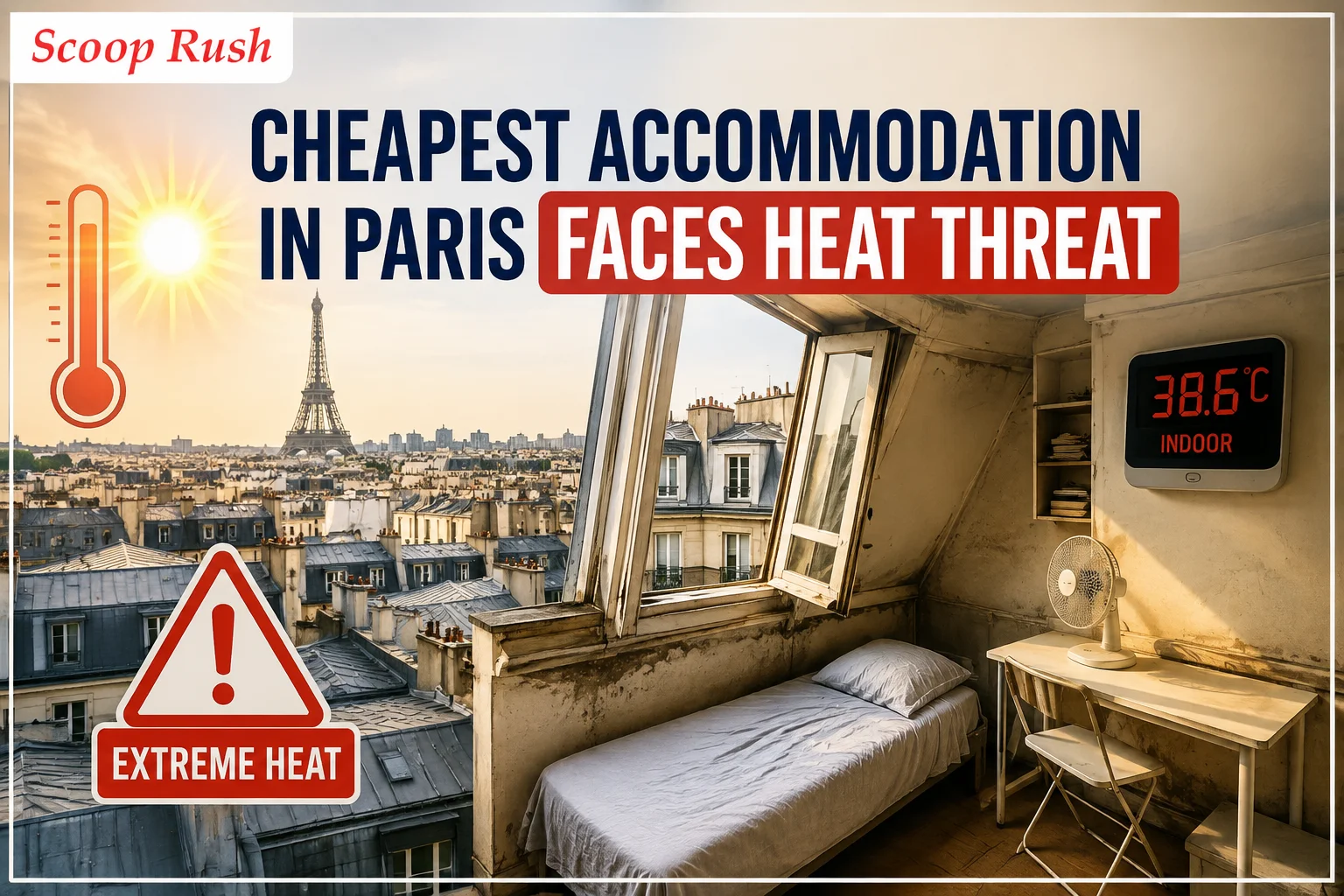
The cheapest accommodation in Paris is under serious threat. Rising summer temperatures now make tiny rooftop rooms hard to live in. These small spaces, known as chambres de bonnes, once gave students and workers a cheap way to live in the city center. Today, extreme heat is turning that bargain into a health risk.
Around 55,000 people still call these rooms home across the Paris region. That makes this issue far bigger than a simple housing quirk. As summers grow hotter, experts warn some rooms could soon become unlivable. This shift could reshape affordable housing in Paris for years to come.
What Are Paris’s Tiny Rooftop Rooms?
Chambres de bonnes started as servants’ quarters in wealthy Parisian homes. Builders placed them under the roofs of grand Haussmannian buildings. Over time, live-in domestic staff became less common. As a result, these rooms slowly turned into housing for students, workers, and retirees.
Their biggest draw was always the price. These rooms cost far less than a typical Paris apartment. However, that same rooftop location now creates a serious problem. Summer heat collects directly under the roof, with nowhere to escape.
Why Extreme Heat Is Making These Rooms Unsafe
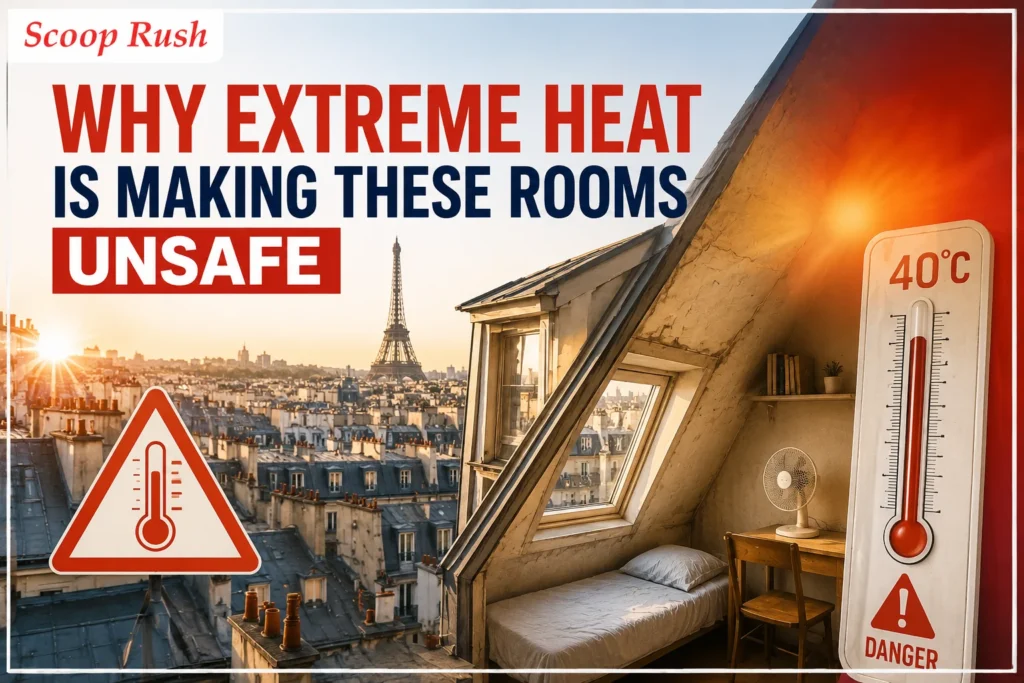
A 2024 study from the Paris Urban Planning Agency, or APUR, looked closely at this issue. Researchers examined summer comfort levels inside homes across the Paris region. They found that unprotected top-floor rooms heat up fast. Indoor temperatures can climb 10 degrees Celsius above outdoor readings.
That gap becomes dangerous during long heatwaves, especially at night. Many of these rooms lack proper insulation or airflow. Consequently, residents struggle to cool down even after sunset. People who spend most of their day at home face the greatest risk.
Life Inside a Nine-Square-Meter Room
Some residents still see these rooms as worth the trouble. Anatoly Novikov rents a nine-square-meter space in central Paris. His room sits in the upscale Notre-Dame-des-Champs area. He pays around 700 euros every month for it.
That price remains far below nearby property values in the same neighborhood. Novikov says the location makes up for the lack of space. For him, living in such a small room is simply part of student life in Paris. Still, he admits the trade-offs are significant during hot summer months.
Why Students Rely on Cheap Paris Housing
Students have long turned to chambres de bonnes for affordable living. These rooms sit close to universities, shops, and public transport. Therefore, many students accept the tight space in exchange for a central location. This trade-off has shaped student housing in Paris for decades.
Demand for this type of housing keeps growing. Paris has seen a 30 percent rise in its student population over 20 years. Many of these students arrive from outside France. Meanwhile, living costs across the city continue to climb, adding more pressure on young renters.
Thousands of Residents Still Call These Rooms Home
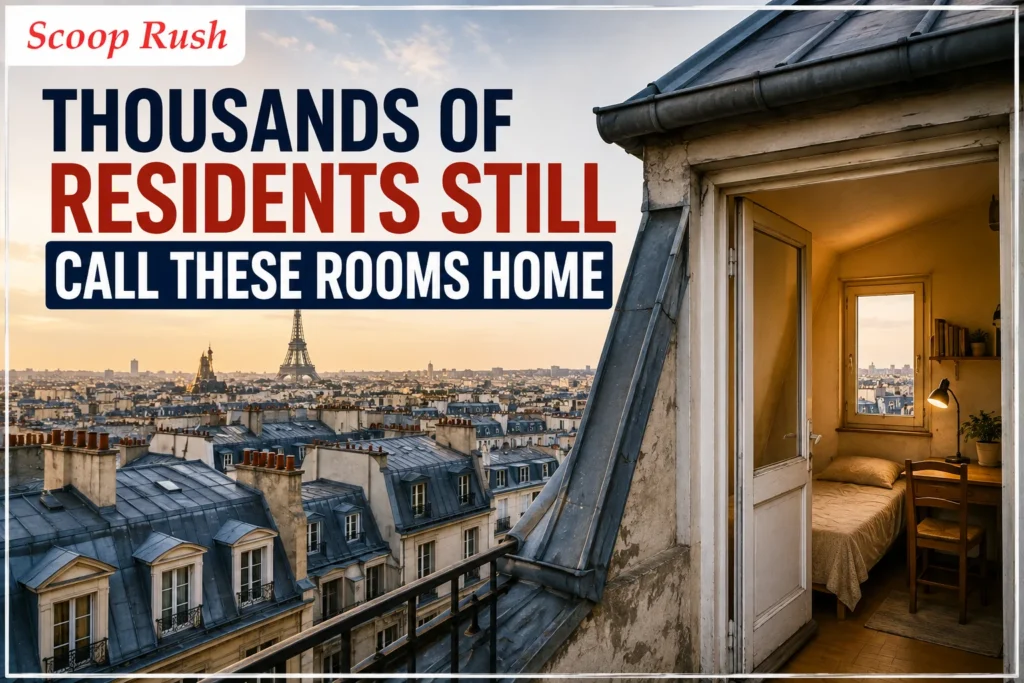
These tiny rooms are not just a curiosity for tourists. Around 55,000 people currently live in chambres de bonnes across the Paris region. This group includes students, young professionals, and older residents. As a result, the issue affects far more than one type of renter.
An earlier APUR study from 2011 showed a wider mix of occupants. Unemployed residents and retirees also lived in these converted spaces. About 20 percent of occupants were over 60 years old. Many had stayed for decades simply because moving elsewhere cost too much.
Tourists Are Also Renting These Small Spaces
Short-term rental platforms have introduced these rooms to a new audience. Travelers sometimes book chambres de bonnes without knowing their original purpose. Emilie Reh experienced this firsthand during a recent trip to Paris. She stayed in a small studio in the popular Marais district.
Her room offered far less space than she expected. She also found that bathroom facilities were shared with other guests. The summer heat made her stay even less comfortable. Even so, she felt the price and location made it worthwhile overall.
Rising Heatwaves Add to the Danger
France recorded an unusually high number of heat-related deaths in summer 2026. The Paris region reported the highest number of these fatalities nationwide. Local climate officials pointed directly to risks inside poorly insulated top-floor homes. Rooftop residents therefore face some of the highest exposure to extreme heat.
This shift changes the nature of the problem. What was once simply uncomfortable could soon become unsafe. If that happens, thousands of low-cost homes may disappear from the market. That outcome would add even more strain to an already tight housing system.
Historic Buildings Complicate Renovation Plans

Paris cannot easily redesign its rooftop apartments without careful planning. The city’s Haussmannian buildings are protected for their historic value. Their rooftops and facades face strict preservation rules. This makes major renovation work slow and complicated for architects.
Experts, including the Architects of the Buildings of France, are studying possible fixes. Better insulation and solar protection could help lower indoor temperatures. However, no single solution works for every building. Each renovation must balance comfort with historic preservation.
What Could Happen to Paris’s Cheapest Homes?
The future of these rooftop rooms remains uncertain. Housing expert Dominique Naert believes some rooms could eventually become illegal to rent. That shift would reflect growing concern over heat-related health risks. Long-term residents with limited income could struggle most if rules change.
The heat problem may not stay limited to top floors either. Experts warn that lower apartments are also getting warmer each summer. This means climate change threatens more than just the smallest Paris homes. Lessons learned here could guide renovation efforts across the wider city.
Why This Housing Problem Matters Beyond Paris
This challenge reaches far beyond the French capital. Many major cities have historic buildings with similar rooftop layouts. Bordeaux, Rome, Madrid, Berlin, and New York all share this concern. As temperatures rise worldwide, similar weaknesses could appear in older housing stock.
Paris now faces a tough balancing act between safety and affordability. Removing unsafe rooms could protect residents from dangerous heat exposure. However, losing them would also shrink an already limited affordable housing supply. Renovation may offer the best middle path for many buildings.
Conclusion
The cheapest accommodation in Paris now faces a turning point. Extreme heat has turned once-affordable rooms into a growing safety concern. Thousands of students, workers, and older residents still depend on these spaces. Losing them could deepen an already difficult housing crisis in the city.
Still, the story is not finished. Architects and city planners continue searching for practical fixes. Better insulation and smart renovation could help save many of these homes. The coming years will decide whether Paris keeps this unique piece of its housing history.
FAQs
1. What are chambres de bonnes in Paris?
Chambres de bonnes are small rooftop rooms in historic Paris buildings. They once housed domestic servants. Today, they offer affordable housing to students and other residents.
2. Why are these rooms becoming too hot?
Their rooftop position traps solar heat throughout the day. Poor insulation and weak ventilation stop that heat from escaping. This makes indoor temperatures rise well above outdoor levels.
3. How small are these Paris apartments?
Many chambres de bonnes measure just a few square meters. French law sets nine square meters as the minimum legal size. Some rooms are roughly the size of a parking space.
4. Who lives in these tiny Paris homes?
Students make up a large share of residents. Young professionals and retirees also rely on this housing type. About one-fifth of past occupants were over 60 years old.
5. Will Paris lose its cheapest rooftop housing?
The outcome remains unclear as heat risks continue rising. Some rooms could face new rental restrictions in the future. Experts are still exploring renovation options to keep them livable.

