
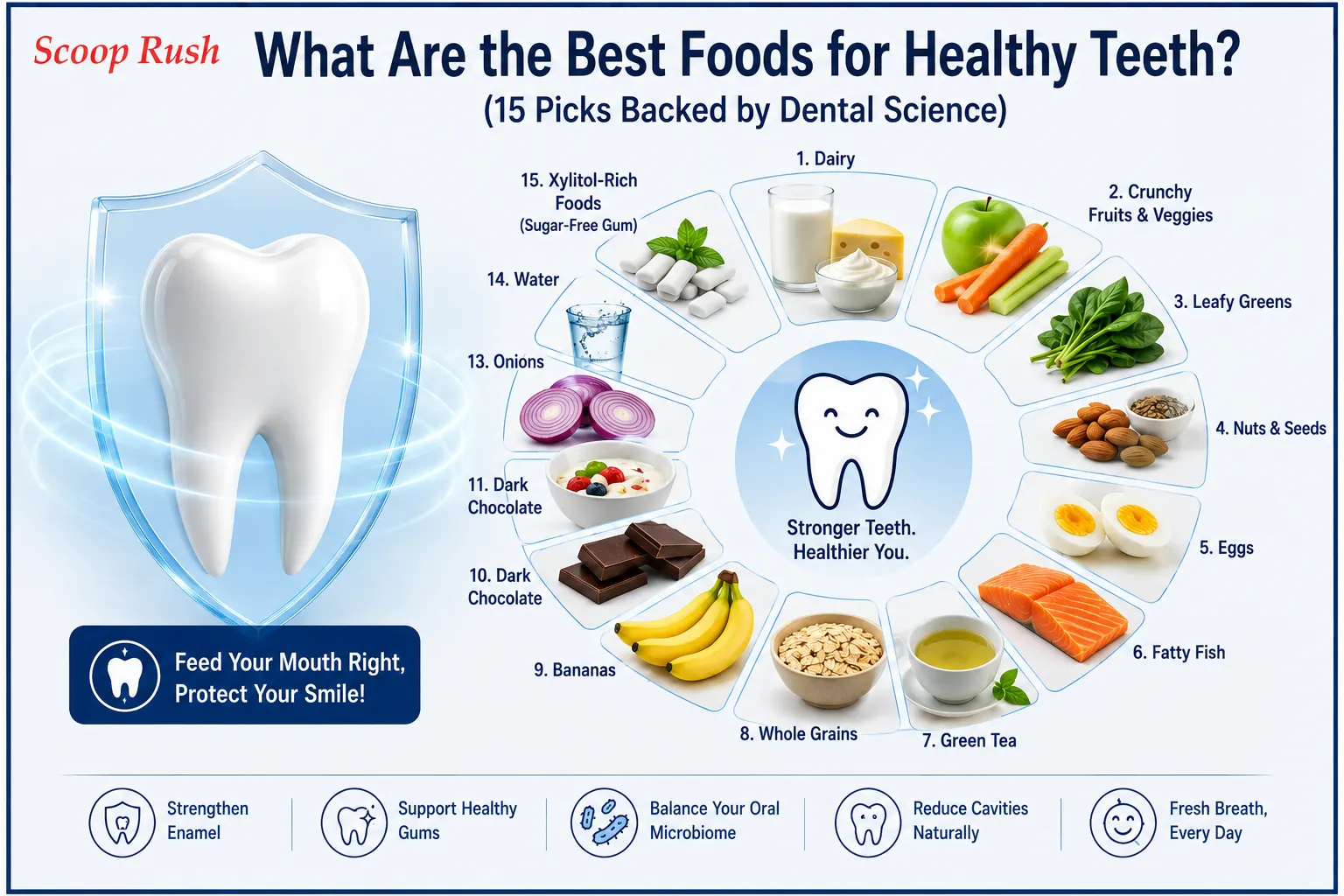
You already know the drill: brush twice a day, floss, see your dentist. But there’s a piece of the puzzle that rarely makes it into that routine advice what you eat doesn’t just fuel your body, it feeds an entire community of microbes living in your mouth. And whether that community thrives or turns against you depends heavily on your plate.
Your mouth is home to hundreds of species of bacteria, fungi, and other microorganisms, collectively known as the oral microbiome. Some of these microbes are troublemakers that convert sugar into tooth-eroding acid. Others are protective allies that crowd out harmful bacteria and even produce their own natural “antibiotics.” The foods you choose determine which group gets the upper hand and the effects reach far beyond your smile, influencing everything from gum health to cardiovascular risk.
Here’s a science-backed, dentist-informed guide to the best foods for healthy teeth, the ones to limit, and how timing your meals can make an outsized difference.
Why Diet Matters More Than You Think
Cavities remain one of the most common chronic conditions worldwide, with the vast majority of adults experiencing at least one by their mid-30s. The usual suspects candy, soda, pastries get plenty of attention. But dental researchers are increasingly focused on the flip side of the equation: foods that actively support a healthier balance of oral bacteria.
A poorly balanced oral microbiome doesn’t just mean more trips to the dentist. Bacterial imbalance in the mouth has been linked to gum disease, and gum disease itself has been associated with a wider set of health concerns, including cardiovascular issues, diabetes complications, and inflammatory conditions elsewhere in the body. Some recent research has even connected certain oral bacterial patterns with increased pancreatic cancer risk, and a lower diversity of oral microbes has been associated with depression in some studies.
The takeaway: nourishing the “good” bacteria in your mouth isn’t a wellness trend it’s a legitimate extension of preventive dental care.
Foods and Drinks to Limit
Before getting to the good stuff, it helps to know what feeds the bacteria you don’t want around:
- Sugary drinks and candy — soda, energy drinks, and sweets are prime fuel for acid-producing bacteria like Streptococcus mutans.
- Refined, starchy snacks — white bread, crackers, biscuits, and pretzels break down into sugars quickly once they hit saliva.
- Frequent snacking on processed foods — it’s not just what you eat but how often; constant grazing means constant acid exposure.
- Sticky dried fruit with added sugar — some packaged dried fruits are coated in extra sugar that lingers on tooth surfaces.
The goal isn’t zero sugar forever natural sugars in fruit and dairy come packaged with nutrients your teeth actually need. It’s the added, refined sugars eaten frequently throughout the day that do the most damage.
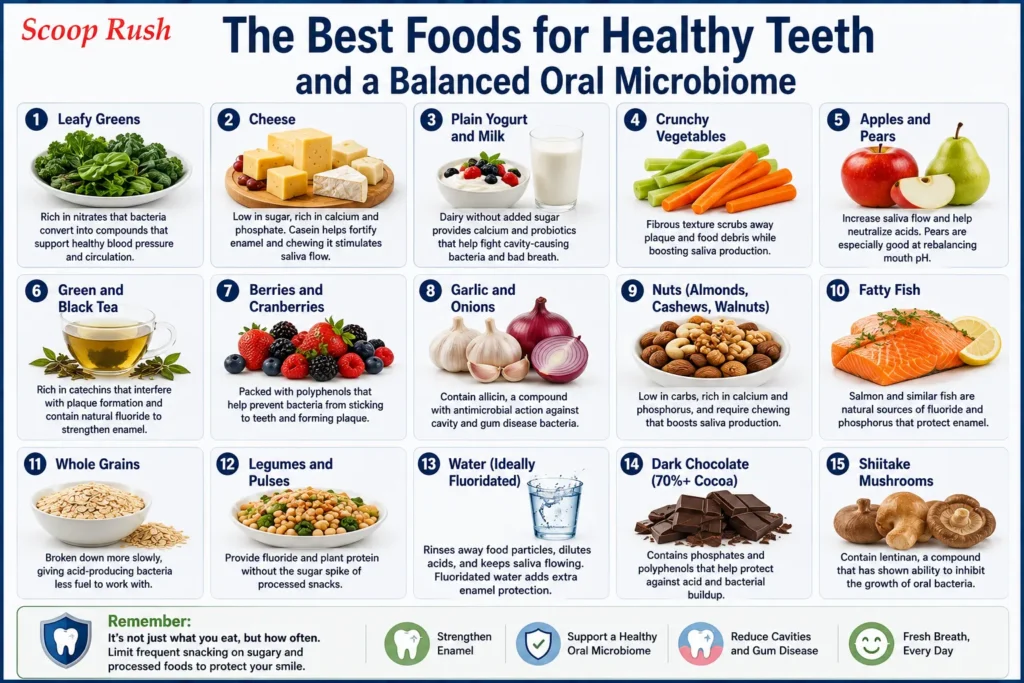
The Best Foods for Healthy Teeth and a Balanced Oral Microbiome
1. Leafy Greens
Kale, spinach, and other leafy greens are rich in nitrates, which oral bacteria convert into compounds that support healthy blood pressure and circulation a two-for-one benefit for your mouth and heart.
2. Cheese
Cheese is a standout for dental health. It’s low in sugar, packed with calcium and phosphate, and contains casein, a protein that helps fortify enamel. Chewing cheese also stimulates saliva flow, which helps neutralize the acids left behind from other foods.
3. Plain Yogurt and Milk
Dairy without added sugar delivers calcium and, in the case of yogurt, probiotics that may help crowd out cavity-causing bacteria and reduce the odds of bad breath.
4. Crunchy Vegetables (Carrots and Celery)
Their fibrous texture works almost like a natural toothbrush, scrubbing away plaque and food debris while boosting saliva production.
5. Apples and Pears
Fresh, whole apples increase saliva flow and help neutralize the acids produced by other foods. Pears, in particular, are notably good at rebalancing mouth pH after eating.
6. Green and Black Tea
Tea leaves are rich in compounds called catechins, which appear to interfere with plaque formation, along with natural fluoride that helps enamel resist acid. Tea has also shown antibacterial effects relevant to gum inflammation and bad breath.
7. Berries and Cranberries
Dark berries are loaded with polyphenols plant compounds that seem to stop bacteria from sticking to tooth surfaces and forming plaque, despite their natural sugar and acid content.
8. Garlic and Onions
Not exactly breath-friendly, but garlic contains allicin, a compound with notable antimicrobial action against the bacteria responsible for cavities and gum disease.
9. Nuts (Almonds, Cashews, Walnuts)
Low in carbohydrates and rich in calcium and phosphorus, nuts also require plenty of chewing, which ramps up saliva production.
10. Fatty Fish
Salmon and similar fish are a natural source of fluoride and phosphorus, both important for protecting enamel.
11. Whole Grains
Because they’re broken down more slowly than refined carbohydrates, whole grains give acid-producing bacteria far less to work with.
12. Legumes and Pulses
Chickpeas, lentils, and beans provide fluoride and plant protein without the sugar spike of processed snacks.
13. Water (Ideally Fluoridated)
Simple but essential water rinses away food particles, dilutes acids, and keeps saliva production up. Fluoridated water adds an extra layer of enamel protection.
14. Dark Chocolate (70%+ Cocoa)
Good news for chocolate lovers dark chocolate contains phosphates and polyphenols that may help protect against acid and bacterial buildup, unlike its sugar-laden milk chocolate counterpart.
15. Shiitake Mushrooms
These contain a compound called lentinan that has shown some ability to inhibit the growth of oral bacteria.
Quick Reference: Foods and Their Dental Benefits
| Food | Key Compound/Property | Main Benefit |
| Leafy greens | Nitrates | Supports beneficial bacteria, blood pressure |
| Cheese | Casein, calcium, phosphate | Strengthens enamel, buffers acid |
| Plain yogurt/milk | Calcium, probiotics | Lowers mouth acidity, may reduce cavity risk |
| Carrots/celery | Fiber, crunch | Mechanically cleans teeth, boosts saliva |
| Apples/pears | Fiber, malic acid | Stimulates saliva, neutralizes acid |
| Green/black tea | Catechins, fluoride | Reduces plaque, fights bad breath |
| Berries/cranberries | Polyphenols | Prevents bacterial adhesion |
| Garlic/onions | Allicin | Antimicrobial against cavity-causing bacteria |
| Nuts | Calcium, phosphorus | Low-carb chewing food, boosts saliva |
| Fatty fish | Fluoride, phosphorus | Protects enamel |
| Whole grains | Complex carbohydrates | Limits bacterial fuel supply |
| Legumes | Fluoride, plant protein | Supports remineralization |
| Water | Fluoride (if fluoridated) | Rinses acids, boosts saliva |
| Dark chocolate (70%+) | Phosphates, polyphenols | Protects against acid and bacteria |
| Shiitake mushrooms | Lentinan | Inhibits oral bacterial growth |
Timing Matters Just as Much as Food Choice
Dental researchers increasingly point out that when and how often you eat can matter as much as what you eat. Every time you snack, your mouth goes through an acid attack as bacteria respond to available sugars and it can take saliva up to 30–60 minutes to neutralize that acid and restore a healthy pH.
Practical ways to apply this:
- Eat sugary or starchy foods as part of a meal rather than as standalone snacks, since meals trigger more saliva production.
- Finish meals with a “neutralizing” food such as cheese, plain yogurt, or unsweetened tea to help offset acid from earlier courses.
- Limit grazing throughout the day; fewer, more complete eating occasions give your mouth more recovery time.
- Rinse with water after eating or drinking anything acidic or sugary, especially if you can’t brush right away.
- Save raw, crunchy produce for the end of a meal, when its scrubbing action can do the most good.
Diet, Gum Disease, and Whole-Body Health
Gum disease isn’t just a dental inconvenience it’s a leading cause of adult tooth loss and has been linked to broader inflammation in the body. Diets closely resembling the Mediterranean pattern rich in vegetables, whole grains, legumes, and healthy fats, with modest amounts of red meat have been associated with less severe gum disease in research populations. By contrast, diets high in added sugar, saturated fat, and frequent red meat consumption have shown stronger associations with more advanced gum disease, although researchers are still working out the exact mechanisms behind that link.
The consistent theme across dental researchers: there’s no single miracle food. What matters most is the overall pattern a diet built around whole plant foods, lean proteins, dairy, and water, with sugar treated as an occasional guest rather than a daily staple.
Vitamins and Micronutrients Your Teeth Actually Need
Diet supports oral health partly through whole foods and partly through the specific micronutrients those foods deliver. A handful of vitamins and minerals do most of the heavy lifting:
- Calcium — the primary building block of both bone and tooth structure, found in dairy, leafy greens, and fortified plant milks.
- Vitamin D — helps the body actually absorb and use calcium; without enough of it, calcium-rich foods can’t do their job as effectively.
- Vitamin C — essential for healthy gum tissue and wound healing; a deficiency is one of the classic causes of bleeding, inflamed gums.
- Vitamin A — supports the mucous membranes of the mouth and plays a role in enamel formation.
- Phosphorus — works alongside calcium to remineralize enamel that’s been softened by acid.
- Zinc — has antibacterial properties in the mouth and supports tissue repair.
The good news is that a varied, whole-food diet covers most of these needs without any extra effort. The temptation, especially for anyone chasing faster results, is to reach for high-dose supplements instead. That’s worth approaching carefully megadosing on fat-soluble vitamins like A and D can actually cause harm rather than help, and more isn’t always better when it comes to micronutrients. If you’re considering supplementation on top of your diet, it’s worth understanding the risks of taking too many vitamins before adding anything beyond a standard multivitamin.
How Your Broader Lifestyle Shapes Oral Health
Diet doesn’t operate in isolation. Several everyday lifestyle factors influence the same bacterial balance and inflammatory pathways that determine whether your gums and teeth stay healthy.
Stress and gum inflammation. Chronic stress raises cortisol levels, which can suppress immune function and make gum tissue more vulnerable to the bacteria that cause periodontal disease. Stress also tends to correlate with worse dietary choices, more teeth grinding, and less consistent brushing habits a compounding effect rather than a single cause. Building in small, sustainable ways to relieve stress throughout your week can indirectly support a healthier mouth, not just a calmer mind.
Movement and circulation. Regular physical activity improves blood flow throughout the body, including to gum tissue, which supports faster healing and better immune response. You don’t need an intense workout routine to see a benefit something as simple as taking a 5-minute walk every hour during a sedentary day has been associated with broader metabolic and cardiovascular benefits that circle back to gum and heart health, given how closely the two are linked.
Sleep and saliva production. Saliva flow naturally decreases during sleep, which is part of why the “morning mouth” feeling exists. Poor sleep quality and habits like sleeping with the mouth open (often linked to stress or congestion) can leave teeth exposed to acid for longer stretches with less natural protection.
None of these factors replace a tooth-friendly diet, but they interact with it. Someone eating well but under constant stress, or barely moving throughout the day, may still see slower healing and more gum inflammation than the diet alone would predict.
How Popular Diet Trends Affect Your Teeth
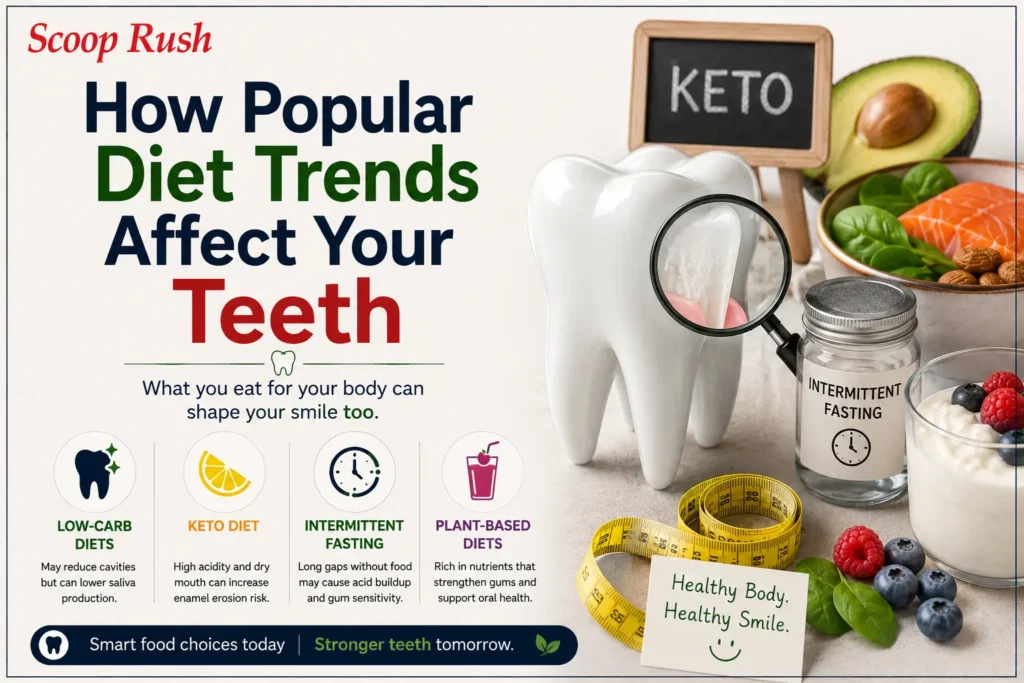
A lot of people adjust their overall eating pattern for reasons that have nothing to do with dental health weight management, blood sugar control, or general wellness goals. It’s worth knowing how some of the most common approaches intersect with oral health.
Low-carb and keto-style eating. Cutting refined carbohydrates and added sugar is generally a win for your teeth, since it directly reduces the fuel available to acid-producing bacteria. That said, some people on very low-carb diets develop “keto breath,” caused by ketone production, and may lean on sugar-free alternatives that still bring acidity into the mix. If you’re exploring this style of eating, it helps to look at the full picture of benefits, risks, and foods on a low-carb diet rather than just the weight-loss headline.
Plant-based and largely vegetarian diets. Diets built around vegetables, legumes, whole grains, nuts, and fruit tend to align closely with what dental researchers recommend for a stable oral microbiome high fiber, high polyphenol content, and naturally lower in the ultra-processed foods most associated with cavities. Anyone considering a shift in this direction can find a useful starting point in this plant-based diet guide, which covers the nutritional basics beyond just oral health.
Diet soda as a “healthier” swap. Many people cut back on regular soda specifically to protect their teeth, switching to diet versions instead. The sugar reduction is a genuine benefit, but diet sodas are often still highly acidic, which can erode enamel over time even without the sugar. If you’re weighing your options here, this comparison of Diet Coke vs. Coke Zero breaks down the differences in acidity and ingredients so you can make a more informed swap water and unsweetened tea remain the better default for daily hydration.
Making It Stick: Building a Tooth-Friendly Habit for Life
Knowing which foods help your teeth is only useful if it translates into consistent behavior. A few practical strategies make that transition easier:
- Anchor new habits to existing routines. Add a glass of water or a small piece of cheese to the end of meals you already eat every day, rather than trying to overhaul your entire diet at once.
- Batch-prep tooth-friendly snacks. Wash and portion carrots, celery, and apple slices at the start of the week so they’re as convenient to grab as anything processed.
- Make meals social when you can. Eating in a relaxed, unhurried setting rather than rushed and alone tends to slow down eating pace and encourage more mindful choices. There’s evidence that the benefits of eating together extend beyond mood and connection into genuinely better dietary patterns, since shared meals are less likely to be dominated by convenience snacking.
- Think in decades, not weeks. The cumulative effect of dietary choices on oral health compounds slowly, which is exactly why it’s easy to underestimate. Establishing healthy habits in your 20s and 30s including dietary ones tends to pay off disproportionately later, since enamel doesn’t regenerate and gum damage becomes harder to reverse the longer it’s left unaddressed.
A Note on Your Morning Coffee or Tea
Given how often tea came up earlier in this guide as a genuine ally for oral health, it’s worth a closer look at how you drink it. Black coffee and unsweetened tea are both far better choices than sweetened versions, but timing and additions matter. Coffee’s natural acidity can be harder on enamel when consumed on an empty stomach first thing in the morning, both for digestive comfort and because there’s less food present to buffer the acid. If your routine involves coffee before breakfast, it’s worth understanding what drinking coffee on an empty stomach actually does, so you can decide whether pairing it with food or simply following it with a glass of water makes sense for you.
The Bottom Line
There’s no shortcut food that undoes a diet high in sugar, and there’s no need to obsess over a single “superfood” either. The strongest, most consistent finding across dental research is that an overall eating pattern rich in vegetables, whole grains, dairy, lean protein, and water, with added sugar kept occasional creates a mouth environment where beneficial bacteria can outcompete the harmful ones. Pair that with consistent brushing, flossing, and regular dental visits, and you’re covering both sides of the equation that actually determines the health of your smile.
FAQs
Is it more important to eat the right foods or just brush and floss well?
Both matter, and neither replaces the other. Brushing and flossing physically remove plaque, but they don’t change what fuels the bacteria in your mouth between cleanings. A diet high in added sugar can outpace even a diligent oral hygiene routine.
Does natural sugar in fruit damage teeth the same way as added sugar?
Not to the same degree. Whole fruit comes with fiber, water content, and nutrients that help offset its sugar content, and chewing it stimulates saliva. Fruit juice and dried fruit with added sugar are more concerning since they lack that buffering fiber and often cling to teeth longer.
Can diet alone reverse a cavity?
No. Once enamel has broken down into an actual cavity, it requires professional dental treatment. Diet is most powerful as prevention supporting remineralization and limiting the acid exposure that leads to decay in the first place.
Is dark chocolate really good for teeth?
Compared with other sweets, yes, dark chocolate with a high cocoa content (70% or more) contains compounds that may help resist plaque and acid, and it’s typically lower in added sugar than milk chocolate. It’s a better-for-you treat, not a substitute for brushing.
How long does it take saliva to neutralize acid after eating?
Roughly 30 to 60 minutes, depending on the food and individual saliva flow. This is part of why limiting snack frequency, rather than just snack choice, is a meaningful strategy for protecting enamel.
Are mouthwashes a good substitute for a tooth-friendly diet?
Not entirely. Over-the-counter mouthwashes vary widely in effect, and some antibacterial formulas can disrupt the balance of the oral microbiome rather than support it. Diet works more consistently to shape which bacteria are able to thrive.
What’s the single best habit for a tooth-friendly diet?
Most dental researchers land on the same, unglamorous answer: a balanced diet with plenty of vegetables, lean protein, and whole grains, minimal added sugar, and consistent hydration with water ideally fluoridated.
Does stress really affect my teeth and gums?
Yes. Chronic stress can weaken immune response in gum tissue, increase teeth grinding, and disrupt sleep and eating patterns all of which make it easier for harmful bacteria to gain ground. Managing stress is a legitimate, if often overlooked, part of a complete oral health strategy.
Should I take vitamin or mineral supplements specifically for my teeth?
Not by default. A varied diet covering calcium, vitamin D, vitamin C, and phosphorus is usually sufficient. Supplements can help fill a genuine gap, but high-dose, unsupervised supplementation carries its own risks and isn’t a substitute for a well-rounded diet.

