
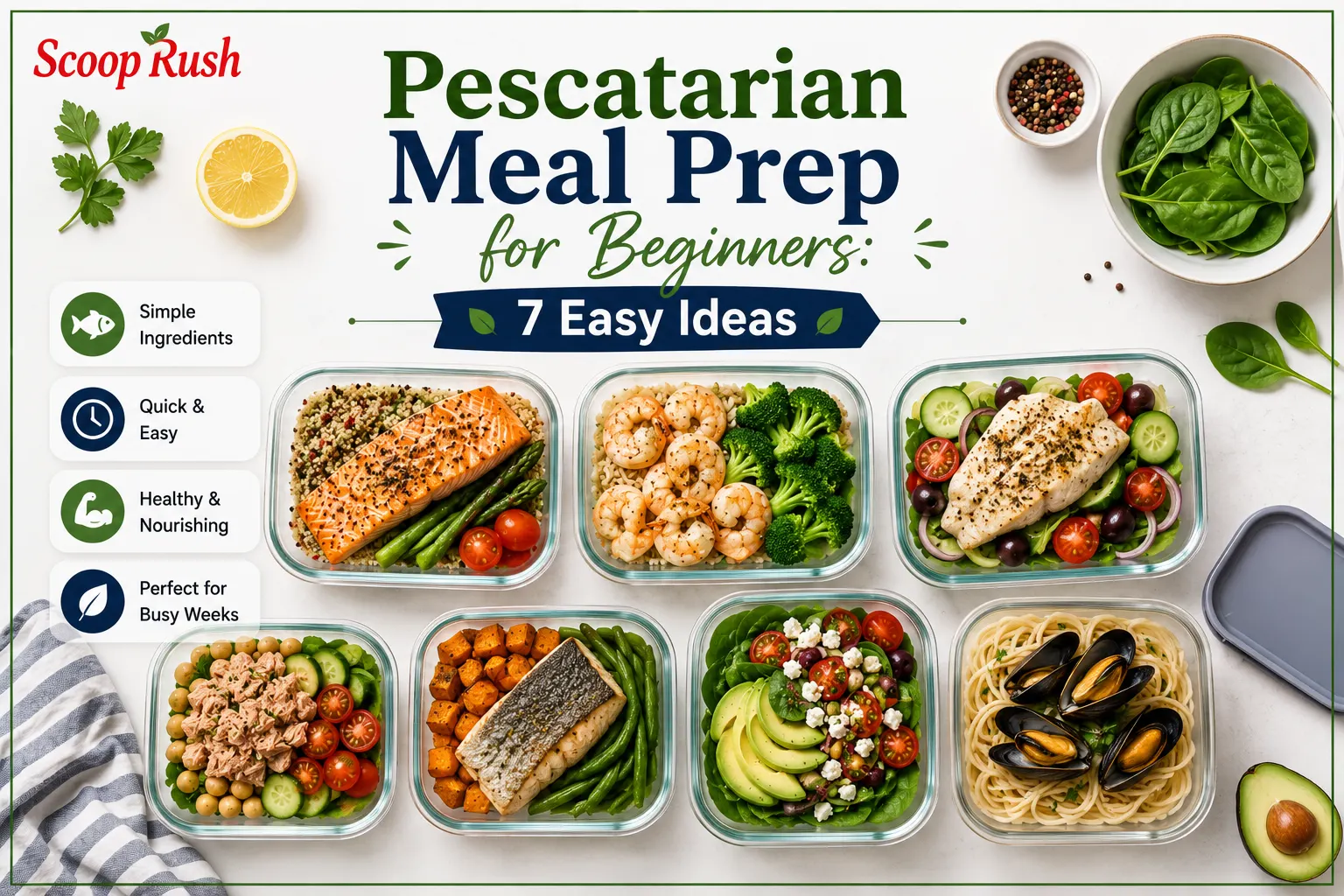
Sunday afternoons have a way of deciding how the rest of your week will go. Spend an hour with a cutting board and a sheet pan, and Tuesday night stops being a scramble for takeout menus. That’s the real promise of pescatarian meal prep: a little upfront planning that pays off in calmer evenings, steadier energy, and meals built around fish, seafood, whole grains, and vegetables instead of whatever’s fastest to order.
This guide walks through what pescatarian meal prep actually involves, how to tell if the diet fits your lifestyle, seven meal prep recipes worth putting on repeat, a step-by-step system for prepping efficiently, a sample five-day plan, and answers to the questions people ask most often before they get started.
What Is Pescatarian Meal Prep?
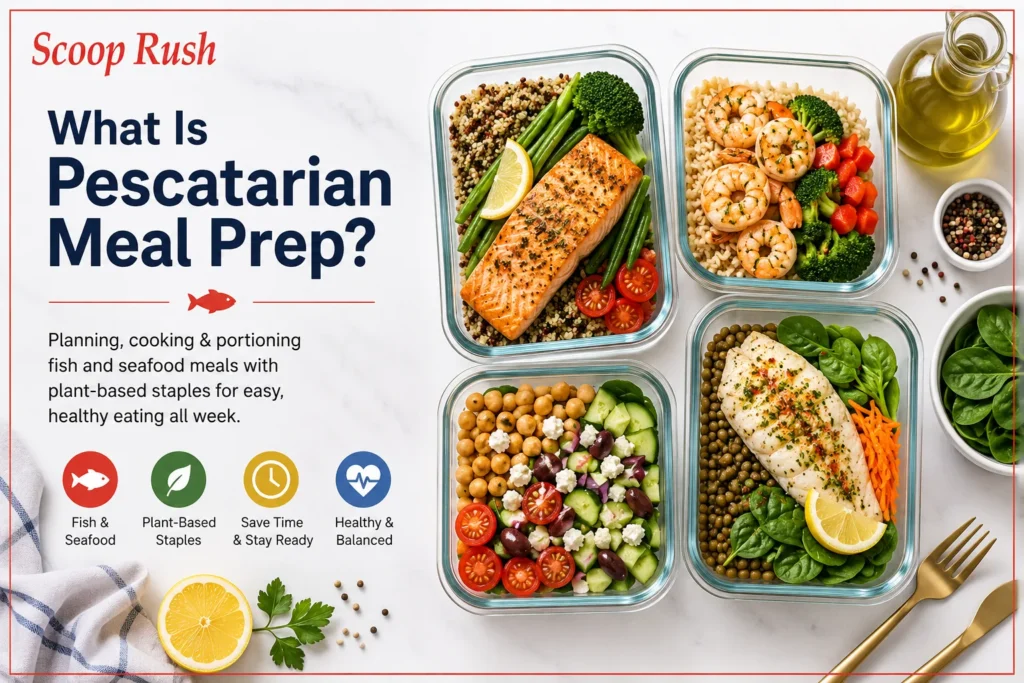
Pescatarian meal prep is the practice of planning, cooking, and portioning meals in advance that center on fish and seafood alongside plant-based staples vegetables, whole grains, legumes, and, for many people, eggs and dairy. It borrows the same batch-cooking logic used in other structured eating plans, like a vegetarian keto meal plan or a vegan bodybuilder meal plan, but keeps seafood on the table as the primary protein.
Done well, it’s less about cooking in bulk and more about designing meals so your fridge and freezer function as a backup kitchen. When grab-and-go options are already portioned and ready, you’re far less likely to reach for delivery apps on a busy weeknight and far more likely to hit a consistent intake of omega-3 fatty acids and lean protein without thinking too hard about it.
Is a Pescatarian Diet Right for You?
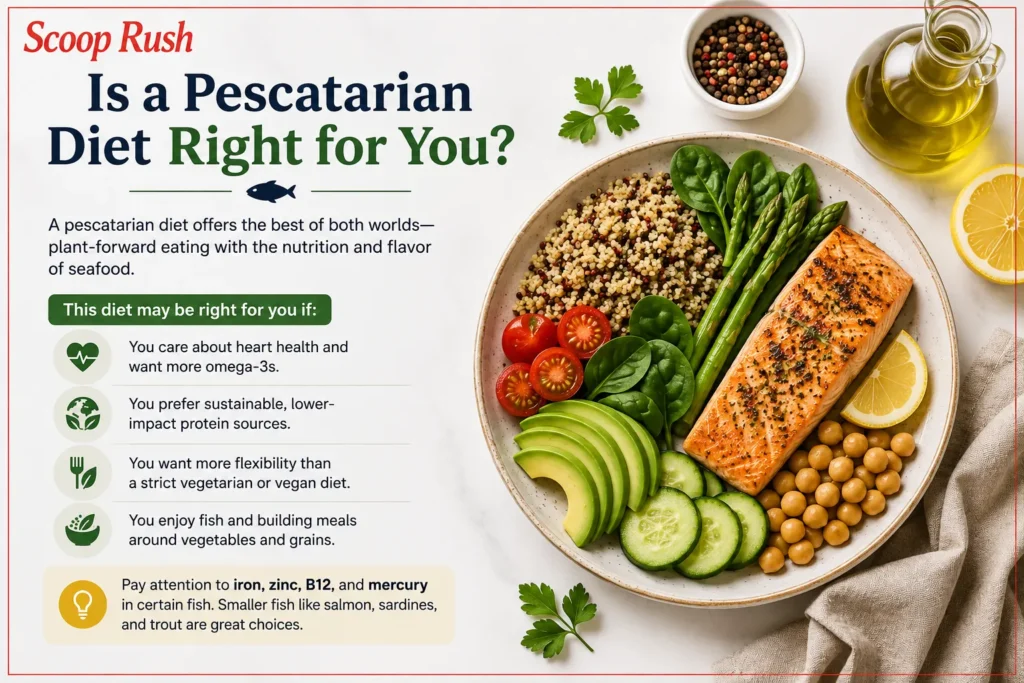
A pescatarian diet tends to appeal to people who like the structure of plant-forward eating but don’t want to give up the flavor and nutritional punch of seafood. It offers omega-3 fatty acids, vitamin B12, high-quality protein, and a wide range of textures and cuisines all without relying on red meat or poultry.
This way of eating is a natural fit if:
- You care about heart health and want more omega-3s in your diet
- You’re interested in sustainable, lower-impact protein sources
- You want more flexibility than a strict vegetarian or vegan diet allows
- You enjoy cooking with fish but also like building meals around vegetables and grains
It does take a bit more intention than an unrestricted diet. Because red meat and poultry are off the table, it’s worth paying attention to iron, zinc, and B12 intake, and being mindful of mercury levels in certain fish, especially if you eat seafood daily. Larger, longer-living fish think swordfish, king mackerel, and bigeye tuna tend to carry more mercury than smaller fish like salmon, sardines, and trout. If you’re pregnant, nursing, or managing a health condition, it’s worth talking with a registered dietitian or doctor before making the switch, so your plan accounts for your specific needs.
Pescatarian vs. Vegetarian vs. Vegan: Where It Fits
People often land on pescatarian eating after trying and not quite sticking with a stricter plant-based diet. Seeing how the three compare side by side makes it easier to understand why.
| Diet | Includes Seafood | Includes Eggs/Dairy | Includes Meat/Poultry | Typical Appeal |
| Vegan | No | No | No | Strictest plant-based approach, avoids all animal products |
| Vegetarian | No | Usually yes | No | Plant-forward with dairy/egg flexibility |
| Pescatarian | Yes | Usually yes | No | Plant-forward with seafood as the primary protein source |
The main advantage pescatarian eating has over a strict plant-based diet is flexibility during meal prep. Seafood-based proteins tend to be quicker to cook than many plant-based protein sources, which require more attention to combining foods for complete amino acid profiles. On the opposite end of the spectrum, people following an animal-based diet or a strict carnivore diet skip plant foods almost entirely pescatarian eating sits comfortably in the middle, borrowing structure from both. All of these approaches can be nutritionally sound with enough planning it comes down to which one fits your lifestyle, cooking habits, and taste preferences.
Building a Pescatarian Meal Prep Grocery List
A well-organized grocery list is what turns meal prep from a stressful Sunday chore into a quick, routine errand. Group your list by category so you’re not backtracking through the store:
Seafood (fresh or frozen)
- Salmon fillets
- Shrimp (peeled and deveined)
- Cod or another mild white fish
- Canned tuna (packed in water)
- Scallops
Produce
- Broccoli, bell peppers, sweet potatoes
- Cucumber, cherry tomatoes, red onion
- Snap peas, carrots, spinach or kale
- Lemons, garlic, fresh herbs (dill, parsley, cilantro)
Grains and legumes
- Quinoa, brown rice, farro
- Canned chickpeas and white beans
- Soba noodles
Pantry and sauces
- Olive oil, sesame oil
- White miso paste, rice vinegar
- Dijon mustard, tahini
- Plain Greek yogurt, feta cheese
Buying frozen seafood in bulk is one of the easiest ways to keep costs down without sacrificing quality — most frozen fish is flash-frozen shortly after catch, which locks in freshness comparable to what you’d find at the fish counter.
Key Nutrients to Watch on a Pescatarian Diet
Seafood does a lot of nutritional heavy lifting, but a well-rounded pescatarian diet still benefits from a little planning around a few key nutrients.
| Nutrient | Why It Matters | Good Sources |
| Omega-3 fatty acids | Supports heart and brain health, reduces inflammation | Salmon, sardines, mackerel, trout, walnuts, flaxseed |
| Vitamin B12 | Needed for nerve function and red blood cell production | Fish, shellfish, eggs, dairy, fortified nutritional yeast |
| Iron | Supports energy and oxygen transport in the blood | Shellfish (especially clams and mussels), lentils, spinach, fortified grains |
| Zinc | Supports immune function and wound healing | Oysters, shrimp, chickpeas, pumpkin seeds |
| Protein | Builds and repairs muscle, keeps you full longer | Fish, shrimp, eggs, Greek yogurt, legumes, quinoa |
| Fiber | Supports digestion and steady blood sugar | Whole grains, beans, vegetables, fruit |
Rotating between different types of fish and shellfish, rather than leaning on one or two favorites, is an easy way to cover more nutritional ground without extra effort. If you’re also taking supplements to fill any gaps, it’s worth understanding the risks of taking too many vitamins before stacking on extras you may not need.
7 Pescatarian Meal Prep Recipe Ideas
These recipes were chosen because they hold up well in the fridge, reheat cleanly, and don’t lose flavor or texture after a few days a common problem with delicate fish dishes.
1. Lemon-Garlic Sheet-Pan Salmon & Veggies
This one-tray dinner comes together with minimal cleanup. Toss salmon fillets with chopped broccoli, bell peppers, and cubed sweet potatoes in olive oil, lemon juice, minced garlic, and a pinch of sea salt, then roast everything at 400°F for about 20–25 minutes, until the salmon flakes easily and the vegetables are tender.
It keeps well in the fridge for up to four days, making it a solid option if you’re following a high-protein meal plan. The salmon delivers heart-healthy omega-3s, while the vegetables bring fiber, vitamin C, and antioxidants.
2. Shrimp & Quinoa Mediterranean Bowls
Cook a batch of quinoa, then season shrimp with oregano, garlic, and olive oil and roast or pan-sear until just opaque. Add chopped cucumber, cherry tomatoes, Kalamata olives, and crumbled feta. Blend Greek yogurt with lemon juice and dill for the dressing, and store it separately so the bowls don’t get soggy.
The mix of whole grains, lean protein, and healthy fats makes this a balanced lunch, rich in selenium, vitamin B12, and anti-inflammatory compounds.
3. Tuna-Yogurt Grain Salad
Mix canned tuna (packed in water) with plain Greek yogurt, chopped celery, red onion, Dijon mustard, and parsley or dill. Serve it over cooked farro or brown rice, or spoon it into lettuce cups if you’re leaning toward a low-carb diet.
This one stays fresh for up to three days and is easy to adapt based on what’s already in your fridge. It’s a solid source of protein, calcium, and omega-3s, and the yogurt adds a dose of probiotics.
4. Miso-Glazed Cod with Stir-Fried Vegetables
Cod cooks quickly and holds its texture well, which makes it a good candidate for prepping ahead. Marinate fillets in white miso paste, rice vinegar, sesame oil, and a touch of honey for 15–30 minutes, then bake at 375°F for 15–18 minutes. While it bakes, stir-fry snap peas, bell peppers, and shredded carrots in sesame oil and garlic, and portion everything over brown rice or soba noodles.
It’s light but satisfying, with lean protein, B vitamins, and antioxidants from the vegetables.
5. Chickpea & Tuna Stuffed Peppers
Combine canned tuna, mashed chickpeas, lemon juice, chopped parsley, and a spoonful of tahini. Fill raw or roasted bell pepper halves with the mixture and chill until ready to eat.
These hold up well for three to four days and are high in plant-based fiber, protein, and folate — a good fit if you’re following a high-protein, high-fiber eating plan.
6. Seared Ahi Tuna Poke-Style Bowls
Sear ahi tuna steaks for about a minute per side, leaving the center rare, then slice thin. Toss with a light soy sauce, sesame oil, and rice vinegar dressing. Build bowls with cooked brown rice or sushi rice, shredded carrots, edamame, cucumber, and avocado, keeping the avocado separate until serving so it doesn’t brown.
This one is best eaten within two days given the seared tuna, but it’s an easy way to work more lean protein and healthy fats into a weekday lunch rotation.
7. Garlic Butter Scallops with White Beans and Greens
Pan-sear scallops in a little butter and garlic until golden on each side, then set aside. In the same pan, wilt spinach or kale and warm through a can of drained white beans with a squeeze of lemon. Portion the beans and greens as a base, with scallops on top.
Scallops are naturally low in fat and high in protein, and pairing them with beans adds fiber and iron to round out the meal.
How to Meal Prep for a Pescatarian Diet: A 5-Step System
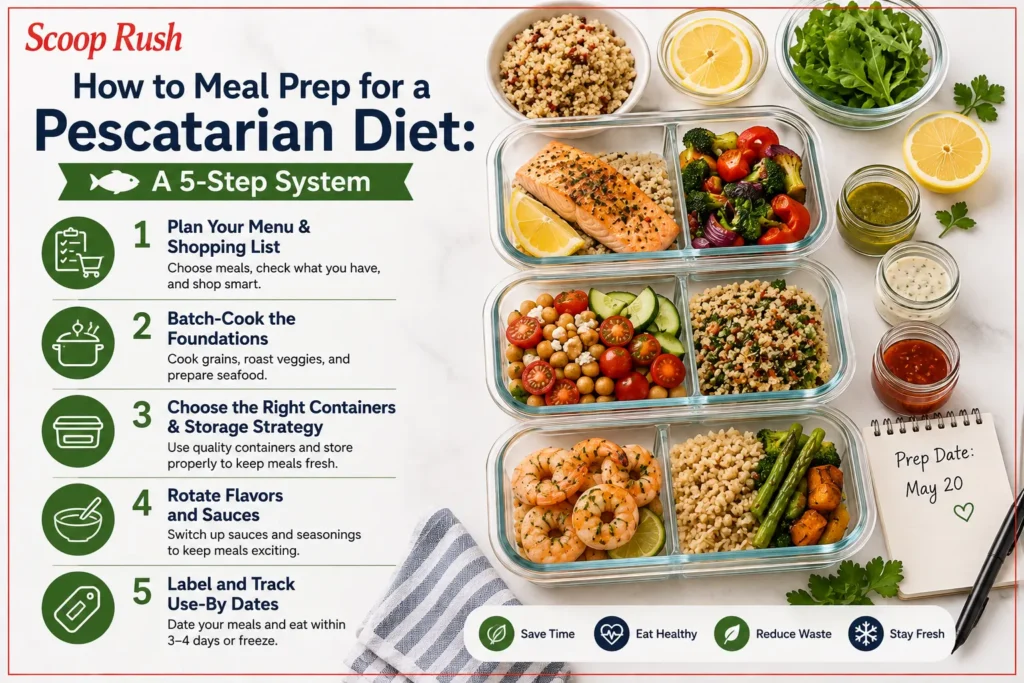
Once you’ve picked a few recipes, the process of turning them into a week of ready-to-eat meals comes down to five repeatable steps.
Step 1: Plan Your Menu and Shopping List
Pick three to five meals for the week based on your schedule and what sounds appealing right now cravings matter more to consistency than most people admit. Check your fridge and pantry first; you likely already have grains, spices, or canned beans on hand. Then build a shopping list organized by seafood, produce, grains, and sauces so nothing gets missed at the store. This step alone cuts down on both wasted food and impulse purchases.
Step 2: Batch-Cook the Foundations
Set aside an hour or two to cook the building blocks: a big batch of grains like brown rice, quinoa, or farro, a tray of roasted vegetables, and your seafood of choice, baked or pan-seared. Seafood cooks fast usually under 15 minutes so it’s worth timing it last. With these staples ready, assembling meals through the week becomes a matter of combining, not cooking from scratch.
Step 3: Choose the Right Containers and Storage Strategy
Glass or BPA-free containers with separate compartments keep sauces, grains, and proteins from turning into a soggy mess. Most prepped meals hold safely in the fridge for four to five days; anything you won’t eat within that window should go straight into the freezer. Quality containers aren’t just a convenience they genuinely reduce both food waste and the risk of cross-contamination.
Step 4: Rotate Flavors and Sauces
The fastest way to abandon a meal prep routine is boredom. Swap a lemon-yogurt sauce one week for a spicy chili-garlic glaze the next, or rotate between Mediterranean, Asian-inspired, and Latin flavor profiles across different weeks. Small changes in seasoning keep the same base ingredients rice, salmon, roasted vegetables from feeling repetitive.
Step 5: Label and Track Use-By Dates
Write the prep date on every container. It’s a small habit, but it removes the guesswork of “is this still good?” later in the week. Aim to eat seafood-based meals within three to four days, or freeze portions immediately if you won’t get to them in time. This step is what actually keeps a meal prep routine sustainable and safe.
Sample 5-Day Pescatarian Meal Prep Plan
Here’s how the recipes above might come together across a week, mixing and matching to avoid repetition while keeping shopping and cooking manageable.
| Day | Lunch | Dinner |
| Monday | Tuna-Yogurt Grain Salad | Lemon-Garlic Sheet-Pan Salmon & Veggies |
| Tuesday | Shrimp & Quinoa Mediterranean Bowl | Miso-Glazed Cod with Stir-Fried Vegetables |
| Wednesday | Chickpea & Tuna Stuffed Peppers | Garlic Butter Scallops with White Beans and Greens |
| Thursday | Seared Ahi Tuna Poke-Style Bowl | Leftover Sheet-Pan Salmon & Veggies |
| Friday | Shrimp & Quinoa Mediterranean Bowl | Miso-Glazed Cod (fresh batch or leftovers) |
Feel free to shuffle this based on what’s freshest at the store or on sale that week the structure matters more than the exact pairing. If you’re also prepping breakfasts, a batch of gluten-free breakfast ideas pairs well alongside this lineup without adding much extra shopping.
Best Storage and Food Safety Tips
- Cool cooked seafood to room temperature before sealing it in a container trapping heat speeds up bacterial growth
- Store sauces and dressings separately from grains and greens to prevent sogginess
- Use shallow, wide containers rather than deep ones, so food cools evenly
- Freeze portions you won’t eat within four days rather than pushing the fridge limit
- Reheat fish gently, in a covered pan on low heat or in short microwave bursts, to avoid drying it out
- Label everything with the prep date, even if you’re sure you’ll remember
Benefits of Pescatarian Meal Prep
Nutrient-rich, balanced meals. When you control the ingredients, you naturally end up with more fiber, protein, and healthy fats, and fewer additives and excess sodium. Combining seafood with vegetables, whole grains, and legumes provides a steady supply of omega-3s, vitamins A and C, and minerals like magnesium and potassium.
Time savings and convenience. Having meals ready in the fridge removes the nightly decision of what to cook. There’s no 45-minute scramble after a long day, and no reaching for delivery apps out of sheer decision fatigue.
Support for health goals. Portioning meals in advance keeps serving sizes consistent, whether the goal is heart health, blood sugar management, or weight management. Seafood’s combination of high-quality protein and anti-inflammatory fats supports both cardiovascular and brain health over time, and consistent protein intake is especially useful for preserving muscle mass if you’re managing weight through calorie changes or medication. Pairing this style of eating with other healthy habits like taking a short walk every hour during the workday tends to compound the benefits far more than diet changes alone.
Less food waste. Buying with a specific menu in mind, rather than shopping on impulse, means fewer forgotten vegetables wilting in the crisper drawer.
Common Mistakes to Avoid
- Prepping too much variety at once. Five completely different recipes in one session multiplies both shopping complexity and cleanup. Two or three recipes with overlapping ingredients is usually more sustainable.
- Skipping the labeling step. It’s easy to lose track of what’s four days old versus what’s fresh, especially once containers start to look alike.
- Over-seasoning early. Adding acidic dressings or sauces before storage can break down delicate fish and vegetables faster. Keep dressings separate until serving.
- Ignoring variety in fish choices. Relying on the same one or two fish every week limits nutrient diversity and increases exposure to whatever contaminants that particular fish tends to carry.
- Not accounting for texture changes. Some fish, like seared tuna, are best eaten within a day or two building your week around a mix of sturdier options (cod, salmon, shrimp) and quicker-turnaround ones keeps everything tasting its best.
Final Thoughts
Pescatarian meal prep isn’t about complicated recipes or hours in the kitchen every Sunday. It’s a system: a short list of go-to meals, a couple of hours of batch cooking, the right containers, and a habit of labeling what’s already done. Once that system is in place, the rest of the week takes care of itself balanced meals are just a container away, and the daily “what’s for dinner” question stops being a source of stress.
If you’re building a plan around specific health goals, a registered dietitian can help tailor portions, fish selection, and nutrient targets to your individual needs.
FAQs
How long does prepped fish stay fresh in the fridge?
Most cooked seafood keeps well for three to four days when stored properly in an airtight container. Delicate preparations, like seared or raw-style tuna, are best eaten within one to two days.
Can I freeze pescatarian meal prep?
Yes. Cooked fish, shrimp, and grains generally freeze well for one to two months. Vegetables with high water content, like cucumber or lettuce, don’t freeze as well and are better added fresh after reheating.
Is pescatarian meal prep more expensive than meat-based meal prep?
It depends on the type of seafood. Canned tuna, frozen shrimp, and cod are generally affordable and comparable to chicken or beef in price. Fresh salmon, scallops, and specialty fish tend to cost more, so mixing budget-friendly and premium options across the week helps manage cost.
How many times a week should I eat fish on a pescatarian diet?
There’s no single rule, but many people aim for seafood at least three to four times a week to get consistent omega-3 and B12 intake, filling in other meals with eggs, dairy, legumes, and plant-based proteins.
What’s the best way to reheat fish without drying it out?
Low, gentle heat works best a covered pan on low, a low oven at around 275°F, or short 20–30 second bursts in the microwave. Avoid high heat, which tends to overcook fish quickly.
Do I need to worry about mercury if I eat fish daily?
It’s worth paying attention to which fish you’re eating rather than avoiding fish altogether. Smaller fish like salmon, trout, and sardines carry less mercury than larger, longer-living species like swordfish or king mackerel. Rotating your choices and moderating high-mercury fish is a reasonable approach for most adults.
Can pescatarian meal prep work for a high-protein diet?
Yes. Shrimp, tuna, salmon, cod, and scallops are all lean, high-protein options, and pairing them with legumes, quinoa, or Greek yogurt makes it straightforward to hit higher protein targets across the day.

