
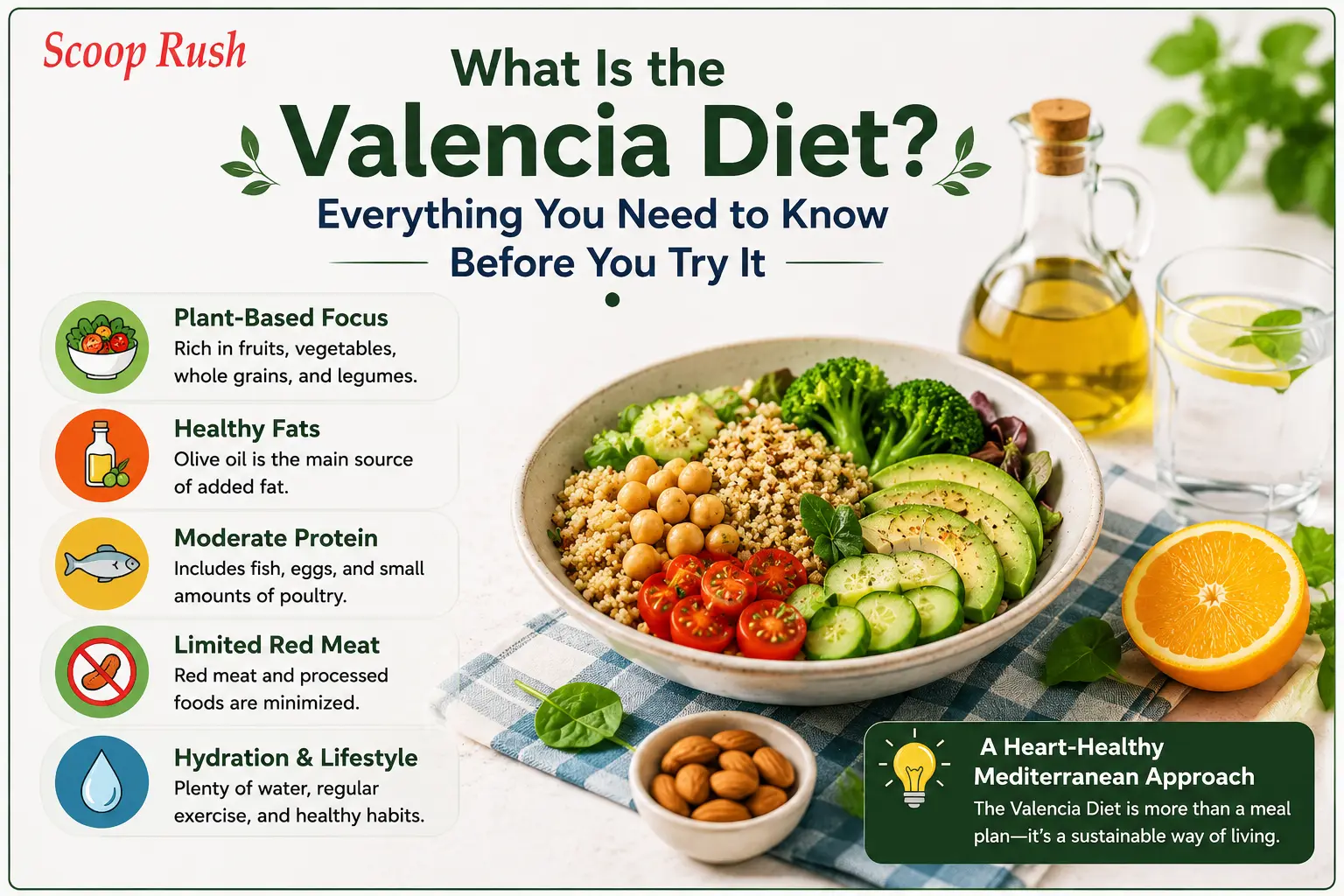
Every few months, a new eating plan takes over social media feeds and dinner-table conversations alike. First it was the carnivore diet. Then it was the egg-only craze. Now, the internet has a new obsession: the Valencia Diet. Praised for being less restrictive than most viral diets and criticized by some for lacking rigorous research, it has become one of the most searched nutrition trends of the year.
So what exactly is the Valencia Diet, why is it spreading so fast, and more importantly is it actually good for you? Here’s a full breakdown of the plan, the science behind it, and what nutrition experts have to say.
Who Created the Valencia Diet?
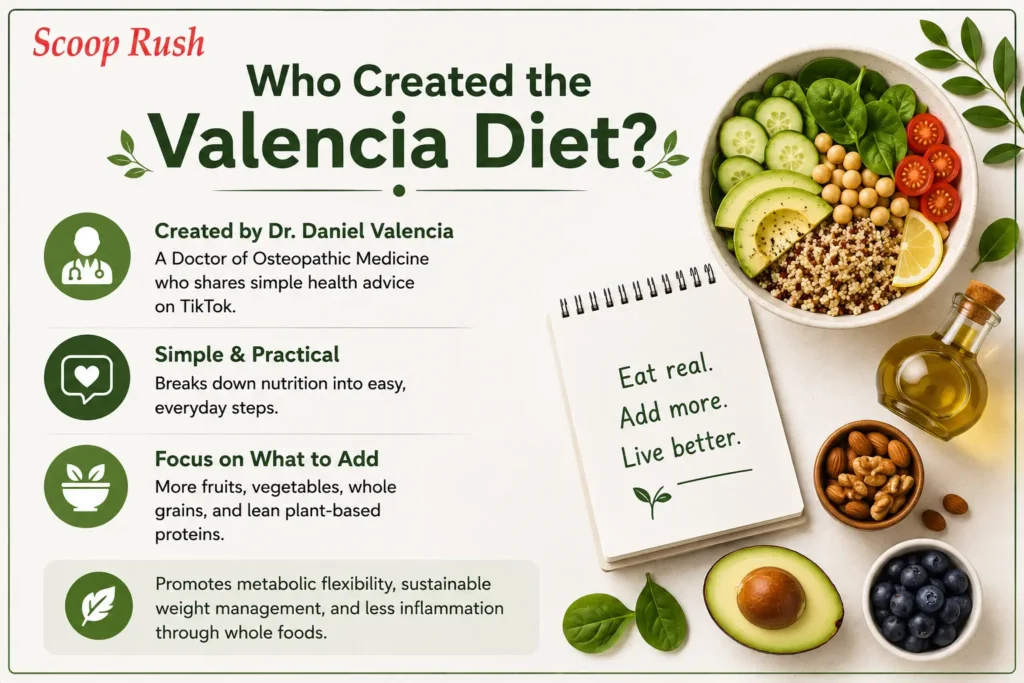
The Valencia Diet takes its name from its creator, Dr. Daniel Valencia, a Doctor of Osteopathic Medicine known for sharing accessible, everyday health advice on social platforms, particularly TikTok. Rather than promoting an extreme or restrictive protocol, Dr. Valencia built his following by breaking down nutrition science into simple, actionable steps that don’t require a dietitian’s supervision or a pantry overhaul.
His overall message centers on metabolic flexibility, sustainable weight management, and reducing inflammation through whole foods themes that resonate strongly with people who feel burned out on fad diets that eliminate entire food groups. Instead of telling followers what they can never eat again, Dr. Valencia’s approach is built around what to add more of: fruits, vegetables, lean and plant-based proteins, and whole grains.
What Is the Valencia Diet, Exactly?
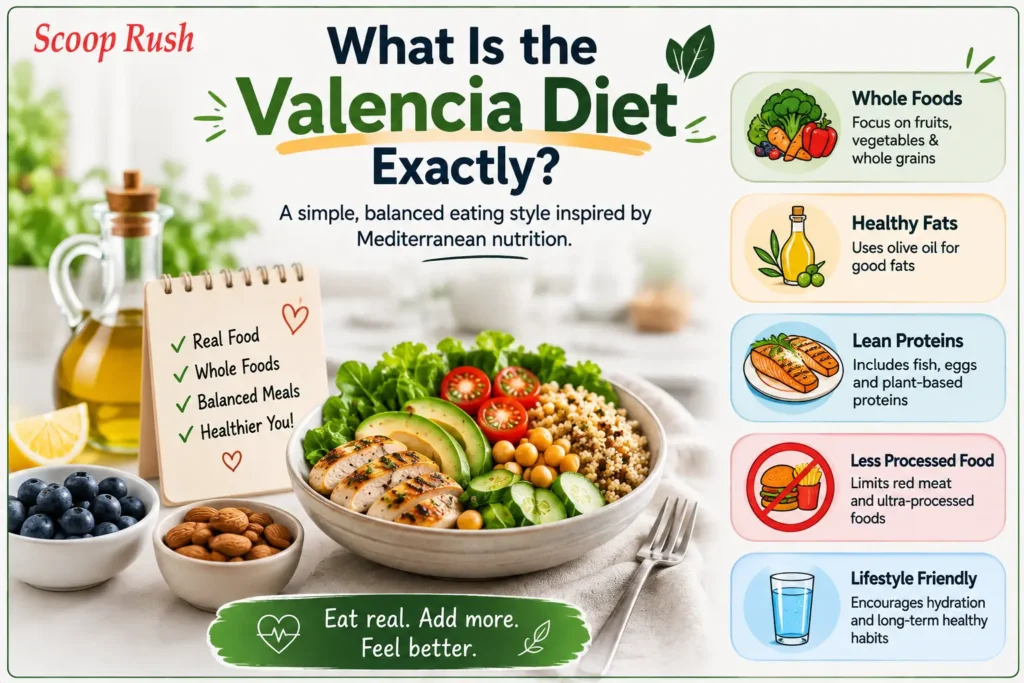
At its core, the Valencia Diet is a whole-foods eating pattern that borrows heavily from the Mediterranean diet while layering in intermittent fasting and a specific protein target. It isn’t vegetarian or vegan, but it does push followers to rely more on plant-based and non-meat proteins think eggs, Greek yogurt, tofu, cottage cheese, and legumes rather than red meat or heavily processed protein sources.
The general framework includes:
- A daily calorie target of roughly 1,500 calories for most adults, though this varies based on individual needs, activity level, and body size.
- A protein goal of about 1 gram per pound of ideal body weight, which typically works out to somewhere between 100 and 150 grams of protein a day for most followers.
- Unlimited fruit and vegetable intake, since these are considered the foundation of the diet rather than something to ration.
- A daily fasting window of at least 12 hours, meaning most people naturally end up eating within a 10-to-12-hour window each day.
- Regular movement, including both strength training and cardiovascular exercise, positioned as a non-negotiable part of the lifestyle rather than an optional add-on.
Because of this structure, many nutrition writers have described it as a more flexible, protein-forward cousin of the Mediterranean diet one built for people who want structure without feeling like they’re constantly saying no to food.
The Core Principles Behind the Plan
1. Whole, Unprocessed Foods First
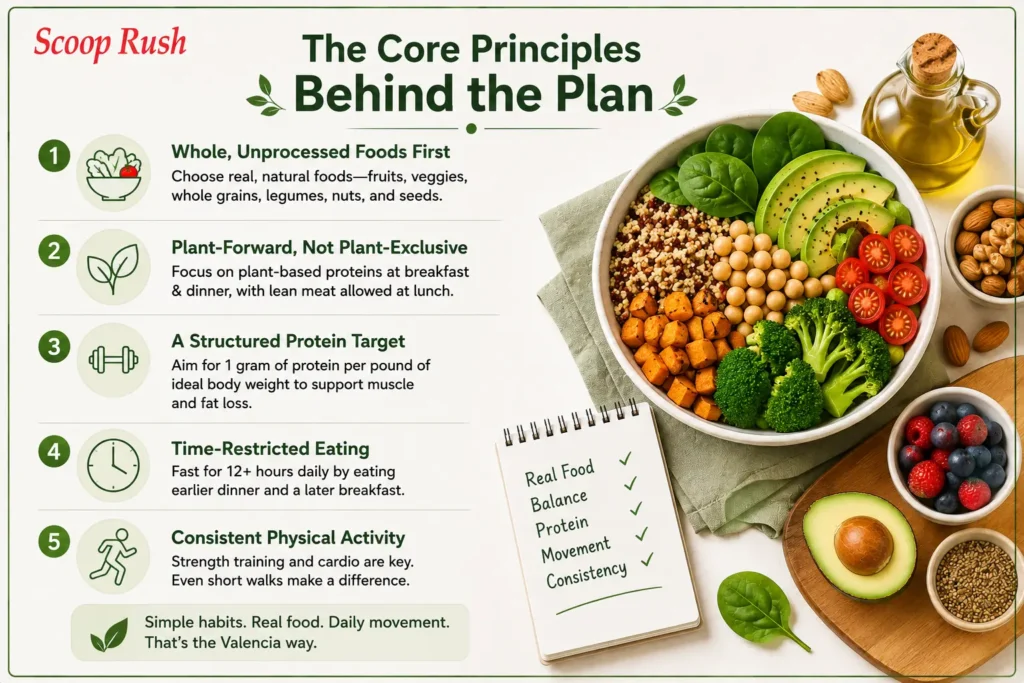
The plan’s central rule is simple: prioritize food in its most natural form. That means loading up on fresh produce, whole grains, legumes, nuts, and seeds, while cutting back on packaged snacks, refined sugar, and heavily processed ingredients. This isn’t a new idea in nutrition science, but Dr. Valencia’s framing”eat real food, mostly plants” has made it easy to digest for a generation raised on ultra-processed convenience meals.
2. Plant-Forward, Not Plant-Exclusive
Unlike vegan or vegetarian diets, the Valencia Diet doesn’t ban meat outright. It simply asks followers to lean toward non-meat proteins for two of their three main meals, typically breakfast and dinner, while allowing more flexibility including lean meat like grilled chicken at lunch. The idea is to reduce overall red and processed meat consumption without requiring anyone to give it up entirely.
3. A Structured Protein Target
The “1 gram of protein per pound of ideal body weight” guideline is one of the most talked-about elements of the diet. It’s a formula more commonly associated with bodybuilding and strength-training circles than with general wellness content, and its inclusion here is part of what sets the Valencia Diet apart from more traditional Mediterranean-style eating plans. The goal is to preserve lean muscle mass, particularly during a period of calorie restriction, while still supporting fat loss a concern that’s become especially relevant as more people ask about GLP-1 medications and muscle loss during rapid weight-loss periods.
4. Time-Restricted Eating
A daily fasting period of 12 hours or more is built into the plan. For most people, this simply means finishing dinner earlier and pushing breakfast slightly later a far gentler version of intermittent fasting than the 16:8 or alternate-day protocols that have circulated in fitness communities for years. Since many followers still reach for coffee first thing in the morning before their fasting window ends, it’s worth understanding what drinking coffee on an empty stomach actually does to digestion and blood sugar.
5. Consistent Physical Activity
The Valencia Diet isn’t marketed as a standalone weight-loss hack. Strength training and cardiovascular exercise are treated as essential companions to the eating plan, reflecting a broader wellness philosophy rather than a narrow calorie-counting approach. For anyone who isn’t ready for a full workout routine, research on the benefits of a five-minute walk every hour shows that even small bursts of movement throughout the day can meaningfully support this part of the plan.
Breaking Down the Macronutrients
The Valencia Diet follows a fairly structured macronutrient split compared to many trending diets, which often skew heavily toward one macronutrient at the expense of others:
| Macronutrient | % of Daily Calories | Approximate Daily Amount | Primary Sources |
| Protein | 30-40% | 100-150g | Eggs, Greek yogurt, tofu, cottage cheese, legumes, lean chicken |
| Carbohydrates | 40-50% | 150-200g | Whole grains, legumes, vegetables, fruit |
| Fats | 20-30% | 40-60g | Avocado, nuts, seeds, olive oil |
This distribution keeps the plan from tipping into extremely low-carb or extremely high-fat territory. That’s a notable contrast to the benefits and risks of a low-carb diet, where carbohydrate intake is restricted far more aggressively, something nutrition experts often flag as a red flag in more extreme fad diets.
What a Day of Eating Looks Like
One of the reasons the Valencia Diet has spread so quickly is that it comes with an easy-to-follow meal template rather than a rigid, hour-by-hour meal plan. A typical day looks something like this:
Breakfast
- Three servings of fresh fruit, such as berries, an apple, or a banana
- One serving of non-meat protein, like Greek yogurt or eggs
- A small serving of healthy fat, such as a handful of nuts or seeds
Optional Snack
- One piece of fruit, like an orange or pear
- A small handful of almonds or walnuts
Lunch
- Three servings of vegetables, such as a mixed salad with leafy greens, tomatoes, and cucumber
- One serving of lean protein, such as grilled chicken or tofu
- One serving of whole grains, like quinoa or brown rice
- A drizzle of olive oil or a few slices of avocado for healthy fat
Dinner
- A mix of vegetables, legumes, or a fresh salad
- One serving of non-meat protein, such as lentils or chickpeas
- A small portion of fruit for dessert
- A modest amount of healthy fat, like nuts or olive oil
For people managing diabetes, a modified version of the plan swaps out some of the higher-sugar fruit servings for additional vegetables or low-glycemic fruit choices, and adjusts protein timing to help manage blood sugar swings throughout the day.
Does the Valencia Diet Actually Work? What Experts Say
Registered dietitians who have reviewed the plan generally agree that it aligns reasonably well with established dietary guidelines as long as followers are eating enough to meet their individual energy needs. Because the Valencia Diet closely mirrors the Mediterranean diet, much of the existing research on Mediterranean-style eating can reasonably be applied to it, particularly around heart health and inflammation.
Heart Health
The diet leans heavily on unsaturated fats from olive oil, nuts, and seeds, along with fiber-rich produce a combination associated with lower LDL (“bad”) cholesterol and higher HDL (“good”) cholesterol. Reducing red and processed meat intake in favor of plant-based proteins is also linked to lower cardiovascular strain and improved kidney function over time.
Weight Management
Because the diet doesn’t require followers to eliminate entire food groups, dietitians note it tends to be easier to sustain than more restrictive plans. The emphasis on fiber-rich fruits, vegetables, and legumes naturally promotes fullness, which can reduce overeating without requiring obsessive calorie tracking. The built-in fasting window may also help regulate appetite-related hormones for some people, though individual responses to intermittent fasting vary widely.
Inflammation and Gut Health
Leafy greens, berries, olive oil, and nuts are all rich in polyphenols and antioxidants associated with lower markers of inflammation. Meanwhile, the diet’s emphasis on fiber from legumes, vegetables, and whole grains supports a healthier gut microbiome, which plays a role not just in digestion but in immune function and even mood regulation.
Metabolic Health
The pairing of intermittent fasting with a lower-glycemic, whole-food eating pattern may help stabilize blood sugar and improve insulin sensitivity over time. This is one reason some nutrition professionals suggest the plan could be a reasonable option for people at risk of type 2 diabetes though, again, personalized medical guidance is essential before making that call.
What’s Missing From the Evidence
Despite these overlaps with well-studied eating patterns, it’s worth being clear: there is currently no large-scale, peer-reviewed research specifically on the Valencia Diet itself. Much of what’s promising about the plan is borrowed credibility from Mediterranean diet research rather than dedicated clinical trials. That doesn’t necessarily make it a bad approach, but it does mean the “health halo” around the Valencia Diet is, at least for now, more anecdotal and social-media-driven than scientifically proven.
How Does It Compare to the Mediterranean Diet?
The similarities between the two are hard to miss an emphasis on olive oil, fresh produce, legumes, and reduced meat consumption sits at the heart of both. But there are a few meaningful differences:
| Feature | Valencia Diet | Mediterranean Diet |
| Fasting window | Required, minimum 12 hours daily | Not part of the traditional plan |
| Protein target | Structured: ~1g per pound of ideal body weight | No specific formula |
| Calorie guidance | Explicit target (~1,500 cal/day for most) | Generally calorie-agnostic |
| Meat consumption | Non-meat protein emphasized at 2 of 3 meals | Meat and fish allowed more freely |
| Research base | Extrapolated from Mediterranean diet studies | Decades of dedicated clinical research |
In short, the Valencia Diet can be thought of as a modernized, fitness-influenced take on Mediterranean eating one designed to appeal to people who want measurable structure alongside a whole-foods philosophy.
Who Might Benefit From the Valencia Diet?
The plan tends to appeal most to people who:
- Want to reduce their intake of processed foods without giving up flexibility
- Are interested in shifting toward more plant-based proteins without fully eliminating meat
- Want a structured but not overly restrictive approach to weight management
- Are curious about intermittent fasting but want a gentler entry point than more extreme fasting protocols
- Are focused on heart health, inflammation, or general metabolic wellness
Who Should Be Cautious?
As with any eating plan, the Valencia Diet isn’t necessarily right for everyone. People who are pregnant or breastfeeding, managing diabetes, recovering from disordered eating, or living with other underlying health conditions should talk to a doctor or registered dietitian before adopting the fasting component or the calorie target, both of which may need significant adjustment based on individual medical needs.
It’s also worth noting that a diet built around plant-based proteins can make it harder to get enough vitamin B12, iron, and magnesium nutrients that are more concentrated in animal products. Anyone following the plan long-term may want to keep an eye on these nutrients, either through food choices or with guidance from a healthcare provider, and it’s worth understanding the risks of taking too many supplements before reaching for a multivitamin to fill the gap.
Common Criticisms of the Plan
Despite its popularity, the Valencia Diet isn’t without pushback. A few recurring concerns show up across nutrition commentary:
Cost and accessibility. The diet leans heavily on fresh produce, extra virgin olive oil, nuts, and specialty items like cottage cheese or Greek yogurt — all of which can be expensive or hard to access depending on where someone lives. Critics note that a diet built around fresh, seasonal ingredients isn’t equally realistic for every income level or region.
Lack of dedicated research. As mentioned above, most of the health claims tied to the Valencia Diet are extrapolated from Mediterranean diet studies rather than research on the plan itself. That’s a meaningful gap for anyone looking for hard clinical evidence before committing to a new way of eating.
Loose structure can create confusion. Because the diet doesn’t come with strict, food-by-food rules, some people find it harder to know exactly how to implement it day to day. Without professional guidance, followers may end up either under-eating or unintentionally skewing the recommended macronutrient balance.
Fasting isn’t universal.Although a 12-hour fasting window is relatively mild compared with other intermittent fasting approaches, it may not suit everyone, especially people with a history of disordered eating or certain metabolic conditions.
Tips If You’re Thinking About Trying It
If the Valencia Diet sounds appealing, nutrition experts generally recommend easing into it rather than overhauling your entire diet overnight:
- Start with food quality, not restriction. Focus first on swapping processed snacks for whole foods before worrying about exact calorie or protein numbers.
- Track your intake for a week or two. Using a food-logging app can help you understand whether you’re actually hitting the diet’s protein and calorie targets, since many people underestimate how much they eat.
- Build your plate visually. A simple way to approximate the diet’s balance is to fill half your plate with vegetables, a quarter with protein, and a quarter with whole grains, adding healthy fats in moderation.
- Ease into the fasting window. If you’re new to intermittent fasting, start by simply avoiding late-night snacking rather than jumping straight to a strict 12-hour window.
- Pair it with movement. Since exercise is a built-in part of the plan, adding even light strength training two to three times a week can help preserve muscle mass while eating in a calorie deficit.
- Check in with a professional. A registered dietitian can help tailor the calorie and protein targets to your specific body size, activity level, and health history, rather than applying the general guidelines as a one-size-fits-all formula.
If you’re just starting to build a healthier routine overall, it can also help to look at broader healthy habits for your 20s and 30s rather than treating the Valencia Diet as an isolated fix.
Why the Valencia Diet Went Viral
It Grew Through Short-Form Video, Not Research Papers
Part of what makes the Valencia Diet’s rise so interesting isn’t just the plan itself it’s how it spread. Unlike many diet trends that originate in a book or a clinical study, this one grew almost entirely through short-form video, with Dr. Valencia breaking down his approach in quick, digestible clips rather than long-form articles or academic papers. That format lends itself to simple visuals, like plate breakdowns and macro percentages, which are easy to screenshot and share.
It Arrived at the Right Cultural Moment
It also arrived at a moment when a lot of people were burned out on extreme diet culture. After years of carnivore, keto, and even short-term plans like the military diet dominating wellness feeds, a plan that says “eat more fruits and vegetables, watch your protein, and don’t eat past a certain hour” feels almost refreshingly moderate by comparison. That relative flexibility is likely a big part of why it has resonated with such a broad audience, from casual gym-goers to people simply looking to eat a little cleaner.
Virality Isn’t the Same as Validity
Of course, virality doesn’t equal validity. A diet can spread quickly because it works well, because people find it easy to understand, or simply because a creator with a large platform promotes it. Often, all three factors play a role. That’s why you should separate a diet’s marketing momentum from its actual nutritional value. The research-backed benefits discussed above focus on the nutritional substance rather than the hype surrounding the trend.
The Bottom Line
The Valencia Diet has resonated with so many people because it offers something a lot of fad diets don’t: flexibility. It doesn’t ban entire food groups, it doesn’t demand extreme fasting windows, and it borrows heavily from an eating pattern the Mediterranean diet that already has decades of research behind it. For people looking to eat more whole foods, cut back on processed meals, and build a sustainable relationship with food, it’s a reasonable framework to explore.
That said, it’s not a miracle solution, and much of its popularity is currently outpacing the science built specifically around it. Anyone considering the plan, especially those with existing health conditions, should loop in a healthcare provider before diving in — and remember that the best diet is ultimately the one you can stick with long-term, not just the one trending on your For You page.
FAQs
What is the Valencia Diet?
It’s a whole-foods eating plan created by Dr. Daniel Valencia that combines Mediterranean-style eating with intermittent fasting, a bodyweight-based protein target, and an emphasis on plant-based protein sources.
Is the Valencia Diet the same as the Mediterranean diet?
Not exactly. It shares many of the same foods and principles but adds a structured calorie target, a specific protein formula, and a built-in daily fasting window that the traditional Mediterranean diet doesn’t require.
Can the Valencia Diet help with weight loss?
It can support weight management through portion awareness, high-fiber foods that promote fullness, and intermittent fasting though results depend heavily on individual adherence, activity level, and starting point.
Is the Valencia Diet safe for everyone?
Most healthy adults can try a modified version of the plan, but people who are pregnant, breastfeeding, managing diabetes, or recovering from disordered eating should consult a healthcare provider before starting, particularly because of the fasting and calorie components.
Do I have to give up meat on the Valencia Diet?
No. The plan encourages more plant-based and non-meat proteins, especially at breakfast and dinner, but it doesn’t require followers to eliminate meat entirely.

