
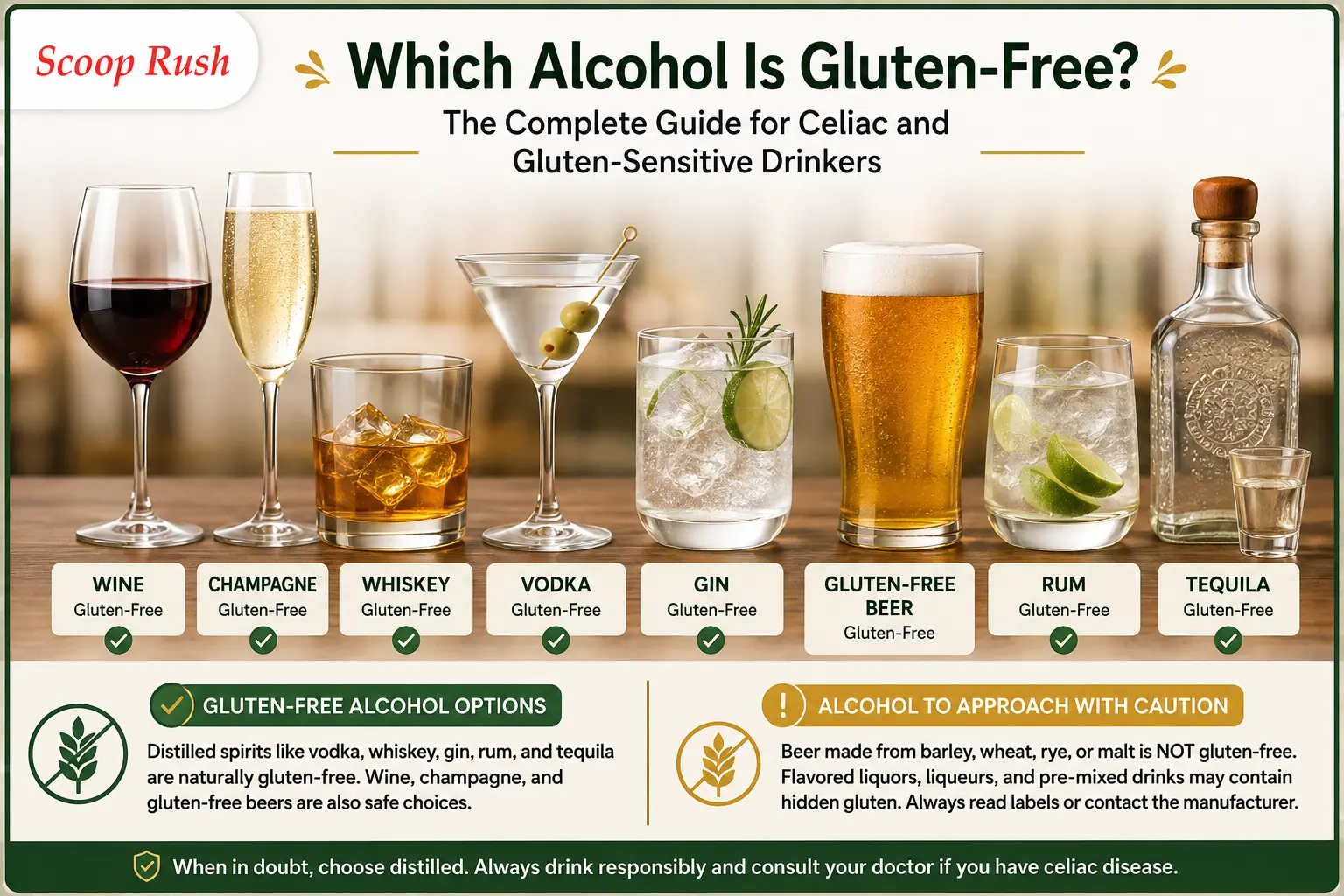
Going out for drinks shouldn’t feel like a minefield. But if you live with celiac disease, non-celiac gluten sensitivity, or you’re simply following a gluten-free lifestyle, ordering at a bar can bring on a wave of questions. Is that vodka safe? What about the beer on tap? Will the cocktail syrup wreck your night?
The good news is that most alcoholic drinks are naturally gluten-free or become gluten-free through the way they’re made. The confusion usually comes down to a handful of myths, some tricky labeling rules, and a few categories namely beer that genuinely do need extra caution.
This guide breaks down exactly which alcohol is gluten-free, which drinks to steer clear of, and why distillation changes everything.
Quick Answer: Gluten-Free Alcohol at a Glance
Here’s the short version before we dig into the details.
| Category | Gluten-Free Status | Notes |
| Vodka, gin, whiskey, bourbon, rum, tequila, brandy, scotch, mezcal, absinthe | Generally safe | Distillation removes gluten proteins, even when the base grain contains gluten |
| Wine (still and sparkling) | Generally safe | Made from grapes; rare “may contain traces” labels do exist |
| Champagne and Prosecco | Generally safe | Naturally gluten-free sparkling wines |
| Port, sherry, vermouth | Generally safe | Grape-based fortified wines |
| Cider | Generally safe | Made from apples, though some brands add a touch of malt |
| Hard seltzers | Usually safe | Check the label, as recipes vary by brand |
| Beer, ale, lager, stout | Not safe unless labeled gluten-free | Made from barley or wheat; look for “gluten-free” or “gluten-removed” certification |
| Some liqueurs and flavored malt beverages | Check the label | Added flavorings or malt bases can introduce gluten |
| Cocktails with syrups, beer, or Worcestershire sauce | Check the ingredients | Mixers are often the hidden risk, not the spirit itself |
Why Distilled Spirits Are Considered Gluten-Free
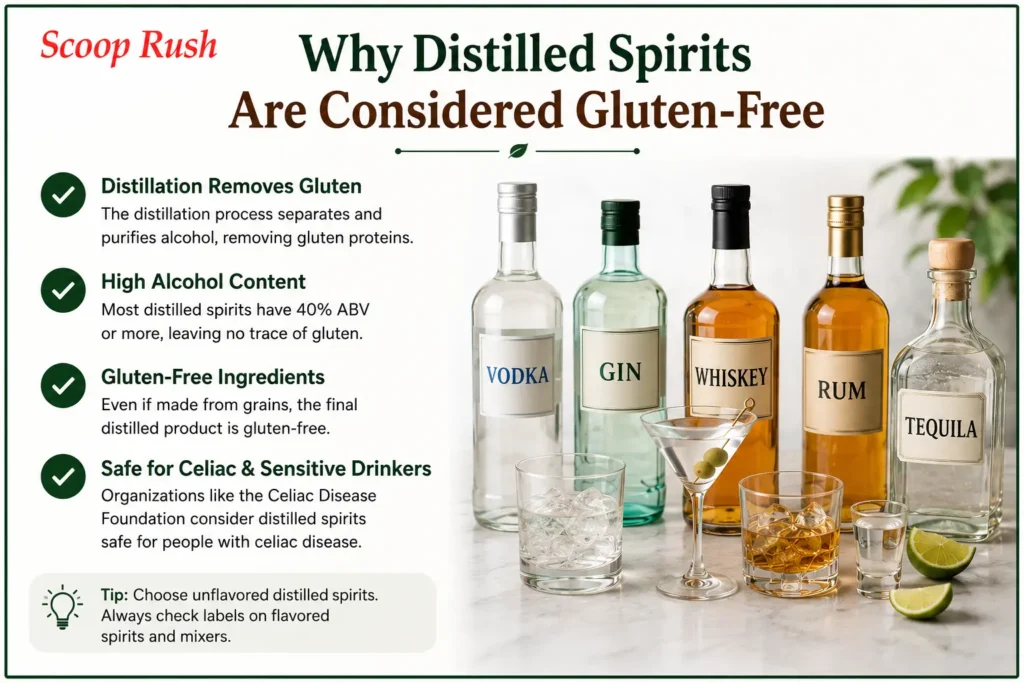
This is the part that trips people up the most: many spirits start out as gluten-containing grains. Whiskey and bourbon typically begin with wheat, rye, or barley. Some vodkas and gins do too. So how can they be labeled gluten-free?
The Science Behind Distillation
The answer lies in the distillation process itself. In the United States, the Alcohol and Tobacco Tax and Trade Bureau (TTB) the agency that regulates most alcoholic beverages has ruled that distillation removes the proteins responsible for triggering a reaction in people with celiac disease. Gluten proteins are large, complex molecules, and they’re too heavy to evaporate along with the alcohol during distillation. Instead, they stay behind in the mash, while the purified alcohol vapor is collected separately and condensed into the finished spirit.
This is fundamentally different from what happens during fermentation, which is why beer a fermented, not distilled, beverage plays by a different set of rules entirely.
The Official TTB Ruling
According to the TTB, because distillation strips out the protein when proper manufacturing practices are followed, and because the absence of protein can be confirmed with scientifically validated testing methods, distillers are permitted to label their products “gluten-free” even when the starting grain contained gluten as long as they take precautions to prevent gluten from being reintroduced after distillation.
That last part matters. A distillery still has to prove, if asked, that no protein made it into the final bottle and that there was no cross-contact from storage containers, shared equipment, or added ingredients after the spirit left the still.
What This Means for You
In short: it’s not the grain that determines whether a spirit is gluten-free it’s what happens to that grain during and after distillation. A wheat-based vodka and a potato-based vodka can end up equally safe, provided both are properly distilled and handled afterward. This is also why flavored or spiced spirits deserve a second look: any ingredient added back in after distillation bypasses the process that made the base spirit safe in the first place.
Spirits That Are Generally Gluten-Free
The following distilled spirits are considered safe for a gluten-free diet, even when derived from gluten-containing grains:
- Vodka — including wheat-based vodkas, thanks to distillation
- Gin — even when made from wheat or barley
- Whiskey and Scotch — malt whisky included
- Bourbon — a corn-based whiskey, naturally low-risk
- Rum — made from sugarcane or molasses
- Tequila and mezcal — made from the blue agave plant
- Brandy and cognac — grape-based spirits
- Absinthe — herb-based spirit
- Soju — Korean distilled spirit
The caveat with all of these is what happens after distillation. Flavored spirits, liqueurs, and pre-mixed drinks sometimes have ingredients added back in post-distillation think flavoring syrups, coloring, or thickeners and those additions can occasionally introduce gluten. Always check the label on anything flavored, spiced, or “ready to drink.”
A Note on Popular Vodka Brands
Not every vodka is treated equally by gluten-free drinkers, and brand-specific questions come up constantly.
- Smirnoff is certified gluten-free and widely considered safe by celiac organizations.
- Absolut is made from winter wheat, and while distillation should remove the gluten protein, some people with high sensitivity report symptoms after drinking it Absolut has not sought official gluten-free certification.
- Brands made from potatoes, corn, or grapes such as certain potato vodkas sidestep the debate entirely, since there’s no gluten-containing grain in the process to begin with.
If you’re highly sensitive, sticking to vodkas made from potatoes, corn, or grapes, or those carrying an official gluten-free certification, is the more cautious route.
What About Wine, Champagne, and Fortified Wines?
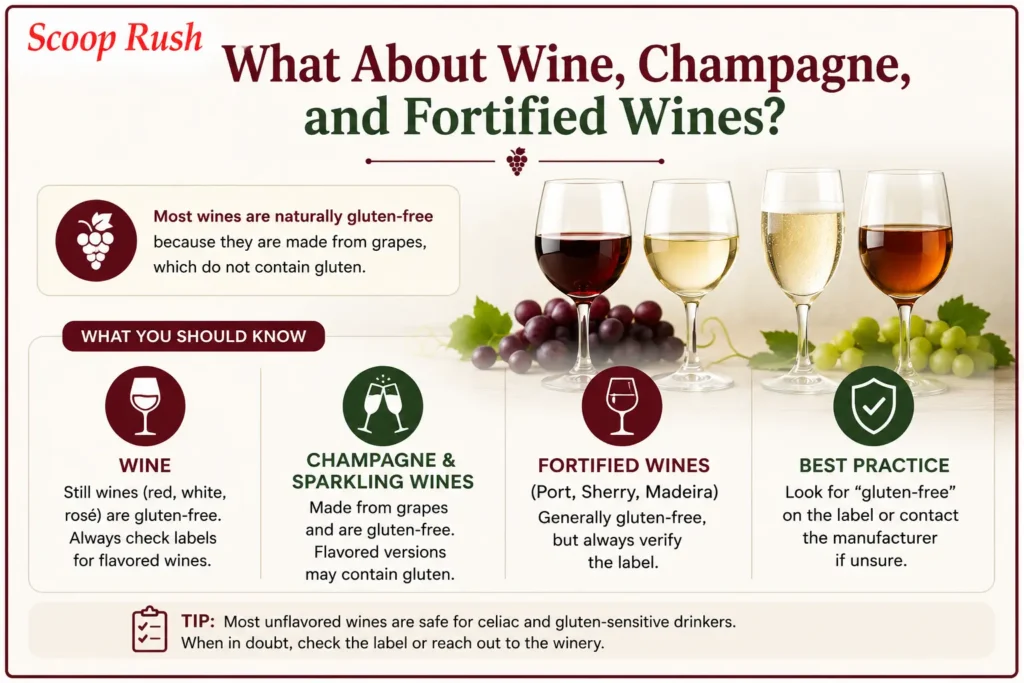
Wine is about as gluten-friendly as alcohol gets. It’s made from grapes, which contain no gluten at all, and the fermentation process doesn’t introduce any.
- Still wines — reds, whites, and rosés are naturally gluten-free.
- Sparkling wines, including Champagne and Prosecco, are also gluten-free.
- Port, sherry, and vermouth are fortified wines made from a grape base and are considered safe.
Wine also tends to appeal to drinkers following a low-carb diet, since it’s naturally lower in carbohydrates than most beers and mixed drinks.
There is one small wrinkle worth knowing about: during the “fining” process, some winemakers use gluten-based products to clarify the wine, and certain wines are aged in oak barrels sealed with a wheat-based paste. These practices can theoretically leave trace amounts of gluten behind. Reports of this happening are rare, but if you’re highly sensitive, it doesn’t hurt to check the label or contact the producer for reassurance.
Cider and Seltzers
Cider is made by fermenting apples, so it’s naturally gluten-free in most cases. Some cider makers do add a small amount of malt for flavor, so it’s worth a quick label check if you’re extremely sensitive, but the vast majority of ciders on the market are safe.
Hard seltzers have exploded in popularity, and most are brewed from a fermented cane sugar or malt base and then processed to remove gluten, similar to gluten-removed beer. Many are labeled gluten-free, but formulas differ by brand similar to how ingredients vary across diet soda brands so a quick label scan is the safest bet.
Beer: The One Category That Needs Real Caution
If there’s a single rule to remember, it’s this: regular beer is not gluten-free.
Traditional beer, ale, lager, and stout are made by fermenting barley and often wheat both gluten-containing grains. Fermentation, unlike distillation, does not remove gluten proteins. That means a standard pint is off-limits for anyone with celiac disease or a serious gluten sensitivity.
That said, the beer aisle isn’t a total dead zone. There are two very different types of gluten-friendly beer, and understanding the difference matters:
- Gluten-free beer — brewed from grains that never contained gluten to begin with, such as sorghum, rice, millet, or corn. These beers are regulated by the FDA rather than the TTB and can be labeled “gluten-free” if they test below 20 parts per million (ppm) of gluten.
- Gluten-removed (or gluten-reduced) beer — brewed from traditional grains like barley, then treated with enzymes that break down the gluten proteins into smaller fragments. These often test below 20 ppm too, but because they’re still made from gluten-containing grains, some health organizations remain cautious about recommending them to people with celiac disease, since testing methods for this process haven’t been universally validated.
If you see a beer labeled “gluten-free,” it’s the safer bet. If it says “gluten-removed” or “crafted to remove gluten,” treat it with a bit more caution, especially if you have celiac disease rather than a milder sensitivity.
Common Beers That Are NOT Gluten-Free
- Corona
- Budweiser and Bud Light
- Heineken
- Guinness
- Stella Artois
- Peroni
- Most standard lagers, ales, and stouts
Is Baileys Gluten-Free?
Baileys Irish Cream contains Irish whiskey, which is distilled from gluten-containing cereals. Distilled spirits are typically considered gluten-free under TTB and FDA guidance, but Baileys also contains cream and other added ingredients, so those with high sensitivity may want to double-check current formulations or reach out to the manufacturer directly.
Liqueurs, Ouzo, and Sake: Where It Gets Tricky
A few specialty drinks deserve their own mention because they don’t fit neatly into the “spirits are always fine” rule:
- Ouzo, the anise-flavored Greek spirit, sometimes has grains added back in after distillation, which can reintroduce gluten.
- Sake, brewed from rice, is generally low-risk but can occasionally raise questions depending on production methods, so it’s worth checking with the brand if you’re sensitive.
- Flavored liqueurs can contain gluten-based thickeners, flavorings, or coloring agents added after distillation.
When in doubt with any specialty liqueur, a quick look at the label or a message to the manufacturer is the safest move.
Are Cocktails Gluten-Free?
This is where things get genuinely complicated, because a cocktail is only as gluten-free as its weakest ingredient. A gin and tonic or a vodka soda is typically a safe bet, since it’s just spirit, mixer, and citrus.
Cocktails That Commonly Carry Hidden Gluten
- Bloody Marys often contain Worcestershire sauce, which is frequently made with barley malt vinegar.
- Beer cocktails, like a shandy or a Michelada, obviously carry the same risk as regular beer.
- Flavored syrups used in craft cocktails can sometimes contain gluten-based thickeners.
- Pre-mixed canned cocktails can be a wildcard, since ingredient lists aren’t always required by law (more on that below).
What to Do at the Bar
The safest approach at a bar is the same one you’d use when ordering food: ask what’s actually in the drink, not just what spirit is listed on the menu. If a cocktail menu describes a drink only by its base spirit and a vague flavor note, it’s worth asking the bartender directly whether any syrups, sauces, or bitters are involved, since these are the most common source of hidden gluten. When in doubt, a simple spirit-and-mixer combination like tequila and soda with lime, or whiskey on the rocks is almost always the safest order.
Gluten Cross-Contact: The Risk Beyond the Ingredients
Even when a drink’s core ingredients are gluten-free, cross-contact is a separate risk worth understanding. This happens when a naturally gluten-free product comes into contact with gluten somewhere along the supply chain, rather than through the ingredients themselves.
Where Cross-Contact Can Happen
- Shared bottling lines — a facility that also bottles beer or malt-based drinks may use the same equipment for gluten-free spirits.
- Storage barrels — spirits and wines aged in barrels previously used for gluten-containing products can pick up trace residue.
- Bar equipment — this one is often overlooked. A shared cocktail shaker, ice scoop, or garnish tray used for both beer and spirits at a bar can introduce trace gluten, even if the drink itself is safe on paper.
Why This Matters More for Some People Than Others
For people with mild gluten sensitivity, trace cross-contact is rarely an issue. But for those with celiac disease, even small amounts of gluten can trigger an immune response, so it’s worth being mindful of preparation, not just ingredients, especially at bars and restaurants rather than with sealed, factory-bottled products.
The Weird Labeling Loophole You Should Know About
Here’s a quirk of alcohol labeling that catches a lot of people off guard: in many regions, alcoholic drinks above a certain alcohol-by-volume threshold aren’t legally required to list their full ingredients on the label, the way food products are.
Allergens Still Have to Be Disclosed
However, alcoholic drinks are still required to disclose major allergens, including gluten-containing grains, even when the full ingredient list is left off the label. This means a canned cocktail might not tell you every ingredient inside, but it must flag wheat, barley, or rye if any of those are present.
The Name-as-Disclosure Exception
There’s an extra wrinkle, too a product that has the allergen in its own name, like “Wheat Beer,” is sometimes exempt from separately listing wheat as an allergen, since it’s already obvious from the name itself.
When to Contact the Manufacturer
The upshot: if you’re ever uncertain whether a canned cocktail, flavored spirit, or specialty drink is gluten-free, your best move is to contact the manufacturer directly rather than relying solely on the can. Most beverage companies keep detailed allergen and gluten-status information on hand and are used to fielding this exact question.
Brand Checklist: Popular Alcohol Brands and Gluten Status
| Brand | Gluten-Free? | Why |
| Smirnoff Vodka | Yes | Certified gluten-free |
| Absolut Vodka | Caution | Made from wheat; not officially certified |
| Tito’s Handmade Vodka | Yes | Made from corn |
| Ciroc | Yes | Made from grapes |
| Grey Goose | Yes | Made from wheat but distilled; check personal tolerance |
| Corona | No | Contains barley malt |
| Bud Light | No | Standard barley-based beer |
| Guinness | No | Barley-based stout |
| Baileys Irish Cream | Caution | Contains distilled whiskey plus added ingredients |
| Tequila (100% agave) | Yes | Distilled from blue agave |
| Champagne (most brands) | Yes | Grape-based sparkling wine |
Tips for Ordering Gluten-Free Alcohol With Confidence
- Stick to wine, champagne, cider, or straight spirits (vodka, gin, rum, tequila, whiskey) mixed with soda water, tonic, or juice.
- Avoid anything poured straight from a beer tap unless it’s specifically labeled gluten-free.
- Ask your bartender about syrups, mixers, and garnishes before ordering a cocktail.
- Watch out for Worcestershire sauce in Bloody Marys and similar savory cocktails.
- When trying a new bottled or canned product, check for a “gluten-free” certification rather than assuming based on the base spirit alone.
- If a product doesn’t list ingredients, don’t hesitate to contact the manufacturer most have gluten information available on request.
- Look specifically for beers made from sorghum, rice, millet, or corn if you want a truly gluten-free beer experience.
- Try to avoid drinking on an empty stomach, which can make it harder to gauge how your body is reacting to a drink.
- If you’re out for a while, pairing drinks with a bit of movement even a 5-minute walk every hour can help you stay comfortable and aware of how you’re feeling.
FAQs
Is all alcohol gluten-free?
No. While most spirits, wine, cider, and champagne are gluten-free, regular beer, ale, lager, and stout are not, since they’re fermented from barley or wheat rather than distilled.
Can people with celiac disease drink vodka?
Yes, in most cases. Even wheat-based vodkas are considered gluten-free after distillation, since the process removes the gluten protein. Those who are highly sensitive may prefer vodkas made from potatoes, corn, or grapes to avoid any doubt.
Is Guinness gluten-free?
No. Guinness is a barley-based stout and is not suitable for a gluten-free diet unless a specific gluten-free version is released.
What is the difference between “gluten-free” and “gluten-removed” beer?
Gluten-free beer is brewed from grains that never contained gluten, such as sorghum or rice. Gluten-removed beer starts with barley or wheat and is then treated with enzymes to break down the gluten. Both may test below 20 ppm, but gluten-removed beer is treated with more caution by some celiac organizations since testing methods for it aren’t universally validated.
Are flavored vodkas and liqueurs gluten-free?
Not always. The base spirit may be gluten-free, but flavorings, syrups, or thickeners added after distillation can introduce gluten. Always check the label or ask the manufacturer for flavored or specialty products.
Is wine ever unsafe for a gluten-free diet?
Wine is naturally gluten-free, since it’s made from grapes. In rare cases, gluten can be introduced during the fining process or through barrels sealed with wheat paste, so highly sensitive drinkers may want to double-check with the producer, though this is uncommon.
Do I need to worry about cross-contamination at bars?
It’s worth being mindful of it, especially if you have celiac disease. Shared shakers, ice scoops, and garnish trays used for both beer and spirits can introduce trace gluten, even if the drink itself is made with gluten-free ingredients.
What’s the safest drink to order if I’m unsure?
A straightforward spirit and mixer like tequila with soda water and lime, or whiskey on the rocks is typically the lowest-risk option, since it avoids syrups, sauces, and beer entirely.
Does alcohol affect people taking GLP-1 medications?
It can. Alcohol and GLP-1 medications can interact in ways that affect appetite, digestion, and blood sugar, so it’s worth talking to your doctor about how alcohol fits into your routine if you’re on one of these medications.
Most alcohol is naturally or effectively gluten-free wine, cider, champagne, and virtually all distilled spirits fall into the safe category, even when they start out as wheat, rye, or barley. Beer is the clear exception, along with a handful of specialty liqueurs and cocktail mixers that can sneak gluten in after the fact.
The safest healthy habit to build, whether you’re at a bar, a liquor store, or hosting a party, is the same one you’d use with food: know your safe categories, double-check labels on anything flavored or blended, and don’t be afraid to ask questions. With a bit of label-reading, there’s still a full bar’s worth of options open to you.

