
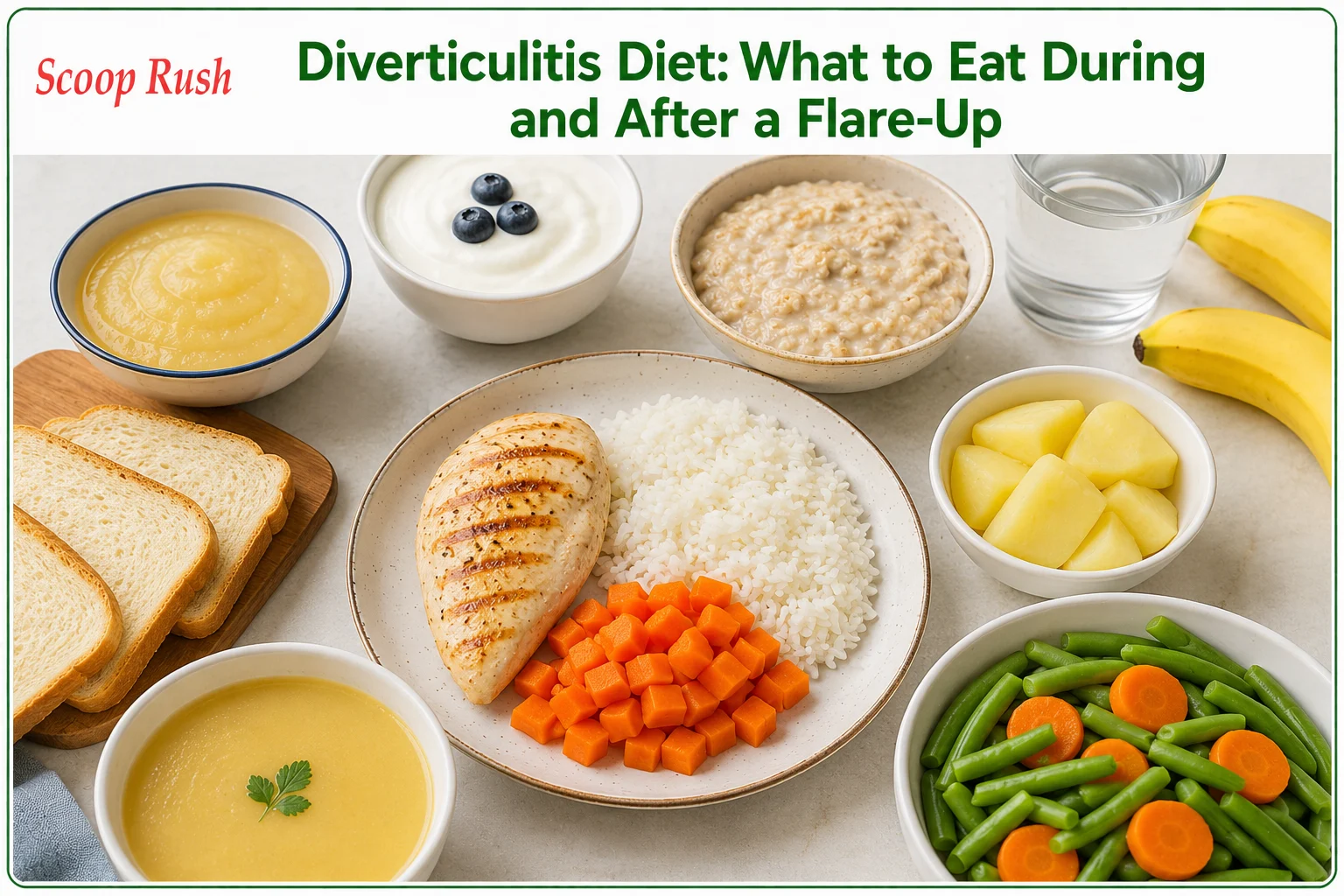
If you’ve ever doubled over with sudden pain in your lower left abdomen, you know how disruptive a diverticulitis flare-up can be. One day you’re eating normally, and the next you’re wondering whether your favorite foods are somehow to blame. The truth is, what you eat plays a real role in how your gut recovers and in whether you end up back in this position again.
Why Diet Matters So Much With Diverticulitis
The diverticulitis diet isn’t one fixed meal plan. It’s a way of eating that shifts depending on where you are in the condition: whether you’re in the middle of a flare, easing back into regular meals, or trying to prevent the next episode altogether. Understanding how and when to adjust your diet can make a real difference in your comfort, your recovery time, and your long-term digestive health.
What Is Diverticulitis, Exactly?
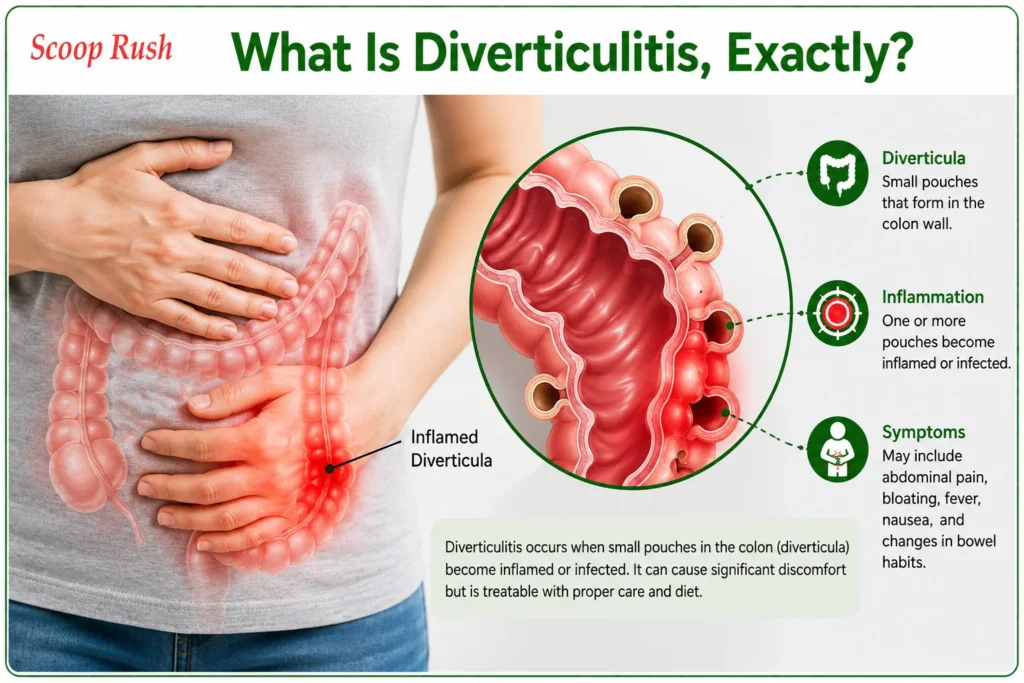
To understand the diet, it helps to understand the condition first.
Many adults develop small pouches, called diverticula, that bulge outward through weak spots in the wall of the colon. This is known as diverticulosis, and it’s extremely common, particularly after age 40. Most people who have these pouches never know it, because diverticulosis usually causes no symptoms at all.
Problems start when one or more of these pouches becomes inflamed or infected — often due to a small tear or a buildup of bacteria. That’s when diverticulosis becomes diverticulitis, and it can bring on a cluster of uncomfortable symptoms, including:
- Pain or tenderness in the lower abdomen, typically on the left side
- Bloating
- Fever
- Nausea
- Constipation or diarrhea
When these symptoms appear, it’s referred to as a flare-up, and it’s a signal that your colon needs a break. Diet becomes one of the main tools for giving it that rest.
Diverticulitis isn’t rare, and it isn’t just a condition of older adults. Gastroenterologists have noted a rising number of cases among younger patients, particularly those in their 20s and 30s, which is a reminder that building healthy habits in your 20s and 30s matters well before retirement age. Along with diet, other everyday habits physical inactivity, carrying excess weight, smoking, and heavy alcohol use are all linked to a higher risk of developing the condition.
The Diverticulitis Diet: Three Stages
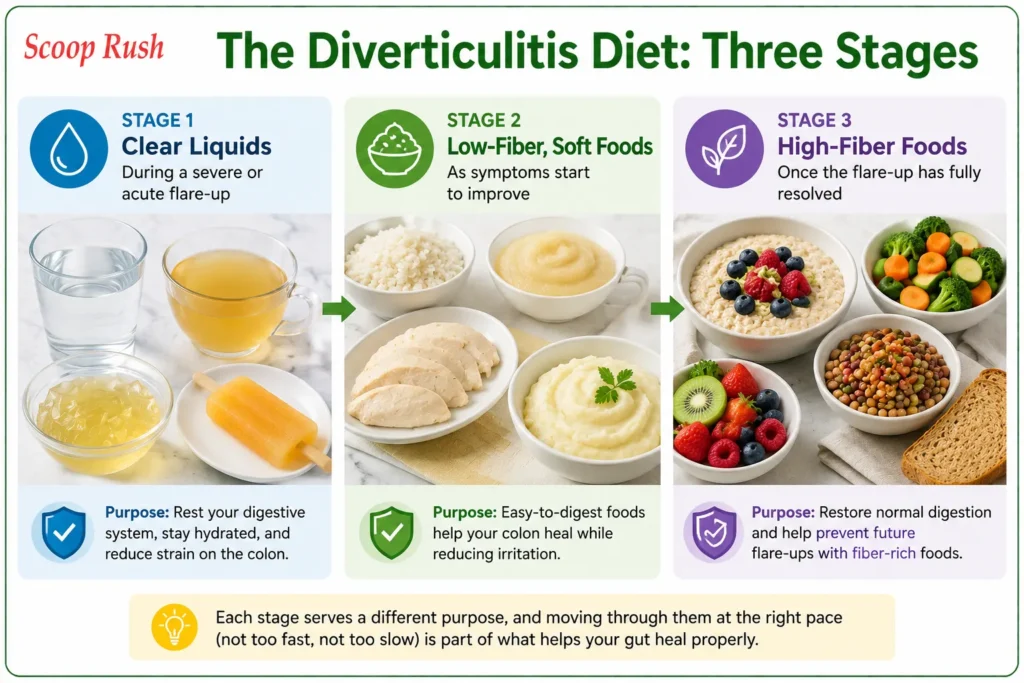
Rather than a single set of rules, think of the diverticulitis diet as three stages that you move through depending on your symptoms:
- Clear liquids — during a severe or acute flare-up
- Low-fiber, soft foods — as symptoms start to improve
- High-fiber foods — once the flare-up has fully resolved, to help prevent the next one
Each stage serves a different purpose, and moving through them at the right pace (not too fast, not too slow) is part of what helps your gut heal properly.
Stage One: The Clear Liquid Diet
If your flare-up is severe meaning persistent pain, fever, or an inability to keep food down your healthcare provider may recommend starting with a clear liquid diet, or you may even need IV fluids and antibiotics if hospital care is required. The idea is simple: give your digestive tract almost nothing to process so it can rest and begin healing.
Clear liquids and clear foods that are typically allowed include:
- Water
- Chicken, beef, or vegetable broth
- Fruit juices without pulp, such as apple, cranberry, or white grape juice
- Sports drinks or electrolyte drinks
- Plain tea or coffee, without milk or cream
- Soda
- Plain or flavored gelatin
- Ice pops made without fruit pieces or pulp
- Ice chips
- Hard candy
This stage is intentionally limited. It doesn’t provide enough fiber, protein, or other nutrients to sustain you for long, so it’s meant to be short-term typically just a few days. Staying on a clear liquid diet longer than your provider recommends can actually lead to weakness and nutritional gaps, so it’s important to transition to the next stage as soon as you’re able.
Most people with mild diverticulitis start to feel some relief within two to three days of beginning a clear liquid or low-fiber diet. If you don’t notice improvement in that window or if your symptoms get worse it’s time to call your healthcare provider. You should also reach out right away if you develop a fever, your abdominal pain intensifies, or you’re unable to keep liquids down. These can be signs that you need additional treatment.
Stage Two: Low-Fiber, Soft Foods
Once your symptoms start easing, the next step is a low-fiber diet made up of soft, easily digestible foods. The goal here is to keep things gentle on your gut while slowly reintroducing more substance to your meals an approach that overlaps closely with a low-residue diet. Foods may be chopped, mashed, or pureed to make digestion even easier.
Grains
- White bread
- Plain white crackers
- White rice
- Regular pasta
- Cream of Wheat or other refined cereals like puffed rice
Fruits
- Bananas
- Applesauce
- Canned or cooked fruit without skin or seeds
- Smoothies made without seeds or fruit pieces
- 100% fruit juice without pulp (diluting juice half-and-half with water can make it easier to tolerate)
Vegetables
- Cooked or canned vegetables without skins, seeds, or stems (carrots and zucchini are common choices)
- Vegetable juice without pulp
Avoid raw fruits and vegetables during this stage, along with cooked spinach, other leafy greens, peas, and corn these tend to be harder on a healing gut.
Proteins
- Skinless, well-cooked chicken or turkey
- Lean fish
- Well-cooked eggs
- Tofu
- Smooth nut butters, like peanut or almond butter
- Ready-to-drink protein shakes
Dairy (if you tolerate it well)
- Fat-free, low-fat, or reduced-fat milk
- Cottage cheese or other soft, mild cheeses
- Yogurt without added nuts, seeds, or granola
- Sherbet or low-fat ice cream
A practical approach during this stage is to eat 5 to 6 small meals a day rather than 2 or 3 large ones. Aim for roughly 1 to 2 ounces of protein per meal alongside a low-fiber food, and keep drinking plenty of water throughout the day.
Popular, easy-to-tolerate meal ideas during this phase include mashed potatoes, egg salad, tuna salad, or pureed sweet potatoes foods that are naturally lower in fiber but still satisfying and nutrient-dense.
Foods to Avoid During a Flare-Up
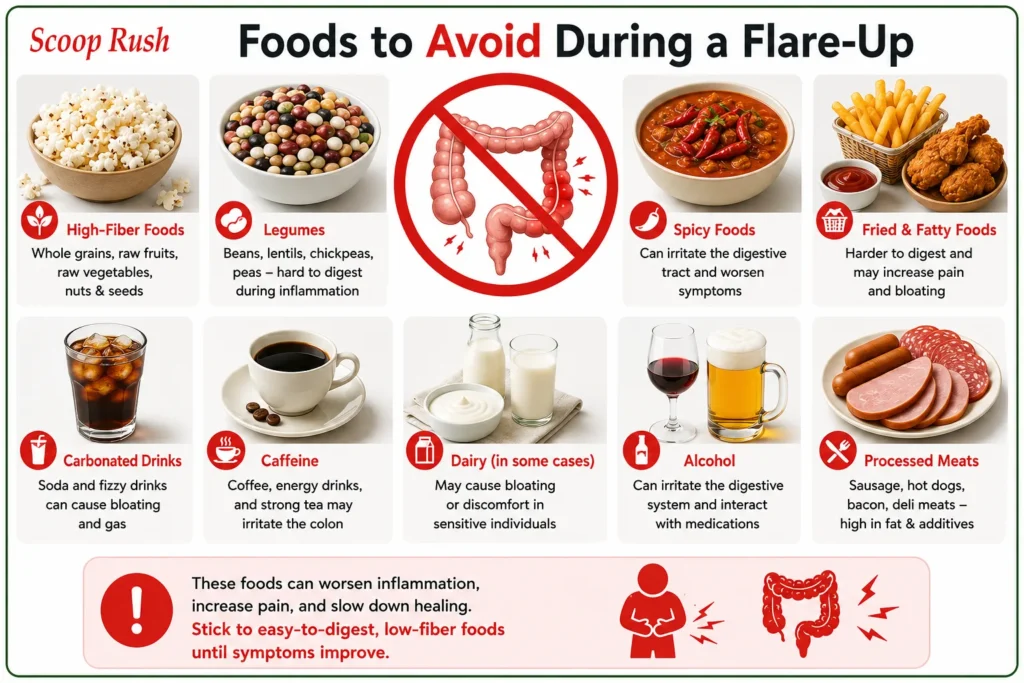
Certain foods are more likely to irritate your digestive system while you’re symptomatic, so it’s best to steer clear of them until you’ve fully recovered. Many of these overlap with what’s typically avoided on a bland diet:
- Fried or greasy foods
- Spicy dishes
- Red meat and processed meats
- Alcohol
- Pastries, candy, soda, and other foods high in refined sugar
Everyone’s gut responds a little differently, so it can help to keep a food diary during a flare-up. Tracking what you eat alongside how you feel can help you and your healthcare provider spot specific foods that seem to trigger your symptoms, even if they’re not on the general “avoid” list.
Stage Three: Returning to a High-Fiber Diet
Once a flare-up has fully resolved usually within a week or two the goal shifts from resting your gut to protecting it long-term. That means gradually working your way back up to a high-fiber diet.
Fiber helps keep stool soft and moving efficiently through the colon, which reduces pressure on the intestinal wall. Over time, this is thought to lower the likelihood that diverticula will form in the first place, or that existing ones will become inflamed again the same principle behind fiber’s role in a hemorrhoids diet.
Most adults should aim for somewhere between 25 and 35 grams of fiber per day. The key word is gradually ramping up fiber too quickly can cause its own bloating and discomfort, which defeats the purpose. Increase your intake slowly over several weeks, and make sure you’re drinking plenty of water as you do, since fiber needs adequate fluid to move through your system properly.
Good high-fiber foods to build back into your meals include:
- Whole grains, such as brown rice, oats, quinoa, and whole wheat bread
- Fresh and dried fruits, including apples, berries, pears, figs, and oranges
- Raw vegetables, like leafy greens, broccoli, and carrots
- Legumes, including beans, peas, and lentils
- High-fiber cereals
If you’re struggling to get enough fiber from food alone, a fiber supplement may be worth discussing with your healthcare provider just keep in mind that more isn’t always better when it comes to supplements. It’s also worth noting that no strong evidence currently supports probiotics as a way to shorten or prevent a flare-up, so they shouldn’t be relied on as a substitute for dietary fiber.
What About Nuts, Seeds, and Popcorn?
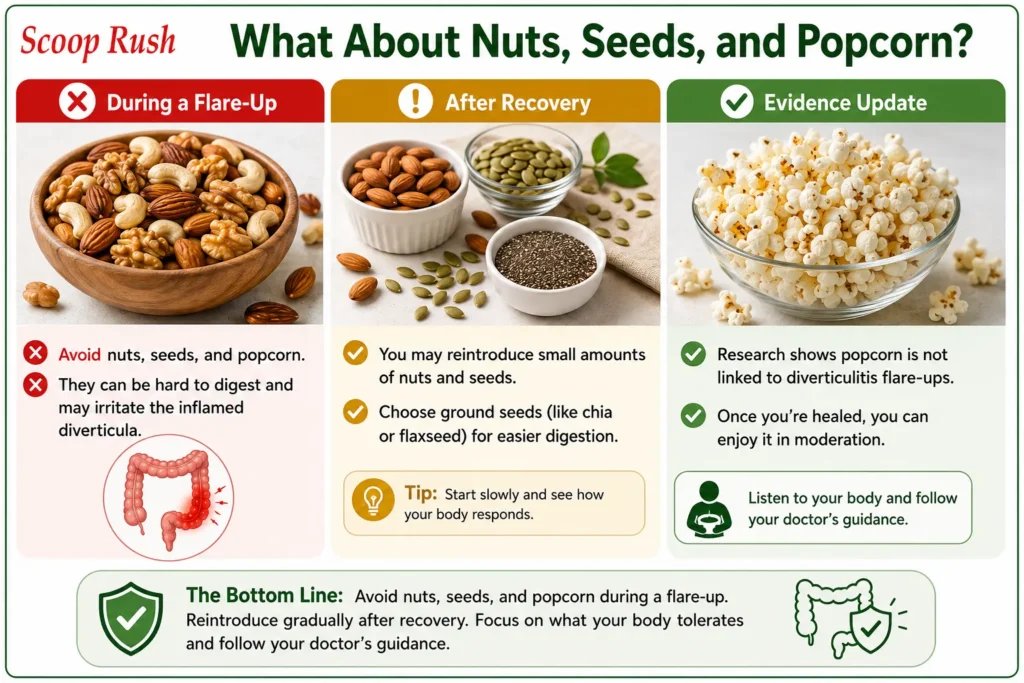
For years, people with diverticulosis or a history of diverticulitis were told to avoid nuts, seeds, corn, and popcorn. The concern was that these small, hard foods might get lodged in the diverticula and trigger inflammation.
That advice has changed. Current research doesn’t support the idea that these foods cause diverticulitis, and most gastroenterologists no longer recommend avoiding them even for people managing a flare-up, as long as the foods are chewed thoroughly. If you’re temporarily reducing fiber during a flare, smooth nut butters offer a way to get some of the flavor and nutrition of nuts without the texture that might be harder to tolerate in that moment.
Sample Day of Eating at Each Stage
It can help to see what a day of meals might actually look like at each stage of the diet.
During a clear liquid phase:
- Morning: Apple juice (no pulp), black tea
- Midday: Chicken broth, a lime gelatin cup
- Afternoon: Ice pop, ginger ale
- Evening: Vegetable broth, more gelatin if desired
During the low-fiber recovery phase:
- Morning: Scrambled eggs with white toast, a banana
- Midday: White rice with well-cooked, skinless chicken and mashed carrots
- Afternoon snack: Smooth peanut butter on a few plain crackers
- Evening: Baked, skinless fish with mashed potatoes and canned peaches
Once fully recovered, high-fiber maintenance:
- Morning: Oatmeal topped with berries and a spoonful of ground flaxseed
- Midday: A whole-grain wrap with grilled chicken, spinach, and avocado
- Afternoon snack: An apple with almond butter
- Evening: Lentil soup with a side salad and whole-grain bread
These are just examples your own recovery pace and food tolerances may look a little different, so it’s worth adjusting based on how your body responds.
Lifestyle Factors Beyond Diet
While food is central to managing diverticulitis, it’s not the only piece of the puzzle. A few other habits play a meaningful role in both recovery and prevention:
- Stay active. Regular movement, even something as simple as a five-minute walk every hour, is associated with better gut health. If you’ve been inactive, talk to your provider about how to ease back into exercise safely.
- Avoid smoking. Smoking is linked to a higher risk of diverticulitis and can interfere with healing.
- Limit alcohol. Heavy alcohol use is another modifiable risk factor worth addressing.
- Manage your weight. Obesity is associated with an increased risk of developing diverticulitis.
- Rest when you need to. During an active flare, giving your body time to recover alongside dietary changes supports healing.
- Use heat and over-the-counter relief as directed. A heating pad and appropriate use of nonsteroidal anti-inflammatory drugs can help with comfort, though you should check with your provider about which pain relievers are appropriate for you, since some can affect the digestive tract.
Can Diverticulitis Go Away on Its Own?
Mild cases of diverticulitis sometimes resolve without extensive medical treatment, but that doesn’t mean you should manage it entirely on your own. It’s still worth having a healthcare provider evaluate your symptoms. Depending on the severity, they may prescribe antibiotics to treat an underlying infection or medication to manage pain.
Alongside any treatment, providers often recommend a combination of dietary changes and simple at-home care: resting, staying hydrated, easing into light activity like walking or stretching, and applying heat to the abdomen for comfort. If your symptoms aren’t improving within a few days, or if they’re getting worse, don’t wait it out reach back out to your provider promptly.
When to Seek Medical Care
Diet can go a long way in supporting your recovery, but it isn’t a substitute for medical care when symptoms are serious. Contact your healthcare provider if you experience any of the following:
- A fever that develops or persists
- Abdominal pain that’s worsening rather than improving
- Inability to keep liquids down
- No improvement after several days on a clear liquid or low-fiber diet
These can be signs of a more serious infection or complication that requires antibiotics, additional treatment, or in some cases, hospital care.
Understanding Soluble vs. Insoluble Fiber
Not all fiber behaves the same way in your gut, and understanding the difference can help you build a more effective high-fiber diet once you’ve recovered from a flare-up.
Soluble fiber dissolves in water and forms a gel-like substance as it moves through your digestive tract. It tends to be gentler and is often easier to tolerate when you’re first reintroducing fiber. Good sources include oats, bananas, applesauce, and cooked carrots.
Insoluble fiber doesn’t dissolve and instead adds bulk to stool, helping it move through the colon more efficiently. This type is found in whole grains, the skins of fruits and vegetables, and leafy greens.
Most high-fiber foods contain a mix of both types. When you’re rebuilding your fiber intake after a flare-up, it can help to lean slightly more on soluble-fiber foods at first, then gradually add more insoluble sources as your tolerance improves. This staged approach can reduce the bloating or gas that sometimes comes with reintroducing fiber too quickly.
Hydration: The Often-Overlooked Half of the Equation
Fiber and water work as a team. Without enough fluid, added fiber can actually make constipation and bloating worse rather than better, because fiber needs water to move smoothly through the digestive tract.
A few practical hydration habits worth building into your routine:
- Keep a water bottle with you and sip throughout the day rather than drinking large amounts all at once.
- Pay attention to urine color as a rough hydration gauge pale yellow is a good sign, while dark yellow suggests you need more fluids.
- Herbal teas and clear broths can count toward your fluid intake, especially during recovery stages when plain water feels unappealing.
- If you’re increasing fiber intake, increase your water intake at the same time, not after the fact.
- Limit caffeinated and alcoholic beverages, which can have a mild dehydrating effect and may irritate the digestive tract during recovery.
Common Myths About the Diverticulitis Diet
There’s a lot of outdated or oversimplified advice circulating about diverticulitis, and separating fact from myth can make it easier to eat with confidence.
Myth: You must avoid nuts, seeds, and popcorn forever. As covered earlier, this advice has been updated. Current evidence doesn’t support this restriction for most people.
Myth: A low-fiber diet is the long-term solution. A low-fiber diet is a short-term tool used specifically during an active flare-up. Long-term, a high-fiber diet is what actually helps prevent future episodes.
Myth: Diverticulitis is caused by diet alone. While diet plays a meaningful role, factors like genetics, age, physical activity levels, smoking, and body weight all contribute to overall risk. Diet is one piece of a larger picture, not the sole cause or cure.
Myth: Once you’ve had one flare-up, you’ll definitely have another. Many people who make lasting dietary and lifestyle changes reduce their risk of recurrence significantly. A flare-up isn’t necessarily a sign that more are inevitable.
Myth: Spicy food directly damages the colon. Spicy foods aren’t proven to cause diverticulitis, but they can aggravate symptoms during an active flare-up simply because they’re harder on an already inflamed digestive tract. That’s different from causing the underlying condition.
Building a Long-Term Eating Pattern
Once you’ve moved past an active flare-up, the goal shifts from short-term symptom management to building sustainable habits. A few strategies that can help:
- Plan meals around fiber, not around restriction. Instead of thinking about what to avoid, focus on what to add an extra serving of vegetables, a swap from white rice to brown, or lentils in place of some red meat.
- Batch-cook high-fiber staples. Cooking a big pot of lentils, beans, or brown rice at the start of the week makes it easier to add fiber to meals without extra effort each day.
- Read labels for added sugar and refined grains. Many packaged foods marketed as “healthy” are still low in fiber and high in refined carbohydrates.
- Don’t overhaul everything at once. Gradual changes are both easier to stick with and gentler on your digestive system than an abrupt shift to a high-fiber diet.
- Revisit your plan with a professional periodically. Your fiber needs and tolerances may shift over time, especially if you experience another flare-up or other digestive changes.
The Bottom Line
Managing diverticulitis through diet comes down to timing: resting your gut with clear liquids and low-fiber foods when you’re flaring, then rebuilding toward a high-fiber diet once you’ve recovered. That shift from restriction to reintroduction is what supports both short-term healing and long-term prevention.
Because everyone’s digestive system responds a little differently, it’s worth working closely with your healthcare provider or a registered dietitian to fine-tune a plan that fits your body, your symptoms, and your recovery timeline. Small, consistent changes to what you eat paired with healthy lifestyle habits like staying active, limiting alcohol, and not smoking can make a real difference in how often flare-ups happen and how quickly you bounce back when they do.
If you’re currently dealing with symptoms or want personalized guidance on your diet, don’t hesitate to reach out to your doctor or a gastroenterologist for support.
FAQs
How long does a diverticulitis flare-up typically last?
Mild flare-ups often start improving within two to three days of dietary changes, with full resolution generally taking one to two weeks. More severe cases can take longer and may require medical treatment.
Can I ever eat nuts and seeds again if I have diverticulitis?
Yes. Current medical guidance no longer supports avoiding nuts, seeds, or popcorn for people with diverticulosis or diverticulitis. Just be sure to chew thoroughly.
Is fiber dangerous during a flare-up?
No, the temporary shift to a low-fiber diet during a flare isn’t because fiber is harmful. It’s simply to make digestion more comfortable while your colon heals. Long-term, a high-fiber diet is protective, not risky.
Do probiotics help prevent diverticulitis flare-ups?
Current research hasn’t shown that probiotic supplements shorten or prevent flare-ups, so they shouldn’t be relied on as a primary strategy.
What’s the difference between diverticulosis and diverticulitis?
Diverticulosis is simply having the small pouches in the colon wall, which is common and usually symptom-free. Diverticulitis is when those pouches become inflamed or infected, causing pain and other symptoms.

