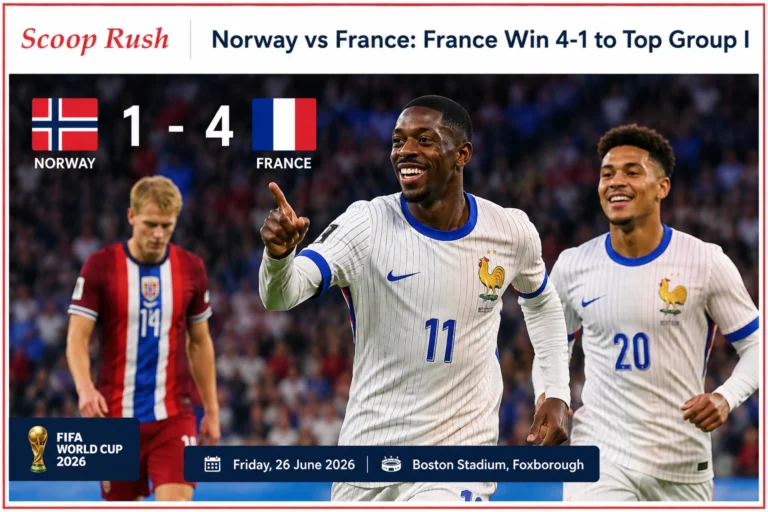
Competition: FIFA World Cup 2026, Group I Full Time: Norway 1-4 France Venue: Boston Stadium, Foxborough Date:Friday, 26 June 2026
Norway vs France: France Finish Group Stage with Perfect Record
Norway vs France ended with a convincing 4-1 victory for France in the final Group I match of the FIFA World Cup 2026. France produced another dominant performance to finish the group stage with three wins from three matches and nine points.
Norway had already secured qualification for the Round of 32 before kickoff. As a result, they rested 10 of their 11 regular starters, including Erling Haaland. France took full advantage of the changed lineup, with Ousmane Dembélé scoring a first-half hat-trick to put the match beyond doubt before Désiré Doué added a late fourth goal in stoppage time.
Norway vs France Match Summary
France started brightly and controlled possession from the opening whistle. Their midfield moved the ball quickly, while the forwards combined effectively in the final third. Dembélé’s clinical finishing gave France complete control during the first half.
Norway showed greater intent after the break and created several opportunities. However, Jørgen Strand Larsen missed a penalty that could have reduced the deficit and changed the momentum. France remained composed for the rest of the match and sealed a comfortable 4-1 victory with Doué’s stoppage-time strike.
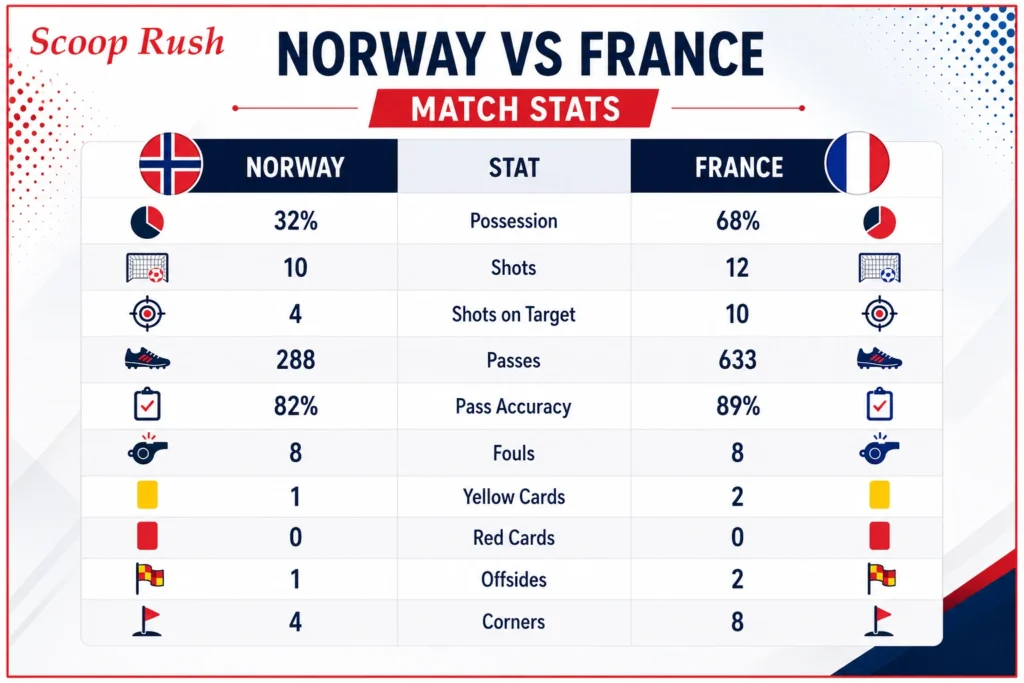
Norway vs France Match Stats
Stat
Norway
France
Possession
32%
68%
Shots
10
12
Shots on Target
4
10
Passes
288
633
Pass Accuracy
82%
89%
Fouls
8
8
Yellow Cards
1
2
Red Cards
0
0
Offsides
1
2
Corners
4
8
Tactical Analysis: Norway vs France
Norway vs France Showed France’s Attacking Efficiency
France controlled the match through patient possession and quick passing. Their midfield dictated the tempo, while the front line made intelligent runs behind Norway’s defence. Dembélé’s movement caused constant problems and allowed France to build a commanding first-half lead.
Norway vs France Reflected Norway’s Squad Rotation
Norway rotated heavily after securing qualification before the final group match. Although the changes reduced their usual attacking threat, they still created chances during the second half. Strand Larsen’s missed penalty proved costly, as France quickly regained control and comfortably saw out the result.
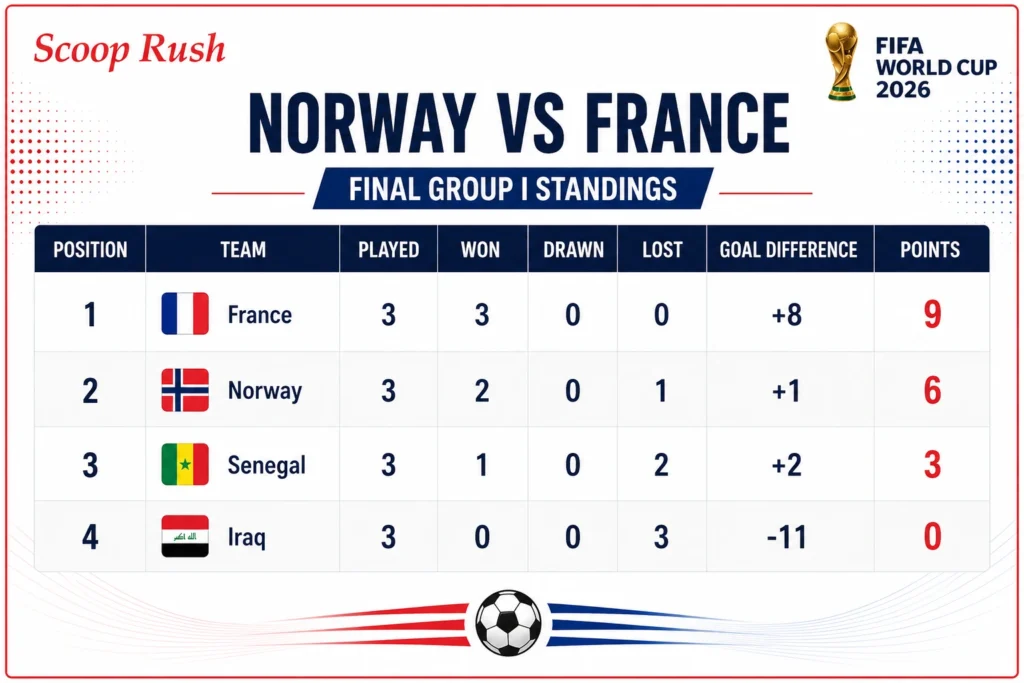
Norway vs France Final Group I Standings
Position
Team
Played
Won
Drawn
Lost
Goal Difference
Points
1
France
3
3
0
0
+8
9
2
Norway
3
2
0
1
+1
6
3
Senegal
3
1
0
2
+2
3
4
Iraq
3
0
0
3
-11
0
What the Result Means
France completed the group stage with a perfect nine points and advanced to the Round of 32 as Group I winners. Their attacking form and defensive consistency made them one of the strongest teams heading into the knockout rounds.
Norway also qualified after finishing second with six points. Despite the heavy defeat, their earlier victories secured progression. Senegal ended third with a positive goal difference and remained in contention as one of the best third-placed teams, while Iraq finished fourth after three defeats.
Key Takeaways from Norway vs France
The Norway vs France match highlighted France’s depth, attacking quality, and clinical finishing. Ousmane Dembélé’s first-half hat-trick laid the foundation for another impressive victory, while Désiré Doué completed the scoring late in the game.
Norway chose to rotate most of their starting lineup after already booking a place in the knockout stage. Even so, they remained competitive in the second half but could not recover after missing a crucial penalty. France now move into the Round of 32 full of confidence, while Norway will look to welcome back their regular starters for the knockout phase.
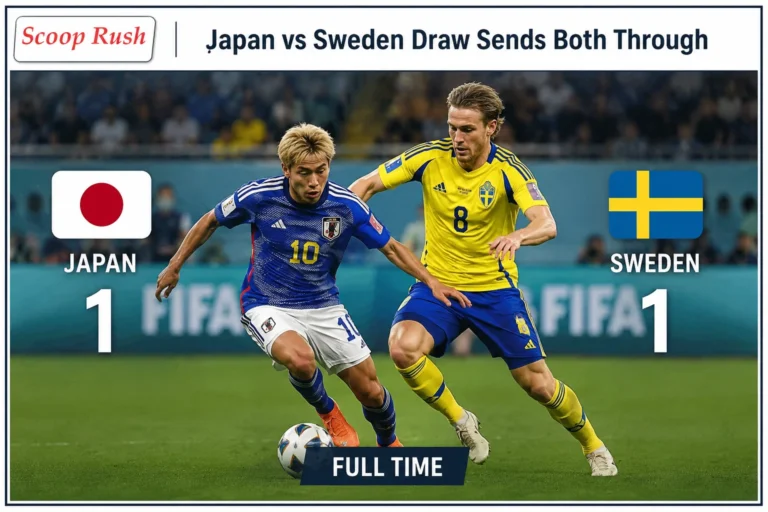
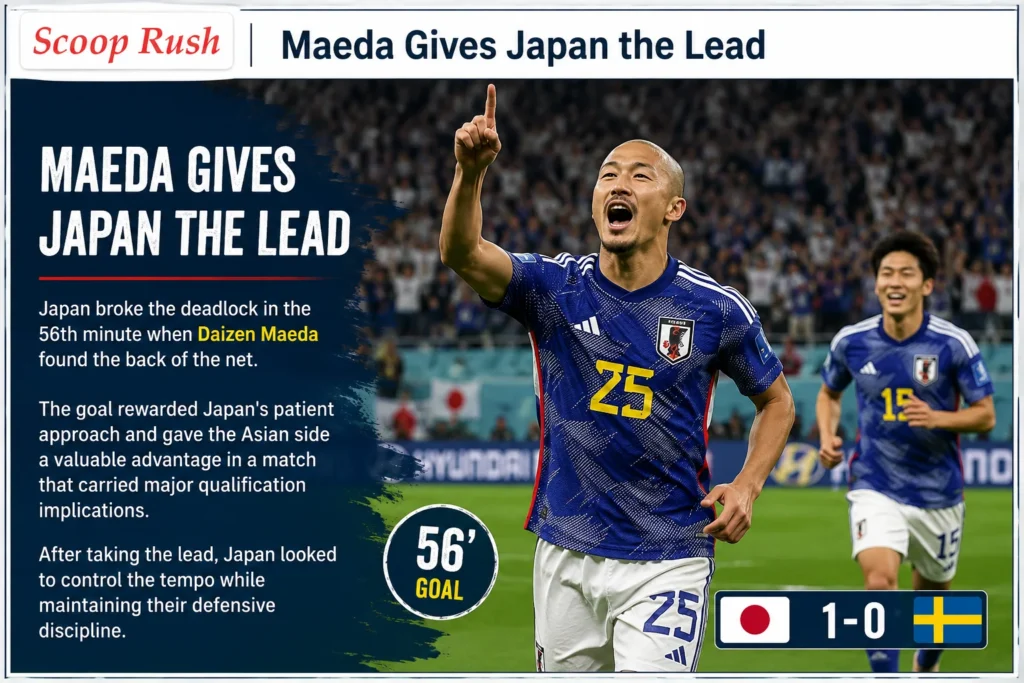
Japan vs Sweden ended in a hard-fought 1-1 draw in the final Group F match of the FIFA World Cup 2026 on June 25 at Dallas Stadium in Arlington, Texas. Daizen Maeda gave Japan the lead early in the second half before Anthony Elanga equalized six minutes later. The result secured Japan’s place as Group F runners-up, while Sweden advanced as one of the tournament’s best third-placed teams.
With qualification at stake, both teams produced disciplined performances in a tightly contested match. Although neither side managed to claim all three points, the draw proved enough to extend both nations’ World Cup campaigns into the knockout stage.
Japan vs Sweden Finishes Goalless in the First Half
The opening 45 minutes were evenly balanced as Japan and Sweden remained compact at the back and limited each other’s attacking opportunities. Both teams enjoyed spells of possession but struggled to create clear-cut chances against organized defensive lines.
The first half ended 0-0, leaving the decisive moments for after the break.
Maeda Gives Japan the Lead
Japan broke the deadlock in the 56th minute when Daizen Maeda found the back of the net. The goal rewarded Japan’s patient approach and gave the Asian side a valuable advantage in a match that carried major qualification implications.
After taking the lead, Japan looked to control the tempo while maintaining their defensive discipline.
Elanga Scores Sweden’s Equalizer
Sweden responded quickly and restored parity in the 62nd minute through Anthony Elanga. His well-taken finish brought Sweden back into the contest just six minutes after Japan had opened the scoring.
The equalizer shifted the momentum, with both teams pushing for a winner during the closing stages. Despite several attacking moves, neither side could produce the decisive goal, and the match finished level.
Japan vs Sweden Match Statistics
The official statistics reflected a competitive encounter between two evenly matched teams.
Possession and Shooting Numbers
Final Score: Japan 1-1 Sweden
Possession: Japan 51% – Sweden 49%
Total Shots: Japan 8 – Sweden 10
Shots on Target: Japan 3 – Sweden 5
Passing Accuracy: Japan 88% – Sweden 81%
Sweden created slightly more shooting opportunities, while Japan enjoyed a small advantage in possession and completed passes with greater accuracy.
Discipline and Corners
Corners: Japan 2 – Sweden 8
Yellow Cards:
Japan: Shōgo Taniguchi
Sweden: Isak Hien, Viktor Gyökeres
Both teams maintained their discipline throughout most of the contest despite the high stakes, with only three yellow cards shown.
Group F Final Standings
The draw confirmed the final Group F standings after all three group matches were completed.
Netherlands – 7 points
Japan – 5 points
Sweden – 4 points
Tunisia – 0 points
The Netherlands progressed as group winners, while Japan secured second place. Sweden also advanced after finishing among the tournament’s best third-placed teams, while Tunisia exited the competition without a point.
Japan and Sweden Advance to the Knockout Stage
The result ensured both teams remained in the FIFA World Cup 2026.
Japan advanced as Group F runners-up and will face Brazil in the Round of 32 on June 29. Sweden also booked their place in the knockout stage as one of the best third-placed teams and will take on France on June 30.
For Japan, the draw capped off a consistent group-stage campaign built on defensive organization and timely goals. Sweden, meanwhile, showed resilience by responding quickly after falling behind and earned the point they needed to continue their World Cup journey.
With the group stage complete, both nations now turn their attention to the knockout rounds, where the margin for error disappears and every match becomes decisive
Ryan Reynolds drunk driver accident shocked fans after the actor revealed details of a life-changing crash from his teenage years. The Hollywood star shared that he was hit by a drunk driver when he was 18 years old in Vancouver, Canada, and suffered serious injuries that required four weeks of hospital recovery.
The actor revealed that the crash left him with severe injuries, causing him to break every bone on the left side of his body. He spent four weeks in the hospital recovering from the accident.
The Ryan Reynolds drunk driver accident story recently came back into the spotlight after the actor shared details of the incident during a conversation with Rob McElhenney. His story surprised fans because it showed a different side of the Hollywood star before he became one of the biggest names in entertainment.
Ryan Reynolds Drunk Driver Accident: What Happened
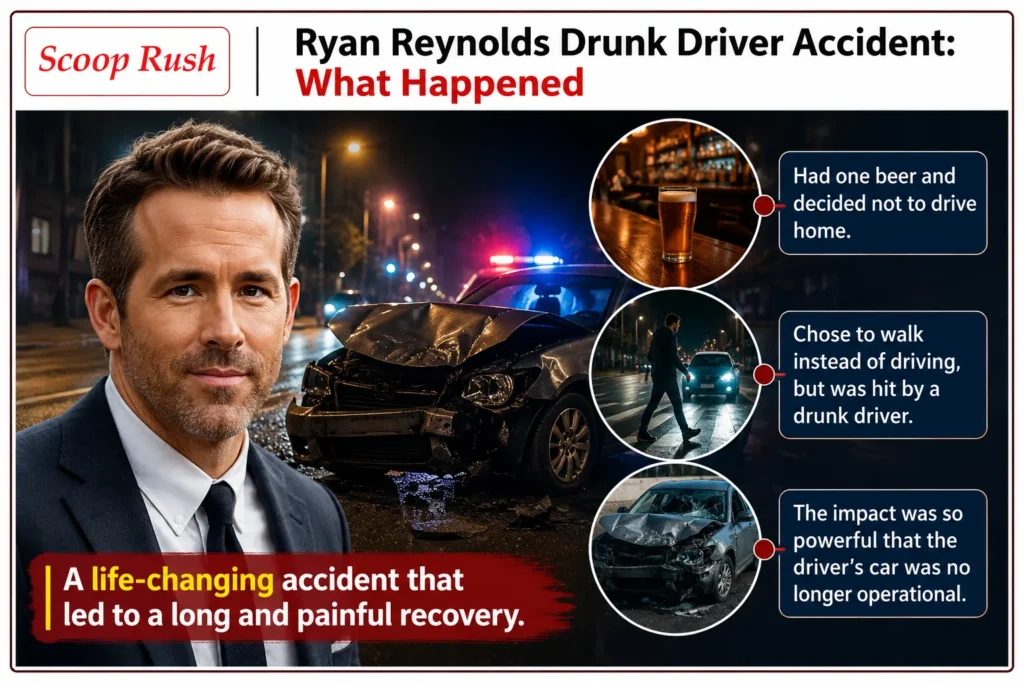
Ryan Reynolds explained that the accident happened when he was 18 years old after leaving a bar. He said he had one beer and decided not to drive home because he wanted to make a safe choice.
Although his home was only a few blocks away, Reynolds decided to leave his car behind and walk instead.
He looked at his car and thought it was better not to take any risk after drinking. However, while crossing the road, he was suddenly hit by a drunk driver.
According to Reynolds, the collision was extremely powerful. He explained that the impact was so strong that the driver’s vehicle was no longer operational after hitting him.
The accident became one of the most difficult moments of his life and resulted in a long recovery process.
The Injuries Ryan Reynolds Suffered After the Crash
Reynolds revealed that he spent four weeks in the hospital after the accident. He said the crash caused him to break every bone on the left side of his body.
The actor later described himself as a “rickety, broken mess” because of the lasting effects of the injuries.
Although audiences often see Reynolds as a strong and confident action star, the accident revealed a much more personal side of his journey.
The crash happened years before his major success in films like Deadpool, but the memory stayed with him throughout his life.
During his interview, Reynolds also thanked Dr. Meek and Vancouver General Hospital for helping him recover after the serious injuries.
How Ryan Reynolds Shared the Accident Story
Ryan Reynolds opened up about the accident during a GQ video interview with Rob McElhenney.
The conversation took place while the two were attempting to build IKEA furniture and answering questions. During the activity, Reynolds shared the unexpected story from his teenage years.
McElhenney appeared surprised and said it was the first time he had heard the full details of the accident from Reynolds.
Reynolds explained that he had made what he believed was the correct decision by not driving after drinking. However, he was still involved in a dangerous situation because of another person’s actions.
Ryan Reynolds Hospital Recovery After the Accident
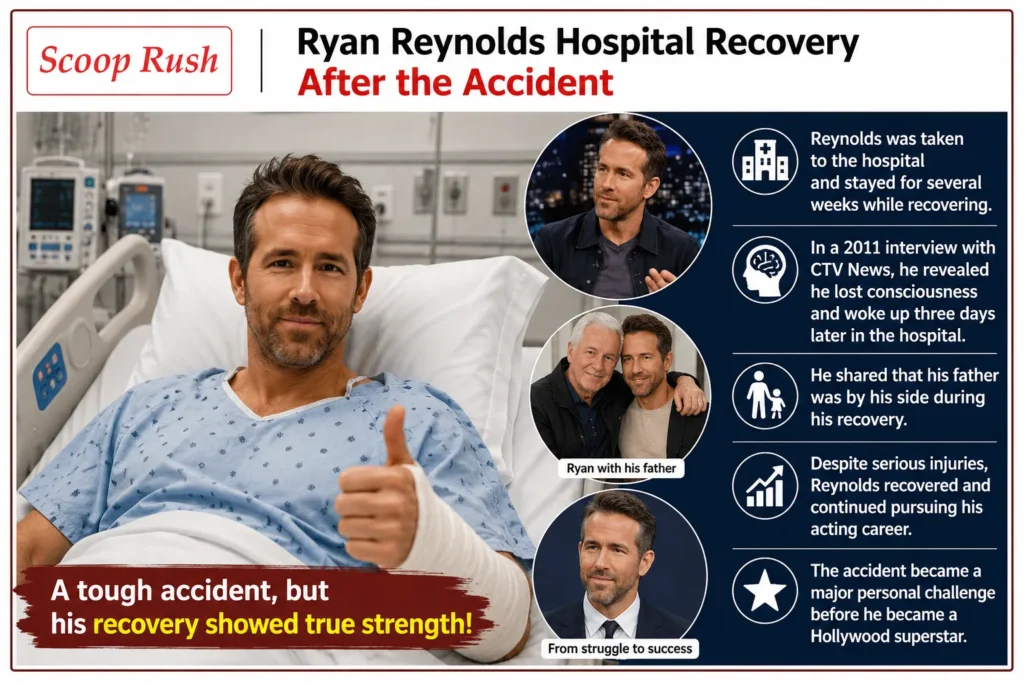
After the crash, Reynolds was taken to the hospital, where he stayed for several weeks while recovering.
The actor had previously discussed the accident during a 2011 interview with CTV News. He explained that he lost consciousness after the collision and woke up three days later in the hospital.
Reynolds also shared a memory of his father being there during his recovery.
Despite the seriousness of his injuries, Reynolds eventually recovered and continued working toward his acting career.
The accident became a major personal challenge before he became a globally recognized Hollywood star.
The Lesson Ryan Reynolds Learned From the Crash
Ryan Reynolds has often talked about how unexpected events can change the direction of a person’s life.
During his conversation with McElhenney, he discussed how things do not always happen according to plan.
Furthermore, his accident showed how quickly circumstances can change. Reynolds made the decision not to drive after drinking, but he was still affected by someone else’s unsafe choice.
His experience also highlights the importance of road safety and how the actions of one person can impact another person’s life.
Ryan Reynolds Career After the Accident
Years after the accident, Ryan Reynolds became one of Hollywood’s most successful actors.
He gained worldwide recognition for his role as Deadpool, a character famous for humor, action, and confidence.
However, his personal story shows that even successful people can face serious struggles before reaching their goals.
The accident happened during his teenage years, long before fame, but it became an important part of his life journey.
Why Ryan Reynolds Accident Story Matters
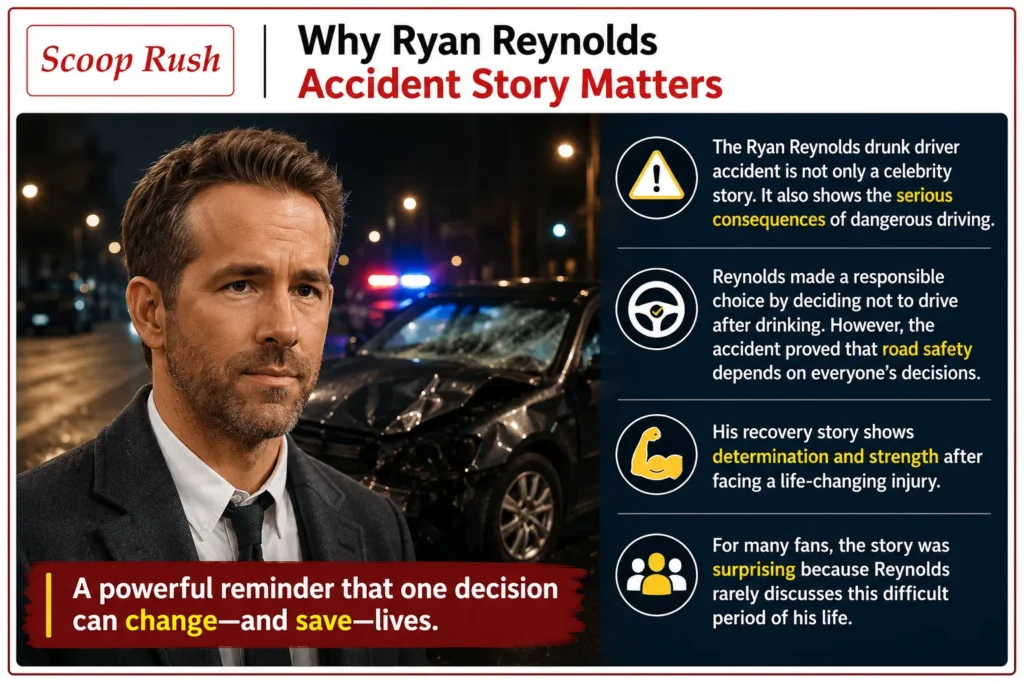
The Ryan Reynolds drunk driver accident is not only a celebrity story. It also shows the serious consequences of dangerous driving.
Reynolds made a responsible choice by deciding not to drive after drinking. However, the accident proved that road safety depends on everyone’s decisions.
Additionally, his recovery story shows determination and strength after facing a life-changing injury.
For many fans, the story was surprising because Reynolds rarely discusses this difficult period of his life.
Conclusion
Ryan Reynolds’ story of being hit by a drunk driver remains one of the most serious experiences from his early life.
The actor revealed that he broke every bone on the left side of his body and spent four weeks in the hospital after the accident.
Although the crash caused major injuries, Reynolds recovered and continued building a successful career in Hollywood.
His experience reminds people that unexpected moments can change lives, and responsible choices on the road can help prevent serious accidents.
FAQs
1. When did Ryan Reynolds get hit by a drunk driver?
Ryan Reynolds was hit by a drunk driver when he was 18 years old in Vancouver, Canada.
2. How many bones did Ryan Reynolds break?
Ryan Reynolds said he broke every bone on the left side of his body after the accident.
3. How long was Ryan Reynolds hospitalized?
Ryan Reynolds spent four weeks in the hospital recovering from his injuries.
4. Did Ryan Reynolds lose consciousness after the crash?
Yes, Reynolds previously said he lost consciousness after the accident and woke up three days later in the hospital.
5. What did Ryan Reynolds learn from the accident?
Ryan Reynolds said the experience showed him that life can change unexpectedly and things do not always go according to plan.
What if the plastic polluting the ocean could become part of the roads people drive on every day? Researchers in Hawaii are testing a new solution by transforming old fishing nets, marine debris, and recycled plastic waste into asphalt materials. The project called Hawaii turning ocean plastic into roads shows how researchers are finding new ways to recycle marine waste and create useful road materials.
The project, known as Hawaii turning ocean plastic into roads, is designed to tackle the growing problem of plastic pollution while finding a practical use for waste materials. Scientists are studying whether plastic collected from oceans and communities can be safely reused in road construction instead of being sent to landfills.
Early research shows that recycled plastic roads did not release more microplastics than traditional pavement during testing. Although more studies are needed, researchers believe the project could offer a new way to manage plastic waste and create useful infrastructure.
Hawaii Turns Ocean Plastic Into Roads Through Recycling Innovation
Hawaii faces a growing plastic waste challenge because of its location and limited recycling options. Moving waste away from the islands for processing can be expensive and difficult.
Meanwhile, marine debris continues to affect Hawaii’s beaches and surrounding waters. Discarded fishing nets are one of the major sources of plastic pollution found in the ocean.
Researchers from the Center for Marine Debris Research (CMDR) at Hawaiʻi Pacific University are now exploring whether these materials can be reused in asphalt roads.
Instead of allowing plastic waste to remain in the environment, scientists are testing whether it can become a valuable construction material.
The research team is working with the Hawaii Department of Transportation (HDOT) to study the performance and environmental impact of recycled plastic asphalt.
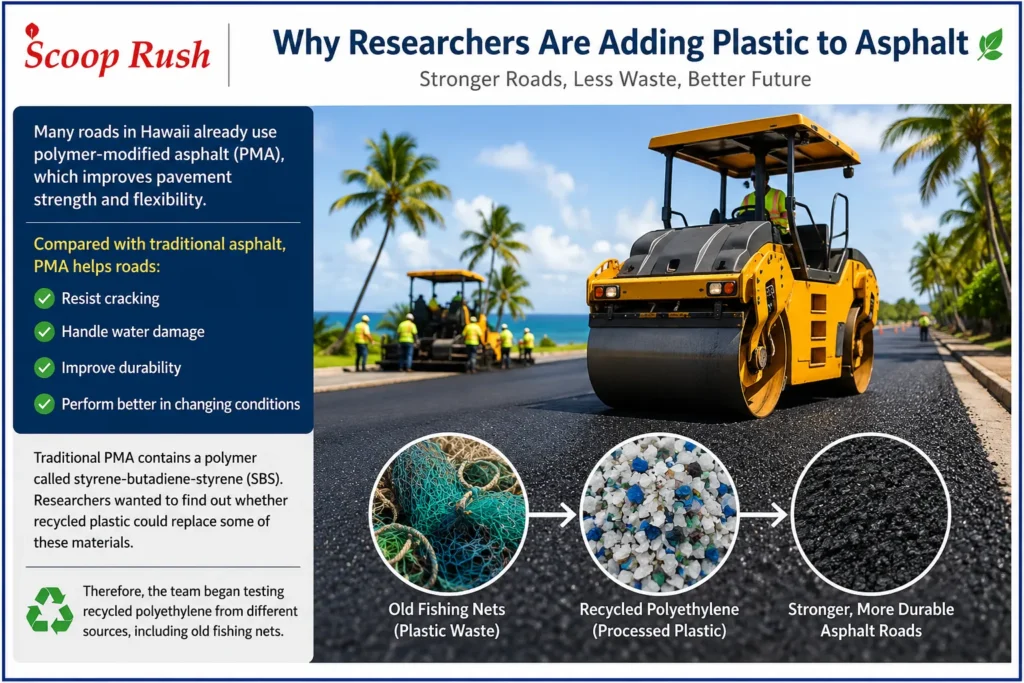
Why Researchers Are Adding Plastic to Asphalt
Many roads in Hawaii already use polymer-modified asphalt (PMA), which improves pavement strength and flexibility.
Compared with traditional asphalt, PMA helps roads:
Resist cracking
Handle water damage
Improve durability
Perform better in changing conditions
Traditional PMA contains a polymer called styrene-butadiene-styrene (SBS). Researchers wanted to find out whether recycled plastic could replace some of these materials.
Therefore, the team began testing recycled polyethylene from different sources, including old fishing nets.
Old Fishing Nets Are Being Recycled Into Roads
Abandoned fishing gear is a major part of Hawaii’s marine debris problem.
Through the Bounty Project, the Center for Marine Debris Research works with licensed commercial fishers to remove marine waste from the ocean.
Researchers collect discarded fishing nets and other plastic materials before separating plastics that can be reused.
Many fishing nets contain polyethylene, a durable plastic that is also used in everyday products.
After collection, the materials are processed and prepared for asphalt production.
The recycled plastic is then mixed with road materials to create experimental pavement sections.
Testing Recycled Plastic Roads on Oahu
Researchers tested the recycled plastic asphalt on a residential road located on Oahu.
A paving company created three different road sections using different asphalt mixtures.
Traditional Asphalt Section
One road section used standard polymer-modified asphalt containing SBS.
Household Recycled Plastic Section
Another section used recycled polyethylene collected from local recycling programs.
Fishing Net Plastic Section
The third section used polyethylene recovered from discarded fishing nets.
After about 11 months, scientists collected road dust samples to study whether the recycled plastic pavement released microplastics.
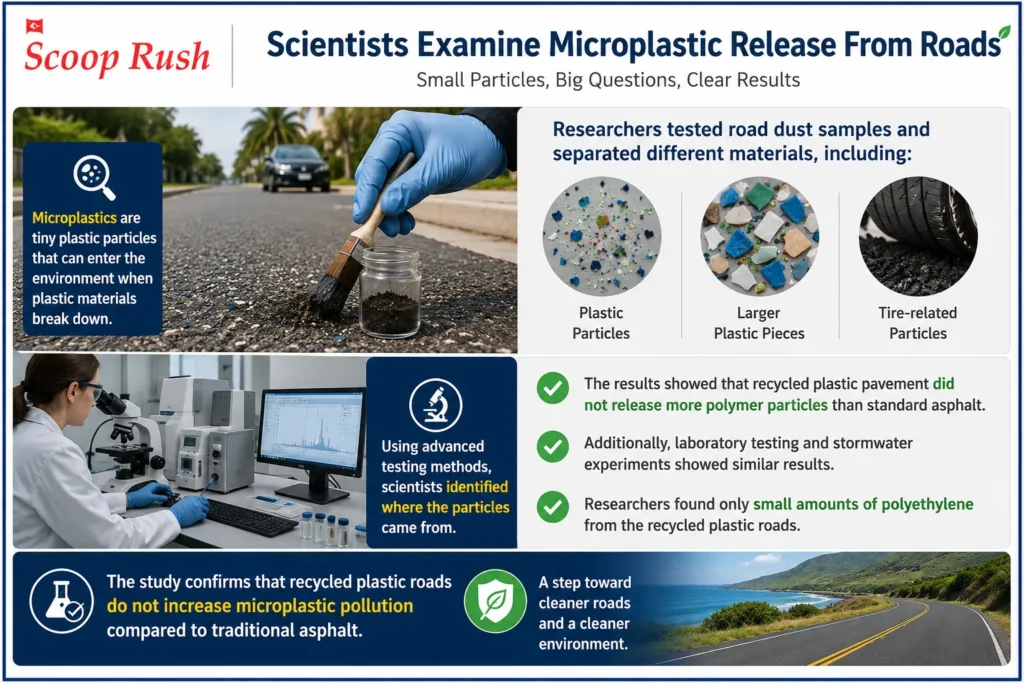
Scientists Examine Microplastic Release From Roads
Microplastics are tiny plastic particles that can enter the environment when plastic materials break down.
Researchers tested road dust samples and separated different materials, including:
Plastic particles
Larger plastic pieces
Tire-related particles
Using advanced testing methods, scientists identified where the particles came from.
The results showed that recycled plastic pavement did not release more polymer particles than standard asphalt.
Additionally, laboratory testing and stormwater experiments showed similar results.
Researchers found only small amounts of polyethylene from the recycled plastic roads.
Tire Wear Had a Larger Impact Than Recycled Plastic
During testing, scientists discovered that tire wear produced a much stronger signal than recycled plastic materials.
Vehicles naturally release tiny tire particles as they travel across roads. Researchers found these particles in much higher amounts compared with polyethylene from recycled plastic asphalt.
This suggests that recycled plastic inside asphalt may remain combined with other road materials instead of separating into individual plastic particles.
Could Plastic Roads Help Reduce Ocean Pollution?
The Hawaii project is still being studied, and researchers say more long-term testing is necessary.
Scientists need to understand how these roads perform over many years and whether the recycled materials continue to maintain their strength.
However, early results show that recycled plastic asphalt could become a possible solution for reducing waste problems.
If future studies confirm the technology is effective, it could help reduce:
Ocean plastic pollution
Landfill waste
Marine debris problems
The project also shows how recycling can create new uses for materials that were previously considered waste.
The Future of Hawaii’s Plastic Road Experiment
The idea of turning ocean plastic into roads represents a new approach to dealing with waste.
Instead of treating old fishing nets and plastic debris as useless materials, researchers are exploring how they can become part of important infrastructure.
Furthermore, the project provides valuable information about how recycled plastics behave in real-world conditions.
Although more research is required, Hawaii’s experiment demonstrates how science and recycling can work together to address environmental challenges.
Conclusion: Hawaii’s Plastic Roads Could Create a New Recycling Model
Hawaii is testing an innovative method by turning ocean plastic, fishing nets, and recycled waste into road materials. The Hawaii turning ocean plastic into roads project highlights how recycled materials can help solve plastic pollution challenges while supporting future infrastructure solutions.
Early findings suggest that recycled plastic asphalt does not release more microplastics than traditional pavement. While researchers continue studying the long-term results, the project offers a possible new way to manage marine debris.
Ultimately, Hawaii’s plastic road experiment could become an example of how waste materials can be reused to create practical solutions.
FAQs
1. Why is Hawaii turning ocean plastic into roads?
Hawaii is testing recycled plastic roads to reuse marine debris and reduce plastic waste problems.
2. Are recycled plastic roads safe?
Early testing shows recycled plastic asphalt did not release more microplastics than traditional pavement, but research is continuing.
3. What type of plastic is used in these roads?
Researchers are using polyethylene recovered from household recycling and discarded fishing nets.
4. Where are these roads being tested?
The experimental road sections were created on Oahu, Hawaii.
5. Will recycled plastic roads become common?
More long-term testing is needed, but the technology could become a useful recycling solution in the future.
Your fitness studio name is one of the first things people notice about your business. Before someone visits your gym, books a class, or follows you on social media, they’ll likely see your name on Google, Instagram, or a local business directory. A memorable name helps create a strong first impression, builds trust, and makes your business easier to remember. In 2026, fitness branding is becoming cleaner and more modern. Instead of loud or intimidating names, many successful fitness businesses choose names that are simple, professional, and flexible enough to grow with their services. Whether you’re opening a boutique fitness studio, a personal training business, or a full-service gym, the right name can support your marketing efforts and help establish your brand. This guide explains how to choose the perfect fitness studio name, highlights common naming mistakes, and shares over 100 fitness studio name ideas to inspire your business.
Why Your Fitness Studio Name Is Important
Your business name is more than just a label it represents your brand identity. A well-chosen name helps customers recognize your business, improves word-of-mouth recommendations, and creates consistency across your website, social media accounts, and marketing materials.
A strong fitness business name should:
Be easy to remember
Be simple to pronounce and spell
Reflect your brand personality
Support future business growth
Look professional on signs, logos, and merchandise
Many fitness businesses now offer personal training, group classes, wellness coaching, recovery services, and online programs. Choosing a flexible name today can save you from rebranding as your business expands.
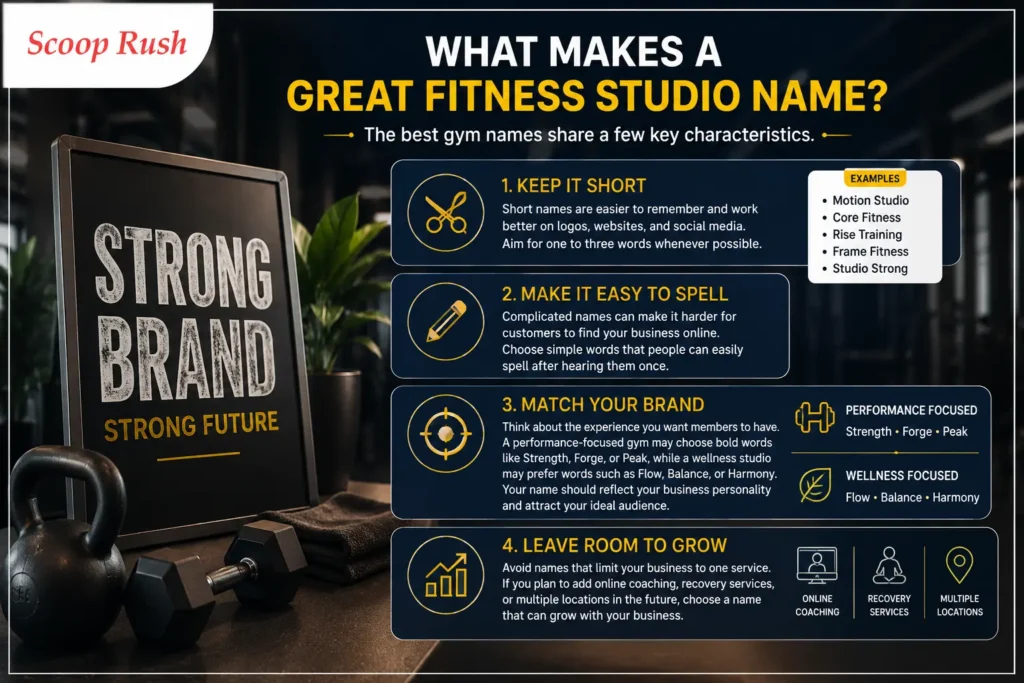
What Makes a Great Fitness Studio Name?
The best gym names share a few key characteristics.
Keep It Short
Short names are easier to remember and work better on logos, websites, and social media. Aim for one to three words whenever possible.
Examples include:
Motion Studio
Core Fitness
Rise Training
Frame Fitness
Studio Strong
Make It Easy to Spell
Complicated names can make it harder for customers to find your business online. Choose simple words that people can easily spell after hearing them once.
Match Your Brand
Think about the experience you want members to have.
A performance-focused gym may choose bold words like Strength, Forge, or Peak, while a wellness studio may prefer words such as Flow, Balance, or Harmony. Your name should reflect your business personality and attract your ideal audience. If your studio targets health-conscious members, your name should feel trustworthy and clean.
Leave Room to Grow
Avoid names that limit your business to one service. If you plan to add online coaching, recovery services, or multiple locations in the future, choose a name that can grow with your business.
How to Brainstorm Fitness Studio Name Ideas
Finding the perfect name starts with understanding your brand.
Ask yourself:
Who is my target audience?
What type of training do I offer?
What feeling do I want my brand to create?
Will this name still fit my business five years from now?
Write down words related to movement, health, fitness, energy, and performance. Then combine them to create unique name ideas. For studios focused on active living and daily movement, names that reflect consistency and progress often resonate best with members.
Popular fitness-related words include:
Motion
Core
Active
Peak
Balance
Rise
Energy
Momentum
Strength
Progress
Vital
Performance
Studio
Train
Wellness
Simple combinations often create memorable business names.
Modern Fitness Studio Name Ideas
These names suit boutique gyms, wellness studios, and modern fitness businesses.
Motion Studio
Form Fitness
Core Studio
Studio Strong
Elevate Fitness
Momentum Studio
Prime Motion
One Movement
Rise Fitness
Frame Fitness
Active Lab
Foundation Fitness
Pure Motion
Urban Fitness
Core Collective
Progress Studio
Motion Works
Balance Fitness
Movement House
The Training Room
Strong Gym Name Ideas
If your business focuses on strength and performance, consider these names.
Forge Fitness
Iron Core
Peak Strength
Strong Foundation
Power House
Lift Lab
Built Better
Prime Strength
Strength Works
Steel Motion
Core Force
Heavy Training
Summit Fitness
Iron Motion
Strongline
Foundation Gym
Alpha Training
Power Studio
Endurance Fitness
Titan Performance
Boutique Fitness Studio Name Ideas
Boutique studios often benefit from modern, stylish names. Many boutique gym owners today also focus on overall member wellness, making sure their space and services feel welcoming and safe for every age group.
Harmony Studio
Precision Fitness
Inspire Movement
Signature Studio
Urban Wellness
Modern Motion
Studio Origin
Wellness Collective
Open Motion
Balance House
Active Living
Motion Society
Daily Wellness
Pure Studio
Wellness House
Elevation Studio
Collective Fitness
Motion Lounge
Focus Fitness
Momentum House
Friendly Community Gym Names
If your gym welcomes beginners and families, these names create a friendly image. Community gyms are especially popular among purpose-driven professionals who value health alongside meaningful work.
Everyday Fitness
Better Together Fitness
Community Motion
Thrive Fitness
Local Fitness Club
Strong Together
Move Better Studio
Healthy Living Fitness
Active Community
Next Step Fitness
Fit Forward
Progress Together
Better Movement
Daily Progress
Friendly Fitness
Wellness Together
Open Gym Studio
Active Neighbors
Fit Collective
Move Together
Creative One-Word Fitness Business Names
Short, brandable names can grow into strong businesses over time.
Formexa
Movara
Corevia
Liftora
Strivon
Fitvera
Trainix
Movion
Nexora
Vitalix
Corezen
Activa
Flexora
Endurox
Riseon
Peakora
Motionix
Fitnova
Wellora
Momentuma
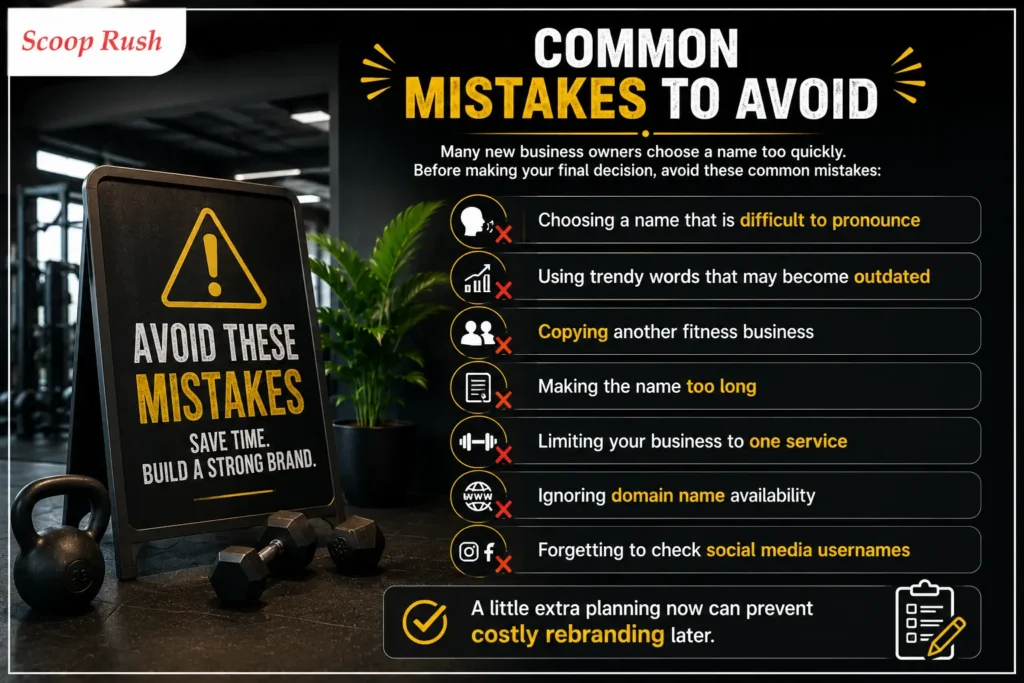
Common Mistakes to Avoid
Many new business owners choose a name too quickly. Before making your final decision, avoid these common mistakes:
Choosing a name that is difficult to pronounce
Using trendy words that may become outdated
Copying another fitness business
Making the name too long
Limiting your business to one service
Ignoring domain name availability
Forgetting to check social media usernames
A little extra planning now can prevent costly rebranding later.
Check Your Name Before Launching
Before registering your business, make sure your chosen name passes this checklist.
Is it memorable?
Is it easy to pronounce?
Does it represent your brand?
Can it support future growth?
Is the website domain available?
Are matching social media usernames available?
Does it stand out from local competitors?
Will it look good on logos and signage?
If the answer is “yes” to all of these questions, you are likely choosing a strong business name.
Tips for Building a Strong Fitness Brand
Your business name is only one part of your brand. A successful fitness business also needs consistent branding across every customer touchpoint.
Keep your logo, colors, website, and social media profiles consistent. Choose a name that is easy to search online and simple enough for customers to remember after hearing it once. Encourage members to tag your business on social media using the same name across all platforms.
As your business grows, a strong and recognizable brand can help attract new members and build customer loyalty.
Final Thoughts
Choosing the right fitness studio name is an important step in building a successful fitness business. The best names are memorable, easy to pronounce, and flexible enough to grow with your brand. Whether you’re opening a boutique fitness studio, a strength training gym, or a community wellness center, take the time to choose a name that reflects your vision and appeals to your target audience.
Before making your final decision, check that your preferred name is available as a business registration, website domain, and social media handle. A thoughtful naming strategy today can help create a recognizable brand that supports your business for years to come.
FAQs
What makes a good fitness studio name?
A good fitness studio name is short, memorable, easy to pronounce, and reflects your brand identity while allowing room for future growth.
Should I include the word “Fitness” or “Gym” in my business name?
Not necessarily. Many successful fitness brands use creative names without these words. However, including “Fitness,” “Studio,” or “Gym” can make it easier for customers to understand your business at a glance.
How can I make my gym name unique?
Combine simple fitness-related words, create a brandable name, and check that it isn’t already being used by another business in your area.
Why should I check domain and social media availability?
Using the same name across your website and social media platforms makes your business easier to find and helps build a consistent brand identity.
Can I change my fitness studio name later?
Yes, but rebranding can be expensive and may confuse existing customers. Choosing the right name from the beginning is usually the better long-term strategy.
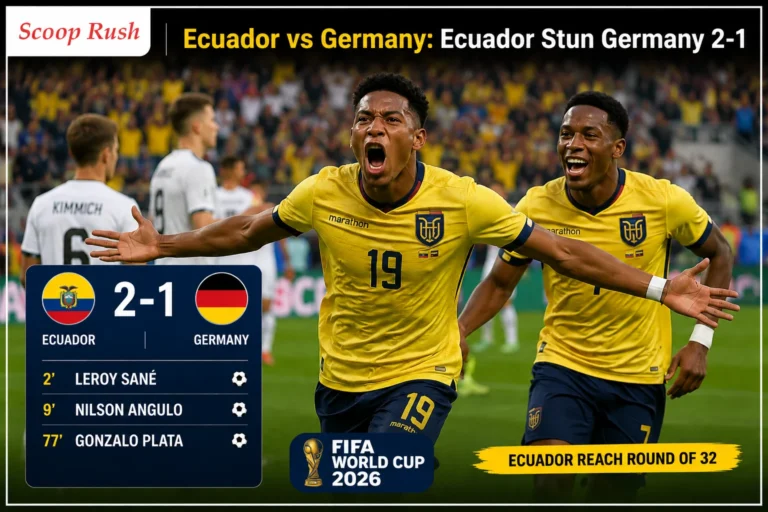
Competition: FIFA World Cup 2026, Group E Full Time: Ecuador 2-1 Germany Venue: New York/New Jersey Stadium (MetLife Stadium), East Rutherford, New Jersey, USA Date: 25 June 2026
Match Report: Ecuador vs Germany
Ecuador vs Germany produced one of the biggest upsets of the FIFA World Cup 2026 group stage. Ecuador recovered from an early setback to defeat Germany 2-1 and secure a place in the Round of 32 as one of the tournament’s best third-placed teams.
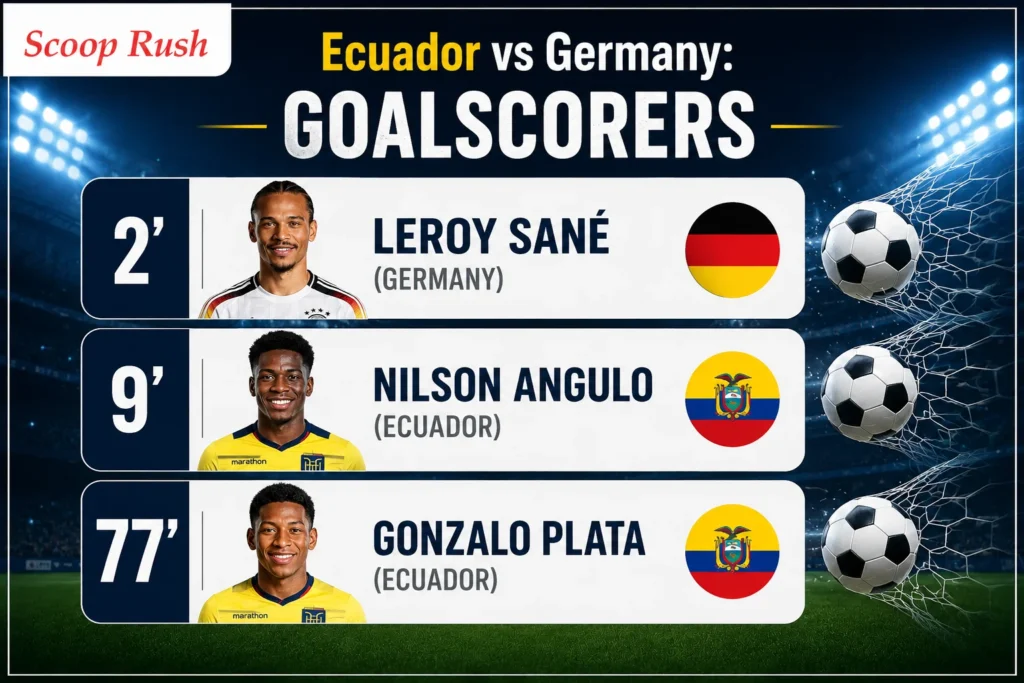
Germany made a dream start when Leroy Sané scored in the 2nd minute after finishing a well-worked move. However, Ecuador responded almost immediately. Nilson Angulo punished a defensive mistake to level the score in the 9th minute and shift the momentum. The match remained evenly balanced until the 77th minute, when Gonzalo Plata reacted quickest from a corner to score the decisive goal.
Germany dominated possession throughout the contest, yet Ecuador defended with discipline and made their chances count in the final third.
Ecuador vs Germany: Goalscorers
2′ Leroy Sané (Germany)
9′ Nilson Angulo (Ecuador)
77′ Gonzalo Plata (Ecuador)
Ecuador vs Germany: Match Statistics
Statistic
Ecuador
Germany
Possession
39%
61%
Shots
7
11
Shots on Target
3
3
Corners
3
2
Fouls
15
10
Yellow Cards
3
1
Red Cards
0
0
Offsides
1
0
Passes
318
582
Germany completed 582 passes and controlled most of the possession. Even so, Ecuador created the clearer chances and finished them with impressive efficiency.
Ecuador vs Germany: Tactical Analysis
Ecuador vs Germany highlighted two contrasting tactical approaches. Germany relied on patient build-up play and controlled possession through midfield. Florian Wirtz and Jamal Musiala frequently looked to unlock Ecuador’s defence, while Joshua Kimmich and David Raum provided width from the flanks.
Ecuador, meanwhile, stayed compact without the ball and looked to attack quickly after regaining possession. Moisés Caicedo and Pedro Vite helped control transitions, while Nilson Angulo and Gonzalo Plata stretched Germany’s back line with their pace. Their disciplined defending and clinical finishing ultimately made the difference.
Ecuador vs Germany: Starting Lineups
Ecuador (4-4-2)
Hernán Galíndez
Joel Ordóñez
Willian Pacho
Piero Hincapié
Alan Franco
John Yeboah
Moisés Caicedo
Pedro Vite
Nilson Angulo
Gonzalo Plata
Enner Valencia
Germany (4-2-3-1)
Manuel Neuer
Joshua Kimmich
Jonathan Tah
Antonio Rüdiger
David Raum
Aleksandar Pavlović
Felix Nmecha
Leroy Sané
Jamal Musiala
Florian Wirtz
Kai Havertz
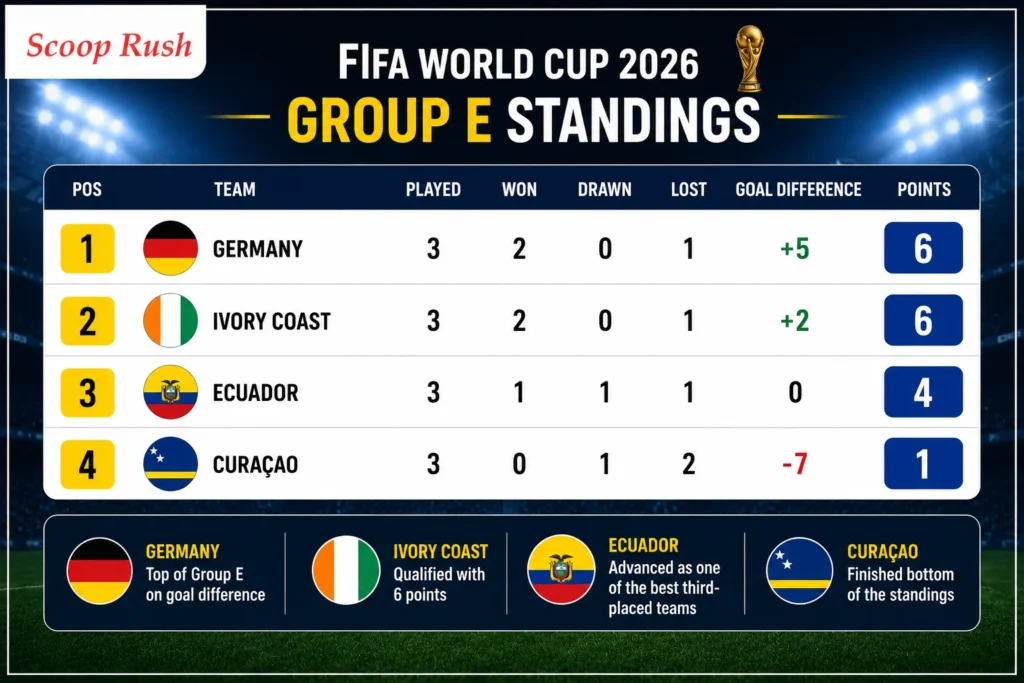
Ecuador vs Germany: Group E Standings
Position
Team
Played
Won
Drawn
Lost
Goal Difference
Points
1
Germany
3
2
0
1
+5
6
2
Ivory Coast
3
2
0
1
+2
6
3
Ecuador
3
1
1
1
0
4
4
Curaçao
3
0
1
2
-7
1
Germany finished top of Group E on goal difference despite the defeat. Ivory Coast also qualified after collecting six points. Ecuador progressed to the Round of 32 as one of the best third-placed teams with four points. Curaçao finished bottom of the standings.
Ecuador vs Germany: What the Result Means
Ecuador vs Germany ended with Ecuador celebrating one of the greatest victories in the nation’s World Cup history. The comeback victory secured a place in the knockout stage and demonstrated the team’s resilience against one of football’s strongest nations.
Germany still advanced as Group E winners despite suffering their first defeat of the tournament. Meanwhile, Ecuador carried valuable momentum into the Round of 32 after producing one of the competition’s standout performances.
Ecuador vs Germany: Player of the Match
Gonzalo Plata earned Player of the Match honours after scoring the winning goal in the 77th minute. His movement and composure proved decisive in the closing stages. Nilson Angulo also delivered an excellent performance by scoring the equaliser and consistently troubling Germany’s defence.
Conclusion
Ecuador vs Germany will be remembered as one of the defining matches of the FIFA World Cup 2026 group stage. Ecuador combined disciplined defending, rapid counter-attacks and clinical finishing to overturn an early deficit. Although Germany still finished first in Group E, Ecuador’s memorable 2-1 victory secured a deserved place in the Round of 32 and marked one of the country’s finest moments on the World Cup stage.
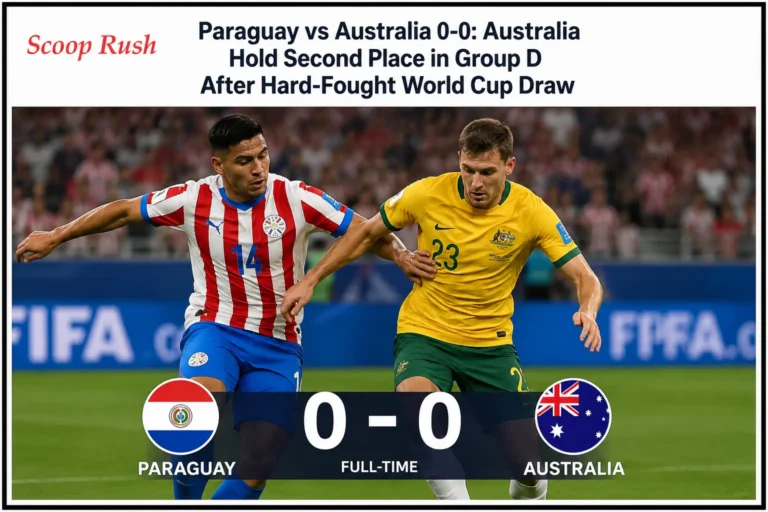
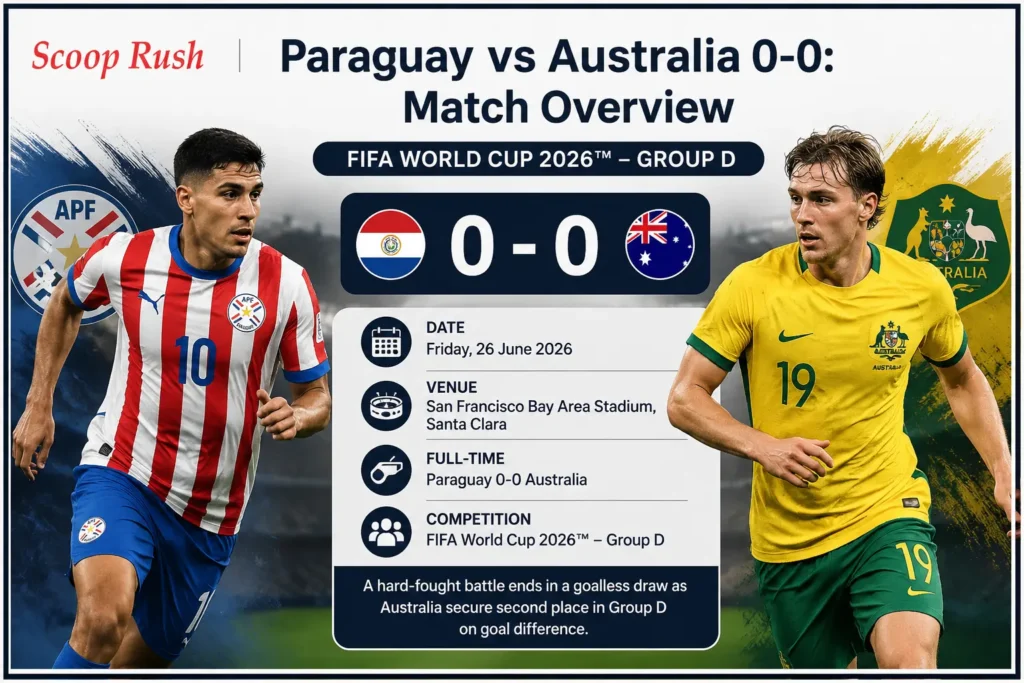
FIFA World Cup 2026™ – Group D Full-Time: Paraguay 0-0 Australia Date: Friday, 26 June 2026 Venue: San Francisco Bay Area Stadium, Santa Clara,
Paraguay vs Australia 0-0: Group D Battle Ends Without a Goal
Can a goalless draw still shape a FIFA World Cup Group D. The answer was clear on Friday as Paraguay and Australia played out a tense 0-0 draw in Group D, a result that carried significant implications for the standings despite the lack of goals.
In a match where chances were limited and defensive organization took center stage, Australia secured an important point that helped them finish second in Group D, while Paraguay concluded their group-stage campaign with a draw. The contest showcased disciplined defending, tactical awareness, and a fierce midfield battle as both teams searched for a breakthrough that never arrived.
For fans looking at the scoreline alone, the match may appear uneventful. However, the statistics, tactical setups, and group-stage consequences tell a more compelling story.
Paraguay vs Australia 0-0: Match Overview
The Group D fixture ended in a stalemate, with neither side able to find the back of the net across 90 minutes.
Australia entered the match positioned second in the group standings, while Paraguay were third. By full time, the Australians had done enough to preserve their place in the standings through a disciplined defensive display and efficient game management.
The encounter was characterized by contrasting styles. Australia enjoyed more possession and generated a higher number of attacking opportunities, while Paraguay focused on staying compact and limiting clear-cut chances.
Although both teams showed determination and energy, the finishing touch was missing throughout the contest.
Paraguay vs Australia 0-0:Key Match Statistics
The numbers from the match help explain why Australia looked slightly more threatening despite the draw.
Shots: Paraguay 8, Australia 12
Shots on Target: Paraguay 2, Australia 5
Possession: Paraguay 44%, Australia 56%
Passes: Paraguay 394, Australia 506
Pass Accuracy: Paraguay 84%, Australia 82%
Fouls: Paraguay 9, Australia 6
Yellow Cards: Paraguay 1, Australia 1
Corners: Paraguay 1, Australia 3
Offsides: Paraguay 0, Australia 0
Australia led several important attacking categories, including shots, shots on target, possession, passes, and corners. Paraguay, meanwhile, demonstrated efficiency in possession and maintained a slightly higher passing accuracy despite seeing less of the ball.
The statistics highlight a match in which Australia controlled larger stretches of play but could not convert their territorial advantage into goals.
Group D Standings After the Draw
The result proved particularly valuable for Australia in the context of the group standings.
Group D Final Table
Team
MP
W
D
L
GF
GA
GD
Points
USA
3
2
0
1
8
4
+4
6
Australia
3
1
1
1
2
2
0
4
Paraguay
3
1
1
1
2
4
-2
4
Türkiye
3
1
0
2
3
5
-2
3
Australia and Paraguay both finished with four points. However, Australia’s superior goal difference allowed them to claim second place in the group.
That small margin ultimately made the difference between the two sides and underlined the importance of every goal scored and conceded throughout the group stage.
How the Match Unfolded
The game developed into a tactical contest from the opening whistle. Neither team was willing to take excessive risks early, knowing the significance of the result in the group standings. Midfield organization became a priority, with both sides attempting to limit space between the lines.
Australia gradually gained control of possession and looked the more dangerous side going forward. Their ability to circulate the ball effectively helped them sustain pressure for longer periods.
Paraguay, however, remained compact defensively and rarely allowed Australia clear opportunities in central areas. Whenever Australia advanced into dangerous positions, Paraguay’s defensive structure held firm.
As the match progressed, both teams continued searching for a breakthrough, but the final pass and finishing quality were lacking.
The first half ended scoreless, leaving everything to play for after the interval.
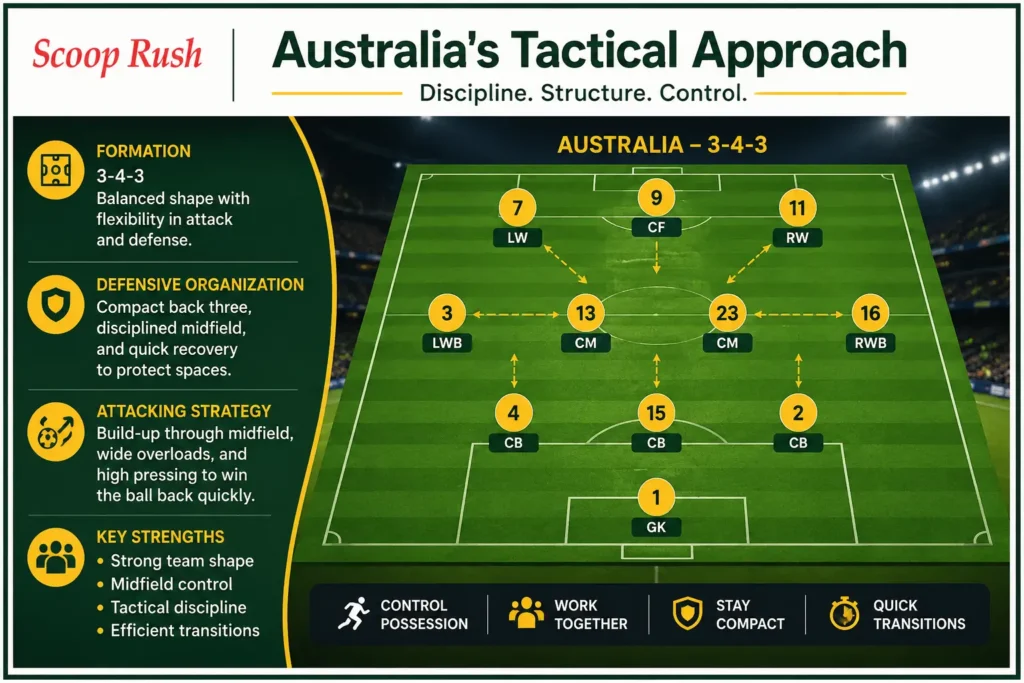
Australia’s Tactical Approach
Australia lined up in a 3-4-3 formation and showed a clear commitment to controlling possession.
The team completed more passes than Paraguay and maintained 56 percent possession, reflecting their willingness to dictate the rhythm of the match.
Paraguay managed only two shots on target despite creating eight attempts overall. Australia’s back line remained organized and prevented the South American side from generating sustained attacking momentum.
The defensive unit also avoided unnecessary mistakes, helping the team secure a clean sheet in a high-pressure environment.
Creating Chances Without Finishing
While Australia produced 12 shots and five efforts on target, converting those opportunities proved difficult.
The attacking players found space at times and forced Paraguay’s defense to remain alert, but the decisive moment never arrived.
Still, the ability to create more chances than their opponents offered encouragement and demonstrated why Australia finished ahead of Paraguay in the group.
Paraguay’s Defensive Resilience
Although Paraguay saw less possession and fewer attacking opportunities, their defensive performance played a major role in securing the draw.
The South Americans showed patience and discipline throughout the contest.
Compact Defensive Shape
Paraguay’s defensive structure limited Australia’s effectiveness in dangerous areas.
Even when Australia controlled possession, Paraguay maintained good positioning and prevented the game from becoming one-sided.
Their ability to withstand pressure helped them earn a valuable point against a direct competitor in the standings.
Paraguay introduced Junior Alonso in place of Matías Galarza late in the match. Another substitution saw Damián Bobadilla replaced by Diego Gómez.
Australia also made attacking changes, including the introduction of Nestory Irankunda for Riley McGree. Later, Paul Okon-Engstler was replaced by Nicholas Milanovic.
These substitutions were intended to provide fresh legs and potentially create a breakthrough. However, neither side was able to produce the decisive attacking sequence needed to separate the teams.
Australia’s ability to control possession, create more chances, and maintain defensive discipline helped them secure the point they needed to remain second in the group. Paraguay responded with a resilient and organized performance that prevented Australia from finding a breakthrough.
In the end, the match demonstrated how tournament football is often decided by fine margins. While neither side celebrated a victory, Australia emerged with the greater reward as the draw ensured their place above Paraguay in the final Group D standings.
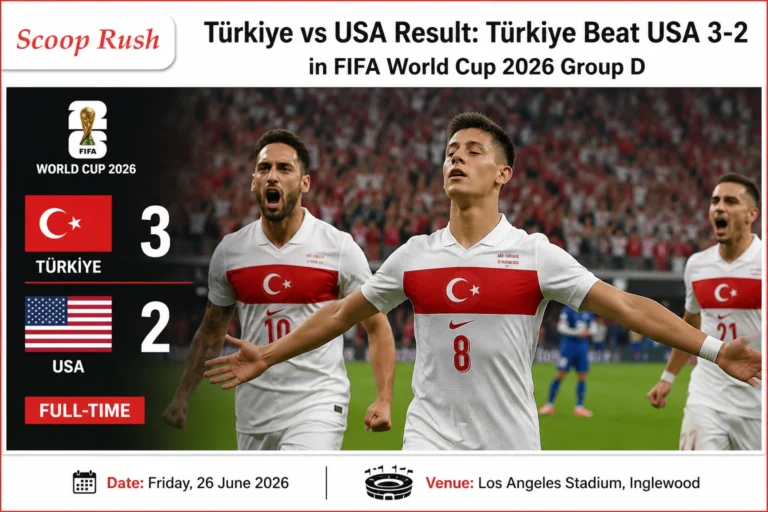
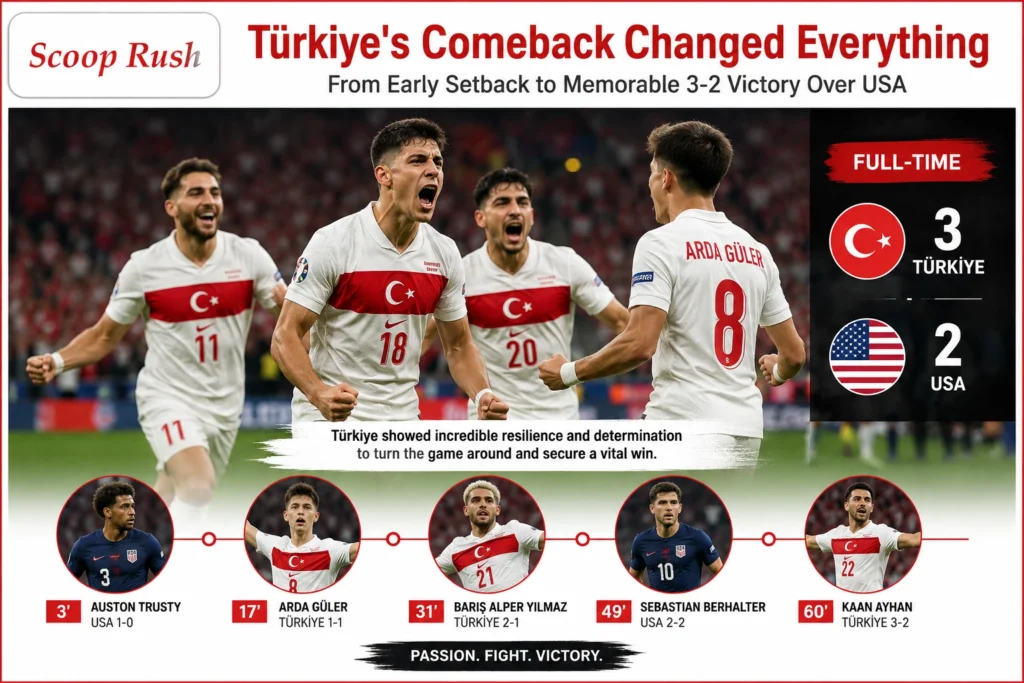
FIFA World Cup 2026™ Group D Full-Time: Türkiye 3-2 USA Date: Friday, 26 June 2026 Venue: Los Angeles Stadium, Inglewood
What looked like another comfortable night for the United States turned into one of the biggest turnarounds of the FIFA World Cup 2026 group stage. Despite taking an early lead and dominating possession, the USA suffered a dramatic 3-2 defeat as Türkiye produced a resilient comeback to keep their tournament hopes alive and secure a place in the knockout rounds.
The Türkiye vs USA Result: Türkiye Beat USA 3-2 in FIFA World Cup 2026 Group D will be remembered as one of the most entertaining matches of the group stage. Played at Los Angeles Stadium, Inglewood, the contest featured five goals, momentum swings, tactical adjustments, and a determined Turkish side that refused to give up after falling behind early.
While the United States controlled much of the ball and created more chances, Türkiye proved that efficiency in front of goal often matters more than possession. Clinical finishing, disciplined defending during key moments, and timely substitutions helped Türkiye overturn the deficit and claim an important victory.
Although the USA lost the match, they still finished at the top of Group D, while Türkiye advanced to the Round of 32 after securing their first win of the tournament.
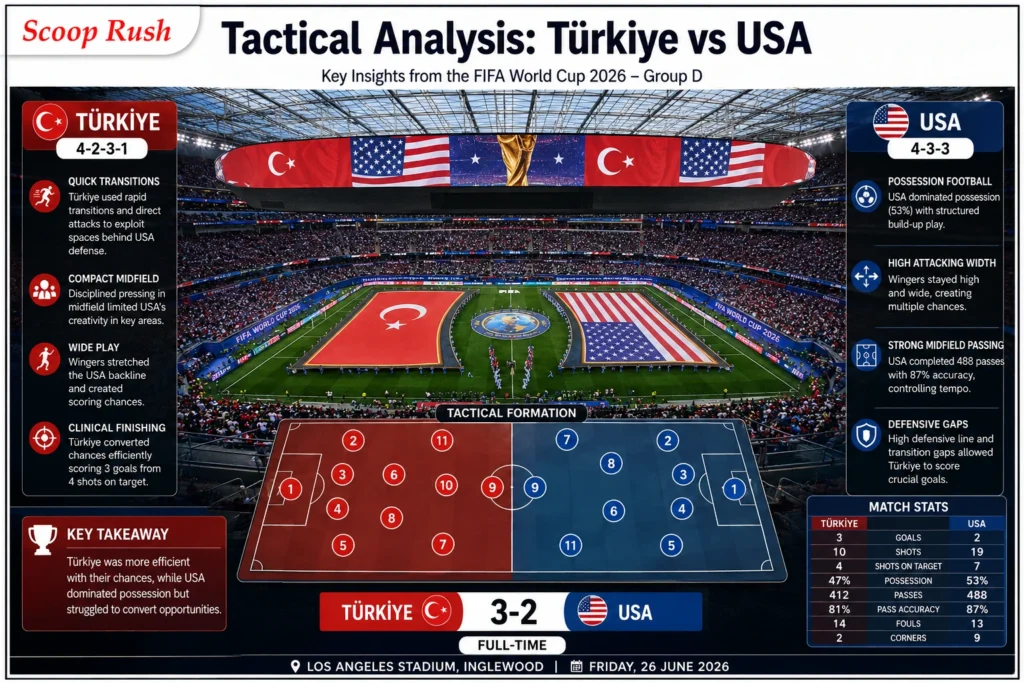
Tactical Analysis: Türkiye vs USA
Türkiye responded brilliantly.
Arda Güler equalized in the 17th minute, restoring confidence to the Turkish side and changing the momentum of the match. The equalizer energized Türkiye, who began pressing higher up the field.
Just before halftime, Barış Alper Yılmaz completed the comeback by scoring in the 31st minute. Türkiye entered the break with a 2-1 advantage despite seeing less of the ball.
The second half remained highly competitive.
The USA fought back when Sebastian Berhalter scored in the 49th minute, bringing the match level once again at 2-2.
However, Türkiye refused to settle.
In the 60th minute, Kaan Ayhan scored what proved to be the winning goal, restoring Türkiye’s lead at 3-2. The Turkish defense then held firm through the remaining minutes to seal an impressive victory.
Match Scoreline
Goalscorers
Türkiye
Arda Güler (17′)
Barış Alper Yılmaz (31′)
Kaan Ayhan (60′)
USA
Auston Trusty (3′)
Sebastian Berhalter (49′)
Türkiye’s Comeback Changed Everything
Conceding after only three minutes could easily have disrupted Türkiye’s game plan.
Instead, the team responded calmly.
Rather than abandoning their structure, Türkiye continued attacking through quick transitions and made better use of the opportunities they created.
Their equalizer shifted confidence completely.
By halftime, Türkiye had scored twice from limited chances, demonstrating impressive efficiency in the final third.
Even after the USA equalized early in the second half, Türkiye maintained composure instead of panicking. Their patience paid off when Kaan Ayhan found the decisive goal midway through the second half.
Clinical Finishing Made the Difference
One of the biggest stories from the match was Türkiye’s efficiency.
Despite recording only:
10 total shots
4 shots on target
47% possession
they managed to score three goals.
Every major attacking opportunity was taken with confidence, highlighting excellent finishing and smart decision-making around the penalty area.
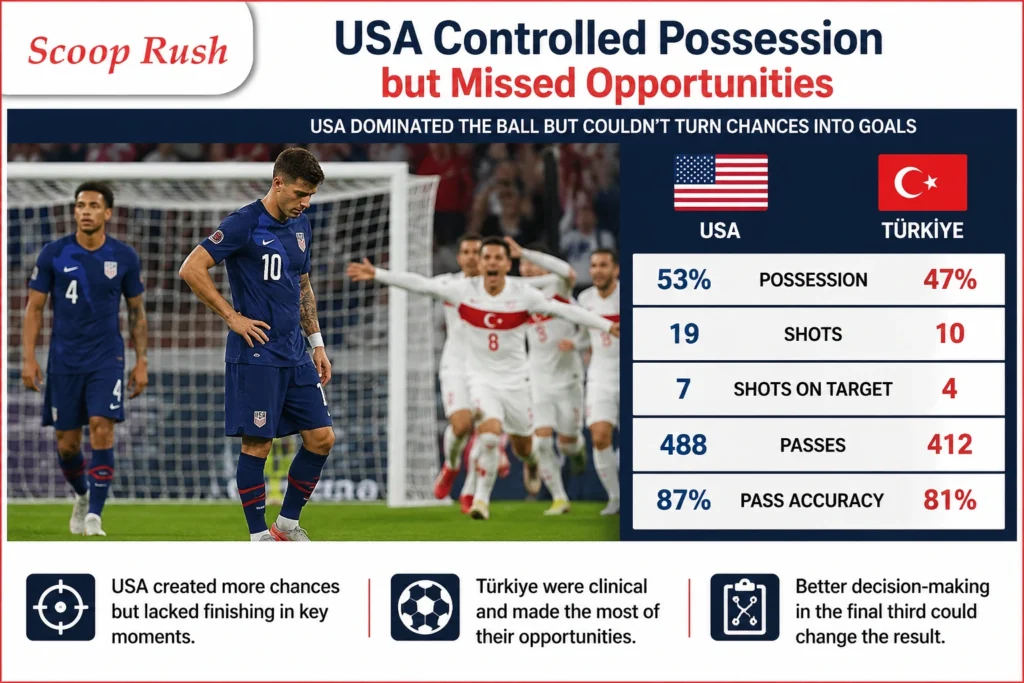
USA Controlled Possession but Missed Opportunities
The statistics tell an interesting story.
The United States enjoyed:
53% possession
19 total shots
7 shots on target
488 completed passes
87% pass accuracy
Those numbers usually point toward victory.
Instead, the Americans struggled to convert enough of their chances while leaving space behind their defensive line during key transitions.
Despite producing nearly twice as many attempts as Türkiye, the USA finished with two goals and no points from the match.
Strong Build-Up Play Wasn’t Enough
The United States moved the ball confidently throughout the match.
Their passing combinations frequently pushed Türkiye into defensive positions, and they consistently created opportunities inside the attacking third.
However, football is ultimately decided by goals.
Türkiye’s ability to capitalize on crucial moments outweighed the USA’s statistical dominance.
Türkiye vs USA Key Match Statistics
The final numbers underline just how competitive the game was.
Statistic
Türkiye
USA
Goals
3
2
Shots
10
19
Shots on Target
4
7
Possession
47%
53%
Passes
412
488
Pass Accuracy
81%
87%
Fouls
14
13
Yellow Cards
0
1
Red Cards
0
0
Offsides
1
5
Corners
2
9
Although the USA led nearly every attacking statistic, Türkiye made the most of their opportunities and defended effectively when it mattered most.
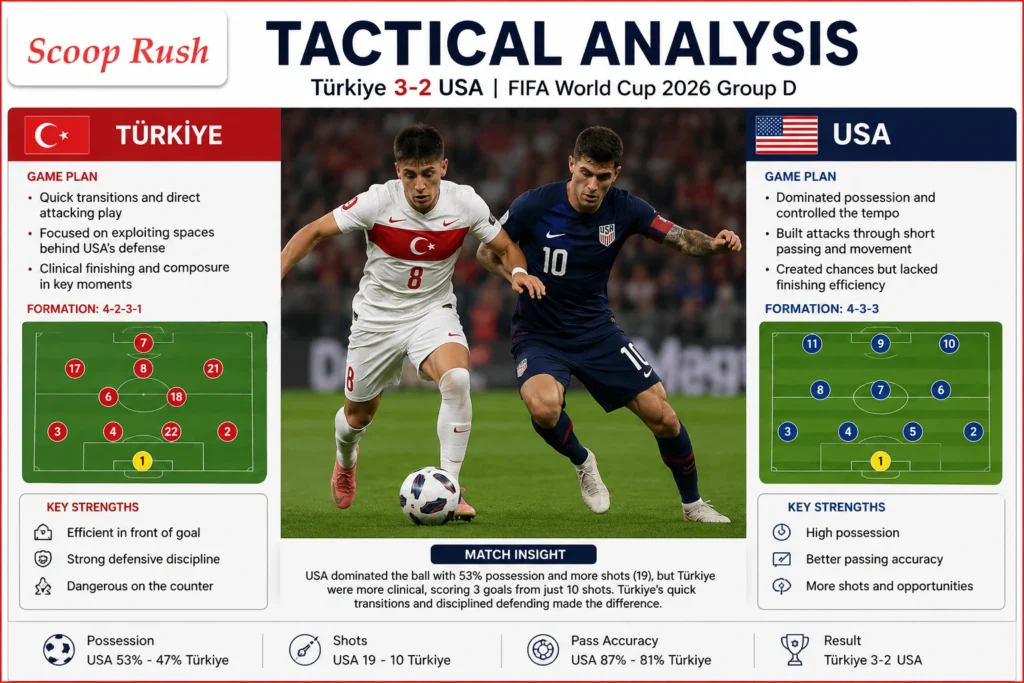
Tactical Analysis: Türkiye vs USA
Türkiye approached the match with patience.
Rather than competing directly in long periods of possession, they focused on quick transitions and direct attacking movements.
This approach proved highly effective against an American side that often committed players forward.
The USA’s game plan centered around controlling possession and building attacks through structured passing sequences.
While that strategy created numerous opportunities, defensive lapses during transition allowed Türkiye to punish them repeatedly.
Although the USA lost this match, they still finished first in Group D.
Türkiye’s victory secured qualification to the knockout stage, making this comeback one of the most significant results of the group.
Türkiye vs USAStandout Performers
Several players delivered decisive performances.
Arda Güler Scored Türkiye’s equalizer and inspired the comeback with an influential attacking display.
Barış Alper Yılmaz Produced an excellent finish before halftime to give Türkiye control of the match.
Kaan Ayhan Scored the winning goal that ultimately sent Türkiye into the knockout rounds.
Auston Trusty Opened the scoring inside three minutes and gave the USA a dream start.
Sebastian Berhalter Brought the Americans level early in the second half and kept the contest alive until Türkiye’s winner.
What This Result Means
The victory represents a major confidence boost for Türkiye as they move into the knockout rounds.
Coming from behind against a strong United States side demonstrates resilience, composure, and belief under pressure.
For the USA, the defeat serves as a reminder that controlling possession and creating chances does not always guarantee success. Defensive concentration and finishing efficiency will become even more important in the knockout stage.
Despite the setback, topping Group D ensures the Americans remain well positioned for the next phase of the FIFA World Cup 2026.
Türkiye showed outstanding character after conceding within the opening minutes, responding with three well-taken goals and determined defending to secure a famous victory. Although the USA dominated possession, passing, and shot count, Türkiye proved that clinical finishing and composure in decisive moments are often the difference between winning and losing at the FIFA World Cup.
As both teams prepare for the knockout stage, this thrilling encounter will stand out as one of the most entertaining matches of the tournament so far.
FAQs
1. What was the final score between Türkiye and the USA in the FIFA World Cup 2026? Türkiye defeated the USA 3-2 in a thrilling Group D match.
2. Who scored for Türkiye against the USA? Arda Güler, Barış Alper Yılmaz, and Kaan Ayhan scored Türkiye’s three goals.
3. Who scored for the United States? Auston Trusty opened the scoring before Sebastian Berhalter added the USA’s second goal.
5. Which team had more possession in the match? The USA finished with 53% possession, while Türkiye recorded 47%, but Türkiye converted their chances more efficiently to earn a 3-2 victory.
Investor Jeremy Grantham Shares Investment Advice and AI Warning
Veteran investorJeremy Grantham, widely recognized for accurately warning about the dot-com crash and the 2008 global financial crisis, has revealed how he believes ordinary people should invest their monthly income. During a recent appearance on The Diary of a CEO podcast hosted by Steven Bartlett, Grantham also shared his concerns about artificial intelligence, cryptocurrency, and the future of work.
The billionaire investor believes investors should think beyond the United States while also preparing for significant technological disruption.
Jeremy Grantham’s Recommended Investment Strategy
Rather than following the common advice of investing heavily in the S&P 500, Grantham recommends building a diversified portfolio focused primarily on international markets.
His suggested allocation includes:
Around 60% in non-US equities
5–10% in precious metals
A small allocation to real estate where appropriate
The remaining portion in bonds
According to Grantham, many investors assume recent market leaders will continue outperforming indefinitely. He argues that history shows financial leadership regularly rotates between regions and asset classes.
He believes international and emerging markets currently offer stronger long-term opportunities than many US stocks.
Why Grantham Isn’t Investing in the S&P 500
Although the US stock market has delivered exceptional returns over the past two decades, Grantham believes valuations have become expensive.
He pointed out that emerging markets have recently outperformed many major US indexes, suggesting investors should avoid assuming past winners will always remain the best investments.
Instead of chasing recent trends, Grantham encourages investors to focus on long-term market cycles and remain patient.
Long-Term Investing Over Frequent Trading
Grantham emphasized that successful investing isn’t about constantly buying and selling.
He believes investors should:
Invest consistently
Stay diversified
Avoid emotional decisions
Hold investments for the long term
This disciplined approach, he argues, reduces risk while allowing portfolios to benefit from long-term market growth.
Jeremy Grantham’s Strong View on Cryptocurrency
Grantham also expressed one of his strongest opinions during the interview when discussing cryptocurrencies.
He revealed that he owns no cryptocurrency and has never invested in digital assets.
According to Grantham, cryptocurrencies are:
Too volatile to function as reliable stores of value
Not widely used for everyday transactions
Primarily speculative investments
While acknowledging that cryptocurrencies could remain popular for some time, he questioned their long-term value and sustainability.
AI Could Transform the Global Job Market
Beyond investing, Grantham also discussed artificial intelligence and robotics, warning that rapid technological development could dramatically reshape employment.
He believes automation will first replace many routine operational and repetitive jobs, particularly roles involving predictable physical tasks.
As AI-powered robots become more capable and affordable, businesses may increasingly automate work currently performed by humans.
Concerns About AI’s Rapid Growth
Grantham warned that widespread AI adoption could create significant economic disruption.
His concerns include:
Large-scale job displacement
Increased demand for electricity and advanced computer chips
Growing dependence on automation
Economic inequality during technological transitions
While acknowledging AI’s impressive capabilities, Grantham believes society needs more time to adapt before automation becomes widespread.
Skills That Could Remain Valuable
Looking ahead, Grantham suggested that practical careers may prove more resilient in an AI-driven economy.
He highlighted areas such as:
Engineering
Agriculture
Skilled technical trades
Infrastructure development
These professions, he believes, may continue requiring human expertise even as AI becomes more advanced.
Final Thoughts
Jeremy Grantham has built a reputation by identifying major financial bubbles before they burst. While no investor can predict the future with certainty, his latest advice reflects a cautious approach to both investing and emerging technologies.
His recommendations emphasize diversification, patience, and avoiding speculative assets, while his AI warnings encourage governments, businesses, and workers to prepare for significant changes in the global workforce.
Whether investors agree with his views or not, Grantham’s long history of studying market cycles ensures his opinions continue to attract attention from financial professionals worldwide.
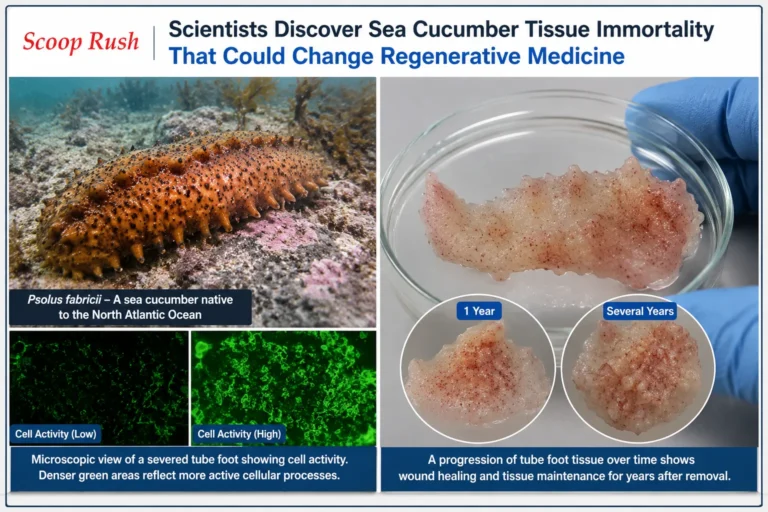
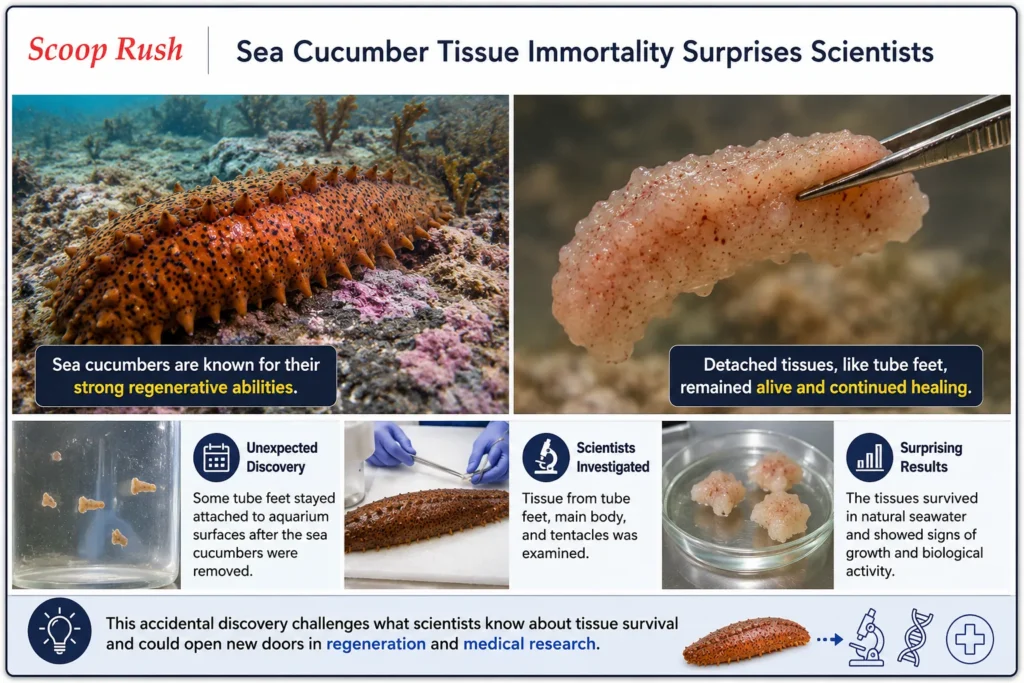
A piece of sea cucumber tissue that scientists expected to die after being separated from its body has shocked researchers by surviving, healing itself, and continuing biological activity for more than three years. This discovery of sea cucumber tissue immortality has challenged traditional scientific ideas about how tissues survive outside a complete organism.
Scientists studying the North Atlantic sea cucumber species Psolus fabricii discovered that detached tissues did not simply decay after being removed from the animal. Instead, these tissues continued repairing themselves, absorbing nutrients, and maintaining cellular activity without a mouth, digestive system, or connection to the original body.
The discovery has created new interest in regeneration, tissue repair, and aging research. Researchers believe this unusual ability could help scientists better understand how living tissues survive and maintain themselves in conditions where normal tissues would stop functioning.
The discovery of sea cucumber tissue immortality happened unexpectedly during research at Memorial University of Newfoundland.
Scientists were studying live sea cucumbers when they noticed something unusual. Some tube feet from the animals remained attached to aquarium surfaces after the sea cucumbers were removed.
Normally, researchers expected these detached tissues to break down and die.
However, the tissues remained alive.
Days turned into weeks, and weeks turned into months. The detached pieces continued healing and showed signs of growth even though they were no longer connected to the original animal.
Lead researcher Sara Jobson explained that sea cucumbers are already known for their strong regenerative abilities. They can regrow lost body parts, but scientists had never closely studied what happens to tissues that are completely separated from the animal.
To understand this unusual behavior, researchers examined tissue removed from different parts of the sea cucumber, including:
Tube feet
Main body tissue
Tentacle tissue
The results surprised the research team. The separated tissues survived in natural seawater and continued showing signs of biological activity.
How Did the Detached Sea Cucumber Tissue Survive?
Normally, when tissue is removed from an organism, it loses important support systems. Blood supply, nutrients, and communication signals from the body are no longer available.
Because of this, most tissues begin to deteriorate.
However, the sea cucumber tissue behaved differently.
Researchers found that the detached tissue could:
Repair damaged areas
Produce new cells
Maintain immune activity
Respond to touch
Absorb nutrients from seawater
One of the most surprising findings was that the tissue survived without a mouth or digestive system.
Scientists discovered that the tissue appeared to absorb amino acids from the surrounding seawater. These nutrients helped the tissue continue functioning outside the animal’s body.
Furthermore, the research was performed in natural seawater instead of a highly controlled sterile environment.
Despite bacteria and microorganisms being present, the tissue continued to survive.
Why Scientists Call It “Zombie Tissue”
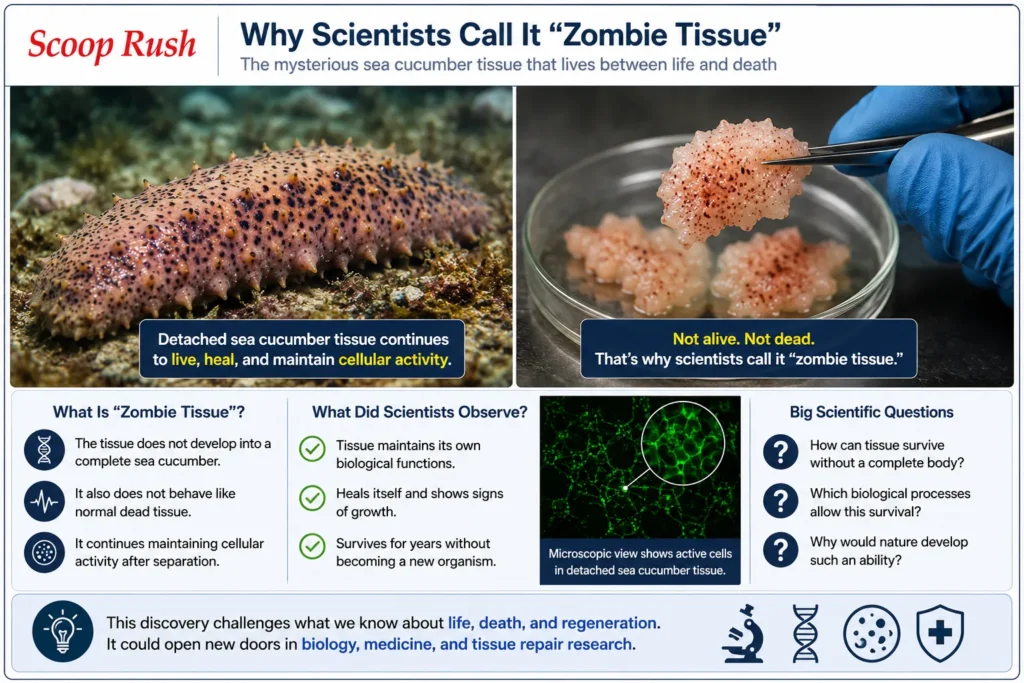
Researchers described the separated sea cucumber tissue as something between living and dead.
The tissue did not develop into a complete new sea cucumber. However, it also did not behave like normal dead tissue.
Because of this unusual condition, scientists compared it to “zombie tissue.” The term describes tissue that continues maintaining cellular activity even after being separated from a complete organism.
Sara Jobson explained that these tissues appeared to maintain their own biological functions. However, they did not become independent animals.
This discovery created several important scientific questions:
How can tissue survive without a complete body?
Which biological processes allow this survival?
Why would nature develop such an ability?
Sea Cucumber Regeneration Has Long Interested Scientists
Sea cucumbers belong to a group of animals called echinoderms. This group also includes starfish and sea urchins.
These animals are widely known for their ability to regenerate.
For example, some sea cucumbers can remove internal organs as a defense mechanism and later replace them. Additionally, some species can reproduce through fission, where parts of the animal can develop into complete organisms.
However, scientists previously believed that separated tissues would eventually stop functioning.
The discovery of sea cucumber tissue immortality shows that tissue survival and regeneration may be more complex than researchers previously understood.
A New Model for Studying Aging and Healing
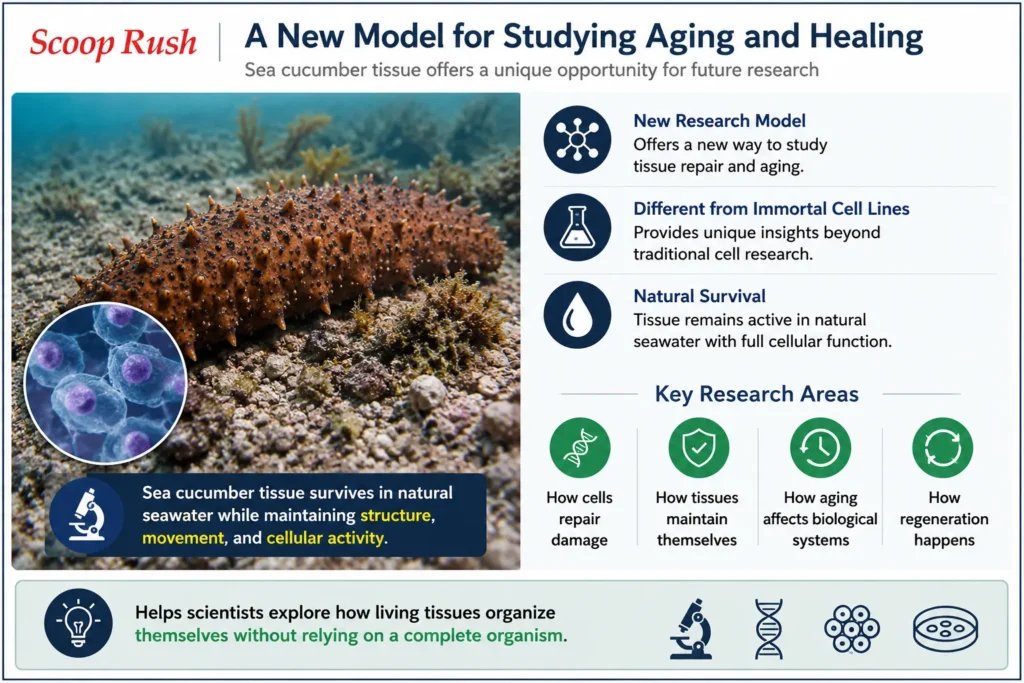
The discovery could provide scientists with a new model for studying tissue repair and aging.
Researchers have studied immortal cell lines for many years. One famous example is HeLa cells, which have helped scientists understand many biological processes.
However, sea cucumber tissue provides a different research opportunity.
The tissue survived in natural seawater while maintaining structure, movement, and cellular activity.
Scientists believe these tissues may help researchers study:
How cells repair damage
How tissues maintain themselves
How aging affects biological systems
How regeneration happens
Furthermore, this discovery may help scientists explore how living tissues organize themselves without depending completely on a full organism.
The Difference Between Immortal Cells and Immortal Tissue
Immortal cells and immortal tissues are not the same.
Some laboratory cell lines can continue growing under controlled conditions. However, the sea cucumber discovery involves tissue that maintained activity outside the body.
The tissue did more than survive. It continued healing, moving, and showing cellular organization.
Researchers observed that the tissue remained active for more than three years before ending the experiment to publish their findings.
However, scientists still need further research to confirm whether these tissues are truly immortal. Studying their DNA structure may help reveal whether the cells experience normal aging or have special survival mechanisms.
What This Discovery Means for Future Research
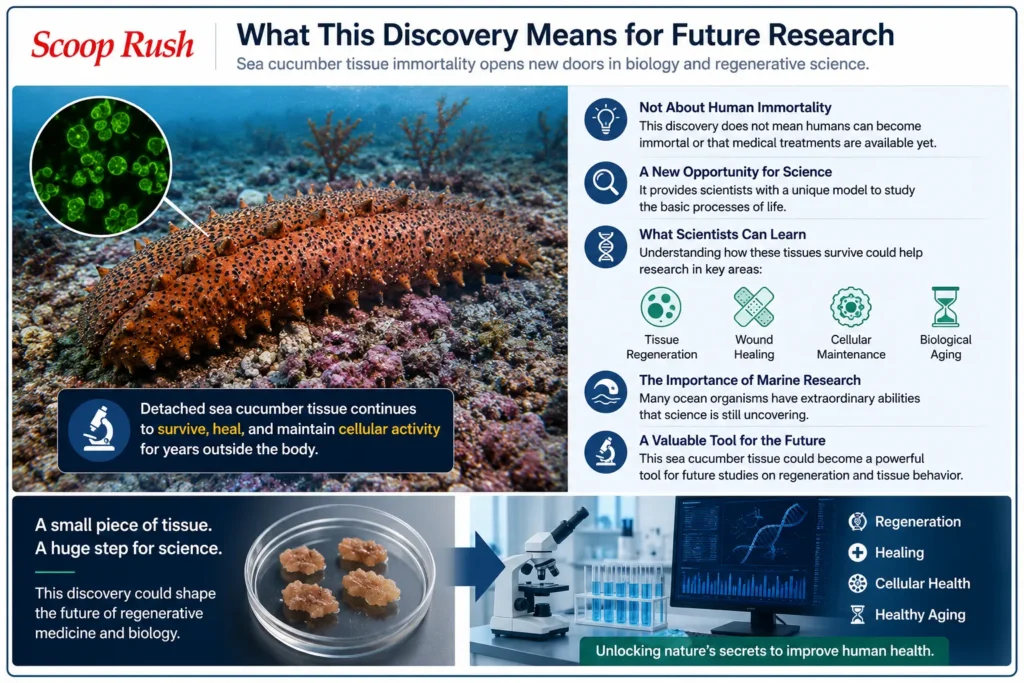
The discovery of sea cucumber tissue immortality does not mean humans can become immortal or that medical treatments are immediately available.
Instead, it gives scientists a new opportunity to study the basic processes of life.
Understanding how these tissues survive could provide information about:
Tissue regeneration
Wound healing
Cellular maintenance
Biological aging
Additionally, the discovery highlights the importance of marine research. Many ocean organisms have unique abilities that scientists are still working to understand.
The researchers believe this sea cucumber tissue could become a valuable tool for future studies focused on regeneration and tissue behavior.
Conclusion: Sea Cucumber Tissue Immortality Changes How Scientists View Life
The discovery of sea cucumber tissue immortality has challenged traditional ideas about what happens when tissue is separated from a living organism.
The pieces of Psolus fabricii did not become new animals, but they also did not die. Instead, they continued healing, absorbing nutrients, and maintaining cellular activity for years.
Although scientists need more research to understand the exact mechanisms behind this ability, the discovery provides a new way to study regeneration, aging, and tissue survival.
This finding also shows that nature still holds many biological mysteries, and unexpected discoveries can change how scientists understand life itself.
FAQs
1. What is sea cucumber tissue immortality?
Sea cucumber tissue immortality refers to the unusual ability of separated Psolus fabricii tissues to survive, heal, and maintain cellular activity for more than three years.
2. Which sea cucumber species showed this ability?
Scientists studied Psolus fabricii, a sea cucumber species native to the North Atlantic Ocean.
3. Can the sea cucumber tissue grow into a complete animal?
No. Researchers found that the tissue survived independently but did not develop into a complete sea cucumber.
4. Why is this discovery important?
This discovery may help scientists study tissue regeneration, healing, aging, and how cells maintain themselves over time.
5. Are sea cucumbers truly immortal?
No. Scientists have not confirmed that sea cucumbers or their tissues are completely immortal. More research is needed.