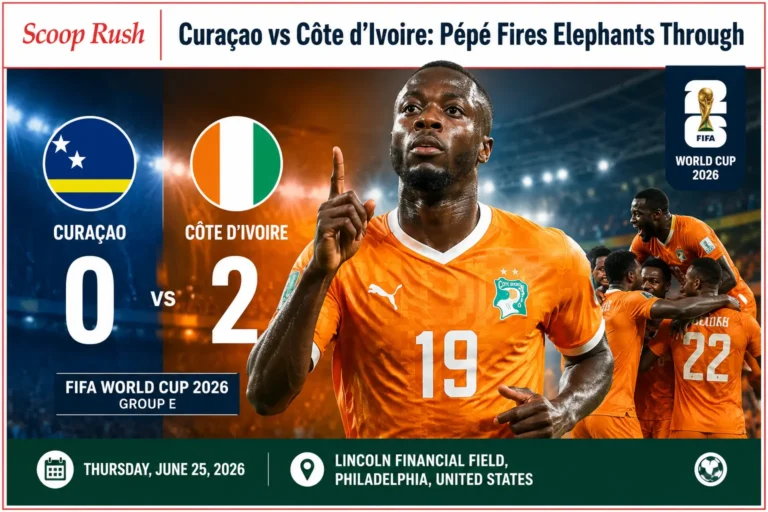
Competition: FIFA World Cup 2026, Group E Full Time: Curaçao 0-2 Côte d’Ivoire Venue: Lincoln Financial Field, Philadelphia, United States Date: Thursday, June 25, 2026
Curaçao vs Côte d’Ivoire Match Summary
Curaçao vs Côte d’Ivoire ended in a convincing 2-0 victory for the Elephants, who secured qualification for the FIFA World Cup 2026 Round of 32. Nicolas Pépé starred with a superb brace as Côte d’Ivoire produced a disciplined display at both ends of the pitch. Meanwhile, Curaçao battled throughout the contest but could not find a way past the well-organised Ivorian defence.
The result ensured Côte d’Ivoire finished second in Group E on goal difference behind Germany. More importantly, the Elephants reached the World Cup knockout stage for the first time in their history.
Curaçao vs Côte d’Ivoire First Half
Côte d’Ivoire made the perfect start and took control almost immediately. Their quick passing and aggressive pressing forced Curaçao onto the back foot from the opening whistle.
The breakthrough came in just the 7th minute. Nicolas Pépé reacted quickly inside the penalty area and calmly finished to give the Elephants an early advantage.
Although Curaçao tried to settle into the match, Côte d’Ivoire remained organised and controlled possession for much of the first half. The Elephants defended confidently and carried their one-goal lead into the break.
Curaçao vs Côte d’Ivoire Second Half
Curaçao returned with greater attacking intent after half-time, hoping to level the score. However, Côte d’Ivoire stayed compact and continued to threaten on the counterattack.
The decisive moment arrived in the 64th minute when Ibrahim Sangaré set up Nicolas Pépé for his second goal of the evening. The finish doubled Côte d’Ivoire’s advantage and effectively secured qualification.
From that point onward, the Elephants managed the game professionally. They limited Curaçao’s attacking opportunities and comfortably preserved another valuable clean sheet.
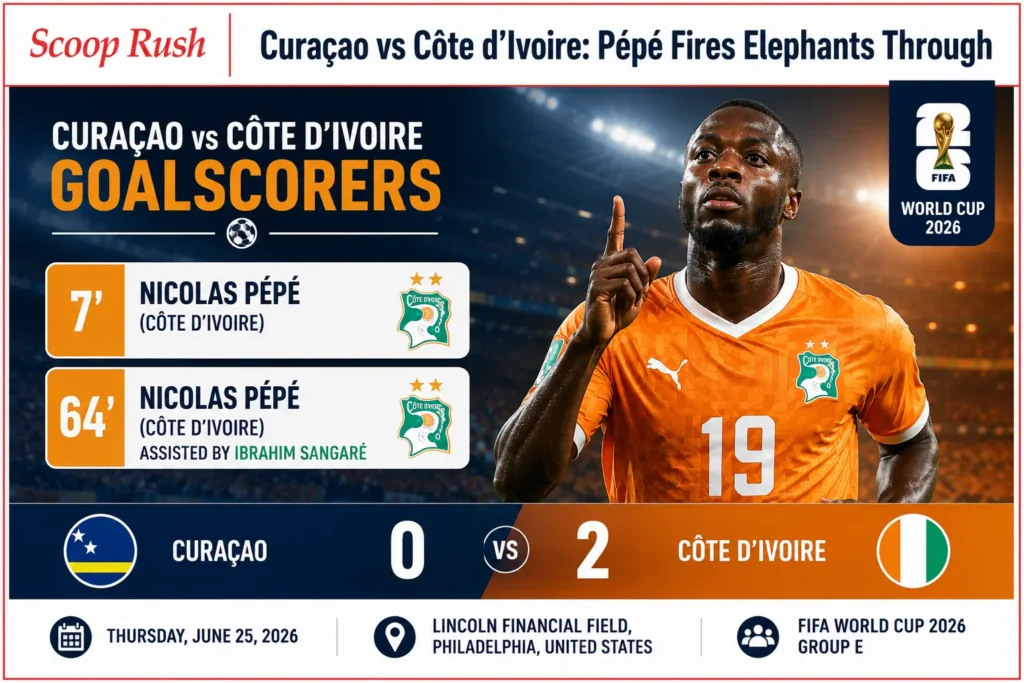
Curaçao vs Côte d’Ivoire Goalscorers
7′ Nicolas Pépé (Côte d’Ivoire)
64′ Nicolas Pépé (Côte d’Ivoire), assisted by Ibrahim Sangaré
Tactical Analysis: Curaçao vs Côte d’Ivoire
Curaçao vs Côte d’Ivoire highlighted the importance of organisation and efficiency. Throughout the match, the Elephants stayed compact in defence and attacked with pace whenever space opened up. Quick passing through midfield allowed them to control possession and build dangerous attacks.
On the flanks, the wide players stretched Curaçao’s defensive line and created room for Nicolas Pépé to make intelligent runs into the box. Ibrahim Sangaré added balance in midfield by recovering possession regularly and setting up Pépé’s second goal with a well-timed assist.
Despite showing determination, Curaçao found it difficult to break through the disciplined Ivorian back line. As a result, clear scoring opportunities remained limited, while Côte d’Ivoire managed the game confidently and secured a deserved place in the Round of 32.
Curaçao vs Côte d’Ivoire Player Performances
Nicolas Pépé delivered the standout performance of the match. His early goal settled the team, while his second-half strike confirmed Côte d’Ivoire’s place in the knockout stage. His movement, composure, and finishing proved decisive throughout the contest.
Ibrahim Sangaré also impressed with an energetic midfield display. He protected the defence, controlled possession, and provided the assist for Pépé’s second goal. The Ivorian defence performed with discipline and concentration to secure an important clean sheet.
For Curaçao, the players continued to compete until the final whistle. However, they lacked the attacking quality needed to break down Côte d’Ivoire’s organised defensive structure.
What the Result Means
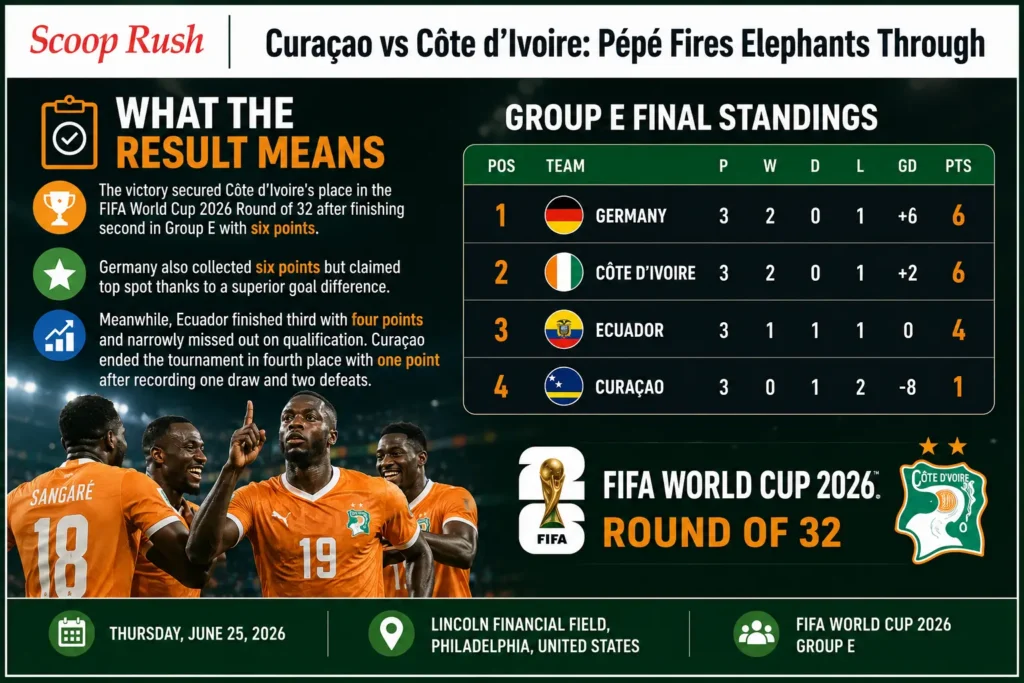
The victory secured Côte d’Ivoire’s place in the FIFA World Cup 2026 Round of 32 after finishing second in Group E with six points. Germany also collected six points but claimed top spot thanks to a superior goal difference.
Meanwhile, Ecuador finished third with four points and narrowly missed out on qualification. Curaçao ended the tournament in fourth place with one point after recording one draw and two defeats.
Group E Final Standings
Position
Team
Played
Won
Drawn
Lost
Goal Difference
Points
1
Germany
3
2
0
1
+6
6
2
Côte d’Ivoire
3
2
0
1
+2
6
3
Ecuador
3
1
1
1
0
4
4
Curaçao
3
0
1
2
-8
1
Historic Achievement for the Elephants
This victory marked a landmark moment for Côte d’Ivoire. Thanks to Nicolas Pépé’s match-winning brace, the Elephants qualified for the FIFA World Cup knockout stage for the first time in their history.
The team combined disciplined defending with clinical finishing to produce one of their most significant World Cup performances. As a result, Côte d’Ivoire will enter the Round of 32 with growing confidence and the belief that they can continue their memorable campaign.
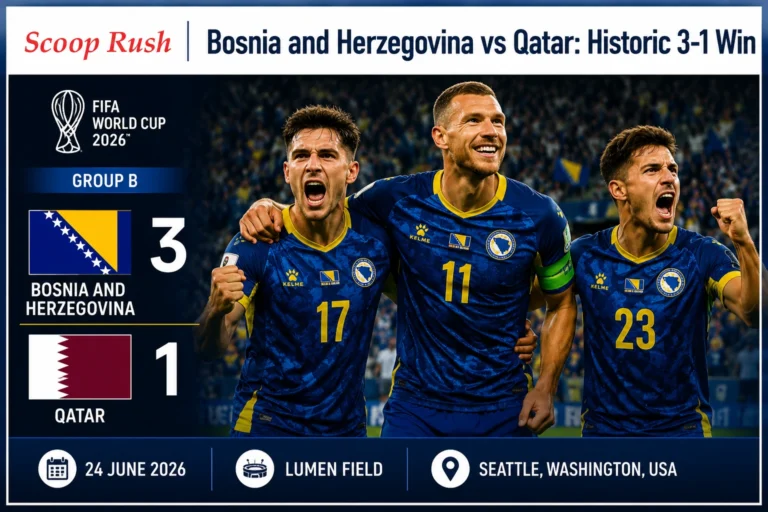
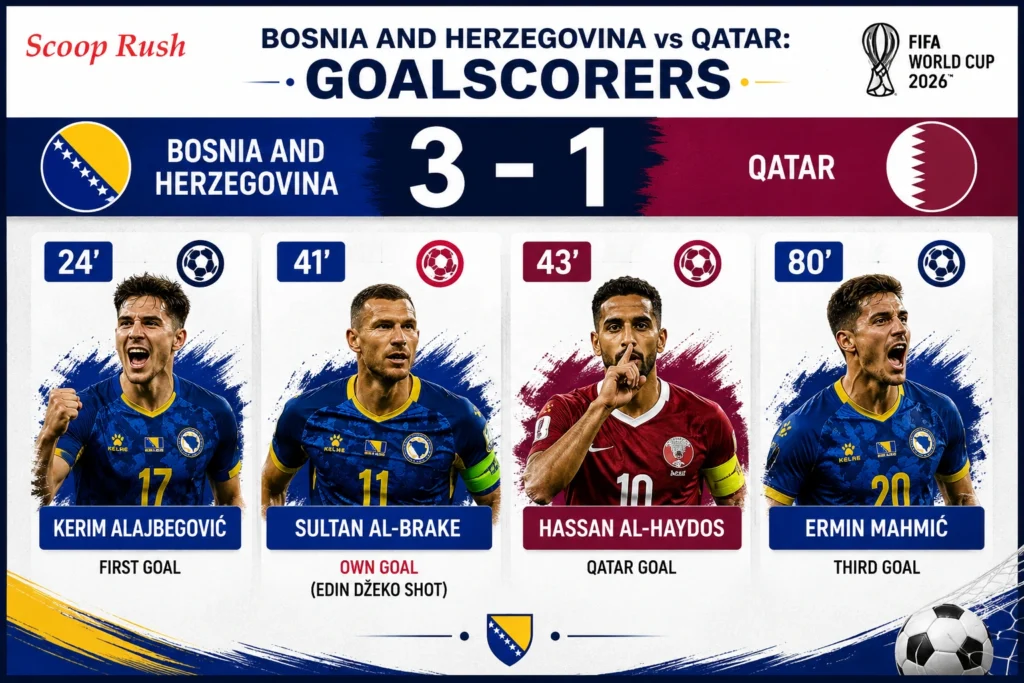
Competition: FIFA World Cup 2026, Group B Full Time: Bosnia and Herzegovina 3-1 Qatar Venue: Lumen Field, Seattle, Washington, USA Date: 24 June 2026
Bosnia and Herzegovina vs Qatar: Match Summary
Bosnia and Herzegovina vs Qatar ended in a deserved 3-1 victory as Bosnia secured a historic place in the FIFA World Cup 2026 Round of 32. The European side controlled much of the match and created the better chances throughout the contest. Although Qatar pulled a goal back before half-time, Bosnia stayed composed and finished the job with another goal late in the second half.
The victory moved Bosnia onto four points in Group B. As a result, they advanced as one of the tournament’s best third-placed teams and booked a Round of 32 meeting with the United States.
Bosnia and Herzegovina vs Qatar: Goalscorers
Bosnia took the lead through Kerim Alajbegović, who became his country’s youngest-ever FIFA World Cup goalscorer. The 18-year-old cut inside before curling a brilliant right-footed strike into the top corner.
Just before the break, Bosnia doubled their advantage when Sultan Al-Brake turned Edin Džeko’s powerful effort into his own net.
Qatar responded before half-time as captain Hassan Al-Haydos finished from close range to reduce the deficit and keep his side in the contest.
However, Bosnia restored their two-goal cushion late in the second half when substitute Ermin Mahmić scored with a deflected effort to seal an important 3-1 victory.
Bosnia and Herzegovina vs Qatar: Match Stats
Bosnia edged possession and produced the more effective attacking display.
Stat
Bosnia and Herzegovina
Qatar
Possession
55%
45%
Shots
8
3
Shots on Target
5
2
Passes
486
406
Pass Accuracy
86%
84%
Fouls
8
14
Yellow Cards
1
2
Red Cards
0
0
Corners
8
3
Despite a modest number of chances, Bosnia finished clinically and remained in control for most of the match.
Bosnia and Herzegovina vs Qatar: Tactical Analysis
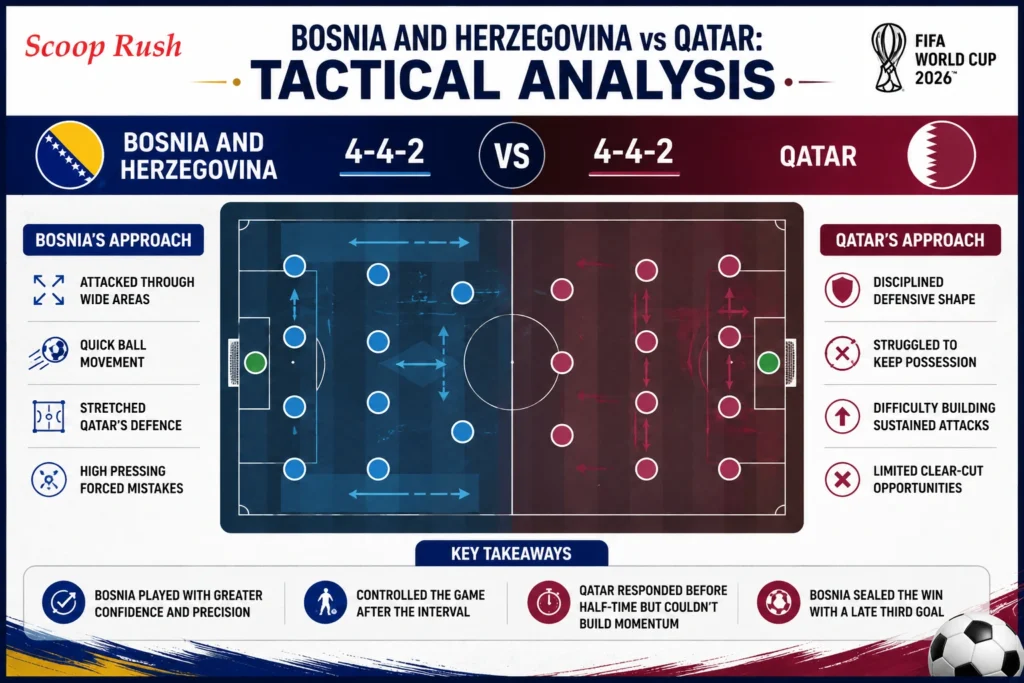
The match featured both sides setting up in a 4-4-2 formation. However, Bosnia executed their approach with greater confidence and precision. They attacked through the wide areas, moved the ball quickly, and regularly stretched Qatar’s defence. Their pressing also forced several mistakes in dangerous positions.
Qatar defended with discipline but struggled to keep possession and build sustained attacks. Even after reducing the deficit before half-time, they found it difficult to create further clear-cut opportunities. Bosnia managed the game well after the interval and wrapped up the victory with a late third goal.
Bosnia and Herzegovina vs Qatar: Key Performers
Kerim Alajbegović stole the headlines by becoming Bosnia and Herzegovina’s youngest-ever FIFA World Cup goalscorer with a superb opening strike.
Captain Edin Džeko marked his 150th international appearance with another influential display. His effort forced the own goal that doubled Bosnia’s lead.
Meanwhile, Esmir Bajraktarević provided pace and creativity on the wing, consistently troubling Qatar’s back line.
For Qatar, Hassan Al-Haydos once again demonstrated his experience by scoring his team’s only goal and leading by example.
Bosnia and Herzegovina vs Qatar: What the Result Means
The victory marked a historic moment for Bosnia and Herzegovina. Their four-point haul was enough to qualify as one of the FIFA World Cup’s best third-placed teams, sending them into the Round of 32 for the first time in the nation’s history. They will now face the United States in the knockout stage.
Meanwhile, Qatar finished bottom of Group B with one point. Despite their determination, they were unable to secure a victory and exited the tournament after the group stage.
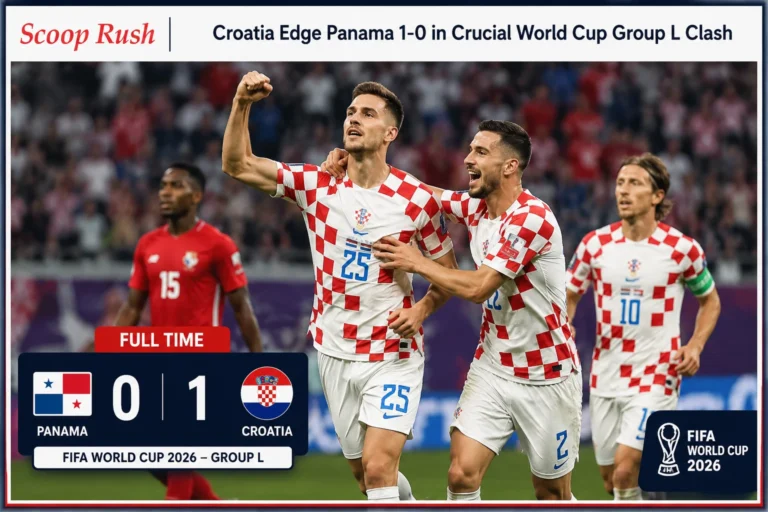
Final Score: Panama 0-1 Croatia Competition: FIFA World Cup 2026 – Group L Venue: Toronto Stadium
Croatia Secure Crucial Win Over Panama in Group L
A single goal was enough to separate the two sides as Panama vs Croatia ended with Croatia claiming a valuable 1-0 victory in their FIFA World Cup 2026 Group L clash at Toronto Stadium.
The tightly contested encounter remained scoreless throughout the opening half before Croatia found the breakthrough early in the second period. The win gives Croatia its first victory of the tournament and strengthens its position in the race for a place in the knockout stage. Panama, meanwhile, produced another determined display but was unable to find the equalizer.
Match at a Glance
Final Score: Panama 0-1 Croatia
Competition: FIFA World Cup 2026 – Group L
Venue: Toronto Stadium
Winning Team: Croatia
Decisive Goal: 54th minute
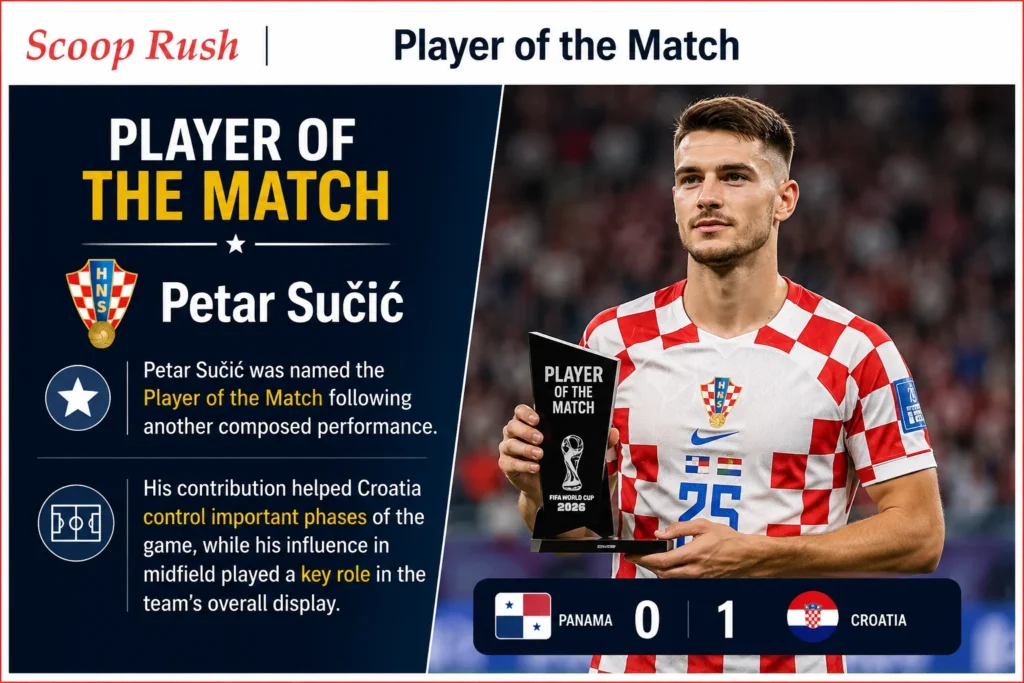
Player of the Match: Petar Sučić
Croatia Find the Decisive Moment
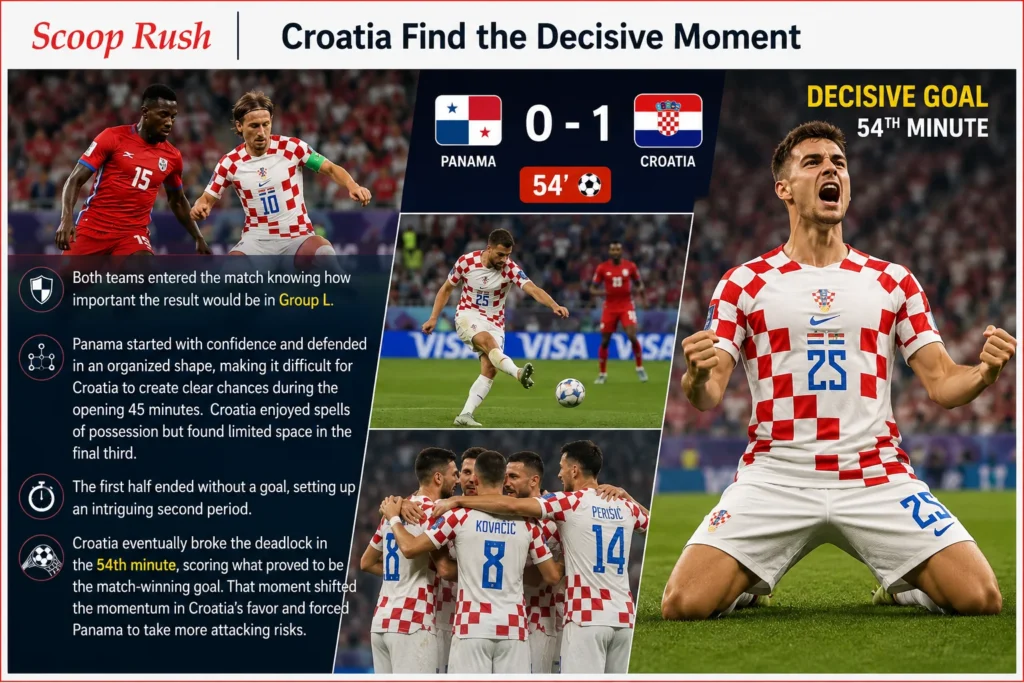
Both teams entered the match knowing how important the result would be in Group L.
Panama started with confidence and defended in an organized shape, making it difficult for Croatia to create clear chances during the opening 45 minutes. Croatia enjoyed spells of possession but found limited space in the final third.
The first half ended without a goal, setting up an intriguing second period.
Croatia eventually broke the deadlock in the 54th minute, scoring what proved to be the match-winning goal. That moment shifted the momentum in Croatia’s favor and forced Panama to take more attacking risks.
Second Half Battle
After conceding, Panama increased the tempo and searched for an equalizer.
The Central American side committed more players forward and attempted to test Croatia’s defensive organization. Croatia, however, remained disciplined and managed the closing stages effectively.
Although Panama continued pressing until the final whistle, Croatia defended resolutely and preserved their one-goal advantage to secure all three points.
Player of the Match
Petar Sučić was named the Player of the Match following another composed performance.
His contribution helped Croatia control important phases of the game, while his influence in midfield played a key role in the team’s overall display.
Key Match Statistics
The contest remained closely fought from start to finish.
Match Summary
Final Score: Panama 0-1 Croatia
First Half: 0-0
Winning Goal: 54th minute
Competition: FIFA World Cup 2026 Group L
Venue: Toronto Stadium
While the scoreline was narrow, Croatia showed efficiency in front of goal and determination in defense to secure an important victory.
What This Result Means
This victory gives Croatia valuable momentum in Group L as the tournament progresses.
Winning close matches is often crucial during the group stage, and Croatia demonstrated the patience and discipline needed to capitalize on a single opportunity.
For Panama, the defeat is disappointing but the performance showed resilience. The team remained competitive throughout the match and continued pushing for an equalizer until the closing minutes.
With more group matches still to play, both teams remain focused on achieving their tournament objectives.
Looking Ahead
Croatia will enter its next Group L fixture with renewed confidence after earning its first win of the campaign.
Panama, meanwhile, will look to recover quickly and seek a positive result in its remaining group matches. Every point becomes increasingly valuable as the battle for qualification continues.
Conclusion
The Panama vs Croatia match highlighted how small moments can decide games at the FIFA World Cup. After a balanced first half, Croatia made its opportunity count with a decisive goal in the 54th minute before defending its lead with composure.
The 1-0 victory provides Croatia with an important boost in Group L, while Panama will aim to bounce back in its upcoming fixtures. As the tournament continues, both teams still have opportunities to shape their World Cup campaigns.
Artificial intelligence is changing the way organizations protect themselves from cyber threats. But as AI becomes more powerful, it is also creating new security challenges that could affect the future of digital defense.
Introduction: Why AI in Cybersecurity Matters Today
AI in cybersecurity is becoming one of the most important developments in modern digital protection. Organizations are using artificial intelligence to analyze large amounts of security data, identify suspicious behavior, improve response speed, and protect sensitive information.
However, AI is creating a new cybersecurity challenge because attackers are also using advanced technologies to improve their methods. This creates a growing balance between AI-powered defense and AI-driven threats.
Modern organizations generate huge amounts of security information every day. Human security teams cannot always process and analyze all this information quickly. Therefore, AI has become an important solution for detecting threats faster and helping cybersecurity professionals make better decisions.
The future of cybersecurity will depend on how organizations manage AI benefits while controlling new risks. Strong security practices, monitoring, and responsible AI use will become essential as this technology continues to expand.
What Is AI in Cybersecurity?
AI in cybersecurity refers to the use of artificial intelligence technologies to protect networks, systems, applications, and sensitive data from cyber threats.
Unlike traditional security systems that mainly depend on fixed rules, AI can analyze patterns, detect unusual behavior, and learn from previous security activities.
As a result, AI-powered security systems can identify threats that may not match traditional attack methods.
How AI Technologies Support Cybersecurity
Machine learning plays an important role in AI security because it allows systems to improve by studying previous cyber activity.
For example, AI can identify:
Unusual login attempts
Unexpected file access
Suspicious network traffic
Additionally, natural language processing helps AI analyze emails, messages, and reports. This allows security systems to identify possible phishing attempts and suspicious communication.
Why AI Is Becoming Central to Security Work
Cyber attackers are becoming faster and more advanced. Meanwhile, organizations are managing cloud environments, remote employees, connected devices, and large digital systems.
Traditional cybersecurity methods often struggle to manage this increasing complexity. Therefore, AI is becoming important because it supports continuous monitoring and faster threat analysis.
How AI Helps Security Teams
AI helps security teams by:
Detecting unusual activity quickly
Reducing unnecessary security alerts
Identifying new attack patterns
Supporting faster incident response
Improving data protection
However, organizations must carefully manage AI adoption because every new technology can introduce additional security risks.
The Benefits of AI in Cybersecurity
AI provides several advantages for modern cybersecurity teams. It improves threat detection, strengthens security operations, and helps organizations respond to attacks more effectively.
Faster Threat Detection and Response
One of the biggest benefits of AI in cybersecurity is speed.
Security teams often receive thousands of alerts every day. Therefore, identifying the most serious threats can become difficult.
AI can analyze large amounts of security data and highlight suspicious activities that require immediate attention.
For example, AI can detect unusual traffic patterns, abnormal account behavior, and possible malware activity.
As a result, security professionals can respond faster before attackers create more damage.
Detecting Threats Without Known Attack Signatures
Traditional security tools usually search for known attack patterns. However, attackers continue creating new techniques that may avoid traditional detection.
AI uses behavioral analysis to identify unusual actions instead of depending only on previously known threats.
This helps organizations detect:
New phishing methods
Unknown malware behavior
Suspicious user activity
Unusual access attempts
Therefore, AI provides a more flexible approach to modern cybersecurity.
Reducing Security Alert Fatigue
Security teams often handle a large number of alerts. Many of these alerts may not represent serious threats.
AI helps by filtering unnecessary warnings, grouping similar incidents, and providing additional context.
As a result, analysts can focus on important security problems and improve efficiency.
Improving Data Protection
Although AI creates new risks, it can also improve data protection when used correctly.
AI-powered systems can identify sensitive information, monitor data movement, and reduce accidental exposure.
For example, AI can detect when confidential information is shared through AI applications or when sensitive data appears in unsafe locations.
Therefore, AI can become both a security challenge and a security solution.
Using AI to Fight AI-Based Attacks
Cyber attackers are increasingly using automation and AI to improve their operations.
They can use AI to create more convincing phishing messages, automate attacks, and increase attack speed.
Because of this, defenders also need AI-powered solutions that can operate at a similar speed.
The Risks of AI in Cybersecurity
While AI improves cybersecurity, it also introduces new risks. Organizations need to understand these challenges before expanding AI adoption.
Data Leakage Through AI Tools
One major concern is sensitive information exposure through AI systems.
Employees may enter confidential information into AI applications, upload files, or share data without understanding how that information is processed.
Furthermore, AI integrations may store conversations or transfer information through external services.
Without proper controls, organizations may lose visibility into where their data goes.
Shadow AI Risks
Shadow AI happens when employees use AI tools without approval from security teams.
This creates problems because organizations may not know:
Which AI tools employees are using
What information is being shared
Whether those tools meet security requirements
As a result, companies may face compliance problems and increased security risks.
Prompt Injection and Jailbreak Attacks
Generative AI systems can be manipulated through specially designed instructions known as prompt injection attacks.
Attackers may attempt to:
Override AI instructions
Extract sensitive information
Force unsafe actions
The risk becomes higher when AI systems connect with business tools or automated workflows.
Therefore, organizations need real-time monitoring and security controls.
AI Model Integrity Risks
AI systems depend on models, training data, and algorithms to make decisions.
However, these models can become security risks if attackers manipulate the information used for training or create hidden weaknesses.
If an AI model learns from incorrect information, it may produce inaccurate security decisions.
Therefore, continuous testing and monitoring are necessary.
AI Supply Chain Security Challenges
Organizations often depend on external AI services, open-source models, plugins, and third-party platforms.
However, every external connection can create additional security concerns.
AI supply chain risks may appear through:
Third-party AI providers
External APIs
Open-source AI models
Integrated security tools
A weakness in one part of the AI ecosystem may affect organizations using that technology.
How Organizations Can Manage AI Security Risks
AI security requires more than simply adopting new tools. Organizations need a complete strategy covering AI usage, protection, and governance.
Improve Visibility Into AI Usage
Organizations cannot manage AI risks if they do not know where AI is being used.
Security teams need to identify:
Which AI applications employees use
What data AI systems access
Which models and tools are connected
Where security weaknesses exist
Better visibility helps organizations discover risky AI activity earlier.
Control Access to AI Tools
Not every user needs access to every AI application.
Access controls help organizations decide who can use AI tools and what information can be shared.
As a result, companies can reduce unnecessary exposure.
Protect AI Interactions in Real Time
Many AI security issues happen during normal usage.
Real-time protection can detect:
Sensitive data sharing
Unsafe prompts
Suspicious AI behavior
Attempts to manipulate AI systems
Test AI Systems Continuously
AI technology changes quickly. New weaknesses can appear as models and systems are updated.
Continuous testing helps organizations identify problems before attackers discover them.
Build Strong AI Governance
AI adoption requires clear rules and responsibilities.
Organizations need policies explaining:
How employees should use AI tools
What information should not be shared
How AI decisions are reviewed
Who manages AI security risks
The Future of AI in Cybersecurity
AI will continue changing cybersecurity as both defenders and attackers improve their capabilities.
In the short term, AI may increase cyber risks because attackers can use automation to create faster attacks.
However, AI can also strengthen cybersecurity by helping organizations detect threats continuously and respond more effectively.
Autonomous Security Response
AI systems can help identify threats and take quick actions, such as blocking suspicious activity or isolating affected systems.
However, human oversight remains important because complex security decisions require professional judgment.
Privacy-Focused AI Security
AI systems require data to improve, but cybersecurity data can contain sensitive information.
Privacy-focused AI approaches aim to improve learning while reducing unnecessary data exposure.
AI Is Changing the Future of Cybersecurity
Artificial intelligence is becoming one of the most important technologies in modern cybersecurity.
It helps organizations detect threats faster, reduce workload, and protect digital systems more effectively.
However, AI also creates new challenges, including data leakage, model risks, and supply chain security issues.
Organizations that combine AI technology with human expertise and strong governance will be better prepared for future cyber threats.
Conclusion
AI in cybersecurity offers powerful opportunities for improving digital protection, but it also introduces new challenges that organizations cannot ignore.
The most effective approach is not simply adopting AI tools, but building strong security strategies around them. By improving visibility, controlling access, protecting AI interactions, and continuously testing systems, organizations can use AI safely.
Ultimately, AI will continue shaping cybersecurity by helping defenders respond faster while requiring stronger controls to manage emerging risks.
FAQs
What are the main benefits of AI in cybersecurity?
AI helps detect threats faster, analyze large amounts of data, reduce security alerts, improve response times, and protect sensitive information.
What are the biggest risks of AI in cybersecurity?
The biggest risks include data leakage, prompt injection attacks, shadow AI, model manipulation, third-party AI risks, and compliance challenges.
Can AI completely automate cybersecurity?
AI can automate many security tasks, but human experts are still required for complex decisions and threat analysis.
How does AI help prevent cyberattacks?
AI helps prevent attacks by detecting unusual behavior, analyzing patterns, identifying suspicious activities, and supporting faster response.
Why is AI security important?
AI security is important because both organizations and attackers are using AI. Strong security controls help reduce new cyber risks.
The Nancy Guthrie case has taken a new turn after a reported demand letter sent to TMZ claimed to contain possible evidence connected to her disappearance. According to the message, the sender claims a phone hidden in a secure location contains a video, photos, and information about people allegedly involved in the case.
The new claim has gained attention because Nancy Guthrie, the 84-year-old mother of TODAY show anchor Savannah Guthrie, has been missing from her Arizona home since January 31. However, authorities have not confirmed whether the alleged evidence is real or whether the information provided in the letter is accurate.
Meanwhile, the Pima County Sheriff’s Department and the FBI continue investigating the disappearance. The latest message comes after several previous notes and alleged ransom letters appeared during the case, making investigators carefully review every new claim.
Nancy Guthrie Case Takes New Turn With New Demand Letter
The latest update in the Nancy Guthrie case came after TMZ reported receiving another email from a person claiming to have important information about the disappearance.
According to the reported message, the sender claimed that a phone stored in a secure location contains a short video showing Nancy Guthrie with one of the people allegedly connected to the case.
The sender also claimed that the phone includes pictures, names, addresses, and other details that could identify those involved.
In exchange for access to the phone and password, the sender reportedly demanded Bitcoin payment.
However, the authenticity of the letter has not been confirmed. TMZ shared the information with the FBI, but investigators have not verified the claims.
What Did the New Letter Claim?
According to reports, the sender claimed that only two people were directly involved in Nancy Guthrie’s disappearance.
The message reportedly stated that the hidden phone contains information that could reveal details about those responsible.
The sender also claimed the video shows Nancy Guthrie on what may have been the final day of her life.
Despite these claims, authorities have not confirmed the existence of the alleged video or verified the information mentioned in the message.
Authorities Question the Latest Nancy Guthrie Case Claim
The new letter has created renewed attention around the investigation. However, officials have questioned whether the information is genuine.
Pima County Sheriff Chris Nanos reportedly suggested that the latest note could be another false claim.
Law enforcement has received multiple messages connected to Nancy Guthrie’s disappearance. Therefore, investigators are carefully checking each piece of information before treating it as evidence.
The FBI has also declined to comment on the ongoing investigation.
Background: Nancy Guthrie’s Disappearance
Nancy Guthrie, the 84-year-old mother of Savannah Guthrie, was reported missing from her home near Tucson, Arizona.
According to reports, a family member dropped her off at her home after dinner on January 31. She was reported missing the following morning.
The Pima County Sheriff’s Department started the investigation, and the FBI joined the case days later.
Officials believe Nancy Guthrie may have been abducted, although investigators have not publicly confirmed all details surrounding her disappearance.
Previous Notes Connected to the Investigation
The latest letter is not the first message connected to the case.
Previously, several alleged ransom notes were sent to media outlets, including TMZ and KOLD News.
One earlier message reportedly demanded millions of dollars in Bitcoin in exchange for Nancy Guthrie’s release. Another message later claimed she had died accidentally.
However, authorities have not confirmed those claims.
Savannah Guthrie previously said that she and her family believed some messages received during the investigation may have been real, while others appeared unreliable.
Why the New Letter Has Attracted Attention
The latest demand letter has gained attention because it claims to provide direct evidence related to Nancy Guthrie’s disappearance.
If verified, the alleged video and other information could become important for investigators.
However, authorities must confirm the source and authenticity before considering the material as evidence.
Meanwhile, the case continues to receive public attention because many questions remain unanswered.
Media Reports and Investigation Challenges
Several media organizations have received messages connected to the case, but not all information has been confirmed.
Journalists and investigators must carefully separate verified facts from unconfirmed claims.
Additionally, false information can create challenges for law enforcement teams working on the investigation.
The FBI and local authorities continue reviewing information that may help explain what happened.
What Happens Next in the Nancy Guthrie Case?
The next steps depend on whether investigators can verify the claims made in the latest letter.
If the alleged phone, video, or other evidence exists, authorities would need to examine the material carefully.
Until officials confirm the information, the claims remain unverified.
The investigation continues as authorities search for answers about Nancy Guthrie’s disappearance.
Conclusion
The Nancy Guthrie case has received fresh attention after a new demand letter claimed to contain video evidence connected to her disappearance.
The sender claims the information could reveal details about the people involved, but authorities have not confirmed the claims.
As the investigation continues, officials remain focused on verifying facts and finding reliable information.
FAQs
1. What is the latest update in the Nancy Guthrie case?
A new demand letter reportedly sent to TMZ claims to contain video evidence, photos, and information connected to Nancy Guthrie’s disappearance. Authorities have not verified the claims.
2. Who is Nancy Guthrie?
Nancy Guthrie is the 84-year-old mother of Savannah Guthrie, the TODAY show co-anchor.
3. Has Nancy Guthrie been found?
No, Nancy Guthrie has not been found. Authorities continue investigating her disappearance.
4. Did authorities confirm the alleged video evidence?
No. Investigators have not confirmed that the alleged video or other information mentioned in the letter is authentic.
5. Who is investigating the Nancy Guthrie case?
The Pima County Sheriff’s Department and the FBI are investigating the disappearance.
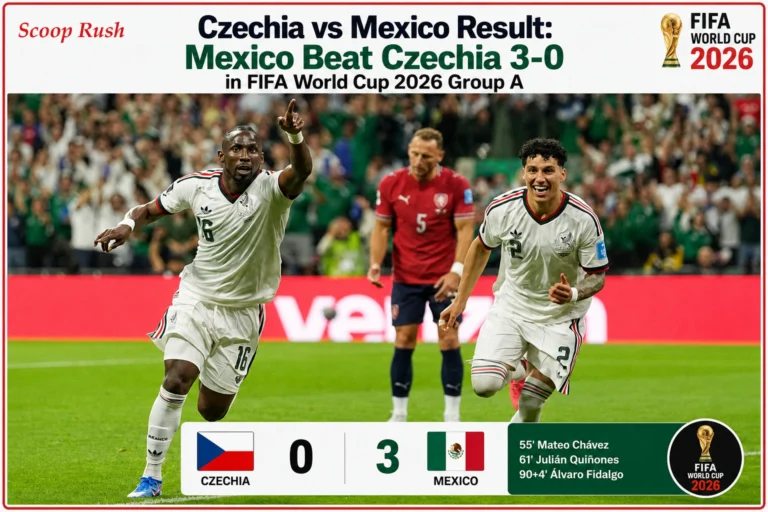
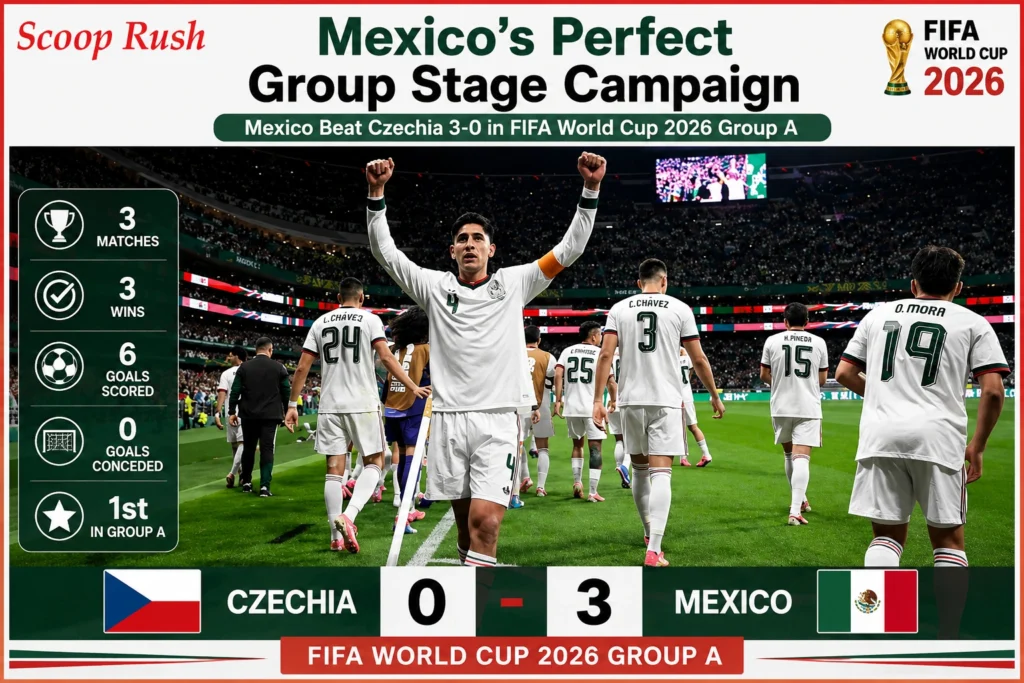
Competition: FIFA World Cup 2026 Stage: Group A Date: Thursday, 25 June Result: Czechia 0-3 Mexico
Mexico Ends Group A in Style with a Convincing Victory.Mexico delivered one of their strongest performances of the FIFA World Cup 2026 group stage, defeating Czechia 3-0 to finish at the top of Group A. With clinical finishing, disciplined defending, and another confident team display, Mexico secured all three points and confirmed their place in the knockout stage as group winners.
The Czechia vs Mexico Result: Mexico Beat Czechia 3-0 is significant because it highlights Mexico’s impressive consistency throughout the group stage. While Czechia fought hard, they were unable to break through a well-organized Mexican defense and ultimately finished the tournament without a victory.
Why This Result Matters
The final Group A standings were shaped by this decisive victory.
Mexico completed the group stage unbeaten, collecting three wins from three matches and finishing with a perfect nine points. Their attack produced six goals while the defense conceded none, underlining their balance on both ends of the pitch.
For Czechia, the defeat marked a disappointing end to their campaign. They earned just one point from three matches and finished at the bottom of the group.
Mexico gradually took control of the contest before breaking Czechia’s resistance in the second half. Three well-timed goals ensured there would be no comeback and sealed a comfortable victory.
After Dominant Second Half
The opening 45 minutes were competitive, with Czechia trying to remain organized and limit Mexico’s attacking opportunities. Mexico enjoyed plenty of possession but had to remain patient against a determined defensive setup.
Despite controlling much of the ball, Mexico entered halftime without a goal.
Everything changed after the break.
Mexico increased the tempo, moved the ball more quickly, and began creating higher-quality opportunities. Their breakthrough finally arrived ten minutes into the second half, opening the game and forcing Czechia to push forward.
That created more space for Mexico, who punished their opponents with two additional goals to complete an emphatic 3-0 win.
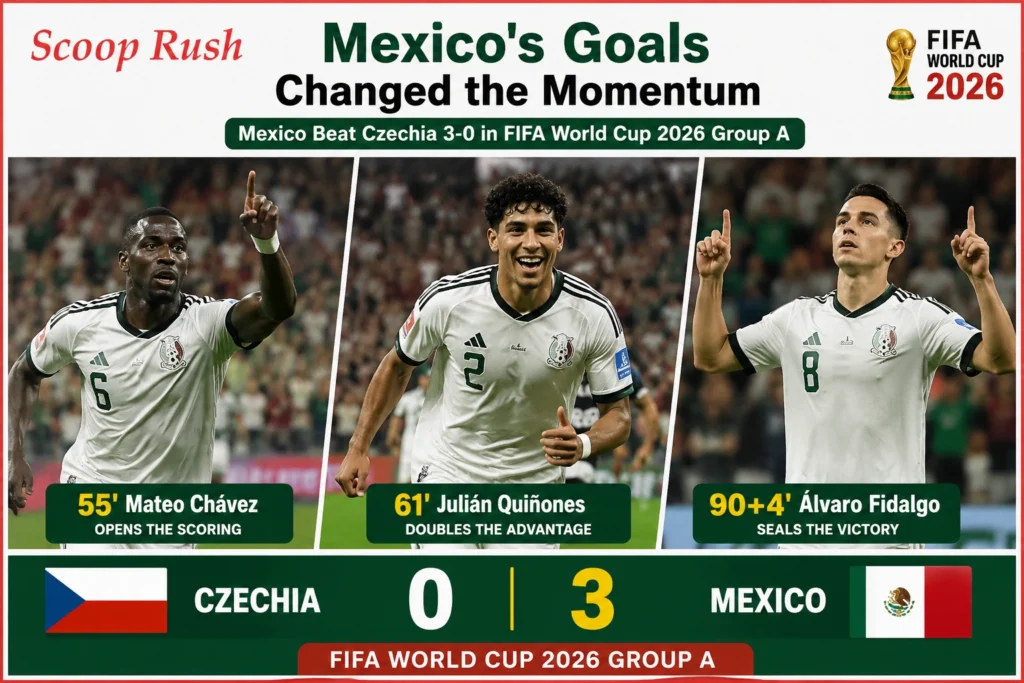
Mexico’s Goals Changed the Momentum
Mateo Chávez Opens the Scoring
The breakthrough arrived in the 55th minute.
Mateo Chávez gave Mexico the lead with an important goal that rewarded their persistent attacking play. The opener immediately shifted momentum in Mexico’s favor and placed Czechia under greater pressure.
Julián Quiñones Doubles the Advantage
Only six minutes later, Julián Quiñones extended Mexico’s lead.
The second goal gave Mexico complete control of the match and allowed them to manage the game with confidence while continuing to threaten on the counterattack.
Álvaro Fidalgo Seals the Victory
Deep into stoppage time, Álvaro Fidalgo completed the scoring.
His late finish added further gloss to an already impressive performance and confirmed a comprehensive 3-0 result.
Match Statistics
The overall statistics show a balanced contest in possession, but Mexico proved far more clinical in front of goal.
Statistic
Czechia
Mexico
Shots
12
11
Shots on Target
1
5
Possession
51%
49%
Passes
402
385
Pass Accuracy
84%
88%
Fouls
9
13
Yellow Cards
0
1
Red Cards
0
0
Offsides
1
0
Corners
5
1
Although Czechia recorded slightly more shots and possession, they struggled to test the Mexican goalkeeper. Mexico registered five shots on target and converted three of them, demonstrating outstanding efficiency.
Mexico’s Clinical Finishing Made the Difference
One of the biggest differences between the two sides was efficiency inside the final third.
Czechia attempted 12 shots but managed only one effort on target. Their attacking moves frequently broke down before producing meaningful chances.
Mexico, meanwhile, needed only 11 attempts to score three goals. Their movement, decision-making, and finishing quality allowed them to capitalize whenever opportunities appeared.
This clinical edge ultimately decided the match.
Czechia Controlled Possession but Lacked End Product
Czechia actually enjoyed a slight advantage in possession, finishing with 51 percent of the ball.
They also completed more total passes than Mexico, showing they were capable of building play through midfield.
However, possession alone does not win football matches.
Mexico defended with discipline, limited dangerous opportunities, and forced Czechia into low-quality attempts. Despite moving the ball effectively across the pitch, Czechia rarely threatened the Mexican goal.
Mexico’s Defensive Performance Stands Out
Another major positive for Mexico was their defensive organization.
Throughout the group stage, Mexico conceded zero goals.
Against Czechia, the defenders remained compact, won key challenges, and prevented attackers from creating clear scoring chances.
Allowing only one shot on target reflected the team’s excellent positioning and concentration from the opening whistle until the final minutes.
Keeping another clean sheet further boosted confidence heading into the knockout rounds.
Group A Final Standings
Following the completion of the group stage, the standings were:
Position
Team
Points
1
Mexico
9
2
South Africa
4
3
South Korea
3
4
Czechia
1
Mexico finished first after winning all three matches.
South Africa claimed second place and also advanced to the knockout stage.
South Korea ended third with three points, while Czechia finished fourth after collecting just one point.
Mexico’s Perfect Group Stage Campaign
Mexico could hardly have asked for a better group-stage performance.
Key achievements included:
Three wins from three matches. Nine points. Six goals scored. Zero goals conceded. First place in Group A.
Winning every group-stage match provides valuable momentum ahead of the knockout rounds and reinforces Mexico’s reputation as one of the tournament’s strongest performers so far.
Czechia’s Tournament Comes to an End
For Czechia, this defeat marked the end of their World Cup campaign.
Despite showing determination and enjoying long periods of possession against Mexico, they struggled to convert control into genuine scoring opportunities.
One point from three matches left them at the bottom ofGroup A, ending hopes of progressing beyond the group stage.
There were encouraging moments in terms of passing and overall organization, but the lack of attacking efficiency ultimately proved costly.
Key Takeaways from the Match
Several important lessons emerged from the contest.
Mexico demonstrated exceptional efficiency, converting their opportunities while remaining solid defensively.
Their balance between attack and defense has been one of the defining features of their group-stage campaign.
Czechia showed they could compete in possession but must improve chance creation and finishing in future international competitions.
The contrast between Mexico’s clinical finishing and Czechia’s missed opportunities explains the final scoreline more than the possession statistics.
Conclusion
The Czechia vs Mexico Result: Mexico Beat Czechia 3-0 perfectly reflected Mexico’s outstanding group-stage campaign.
Goals from Mateo Chávez, Julián Quiñones, and Álvaro Fidalgo secured a convincing victory that guaranteed Mexico first place in Group A with a perfect nine-point record. Their disciplined defending, efficient finishing, and tactical composure have made them one of the most impressive teams heading into the knockout stage.
For Czechia, the tournament ended in disappointment. Although they competed well in possession and created several shooting opportunities, they could not translate those efforts into goals. Finishing with one point leaves them at the bottom of the group, while Mexico moves forward with confidence and significant momentum.
FAQs
1. What was the final score between Czechia and Mexico?
Mexico defeated Czechia 3-0 in their FIFA World Cup 2026 Group A match.
2. Who scored for Mexico against Czechia?
Mateo Chávez, Julián Quiñones, and Álvaro Fidalgo scored Mexico’s three goals.
3. Did Mexico qualify for the FIFA World Cup 2026 knockout stage?
Yes. Mexico finished first in Group A with a perfect nine points and advanced to the knockout stage.
4. How did Czechia perform in Group A?
Czechia finished fourth in Group A with one point from three matches.
5. What were the key match statistics?
Czechia recorded 12 shots and 51% possession, while Mexico had 11 shots, five on target, scored three goals, and kept another clean sheet.
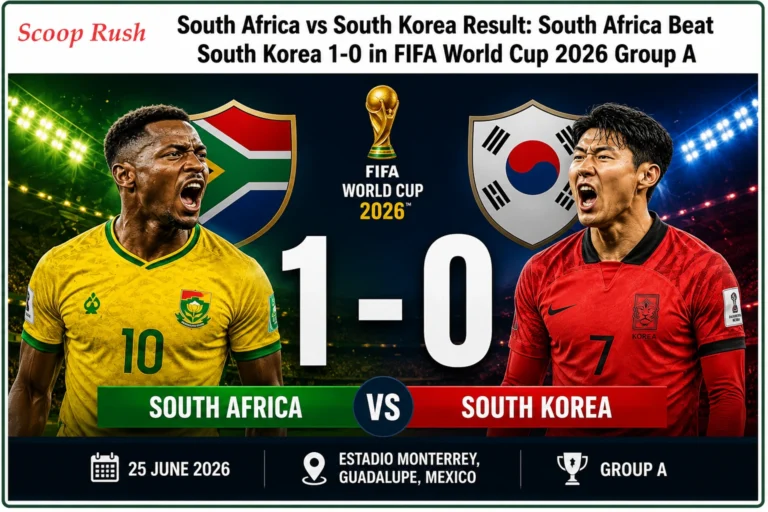
Competition: FIFA World Cup 2026 Group A Date: 25 June 2026 Result: South Africa 1–0 South Korea Venue: Estadio Monterrey, Guadalupe, Mexico
South Africa Edge South Korea in a Crucial Group A Battle. A single goal made all the difference as South Africa defeated South Korea 1-0 in an important FIFA World Cup 2026 Group A fixture. While South Korea controlled possession for most of the match, South Africa produced the decisive moment in front of goal and defended with determination to secure three valuable points.
The result strengthens South Africa’s position in Group A and keeps their qualification hopes alive. Meanwhile, South Korea will be disappointed after dominating the ball but failing to convert possession into goals.
Introduction
The South Africa vs South Korea Result: South Africa Beat South Korea 1-0 in FIFA World Cup 2026 Group A became one of the most tactical contests of the group stage. It was a classic example of how efficiency can outweigh possession in football.
South Africa remained disciplined throughout the match, created enough quality chances, and capitalized on the opportunity that mattered most. South Korea circulated possession confidently but struggled to break through South Africa’s defensive organization.
Both teams entered the match knowing that every point could prove decisive in Group A, making this victory especially significant for South Africa.
South Africa vs South Korea Match Summary
South Africa produced a composed and disciplined performance to earn a narrow victory.
The game’s only goal came in the 63rd minute, when Thapelo Maseko found the back of the net after South Africa created one of their best attacking moves of the evening. The goal proved enough to separate the two sides.
Following the breakthrough, South Africa concentrated on protecting their lead with organized defending while looking for opportunities on the counterattack.
South Korea pushed forward in search of an equalizer but were unable to create enough clear-cut opportunities to beat the South African defense.
When the final whistle arrived, South Africa celebrated a valuable three points after a hard-earned performance.
Thapelo Maseko Delivers the Match Winner
One Clinical Finish Changed the Game
The defining moment arrived shortly after the hour mark.
Thapelo Maseko made his opportunity count with an accurate finish that gave South Africa the lead in the 63rd minute.
Although both teams had chances throughout the contest, Maseko’s goal proved to be the decisive contribution.
His finish rewarded South Africa’s disciplined approach and ultimately secured one of the most important victories of their World Cup campaign.
Match Statistics
The statistics reveal two very different approaches.
Statistic
South Africa
South Korea
Goals
1
0
Shots
14
7
Shots on Target
4
2
Possession
31%
69%
Passes
329
674
Pass Accuracy
82%
91%
Fouls
7
9
Yellow Cards
1
1
Red Cards
0
0
Offsides
3
0
Corners
4
5
These numbers highlight an interesting contrast.
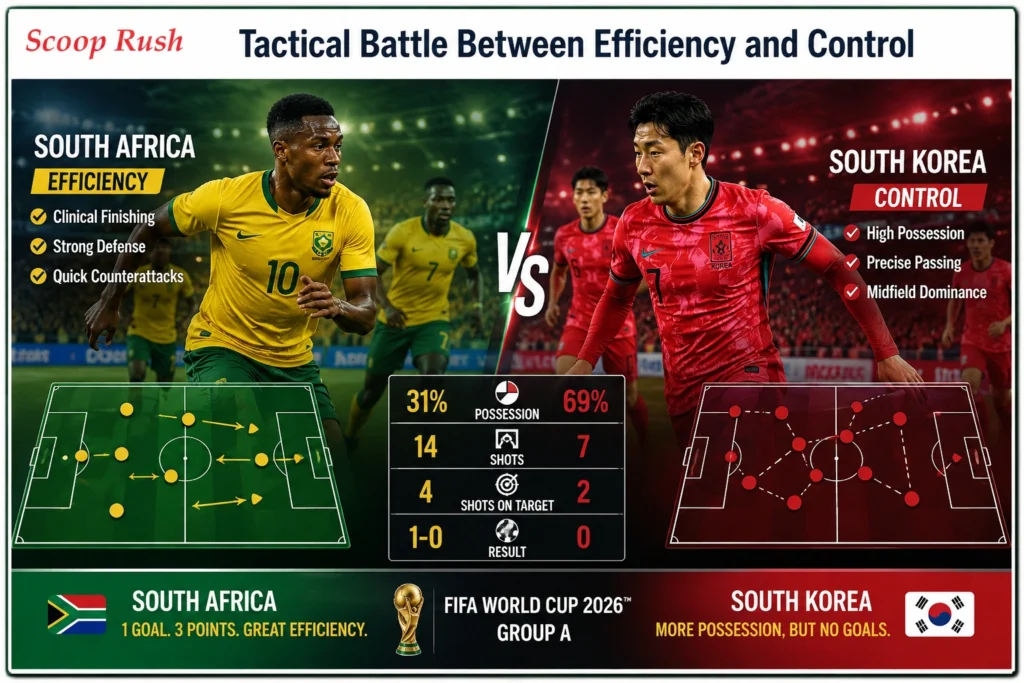
South Korea dominated possession with nearly 70 percent of the ball and completed more than twice as many passes. However, South Africa generated more shots and twice as many efforts on target, showing greater attacking efficiency despite spending less time in possession.
South Africa’s Defensive Organization
One of the biggest reasons behind South Africa’s success was their defensive discipline.
The team remained compact throughout the match, limiting South Korea’s space in dangerous attacking areas.
Even when South Korea controlled long periods of possession, South Africa maintained their shape and prevented the opposition from creating numerous clear scoring chances.
The defensive unit consistently cleared crosses, tracked runners, and stayed organized during sustained pressure.
Their teamwork allowed them to protect the narrow advantage until the final whistle.
South Korea Controlled Possession but Lacked the Final Touch
South Korea’s passing game worked effectively through midfield.
They recorded 69% possession, 674 completed passes, and 91% pass accuracy. These figures demonstrate their technical quality.
However, football matches are decided by goals rather than possession.
Despite controlling the ball for most of the contest, South Korea managed only seven shots and just two on target.
South Africa successfully forced many attacks into less dangerous areas, making it difficult for South Korea to create genuine scoring opportunities.
Tactical Battle Between Efficiency and Control
This match showcased two contrasting football philosophies.
South Korea focused on patient possession, building attacks through multiple passes and controlling the tempo.
South Africa adopted a more direct strategy, staying compact defensively before launching quick transitions whenever space became available.
South Africa committed seven fouls compared to South Korea’s nine.
Neither side had a player sent off.
The disciplined nature of the match allowed both teams to focus on football rather than physical confrontations.
Group A Standings Impact
The victory significantly boosts South Africa’s position in Group A.
Three points from this match strengthen their chances of progressing further in the FIFA World Cup 2026.
For South Korea, the defeat increases pressure in the remaining group fixtures.
With every point proving valuable in such a competitive group, future matches become even more important for both nations.
South Africa’s Performance Breakdown
Several aspects of South Africa’s display stood out.
Clinical Finishing South Africa converted one of their best chances into the winning goal.
Defensive Discipline The defenders maintained excellent positioning throughout the match.
Efficient Counterattacks Despite lower possession, South Africa consistently threatened when moving forward quickly.
Strong Teamwork The players remained organized from start to finish, helping secure an important clean sheet.
South Korea’s Performance Breakdown
South Korea also produced positive aspects despite the defeat.
Excellent Ball Retention Their passing accuracy reached 91%, reflecting quality in possession.
Midfield Control The midfield dictated large portions of the game through patient passing.
Need for Greater Creativity Although possession remained impressive, South Korea struggled to convert control into dangerous chances. Improving efficiency in the final third will be important moving forward.
Lessons from the Match
This encounter reinforced several important football principles.
Possession alone does not guarantee victory. Creating quality chances is more valuable than simply controlling the ball.
South Africa demonstrated each of these qualities effectively.
What This Result Means
South Africa will take confidence from defeating a technically strong South Korean side.
The clean sheet also highlights the team’s defensive reliability heading into future Group A matches.
South Korea still possesses the quality to respond but must improve their attacking effectiveness if they hope to advance.
With the group stage becoming increasingly competitive, every remaining fixture carries enormous importance.
Conclusion
The South Africa vs South Korea Result: South Africa Beat South Korea 1-0 in FIFA World Cup 2026 Group A highlighted the importance of efficiency, discipline, and tactical execution.
While South Korea dominated possession and completed significantly more passes, South Africa made the decisive moment count through Thapelo Maseko’s second-half goal.
Supported by organized defending and effective game management, South Africa secured a valuable victory that could play a crucial role in the race for qualification from Group A.
The match served as another reminder that in World Cup football, taking chances often matters more than controlling possession.
FAQs
What was the result of South Africa vs South Korea?
South Africa defeated South Korea 1-0 in the FIFA World Cup 2026 Group A match.
Who scored the winning goal?
Thapelo Maseko scored the only goal in the 63rd minute.
Where was the match played?
The match was played at Estadio Monterrey in Guadalupe, Mexico.
Which team had more possession?
South Korea had 69% possession, while South Africa had 31%.
Why was this win important for South Africa?
The victory earned three crucial Group A points and strengthened South Africa’s chances of qualifying for the knockout stage.
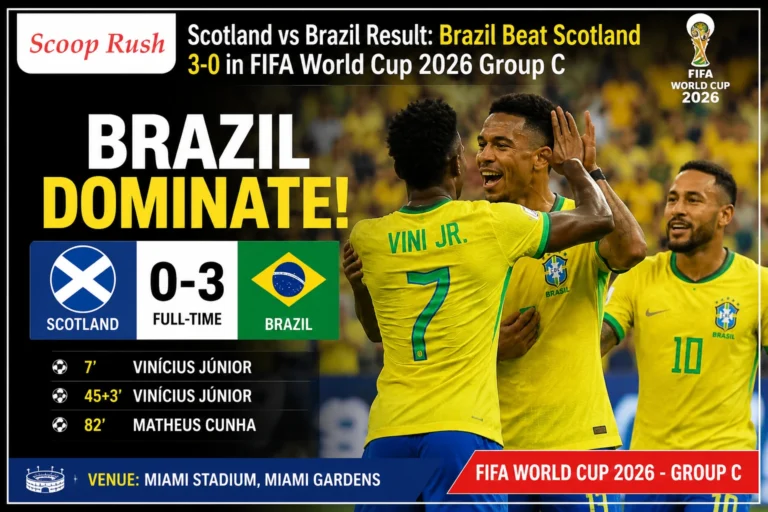
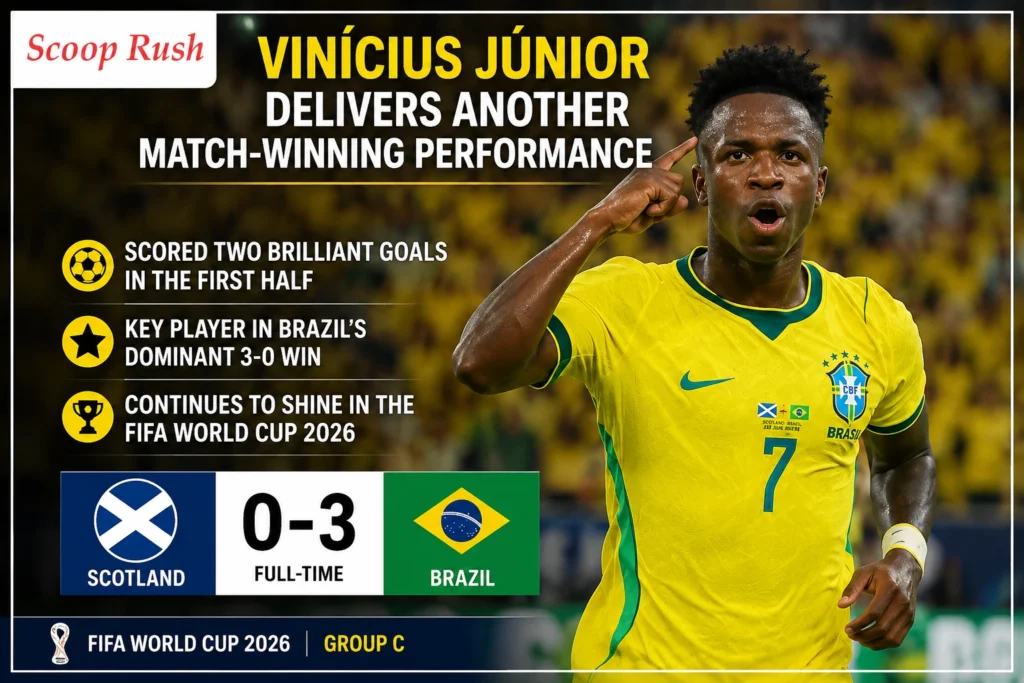
Competition: FIFA World Cup 2026 Full Time: Scotland 0–3 Brazil Group: Group C Venue: Miami Stadium, Miami Gardens
Brazil Makes Another Strong Statement in Group C. Brazil continued their impressive FIFA World Cup 2026 campaign with another convincing victory. The Scotland vs Brazil Result: Brazil Beat Scotland 3-0 in FIFA World Cup 2026 Group C confirmed Brazil’s place at the top of the standings after a disciplined and clinical display.
While Scotland worked hard throughout the match, Brazil’s quality in attack proved too much to handle. Vinícius Júnior produced another standout performance with two goals before Matheus Cunha completed the scoring, giving Brazil maximum points from the contest.
The result strengthens Brazil’s position in Group C while leaving Scotland facing a difficult path after another defeat.
Brazil Beat Scotland
Brazil entered the match looking to maintain their unbeaten start in Group C, while Scotland needed a positive result to improve their chances of progressing.
From the opening whistle, Brazil controlled possession, created the better chances, and consistently forced Scotland onto the defensive. Their attacking movement eventually paid off as Vinícius Júnior opened the scoring before adding a second later in the match. Matheus Cunha also found the net to secure a comfortable 3-0 victory.
Although Scotland showed determination, they struggled to convert limited opportunities into meaningful chances against Brazil’s organized defense.
Brazil established control early in the game with confident passing and quick movement across the pitch.
Scotland defended in numbers but found it difficult to stop Brazil’s attacking combinations. The opening goal settled Brazil, allowing them to dictate the tempo throughout most of the contest.
Brazil remained patient in possession while continuing to stretch Scotland’s defense with attacks from both wings.
The second goal just before halftime gave Brazil a comfortable advantage, and they continued creating chances after the break before sealing the victory with a late third goal.
Vinícius Júnior Delivers Another Match-Winning Performance
Two First-Half Goals Put Brazil in Complete Control
Vinícius Júnior was the standout performer for Brazil.
He opened the scoring in the seventh minute, giving Brazil an early advantage that immediately changed the momentum of the match.
Just before halftime, he doubled Brazil’s lead with another well-timed finish during first-half stoppage time.
His two-goal performance provided Brazil with complete control before the interval and allowed the team to manage the second half with confidence.
Matheus Cunha Seals the Victory
Brazil continued searching for another goal after halftime.
Their persistence was rewarded in the 82nd minute when Matheus Cunha added Brazil’s third goal of the evening.
The late strike reflected Brazil’s attacking depth and ensured the scoreline accurately represented their dominance throughout the match.
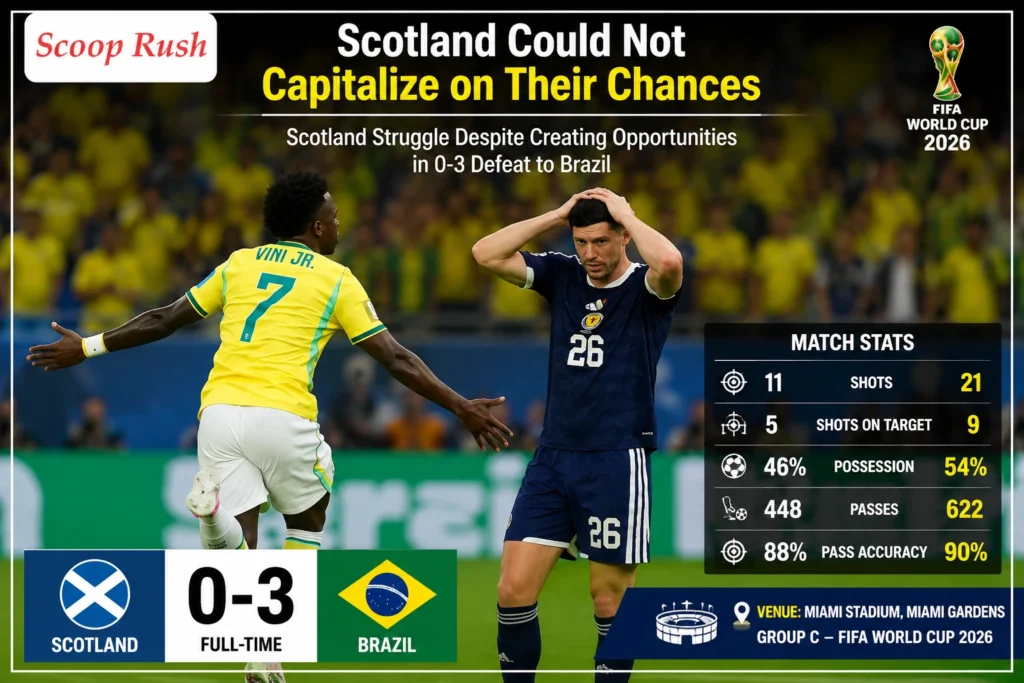
Match Statistics Show Brazil’s Dominance
The statistics highlight just how much Brazil controlled the contest.
Match Statistic
Scotland
Brazil
Shots
11
21
Shots on Target
5
9
Possession
46%
54%
Passes
448
622
Pass Accuracy
88%
90%
Fouls
10
11
Yellow Cards
1
2
Red Cards
0
0
Offsides
0
1
Corners
7
6
Brazil produced more shots, created more efforts on target, completed significantly more passes, and enjoyed greater possession.
Scotland’s seven corners demonstrated they had attacking moments, but they were unable to convert those opportunities into goals.
Scotland Could Not Capitalize on Their Chances
Scotland produced 11 shots during the match, with five reaching the target.
Despite these efforts, Brazil’s defense remained organized whenever Scotland threatened.
Scotland also maintained an impressive 88 percent pass accuracy, showing composure in possession. However, they struggled to create clear scoring opportunities against Brazil’s defensive structure.
Their inability to find an early response after conceding made the challenge increasingly difficult as the game progressed.
Brazil’s Midfield Controlled the Tempo
Brazil’s midfield played an important role throughout the contest.
By completing 622 passes with a 90 percent accuracy rate, Brazil consistently controlled possession and prevented Scotland from building sustained attacks.
Their ability to recycle possession, switch play, and move the ball quickly allowed the forwards to receive quality service in dangerous areas.
That control became one of the defining factors behind Brazil’s comfortable victory.
Team Discipline and Match Management
The match remained competitive but generally well controlled.
Scotland committed 10 fouls and received one yellow card.
Brazil finished with 11 fouls and two yellow cards.
Neither side had a player sent off, allowing the match to flow without major interruptions.
Brazil also managed the closing stages effectively after taking a commanding lead.
Key Substitutions During the Match
Several substitutions were made during the second half.
For Scotland:
Findlay Curtis replaced John McGinn.
Che Adams replaced Lawrence Shankland.
These changes aimed to provide fresh attacking options, but Brazil continued controlling possession and limited Scotland’s opportunities.
Brazil also introduced fresh players from the bench to maintain intensity as they protected their lead.
Group C Standings After the Result
Following the victory, Brazil strengthened their position at the top of Group C.
Brazil and Morocco finished level on seven points, while Scotland ended with three points.
Key Takeaways From the Match
Several important conclusions emerged from Brazil’s victory.
Vinícius Júnior scored twice and earned the spotlight.
Matheus Cunha added the third goal late in the match.
Brazil finished with 21 shots compared to Scotland’s 11.
Brazil completed more than 620 passes while maintaining 90 percent accuracy.
Scotland created opportunities but could not convert them.
Brazil finished the group stage strongly with another impressive performance.
Conclusion
The Scotland vs Brazil Result: Brazil Beat Scotland 3-0 in FIFA World Cup 2026 Group C showcased why Brazil remains one of the tournament’s strongest teams.
Vinícius Júnior’s first-half brace laid the foundation for victory before Matheus Cunha added the finishing touch late in the match. Brazil controlled possession, produced more attacking chances, and managed the game professionally from start to finish.
Scotland battled throughout the contest and created several opportunities, but Brazil’s quality in both attack and midfield proved decisive. The victory keeps Brazil at the top of Group C with seven points and further builds momentum as the tournament progresses.
FAQs
1. What was the final score between Scotland and Brazil? Brazil defeated Scotland 3-0 in their FIFA World Cup 2026 Group C match.
2. Who scored for Brazil against Scotland? Vinícius Júnior scored two goals, while Matheus Cunha added the third.
3. Where was the Scotland vs Brazil match played? The match took place at Miami Stadium, Miami Gardens.
4. How many points does Brazil have after the win? Brazil finished the group stage with 7 points.
5. What were the possession statistics in the match? Brazil had 54% possession, while Scotland recorded 46% possession.
Have you ever reached mid-afternoon feeling mentally drained, sluggish, and unable to focus? According to new research, the solution might be far simpler than another cup of coffee. A five-minute walk every hour could help improve your mood, reduce fatigue, and make long days of sitting more manageable without any decline in work performance. This kind of small habit matters just as much as other overlooked health choices, from how often you should brush your hair to understanding the risks of taking too many supplements. As modern life grows increasingly sedentary, paying attention to everyday health concerns can make a meaningful difference in how you feel and function.
New Study Explores the Benefits of Regular Walking Breaks
The research was published in the British Journal of Sports Medicine and was led by Dr. Keith Diaz of Columbia University Medical Center. The study examined data from 19,342 adults who enrolled in the “Body Electric Challenge,” an interactive movement program connected to NPR’s Body Electric podcast series. Of those participants, 11,484 went on to begin a two-week walking intervention designed to reduce prolonged sedentary behavior. Researchers wanted to determine whether structured walking breaks could improve how people felt during the day and whether those breaks would interfere with productivity.
How the Body Electric Challenge Worked
Participants first completed a baseline period of approximately one week while continuing their normal daily routines. After that, they selected one of three walking schedules:
Five-minute walk every 30 minutes
Five-minute walk every 60 minutes
Five-minute walk every 120 minutes
Participants were asked to follow their chosen schedule throughout waking hours for two weeks. Notably, researchers did not use reminder apps or external prompts. Instead, participants managed the program independently in real-world conditions. To qualify, participants had to be adults who could access a smartphone and communicate in English. Individuals with certain recent injuries or exercise-related chest pain were excluded from participation. Meanwhile, participants with physical disabilities who could not walk were encouraged to engage in alternative forms of movement that worked for them.
Why Sedentary Lifestyles Have Become a Major Concern
Researchers noted that adults in many developed countries now spend approximately 11 to 12 hours per day sitting, and this trend has become a growing public health concern. Previous research has linked prolonged sedentary behavior to:
Increased risk of chronic disease
Poorer mental health outcomes
Higher mortality risk
Greater likelihood of metabolic health problems
Health authorities have long encouraged people to sit less and move more, but that advice does not clearly define how frequently people should interrupt sitting time. Consequently, many individuals struggle to translate broad recommendations into practical daily habits, and this study sought to address that gap directly.
Five-Minute Walk Every Hour Produced Meaningful Benefits
The findings revealed positive outcomes across all three walking schedules. Participants generally reported:
Reduced fatigue
Improved mood
Fewer negative emotions
Better emotional balance
However, the greatest improvements occurred among participants who took walking breaks every 30 minutes. Despite producing the strongest results, that schedule proved more difficult for many people to maintain consistently, so researchers looked beyond effectiveness alone and evaluated practicality.
Why the Hourly Walking Schedule Stood Out
Among the three options, the five-minute walk every hour emerged as the most balanced approach. Participants reported meaningful improvements in fatigue and mood while still finding the schedule manageable enough to follow consistently. Researchers considered this combination particularly important because public health recommendations must be realistic for everyday life. While more frequent breaks may offer greater benefits, people are less likely to maintain habits that feel disruptive, and the hourly approach appeared to strike an effective middle ground between results and sustainability.
A subset of approximately 1,200 full-time employed participants provided additional data through text-message surveys during the study. These check-ins allowed researchers to examine how participants felt at specific moments throughout the day, and the findings were consistent. Immediately following walking breaks, participants reported:
Lower levels of fatigue
Improved mood
Greater emotional well-being
These effects appeared across all three walking schedules. Researchers suggested that brief movement breaks could help people feel refreshed during long periods of sitting, much the way other health habits like protecting yourself from heat and humidity risks or following simple home cooling tips during hot weather help maintain physical comfort and alertness. Many workers experience energy slumps during afternoon hours, and regular walking breaks may provide opportunities to reset mentally, improve alertness, and interrupt extended sedentary periods.
Did Walking Breaks Hurt Productivity?
One common concern among employees is that stepping away from work could reduce productivity, and many workers worry that frequent breaks may be viewed negatively by supervisors or colleagues. The study’s findings provide reassurance. Participants across all three walking schedules reported that work performance remained stable or improved slightly during the intervention, and researchers found no evidence that movement breaks harmed work engagement. In fact, some participants reported modest improvements. According to Dr. Keith Diaz, movement breaks may help support attention, memory, executive function, and overall mental freshness, meaning that stepping away briefly may actually help workers maintain focus throughout the day rather than reducing effectiveness.
Adherence Rates Showed the Challenge of Frequent Breaks
An important aspect of the study involved measuring how consistently participants followed their assigned schedules. The results highlighted a key reality of behavior change. Compliance rates varied significantly:
About 10% of participants fully complied with the 30-minute schedule
About 24% fully complied with the hourly schedule
About 46% fully complied with the two-hour schedule
These findings suggest that less frequent movement schedules are easier to maintain. However, researchers also observed that meaningful benefits occurred even when participants did not perfectly follow their plans, which may be encouraging for people who struggle to maintain strict routines. Rather than aiming for perfection, simply increasing movement throughout the day may still provide noticeable benefits.
What Makes This Study Different?
Many previous studies examining movement breaks have taken place in controlled laboratory settings where participants are closely monitored. This study differed in several important ways. First, it involved an exceptionally large sample of participants. Second, it took place in real-world environments where people managed their own schedules. Third, participants represented a diverse range of occupations, backgrounds, nationalities, physical abilities, and life circumstances. Because of these factors, the findings may better reflect how movement interventions actually work in everyday life.
Important Limitations to Consider
Despite its strengths, the study also has limitations worth noting. Researchers emphasized that outcomes were based largely on self-reported information. Participants described their own:
Fatigue levels
Mood
Emotional state
Work performance
The study did not directly measure physical health markers such as:
Blood sugar levels
Cardiovascular health
Blood pressure
Long-term disease risk
Additionally, the intervention lasted only two weeks, so researchers cannot yet determine whether these improvements would persist over months or years. Future studies will be needed to examine the long-term effects, just as ongoing research continues to explore broader health questions from the role of HPV vaccines in preventing cervical cancer deaths to breakthroughs like teplizumab for delaying type 1 diabetes onset.
Practical Ways to Add More Movement to Your Day
One reason the hourly walking strategy attracted attention is its simplicity. Unlike many wellness interventions, it does not require special equipment, gym memberships, or major schedule changes. People may be able to incorporate movement breaks through simple actions such as:
Taking a short walk around the office
Walking outdoors for five minutes
Pacing during phone calls
Holding walking meetings
Walking around the home during work breaks
The goal is simply to interrupt prolonged sitting with brief periods of movement, and for many people, that may be a realistic first step toward a more active lifestyle — something that can matter just as much as other routine habits, like ensuring your work feels purposeful and sustainable.
What the Findings Mean for Public Health
Public health experts have spent years encouraging people to reduce sedentary behavior, but recommendations often remain broad and difficult to implement. This study offers a potentially practical guideline. A five-minute walk every hour appears capable of improving mood and reducing fatigue while fitting reasonably well into daily life. Although more research is needed to explore long-term health outcomes, the findings suggest that regular movement breaks may represent a simple and accessible strategy for millions of people who spend much of the day sitting.
Conclusion
The latest research from the British Journal of Sports Medicine suggests that taking a five-minute walk every hour may be one of the simplest ways to combat the negative effects of prolonged sitting. Participants in a large real-world study reported feeling less fatigued, more positive, and emotionally healthier after incorporating regular walking breaks into their day, and importantly, these benefits did not come at the cost of productivity. While walking every 30 minutes produced the strongest results, the hourly schedule emerged as the most practical balance between effectiveness and sustainability. For anyone who spends long hours sitting, a brief walk each hour could be a small change that delivers meaningful improvements in daily well-being.
FAQs
1. Does a five-minute walk every hour really improve mood?
According to the study, participants who took regular walking breaks reported improved mood, fewer negative emotions, and greater emotional well-being during the two-week intervention.
2. How often should I take walking breaks while working?
Researchers found that a five-minute walk every hour offered the best balance between effectiveness and practicality for most participants.
3. Can walking breaks improve productivity?
The study found no evidence that walking breaks harmed productivity. Participants generally reported stable or slightly improved work performance.
4. Is walking every 30 minutes better than every hour?
Walking every 30 minutes produced the greatest improvements in mood and fatigue. However, participants found it harder to maintain consistently than the hourly schedule.
5. Did the study measure physical health benefits?
No. The research focused primarily on self-reported fatigue, mood, and work performance. It did not directly measure blood sugar, heart health, or other physical health markers.
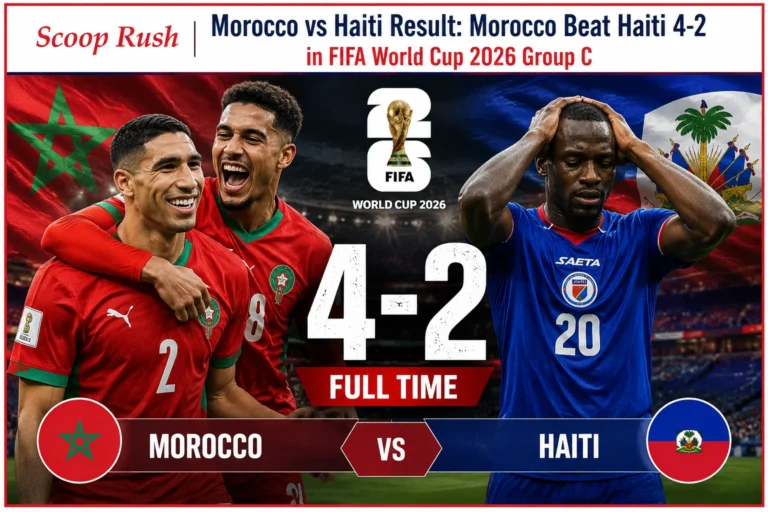
Competition: FIFA World Cup 2026 Date: 25 June Result: Morocco 4-2 Haiti Venue: Atlanta Stadium, Atlanta
Morocco Deliver an Entertaining 4-2 Victory to Strengthen Their Group C Campaign. Few Group C matches delivered as much excitement as this thrilling encounter between Morocco and Haiti. Featuring six goals, attacking football, and relentless effort from both teams, the contest provided fans with an entertaining display from the opening whistle to the final moments. Morocco vs Haiti Result: Morocco Beat Haiti 4-2 in FIFA World Cup 2026 Group C quickly became one of the standout headlines of the day as Morocco secured an important victory to strengthen their position in the tournament.
Morocco entered the match with confidence and immediately established control through patient possession, accurate passing, and well-organized attacking movements. Their ability to dominate the ball allowed them to dictate the tempo for long periods while creating regular opportunities in the final third. The team’s attacking quality was rewarded with four goals, each arriving at crucial moments to keep Haiti from building lasting momentum.
Although Haiti faced significant pressure throughout the match, they responded with determination and resilience. The team found the net twice and continued to compete with energy despite spending much of the game defending. Their willingness to fight until the final whistle ensured the contest remained competitive and entertaining, even against a side that controlled most aspects of play.
Morocco’s superiority was also reflected in the match statistics. Greater possession, a higher number of shots, impressive passing accuracy, and sustained attacking pressure highlighted the difference between the two teams. Whenever Haiti reduced the deficit, Morocco responded quickly with another goal, demonstrating composure and confidence under pressure.
The 4-2 victory not only earned Morocco three valuable points but also confirmed the team’s impressive form during the group stage. The result strengthened their position in Group C and secured progression to the knockout rounds with growing momentum. For Haiti, the tournament concluded without a victory, but the team’s determination and fighting spirit remained evident throughout the match, providing positives to build on for future international competitions.
Match Summary
Morocco made their intentions clear from the opening whistle by taking control of possession and playing with confidence across the pitch. Their patient passing, organized midfield, and attacking movement allowed them to push Haiti deep into their own half for extended periods. Although Haiti defended with determination, Morocco consistently looked the more threatening side and created several promising opportunities as they searched for the opening goal.
Their sustained pressure was finally rewarded in the 39th minute when Achraf Hakimi found the back of the net to give Morocco a deserved lead. The goal reflected Morocco’s attacking dominance throughout the first half and rewarded their positive start to the match.
Haiti responded well and pulled a goal back in the 43rd minute through Wilson Isidor, reducing the deficit to 1-1 and giving the underdogs renewed belief before halftime. The goal ensured the contest remained competitive despite Morocco controlling most of the play.
However, Morocco responded immediately. In first-half stoppage time (45+1), Ismael Saibari restored Morocco’s advantage with a well-taken finish following another well-worked attacking move. Scoring just before the halftime whistle gave Morocco valuable momentum and allowed them to enter the break with a 2-1 lead.
The opening 45 minutes delivered attacking football, quality finishing, and plenty of excitement, setting up an entertaining second half between the two Group C sides.
Morocco continued to attack after halftime instead of protecting their narrow lead.
Their positive approach was rewarded in the 78th minute when Soufiane Rahimi added Morocco’s third goal, giving his side valuable breathing room.
Haiti refused to give up and reduced the deficit shortly afterward through an own goal credited to Yassine Bounou in the 82nd minute.
At 3-2, the match was once again alive.
However, Morocco responded immediately.
Genisimy Yassine Seals the Win
Only a few minutes later, Genisimy Yassine restored Morocco’s two-goal advantage by scoring in the 85th minute.
A VAR review confirmed the goal, ending Haiti’s hopes of completing a comeback.
The fourth goal effectively sealed Morocco’s victory and completed an entertaining 4-2 scoreline.
Complete Goal Scorers
Morocco
Achraf Hakimi (39′)
Ismael Saibari (45+1′)
Soufiane Rahimi (78′)
Genisimy Yassine (85′)
Haiti
Wilson Isidor (43′)
Yassine Bounou (Own Goal, 82′)
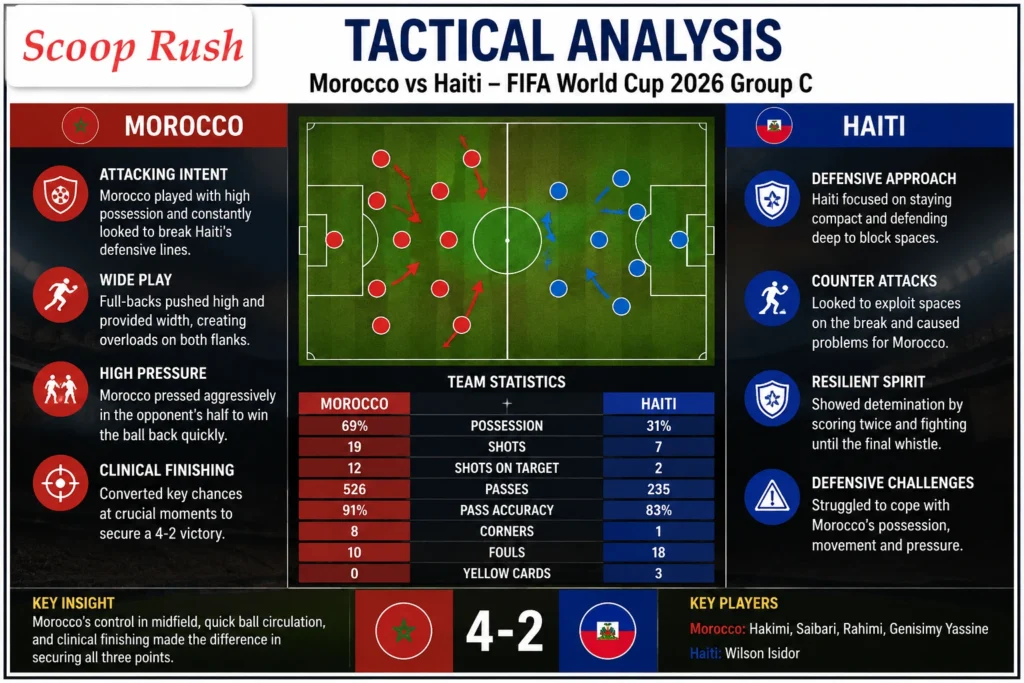
Match Statistics
The statistics clearly illustrate Morocco’s overall dominance.
Statistic
Morocco
Haiti
Shots
19
7
Shots on Target
12
2
Possession
69%
31%
Passes
526
235
Pass Accuracy
91%
83%
Fouls
10
18
Yellow Cards
0
3
Red Cards
0
0
Offsides
5
0
Corners
8
1
Morocco enjoyed nearly seventy percent possession and completed more than twice as many passes as Haiti. Their 19 shots, including 12 on target, demonstrate how consistently they threatened Haiti’s defense throughout the contest.
Morocco Controlled the Match from Start to Finish
The match statistics clearly demonstrate why Morocco deserved all three points. From the opening whistle to the final minutes, they controlled possession, dictated the tempo, and consistently applied pressure in the attacking third. Their ability to keep the ball and patiently build attacks prevented Haiti from gaining sustained momentum and allowed Morocco to remain in command for most of the contest.
Morocco’s midfield played a crucial role in maintaining that control. Accurate passing, intelligent movement, and quick ball circulation enabled the team to move play from defense to attack with confidence. With 69 percent possession and an impressive 91 percent pass accuracy, Morocco showed composure under pressure and rarely allowed Haiti opportunities to disrupt their rhythm.
The attacking intent was equally evident in the final third. Morocco registered 19 shots, including 12 efforts on target, reflecting their ability to create regular scoring opportunities throughout the match. They also earned eight corner kicks, keeping Haiti’s defense under constant pressure and forcing them to spend long periods protecting their penalty area.
Although Haiti defended with determination and worked hard to limit the damage, Morocco’s movement, technical quality, and patient build-up play repeatedly created openings. Their balanced performance in possession, attack, and defensive organization ensured they remained in control for the majority of the game, making the 4-2 victory a deserved reward for their overall display.
Haiti Showed Character Despite Defeat
Although the final score ended in defeat, Haiti produced a performance that reflected determination, resilience, and a refusal to give up. Facing a Morocco side that dominated possession and controlled the tempo for much of the contest, Haiti continued to compete with commitment until the final whistle. Their fighting spirit ensured the match remained competitive even when Morocco appeared to be in complete control.
Wilson Isidor’s first-half goal provided Haiti with a timely boost and reminded Morocco that the contest was far from over. Later in the second half, an own goal by Yassine Bounou reduced the deficit once again, giving Haiti renewed hope of staging an unlikely comeback. Those moments highlighted the team’s ability to capitalize on limited opportunities despite spending long periods without the ball.
However, creating consistent attacking chances remained a major challenge. Haiti managed only seven total shots, with two on target, illustrating how difficult it was to break through Morocco’s organized defensive structure. Morocco’s disciplined positioning and effective ball control restricted Haiti’s attacking rhythm and forced them to spend much of the match defending.
Despite leaving the tournament without a victory, Haiti’s commitment and competitive attitude were evident throughout the match. While the result did not go their way, the experience of competing against one of Group C’s strongest teams provides valuable lessons that can help the squad grow and improve in future international competitions.
Tactical Analysis
Morocco’s Attacking Approach
Morocco relied on patient possession combined with quick passing around Haiti’s penalty area. The midfield consistently recycled possession, allowing attacking players to find space between defensive lines. Wide attacks also played an important role in stretching Haiti’s defense. Once Morocco entered the final third, they attacked with confidence and committed multiple players forward. The strategy produced numerous chances and ultimately four goals.
Haiti’s Defensive Challenges
Haiti spent much of the game defending deep. Their aggressive approach resulted in:
18 fouls
3 yellow cards
Although the defensive commitment prevented an even heavier defeat, Morocco’s constant pressure eventually broke through on several occasions.
Key Performers
Achraf Hakimi
Achraf Hakimi played a vital role in Morocco’s victory by opening the scoring in the first half and giving his team the momentum they needed. His goal in the 39th minute rewarded Morocco’s early dominance and helped settle the team after a period of sustained attacking pressure. Beyond finding the net, Hakimi remained influential throughout the match with his intelligent movement and willingness to support attacks from wide areas.
His ability to combine defensive discipline with attacking intent created additional challenges for Haiti’s back line. Every forward run added pace and width to Morocco’s attacks, making him one of the standout performers in an impressive team display.
Ismael Saibari
Ismael Saibari made a significant contribution by scoring Morocco’s second goal in first-half stoppage time. His finish came at an important stage of the match, allowing Morocco to head into the halftime break with a stronger advantage and greater confidence. The goal reflected Morocco’s determination to keep attacking rather than simply protecting their lead.
Throughout the contest, Saibari’s movement and link-up play helped Morocco maintain control in the attacking third. His ability to find space and support the forward line ensured that Haiti’s defense remained under constant pressure, making his overall contribution just as valuable as his goal.
Soufiane Rahimi
Soufiane Rahimi produced another important moment for Morocco by scoring the team’s third goal in the 78th minute. At a time when Haiti continued to search for a way back into the match, his finish restored Morocco’s comfortable advantage and shifted the momentum firmly in their favor.
Rahimi remained active throughout the game, working hard both on and off the ball while providing another attacking outlet. His goal rewarded Morocco’s patient build-up play and demonstrated the team’s ability to capitalize on key opportunities when it mattered most.
Genisimy Yassine
Genisimy Yassine completed Morocco’s impressive attacking performance with the decisive fourth goal late in the match. After a VAR review confirmed the goal, Morocco regained their two-goal cushion and effectively ended Haiti’s hopes of producing a late comeback.
Yassine showed composure in a crucial moment, delivering a finish that reflected Morocco’s confidence and attacking quality. His late contribution ensured the team finished the match strongly and underlined the squad’s depth, as multiple players stepped up to make meaningful contributions in an entertaining 4-2 victory.
Discipline Report
Discipline was another area where Morocco held an advantage.
Morocco
Yellow Cards: 0
Red Cards: 0
Haiti
Yellow Cards: 3
Red Cards: 0
Haiti’s higher foul count reflected the pressure they faced while trying to stop Morocco’s attacks.
Brazil and Morocco finished level on seven points, with Brazil taking first place on goal difference. Morocco successfully qualified for the knockout stage after an impressive group-stage campaign. Scotland finished third, while Haiti ended the tournament fourth without earning a point.
What This Result Means
This victory is significant for Morocco. Their attacking quality, possession-based football, and efficient finishing demonstrated why they progressed from Group C. Scoring four goals against Haiti provides confidence heading into the knockout rounds. For Haiti, despite elimination, the team showed resilience by continuing to compete until the final whistle. The experience gained against high-quality opposition could prove valuable for future international competitions.
Haiti Goals: Wilson Isidor (43′), Yassine Bounou (Own Goal, 82′)
Possession: Morocco 69%, Haiti 31%
Shots: Morocco 19, Haiti 7
Shots on Target: Morocco 12, Haiti 2
Conclusion
Morocco vs Haiti Result: Morocco Beat Haiti 4-2 in FIFA World Cup 2026 Group C highlighted Morocco’s attacking quality, composure, and ability to control the game during crucial moments. Scoring four goals against a determined Haiti side reflected Morocco’s effectiveness in front of goal, while their dominance in possession and passing allowed them to dictate the pace of the match from start to finish. The victory was built on clinical finishing, disciplined teamwork, and a strong response whenever Haiti threatened to close the gap.
Despite the defeat, Haiti showed resilience and never stopped competing. Their two goals demonstrated fighting spirit and determination, even against a side that controlled most of the match. However, Morocco’s superior ball control, creative attacking play, and consistent pressure ultimately proved too much to overcome.
The result secured Morocco’s place in the knockout stage after an impressive Group C campaign and provided valuable momentum heading into the next round of the FIFA World Cup 2026. Confidence will be high as the team looks to carry this attacking form into tougher challenges ahead. For Haiti, the tournament ends with disappointment, but the experience gained against quality opposition offers important lessons that can support the team’s future development. Overall, this entertaining six-goal contest will be remembered as one of the most exciting Group C matches, showcasing Morocco’s ambition and their ability to deliver under pressure when qualification was on the line.