
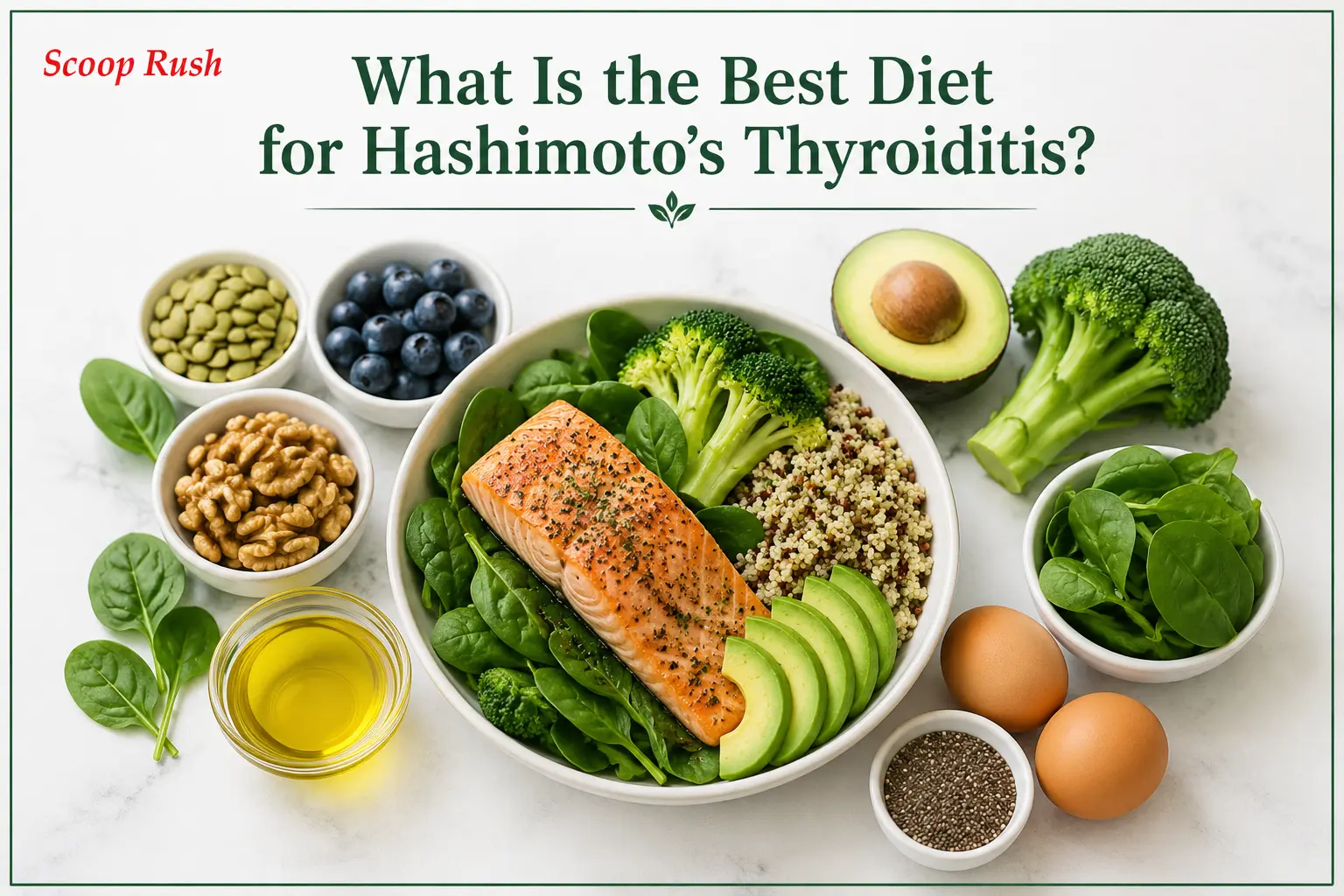
If you’ve been diagnosed with Hashimoto’s thyroiditis, you’ve probably already discovered that levothyroxine doesn’t always erase the fatigue, brain fog, weight gain, and dry skin that come with the condition. Millions of people manage the disease with medication alone and still feel like something is missing. Increasingly, research points to what’s on your plate as part of the answer.
Why There’s No Single “Hashimoto’s Diet”
Hashimoto’s thyroiditis is an autoimmune disorder and one of the most common thyroid conditions worldwide. It develops when the immune system mistakenly attacks the thyroid gland, gradually reducing its ability to produce hormones. Over time, this can lead to hypothyroidism, along with a cluster of symptoms that affect nearly every system in the body.
While there’s no single “Hashimoto’s diet” backed by a mountain of randomized trials, a growing body of evidence suggests that specific eating patterns, and specific nutrients, can meaningfully influence inflammation, gut health, and thyroid antibody levels. Here’s what’s actually known, what’s promising but unproven, and how to think about building a plate that works for your body.
What Is Hashimoto’s Thyroiditis, and Why Does Food Matter?
The thyroid is a small, butterfly-shaped gland at the base of the neck, but its influence is enormous. It secretes hormones that regulate metabolism, growth, and the function of nearly every organ system. In Hashimoto’s thyroiditis, immune cells called lymphocytes infiltrate the thyroid and slowly damage the tissue responsible for hormone production. As the gland’s output declines, common symptoms appear, including:
- Persistent fatigue
- Unexplained weight gain
- Dry skin and hair loss
- Constipation
- Sensitivity to cold
- Brain fog and low mood
Genetics vs. Lifestyle: Why Both Matter
Genetics play a substantial role in who develops autoimmune thyroid disease, accounting for a large share of individual risk. But genetics don’t act alone several other factors interact with that genetic predisposition to influence whether, and how severely, the disease progresses:
- Diet and overall nutrient status
- Gut bacteria and digestive health
- Environmental toxin exposure
- Hormonal status
- General lifestyle habits (sleep, stress, activity)
That combination of factors is exactly why nutrition has become such a heavily researched piece of the Hashimoto’s puzzle: it’s one of the few levers patients can actually pull themselves, alongside their prescribed hormone therapy.
What Diet Can and Can’t Do
It’s worth being upfront about the limits of the evidence. No diet has been proven to cure Hashimoto’s or reverse existing thyroid damage, and hormone replacement therapy remains the backbone of treatment for most patients. What research does show is that certain dietary patterns can:
- Lower inflammatory markers
- Support a healthier gut microbiome
- In some studies, reduce thyroid antibody levels
Together, these changes may translate into fewer symptoms and a better quality of life, even though they don’t replace medication.
Is There One “Best” Diet for Hashimoto’s?
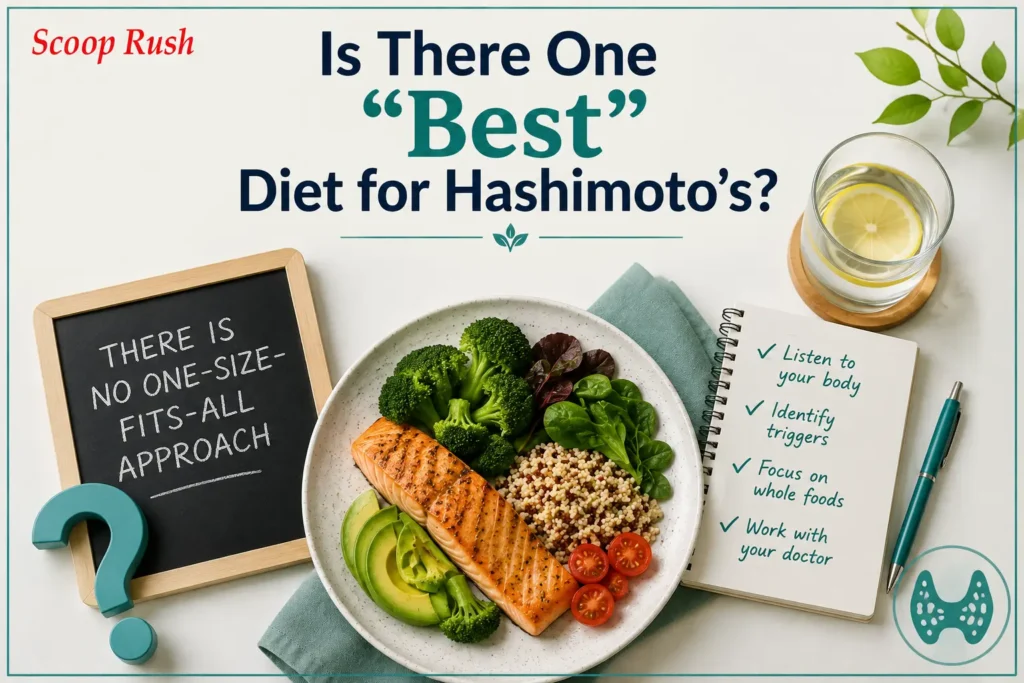
Not exactly. There isn’t a single, universally prescribed eating plan for Hashimoto’s disease. Instead, several different dietary approaches have shown benefits in studies or clinical observation, and the right one often depends on individual triggers, food sensitivities, and how well a person tolerates each approach. Below are the patterns with the most support.
Gluten-Free and Grain-Free Diets
People with Hashimoto’s thyroiditis are more likely to also have celiac disease than the general population, which is why many clinicians recommend celiac screening at diagnosis. Beyond celiac disease specifically, some research suggests that eliminating gluten may still help people with autoimmune conditions generally, even without a confirmed gluten allergy.
What the research shows: In one six-month study of women with Hashimoto’s, a gluten-free diet was associated with:
- Lower thyroid antibody levels
- Improved thyroid function
- Better vitamin D status
…compared with a control group that didn’t change their diet.
Why it’s not for everyone: Going gluten-free isn’t universally recommended for everyone with Hashimoto’s. Outside of confirmed celiac disease or a diagnosed sensitivity, the evidence for a blanket gluten-free recommendation is still thin, and unnecessarily restrictive diets can be hard to sustain and may create their own nutritional gaps. If you do want to try it, starting with a few simple gluten-free breakfast ideas is an easy, low-pressure way to ease in.
The Autoimmune Protocol (AIP) Diet
The Autoimmune Protocol, sometimes described as a stricter offshoot of the paleo diet, is built specifically for people with autoimmune conditions. It temporarily removes foods thought to provoke inflammation or gut permeability, before reintroducing them one at a time to identify personal triggers. Foods removed during the elimination phase typically include:
- Grains
- Dairy
- Legumes
- Nightshade vegetables
- Eggs, nuts, and seeds
- Refined sugar and alcohol
- Processed oils
What the research shows: In a small ten-week study of women with Hashimoto’s, following the AIP diet led to meaningful improvements in quality-of-life scores and a significant drop in C-reactive protein, a key marker of systemic inflammation.
A word of caution: The results are encouraging, but the study was small and short, and AIP is a restrictive protocol that’s best undertaken with guidance from a registered dietitian or physician familiar with autoimmune nutrition, rather than attempted alone long-term.
Anti-Inflammatory Diets
Chronic low-grade inflammation is thought to be one of the driving forces behind autoimmune thyroid disease, which has made anti-inflammatory eating patterns a natural area of interest. These diets typically emphasize colorful fruits and vegetables, fatty fish, olive oil, nuts, and whole grains, while limiting processed foods, refined sugar, and industrial trans fats.
Supporting this idea, a study of over 200 women with Hashimoto’s found that markers of oxidative stress a state closely linked to chronic inflammation were lower among those who ate fruits and vegetables more often. The Mediterranean diet, one of the best-studied anti-inflammatory eating patterns in general, is frequently cited by researchers as a template that also appears to help balance gut bacteria, which ties into the thyroid-gut connection discussed below.
Low-Glycemic and Sugar-Reduced Diets
Blood sugar swings are common among people with Hashimoto’s, and some evidence suggests they may be more prone to a rebound drop in blood sugar (reactive hypoglycemia) after eating carbohydrate-heavy meals. Excess sugar intake has also been linked to increased inflammation, disruption of healthy gut bacteria, and worsening autoimmune activity. A low-glycemic approach built around foods that release glucose into the bloodstream more slowly may help stabilize energy levels and reduce the inflammatory load that comes with frequent blood sugar spikes. For a closer look at how carbohydrate reduction affects the body more broadly, see this guide to low-carb diet benefits, risks, and foods.
Dairy-Free and Lactose-Free Diets
Lactose intolerance shows up more frequently in people with Hashimoto’s than in the general population. For those affected, dairy can worsen bloating, diarrhea, and reflux, and may interfere with proper absorption of thyroid medication. Cutting out dairy is not a universal necessity, though plenty of people with Hashimoto’s tolerate it just fine, which is why this, like most elements of the Hashimoto’s diet conversation, comes down to individual testing rather than a blanket rule.
Whole-Food Diets
Perhaps the least controversial recommendation in this entire space: minimizing ultra-processed foods and added sugar while building meals around whole, nutrient-dense ingredients supports better weight management and symptom control. This doesn’t require an elaborate protocol it’s simply a foundation that makes any of the more targeted approaches above easier to layer on top of.
The Gut-Thyroid Connection
One of the more interesting developments in Hashimoto’s research over the past decade is the recognition of a genuine “thyroid-gut axis.” The gut’s bacterial community, or microbiota, plays a direct role in regulating immune activity, and disruptions to that balance (called dysbiosis) are increasingly linked to autoimmune thyroid disease.
How an Unhealthy Gut Affects the Thyroid
Here’s roughly how it works:
- An imbalanced gut microbiome can weaken the intestinal lining, a phenomenon often referred to as “leaky gut.”
- That increased permeability allows more antigens and inflammatory triggers to cross into the bloodstream, feeding systemic inflammation and, potentially, autoimmune activity in the thyroid.
- Gut bacteria also directly influence the body’s absorption of thyroid-critical minerals like iodine, selenium, zinc, and iron.
- As a result, an unhealthy gut can contribute to nutrient shortfalls even when a person’s diet looks adequate on paper.
The Role of Probiotics
Certain beneficial bacterial strains, including species of Lactobacillus and Bifidobacterium, tend to be reduced in people with autoimmune thyroid disease. Early research on probiotic and prebiotic supplementation (“synbiotics”) has shown some promise for lowering TSH and reducing fatigue in people with hypothyroidism, though this is still an emerging area rather than an established treatment.
Key Nutrients That Influence Thyroid Function
Certain vitamins and minerals are directly involved in thyroid hormone production, activation, and regulation. Deficiencies and in some cases excesses of these nutrients have both been linked to worsening thyroid function. The table below summarizes the nutrients most consistently discussed in Hashimoto’s research.
| Nutrient | Role in Thyroid Health | Good Food Sources | Caution |
| Iodine | Essential building block of thyroid hormones T3 and T4 | Iodized salt, seafood, dairy, eggs | Chronic high intake may trigger or worsen autoimmune thyroiditis |
| Selenium | Cofactor for enzymes that convert T4 into active T3; antioxidant | Brazil nuts, fish, liver, spinach | High-dose supplementation can be toxic |
| Zinc | Supports T3 receptor activity and hormone signaling | Pumpkin seeds, meat, whole grains, legumes | Deficiency linked to disrupted hormone levels and higher antibody titers |
| Iron | Needed for the enzyme (thyroid peroxidase) that helps make thyroid hormone | Red meat, poultry, legumes, seeds | Excess intake may have pro-oxidant effects |
| Vitamin D | Modulates immune cell activity; deficiency is common in Hashimoto’s | Fatty fish, egg yolks, fortified foods, sunlight | Very high doses can raise blood calcium to unsafe levels |
| Magnesium | Involved in melatonin synthesis and may reduce inflammatory markers | Leafy greens, nuts, seeds, whole grains | Generally well-tolerated at food-based levels |
| B-complex vitamins | Support metabolism and thyroid-pituitary signaling | Whole grains, legumes, eggs, leafy greens | Deficiencies common in autoimmune thyroid patients |
| Omega-3 fatty acids | Anti-inflammatory; may support gut barrier integrity | Fatty fish, flaxseed, walnuts, chia seeds | Balance with omega-6 intake matters more than total amount |
Because nutrient needs vary widely by individual and because some of these nutrients are harmful in excess, testing and professional guidance are far safer than self-prescribing high-dose supplements. If iodine excess is a concern for you specifically, this low-iodine diet guide breaks down what that looks like in practice.
Foods to Focus On
Rather than framing the Hashimoto’s diet purely around restriction, most clinicians encourage patients to build meals around nutrient-dense, minimally processed foods, including:
- Fruits — berries, citrus, apples, pears, and bananas
- Non-starchy vegetables — broccoli, zucchini, peppers, asparagus, and leafy greens
- Healthy fats — olive oil, avocado, coconut oil, and fatty fish
- Lean animal protein — salmon, turkey, cod, shrimp, and eggs (if tolerated)
- Gluten-free whole grains — quinoa, brown rice, and rolled oats (if grains are tolerated)
- Nuts, seeds, and nut butters — almonds, walnuts, sunflower seeds, and pumpkin seeds
- Legumes — lentils, chickpeas, and black beans (if tolerated)
- Dairy or fortified alternatives — full-fat yogurt, or fortified almond and coconut milk
- Herbs and spices — turmeric, ginger, rosemary, and black pepper
- Hydration — water, herbal tea, and sparkling water
Several of these items eggs, grains, dairy, and legumes are considered generally healthy but are also common individual triggers for some people with Hashimoto’s. This is where an elimination-and-reintroduction approach, ideally guided by a dietitian, becomes useful: it lets you find your own personal list rather than guessing from a generic one.
Foods to Limit or Avoid
On the other side of the ledger, several food categories are consistently flagged as worth reducing or eliminating for people managing Hashimoto’s symptoms:
- Added sugars and sweets — soda, candy, pastries, and sugary cereals
- Fried and fast food
- Refined grains — white bread, white pasta, and white flour products
- Highly processed meats — bacon, sausage, and deli meats
- Alcohol
- Gluten-containing grains, for those with celiac disease, gluten sensitivity, or Hashimoto’s-related gluten intolerance
A Note on Goitrogens: Soy and Cruciferous Vegetables
Soy and raw cruciferous vegetables (like broccoli, cabbage, and kale) deserve a special mention. Both contain naturally occurring compounds called goitrogens, which can interfere with thyroid hormone production in very large amounts.
- Cooking cruciferous vegetables substantially reduces their goitrogenic activity.
- For most people eating normal portions, they remain nutritious additions to the diet rather than something to fear.
- Soy’s effect on thyroid function is less settled, and many people with Hashimoto’s choose to limit it as a precaution while researchers continue to investigate.
Supplements Worth Discussing With a Doctor
Because nutrient deficiencies are common among people with Hashimoto’s, supplementation sometimes plays a supporting role alongside diet. Nutrients most frequently discussed include:
- Selenium
- Zinc
- Curcumin (the active compound in turmeric)
- Vitamin D
- B-complex vitamins
- Magnesium
- Iron
Two additional compounds deserve their own explanation.
Melatonin
Best known as a sleep hormone, melatonin also has antioxidant and immune-modulating properties. A small, older study found that women with hypothyroidism who took melatonin at bedtime had higher thyroid hormone levels after several months compared with a placebo group, along with improvements in mood and alertness. However, large, rigorous trials confirming melatonin’s safety and effectiveness specifically for thyroid conditions are still lacking, and its dosing appears to matter a great deal effects at supplement doses can differ substantially from the hormone’s natural, low-dose circadian pattern in the body.
Iodine
Iodine is a case where more is not automatically better. While it’s essential for hormone production, high-dose iodine supplementation in someone who isn’t actually deficient can trigger or worsen autoimmune thyroiditis. Iodine status should generally be assessed by a healthcare provider before supplementing.
The Bottom Line on Supplements
Supplements can help correct documented deficiencies, but self-directed high-dose supplementation especially of iodine, selenium, or melatonin — carries real risk and should be discussed with a physician or dietitian familiar with your specific labs. For a broader look at how “more is better” thinking can backfire, see the risks of taking too many vitamins.
Lifestyle Factors Beyond the Plate
Diet doesn’t operate in isolation. A few additional habits consistently show up in Hashimoto’s research and clinical guidance:
Stress Management
In a study of women with Hashimoto’s, structured stress-reduction practices were linked to reduced anxiety and depression, improved quality of life, and lower thyroid antibody levels. Chronic stress affects the immune system and hormone regulation broadly, so building in practices like mindfulness, gentle movement, or therapy can be a meaningful complement to dietary changes. Even something as simple as a 5-minute walk every hour can help offset the effects of a sedentary day, and it fits naturally alongside the broader healthy habits worth building in your 20s and 30s.
Medication Timing
For people on levothyroxine, timing matters for absorption. Most guidance recommends:
- Taking thyroid medication on an empty stomach
- Roughly 30–60 minutes before breakfast, or
- Several hours after the last meal of the day
Food and particularly certain supplements like calcium and iron can interfere with how well the medication is absorbed, so consistent timing matters. Worth noting too: many people reach for coffee right after their morning dose, and it’s worth understanding what drinking coffee on an empty stomach actually does before making that a daily habit.
Patience
Thyroid hormone levels and symptoms typically take weeks to respond to a new medication dose or a new dietary approach. Expecting immediate results can lead to unnecessary discouragement or premature diet-hopping.
The Bottom Line
There’s no single miracle diet for Hashimoto’s thyroiditis, but there is real, growing evidence that what you eat can influence how you feel. Anti-inflammatory eating patterns, attention to gut health, and correcting specific nutrient deficiencies all show promise for easing symptoms and potentially reducing thyroid antibody activity. At the same time, this is a highly individual condition what helps one person may do little for another, and restrictive protocols like AIP or gluten-free eating are worth approaching with professional guidance rather than trial and error alone.
The most reliable strategy is also the least flashy one: keep taking prescribed medication as directed, build meals around whole, nutrient-dense foods, pay attention to how your own body responds to specific foods, and loop in a doctor or registered dietitian who has experience with autoimmune thyroid conditions. Combined with your prescribed treatment, thoughtful dietary choices can be a genuinely powerful part of feeling better with Hashimoto’s.
FAQs
Can you eat eggs if you have Hashimoto’s?
For most people, yes, eggs are a nutrient-dense protein source. The main exception is the Autoimmune Protocol diet, which removes eggs temporarily during its elimination phase. Outside of that specific protocol, whether to include eggs is generally an individual decision made with a healthcare provider.
What triggers a Hashimoto’s flare-up?
Unlike some autoimmune conditions, Hashimoto’s doesn’t tend to have sharp, distinct “flares” it progresses gradually, damaging thyroid tissue over time. That said, nutritional deficiencies, certain medications or supplements that interfere with thyroid hormone, and chronic stress can all worsen symptom severity along the way.
Is a gluten-free diet necessary for everyone with Hashimoto’s?
Not necessarily. It’s strongly recommended for anyone with confirmed celiac disease, and some people without celiac disease still report symptom improvement. But there isn’t currently enough evidence to recommend a strict gluten-free diet as a blanket rule for every person with Hashimoto’s.
Will diet alone treat Hashimoto’s thyroiditis?
No. For most patients, hormone replacement therapy remains essential. Diet and lifestyle changes are best understood as complementary tools that may reduce symptom severity, support overall health, and in some cases influence inflammatory markers and antibody levels not as a substitute for medical treatment.

