
Bread has a strange reputation among vegans. New plant-based eaters often assume every loaf is off-limits. They lump bread in with cheese, eggs, and butter.
But that’s not true. So, is bread vegan?
Most classic breads are vegan by accident. Flour, water, salt, and yeast that’s it. Bread only became complicated once bakeries started adding dairy and eggs for softness.
This guide answers the question properly. It covers how to tell if a loaf is really vegan, how bakers are turning bread into a protein source, how Asian milk bread is made without dairy, and why bread traditions across the whole world tend to be plant-based more often than people expect.
By the end, you’ll know exactly what to check on a label, how to bake your own protein-packed loaf, and why “milk bread” doesn’t always need milk at all.
Is Bread Vegan? A Quick Answer
Not always. It depends on the type of bread and the ingredients used.
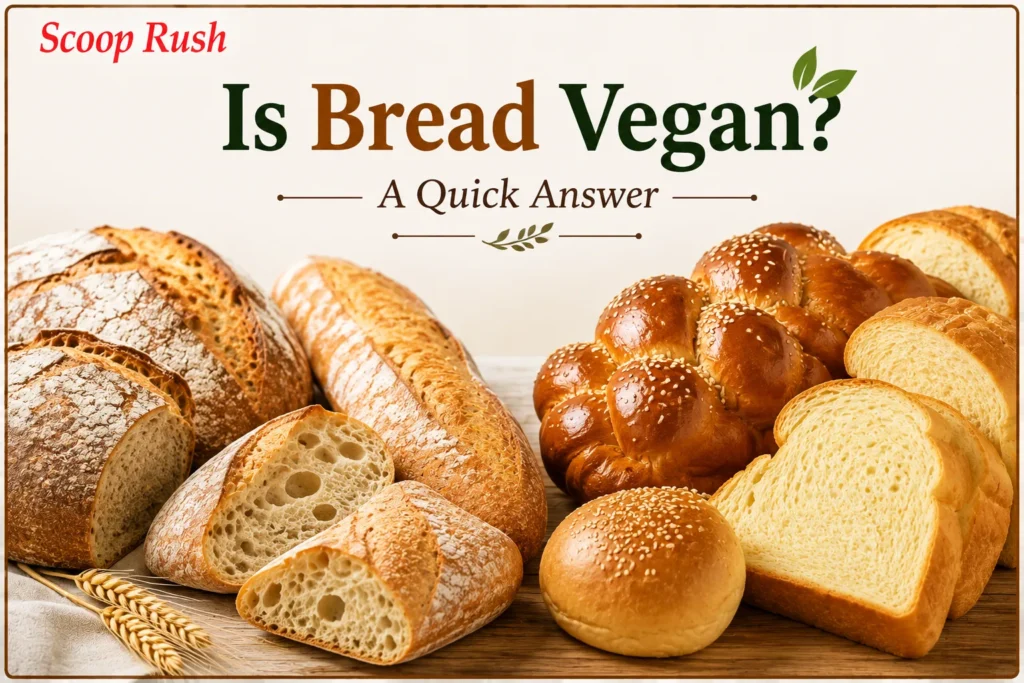
Lean, old-world breads are almost always vegan. Think baguettes, ciabatta, ficelle, and rustic country loaves. These use only flour, water, salt, and yeast. No dairy fat. No eggs.
Enriched breads are a different story. Anything soft, tender, and slightly sweet often has butter, milk, or eggs. This includes brioche, challah, Hawaiian rolls, and many burger buns. Challah is almost always made with eggs. Supermarket sandwich bread often has milk powder or whey too.
Common Non-Vegan Ingredients in Bread
| Ingredient | Why It’s Used | Vegan-Friendly? |
| Milk, whey, casein | Adds softness, flavor, browning | No |
| Eggs | Richness, structure (challah, brioche) | No |
| Honey | Sweetener in “wheat” or “grain” breads | No (vegetarian only) |
| Gelatin | Occasionally used in glazes | No |
| Mono- and diglycerides | Emulsifier, keeps bread moist | Usually yes (mostly soy-derived) |
| Soy lecithin | Emulsifier, dough conditioner | Usually yes |
A simple shortcut helps here. Kosher bakeries rarely use milk products. Jewish dietary law keeps meat and dairy separate. So rye bread and many bagels are safe bets.
Store brands vary a lot, though. The same company can sell both vegan and non-vegan bread side by side. Always check the label.
Why Do Grocery Store Labels Confuse People?
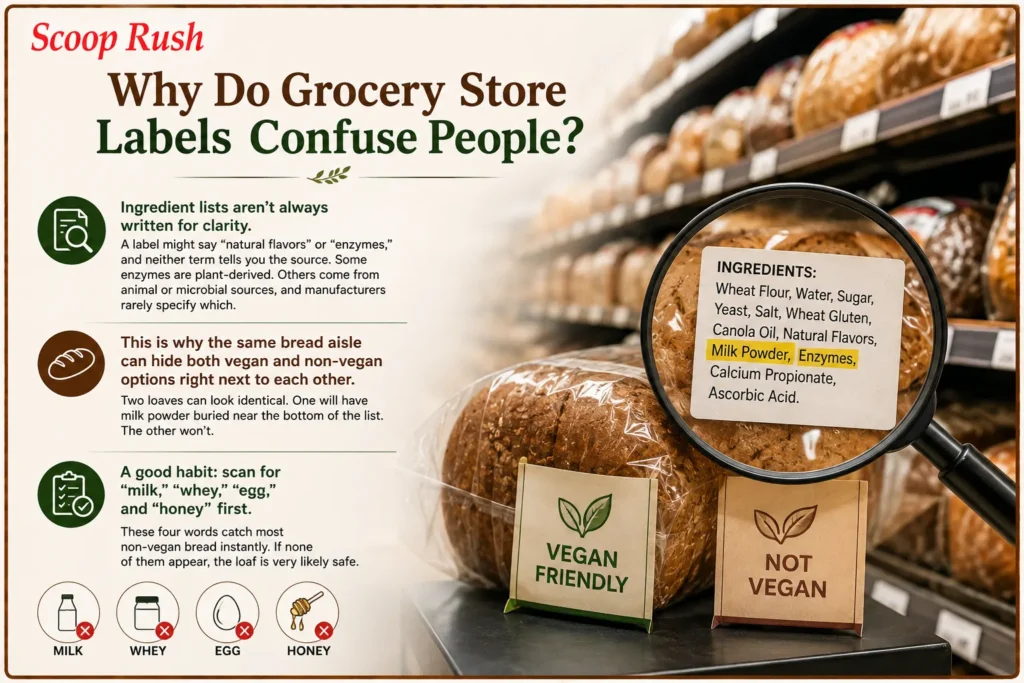
Ingredient lists aren’t always written for clarity. A label might say “natural flavors” or “enzymes,” and neither term tells you the source. Some enzymes are plant-derived. Others come from animal or microbial sources, and manufacturers rarely specify which.
This is why the same bread aisle can hide both vegan and non-vegan options right next to each other. Two loaves can look identical. One will have milk powder buried near the bottom of the list. The other won’t.
A good habit: scan for “milk,” “whey,” “egg,” and “honey” first. These four words catch most non-vegan bread instantly. If none of them appear, the loaf is very likely safe.
Is Yeast Vegan?
Yes. Yeast is a single-celled fungus, not an animal. It lives naturally in the air, on fruit skins, and in flour. This is exactly why naturally fermented bread has existed for thousands of years.
Some very strict vegans do question refined white sugar. A few refineries use bone char to decolorize it. Organic sugar and beet sugar avoid this issue completely. If you’re already careful about what goes into your diet, it’s also worth reading up on supplement risks from taking too many vitamins, since more isn’t always better with nutrition.
Vegan Bread Traditions Around the World
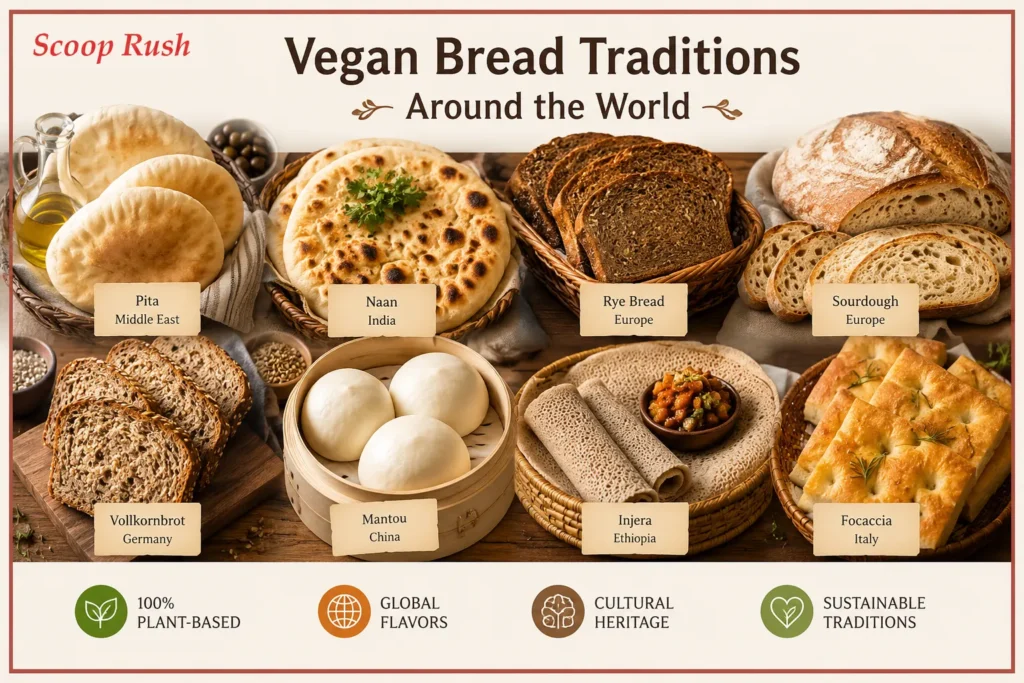
Bread isn’t just a European or American story. Nearly every culture with access to grain has developed its own bread, and most of these traditional versions never needed animal products in the first place.
Middle Eastern flatbreads like pita and lavash are typically just flour, water, salt, and yeast. South Asian staples like roti and phulka skip yeast entirely, relying on whole wheat flour and water alone. Latin American arepas are made from ground corn, not wheat, and contain no dairy or eggs in their traditional form. Even Ethiopian injera, made from fermented teff flour, is naturally vegan.
A Quick World Tour
| Bread | Region | Naturally Vegan? |
| Pita | Middle East | Yes |
| Roti / phulka | South Asia | Yes |
| Injera | Ethiopia | Yes |
| Arepa | Latin America | Yes |
| Naan (traditional) | South Asia | Often no (uses yogurt or ghee) |
| Focaccia | Italy | Usually yes |
| Brioche | France | No |
Naan is a useful example of how tricky this gets. Traditional recipes often include yogurt, milk, or ghee for richness, which makes classic naan non-vegan. Restaurant naan, though, varies a lot — some kitchens brush it with plain oil instead of ghee, which makes it vegan without anyone advertising the fact.
This pattern repeats everywhere. The “default” version of a bread often depends more on regional habit than on any technical requirement. A flatbread doesn’t need dairy to turn out well; a baker just has to choose not to add it.
It’s a similar story on the opposite end of the spectrum too. People following an animal-based diet or even a strict carnivore diet skip bread entirely, which shows just how differently cultures and individuals can approach the same staple food.
Why Are Bakers Adding Protein to Bread?
Bread used to sit firmly in the “carbs” category. Nobody reached for a slice to hit a protein goal. That’s changing fast, especially among people following a low-carb diet who still want the comfort of a real sandwich.
Home bakers and recipe developers are now packing real protein into everyday loaves. The trick is a single ingredient: vital wheat gluten.
What Is Vital Wheat Gluten?
Vital wheat gluten is the concentrated protein found naturally in wheat. Bakers make it by washing wheat flour with water. The starch rinses away. Only the stretchy gluten network remains.
It’s also the base ingredient in seitan, the popular vegan meat substitute.
Nutrition snapshot (per ¼ cup):
| Nutrient | Amount |
| Protein | ~23g |
| Calories | ~120 |
This density is what makes it so useful. A small amount adds a lot of protein. It doesn’t add extra fat or sugar.
One limitation: there’s no real substitute for vital wheat gluten in these recipes. Because of this, high-protein bread made this way can’t be gluten-free. If gluten is a concern for you, it’s worth exploring other gluten-free breakfast ideas that don’t rely on wheat-based bread at all.
How Much Protein Can One Slice Really Have?
A typical slice of white sandwich bread has around 2–3 grams of protein. A slice of high-protein vegan bread built around vital wheat gluten can hit 10 grams or more. That’s roughly triple to quadruple the amount, from the same size slice.
Stack that across a sandwich. Two slices of high-protein bread alone can deliver 20 grams of protein, before any filling goes on top. Add a plant-based deli slice or a spread of nut butter, and a single lunch sandwich starts approaching the protein content of a full meal.
This is exactly why the trend has caught on with people building muscle, recovering from workouts, or simply trying to eat more balanced meals without tracking every gram. It’s also worth knowing this if you’re on medications linked to GLP-1 and muscle loss, since keeping protein intake up matters even more in that situation.
Best Non-Dairy Milks for Baking Bread
Not every plant milk performs the same way in a dough. Some add extra protein, some add sweetness, and a few actively work against the texture you want.
| Non-Dairy Milk | Effect on Bread | Best For |
| Pea protein milk | Adds extra protein, mild flavor | High-protein loaves |
| Soy milk | Neutral flavor, good structure | Everyday sandwich bread |
| Oat milk | Slightly sweet, very soft crumb | Enriched, softer loaves |
| Almond milk | Light texture, thinner liquid | Lean, simple loaves |
| Coconut milk | Strong flavor, high fat | Not recommended for most breads |
Coconut milk is worth calling out specifically. Its distinct flavor tends to carry through baking, which can clash with an otherwise neutral loaf. Most recipe developers steer bakers toward it only when a coconut flavor is actually wanted.
Beginner Mistakes When Baking Vegan Bread for the First Time
Vegan bread baking isn’t harder than regular baking, but a few habits trip up beginners more than others. Building consistency in the kitchen ties into the same principles behind good healthy habits in your 20s and 30s small, repeatable routines beat one-off effort every time.
Using cold liquid to activate yeast. Yeast needs warmth to wake up, generally between 90–100°F. Liquid that’s too cold leaves the yeast sluggish, and the dough won’t rise properly.
Skipping a kitchen scale. Cup measurements for flour can vary by as much as 20% depending on how it’s scooped. A scale removes the guesswork and produces far more consistent results.
Rushing the proofing time. Warm, humid kitchens proof faster. Cold, dry kitchens proof slower. Recipe timings are just estimates the dough itself, not the clock, tells you when it’s ready.
Adding too much extra flour while kneading. A slightly sticky dough is normal, especially in humid weather. Adding flour to compensate often leads to a dense, dry loaf.
Cutting the loaf too soon. Bread continues to set internally as it cools. Slicing while it’s still warm can make the crumb gummy, even if the bake itself was perfect.
How Is High-Protein Vegan Bread Made?
The method is close to standard sandwich bread. A few tweaks make the difference.
- Warm non-dairy milk and activate the yeast. Pea protein milk is popular here.
- Mix the milk with vital wheat gluten, flour, salt, and a little sugar.
- Add melted plant butter for softness.
- Knead briefly by hand — just enough to bring the dough together.
- Let it rise once as a ball.
- Shape it into a loaf and let it rise again in the pan.
- Bake until golden, then cool fully before slicing.
The double rise matters. Skipping the second proof, or rushing the shaping step, leads to a dense crumb. Patience beats equipment here.
Common Mistakes to Avoid
| Mistake | What Happens | Fix |
| Over-kneading with a stand mixer | Tough, rubbery bread | Knead briefly by hand instead |
| Skipping the second proof | Dense, tight crumb | Always double-proof |
| Using a full bread machine cycle | Over-develops gluten | Interrupt cycle, use rise-only settings |
| Slicing too early | Gummy texture | Cool fully before cutting |
Storage Guide
| Storage Method | Shelf Life |
| Airtight container, room temperature | 3–5 days |
| Refrigerator | About a week |
| Freezer (sliced) | Several months |
This bread is easy to customize too. Add seeds on top for crunch. Fold in chopped nuts for flavor. Swap in cinnamon and raisins for a sweet breakfast version.
What Makes Asian Milk Bread So Soft?
While Western bakers boost protein, a much older tradition chases a different goal: extreme softness. Think shokupan in Japan, fluffy buns in Hong Kong and Taiwan, or roti sobek in Indonesia.
The softness isn’t an accident. It comes from specific techniques, not luck.
The Key Techniques
| Technique | How It Works |
| Tangzhong | Flour and liquid cooked into a paste before mixing into the dough |
| Yudane | Boiling water poured directly over flour |
| Sweet stiff starter | A pre-fermented, high-sugar sponge dough, left to rise until honeycombed |
All three do the same job. They pre-gel some of the flour’s starch. This lets the bread hold more water. More water means a softer crumb that stays fresh longer.
A Short History
Bread reached much of Asia fairly recently in baking terms. Portuguese traders are usually credited with bringing it to Japan. Colonial trade routes, wartime food policy, and post-war American influence all played a role later on.
Taiwan saw large wheat and milling imports in the mid-20th century. This reshaped local baking traditions. International baking competitions have since raised the profile of Asian bakers and their techniques.
Does Milk Bread Actually Need Milk?
Not really. Despite the name, many recipes use very little dairy. The real engine behind the texture is the starch-gelling technique, not the milk itself.
This makes the whole category easy to veganize. Swap dairy milk for a plain, unsweetened plant milk. Swap butter for plant butter. The tangzhong or yudane paste does most of the work regardless of what liquid it’s built from.
How to Make Vegan Milk Bread
- Make a tangzhong or yudane paste using flour and plant milk (or water).
- Let the paste cool completely.
- Fold it into a standard enriched dough made with plant butter.
- Use non-dairy milk or water for the remaining liquid.
- Proof, shape, and bake as you would any enriched dough.
Nothing about the proofing or shaping process changes. Only the fat and liquid source changes. The starch-gelling method stays exactly the same.
Vegan Milk Bread vs. Regular Milk Bread
| Factor | Dairy Version | Vegan Version |
| Softness technique | Tangzhong/yudane | Same, unchanged |
| Liquid used | Dairy milk | Plant milk or water |
| Fat used | Butter | Plant butter |
| Shelf life | Similar | Similar |
| Taste difference | Baseline | Very minor, if any |
Vegan Bread at a Glance
| Bread Type | Usually Vegan? | Key Technique |
| Baguette, ciabatta, rustic loaves | Yes | Lean dough, no enrichment |
| Challah, brioche | No (traditionally) | Egg/dairy enrichment |
| High-protein sandwich bread | Yes (when made this way) | Vital wheat gluten |
| Asian milk bread / shokupan | Can be, if adapted | Tangzhong or yudane paste |
Final Takeaway
So, is bread vegan? Often, yes but not automatically. Vegan bread isn’t one single thing. It ranges from simple baguettes to protein-packed sandwich loaves to soft Asian milk bread. None of these need eggs, milk, or butter to work.
The real difference between a good loaf and a mediocre one isn’t a missing animal ingredient. It’s technique, proofing time, and understanding what each bread style is trying to achieve.
Start simple. Read labels at the store. Then try baking at home either chasing extra protein with vital wheat gluten, or chasing extreme softness with tangzhong. Either way, the formula stays the same: flour, water, a living culture, and time.
And if bread isn’t always on the menu for you, there are plenty of keto-friendly snack ideas worth keeping on hand too pairing a good diet with simple daily movement, like a 5-minute walk every hour, rounds out the bigger picture of eating well.
FAQs
Is regular sandwich bread vegan?
Not always. Many supermarket loaves contain milk powder or whey. Always check the ingredient label.
Can vegans eat yeast?
Yes. Yeast is a fungus, not an animal product. It’s completely vegan-friendly.
What is vital wheat gluten, and is it vegan?
It’s the concentrated protein from wheat flour. It’s 100% plant-based and commonly used to boost protein in bread and make seitan.
Can high-protein vegan bread be made gluten-free?
No. The recipe depends entirely on vital wheat gluten, which is a wheat product. There’s no gluten-free substitute for it in this method.
Does vegan milk bread taste different from the dairy version?
Not significantly. The softness comes from the tangzhong or yudane technique, not the dairy itself, so the texture stays very similar.
How long does homemade vegan bread last?
About 3–5 days at room temperature, up to a week in the fridge, and several months in the freezer if sliced first.
Is honey ever used in bread, and is it vegan?
Yes, honey shows up in some “wheat” or “grain” breads. It’s vegetarian but not vegan, since it’s produced by bees.
Why does some vegan bread taste better than others?
Technique matters more than ingredients here. Under-proofed dough tastes flat and dense, no matter how good the flour is. Two bakers using identical ingredients can still end up with very different loaves, simply because one rushed the rise and the other didn’t.
Is naan usually vegan?
Not always. Traditional naan often uses yogurt, milk, or ghee. Some restaurants brush it with plain oil instead, which makes it vegan it’s worth asking.
Can I make vegan bread without any special ingredients?
Yes. A basic lean loaf needs only flour, water, salt, and yeast. Vital wheat gluten and tangzhong pastes are optional upgrades, not requirements.

