
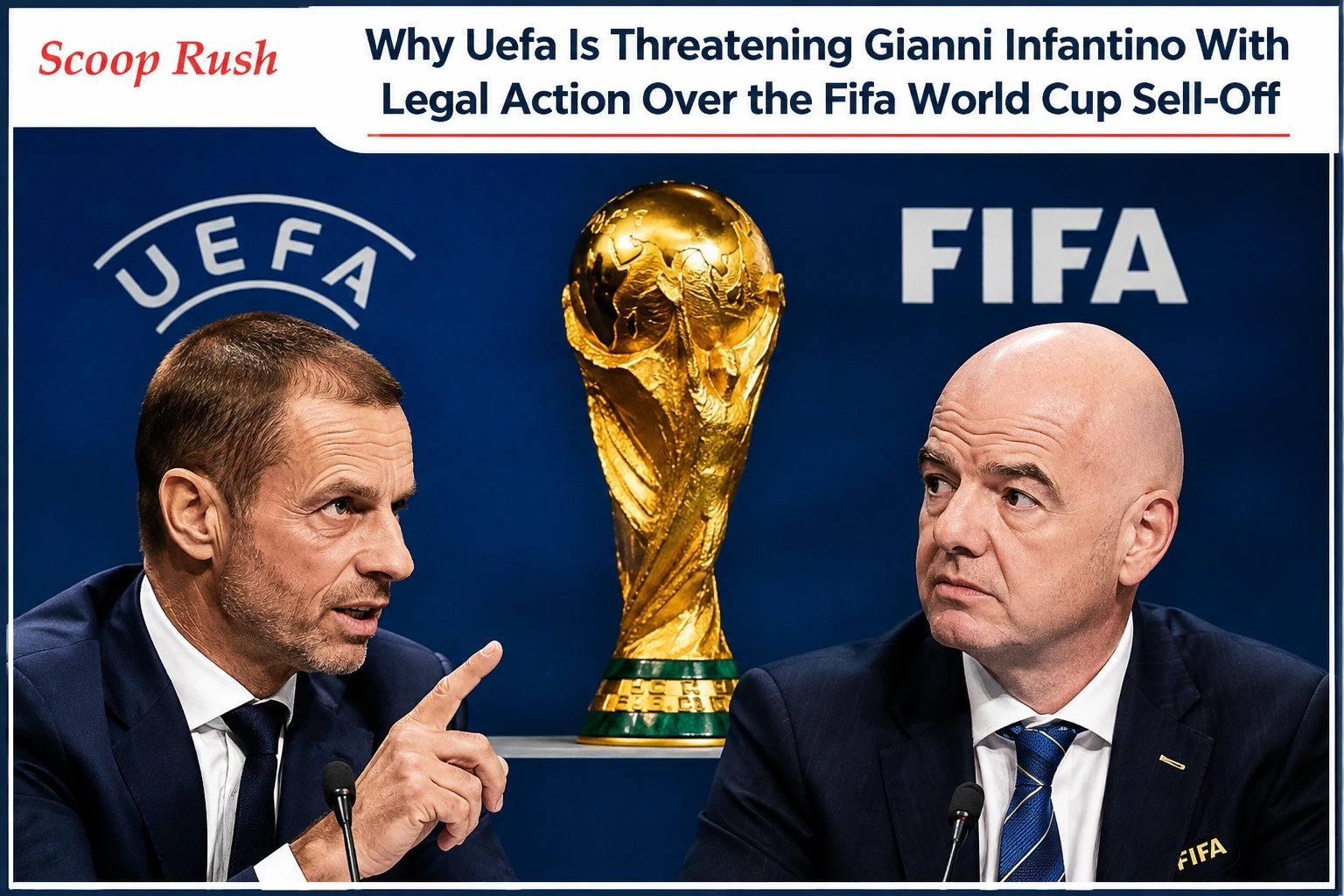
Could the FIFA World Cup sell-off end up splitting world football apart? That question is no longer hypothetical. UEFA is threatening Gianni Infantino with legal action over the plan, and the rift now touches almost every major football body on the planet. A proposal to bring private investors into FIFA’s biggest competitions has turned into one of the tensest standoffs in the sport’s governance in recent memory.
This isn’t a minor disagreement between committees. It involves Fifa president Gianni Infantino, a $40m offer to member associations, an American venture capital firm with ties to the Trump family, and now, formal warnings of legal action. For fans, federations, and anyone who follows how football’s money actually moves, the Fifa World Cup sell-off story matters.
Why Uefa Is Threatening Gianni Infantino With Legal Action
The dispute centers on Infantino’s plan to create a new commercial subsidiary, reportedly called Fifa Forward Enterprise (FFE). The idea was straightforward on paper. Fifa would use FFE to run its major events, including the World Cup, and then invite outside investors to buy minority, non-controlling stakes in that subsidiary. This is the core of the Fifa World Cup sell-off that has now triggered Uefa’s legal threat.
Fifa framed the plan as a way to bring in fresh capital while keeping control of its flagship tournaments in-house. Uefa, however, sees it differently. According to reporting that The Telegraph first published, Uefa sent Infantino a letter stating it is actively weighing legal action, arbitration, or regulatory complaints connected to the FFE proposal.
That marks a serious escalation. Legal threats between continental confederations and FIFA itself rarely happen, and they signal that private conversations and diplomatic pressure have already failed to resolve the disagreement.
What Uefa Is Demanding From Fifa Over the World Cup Sell-Off
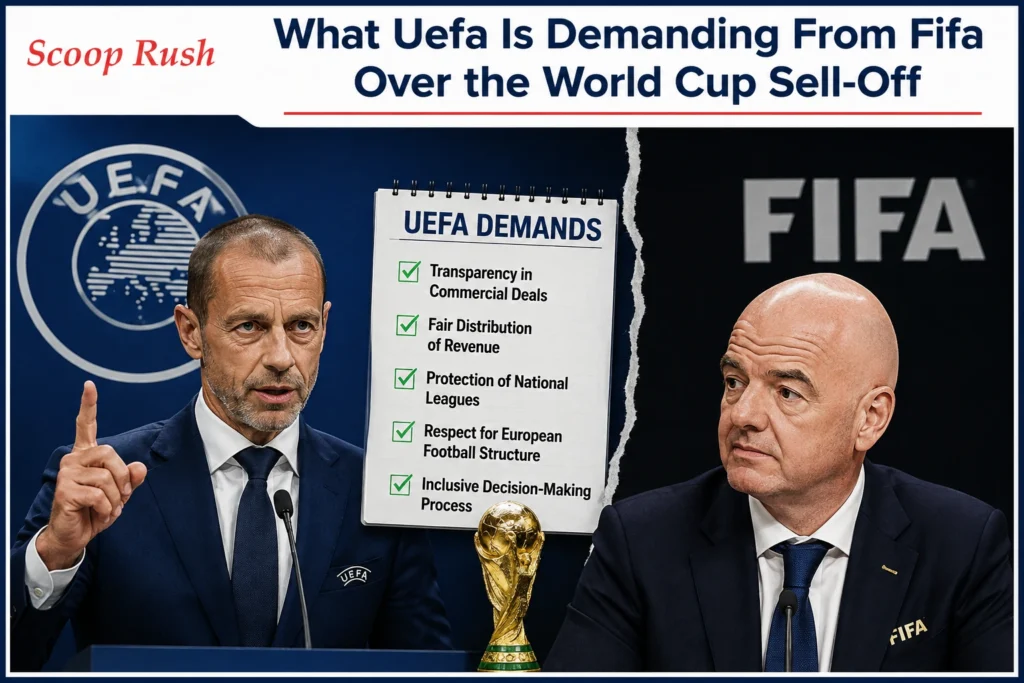
Uefa’s letter didn’t stop at threatening litigation. It also demanded that Fifa immediately preserve every document connected to the FFE plan. This includes emails, instant messages across platforms like WhatsApp, Signal, Teams, and Slack, text messages, written correspondence, and meeting notes.
Crucially, Uefa specified that these obligations apply regardless of Fifa’s internal retention policies. In other words, Uefa wants to make sure Fifa doesn’t delete, archive, or lose anything before any legal process begins. The request covers communications involving Fifa officers, employees, committee members, consultants, agents, member associations, confederations, broadcasters, sponsors, and financial institutions.
This kind of document preservation notice typically precedes formal legal proceedings. It suggests Uefa isn’t simply posturing. Uefa appears to be preparing for a real dispute that could end up in front of arbitrators or regulators.
The $40m Offer That Set a Deadline
Part of what makes this situation urgent is money and timing. Infantino reportedly wrote to all 211 FIFA member associations, telling them they would receive $40m if they backed the FFE proposal. To access an initial $20m of that sum, associations needed to commit by 19 September.
Uefa’s letter specifically referenced this deadline and asked Fifa to preserve documents related to the payment structure for member associations. That includes the design, modelling, legal basis, approval process, and all communications Fifa sent to those associations about the payments.
By tying financial incentives to a fast-approaching deadline, Fifa pushed member federations to decide quickly. For governing bodies already uneasy about the Fifa World Cup sell-off, that pressure appears to have backfired.
Who Is Behind the Fifa World Cup Sell-Off Plan
Thrive Eternal, a venture capital firm Joshua Kushner founded, expected to lead the investor group behind FFE. Joshua Kushner is the brother of Jared Kushner, who is married to Ivanka Trump and serves as the son-in-law of US President Donald Trump.
That connection has added another layer of scrutiny to the proposal. Bringing a politically connected American investment firm into football’s most valuable global asset, the World Cup, was always going to draw attention. Now that the plan has become a flashpoint for legal threats, that scrutiny has only intensified.
Growing Opposition Across Football’s Governing Bodies
Uefa isn’t acting alone in raising concerns. Infantino’s leadership has faced public criticism from several major football authorities, not just in Europe but across North and Central America and the Caribbean as well.
Uefa and Concacaf both released statements criticising the plan before UEFA’s legal threat became public. That kind of coordinated pushback from two of football’s most powerful confederations rarely happens, and it points to a broader unease about how Infantino runs FIFA.
Wales Becomes the First Nation to Withdraw Support
The opposition took a significant turn when Wales became the first national federation to publicly withdraw its backing for Infantino’s bid to continue as Fifa president. For a sitting Fifa president, losing the public support of a member association marks a notable blow, especially this early in what looks like a broader campaign of criticism.
Wales’ move could encourage other federations to follow suit, particularly those who already felt uncomfortable with the Fifa World Cup sell-off but hesitated to break ranks first.
England’s FA Set to Withdraw Backing Too
The pressure on Infantino isn’t limited to continental confederations or smaller federations. The English Football Association also plans to write to Infantino, formally withdrawing its previous support for him.
England’s FA carries significant weight within global football politics. Its decision to step back from backing Infantino adds to a growing sense that support for his leadership is eroding across multiple regions at once, not just in isolated pockets.
What This Means for Fifa’s Leadership
Gianni Infantino has led FIFA for a decade. Throughout that time, he has overseen major changes to the organization’s structure and commercial reach, including an expanded World Cup format. However, this current controversy represents one of the most visible challenges to his authority in recent years.
Legal threats from UEFA, public criticism from Concacaf, withdrawn support from Wales, and England’s FA reportedly following suit combine to paint a picture of a leadership under real pressure. FIFA hasn’t yet responded publicly, and BBC Sport says it has approached FIFA for comment.
For now, Fifa has scrapped the FFE plan. Yet the fallout from how Infantino proposed and pushed it forward continues to shape the relationship between FIFA and its member confederations.
Why This Dispute Goes Beyond One Investment Plan
At its core, this isn’t only about whether private investors should own a stake in World Cup competitions. It’s about trust between Fifa’s central leadership and the federations that make up its membership. When Uefa demands preservation of internal communications and threatens legal or regulatory action, it signals a breakdown in the normal channels of governance and negotiation.
Additionally, the $40m incentive tied to a tight deadline raises questions about how Fifa makes decisions internally, and whether member associations had genuine time to evaluate the Fifa World Cup sell-off rather than simply react to a payment offer.
Consequently, this dispute could shape conversations about Fifa’s governance structure well beyond the specifics of the FFE plan. Similarly, it may influence how Fifa vets and communicates future commercial proposals to member federations, given how quickly this one drew formal legal threats.
Key Takeaways
UEFA has threatened legal action against FIFA over Infantino’s now-scrapped plan to sell minority stakes in a commercial subsidiary running FIFA’s major competitions. UEFA has also demanded that FIFA preserve all related documents and communications. Meanwhile, opposition to Infantino’s leadership has grown, with Concacaf and UEFA publicly criticizing the plan, Wales withdrawing support for his presidency, and England’s FA reportedly preparing to do the same.
Thrive Eternal, a venture capital firm Joshua Kushner leads, backed the plan, which included a $40m incentive offer to member associations tied to a 19 September deadline. As a result, what began as a commercial proposal has evolved into a broader test of Infantino’s standing within world football’s governing structure.
Ultimately, how Fifa responds to Uefa’s legal threat, and whether more federations follow Wales and England in withdrawing support, will likely determine how the Fifa World Cup sell-off saga develops in the coming weeks.
Frequently Asked Questions
1. Why is Uefa threatening legal action against Fifa?
Uefa is considering legal action, arbitration, or regulatory complaints over the Fifa World Cup sell-off, Infantino’s now-scrapped plan to let private investors buy minority stakes in a new subsidiary running Fifa’s major competitions.
2. What is Fifa Forward Enterprise (FFE)?
FFE was the proposed commercial subsidiary behind the Fifa World Cup sell-off. Fifa planned to use it to operate its major events, and outside investors would have made minority, non-controlling investments in the subsidiary.
3. Who was expected to lead the investment in Fifa’s plan?
Thrive Eternal, a venture capital firm Joshua Kushner founded, expected to lead the proposed investor group for FFE. Joshua Kushner is the brother of Jared Kushner, US President Donald Trump’s son-in-law.
4. Which football associations have withdrawn support for Infantino?
Wales became the first nation to publicly withdraw backing for Gianni Infantino’s bid to continue as Fifa president. The English Football Association also plans to write to Infantino withdrawing its previous support.
5. What documents has Uefa asked Fifa to preserve?
Uefa has asked Fifa to preserve all documents and electronically stored information related to the Fifa World Cup sell-off, including emails, instant messages, text messages, written correspondence, and meeting notes, regardless of Fifa’s internal retention policies.

