
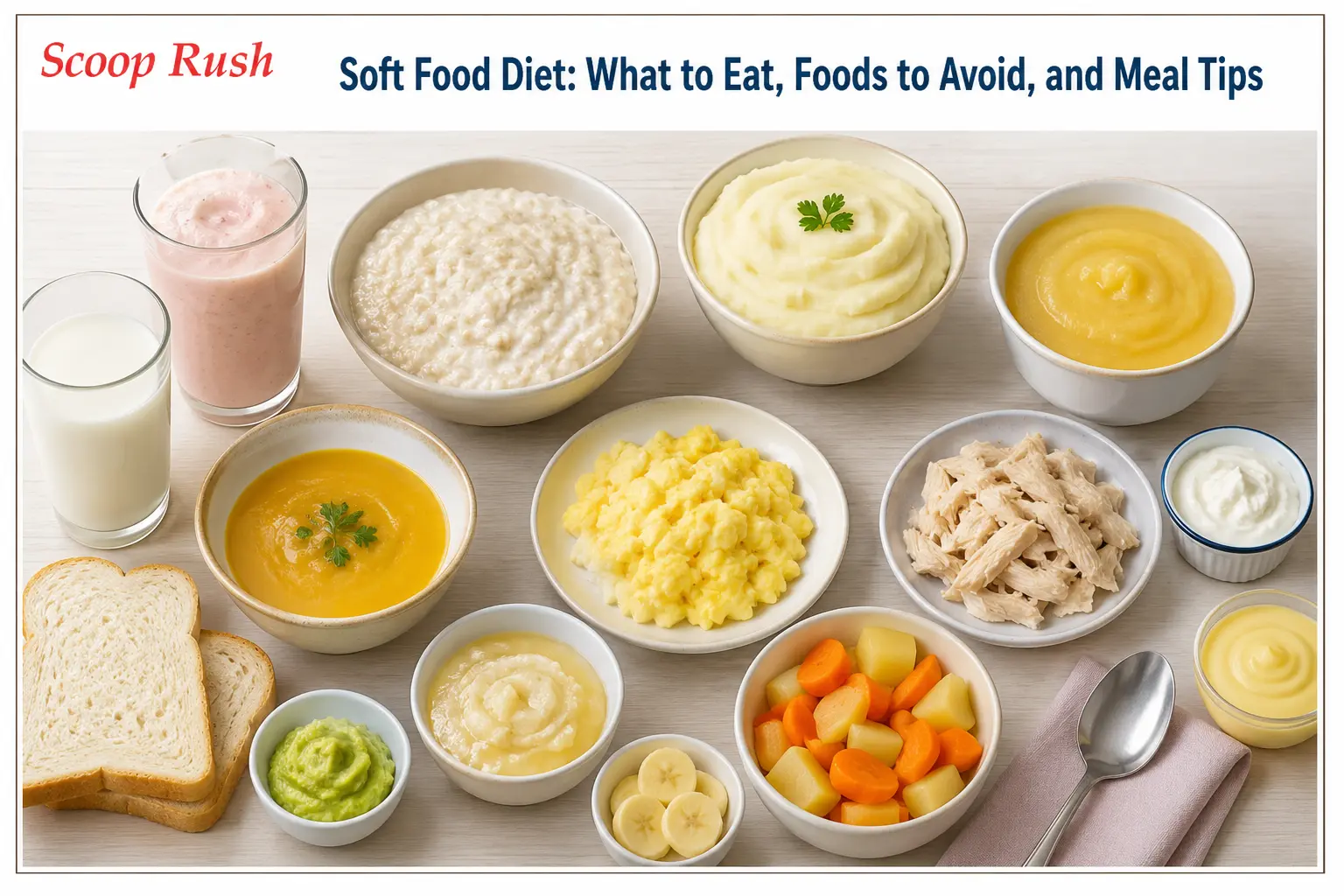
A soft food diet can make eating safer and more comfortable when chewing or swallowing is difficult. Whether you’re recovering from surgery, dealing with digestive problems, or managing mouth sores during cancer treatment, choosing the right foods helps your body heal while ensuring you still get the nutrients you need.
Unlike fad diets, a soft food diet is usually temporary and designed to reduce stress on your digestive system. The focus is on foods that are easy to chew, swallow, and digest while avoiding anything tough, crunchy, or high in fiber that could cause discomfort.
What Is a Soft Food Diet?
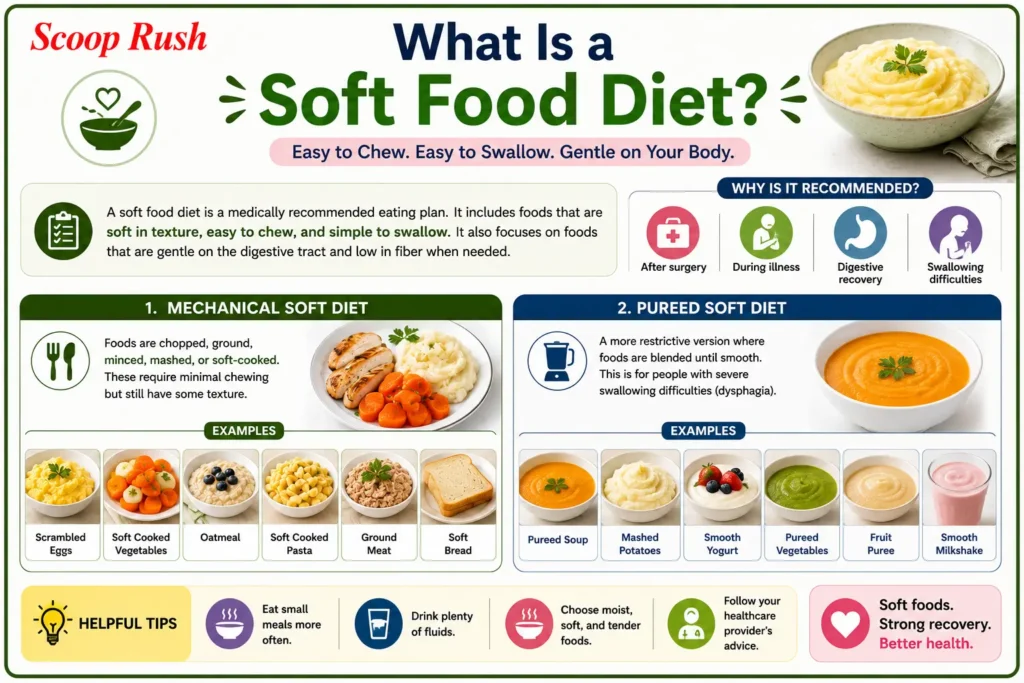
A soft food diet is a medically recommended eating plan consisting of foods that are soft in texture, easy to chew, and simple to swallow. It also emphasizes foods that are gentle on the digestive tract and low in fiber when necessary.
Healthcare providers often recommend this diet after surgery, during illness, or whenever the digestive system needs time to recover. Depending on your condition, your provider may recommend one of two versions:
Mechanical Soft Diet Foods are chopped, ground, minced, mashed, or soft-cooked. These require minimal chewing but still maintain some texture.
Pureed Soft Diet A more restrictive version where foods are blended until smooth think pureed vegetables, blended soups, smooth yogurt, mashed potatoes, and fruit purees. This version is commonly recommended for people with severe swallowing difficulties (dysphagia).
Who Should Follow a Soft Food Diet?
After Surgery — Often recommended after surgery involving the mouth, jaw, teeth, throat, neck, esophagus, or stomach. Soft foods reduce strain on healing tissues while making eating less painful.
Radiation Therapy — People receiving radiation to the head or neck may develop mouth sores, dry mouth, or difficulty swallowing, making soft foods easier to tolerate.
Digestive Disorders — May be recommended for IBS, diverticulitis, diverticulosis, ulcerative colitis, gastritis, or temporary digestive inflammation. Low-fiber, easy-to-digest foods may reduce irritation while symptoms improve.
Swallowing Difficulties (Dysphagia) — People with neurological disorders, stroke, Parkinson’s disease, or other conditions affecting swallowing often benefit from texture-modified diets to reduce choking risk.
Children — May need this diet after oral surgery, tonsil removal, cancer treatment, mouth ulcers, or swallowing disorders, helping them maintain adequate nutrition while minimizing discomfort.
Benefits of a Soft Food Diet
- Reduces pain while chewing
- Makes swallowing easier
- Protects healing tissues
- Lowers digestive irritation
- Improves nutrient intake during recovery
- Reduces choking risk
- Supports faster healing
Foods to Eat on a Soft Food Diet
Choose soft, high-protein foods such as:
- Chicken
- Turkey
- Lean ground beef
- Tender pork
- Fish
- Eggs
- Tofu
- Cottage cheese
- Greek yogurt
- Ricotta cheese
- Creamy peanut butter
- Smooth nut butter
- Baked beans
Fruits
Choose soft fruits, including:
- Bananas
- Avocados
- Applesauce
- Peeled or cooked apples
- Canned peaches
- Canned pears
- Soft melon
- Fruit puree
- Fruit juice without pulp
Avoid:
- Dried fruit
- Frozen berries
- Fruits with seeds
- Coconut
- Citrus juice if you have mouth sores
Vegetables
Good choices include:
- Mashed potatoes
- Baked potatoes without skin
- Green beans
- Green peas
- Cooked spinach
- Squash
- Cooked carrots
- Asparagus
- Cooked beans
- Tomato paste
Avoid:
- Raw vegetables
- Broccoli
- Brussels sprouts
- Corn
- Cabbage
- Onions
- Kale
- Pickles
Grains
Choose soft, easy-to-digest grains such as:
- White rice
- Oatmeal
- Cream of Wheat
- Grits
- Soft pasta
- Plain noodles
- Soft bread
- Pancakes
- Waffles
- Soaked cereal
Avoid:
Brown rice
Wild rice
Quinoa
Barley
Granola
Popcorn
Dairy
Soft dairy foods include:
- Milk
- Plant-based milk
- Greek yogurt
- Cottage cheese
- Soft cheese
- Ricotta cheese
- Kefir
- Pudding
Desserts
If you want a sweet treat, choose soft desserts such as:
- Ice cream
- Sherbet
- Gelatin
- Popsicles
- Yogurt
- Soft cookies
- Cake without nuts
Soups and Liquids
These options are easy to swallow and digest:
- Cream soups
- Chicken soup
- Vegetable soup
- Clear broth
- Smooth blended soups
Foods to Avoid
- Tough meats: steak, jerky, bacon, sausage, hot dogs, kielbasa, meat with gristle
- Nuts and seeds: almonds, walnuts, sunflower seeds, pumpkin seeds, chunky peanut butter
- Raw vegetables: broccoli, carrots, celery, raw spinach, raw onions
- High-fiber foods: whole-grain bread, bran cereal, granola, popcorn, brown rice
- Hard fruits: apples/pears with skin, pineapple, coconut, dried fruit
- Carbonated drinks: fizzy beverages may worsen bloating or digestive discomfort
Tips for Following a Soft Food Diet
- Cook foods until tender — Bake, boil, steam, or slow-cook foods until soft.
- Cut food into small pieces — Smaller bites require less chewing and are easier to swallow.
- Blend foods — Use a blender or food processor for smooth soups, fruit smoothies, vegetable purees, and mashed meals.
- Eat smaller meals — Try four to six smaller meals plus nutritious snacks instead of three large meals.
- Chew slowly — Even soft foods should be chewed thoroughly before swallowing.
- Stay hydrated — Aim for 8 to 10 glasses of fluids daily, including water, milk, soup, smoothies, gelatin, ice cream, and popsicles.
- Watch fiber intake — Many providers recommend limiting fiber temporarily. As symptoms improve, gradually reintroduce fiber-rich foods every few days to monitor tolerance.
Kitchen Tools That Make Soft Food Prep Easier
Having the right equipment on hand can turn soft food preparation from a chore into a quick, manageable part of your routine. A few useful tools include:
- A good blender or immersion blender — Essential for turning soups, fruits, and cooked vegetables into smooth purees without lumps that could be hard to swallow.
- A food processor — Useful for chopping or mincing meats and vegetables to a mechanical soft texture when a full puree isn’t necessary.
- A fine-mesh strainer — Helps remove seeds, skins, or fibrous bits from purees and sauces, which is especially important for people with strict dysphagia diets.
- Silicone ice cube trays — Handy for freezing broth, pureed fruit, or smoothies into small, ready-to-thaw portions, so you always have a soft option available without cooking from scratch every meal.
- A slow cooker or pressure cooker — Both are excellent for breaking down tougher cuts of meat and fibrous vegetables until they’re tender enough to mash with a fork.
- Small, easy-grip utensils — For people recovering from oral surgery or managing tremors, smaller spoons and cups can make self-feeding safer and less tiring.
Investing in even one or two of these tools can significantly cut down meal prep time, which matters when you’re already dealing with fatigue or discomfort from surgery, illness, or treatment.
Adding Flavor Without Irritation
One common complaint about soft food diets is that meals can start to feel bland or repetitive. The good news is that you don’t have to sacrifice flavor just because you’re limiting texture. A few gentle ways to boost taste include:
- Herbs instead of heat — Fresh or dried herbs like basil, dill, parsley, and thyme add flavor without the irritation that comes from spicy seasonings like chili powder or hot sauce.
- Broths and stocks — Cooking rice, oatmeal, or mashed vegetables in low-sodium chicken or vegetable broth instead of plain water adds savory depth.
- Healthy fats — A small amount of olive oil, melted butter, or mashed avocado can make purees creamier and more satisfying without adding harsh texture.
- Dairy-based sauces — Cheese sauces, gravies, and yogurt-based dressings can make plain proteins and grains more appealing while also adding calories for those struggling to eat enough.
- Natural sweetness — Ripe bananas, applesauce, or a drizzle of honey can enhance oatmeal, yogurt, or smoothies without the need for anything crunchy or hard to chew.
If mouth sores or sensitivity are part of your recovery, it’s best to avoid acidic ingredients like citrus, vinegar, and tomato-based sauces until your provider confirms they’re tolerable again.
Sample One-Day Soft Food Meal Plan
| Meal | Foods |
| Breakfast | Oatmeal, scrambled eggs, banana, milk |
| Morning Snack | Greek yogurt, applesauce |
| Lunch | Tender baked chicken, mashed potatoes, cooked green beans |
| Afternoon Snack | Cottage cheese, soft peaches |
| Dinner | Baked fish, white rice, cooked squash |
| Dessert | Vanilla pudding |
More Simple Meal Ideas
Breakfast: oatmeal with mashed banana · scrambled eggs and soft toast · yogurt with applesauce Lunch: chicken noodle soup · tuna with mashed potatoes · soft pasta with cheese sauce Dinner: baked fish with white rice · ground turkey with mashed sweet potatoes · tender chicken with cooked vegetables Snacks: cottage cheese · pudding · smoothies · ice cream · applesauce
A Week’s Worth of Variety
Eating the same handful of meals every day can get old quickly, so here’s a broader rotation to keep things interesting across a full week:
- Day 1: Cream of wheat with banana, cream of chicken soup, baked salmon with mashed potatoes and squash
- Day 2: Soft scrambled eggs with cheese, turkey and rice soup, meatloaf (finely ground) with mashed sweet potatoes
- Day 3: Yogurt parfait with soft fruit, grilled cheese made with soft bread, poached chicken with pureed carrots
- Day 4: Pancakes with syrup, tomato soup (strained if needed) with soft crackers, baked cod with white rice
- Day 5: Oatmeal with applesauce, egg salad on soft bread, shepherd’s pie with mashed cauliflower topping
- Day 6: French toast made with soft bread, chicken and rice casserole, tender pot roast with gravy
- Day 7: Smoothie bowl with soft fruit, minestrone soup (blended smooth), baked tilapia with mashed squash
Rotating proteins, grains, and cooking methods throughout the week not only prevents mealtime boredom but also helps ensure you’re getting a broader range of vitamins and minerals from your food.
Soft Food Diet Shopping List
- Protein: eggs, chicken breast, ground turkey, fish, tofu, cottage cheese, Greek yogurt
- Grains: white bread, white rice, oatmeal, pasta, cream of wheat
- Fruits: bananas, applesauce, canned peaches, avocados, pears
- Vegetables: potatoes, carrots, green beans, squash, spinach
- Dairy: milk, yogurt, cheese, pudding
Nutrition Considerations
A soft food diet can sometimes be low in fiber, vitamin C, certain B vitamins, and iron. If you need to stay on this diet for more than two or three weeks, your healthcare provider may recommend a multivitamin, oral nutrition drinks, or protein supplements. Never start supplements without medical advice taking too many vitamins or combining supplements without guidance can cause its own problems, so it’s worth understanding the risks of over-supplementing before adding anything to your routine.
Timing matters too. If you’re adding a multivitamin or protein shake to your day, pay attention to how and when you take it for example, drinking coffee on an empty stomach alongside supplements can sometimes increase digestive irritation, which is worth avoiding while your gut is already sensitive.
Is a Soft Food Diet Healthy?
It can be healthy when it includes a variety of foods from all major food groups. Lean proteins, dairy products, cooked vegetables, soft fruits, and refined grains provide many important nutrients. However, because high-fiber foods, nuts, seeds, and raw vegetables are limited, the diet may not provide enough fiber and certain vitamins if followed long-term. Most people only need this diet temporarily before returning to a normal eating pattern.
Can You Lose Weight on a Soft Food Diet?
Weight loss is not the purpose of this diet. In fact, some people lose weight unintentionally because eating becomes more difficult. If you’re struggling to eat enough, choose nutrient-rich foods like eggs, yogurt, cottage cheese, smoothies, mashed potatoes, and healthy fats such as avocado. Your healthcare provider may also recommend nutrition shakes if needed.
How the Soft Food Diet Compares to Other Medical Diets
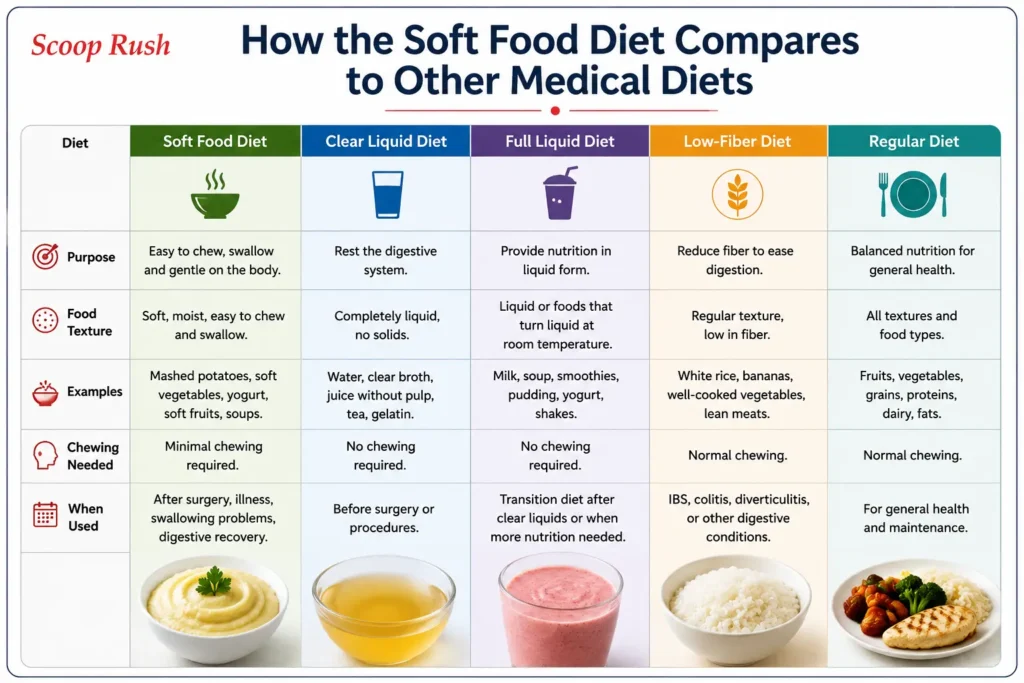
A soft food diet is just one of several texture- or ingredient-modified eating plans doctors use to support recovery, and it’s easy to confuse it with similar-sounding diets. Understanding the differences can help you follow the right plan for your specific condition.
Clear Liquid Diet
This is typically used for a much shorter period than a soft food diet, often before or immediately after certain surgeries or procedures, and includes only liquids you can see through, like broth and juice without pulp. If your provider has you moving between stages of recovery, you may transition from a clear liquid diet to a soft food diet as your digestive system becomes ready for more texture.
Bland Diet
While a soft food diet focuses on texture, a bland diet focuses more on avoiding spicy, fried, or acidic foods that irritate the stomach lining. The two overlap significantly, and many people recovering from digestive issues are advised to follow both principles at once soft in texture and bland in flavor.
Low-Residue Diet
This is closely related to the pureed and low-fiber side of the soft food diet, since both limit fiber to reduce how much undigested material passes through the intestines. If you have a digestive condition like ulcerative colitis or diverticulitis, your provider may specifically recommend a low-residue diet rather than a general soft food plan.
Diet for Hemorrhoids
Interestingly, some digestive conditions call for the opposite approach. If your concern is more about straining and irregularity than chewing or swallowing, a hemorrhoid-friendly diet actually emphasizes more fiber rather than less, which is why it’s important to follow the plan that matches your specific condition rather than assuming all “gentle” diets work the same way.
Low-Sodium Considerations
If you’re managing a condition like Ménière’s disease alongside a swallowing or digestive issue, you may need to combine soft food principles with sodium restriction. A low-sodium diet for Ménière’s disease can be adapted using many of the same soft, mashed, and pureed foods listed above, just with less added salt.
Because these diets can overlap or even conflict in their recommendations, always check with your doctor or dietitian before combining plans, especially if you’re managing more than one condition at once.
How to Prepare Soft Foods at Home
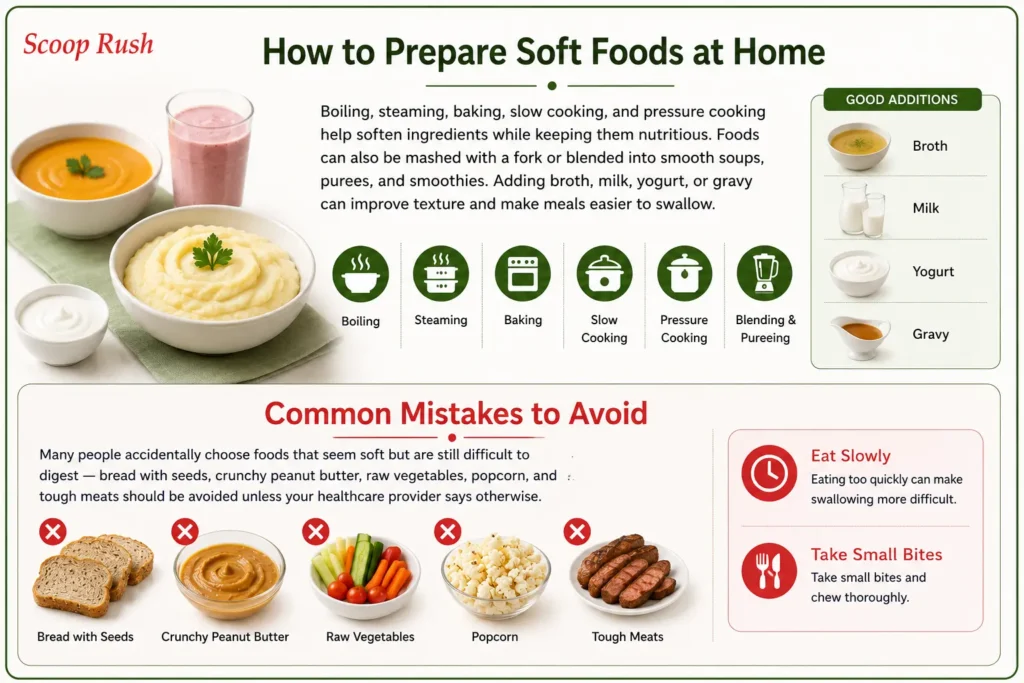
Boiling, steaming, baking, slow cooking, and pressure cooking help soften ingredients while keeping them nutritious. Foods can also be mashed with a fork or blended into smooth soups, purees, and smoothies. Adding broth, milk, yogurt, or gravy can improve texture and make meals easier to swallow.
Common Mistakes to Avoid
Many people accidentally choose foods that seem soft but are still difficult to digest — bread with seeds, crunchy peanut butter, raw vegetables, popcorn, and tough meats should be avoided unless your healthcare provider says otherwise. Eating too quickly or taking large bites can also make swallowing more difficult, so take small bites and chew thoroughly.
Soft Food Diets for Older Adults and Caregivers
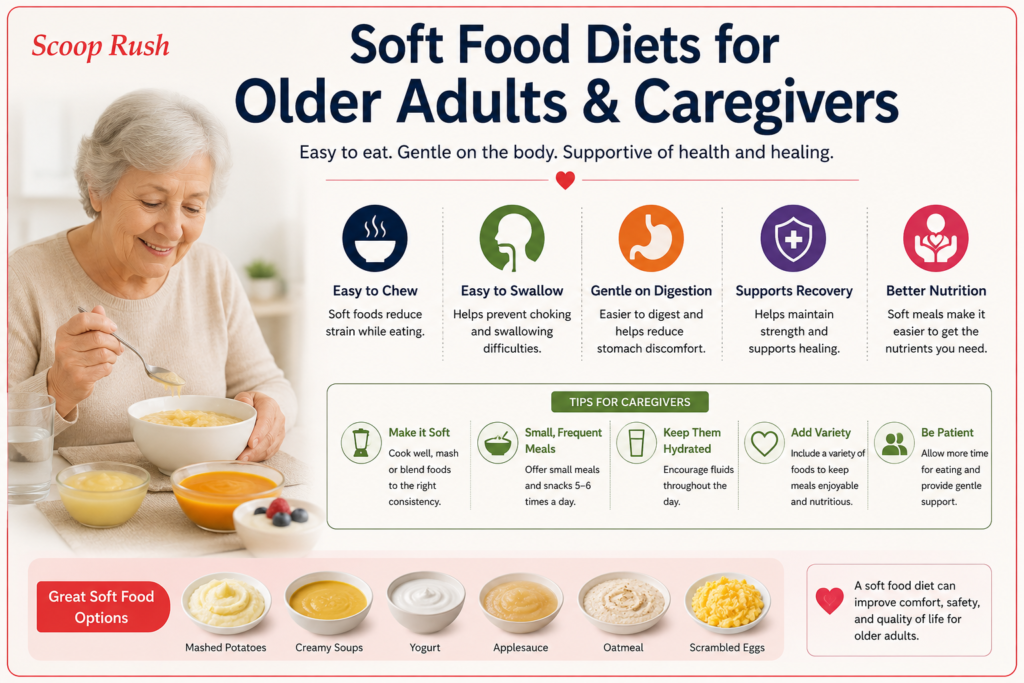
Older adults are especially likely to need a soft food diet, whether due to dental issues, a recent hospitalization, or a condition like dysphagia that develops over time. Caregivers play a major role in making sure meals stay both safe and appealing.
A few things caregivers can keep in mind:
- Presentation matters — Serving pureed foods separately rather than mixed together (for example, keeping mashed potatoes, vegetables, and protein visually distinct on the plate) can make meals feel more appetizing and less like “baby food.”
- Monitor swallowing closely — Watch for coughing, throat clearing, or a wet-sounding voice after swallowing, which can be signs that food or liquid consistency needs to be adjusted further.
- Track intake — Since older adults on modified diets are at higher risk of unintentional weight loss and dehydration, keeping a simple log of what and how much is eaten each day can help catch problems early.
- Watch for other risk factors — Older adults managing a soft food diet at home are often dealing with multiple health considerations at once, so it’s worth staying alert to any additional safety guidance their care team provides, particularly around hydration and temperature-related risks during the summer months.
If you’re a caregiver managing a loved one’s soft food diet long-term, don’t hesitate to ask their care team about a referral to a speech-language pathologist or registered dietitian, both of whom specialize in swallowing safety and nutritional adequacy.
The Emotional Side of Eating Difficulties
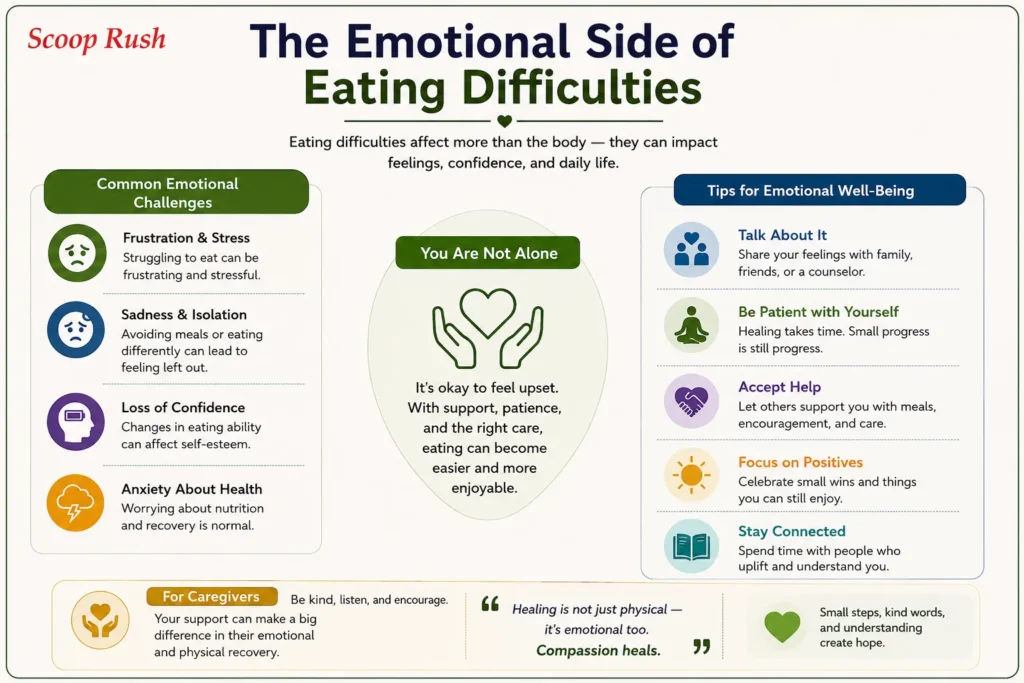
It’s easy to focus purely on the physical logistics of a soft food diet and overlook how emotionally difficult it can be. Food is often tied to comfort, culture, and social connection, and having those foods restricted even temporarily can feel isolating.
Some people find it helpful to:
- Stay connected at mealtimes — Even if you’re eating something different from everyone else at the table, sitting together during meals can help preserve the social and emotional side of eating.
- Get creative with presentation — Using nice dishware, garnishing purees, or plating meals attractively can make a real difference in how appetizing a soft meal feels.
- Celebrate small wins — Being able to tolerate a new food or finish a full meal after surgery or treatment is worth acknowledging, especially during a difficult recovery period.
- Talk to your care team about frustration — If you’re feeling discouraged, a dietitian, speech therapist, or counselor experienced in supporting patients through recovery can offer both practical and emotional support.
Recovery is rarely a straight line, and it’s normal to have days where eating feels harder than others. Being patient with yourself is just as important as following the dietary guidelines.
Transitioning Back to a Regular Diet
Once your healthcare provider says it’s safe, gradually add regular foods back into your meals. Start with slightly firmer foods before returning to raw vegetables, whole grains, and tougher meats. Introduce one new food every few days so you can monitor how your body responds. If pain or digestive symptoms return, speak with your healthcare provider before making further changes.
protein and calcium that are naturally soft and easy to digest.
When to Contact Your Healthcare Provider
Seek medical advice if you experience:
- Difficulty swallowing liquids
- Persistent vomiting
- Weight loss
- Severe abdominal pain
- Fever
- Signs of dehydration
- Inability to eat enough food
These symptoms may require additional medical evaluation.
Final Thoughts
A soft food diet is a temporary eating plan that helps reduce discomfort while your body heals. By choosing foods that are easy to chew, swallow, and digest, you can support recovery without sacrificing nutrition. Focus on soft proteins, cooked vegetables, refined grains, dairy products, and plenty of fluids while avoiding hard, crunchy, and high-fiber foods until your healthcare provider says it’s safe to resume your normal diet.
FAQs
Can I eat eggs on a soft food diet?
Yes. Scrambled, poached, soft-boiled, and hard-boiled eggs are excellent sources of protein and are easy to chew.
Is peanut butter allowed?
Creamy peanut butter is usually acceptable, while chunky peanut butter should be avoided.
Can I drink coffee?
Coffee is generally allowed unless your healthcare provider advises otherwise. If it causes stomach irritation, choose milk or herbal tea instead.
How long should I stay on a soft food diet?
It depends on your medical condition. Some people only need it for a few days after surgery, while others may require it for several weeks or longer. Always follow your healthcare provider’s instructions.
Can I eat soft food diet meals if I have diabetes?
Yes, but portion size and carbohydrate content still matter. Many soft foods like mashed potatoes, oatmeal, and fruit purees are higher in carbohydrates, so people managing blood sugar should work with a dietitian to balance portions and pair carbohydrate-heavy soft foods with protein or healthy fats.
Is it okay to season soft foods?
Yes, mild herbs and seasonings are generally fine and can help meals taste better. It’s best to avoid very spicy, acidic, or heavily peppered seasonings, especially if you have mouth sores or a sensitive digestive system.
Can soft foods be frozen and reheated?
Most soft foods, including soups, purees, and mashed dishes, freeze and reheat well. This makes batch cooking a great option for reducing daily meal prep, especially during recovery when energy levels may be low.
Do I need to avoid all dairy on a soft food diet?
No, dairy is generally encouraged on a soft food diet unless you have a separate intolerance or your provider advises otherwise. Yogurt, cottage cheese, and milk are excellent sources of protein and calcium that are naturally soft and easy to digest.

