
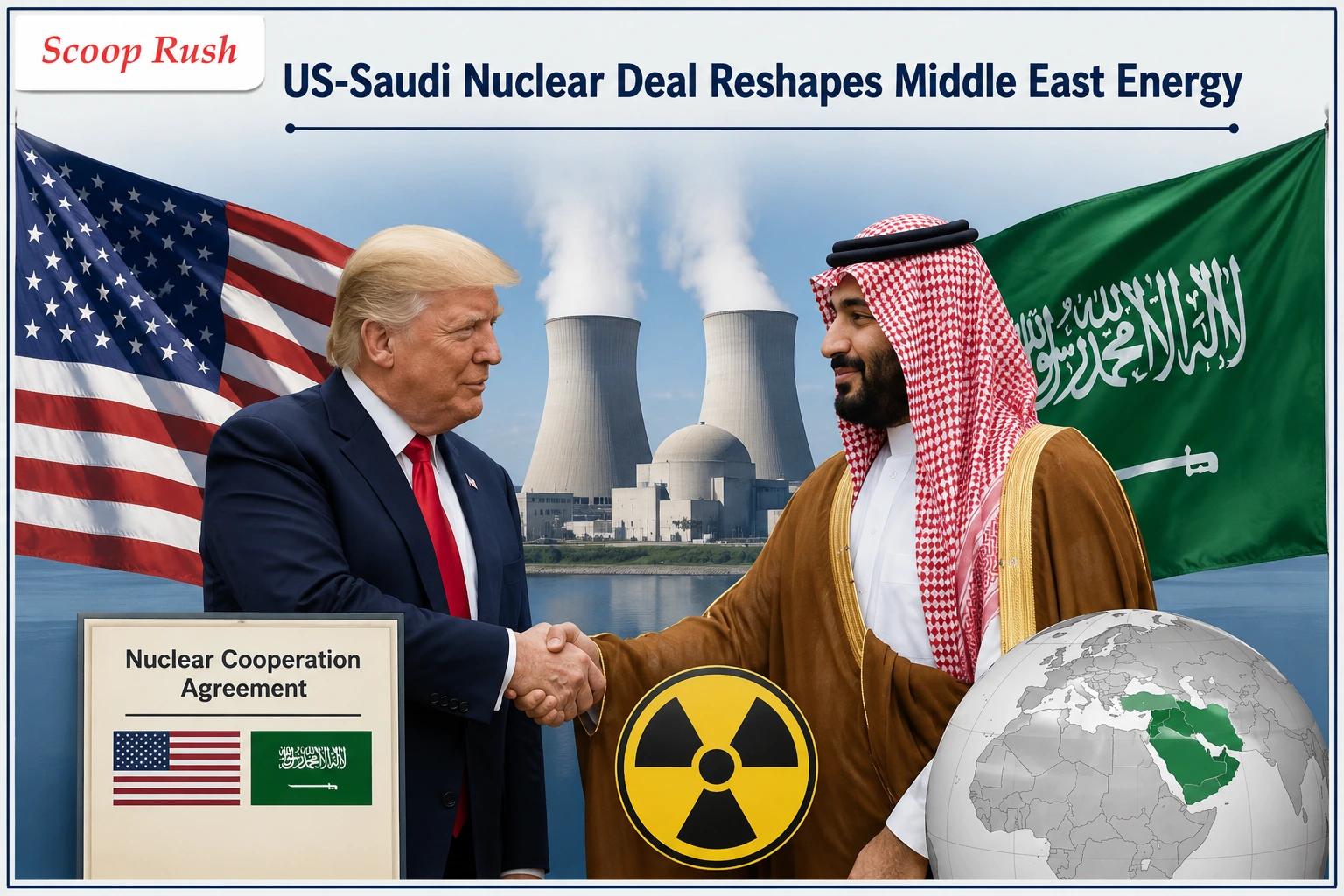
The US-Saudi Nuclear Deal marks a major step in energy and strategic cooperation. The United States and Saudi Arabia signed the agreement on July 22, 2026. The partnership supports Saudi Arabia’s civilian nuclear program. It also creates new business opportunities for American companies.
US Energy Secretary Chris Wright and Saudi Energy Minister Prince Abdulaziz bin Salman signed the agreement. Both countries also signed a bilateral safeguards agreement. The deal now moves to the US Congress for review before it becomes law.
US-Saudi Nuclear Deal Creates Long Term Partnership
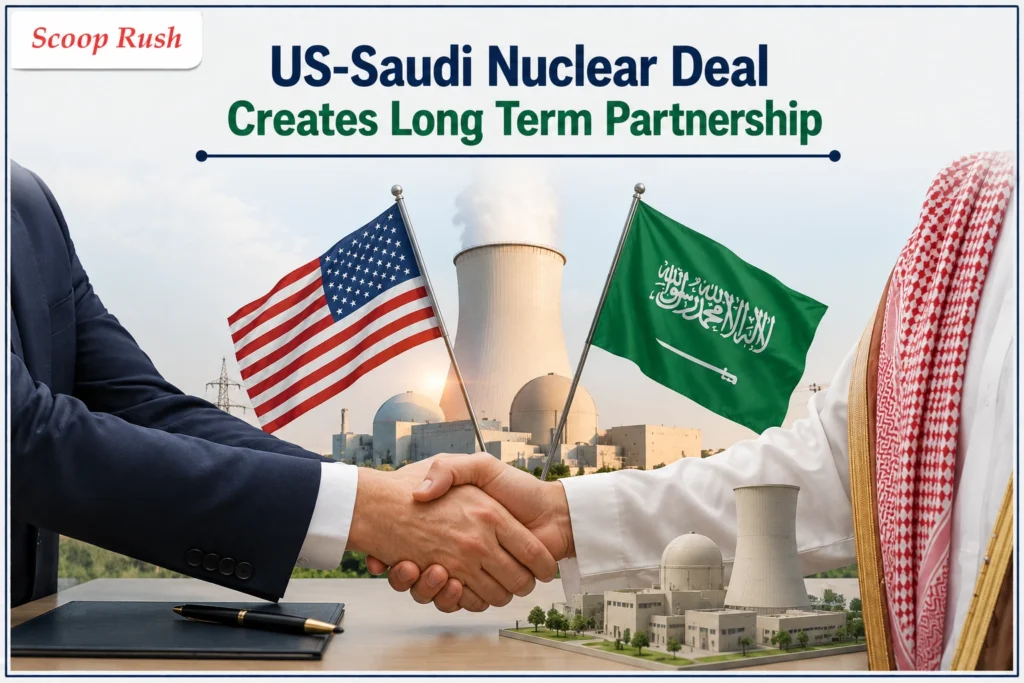
The US-Saudi Nuclear Deal establishes a partnership expected to last for decades. Officials describe it as a multibillion-dollar investment in civilian nuclear energy. The agreement strengthens economic and strategic ties between both countries.
The US Department of Energy said the partnership supports nuclear safety and nonproliferation. It also gives American companies greater access to Saudi Arabia’s growing nuclear energy sector. The agreement could generate billions of dollars in future contracts.
US-Saudi Nuclear Deal Supports Civilian Nuclear Energy
Saudi Arabia plans to diversify its energy sector through nuclear power. The country currently depends mainly on oil and natural gas for electricity generation. Nuclear energy could reduce domestic fossil fuel consumption.
The agreement allows American companies to help develop Saudi nuclear infrastructure. Industry leaders expect firms like Westinghouse, Bechtel, BWXT, and Centrus to benefit. The project could include advanced nuclear reactors and supporting facilities.
Uranium Enrichment Raises Global Concerns
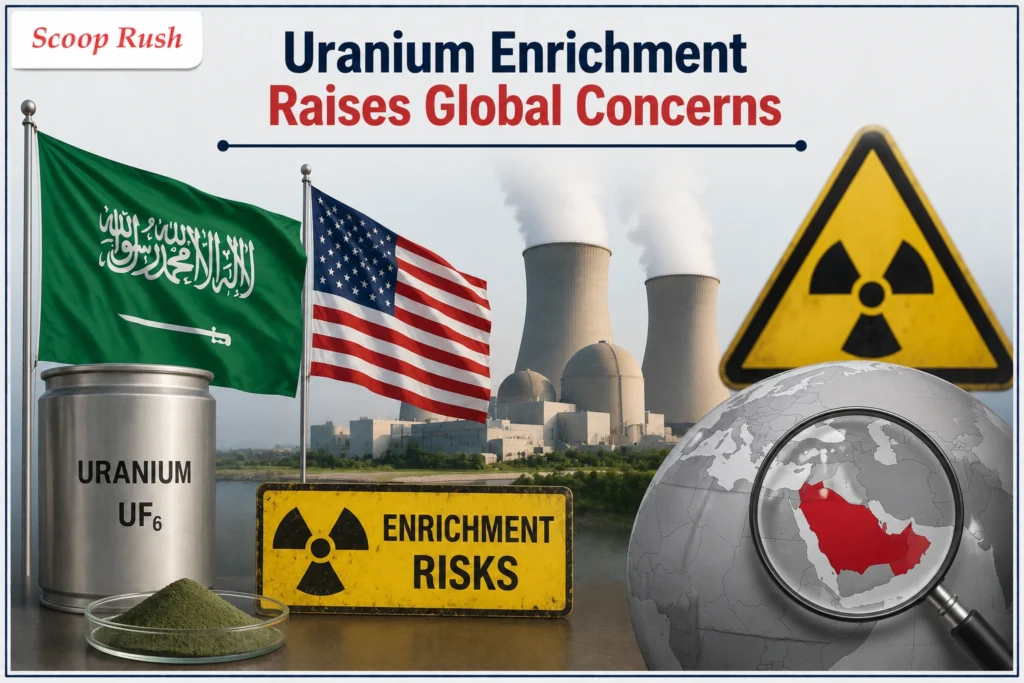
The US-Saudi Nuclear Deal reportedly allows Saudi Arabia to enrich uranium in the future. Uranium enrichment produces fuel for nuclear power plants. However, enriched uranium can also support nuclear weapons development.
Several nuclear experts expressed concern over this provision. They noted the United States rarely supports domestic uranium enrichment abroad. Critics fear the decision could increase future nuclear risks across the Middle East.
Congress Will Review the Agreement
US law requires Congress to review civilian nuclear cooperation agreements. Lawmakers now have 90 legislative session days to raise objections. The agreement moves forward unless Congress blocks it.
Republicans currently control both chambers of Congress. Still, several lawmakers from both parties voiced concerns. Many expect lawmakers to debate the agreement during the review period.
Critics Warn About Regional Security
Several Democratic lawmakers criticized the agreement after its announcement. They argued the deal could encourage a regional nuclear arms race. Some believe Iran may view the agreement as a strategic threat.
Senator Edward Markey strongly opposed the agreement. Senator Chris Murphy also warned about rising regional tensions. Critics believe uranium enrichment could weaken global nonproliferation efforts.
Trump Administration Defends the Agreement
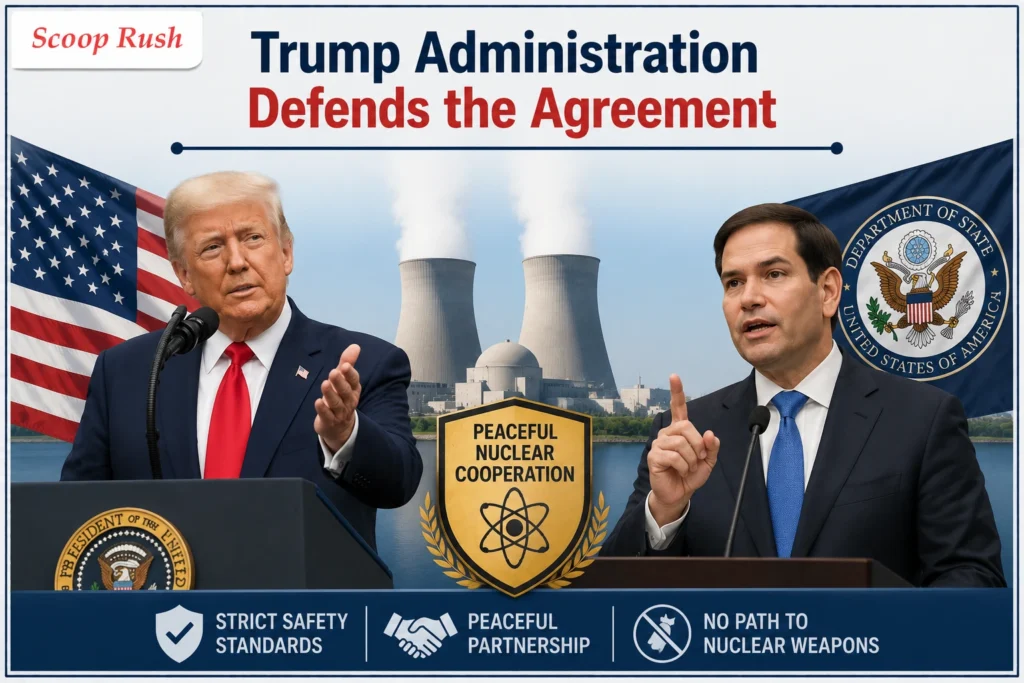
The Trump administration rejected claims that the agreement increases nuclear risks. Energy Secretary Chris Wright said the partnership follows strict safety standards. Officials insist the agreement supports peaceful nuclear cooperation.
Secretary of State Marco Rubio also defended the deal. He said the United States would never approve agreements encouraging nuclear weapons development. The administration believes strong safeguards remain in place.
Saudi Arabia Seeks Energy Independence
Saudi Arabia has pursued a civilian nuclear program for many years. Leaders want to expand clean energy while preserving oil exports. Nuclear power supports the country’s long-term economic strategy.
Saudi officials said the agreement extends existing energy cooperation with Washington. The kingdom considers nuclear energy essential for future electricity demand. Officials also welcomed stronger technological cooperation with American companies.
Agreement Differs From Previous US Nuclear Deals
The US-Saudi Nuclear Deal differs from earlier agreements with regional partners. The 2009 US-UAE agreement banned domestic uranium enrichment. Saudi Arabia appears to receive greater flexibility under the new arrangement.
Reports also suggest the agreement omits the International Atomic Energy Agency’s Additional Protocol. That protocol allows broader international inspections. Critics believe its absence reduces transparency.
Strategic Competition Influenced the Agreement
Washington wanted to strengthen its position in Saudi Arabia’s energy sector. Reports suggested China and Russia also pursued similar nuclear partnerships. The United States aimed to secure the project before competitors succeeded.
The agreement also strengthens broader US influence in the Gulf region. It supports long-term economic cooperation beyond traditional oil partnerships. American companies could gain major infrastructure contracts for decades.
What Happens Next
Congress will examine the agreement before final approval. Debate will likely focus on uranium enrichment and regional security. Lawmakers may seek additional safeguards during the review process.
If approved, the partnership could reshape civilian nuclear cooperation in the Middle East. Construction of reactors and supporting facilities would still require years. The full impact will develop gradually over the coming decades.
Conclusion
The US-Saudi Nuclear Deal represents one of the most significant energy agreements between both nations. It opens major commercial opportunities while supporting Saudi Arabia’s civilian nuclear ambitions. However, uranium enrichment remains the most controversial part of the agreement.
Supporters believe the deal strengthens energy security and American industry. Critics warn it may increase nuclear competition across the Middle East. Congress now holds the next important decision before the agreement takes effect.
FAQs
1. What is the US-Saudi Nuclear Deal?
The US-Saudi Nuclear Deal is a civilian nuclear cooperation agreement. It allows both countries to work together on developing Saudi Arabia’s peaceful nuclear energy program.
2. Why is the agreement considered significant?
The agreement strengthens economic and strategic ties between both nations. It also opens major opportunities for American companies in Saudi Arabia’s nuclear energy sector.
3. Can Saudi Arabia enrich uranium under the agreement?
Reports suggest Saudi Arabia could eventually enrich uranium using US-supported technology. Officials say the program will remain under nuclear safety and nonproliferation standards.
4. Why are some lawmakers and experts concerned?
Critics worry uranium enrichment could increase future nuclear proliferation risks. They fear it may encourage a regional arms race in the Middle East.
5. What happens before the agreement becomes official?
The agreement must undergo review by the US Congress. If lawmakers do not block it during the review period, it can move forward into effect.

