

What happens when more than 45 million people tune in to watch a football match in the United States? For Major League Soccer, the answer could shape the future of the sport for years to come.
The 2026 FIFA World Cup has delivered record-breaking audiences, packed stadiums, and unprecedented attention for football across the United States. Now, Major League Soccer (MLS) is working quickly to turn that excitement into long-term growth. That is exactly why many experts believe Why the World Cup Can Be a Game-Changer for Ambitious MLS is one of the most important questions in American football today.
The league has launched marketing campaigns featuring global stars such as Lionel Messi, Son Heung-min, and David Beckham. It is also offering free tickets to attract new supporters. Meanwhile, league executives see a unique opportunity to build on the momentum created by the World Cup.
The stakes are high. MLS has grown significantly since its launch in 1996, but it still aims to join the world’s elite football leagues. The World Cup may provide the platform it has been waiting for.
Why World Cup Can Be Game-Changer for Ambitious MLS
The World Cup has exposed millions of new fans to football in the United States. As a result, MLS is positioning itself as the next destination for those supporters once the tournament excitement fades.
MLS Executive Vice-President Dan Courtemanche believes the tournament has given the league a major opportunity.
According to Courtemanche, the World Cup introduced Major League Soccer to millions of people. Therefore, MLS plans to capitalize on that momentum as the regular season continues.
To support this effort, the league launched an advertising campaign featuring some of its biggest stars. The message is simple: football fans who enjoyed the World Cup should now follow MLS.
The campaign includes Lionel Messi, Son Heung-min, David Beckham, and many other MLS players who participated in the tournament. Together, they encourage supporters to stay connected to the sport through domestic competition.
A League Built on World Cup Legacy
Ironically, MLS itself exists because of a previous World Cup.
When the United States won the right to host the 1994 FIFA World Cup, FIFA required the country to establish a professional football league. That decision eventually led to the creation of MLS in 1996.
The league began with just 10 teams and no football-specific stadiums.
Today, MLS features 30 clubs and nearly the same number of purpose-built stadiums. That transformation highlights how much the competition has evolved over the past three decades.
The current World Cup could become another defining moment.
Just as the 1994 tournament helped launch MLS, the 2026 edition could help elevate it to a new level of popularity and commercial success.
Record-Breaking Interest in Football Across America
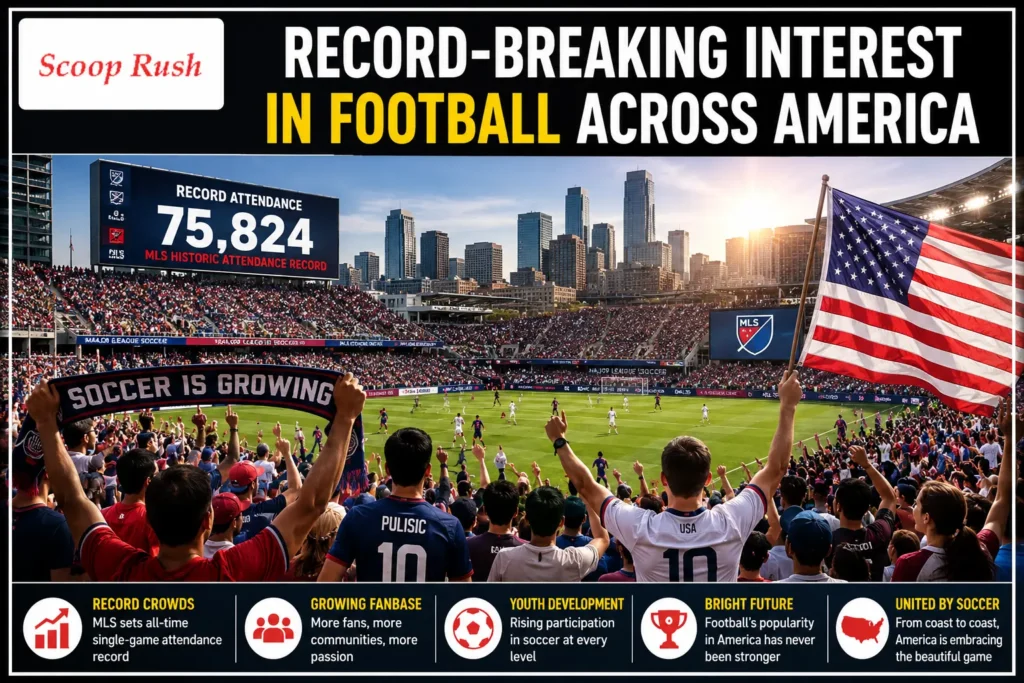
One of the biggest reasons behind MLS optimism is the extraordinary level of public interest generated during the World Cup.
Despite concerns about expensive ticket prices, stadiums were filled throughout the tournament. Fans embraced the event in cities across the country.
Television audiences also reached impressive levels.
The United States’ Round of 16 defeat against Belgium attracted more than 33 million viewers on Fox. That became the most-watched football match ever shown on a single American network.
Meanwhile, England’s victory over Mexico in the Round of 16 drew a combined audience of approximately 45 million viewers across Fox and Telemundo. That made it the most-watched football game in United States history.
These numbers demonstrate football’s growing appeal in America.
Although they still trail the NFL’s Super Bowl audience, the gap appears smaller than many expected. The most-watched Super Bowl in history attracted 127.7 million viewers in 2025.
Nevertheless, football’s audience growth remains a major positive sign for MLS.
MLS Wants to Join the World’s Elite Leagues
Commercially, MLS has already established itself as a successful business.
However, league officials want more. MLS Commissioner Don Garber believes the league has already become one of the strongest football brands from a commercial perspective. Now, the challenge is improving the competition itself and raising its overall football quality.
The goal is ambitious. MLS wants to compete more closely with Europe’s leading leagues in terms of player development, global recognition, and sporting excellence.
Achieving that objective will require continued investment and long-term planning. Fortunately for MLS, several initiatives are already underway.
Lionel Messi and the Star Power Effect
No player has influenced MLS visibility more than Lionel Messi.
Since arriving in the United States, Messi has attracted worldwide attention to the league. His presence has increased interest from fans, broadcasters, sponsors, and international media.
At the 2026 World Cup, Messi represented one of 45 MLS players who participated in the tournament. He was also one of two MLS players involved in the World Cup final for Argentina, alongside Rodrigo de Paul.
Historically, critics often described MLS as a destination for aging stars nearing retirement. Players such as David Beckham helped build the league’s profile after successful careers in Europe. Messi followed a similar path. However, league executives argue that the situation is changing.
MLS Is Attracting Younger Talent
According to MLS officials, the average age of new international signings is now 23.8 years. That statistic suggests clubs are increasingly targeting younger players rather than focusing solely on established veterans.
Many of these footballers view MLS as an important step in their careers. Some hope to develop in the United States before moving to Europe. As a result, the league’s reputation is gradually evolving. Instead of being viewed only as a retirement destination, MLS wants to become a respected pathway for emerging talent.
Major Changes Planned for the Future
MLS leaders understand that continued growth requires structural improvements. One significant change will arrive in 2027 when the league adopts a summer-to-spring calendar. This adjustment will align MLS more closely with European football schedules. Consequently, player transfers between MLS and European clubs should become easier and more efficient.
League officials believe this move will help attract talent while also improving the overall football ecosystem. Additionally, MLS continues to invest heavily in youth development programs. These initiatives are designed to strengthen the future talent pipeline and support long-term success.
Youth Academies Could Shape the Next Generation
Every MLS club now operates a youth academy. These academies provide opportunities for young players to develop in professional environments. At an LA Galaxy World Cup viewing event, dozens of children spent their time playing football on nearby pitches rather than simply watching the match.
Their enthusiasm reflected football’s growing popularity among younger generations. One of those children was eight-year-old Landon, named after American football legend Landon Donovan.
Landon dreams of becoming a professional football player in MLS someday. His story highlights a broader trend. Increasingly, young Americans are growing up with football as an important part of their sporting lives. Furthermore, many families invest significant time and energy into helping their children develop within the game.
The Challenge of America’s Pay-to-Play System
Despite progress, youth development remains one of MLS’s biggest challenges. Critics argue that the American pay-to-play model creates barriers for talented young players. At the highest academy levels, MLS clubs offer free development opportunities. However, many families spend thousands of dollars on travel teams, coaching, and training before reaching those elite pathways.
This system is common across many American sports. Nevertheless, some observers believe it limits access for talented children from lower-income backgrounds.
MLS officials acknowledge the issue and say improvements continue to be made. League representatives also point out that scholarships are available for promising players. Commissioner Garber has emphasized the importance of developing more elite talent. He believes stronger youth systems will benefit both MLS and the United States men’s national team.
Celebrity Owners Help Expand the League’s Reach
MLS benefits from more than just football stars. The league also enjoys support from high-profile celebrity owners. More than two dozen entertainers and athletes hold ownership stakes in MLS clubs.
Notable examples include actor Will Ferrell with LAFC, actress Reese Witherspoon with Nashville SC, actor Matthew McConaughey with Austin FC, and basketball legend Magic Johnson with LAFC. These celebrity connections increase media exposure and help attract new audiences. Additionally, they reinforce the league’s growing cultural relevance within the United States.
MLS Has Become Big Business
The financial growth of MLS has been remarkable. Few examples illustrate this better than the Seattle Sounders. When the club joined MLS in 2009, the expansion fee was approximately $30 million. Today, the franchise is valued at more than $900 million. David Beckham’s story provides another powerful example. His 2007 contract with LA Galaxy included the option to purchase an MLS expansion team for $25 million.
That opportunity eventually led to the creation of Inter Miami. Today, industry experts value Inter Miami at more than $1 billion. These figures highlight the increasing commercial strength of the league. As club valuations rise, investment opportunities become even more attractive.
Can Football Truly Challenge American Football?
Despite football’s recent growth, many observers remain cautious. American football continues to dominate the sporting landscape in the United States. High school football receives enormous attention. Friday night games often feature packed stadiums, marching bands, and extensive community support.
By comparison, youth football traditionally receives less fanfare. Some parents believe this cultural difference influences young athletes as they grow older. As a result, talented teenagers sometimes switch from football to American football because of the greater visibility and opportunities available.
However, others see signs of change. The World Cup has introduced football to millions of new fans. Therefore, the sport may be better positioned than ever before to strengthen its place in American culture.
Michael Bradley Believes Football’s Future Is Secure
New York Red Bulls coach Michael Bradley believes football has already crossed an important threshold in the United States. For years, some supporters worried that the sport would never fully establish itself within American culture.
According to Bradley, that concern is fading. He believes more Americans now take pride in football and recognize its growing importance. Most importantly, he argues that the 2026 World Cup has demonstrated one clear reality. Football is not going anywhere.
Conclusion
The answer to Why the World Cup Can Be a Game-Changer for Ambitious MLS becomes clearer when examining the evidence.
The 2026 FIFA World Cup delivered massive television audiences, packed stadiums, and unprecedented attention for football across the United States. MLS now has a rare opportunity to convert that enthusiasm into long-term support. The league is already taking action through aggressive marketing, youth development investments, calendar reforms, and efforts to attract talented players from around the world.
Challenges remain. Youth development pathways still need improvement, and competition from traditional American sports remains intense. However, the momentum created by the World Cup is undeniable.
Thirty years after the 1994 World Cup helped launch MLS, another tournament may help transform it. Whether MLS eventually joins the world’s elite leagues remains uncertain, but one thing is clear: the future of football in America looks brighter than ever.
FAQs
1. Why is the 2026 World Cup important for MLS?
The tournament exposed millions of people to football and created a major opportunity for MLS to attract new fans and grow its audience.
2. How many MLS players participated in the 2026 World Cup?
A total of 45 MLS players featured in the tournament, including Lionel Messi and Rodrigo de Paul.
3. Why is MLS changing its season schedule?
MLS plans to adopt a summer-to-spring calendar in 2027 to align more closely with European leagues and simplify player movement.
4. Is MLS still considered a retirement league?
League officials argue that perception is outdated. The average age of new international players joining MLS is now 23.8 years.
5. What is the biggest challenge facing MLS youth development?
Many critics point to the pay-to-play structure, which can require families to spend significant money on coaching and travel teams before reaching elite academy levels.

