Home Blog Page 2

AfD Saxony-Anhalt Wins Record Vote But Misses Majority

0

The AfD Saxony-Anhalt election result has shaken German state politics. The far-right party won about 44% of the vote. This is its strongest result ever in a state election.

However, the AfD Saxony-Anhalt victory came with a catch. The party fell three seats short of an outright majority. It now needs support from other lawmakers to form a government. Mainstream parties still refuse to work with the AfD. This leaves Saxony-Anhalt heading into tense and uncertain coalition talks.

A Historic Result Without a Clear Path to Power

A-Historic-Result-Without-a-Clear-Path-to-Power

The AfD secured its best-ever result in a German state election. Its vote share hit roughly 44% in Saxony-Anhalt. Still, the party could not win enough seats to govern alone.

This creates an unusual situation for German politics. The AfD can claim a clear win at the ballot box. Yet it cannot automatically take control of the state government. Ulrich Siegmund, the party’s leading candidate, must now search for parliamentary support. He calls the result a mandate and wants a stable majority soon.

Germany’s Political Firewall Stands in the Way

Germany’s mainstream parties have long refused to form coalitions with the AfD. This informal barrier is often called the political firewall. The Christian Democratic Union has again ruled out any cooperation with the party.

That leaves the AfD searching for unusual alliances. One option is support from the left-wing populist BSW party. BSW shares some AfD views on immigration and Ukraine policy. Other paths include backing from independent lawmakers or forming a minority government. Each option would bring major uncertainty and could limit the party’s plans.

Migration Policy Sits at the Center of the AfD Agenda

Migration dominates the AfD’s platform in Saxony-Anhalt. The party promises what it calls deportation from minute one. It wants to remove people who lack valid residency permits quickly.

The manifesto also calls for stricter asylum rules statewide. It demands more detention before deportation takes place. It proposes mandatory work requirements for asylum seekers too. The party even wants to send Ukrainian refugees back, arguing parts of Ukraine are now safe. Legal experts note that deportation decisions mostly fall under federal, not state, control.

Schools Could Face Major Changes Under AfD Plans

Education policy forms another key pillar of the AfD program. The party wants to reshape school curricula across Saxony-Anhalt. It frames this as removing political influence from classrooms.

The plans include separate classes for refugee children in some schools. Officials could also exclude children without permanent residency from regular education. The party wants less focus on Germany’s Nazi-era history in lessons. One regional AfD figure summed up the approach as “more Bismarck, less Hitler.” Critics warn these ideas could face serious legal challenges under European law.

Cultural Institutions Face a Push for “Patriotic” Policy

Cultural-Institutions-Face-a-Push-for-Patriotic-Policy

The AfD also plans to reshape Saxony-Anhalt’s cultural institutions. Its platform calls for what it describes as patriotic cultural policy. The party wants public funding to favor art tied to German identity.

Bauhaus, the influential design movement rooted in the state, has become a target. The AfD argues Bauhaus lacks enough German character. Culture Minister Wolfram Weimer has strongly pushed back against this stance. Critics compare the plan to historical campaigns against modern art. The party also wants to cut funding for pro-democracy projects statewide.

New Security Proposals Raise Legal Concerns

Public order and policing also feature heavily in the AfD platform. The party wants to create voluntary citizen patrols across local communities. It argues that police officers face too much pressure already.

Legal experts have raised serious doubts about this proposal. Only police officers hold legal authority to use force for public safety. Criminologist Thomas Feltes warns these patrols could resemble vigilante groups. He also says they might increase fear instead of improving safety. The plan shows how far the AfD wants to expand its influence.

Foreign Policy Signals Beyond State Powers

Foreign-Policy-Signals-Beyond-State-Powers

Foreign policy usually falls outside a state government’s control. Still, an AfD win could shape Germany’s wider political debate. State leaders can influence federal policy through the Bundesrat.

The AfD supports closer ties with Russia and wants sanctions lifted. It also opposes Germany’s continued military support for Ukraine. Siegmund hopes success in Saxony-Anhalt can boost the party nationally. Other German states are watching the coalition talks closely. The outcome could shape how AfD approaches future state elections elsewhere.

Economic Pressures Add to the Challenge

Any future government in Saxony-Anhalt will face serious economic problems. The state’s population has dropped sharply since reunification. It fell from about 2.9 million to roughly 2.1 million people.

Healthcare sectors already face worker shortages. The AfD proposes incentives to bring Germans living abroad back home. This plan would offer help with housing and childcare costs. However, it lacks clear details on cost or expected participation. Economists warn that skilled workers may avoid regions seen as unwelcoming.

What Comes Next for Germany’s Political Firewall

The Saxony-Anhalt result has reignited debate over Germany’s firewall policy. Supporters say it keeps extremist parties away from real power. Critics argue it also shields the AfD from facing governing responsibility.

Chancellor Friedrich Merz has again ruled out cooperation with the AfD. This leaves the party without an easy route to government. The coming weeks of coalition talks will carry national weight. A future AfD government could reshape how Germany’s political system works. Every other state will watch closely to see what happens next.

FAQs

1. What happened in the AfD Saxony-Anhalt election? 

The AfD won about 44% of the vote, its strongest state result yet. It fell three seats short of an outright majority in parliament.

2. Can the AfD govern Saxony-Anhalt without other parties? 

No, the party does not have enough seats to rule alone. It needs support from another party or independent lawmakers.

3. What is the AfD’s remigration policy? 

It is a plan for large-scale deportations of people without residency rights. It also includes returning some refugees and expanding detention facilities.

4. How would AfD policy affect refugee children in schools? 

The party wants separate classes for some refugee children. It also proposes excluding children without permanent residency from regular schools.

5. Why does the Saxony-Anhalt result matter for all of Germany? 

It tests whether the AfD can move from strong votes to real power. The outcome could influence future state and national elections.

Disney’s Animal Kingdom Just Changed Its Early Entry Rope Drop: What Guests Need to Know in 2026

0

Imagine rushing through security before sunrise, only to find your usual shortcut is gone. That’s exactly what guests at Disney’s Animal Kingdom faced this year. After a wave of updates at EPCOT, Magic Kingdom, and Hollywood Studios, Animal Kingdom’s Early Entry rope drop finally got its own overhaul. The new setup changes how both resort guests and off-site visitors experience the first thirty minutes of the day.

If Animal Kingdom Early Entry is part of your Walt Disney World strategy, this update matters. Disney moved the checkpoint locations, changed the holding areas, and trimmed the head start that on-site guests used to enjoy. Understanding these changes before your trip can save you time, stress, and a few precious morning minutes, whether you’re staying on-site or off.

Why the Animal Kingdom Early Entry Rope Drop Change Matters

Animal Kingdom typically opens at 8 a.m., so Early Entry begins at 7:30 a.m. That extra half hour has always carried weight, especially for early risers who want a head start before the crowds arrive. However, the park’s attraction lineup during Early Entry stays limited. Since Dinoland USA closed, only four attractions have participated: Avatar Flight of Passage, Na’vi River Journey, Expedition Everest, and Zootopia: Better Zoogether.

With so few rides available, the flow of guests through the entrance becomes critical. A poorly designed checkpoint system creates bottlenecks. A smart one spreads guests out and cuts down on the herded feeling. That’s precisely why this update deserves attention from anyone building a touring plan.

A Field Test of the New Rope Drop Process

A recent visit to Animal Kingdom offered a firsthand look at how the new process plays out. Buses ran steadily by 6:55 a.m., and the bus loops stayed busy even at that early hour. Security and bag check opened around 7:00 a.m. A secondary screening pushed entry through the turnstiles to roughly 7:10 a.m.

The turnstiles didn’t open until approximately 7:19 a.m., which sits on the later end of the usual range. Once guests entered, the differences from the old system became obvious fast.

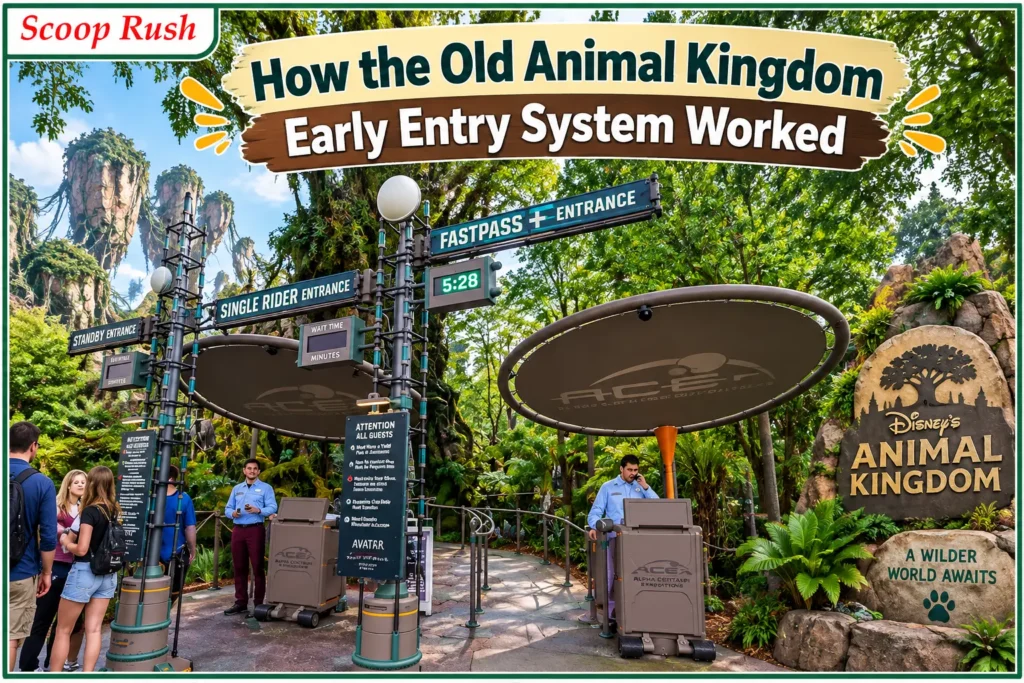
How the Old Animal Kingdom Early Entry System Worked

How the Old Animal Kingdom Early Entry System Worked

Understanding the old process helps explain why this change matters so much. Under the previous system, guests with Early Entry access tapped into the park and headed left through the Oasis. A checkpoint near the entrance verified eligibility by scanning MagicBands or resort room keys. Once Cast Members cleared a guest, that guest could access the entire park.

From there, the crowd moved toward the bridge connecting Discovery Island to Pandora. Since nearly everyone wanted to reach Pandora first, Cast Members held guests at this bridge until Early Entry officially began. The wait length depended heavily on arrival time and when the turnstiles opened that day.

Meanwhile, guests without Early Entry access waited in a separate holding area near the front of the park. This space stayed small, and guests often packed in tightly while waiting for regular rope drops. Many visitors compared it to standing in a corner, since off-site guests had far less room to move or explore.

The Old Squeeze for Off-Site Guests

That cramped holding zone near the Oasis path became a common complaint. Most Walt Disney World visitors actually stay off-site rather than at a Disney resort, so this setup squeezed a large share of daily guests into an uncomfortable space every single morning. Guests had little to do, nowhere to sit, and no room to explore while they waited.

What the New Early Entry Checkpoint System Looks Like

The updated rope drop process moves the checkpoints deeper into the park, onto Discovery Island itself. This single change reshapes the entire morning experience.

Now, both Early Entry resort guests and off-site rope droppers can walk down either path through the Oasis without an early split. The separation happens once guests reach Discovery Island, where two checkpoints now stand.

Off-site guests can wander around Discovery Island while they wait for park opening, instead of standing in a narrow corridor. That said, nothing on Discovery Island opens early. The Discovery Trading Company and Island Mercantile gift shops stay closed until regular park opening, so the extra space adds comfort and movement rather than shopping or dining options.

Where the Two New Checkpoints Sit

The first checkpoint, and by far the busiest, sits near Island Mercantile, just before Pizzafari. This checkpoint blocks access to both Pandora and Africa, which gives on-site guests an early opportunity to reach Kilimanjaro Safaris ahead of the crowd. In practice, this barely matters, since Kilimanjaro Safaris rarely builds a significant wait even well after rope drop.

Many guests reached this checkpoint around 7:29 a.m., though the earliest arrivals passed through closer to 7:25 a.m. The checkpoint stayed active until roughly 8:00 a.m., and off-site guests continued waiting in the nearby holding area right up to that point.

The second checkpoint sits near Zootopia: Better Zoogether, close to the Tree of Life. This checkpoint leads toward the bridge to Asia and Expedition Everest. This area saw far less traffic than the Pandora checkpoint. By around 7:50 a.m., this checkpoint had already opened to everyone, with barely any guests waiting nearby.

This pattern shows exactly where guest demand lies during Early Entry. The overwhelming majority of visitors head straight for Avatar Flight of Passage, which leaves Asia and Expedition Everest as a quieter, less competitive option for anyone willing to skip the rush.

Pros and Cons of the New Early Entry Rope Drop Layout

Pros and Cons of the New Early Entry Rope Drop Layout

Every change like this brings trade-offs, and the new Animal Kingdom Early Entry system is no exception.

Benefits for Off-Site Guests

Off-site guests come out ahead with this update. Since more Walt Disney World visitors stay off-site than on-site, this change improves the overall guest experience for the majority. Off-site guests can now walk around, take photos, or relax in the shade of Discovery Island instead of squeezing into a tight corridor near the entrance.

This shift also softens the old impression that off-site guests mattered less. The previous holding areas often felt like a separate, uncomfortable pen. The new layout feels far more open.

The Trade-Off for On-Site Guests

On-site guests, however, lose a small piece of their advantage. Under the old system, Early Entry guests could walk from the park entrance and typically beat the regular rope drop crowd to Pandora until around 8:10 a.m. Since the checkpoints now sit closer to Discovery Island rather than the entrance, that buffer shrinks to roughly 8:05 a.m.

This five-minute difference stays minor for most guests. As long as you’re already in line for Avatar Flight of Passage, or heading toward Na’vi River Journey, this small change shouldn’t disrupt a well-planned morning.

Should You Still Use Early Entry at Animal Kingdom?

Opinions differ here. Given the smaller advantage for on-site guests and the limited attraction lineup during Early Entry, some park experts are starting to question whether the early wake-up call still pays off. It’s worth testing the new system a few more times before locking in any firm strategy, since results can vary day to day depending on crowd levels and turnstile timing.

That said, Animal Kingdom still offers something special during those early morning hours. The lighting often looks stunning, especially around Expedition Everest, and the park feels noticeably calmer before the general crowds arrive. For guests who value photography, atmosphere, or simply a quieter start to the day, Early Entry still delivers value beyond pure touring efficiency.

Final Takeaways on the Animal Kingdom Early Entry Rope Drop Update

The updated Animal Kingdom Early Entry rope drop reflects a broader trend across Walt Disney World, where Disney has pushed checkpoints deeper into each park to create more breathing room for guests. As a result, off-site visitors now enjoy a noticeably better waiting experience, while on-site guests face only a minor dip in their head start advantage.

Ultimately, whether Early Entry remains the right strategy for your visit depends on your priorities. If beating the crowd to Avatar Flight of Passage matters most, arrive early and head straight to the Pandora checkpoint. However, if you’d rather enjoy a relaxed morning, sleeping in and arriving for a regular rope drop might work just as well for your family.

Either way, knowing how the new system works keeps you from getting caught off guard on your next visit to Disney’s Animal Kingdom.

Frequently Asked Questions

1. What time does Early Entry start at Disney’s Animal Kingdom? 

Early Entry begins thirty minutes before the official park opening. Since Animal Kingdom usually opens at 8 a.m., Early Entry starts around 7:30 a.m.

2. Which attractions are open during Animal Kingdom Early Entry? 

Only four attractions currently participate: Avatar Flight of Passage, Na’vi River Journey, Expedition Everest, and Zootopia: Better Zoogether.

3. Do I need to be a Disney resort guest to use Early Entry? 

Yes. Disney reserves Early Entry access for guests staying at a Walt Disney World resort hotel. Off-site guests can still enter the park early, but they must wait at designated holding areas until regular rope drop begins.

4. Where are the new Early Entry checkpoints located at Animal Kingdom? 

Both checkpoints now sit on Discovery Island. One stands near Island Mercantile before Pizzafari and leads to Pandora and Africa. The other sits near Zootopia: Better Zoogether and leads toward Asia and Expedition Everest.

5. Is Early Entry still worth it at Animal Kingdom? 

It depends on your goals. If reaching Avatar Flight of Passage quickly matters most, Early Entry still helps. However, since the checkpoint change slightly trims the head start for on-site guests, some visitors may find that sleeping in and arriving closer to regular rope drop works just as well.

Iliman Ndiaye Man City Debut: Why He Chose the Etihad Over Tottenham

0

Iliman Ndiaye had a Tottenham deal on the table. Instead, he chose Manchester City, and the Iliman Ndiaye Man City debut that followed has already reshaped the conversation around Pep Guardiola’s squad this season.

Manchester City completed the Iliman Ndiaye transfer on deadline day for a fee in the region of £60m. The Senegal international did not waste any time settling in. He started for City in a 1-0 win over Coventry and attempted more dribbles than anyone else on the pitch. For a player who was turning out for non-league sides just a few years ago, that is a remarkable turnaround. Here is the full story behind the Ndiaye Man City move, what it means for the player, and why he believes City was always the right destination.

Iliman Ndiaye Man City Debut: The Deadline Day Twist

For most of the closing days of the summer window, Ndiaye looked Tottenham-bound. Spurs had reportedly agreed a fee with Everton, but the deal hit a snag. Tottenham needed to sell Richarlison first to fund the move. When that sale did not go through in time, the pathway to Ndiaye collapsed.

Manchester City then stepped in. As the transfer window entered its final hours, City moved decisively and Everton accepted an offer worth around £60m. It capped a window in which City had shown patience, and it turned into a decisive final piece of business.

Ndiaye insists he never let the uncertainty get to him. He stayed calm throughout the process rather than getting caught up in speculation, and he chose to trust that things would work out. That mindset, he says, comes from a broader outlook on life and football.

He also made no secret of where his heart was during the saga. Once Manchester City entered the picture, Ndiaye knew exactly where he wanted to be. He simply could not turn the move down.

Why Ndiaye Chose Manchester City Over Tottenham

The driving force behind Ndiaye’s decision was simple. He wanted Champions League football, and he wanted to test himself at one of the best clubs on the planet. He did not disrespect Tottenham in the process. Instead, he acknowledged their quality while making clear that City represented a different level of opportunity at this stage of his career.

This theme comes up often when players leave mid-table Premier League clubs for genuine title contenders. It is not just about wages or profile. For Ndiaye, the move was about proving he belongs among elite companies and earning a platform to compete on Europe’s biggest stage.

He discussed the move with his wife before it happened. He told her that any Everton exit would only make sense if it led to Champions League football. That conversation turned out to preview exactly how things unfolded.

Leaving Everton Behind for Manchester City

Ndiaye’s move to Manchester City closes a short but eventful chapter at Everton. He joined the Toffees for around £15m in 2024 and quickly won fans over. His direct running, flair on the flanks, and return of 17 goals stood out, especially since Everton finished in the bottom half of the Premier League table in both of his seasons there.

Ndiaye shone as one of the bright spots during a difficult period for Everton. He built a genuine bond with supporters and team-mates, and leaving that connection behind was not easy for him.

Still, Ndiaye stayed clear-eyed about the realities of professional football. He called the exit a natural part of the game. He values the relationships he built at Everton, but he also recognises that players move on as careers progress.

From Non-League Football to a Manchester City Contract

The most remarkable part of Ndiaye’s journey traces back to where he started. His professional career began at non-league side Boreham Wood. He later spent time at Hyde United, a club just seven miles from the Etihad Stadium, where he now plays his home matches. Back then, a Manchester City move would have seemed like a distant dream.

From there, Ndiaye worked his way up the Championship with Sheffield United. A season in France with Marseille then sharpened his game further. That spell abroad exposed him to a different style of football and higher expectations, and it prepared him well before he returned to England with Everton.

Ndiaye’s journey reflects patience and steady progress rather than an overnight rise. He has consistently pushed himself up the football pyramid. He prefers not to dwell on where he started; instead, he keeps his focus on what comes next, and he sees his Manchester City move as another major step in that progression.

Iliman Ndiaye Man City Debut: Full Performance Breakdown

Iliman Ndiaye Man City Debut: Full Performance Breakdown

Manchester City fans did not wait long to see what Ndiaye offers. Guardiola threw him straight into the starting XI against Coventry, and Ndiaye made an immediate impact. He led all players on the pitch with eight completed dribbles. That is exactly the kind of direct, take-on threat City wanted to add to its attack.

Early performances like this matter. They build confidence for the player, and they win over a fanbase that holds extremely high standards. City did not need convincing to sign Ndiaye, but a strong debut helps cement his place in the squad and shows he can handle the step up in quality.

Ndiaye has spoken openly about what the move means to him. He believes this is where he belongs, given the scale of the club. He pointed to world-class team-mates, a world-class stadium, and a passionate fanbase as reasons why City feels like the right fit. He also credited the hard work that got him to this point, calling the move the product of years of graft rather than luck.

What the Ndiaye Signing Means for Manchester City’s Attack

City’s front line already features an array of talented attackers, so the addition of Ndiaye adds further depth and unpredictability to Guardiola’s options. His ability to beat defenders one-on-one, shown clearly on his debut, gives City another route through stubborn defensive setups. That kind of direct running has occasionally troubled the team against deep-lying opposition in recent seasons.

Ndiaye’s versatility across the front line, sharpened during spells at Sheffield United, Marseille and Everton, means he can fill multiple attacking roles. That flexibility should appeal to Guardiola, who has often favoured squad players who can cover several positions rather than out-and-out specialists.

Key Takeaways From the Ndiaye Man City Move

Iliman Ndiaye’s £60m move to Manchester City on deadline day ranks among the more dramatic transfer stories of the window. Spurs’ failure to offload Richarlison in time created a near-miss with Tottenham and opened the door for City to step in. Ndiaye clearly saw the move as the ideal next chapter in his career.

His reasoning stayed consistent throughout. He wanted Champions League football, and he wanted to play for one of the best clubs in the world. Leaving Everton was not easy, given the connection he built with fans over two seasons and 17 goals, but he views the move as a natural and necessary step forward.

Ndiaye’s rise from non-league football at Boreham Wood and Hyde United to lining up for Manchester City at the Etihad rests on steady progress rather than shortcuts. The Iliman Ndiaye Man City debut against Coventry, highlighted by a team-leading eight dribbles, suggests he is ready to compete at this level immediately.

The signing adds depth, flair, and unpredictability to an already stacked Manchester City attack. For Ndiaye, it marks the realisation of a goal he had chased for years. By his own admission, this is only the beginning.

Frequently Asked Questions 

1. How much did Manchester City pay for Iliman Ndiaye? 

Manchester City signed Iliman Ndiaye from Everton for a fee in the region of £60m and completed the deal on transfer deadline day.

2. Why did Iliman Ndiaye not join Tottenham? 

Tottenham had agreed a deal with Everton for Ndiaye, but the move fell through because Spurs could not sell Richarlison in time to fund the transfer. That opened the door for Manchester City to complete the signing instead.

3. How did Iliman Ndiaye perform on his Man City debut? 

The Iliman Ndiaye Man City debut came in a 1-0 Premier League win over Coventry, where he completed eight dribbles, more than any other player on the pitch that day.

4. How many goals did Iliman Ndiaye score for Everton? 

Ndiaye scored 17 goals across two seasons at Everton, even though the club finished in the bottom half of the Premier League table both times.

5. What was Iliman Ndiaye’s career path before joining Everton and Manchester City? 

Ndiaye began his career at non-league club Boreham Wood, later played for Hyde United, then progressed through the Championship with Sheffield United, spent a season at Marseille in France, and joined Everton for around £15m in 2024 before completing his move to Manchester City.

What Is Divine? The New App Reviving Vine in 2026

0

Divine is the new app everyone’s been searching for since Vine disappeared in 2017, and it just launched to the public with a twist nobody saw coming. More than 2.5 million original Vine videos are back from the dead, and Divine also promises to keep AI content out completely.

If you grew up on six-second Vine loops, or you’re simply curious why “Vine is back” started trending, here’s everything you need to know about the Divine app, how it works, and why it’s already pulling in thousands of users.

What Is Divine, Exactly?

What Is Divine, Exactly?

Divine is a short-form video app that lets users create and share six-second videos that loop, just like the original Vine did. It opened to the public on August 20, 2026, and Evan Henshaw-Plath, a former Twitter employee also known as Rabble, built it.

Divine isn’t owned by Twitter, X, or anyone connected to the original Vine app. However, it is backed by Twitter co-founder Jack Dorsey, who held a senior role at the company when it bought Vine back in 2012. That connection gives the Divine app some credibility, since Dorsey has firsthand history with the platform it now revives.

Henshaw-Plath told the BBC he built Divine because he felt social media needed “a reset.” He said he was tired of watching videos online without knowing whether they were real or AI-generated. He added that he wanted to have fun without second-guessing every clip.

Divine’s own website describes its mission as bringing back joy and creativity to short-form video. Unlike traditional platforms, it doesn’t store user data on centralized servers. As a result, creators keep full ownership over what they post, and no single company can delete or control that content.

How the Divine App Differs From Vine

How the Divine App Differs From Vine

Unlike the original Vine, Divine runs on a decentralized system called Nostr. This means no single company controls the app. Consequently, users can potentially move their accounts and content to other apps built on the same system instead of staying locked into one platform forever. Bluesky and Mastodon use similar decentralized models, so the idea isn’t entirely new to social media users.

Divine also enforces a strict no-AI policy, something Vine never had to consider back in 2012, since AI-generated video barely existed at the time.

Additionally, Divine claims there’s no algorithmic manipulation shaping what users see. Instead, people control their own feeds directly, which marks a clear break from how most modern platforms, including WhatsApp, Facebook, and Instagram, operate today.

Divine’s Decentralized Structure Explained

The Nostr protocol gives Divine its independence. Because no company owns the network itself, individual apps built on it can rise or fall without taking user data down with them. Therefore, if Divine ever shuts down, users could theoretically carry their videos and followers to another Nostr-based app instead of losing everything.

How Divine Blocks AI-Generated Videos

This no-AI feature is getting the most attention, and for good reason. Divine uses three main methods to keep synthetic content off the platform.

First, users must record videos live inside the app. Uploading pre-made clips from elsewhere isn’t allowed. This rule immediately rules out most AI video tools, since those tools typically generate files meant for upload rather than live capture.

Second, Divine uses a verification tool called ProofMode. It works like a digital receipt, attaching details to each video such as when someone recorded it and whether the file has changed since. This creates a layer of accountability that most mainstream apps simply don’t offer, unlike the ongoing debate over AI voice cloning laws protecting UK celebrities.

Third, both users and automated systems help flag suspected AI content after it’s posted. If a video looks synthetic, the community becomes part of the moderation process alongside Divine’s own detection tools, in much the same way AI detectors try to tell human writing from AI writing.

Social media analyst Matt Navarra pointed out that this approach carries real risk. He noted that the same features people complain about on other platforms often keep them addictive. Therefore, Divine must prove it can remove that addiction without losing what made short-form video fun in the first place.

Why Divine’s No-AI Promise Matters Right Now

AI-generated video has become nearly impossible to avoid on most platforms today, a concern also raised around Snapchat blocking AI-generated videos from its Spotlight feed. Consequently, many users have grown skeptical about what they’re watching, unsure whether a clip shows real footage or something generated by a tool. Henshaw-Plath addressed this fatigue directly, saying he wanted a space where people didn’t have to second-guess every video.

For a growing number of users, that single promise might be reason enough to try Divine.

The 2.5 Million Restored Vine Videos

Here’s the part that surprised even Divine’s own founder. Henshaw-Plath originally planned to recreate Vine’s format only. Then he discovered that the Internet Archive had preserved a copy of Vine’s old data, so he spent months rebuilding it.

He said the discovery felt exciting, and he expected only a few thousand people to care about it.

Instead, 10,000 people installed Divine within hours of its launch, overwhelming its servers. That reaction told him the app tapped into something bigger than simple nostalgia. Separately, other reports note Divine’s library also includes around 170,000 clips recovered through volunteer archivists, adding even more depth to its restored video collection.

Why Six-Second Vine Videos Still Work Today

You might wonder why anyone wants short, looping clips when YouTube and TikTok have pushed toward longer content in recent years. Henshaw-Plath compared Vine’s format to haiku poetry. He explained that while free-form prose is possible, poetry holds meaning precisely because of its constraints, and Vine worked the same way.

The tight six-second format forced real creativity. There was no room for filler, only for the moment that actually landed. This is likely why so many old Vines still circulate as memes nearly a decade after the app shut down.

How to Sign Up for the Divine App

How to Sign Up for the Divine App

Signing up works differently than most apps people know. Divine uses key pairs instead of email addresses or phone numbers, tied to its Nostr-based system.

There’s one major catch worth knowing before you sign up. Divine has no account recovery system. If you lose your private key, you lose access to your account permanently. This marks a big shift from typical apps, where password resets are standard, so think it through carefully before creating an account.

Divine has already crossed 100,000 users since its public launch, following an earlier beta test back in November. That means the app spent roughly nine months in testing before opening to everyone.

A Quick Look Back at Vine’s Legacy

Understanding Vine’s history helps explain why Divine’s launch feels like such a big deal. The original app launched in June 2012, founded by Rus Yusupov, Colin Kroll, and Dom Hofmann. Twitter bought it just six months later for $30 million.

At its peak, Vine had more than 200 million monthly active users. Furthermore, it helped launch the careers of stars like Jake Paul, Logan Paul, Lele Pons, Brittany Furlan, and Shawn Mendes. Many of these creators turned early Vine fame into long-term entertainment careers, not unlike how some modern creators have built five-figure monthly side hustles from online platforms today.

Despite that massive audience, Vine struggled against Instagram and other rising apps. Twitter ultimately shut it down in 2017, leaving behind a nostalgic gap that fans have discussed ever since.

Divine Isn’t the Only Nostalgic App Making a Comeback

Interestingly, Divine’s return isn’t happening alone. Myspace is also reportedly planning a relaunch, according to site owners Chris Vanderhook and Tim Vanderhook. They confirmed in a new documentary that they still own the Myspace brand and are waiting for the right moment to bring it back.

Together, these two comebacks suggest something bigger is happening across social media. People miss the internet the way it used to feel, before algorithms and AI content took over. Both Divine and Myspace are betting there’s real demand for that older, simpler version of the web.

Final Thoughts on the Divine App

Divine brings back a beloved format, restores a huge chunk of internet history, and takes a clear stand against AI content at a moment when that issue is impossible to ignore. Whether it can hold onto users long-term remains an open question. However, the early numbers, from 10,000 installs in the first few hours to over 100,000 users since launch, suggest real demand for something built on authenticity instead of algorithms.

FAQs

What is the Divine app used for?

Divine lets users create and share six-second looping videos, similar to the original Vine. Users can also browse more than 2.5 million restored classic Vine clips.

Is Divine connected to the original Vine or Twitter?

No. Divine is an independent app built by former Twitter employee Evan Henshaw-Plath. However, it is backed by Twitter co-founder Jack Dorsey.

How does Divine stop AI-generated videos?

Divine requires live recording within the app and uses a verification tool called ProofMode to confirm authenticity. It also relies on user reports plus automated detection to catch AI content.

Can I recover my Divine account if I lose access?

No. Divine has no account recovery system. Losing your private key means permanently losing access to your account.

How many people have joined Divine so far?

Divine has surpassed 100,000 users since its public launch on August 20, 2026. This follows an earlier beta release in November.

Scott Bain Scotland Recall? Falkirk Keeper’s Man-of-the-Match Display Sparks Squad Talk

0

Eight saves. A calm head under pressure. A man of the match award to finish it off. Could this be the weekend that sparked a genuine Scott Bain Scotland recall?

That question feels very real right now. The Falkirk goalkeeper produced a standout performance against Dundee United at Tannadice, and the timing could not be better. Scotland head coach Sebastien Pocognoli will soon name his first squad for the upcoming Nations League fixtures. As a result, Bain’s display has reignited talk over a possible Scott Bain Scotland recall, and there are good reasons why.

Why the Scott Bain Scotland Recall Talk Is Gaining Momentum

Scotland’s goalkeeping picture has shifted a lot in recent months. Fans long considered Craig Gordon the dependable number one, but he has now retired from international football. Meanwhile, Angus Gunn and Liam Kelly, the other two goalkeepers who travelled with the World Cup squad, have not been getting regular game time at club level.

That combination leaves a gap at the top of Pocognoli’s goalkeeping options. Consequently, a strong domestic performance from an experienced keeper carries extra weight right now. Bain delivered exactly that against Dundee United, arriving at precisely the moment selectors are weighing up their choices.

For fans following Scotland squad news, this is more than just a good day for a club goalkeeper. It shows that experience and current form can matter just as much as reputation when a new head coach builds his plans.

Scott Bain’s Man-of-the-Match Saves Against Dundee United

Falkirk struggled for large parts of the match. Dundee United created 27 shots in total, and nine of those hit the target. Bain stopped every single one until Michael Forbes headed home a stoppage-time equaliser. That late goal denied Falkirk what would have been their first league win of the season.

Before that setback, though, Bain was inspired. He denied full-back Kevin Ciubotaru, whose effort looked destined for the bottom corner before Bain intervened. He also stopped Dundee United debutant Lyall Cameron, who could only watch his effort get kept out.

Another debutant, Zidane Iqbal, saw Bain tip his goal-bound shot away from the top corner. Bain then denied Neil Farrugia too. Altogether, he built a performance on reflexes, positioning and composure, exactly the qualities international sides look for in a goalkeeper.

Falkirk’s Manager Backs Bain’s Scotland Case

Falkirk boss John McGlynn praised his goalkeeper after the game and called the performance “terrific.” He explained that Bain offers a modern goalkeeping profile that suits today’s game. According to McGlynn, Bain plays comfortably from the back while still pulling off crucial saves when needed.

McGlynn believes Bain brings composure and calmness to his defence. He also does not expect Scotland’s current setup to overlook that kind of contribution. In other words, the Falkirk manager fully expects national team selectors to take notice.

Opposition Staff Also Back the Scotland Case

Bain’s own manager was not alone in his praise. Dundee United assistant manager Lee Sharp admitted that the goalkeeper had done his international prospects no harm at all. Sharp noted that Bain “had two or three really good saves in the second half.”

When a manager and an opposing coach both single out the same player after a game, it usually means the performance spoke for itself. Given how many chances Dundee United created, that endorsement from the opposing camp adds extra weight to the Scott Bain Scotland recall argument.

Scott Bain’s Career Record Strengthens His Scotland Case

Scott Bain's Career Record Strengthens His Scotland Case

The current form only tells part of the story. Bain’s overall body of work in Scottish football also supports his case for a return to the international fold.

At Falkirk, he has made 44 appearances so far and kept ten clean sheets. Before joining Falkirk, he played for Celtic, where he kept a clean sheet in exactly half of his 78 appearances. That marks a strong record for goalkeeping consistency at one of Scotland’s biggest clubs.

His numbers at Dundee look just as solid. He recorded 21 clean sheets across 124 appearances during his time there. Taken together, this history shows a goalkeeper who has performed consistently at a high level, not just delivered a one-off standout display.

Scott Bain’s Scotland Debut Under Alex McLeish

Bain’s international story began in June 2018, when then-Scotland manager Alex McLeish handed him his debut against Mexico. Since that first cap, he has earned three further appearances for his country.

His most recent Scotland outing came in March, in a pre-World Cup friendly against Ivory Coast. However, Scotland ultimately left him out of the final World Cup squad despite his involvement earlier that year. That near-miss will likely add extra motivation as he pushes for a place under Scotland’s new head coach.

How Pocognoli’s Rebuild Affects Scott Bain’s Scotland Chances

Sebastien Pocognoli takes charge of Scotland at an interesting moment. Craig Gordon’s absence, combined with uncertainty around Gunn and Kelly’s current form, means the new head coach faces early decisions that could shape the goalkeeping department for years to come.

International coaches often use Nations League fixtures to experiment, assess depth, and build early trust with certain players. Therefore, if Pocognoli wants a reliable option who plays regular football and delivers under pressure, Bain’s timing could not be better.

Additionally, goalkeepers who play comfortably from defence, as McGlynn described Bain, tend to fit well into modern tactical setups. Many international sides now prioritise ball-playing goalkeepers who support build-up play rather than simply guard the goal line. Bain’s profile appears to tick that box too.

What’s Next for Scott Bain’s Scotland Recall

Pocognoli will soon announce his first squad for the upcoming Nations League games. Until then, speculation will understandably continue among Scotland supporters and pundits alike.

Bain’s performance alone will not guarantee a recall. Nevertheless, it has strengthened his case at exactly the right time, and it has reminded selectors what he can offer if called upon.

Final Thoughts 

Scott Bain’s man of the match performance against Dundee United did far more than help Falkirk salvage a point. It placed his name firmly back into the conversation surrounding Scotland’s goalkeeping options.

Craig Gordon has retired, and the other World Cup squad goalkeepers lack regular game time. As a result, the door stands open for an experienced option to step forward. Bain’s consistency across spells at Celtic, Dundee and now Falkirk, combined with public praise from both his own manager and an opposing coach, makes a compelling case.

Ultimately, the decision rests with Sebastien Pocognoli. However, based on current form and the wider context around Scotland’s goalkeeping department, Bain appears to be building real momentum heading into squad selection.

Frequently Asked Questions

1. Why is Scott Bain being linked with a Scotland recall? 

Bain delivered a man of the match performance for Falkirk against Dundee United, making eight saves and showing strong distribution. His display comes at a time when Scotland’s goalkeeping options look thinner following Craig Gordon’s retirement.

2. How many caps does Scott Bain have for Scotland? 

Bain has earned four caps for Scotland. He made his debut in June 2018 against Mexico under then-manager Alex McLeish, and his most recent appearance came against Ivory Coast in a pre-World Cup friendly in March.

3. Why did Craig Gordon’s retirement affect Scotland’s goalkeeping options? 

Fans long considered Gordon a dependable senior option for Scotland. His retirement, combined with a lack of recent first-team football for Angus Gunn and Liam Kelly, has left head coach Sebastien Pocognoli with fewer experienced choices in goal.

4. What is Scott Bain’s clean sheet record in his career? 

Bain kept 10 clean sheets in 44 appearances for Falkirk. Earlier in his career, he kept a clean sheet in half of his 78 games for Celtic, and he recorded 21 clean sheets in 124 appearances during his time at Dundee.

5. When will Sebastien Pocognoli announce his first Scotland squad? 

Pocognoli will announce his first squad soon, ahead of the upcoming Nations League fixtures. Bain’s recent form makes him one of the names likely to be under consideration for a recall.

Indiana Jones and the Myth of the Jade Serpent: Temple Facade Rises at Animal Kingdom

0

Can a Maya temple really rise in a matter of weeks? At Disney’s Animal Kingdom, that is exactly what’s happening. New construction photos show the facade for Indiana Jones and the Myth of the Jade Serpent taking shape fast, and fans cannot stop talking about it.

This update matters if you’re planning a future Walt Disney World trip. Indiana Jones and the Myth of the Jade Serpent is one of three headline attractions coming to the new Tropical Americas land. The construction pace we’re seeing right now gives us real clues about when guests will finally step inside. Let’s dig into what’s new, what it means, and when you might actually ride Indiana Jones and the Myth of the Jade Serpent.

Indiana Jones and the Myth of the Jade Serpent: What Changed This Month

Construction crews have worked steadily on Tropical Americas for months. However, September brought the most visible milestone yet. Aerial photos from theme park observer bioreconstruct, captured September 4 and 5, 2026, show workers installing the temple facade for Indiana Jones and the Myth of the Jade Serpent.

This progress follows last month’s D23 Expo reveal, where Disney announced new names for the land’s two major rides. Fans previously called one project the “Encanto Magical Madrigal Casita.” Disney now calls it Antonio’s Fiesta de Encanto. Meanwhile, the long-rumored Indiana Jones Adventure officially became Indiana Jones and the Myth of the Jade Serpent, a name that leans into the ride’s mythology-driven story.

Disney also confirmed that Harrison Ford will voice Dr. Jones for the first time in any Disney Parks attraction. That detail ties Indiana Jones and the Myth of the Jade Serpent directly to the film series instead of a generic jungle-adventure theme.

How Imagineers Are Building the Temple So Fast

How Imagineers Are Building the Temple So Fast

Crews did not sculpt the facade on-site. Instead, Imagineers built and painted each section backstage, then trucked the finished pieces to the construction site for installation. This “chip” method mirrors the technique Disney used for Moana’s Journey of Water a few years ago.

Why should you care about the building method? Because it speeds everything up. Traditional on-site sculpting can drag on for months after crews finish the steel structure. Pre-fabrication changes that timeline. Finishing work now happens at the same time as the structural build. As a result, this detailed Maya temple should come together in weeks, not months.

Addressing Size Concerns About the Jade Serpent Temple

Not every reaction to the new photos has been positive. Some fans worry the temple looks too small. Others fear the old Dino Institute building will remain visible behind it.

Here’s the reality. The temple’s front section was never meant to hide the entire building. That was never the design goal. Crumbling walls will wrap around the temple’s base, and you can already spot steel framework for these walls in recent aerial shots. Sharp-eyed fans will also notice the old Dino Institute logo still sitting just above that area, a fun easter egg for returning guests.

Crews will repaint and weather the rest of the flatter facade so it blends naturally into the temple ruins. Additionally, landscaping and clever sightlines will pull your eye toward the main temple rather than the building around it.

A Useful Comparison: Tokyo DisneySea’s Indiana Jones Adventure

Tokyo DisneySea’s version of Indiana Jones Adventure uses a similar layout. The temple front stands tall and remains visible throughout the surrounding area, but a larger, boxier structure actually serves as the entrance. That entrance sits off to the side, not in the courtyard most photos show.

This approach works well in Tokyo. Guests rarely notice or mind the illusion. While Animal Kingdom’s version likely won’t match Tokyo’s depth and detail, Imagineers appear to be following the same design philosophy. That bodes well for the final guest experience.

Antonio’s Fiesta de Encanto Rises Alongside the Jade Serpent Temple

Antonio's Fiesta de Encanto Rises Alongside the Jade Serpent Temple

The Madrigal Casita, home to Antonio’s Fiesta de Encanto, is also taking shape using the same pre-fabricated method. Imagineers want the house to feel like a standalone structure, not an obvious facade bolted onto a massive warehouse.

Disney has indicated that guests will stand as close as 40 feet from the front door, closer than many expected given the size of the surrounding lawn. Early in-person impressions suggest the casita is well-scaled. It avoids the “toy castle” criticism once aimed at Be Our Guest Restaurant. Instead, fans are comparing its size and presence to Beast’s Castle at Tokyo Disneyland.

Steel mesh for rockwork now wraps around the casita, and this rockwork will eventually hide the show building behind layered mountain scenery. Given how fast the temple facade has progressed, the casita could reach a similar milestone before the end of 2026.

When Will Indiana Jones and the Myth of the Jade Serpent Open?

This is the question every Disney fan wants answered. Unfortunately, Disney hasn’t given an exact date yet. During the D23 Parks Panel, the company skipped announcing a specific opening season. It also didn’t directly reaffirm the previously stated 2027 target for Tropical Americas.

However, Disney did confirm that Monstropolis, a separate expansion at Disney’s Hollywood Studios, will start opening in 2027. That detail matters because industry watchers expect the first phase of Tropical Americas to debut around the same time. Together, the two projects could form a combined multi-park expansion some fans are calling “Cool Kids’ Summer 2027.”

Why a Phased Opening Looks Most Likely

Tropical Americas probably won’t open all at once. Instead, expect a staggered rollout across its three attractions.

El Carrusel de los Animalitos, the family-friendly carousel ride, will likely open first, possibly in 2027. Indiana Jones and the Myth of the Jade Serpent should follow later that year. Pinning down an exact season proves harder here, though, given the complexity of transforming the ride’s queue. Antonio’s Fiesta de Encanto may arrive last, potentially slipping into early 2028.

This phased approach isn’t unusual for large theme park lands. It lets Disney open each section as crews finish it, instead of holding the whole expansion hostage to the slowest attraction.

Inside the Story of Indiana Jones and the Myth of the Jade Serpent

D23 also revealed fresh storyline details for the ride itself. Guests will meet Dr. Jones as he explores a mysterious temple near a cenote, an underground cave that once held water. Local legend says this passageway leads straight to the Maya Underworld. A serpentine creature called the Tsukán guards it.

The ride begins when a portal pulls guests into the Underworld. Once there, riders face escalating dangers: giant bats, oversized scorpions, fire, and snakes. Everything builds toward a climactic showdown with the massive Tsukán animatronic.

Building the Tsukán: Jade Serpent Mythology Comes to Life

Building the Tsukán: Jade Serpent Mythology Comes to Life

New concept art for the queue debuted at D23, alongside a detailed model of the Tsukán. The creature towers over a human-scale reference figure standing at its base. That figure looks roughly the size of Tsukán’s jaw alone, which hints at just how massive the finished animatronic will feel inside the attraction.

Imagineers are hand-sculpting the Tsukán rather than relying entirely on digital fabrication. This choice adds a level of lifelike detail that digital methods alone can’t fully capture. Expect the creature to lunge toward guests during a tense escape sequence, similar in spirit to the classic snake scene from Disneyland’s original Indiana Jones Adventure, but executed with far more realism.

Transforming the Dino Institute Queue Building

The queue presents one of the project’s biggest challenges. The existing building once housed the Dino Institute for the DINOSAUR attraction, a clean, museum-style space. Turning that same building into a weathered, ancient temple interior takes serious design work.

This transformation may actually prove harder than building the exterior facade. Selling depth and dimensionality inside an existing structure is trickier than sculpting a brand-new exterior from scratch. Even so, early signs suggest Imagineering can handle the challenge.

Why This Expansion Matters for Animal Kingdom

Animal Kingdom has needed more thrill-oriented attractions for years. Tropical Americas aims to fill that gap with three distinct experiences. Indiana Jones and the Myth of the Jade Serpent delivers a high-energy adventure. Antonio’s Fiesta de Encanto offers a gentle, all-ages dark ride. El Carrusel de los Animalitos rounds out the land with a classic family attraction.

Furthermore, this expansion could turn Animal Kingdom into a full-day destination instead of a half-day park. Questions remain about evening entertainment and operating hours. Still, three major new rides mark a meaningful step forward.

Final Thoughts 

Rapid progress on the temple facade signals real momentum for Tropical Americas. Disney hasn’t confirmed an exact opening date, but current construction pace and D23 hints point toward a phased 2027 rollout. Indiana Jones and the Myth of the Jade Serpent will likely arrive sometime later in that year.

For now, fans can watch the temple take its final form, the Madrigal Casita rise next door, and the massive Tsukán animatronic inch closer to completion. Expect clearer timelines and fresh updates as construction continues through the rest of 2026.

Frequently Asked Questions

1. When will Indiana Jones and the Myth of the Jade Serpent open? 

Disney hasn’t confirmed an exact date. Industry predictions point to a 2027 opening, likely in the latter half of the year, as part of the phased Tropical Americas rollout.

2. What is the Tsukán in Indiana Jones and the Myth of the Jade Serpent? 

The Tsukán is a giant serpentine creature that guards the passageway to the Maya Underworld in the ride’s storyline. It appears as a massive, hand-sculpted animatronic during the climactic final scene.

3. Will Harrison Ford appear in Indiana Jones and the Myth of the Jade Serpent? 

Yes. Disney confirmed Harrison Ford will voice Dr. Jones, marking his first appearance in a Disney Parks attraction.

4. What construction method are Imagineers using to build the temple facade? 

Imagineers are using a pre-fabricated “chip” method. Crews sculpt and paint facade sections off-site, then transport and install them on location. This speeds up the finishing process significantly.

5. What other attractions are coming to Tropical Americas besides Indiana Jones and the Myth of the Jade Serpent? 

Tropical Americas will also include Antonio’s Fiesta de Encanto, a family dark ride, and El Carrusel de los Animalitos, a family-friendly carousel attraction.

Elon Musk Documentary 2026: What “Musk” Really Claims About the 2024 Election

0

A new Musk documentary 2024 election claim is putting Elon Musk back in the headlines, and he isn’t staying quiet about it.
A new film is reopening one of the most talked-about political mysteries of the last two years. With its theatrical release just weeks away, filmmaker Alex Gibney’s documentary is drawing fresh attention to Elon Musk’s role in Donald Trump’s 2024 campaign. Consequently, questions that once lived on the fringes of political commentary are now heading into mainstream theaters.

This story matters because Musk isn’t a bystander in American politics anymore. He poured enormous resources into Trump’s 2024 campaign, briefly ran a powerful federal agency, and still controls Starlink through his growing SpaceX empire, a satellite network with far-reaching infrastructure influence. Therefore, whatever the documentary does or doesn’t prove, the questions it raises are ones many voters already want answered.

What the Elon Musk Documentary Actually Claims

What the Elon Musk Documentary Actually Claims

Oscar-winning filmmaker Alex Gibney’s documentary, simply titled Musk, arrives in U.S. theaters on October 16, 2026. The film examines Musk’s outsized influence in American politics. One segment in particular has generated the most buzz, raising allegations about what Musk may have known, or predicted, about the 2024 election before officials announced the results.

At the center of this segment is Ashley St. Clair, one of the mothers of Musk’s children and a former conservative influencer. According to reporting from The Hollywood Reporter and The Daily Beast, St. Clair describes Musk showing an unusual level of certainty about the election outcome before it was official.

She recounts a text message in which Musk allegedly said he was about to unleash an “anomaly in the matrix.” The documentary also shows Musk referencing having “10,000 lasers in space.” When Gibney asks on camera whether this meant Starlink, St. Clair says she isn’t sure what else it could refer to.

What the Documentary Does Not Prove

It’s worth being precise here. The film presents St. Clair’s account and supporting text messages as evidence of Musk’s confidence and cryptic language. However, it does not prove what Musk meant by these statements. Nor does it establish a confirmed link between Starlink and any specific election result. These remain allegations and interpretations, not verified findings, and readers should treat them accordingly.

Elon Musk’s Response to the Documentary

Musk dismissed the documentary as a “hit piece” months before its release. Once details from the film began circulating publicly, he offered an even shorter reaction: he was, in his own words, “LMAO” about the whole situation, according to The Hollywood Reporter.

The Daily Beast reported that it reached out to Musk for further comment. As of publication, however, no detailed rebuttal addressing the documentary’s specific claims has surfaced.

Musk’s Documented Role in Trump’s 2024 Campaign

Separate from the documentary’s more speculative claims, Musk’s financial and organizational involvement in Trump’s 2024 campaign is well documented and not in dispute.

He contributed more than $290 million to support Trump’s candidacy, making him one of the largest individual donors of the election cycle. Additionally, Musk hosted town hall events across key swing states and became a highly visible campaign surrogate in its final months.

One especially controversial move involved a petition tied to a pro-Trump political action committee that Musk created. He gave away $1 million checks to petition signers, describing recipients as randomly selected. Critics argued this arrangement functioned as an incentive for registration and turnout among likely Trump supporters in battleground states.

The Wisconsin Bribery Investigation Explained

That same PAC strategy later drew legal scrutiny in Wisconsin, where Musk offered $2 million checks to voters ahead of a state Supreme Court election. He framed the payments as appreciation for voting, though critics called the arrangement a thinly disguised form of vote-buying.

Last month, a Wisconsin prosecutor announced that no bribery charges would be filed against Musk over these controversial payments. As a result, this particular chapter of legal scrutiny closed, even though broader ethical questions about the tactic remain unresolved in public debate.

DOGE, Data Access, and Ongoing Scrutiny

Beyond the 2024 campaign itself, Musk’s brief tenure leading the Department of Government Efficiency, widely known as DOGE, has drawn its own separate set of concerns.

During his time overseeing the initiative, Musk’s team gained access to sensitive federal systems, including those managed by the Social Security Administration. This access later became the subject of a formal whistleblower complaint. Meanwhile, court filings have referenced concerns about how personal data belonging to a large number of Americans was handled.

Furthermore, a Government Accountability Office report questioning DOGE’s claimed $110 billion in savings cast doubt on some of the agency’s most publicized achievements under Musk’s leadership.

Musk eventually stepped down from his DOGE role following a reported falling out with Trump. Since then, however, he has re-engaged with Republican politics ahead of the 2026 midterms, contributing an estimated $800,000 to various GOP campaigns. Meanwhile, his business empire keeps expanding elsewhere, including reported plans tied to an Musk-linked fossil fuel venture, APR Energy.

Why the Elon Musk Election Controversy Matters Now

Why the Elon Musk Election Controversy Matters Now

“The Musk documentary 2024 election claims arrive as midterm elections approach, adding weight to scrutiny of Musk’s political activities.” His combination of enormous personal wealth, control over critical infrastructure like Starlink, and recent experience inside the federal government gives him a level of influence few private citizens have ever held.

The documentary doesn’t claim to offer definitive proof of election manipulation. Instead, it compiles firsthand accounts, text messages, and expert commentary that raise pointed questions about transparency, access, and accountability. Ultimately, whether these questions lead anywhere concrete will depend on how lawmakers, journalists, and voters respond in the coming weeks.

Key Takeaways

  • Alex Gibney’s documentary Musk releases in U.S. theaters on October 16, 2026, and examines Elon Musk’s political influence.
  • Ashley St. Clair alleges Musk showed unusual certainty about the 2024 election outcome beforehand, including a cryptic reference to “10,000 lasers in space.”
  • The documentary does not prove what these statements meant or confirm any link between Starlink and election results.
  • Musk dismissed the film as a “hit piece” and later responded with “LMAO.”
  • A Wisconsin prosecutor declined to file bribery charges over Musk’s $2 million voter checks.
  • DOGE’s data access practices remain under scrutiny following a whistleblower complaint and a critical GAO report.

FAQs

What is the Elon Musk documentary called and when does it release?

The documentary is titled Musk, directed by Alex Gibney, and it’s scheduled for U.S. theatrical release on October 16, 2026.

What does Ashley St. Clair claim in the Elon Musk documentary?

She says Musk displayed unusual confidence about the 2024 election results before they were announced, including a text referencing “10,000 lasers in space.”

Did the documentary prove Elon Musk interfered in the 2024 election?

No. The film presents firsthand accounts and text messages, but it does not establish confirmed proof of election interference or clarify what Musk’s statements meant.

How did Elon Musk respond to the documentary?

Musk called the film a “hit piece” before its release and later said he was “LMAO” about it, without directly addressing the specific claims made.

What happened with the Wisconsin bribery investigation into Elon Musk?

A Wisconsin prosecutor announced last month that no bribery charges would be filed over Musk’s $2 million voter payment checks tied to the state’s Supreme Court election.

Missouri Attractions: Top Places to Explore Right Now

0

Missouri attractions offer much more than busy highways and city skylines. The state mixes caves, forests, rivers, lakes, and historic towns. Visitors can tour an underground cavern in the morning and walk through a historic site by afternoon. Missouri also holds more than 90 state parks and historic sites for travelers to enjoy.

The state’s underground world adds a unique twist to any trip. Missouri has recorded over 7,500 caves within its borders. Many of these caves offer guided tours through striking rock chambers. Above ground, guests can hike, swim, fish, and paddle across varied landscapes.

Missouri Caves Create Unforgettable Underground Adventures

Onondaga Cave State Park features a cave recognized as a National Natural Landmark. Guided tours lead visitors through chambers filled with dramatic rock formations. A river flows through the cave, which adds another layer to the visit. The park also offers hiking trails and other outdoor activities nearby.

Meramec State Park gives cave lovers another strong option. Its Fisher Cave offers guided tours where guests carry handheld lights. The park also holds about 13 miles of trails along the Meramec River. Together, the cave and river create an easy day of outdoor exploration.

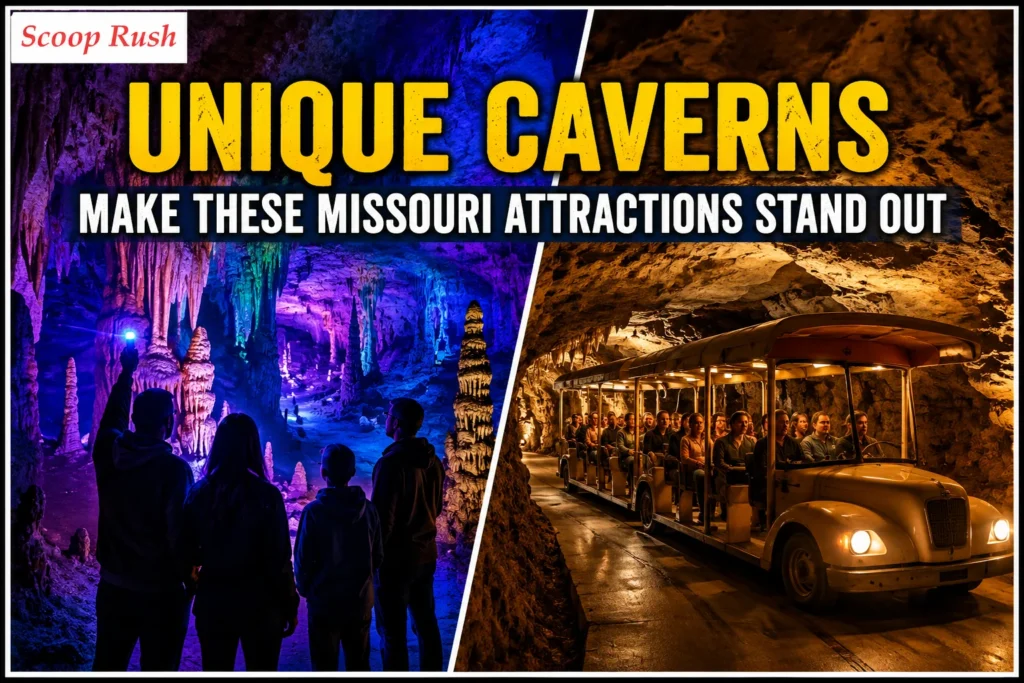
Unique Caverns Make These Missouri Attractions Stand Out

Unique-Caverns-Make-These-Missouri-Attractions-Stand-Out

Stark Caverns adds an unusual twist to the typical cave visit. The attraction combines underground formations with a full escape room challenge. Visitors can also pick a blacklight tour for something different. Its spot near the Lake of the Ozarks makes it easy to reach.

Fantastic Caverns near Springfield offers a completely different approach. Instead of walking, visitors tour the cave by vehicle. This setup works well for guests who struggle with long walks. The guided ride follows a passage carved long ago by an ancient river.

Ha Ha Tonka State Park Blends Nature and History

Ha Ha Tonka State Park ranks among Missouri’s most distinctive outdoor spots. The park sits near the Lake of the Ozarks and combines cliffs, springs, and caves. Its biggest draw is the ruin of an old stone castle. The structure dates back to the early 20th century and later burned in a fire.

Visitors also get plenty of room to explore on foot here. Trails wind through wooded areas and past striking geological features. The Spring Trail leads to one of Missouri’s largest natural springs. Meanwhile, the Castle Trail opens up wide views across the surrounding hills.

Rare Rock Formations Add to the Adventure

Elephant Rocks State Park shows off one of Missouri’s strangest landscapes. Massive granite boulders sit in a line that resembles a row of elephants. These rocks formed more than one billion years ago. Visitors can walk among the boulders while enjoying the forest around them.

The park’s Braille Trail offers an accessible route through the main rock area. Guests can also explore old quarry sites and extra paths nearby. This mix of geology and outdoor recreation makes Elephant Rocks a must-see stop. Photographers especially enjoy the many unusual angles here.

Johnson’s Shut-Ins and Taum Sauk Showcase the Ozarks

Johnson’s Shut-Ins State Park features a landscape shaped by water and volcanic rock. The Black River winds through narrow rock channels, forming pools and small waterfalls. Visitors can swim here when conditions allow and explore nearby trails. Thick forests surround the park and add to its rugged charm.

Nearby, Taum Sauk Mountain State Park offers a very different Ozark experience. This park holds Missouri’s highest point at 1,772 feet. It also features rocky ridges and Mina Sauk Falls. Hikers can connect to the Ozark Trail here for longer adventures.

Missouri Lakes Provide Scenic Outdoor Escapes

Lake of the Ozarks remains one of Missouri’s most popular lake destinations. Its long shoreline includes quiet coves, marinas, and waterfront towns. Visitors can boat, kayak, fish, or simply relax by the water. The lake also connects easily to nearby spots like Ha Ha Tonka State Park.

Table Rock Lake offers another strong option in the Ozark region. Clear water and wooded hills create beautiful scenery all year. Boating, fishing, and paddling remain popular activities at the lake. Visitors can also find nearby trails, campgrounds, and picnic spots.

Historic Missouri Attractions Tell Remarkable Stories

Missouri’s appeal reaches well beyond its natural scenery. The state holds sites tied to famous writers, musicians, and presidents. The Mark Twain Boyhood Home and Museum in Hannibal explores the writer’s early life. The complex includes historic buildings and a collection of Twain memorabilia.

The Scott Joplin House State Historic Site in St. Louis honors the famous ragtime composer. Visitors can tour the modest apartment where Joplin once lived and worked. Ste. Genevieve National Historical Park offers another look into Missouri’s past. Its buildings preserve rare examples of French colonial architecture.

Central and Northwest Missouri Add More History

Central-and-Northwest-Missouri-Add-More-History

Central Missouri holds several key stops for history fans. The National Churchill Museum in Fulton marks Winston Churchill’s famous 1946 speech. It also includes the historic Church of St. Mary the Virgin, Aldermanbury. Lincoln University in Jefferson City carries a strong tie to Civil War history.

Northwest Missouri also features notable historic sites worth a visit. The Pony Express National Museum in St. Joseph explores the old horseback mail system. The Walt Disney Hometown Museum in Marceline celebrates Disney’s childhood there. These spots connect Missouri to major names in American history.

Civil War and Presidential Landmarks Add More Depth

Wilson’s Creek National Battlefield near Republic marks a major Civil War site. The battle took place there on August 10, 1861. Visitors can follow a self-guided driving tour across the field. The site offers a close look at this key chapter of history.

Missouri also holds a strong link to President Harry S. Truman. Truman was born in Lamar back in 1884. Guests can tour the small frame house at his birthplace site. The George Washington Carver National Monument in Diamond adds another historic stop.

Missouri River Towns Bring Small-Town Charm

Ste. Genevieve offers much more than old buildings alone. The town blends French colonial architecture with a relaxed riverside setting. Visitors can browse historic homes, museums, shops, and local galleries. Nearby countryside areas also offer quiet walks and scenic views.

Cape Girardeau gives a different river-town feel along the Mississippi River. Its downtown holds historic buildings, shops, and public art. The Mississippi River Tales Mural tells local history through a large floodwall painting. Trail of Tears State Park sits nearby and adds more hiking options.

Jefferson City and Rocheport Mix History With Scenery

Jefferson City blends government history with strong outdoor recreation. The Missouri State Capitol stands as the city’s top historic attraction. Visitors can tour its grand interior and view art tied to Missouri’s story. The nearby Missouri State Penitentiary also offers tours focused on its past.

Rocheport offers a quieter stop along the Missouri River. This small town features old buildings and direct access to the Katy Trail. Walkers and cyclists use this trail throughout the year. The nearby Rocheport Tunnel adds one more historic feature to explore.

Waterfalls and Natural Bridges Round Out the Scenery

Waterfalls-and-Natural-Bridges-Round-Out-the-Scenery

Missouri’s natural beauty stretches well past mountains and caves. Grand Falls, south of Joplin, forms a wide cascade across Shoal Creek. The waterfall drops over a chert ledge about 12 feet high. It stretches roughly 163 feet wide and creates striking views nearby.

Clifty Creek Natural Bridge adds another impressive geological feature to the list. This stone bridge stretches about 40 feet across the creek. A trail winds through forested and rocky land toward the formation. The spot stays quiet and suits travelers who want fewer crowds.

Prairie Landscapes Complete the Missouri Experience

Wah’Kon-Tah Prairie shows a different side of Missouri’s natural heritage. This large preserve protects one of the state’s few tallgrass prairies left. Visitors can walk through open grasslands and spot native wildlife. Wide views here also create great chances for photography and birdwatching.

Missouri’s prairies remind travelers the state offers more than wooded hills. Scenery changes fast across different corners of Missouri. Travelers can move from caves and forests to open grasslands quickly. This variety makes Missouri a rewarding stop for any nature lover.

Why Missouri Attractions Deserve a Spot on Your List

Missouri brings together outdoor fun, geology, history, and small-town culture. Travelers can visit a cave one day and a museum the next. Lakes, waterfalls, natural bridges, and prairies add even more variety. Many of these spots work well for family trips and road trips alike.

The state offers both famous landmarks and quiet hidden gems. The Gateway Arch gives one of America’s most iconic views in St. Louis. Smaller stops like Rocheport and Clifty Creek offer a slower pace. Meanwhile, the Ozarks deliver some of the strongest outdoor experiences in the region.

FAQs

1. What is Missouri best known for? 

Missouri is known for the Ozarks, caves, rivers, and historic landmarks. The Gateway Arch and Mark Twain’s history also draw many visitors. Its outdoor destinations offer plenty of hiking and exploration options.

2. Why does Missouri get called the Cave State? 

Missouri earned this nickname due to its huge cave network. The state has recorded more than 7,500 caves so far. Several caves welcome guests through guided tours and organized attractions.

3. Which Missouri park has the most unusual scenery? 

Ha Ha Tonka State Park offers an especially unusual mix of features. It combines castle ruins, cliffs, springs, caves, and natural bridges. This setting gives visitors both historic interest and outdoor adventure.

4. Where can visitors explore Missouri’s historic sites? 

Travelers have many options spread across the state. Mark Twain’s boyhood home, the Scott Joplin House, and Wilson’s Creek all differ. Ste. Genevieve and the National Churchill Museum add more historic depth.

5. Is Missouri a good pick for an outdoor vacation? 

Yes, Missouri offers plenty of activities for outdoor travelers. Guests can hike, swim, fish, kayak, and explore caves easily. Its lakes, forests, waterfalls, and prairies create varied and exciting scenery.

Strait of Hormuz Stalemate Keeps US and Iran Locked in Standoff

0

The Strait of Hormuz stalemate now shapes the newest chapter of the US-Iran conflict. Both nations have restarted limited strikes after a month of calm. Still, neither side seems ready for full-scale war. Washington and Tehran are chasing very different goals near this key waterway.

The US wants to contain the crisis and keep oil shipments moving. Iran wants to shift the balance before economic pain becomes too much to bear. This gap between goals keeps the region in a fragile and risky position.

US Works to Control the Strait of Hormuz Stalemate

Washington seems focused on holding pressure without triggering a bigger war. US forces recently escorted commercial ships through this vital passage. On Tuesday, American forces guided 40 vessels carrying 18 million oil barrels safely through. Officials called the mission a wartime high point.

That escort mission proved Washington can still support shipping during conflict. However, it hasn’t erased the broader economic strain caused by the war. Oil prices stay high, even after a small drop on Thursday. Meanwhile, US drivers pay more at the pump than they did last year.

Washington Faces Rising Military and Political Costs

The United States also faces growing military costs as the standoff drags on. American forces have burned through large stocks of defensive missiles. CNN sources say US troops used nearly 80% of some interceptor supplies. These figures cover both the THAAD and Patriot missile defense systems.

Political pressure is also building at home for President Trump. A UMass Amherst poll found strong public disapproval of his war strategy. More than two-thirds of Americans surveyed rejected his handling of the conflict. His approval rating has since dropped to just 32%.

Iran Struggles Under Severe Economic Pressure

Iran-Struggles-Under-Severe-Economic-Pressure

Iran faces a much steeper economic crisis as this standoff continues. US sanctions have made it harder for Tehran to sell oil abroad. The conflict has also limited access to basic goods like food and medicine. Iran’s yearly inflation hit 66% by the end of July.

Despite shrinking military resources and constant attacks, Iran refuses to fully surrender. Analysts say total capitulation could threaten the regime’s survival at home. As a result, Tehran may see escalation as its only path to change. This mindset keeps the Strait of Hormuz stalemate firmly in place.

Why Iran Wants to Break the Current Deadlock

Iran has strong motives to challenge the situation around Hormuz. The strait remains central to its economic survival and regional influence. Disrupting tanker traffic lets Tehran pressure both the US and its allies. Yet continued disruption also carries major risks for Iran itself.

Even so, Iranian actions suggest a clear preference for resistance over surrender. Iran struck regional targets after recent American attacks, according to CNN. Those targets included sites in Jordan, Bahrain, and Kuwait. Still, this latest round of fighting stayed smaller than earlier clashes.

Both Sides Try to Avoid Full-Scale War

Despite harsh rhetoric, both countries are showing real restraint in their attacks. Each side has mostly targeted military assets instead of civilians. They have also avoided hitting critical energy infrastructure so far. This pattern shows both governments understand how fast things could spiral.

Iran has also held back from striking Saudi Arabia or the UAE directly. That restraint may help stop the conflict from spreading across the wider Gulf. However, experts warn that one miscalculation could change everything quickly. Even small strikes can trigger unexpected and serious consequences.

Hormuz Remains the Core Flashpoint of the Conflict

Hormuz-Remains-the-Core-Flashpoint-of-the-Conflict

The Strait of Hormuz sits right at the center of this entire standoff. Washington wants shipping to keep flowing while pressure on Tehran stays high. Iran wants to challenge that very order the US is trying to protect. This creates a direct clash between economic control and strategic resistance.

President Trump has publicly voiced confidence in America’s current position. He claims the US now holds near-total control over the strait. He also points to Iran’s failing economy as proof of US leverage. Yet Iran keeps showing little willingness to accept this arrangement.

Diplomacy Remains Stuck With No Clear Path Forward

Diplomatic efforts have failed to resolve this standoff so far. Iran says it remains open to talks under specific conditions. President Masoud Pezeshkian tied that offer to an earlier nuclear memorandum. He said Iran would respond if Washington restored its earlier commitments.

Trump, however, insists he feels no urgency to push Iran into talks. His stance suggests Washington is comfortable with its current strategic edge. This gap makes a fast diplomatic breakthrough highly unlikely for now. Meanwhile, ongoing attacks continue narrowing the window for real negotiations.

A Fragile Balance That Could Still Collapse

A-Fragile-Balance-That-Could-Still-Collapse

The current calm may look stable, but it remains extremely fragile underneath. Neither side wants a return to full-scale regional war. At the same time, neither government seems ready to back down either. This mix creates a dangerous cycle of pressure and limited retaliation.

Iran faces brutal economic strain and may seek bolder ways to respond. The US faces rising military costs, political backlash, and shrinking weapons stockpiles. Both sides have real reasons to avoid uncontrolled escalation right now. Yet both also feel pressure to keep squeezing their opponent further.

What Could Happen Next in the Strait of Hormuz

The next phase depends heavily on how both sides handle further attacks. If Iran ramps up pressure on shipping, Washington may hit back harder. If American strikes grow stronger, Tehran could widen its regional retaliation. Either path risks pushing this conflict past its current limits.

For now, the Strait of Hormuz stalemate remains a tough puzzle for both nations. Washington can maintain pressure, but that strategy keeps getting costlier. Iran can keep challenging shipping, but that path also risks bigger blowback. Neither government has found an easy route to lasting peace yet.

FAQs

1. What is the Strait of Hormuz stalemate? 

It describes the current deadlock between the US and Iran near the strait. Washington protects shipping while pressuring Tehran economically. Iran wants to disrupt that arrangement and force change. Neither side has won a clear victory yet.

2. Why is the Strait of Hormuz so important? 

It serves as a major route for global energy shipments. Any disruption can affect oil supplies worldwide. This makes it strategically vital for regional powers and the global economy alike.

3. Why does Iran want to challenge the current situation? 

Iran faces harsh economic pressure from falling oil sales and rising inflation. Its leaders may fear that continued pressure threatens government stability. So Tehran seeks more leverage through military and maritime action.

4. Why does the US avoid a bigger war with Iran? 

Washington prefers controlled pressure over another long regional war. US forces already face heavy weapons usage and financial strain. Domestic political opposition adds further pressure on the administration.

5. Could this conflict turn into a larger war? 

Yes, the risk remains real as both sides keep escalating carefully. A single miscalculation could turn limited strikes into wider war. For now, both governments still seem aware of these serious risks.

Is Disney World Busy on Labor Day Weekend 2026? Here’s Why It’s Actually Empty

0

A Holiday Weekend Where Wait Times Barely Register

What if the busiest holiday weekend on the calendar turned into one of the quietest days at Walt Disney World all year? That is exactly what happens during Disney World Labor Day weekend, and longtime visitors expect it every single time.

Each year around this time, a familiar headline appears. Someone posts a photo of an empty Main Street, and the internet reacts with shock. Words like “ghost town” and “dead” start trending. Meanwhile, seasoned Disney fans just nod along, because this pattern repeats like clockwork. Disney World Labor Day weekend has quietly become one of the slowest holiday stretches of the year, and 2026 will follow the same script.

If you are planning a trip around September 5 through 8, 2026, here is the short version: crowds will stay low, wait times will stay short, and the surprise headlines are already writing themselves. Let’s break down why this keeps happening and what it means for your visit.

Why Disney World Labor Day Weekend Stays Quiet Every Year

Why Disney World Labor Day Weekend Stays Quiet Every Year

The explanation comes down to timing. Labor Day sits in an awkward spot on the calendar. Summer vacation has already ended for most families, and fall break is still weeks away. As a result, the holiday falls into a scheduling gap that keeps attendance low.

Most Florida school districts, along with many others nationwide, return to class weeks before Labor Day arrives. This single factor removes a large share of potential visitors. Families no longer treat the holiday as summer’s “last hurrah,” since school has already resumed by the time it rolls around.

This places Labor Day in the same category as other awkwardly timed holidays. Martin Luther King Day falls between New Year’s and mid-winter break. Memorial Day sits between spring break and summer vacation. However, the Labor Day slowdown hits harder. School has just restarted, and early September rarely ranks as a popular vacation month for flexible travelers.

What the Wait Time Data Shows

Historical wait time data backs up this pattern consistently. Crowds dropped sharply on August 8, right as schools prepared to reopen. A second drop followed on August 30. Here are the daily average wait times leading into the holiday weekend:

  • August 30, 2026: 20 minutes
  • August 31, 2026: 16 minutes
  • September 1, 2026: 15 minutes
  • September 2, 2026: 16 minutes
  • September 3, 2026: 19 minutes

For context, anything at or under 26 minutes falls into the lowest tracked crowd category. Three of those four days actually beat the previous record for the slowest day of the year, which had been September 30, 2025, at 17 minutes. That record-breaking pace strongly signals a quiet holiday weekend ahead.

Last year followed a similar trend. The final week of August averaged 25-minute waits, and the first week of September dropped even further to 23 minutes. Labor Day itself bottomed out at just 18 minutes, a level many fans consider “downright dead.”

How This Year’s Disney World Labor Day Weekend Compares to Past Years

Crowd patterns have shifted quite a bit over the years, so looking back adds useful context.

The busiest Labor Day on record since at least 2014 happened in 2017, when average waits hit 33 minutes. That number matches typical May crowd levels, yet it still trails behind this past summer’s June, July, and August averages of 27 minutes.

Then came 2020, which showed a data spike. However, that spike did not reflect real demand. Parks operated at under 30 percent capacity during the phased pandemic reopening, so any visible crowd felt more noticeable against that reduced footprint.

The year 2022 brought genuinely busy crowds, driven by pent-up post-pandemic demand. Meanwhile, 2019 stayed remarkably calm, offering a final quiet stretch before Star Wars: Rise of the Resistance opened and reshaped crowd patterns for years afterward.

Overall, Labor Day has settled into place as the slowest holiday weekend of the year at Walt Disney World. Only the Fourth of July and Halloween come close. Interestingly, Independence Day has followed a nearly identical downward trend, once packed but now fading for many of the same reasons driving this year’s slowdown.

The Economics Behind a Slow Disney World Labor Day Weekend

The Economics Behind a Slow Disney World Labor Day Weekend

Beyond the school calendar, cost plays a major role in shaping crowd levels. Rising prices for park tickets, hotel stays, and airfare have pushed budget-conscious travelers away from weekend dates altogether.

This shift extends beyond holidays too. It shows up on regular Friday and Saturday nights, but the effect becomes even clearer during a holiday weekend, when demand would traditionally spike. Guests with flexible schedules increasingly choose cheaper weekdays and cheaper weeks within the same general date range, rather than locking in a pricier holiday visit.

As a result, the guests who do show up over Disney World Labor Day weekend tend to fall into a few specific groups: Southerners taking advantage of a shorter drive, devoted Disney fans chasing a quick getaway, and local Floridians.

Annual Pass Blockouts Add to the Slowdown

Speaking of locals, another factor works against crowds this year. Both the Pixie Pass and Pirate Pass, the two most affordable Annual Pass tiers for Florida residents, are blocked out from September 5 through 7, 2026.

That detail matters more than it might seem. These two passes likely make up a disproportionate share of the overall Annual Pass population, since many Floridians bought them when they were the cheapest option and never upgraded later. With a large chunk of budget-minded locals unable to visit during the blockout, an already quiet weekend gets quieter still.

This pattern shows up reliably in the data whenever these passes get blocked out beyond their usual weekend restrictions. Locals often rush to visit right before a blockout begins, creating a small spike, followed by a clear dip once the blockout kicks in. The same cycle plays out around Thanksgiving, Christmas, and Spring Break each year.

Given that pattern, expect a modest bump in attendance on Friday, September 4, 2026, as local Annual Passholders squeeze in a visit before the blockout starts. The EPCOT Food & Wine Festival will likely add to that small bump too, though it should stay far smaller than the surges seen before longer holiday blockouts.

Best Parks to Visit During Disney World Labor Day Weekend

Best Parks to Visit During Disney World Labor Day Weekend

Predicting overall crowd levels is one challenge. Figuring out which park to visit each day is trickier, especially with the EPCOT Food & Wine Festival running and Mickey’s Not So Scary Halloween Party events happening at Magic Kingdom.

For guests without Park Hopper tickets, try this single-park approach:

  • September 5, 2026: Disney’s Hollywood Studios
  • September 6, 2026: Magic Kingdom
  • September 7, 2026: EPCOT
  • September 8, 2026: Animal Kingdom

For guests with Park Hopper tickets, a more flexible plan works better:

  • September 5, 2026: Animal Kingdom, then EPCOT
  • September 6, 2026: EPCOT, then a wildcard park
  • September 7, 2026: Disney’s Hollywood Studios, then Magic Kingdom
  • September 8, 2026: Magic Kingdom, then Disney’s Hollywood Studios

These specific park picks carry more uncertainty than the overall crowd forecast. Several competing factors affect the schedule, including the Food & Wine Festival, the Halloween party lineup, and the Annual Pass blockout. Still, the big-picture forecast of low crowds matters far more than which exact park you choose on a given day.

What Happens After Disney World Labor Day Weekend Ends

Typically, the week following Labor Day mirrors the week before it, and it sometimes dips even lower. Given how slow late August and early September have already run this year, matching or beating that pattern will take some doing.

Even so, current trends suggest Walt Disney World may be entering one of its quietest six-week stretches in recent memory. September has historically served as the calm before the park’s busiest three-month period begins in October.

The lowest crowd levels in the past five years occurred during fall 2021, largely driven by pandemic-related factors like COVID case surges and mask mandates. None of those specific circumstances apply in 2026, yet the current trajectory points toward a similarly low range this September for entirely different reasons.

Final Takeaways 

Disney World Labor Day weekend has followed a predictable pattern for years, and 2026 looks set to continue that trend. The awkward calendar placement, shifted school schedules, rising travel costs, and the Annual Pass blockout all point toward another quiet holiday.

For travelers hoping to dodge long lines and packed walkways, this weekend offers a real opportunity. Just keep in mind that “quiet” stays relative. Even a slow day by 2026 standards can feel busy in the evening at Magic Kingdom, especially once fall festival crowds mix in.

Ultimately, if you are debating a Labor Day trip because you worry about overwhelming crowds, the data says you can relax. This holiday has consistently ranked among the calmest weekends of the year at Walt Disney World, and the numbers show it staying that way in 2026.

Frequently Asked Questions

Is Disney World busy on Labor Day weekend 2026? 

No. Wait time trends leading into the holiday show Disney World Labor Day weekend 2026 will rank among the slowest holiday weekends of the year, with crowd levels staying in the lowest tracked category.

Why does Disney World stay so quiet during Labor Day weekend? 

Labor Day falls after most school districts have already returned to session and before fall break begins. This scheduling gap shrinks the pool of potential visitors, unlike holidays such as Thanksgiving or Christmas that align with school breaks.

Which Disney park should I visit first during Labor Day weekend? 

Without Park Hopper tickets, they start with Disney’s Hollywood Studios on September 5, then move to Magic Kingdom, EPCOT, and Animal Kingdom on the following days. Guests with Park Hopper tickets can spread visits across two parks per day for more flexibility.

Are Annual Passholders affecting crowds during Disney World Labor Day weekend? 

Yes, indirectly. Disney blocks out both the Pixie Pass and Pirate Pass, the two most affordable Florida resident Annual Passes, from September 5 through 7, 2026. That keeps a large share of local visitors out of the parks during the holiday itself.

Will crowds stay low after Disney World Labor Day weekend ends? 

Historically, the week after Labor Day tends to match or dip below the week before it. Since late August and early September 2026 have already run historically slow, crowds should stay low into the following weeks before picking up ahead of the busier fall and holiday season.