
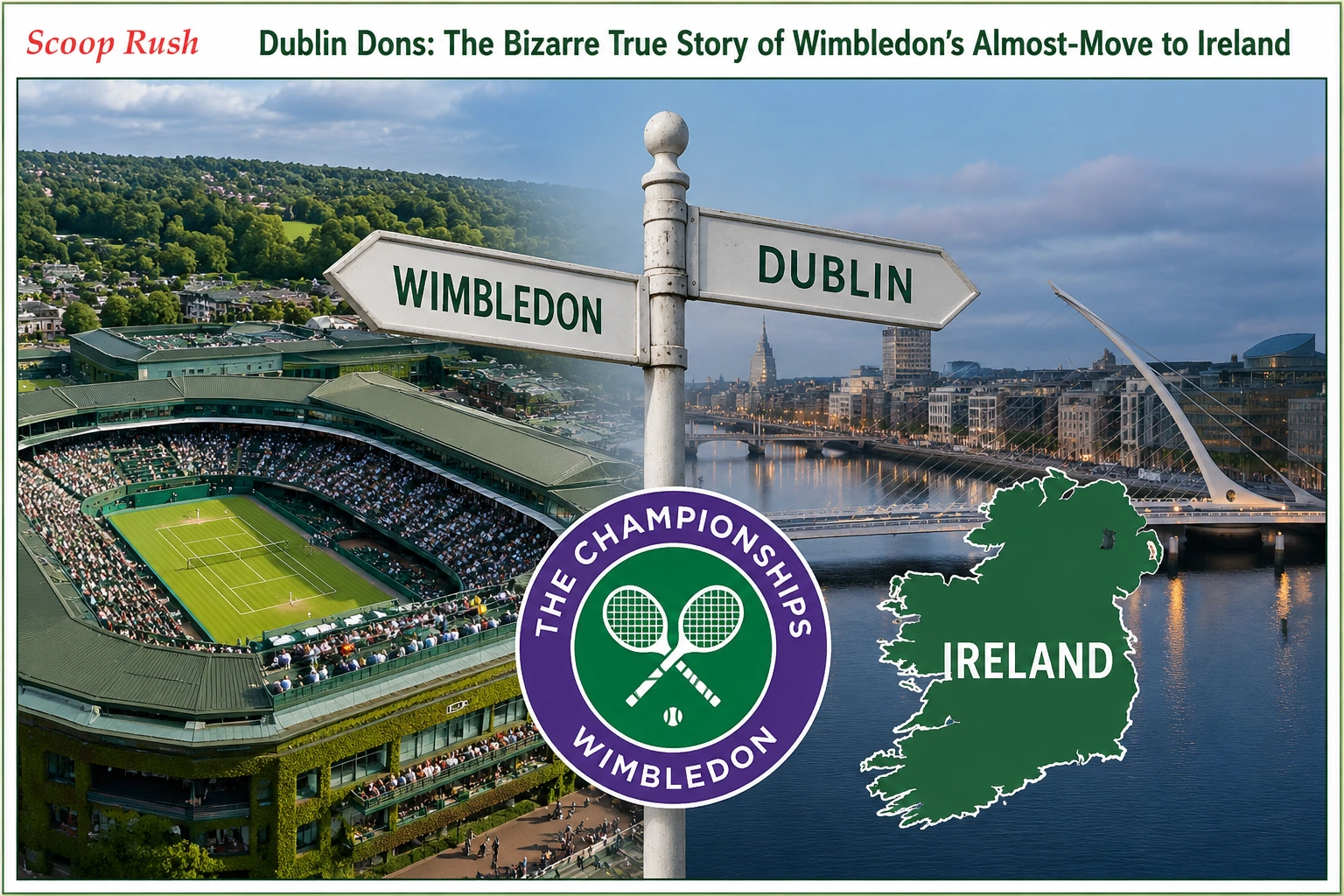
What if a Premier League club had called Dublin home instead of London? It sounds like fantasy football talk. But in the mid-1990s, a group of Irish businessmen came remarkably close to turning Wimbledon FC into the Dublin Dons. The plan collapsed. Yet three decades later, the Dublin Dons story remains one of English football’s most fascinating what-ifs.
Today, thousands of Irish fans cross the sea every fortnight to watch Premier League football live. Record crowds recently packed Croke Park and the Aviva Stadium for pre-season friendlies. This proves Ireland’s appetite for top-flight football has never faded. So it’s worth asking: could a real, permanent Premier League presence in Dublin have actually worked? The Dublin Dons saga suggests the answer might have been yes.
Why the Dublin Dons Plan Still Matters Today
The Dublin Dons plan isn’t just a quirky footnote in football history. It’s a story about ambition, timing, and a missed opportunity that still shapes conversations about Irish football. Understanding how close Wimbledon came to relocating helps explain why the club eventually left London for Milton Keynes. It also explains why a grassroots movement rose from the ashes to create AFC Wimbledon.
For Irish football fans, the Dublin Dons tale raises bigger questions too. What might have happened to the League of Ireland? Would the national team’s profile have grown even further had a Premier League club set up shop on home soil?
How the Dublin Dons Idea First Started
A Club Without a Home
The Dublin Dons story begins with Wimbledon’s long-running housing problem. Chairman Sam Hammam bought the club in 1981. However, plans for a new all-seater stadium in Merton never got off the ground. As a result, Wimbledon shared a ground with Crystal Palace at Selhurst Park from 1991 onward. The arrangement pleased no one.
Kenny Cunningham, the Dublin-born full-back who joined Wimbledon from Millwall in 1994, remembers the awkward atmosphere well. Palace fans constantly hurled abuse at Wimbledon, calling them squatters. Cunningham felt little respect from the home crowd, though he suspects some of it was only half in jest.
Despite the uncertainty off the pitch, Wimbledon thrived on it. Under former Republic of Ireland international Joe Kinnear, the club moved past its rowdy, FA Cup-winning era of the 1980s, once nicknamed by fans and media at the time. Even so, the team remained genuinely competitive, finishing sixth in the 1993-94 season.
Still, the ground issue loomed over everything. Cunningham remembers constant speculation among players. Would they return to Plough Lane? Would they find another groundshare deal instead?
A Chance Meeting That Sparked the Dublin Dons Bid
The seeds of the Dublin Dons plan were planted almost by accident. A Sunday newspaper detailed Hammam’s frustrating standoff with Merton Council over the stadium issue. Tommy Higgins, then working with Ticketmaster Ireland, spotted an opportunity.
Higgins knew that property developer Owen O’Callaghan already held planning permission for a 40,000-seater stadium on the outskirts of Dublin. The project simply needed a tenant to anchor it. A stadium without a club, a club without a stadium. The pieces seemed to fit perfectly.
An initial meeting with Hammam’s brother went nowhere. Then fate intervened. Higgins and businessman Maurice Cassidy ran into former Ireland international and broadcaster Eamon Dunphy on the streets of Dublin. U2 manager Paul McGuinness was standing right beside him. That chance encounter brought together a genuinely heavyweight Irish consortium ready to give the Dublin Dons plan a real shot.
The Premier League’s Changing Landscape in the 1990s

To understand why the timing felt right, it helps to look at English football during the mid-1990s. The game was shifting away from the shadows of the Bradford City fire, Heysel, and Hillsborough. Meanwhile, the wave of foreign ownership that would later transform the sport, starting with Roman Abramovich’s Chelsea takeover, was still years off.
The Premier League itself was becoming a genuinely global product. Players like Jurgen Klinsmann, Dennis Bergkamp, and Juninho had already made moves to England that would have seemed unthinkable just a few years earlier.
On 17 August 1996, the opening day of that season, Gianfranco Zola and Fabrizio Ravanelli arrived as the league’s newest imported stars. Yet a home-grown talent stole the spotlight that day instead.
David Beckham’s audacious lob from the halfway line against Wimbledon at Selhurst Park remains one of the most replayed goals in Premier League history. Cunningham, asked about the strike years later, laughed off any blame. He admitted the cameras caught him standing in the corner of the shot, but he insisted he held no responsibility for that particular goal. For him, the moment captured the excitement building around the league right as the Dublin bid was taking shape.
The Irish consortium sat in the crowd at that very match. They were finalising a bid worth £6m for 74% of Wimbledon.
How the Dublin Dons Bid Split Opinion
Mixed Reactions From Players and the Media
Once news of the bid broke publicly, reaction split immediately. Cunningham remembers many people dismissing the idea outright. They simply couldn’t picture a Premier League team based in Dublin.
Cunningham also credits Hammam’s instinct for publicity. The chairman always found ways to generate headlines beyond matchday results, he noted. At first, Cunningham wondered whether the Dublin plan was just another attention-grabbing move. Then Kinnear made clear the ownership group was completely serious.
Being Irish himself, Cunningham understood the appeal immediately. Some of his English teammates struggled to grasp it, though. He remembers teammates asking, half-jokingly, whether Dublin even offered a decent night out, as if the city sat on the other side of the world.
However, not everyone shared that enthusiasm. Hammam believed convincing fellow club owners and broadcasters would prove straightforward. Winning over the fans, on the other hand, would take far more work.
Wimbledon Fans Reject the Dublin Move
Long-time supporter Ivor Heller had followed Wimbledon since their non-league days in the 1970s. He firmly opposed the move. Heller understood the business logic; after all, fans of the biggest clubs would relish an away trip to Dublin. Still, for him personally, the move represented the end of the football club as he knew it, regardless of which city it landed in.
Heller ran a printing business at the time. He produced placards for display at Selhurst Park that bluntly summed up the fanbase’s mood: “Dublin = Death.”
Meanwhile, opposition to the Dublin Dons plan wasn’t limited to supporters. The Football Association of Ireland pushed back strongly against the proposal too.
Why the FAI Opposed the Dublin Dons Move
The consortium believed a Premier League club in Dublin would lift Irish football as a whole. Kinnear even envisioned a wave of Irish internationals becoming realistic transfer targets. The FAI, however, feared the opposite outcome. They worried a Premier League presence would strangle the domestic League of Ireland instead of helping it.
Higgins, who later became chairman of League of Ireland club Sligo Rovers, still believes the concept was genuinely strong. He points to the timing: the plan arrived during the peak of Jack Charlton’s Ireland side, fresh off appearances at Italia ’90 and USA ’94. Dublin, he argues, missed a real chance to host a mini-international fixture every other week.
Looking back, Higgins believes the move could have transformed Irish soccer entirely. He claims the FAI focused too narrowly on the immediate threat rather than the bigger picture. He also points to how rugby and the GAA have since dominated sponsorship and broadcast revenue in Ireland, arguing that soccer lacked the vision to attempt something genuinely transformative when the chance arose.
How the Dublin Dons Deal Ultimately Collapsed
In the end, none of the opposition actually killed the Dublin Dons plan. The deal simply died from a lack of communication. After 18 months of negotiations, contact with Hammam went cold. Calls stopped coming back. Correspondence went unanswered.
Higgins still keeps the unsigned contract among his files today. He discovered the outcome almost by accident, while walking through an airport the following year. He looked up at a television screen and saw the news: Hammam had sold 80% of Wimbledon to Bjorn Rune Gjelsten and Kjell Inge Rokke for £26m, more than four times the amount the Irish consortium had offered.
A shopping centre now occupies the site where the proposed Dublin stadium once stood.
What Happened to Wimbledon After the Dublin Dons Plan Failed
Dublin never got its Premier League club. Ironically, Wimbledon didn’t keep their own identity either. The club relocated to Milton Keynes in 2004, becoming what is now known as MK Dons.
From the community left behind, a new club rose from the ground up. Supporters founded AFC Wimbledon that same year. The club started life in the ninth tier of English football, with Heller among its four co-founders.
Three decades after the first Dublin rumblings, AFC Wimbledon now competes in League One. The club has since returned to its spiritual home near Plough Lane.
Cunningham views that rebirth as the club’s greatest achievement, ranking it above any cup run or league finish. Surviving relegation after relegation and clawing back up the pyramid, he says, represents success every single time the team takes the pitch.
As for the Dublin Dons plan itself, Cunningham now describes it as a mix of nostalgia and quiet regret over a genuine missed opportunity. He remains convinced the idea would have worked. He also believes fans would have ultimately rowed in behind it, had the move actually gone ahead.
Key Takeaways
The Dublin Dons saga offers a rare glimpse into a genuinely serious attempt to relocate a Premier League club overseas. This happened decades before such ideas became common in global football discussions. Several factors ultimately doomed the plan.
Fan opposition ran fierce and organised, symbolised by Heller’s blunt “Dublin = Death” placards. Additionally, the FAI viewed the move as a threat to Irish domestic football rather than a boost. Ultimately, though, protest didn’t kill the deal. Hammam simply went silent and sold the club to new owners for a far higher sum than the Irish consortium had offered.
Today, Irish fans still travel in huge numbers to watch Premier League football live. Record crowds continue to turn out for one-off friendlies in Dublin. As a result, the Dublin Dons story feels more relevant than ever. It raises a lasting question: was this a wild idea rightly rejected, or a genuine missed chance to reshape football on the island of Ireland?
Frequently Asked Questions
What was the Dublin Dons plan?
The Dublin Dons plan was a mid-1990s proposal by an Irish business consortium to relocate Wimbledon FC from London to a purpose-built 40,000-seater stadium on the outskirts of Dublin, making it the city’s own Premier League club.
Who was behind the Dublin Dons bid?
The consortium included Tommy Higgins, businessman Maurice Cassidy, broadcaster and former Ireland international Eamon Dunphy, and U2 manager Paul McGuinness. Together, they planned to bid £6m for 74% of Wimbledon.
Why did the Dublin Dons deal collapse?
After 18 months of negotiations, Wimbledon chairman Sam Hammam stopped responding to the consortium. He instead sold 80% of the club to Bjorn Rune Gjelsten and Kjell Inge Rokke for £26m, more than four times the Irish group’s offer.
How did Wimbledon fans react to the Dublin Dons proposal?
Reaction was largely negative. Long-time supporter Ivor Heller and fellow fans produced placards reading “Dublin = Death” and displayed them at Selhurst Park to protest the idea.
What happened to Wimbledon after the Dublin Dons plan fell through?
Wimbledon eventually relocated to Milton Keynes in 2004, becoming MK Dons. In response, supporters founded AFC Wimbledon that same year, starting in the ninth tier of English football before working their way back up to League One and returning near their original Plough Lane home.

