
Picture this: you’re two days out of surgery, your stomach is still staging a small rebellion, and your doctor hands you one word of advice “bland.” No garlic, no hot sauce, no crunchy salads, no coffee. For a second, it feels like a life sentence of dry toast and disappointment.
Take a breath. A bland diet isn’t a punishment it’s more like hitting the reset button on your gut. Think of it as putting your digestive system in a comfy recliner instead of asking it to run a marathon. And once you know which foods soothe your stomach and which ones stir up trouble, you’ll realize there’s a lot more on the menu than bananas and toast. You can still eat real, satisfying meals just smarter ones.
Stick with us. By the end of this guide, “bland” won’t sound like a life sentence anymore it’ll sound like a game plan.
What Is a Bland Diet, Really?
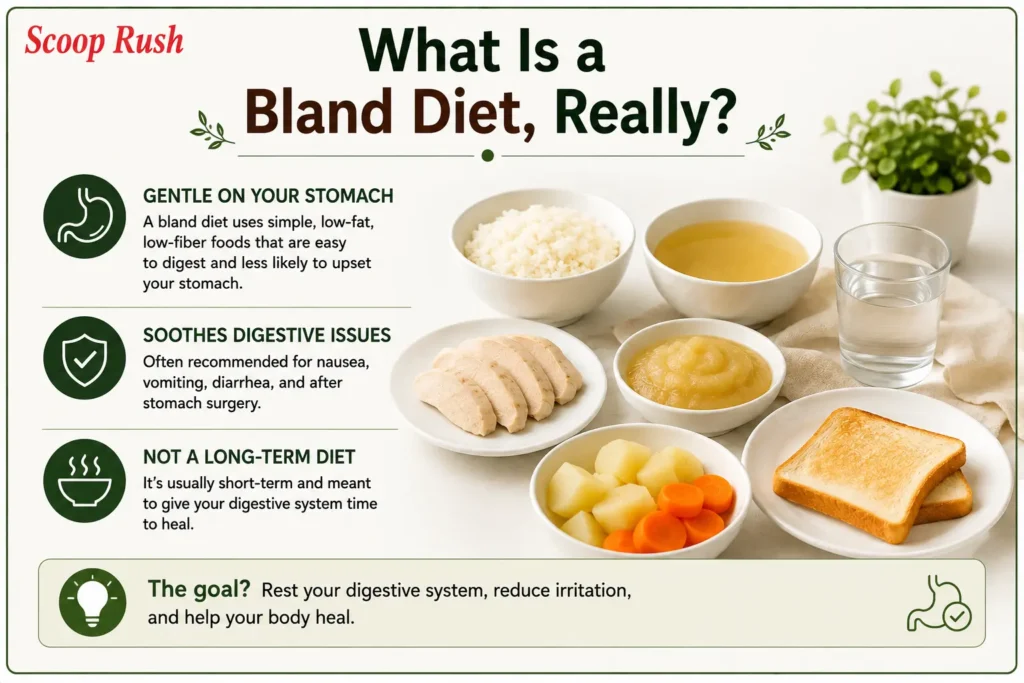
Strip away the medical jargon, and a bland diet is really just an eating pattern built around foods that are gentle, easy to digest, and low in fiber, fat, and spice. The goal isn’t to murder every ounce of flavor in your food it’s to remove the specific troublemakers that irritate an already-sensitive digestive tract: heavy seasoning, grease, tough fiber, and anything that revs up acid production or digestion speed.
You may also hear it called the soft diet, and plenty of people confuse it with the BRAT diet (bananas, rice, applesauce, toast). But BRAT is really just a stripped-down starting point the “safe room” you retreat to for a day or two. The real bland diet is far more generous than four foods. It spans dairy, protein, grains, fruit, and vegetables, as long as each one shows up on your plate the right way.
Who Actually Needs to Eat Bland and Why?
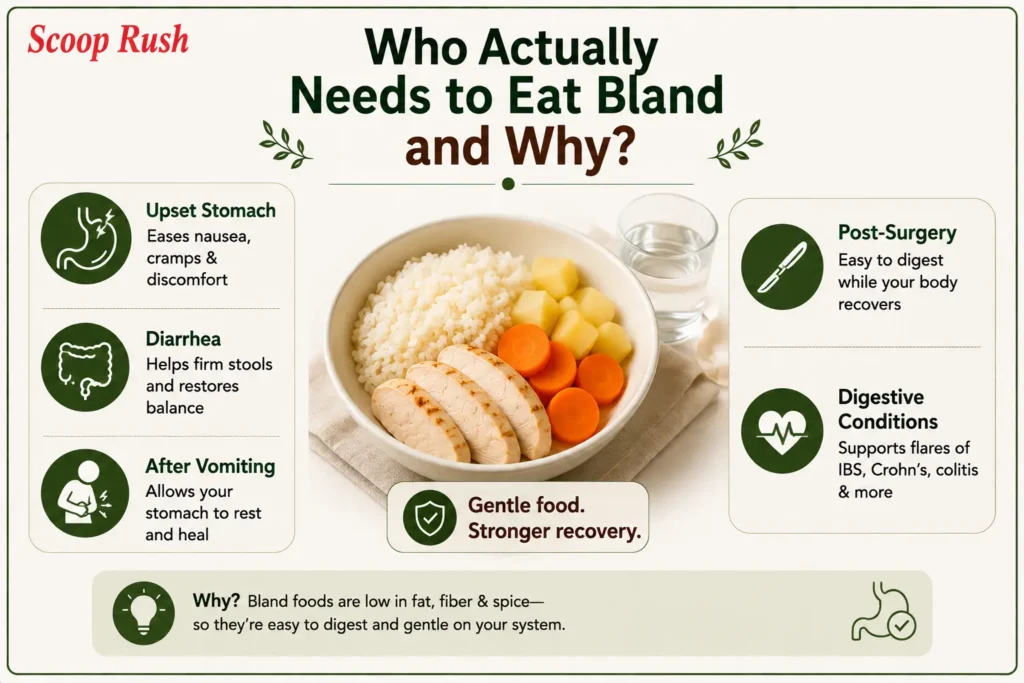
Doctors and dietitians reach for the bland diet whenever they want to calm inflammation, take pressure off your gastrointestinal (GI) tract, and let it heal in peace. It shows up again and again for people dealing with:
- Gastritis or stomach ulcers
- Acid reflux or GERD
- Recovery after GI surgery or a colonoscopy
- Diverticulitis
- Nausea, vomiting, or diarrhea from illness or food poisoning
- Morning sickness during early pregnancy
- Chemotherapy-related digestive side effects
- Mouth or throat sores that make chewing painful
Here’s the thing about a gut in any of these states: it’s already running on fumes. Throw spicy, fatty, or high-fiber food at it, and you’re basically asking a tired engine to floor it uphill. The result? More bloating, more heartburn, more gas, more pain. A bland diet puts your gut on light duty so it can actually catch up and heal.
And here’s the part that should make you feel better right away this is almost always temporary. Most people follow it strictly for a matter of days, maybe a couple of weeks at most, before slowly working regular foods back in as symptoms fade and their care team gives the nod.
The Simple Science Behind Why It Works
There’s nothing mystical about bland food it works because it tackles three specific sources of stress on your gut at once.
- Mechanical irritation: tough, fibrous, or raw foods are simply harder for your body to physically break down.
- Chemical irritation: spice, acid, caffeine, and alcohol all stimulate stomach acid or inflame tissue that’s already on edge.
- Peristalsis: this is the wave-like muscle motion pushing food through your intestines. Soft, low-fiber foods slow that motion down just enough to give your GI tract a genuine break instead of keeping it in constant motion.
Cut back on all three at once, and your gut finally gets the breathing room it needs to repair itself.
The Bland Diet Food List: What You Can Actually Eat
Here’s the good news nobody tells you upfront: the “allowed” list is far longer than you’d expect. The secret isn’t the ingredient it’s the preparation. Cooked instead of raw. Plain instead of seasoned. Lean instead of fatty. Get those three swaps right, and a huge amount of your normal diet is still fair game.
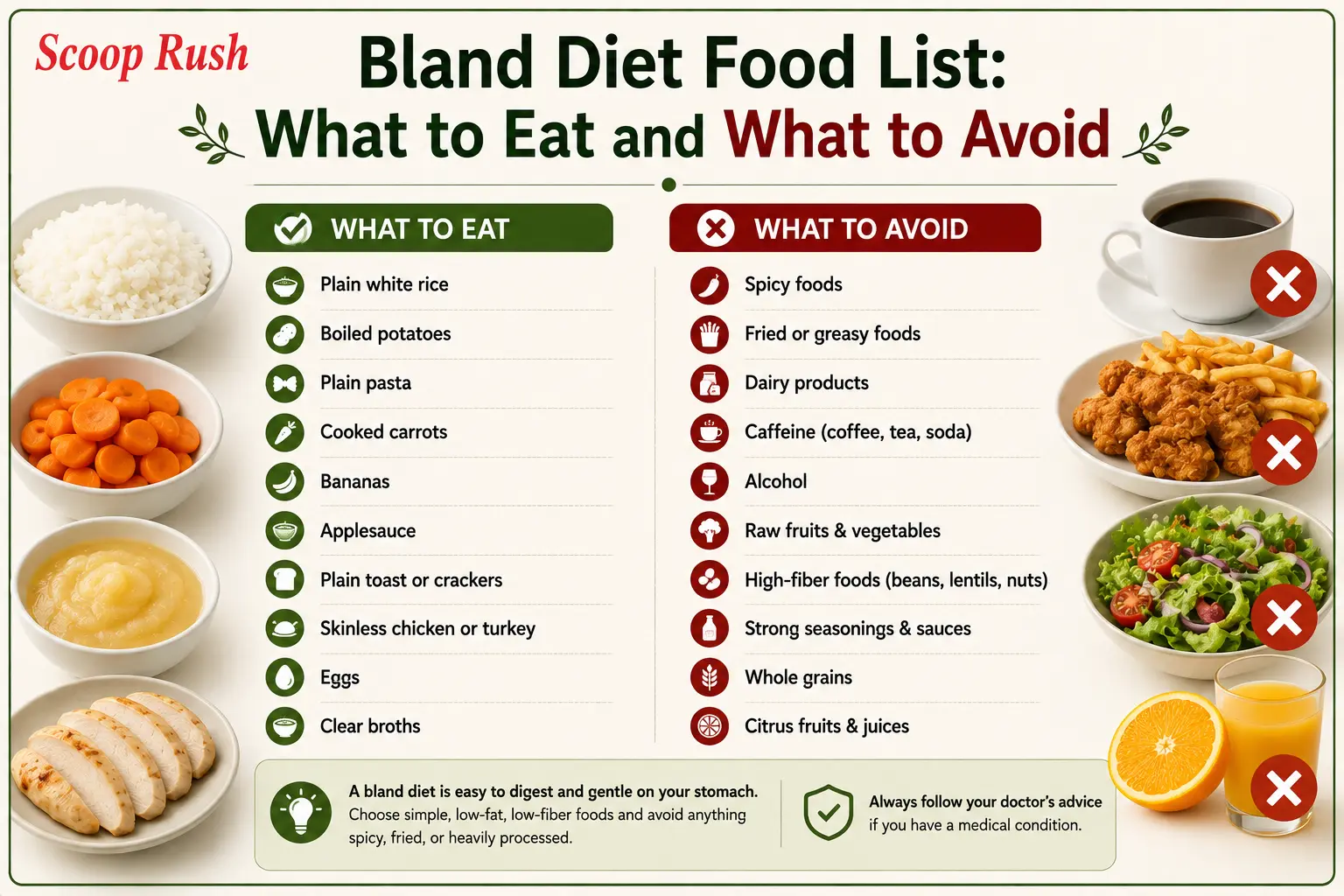
| Food Group | Good Choices |
| Grains & Starches | White bread, white rice, plain pasta, crackers, plain oatmeal, potatoes, low-fiber cereal |
| Dairy & Alternatives | Low-fat milk, mild cheese (mozzarella, ricotta, cottage cheese), plain yogurt, rice or almond milk |
| Protein | Skinless baked or poached chicken, mild white fish, eggs, tofu, smooth peanut butter |
| Vegetables | Cooked carrots, spinach, squash, green beans, potatoes (well-cooked, not raw or fried) |
| Fruit | Bananas, applesauce, canned or cooked fruit, melon, ripe peeled fruit without seeds |
| Fats | A light drizzle of olive oil or butter, used sparingly |
| Beverages | Water, herbal tea, diluted non-citrus juice, caffeine-free drinks |
| Seasonings | Salt, a little pepper, basil, dill, parsley, ginger — used lightly |
A few things worth tattooing on your kitchen wall:
- Refined beats whole grain, for now. Whole-wheat bread and brown rice are nutritional all-stars in normal life, but their fiber content makes them a headache to digest mid-flare-up. Go white temporarily you can switch back later.
- Keep protein lean and simply cooked. Baking, poaching, steaming, boiling these are your new best friends. Frying just adds fat your gut doesn’t need right now.
- Vegetables need to surrender their crunch. Raw veggies are fibrous and stubborn to digest, so cook everything until it’s genuinely soft, not just lightly steamed.
- Fruit gets a little more freedom. Many soft fruits, like a ripe banana, don’t need cooking at all. Just steer clear of anything acidic, seedy, or tough-skinned.
Foods to Avoid on a Bland Diet
If the “eat” list is about gentle preparation, the “avoid” list is about three repeat offenders: spicy, fatty, and high-fiber. Here’s exactly what needs to sit out on the sidelines while your gut heals.
| Food Group | Foods to Avoid |
| Grains | Whole-wheat bread, brown rice, quinoa, bran cereal, anything with more than 5g of fiber per serving |
| Dairy | Full-fat milk, cream, dairy-based ice cream, strong or aged cheeses |
| Protein | Fatty or marbled meat, poultry with the skin on, fried meat, sausage, cured or smoked meats |
| Vegetables | Raw vegetables, fried vegetables, cruciferous vegetables (broccoli, cabbage, cauliflower), onions, garlic, corn |
| Fruit | Citrus fruits, pineapple, berries, dried fruit, anything with tough skins or seeds |
| Fats | Butter in large amounts, mayonnaise, cream-based sauces, fried foods |
| Beverages | Alcohol, coffee, soda, and other caffeinated or carbonated drinks |
| Seasonings | Hot sauce, chili powder, curry, black pepper in large amounts, pickles, horseradish |
Sugary treats cookies, cake, candy, the whole dessert aisle deserve a special mention here too. They’re not just empty calories; they can actively worsen diarrhea and bloating in a gut that’s already struggling.
How to Make Bland Food Taste Like Food Again
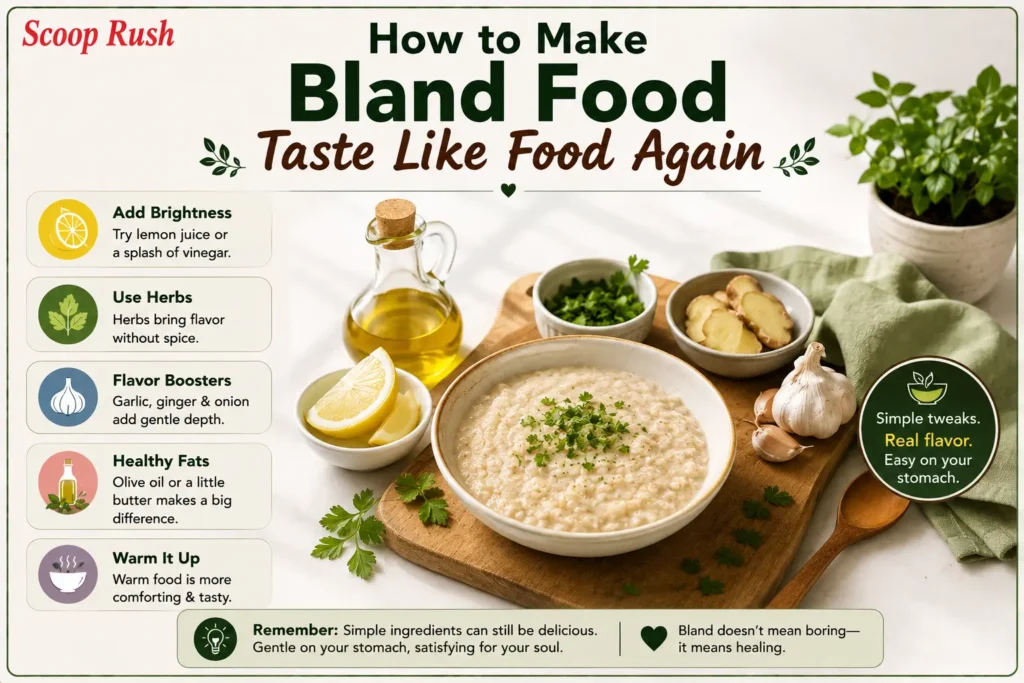
Let’s be honest: the hardest part of this diet usually isn’t discomfort it’s boredom. Eating the same handful of mild foods on repeat gets old fast, and that’s exactly when people start “cheating” and paying for it later. Here’s how to stay interesting without breaking the rules:
- Lean on gentle herbs instead of spice. Basil, dill, parsley, ginger, and a pinch of salt can transform a plain piece of chicken into something you’d actually crave.
- Marinate poultry in mild juices. A quick soak in orange or pineapple juice removed before cooking adds real flavor without leaving behind harsh acidity.
- Rotate your starches like you’re curating a menu. Bounce between rice, potatoes, pasta, and bread so nothing feels like a rerun.
- Eat smaller meals, more often. If nausea or a shaky appetite is the issue, five or six small meals often go down far easier than three big ones.
- Skip drinking large amounts during meals. It keeps you from filling up on liquid instead of the nutrition you actually need.
- Chew like you mean it. The more your teeth do, the less your stomach has to.
- Don’t forget water between meals. Bland, low-fiber eating tends to be binding, so hydration becomes even more important than usual.
Not Every Condition Plays by the Exact Same Rules
Here’s something most generic bland-diet lists skip: the underlying reason you’re on this diet actually shapes how you should approach it. The core principles low fat, low fiber, mild flavor never change, but a few conditions come with their own personal twist.
GERD or Acid Reflux
The real enemy here is acidity and portion size, not just spice. Smaller meals and staying upright for at least an hour afterward can matter as much as what’s on your plate.
Gastritis or Ulcers
The priority shifts to anything that ramps up stomach acid caffeine and carbonated drinks included so spacing meals evenly through the day helps more than people expect.
Recovering from GI Surgery
Don’t rush. Start with clear liquids or very soft foods and progress gradually, because jumping straight to solid, fibrous meals can trigger cramping you really don’t want.
Diverticulitis Flare
Fiber needs to stay especially low until inflammation calms down, and your doctor’s specific timeline for reintroducing it matters more than any generic food list.
IBS
Bland alone won’t guarantee comfort individual trigger foods vary so much that a simple food journal can be more useful than any chart.
Chemotherapy-Related Nausea
Cold or room-temperature foods tend to sit better than hot ones, since strong smells can trigger queasiness fast. A little ginger tea between meals can work wonders.
The takeaway? “Bland” is the starting template, not the whole answer. If you’re managing a specific diagnosis, it’s worth a quick conversation with your doctor or dietitian about whether any of these tweaks apply to you.
What a Full Day of Eating Actually Looks Like
Reading a list of approved foods is one thing. Picturing an actual day of meals is what makes this feel doable. So here’s a realistic rundown, morning to night proof that “bland” doesn’t have to mean “sad.”
Breakfast and Mid-Morning
Start the day with something warm and simple, like plain oatmeal topped with a sliced banana, alongside a glass of low-fat milk. When mid-morning hunger hits, a few plain crackers with a slice of mild cheese does the trick.
Lunch and Afternoon
For lunch, baked chicken breast (skin off, please) paired with mashed potatoes and soft-cooked carrots is filling without being heavy. An afternoon lull calls for something like plain yogurt with a few canned peach slices sweet, cool, and gentle.
Dinner and Evening
By dinner, poached white fish with white rice and steamed spinach rounds things out nicely. And if you need something before bed, plain toast with a thin layer of smooth peanut butter, or a warm glass of milk, closes the day on a comforting note.
Keeping It Fresh the Next Day
The next day, mix it up: eggs instead of oatmeal, tofu instead of chicken, sweet potato instead of white. Rotate your proteins and starches across the week and this stops feeling like a restrictive “diet” and starts feeling like, well, just eating.
Mistakes That Quietly Undo Your Progress
Even with the best intentions, it’s shockingly easy to slip into habits that sabotage a bland diet without realizing it. Keep an eye out for:
- Treating “bland” as an excuse to skip flavor entirely. No herbs, no seasoning at all this often leads to under-eating, which slows down recovery rather than helping it.
- Living on processed “safe” snacks. Plain crackers and pretzels are fine occasionally, but leaning on them as a food group leaves you short on protein and real nutrients.
- Rushing back to regular food too soon. Feeling better for a day doesn’t mean your gut is fully healed. Ease trigger foods back in gradually, not all at once.
- Forgetting to hydrate. Because bland eating tends to be binding, skimping on water is a fast track to constipation.
- Overeating “safe” foods. Even gentle food can cause discomfort in large portions. Smaller, more frequent meals are usually easier to tolerate.
- Ignoring preparation. A vegetable that’s perfectly fine steamed soft becomes a problem the moment it’s fried or served raw. How you cook it matters as much as what it is.
Dodge these traps, and the bland diet actually does its job instead of just feeling like deprivation for nothing.
How Long Should You Actually Stay on This?
For most people, a bland diet is a bridge, not a destination. Depending on why you started, that bridge might be a few days long (a stomach bug) or several weeks long (major GI surgery).
But staying on it longer than necessary comes with its own trade-off. Because it limits whole grains, raw produce, and plenty of high-fiber foods, it’s naturally lighter on certain nutrients fiber, calcium, and vitamin B12 in particular. Extended, overly strict use has even been linked to fatigue and brain fog in some people. That’s exactly why most healthcare providers push for gradually reintroducing regular foods the moment your symptoms allow, rather than white-knuckling the strictest version indefinitely.
If your doctor’s recommended a bland diet for more than a few weeks, it’s worth asking about a reintroduction plan and whether a multivitamin could help cover any nutritional gaps in the meantime.
When “Bland” Isn’t Enough See a Doctor
A bland diet can ease everyday digestive discomfort, but it was never meant to replace real medical care. Reach out to a healthcare provider if you notice:
- Severe or worsening abdominal pain
- Blood in your stool or vomit
- Persistent vomiting or diarrhea lasting more than a couple of days
- Unexplained weight loss
- Difficulty swallowing
- Symptoms that don’t improve despite following the diet closely
These aren’t things to wait out. They’re signs your body needs more than a change in menu.
Conclusion
Going on a bland diet doesn’t mean giving up on flavor or variety it means being a little more intentional about how your food is prepared. Lean proteins, refined grains, cooked vegetables, and soft fruits can still add up to meals you actually look forward to, all while your digestive system gets the break it’s been asking for.
Keep it simple, lean on gentle herbs instead of heavy spice, stay hydrated, and check in with your doctor or a registered dietitian if symptoms persist or you need to stay on the diet longer than expected. With a little planning, “bland” doesn’t have to mean boring it just means kinder to your gut, one meal at a time.
FAQs
Is the bland diet the same as the BRAT diet?
Not quite. BRAT (bananas, rice, applesauce, toast) is a very narrow starting point, often used for a day or two after a stomach bug. The full bland diet is broader and includes dairy, lean protein, cooked vegetables, and more fruit options, making it easier to follow for longer periods without feeling restrictive.
Can I drink coffee or tea on a bland diet?
Caffeinated drinks are typically discouraged because caffeine can stimulate stomach acid and irritate the GI tract. Herbal, caffeine-free teas are usually a safer choice, along with water and diluted non-citrus juice.
How long do I need to stay on a bland diet?
It depends on why you started it. Recovery from a stomach bug might only take a few days, while healing from GI surgery or a flare of gastritis could take a few weeks. Your doctor or dietitian can guide you on when to start reintroducing regular foods.
Can I still lose or maintain weight on a bland diet?
Yes, though it takes a bit more planning. Because many high-fiber, low-calorie foods are limited, focus on portion sizes and nutrient-dense choices like lean protein, dairy, and starches rather than relying only on sugary or fatty “safe” foods.
Are eggs okay on a bland diet?
Yes. Eggs are one of the best-tolerated protein sources on a bland diet they’re soft, low in fiber, and easy to prepare in a mild way, such as boiled, poached, or scrambled with minimal fat.
What can I use for flavor if I can’t have spices?
Mild herbs like basil, dill, parsley, and ginger add flavor without the irritation that comes from heavier spices. A light marinade in mild fruit juice, plus a little salt, can also make simple proteins taste far less “diet food.”
Can I follow a bland diet if I’m pregnant?
Many people use bland-diet principles during the first trimester to manage nausea and food aversions. It’s generally considered safe short-term, but pregnant individuals should still check with their OB-GYN or a dietitian, especially if nausea is severe or prolonged.

