
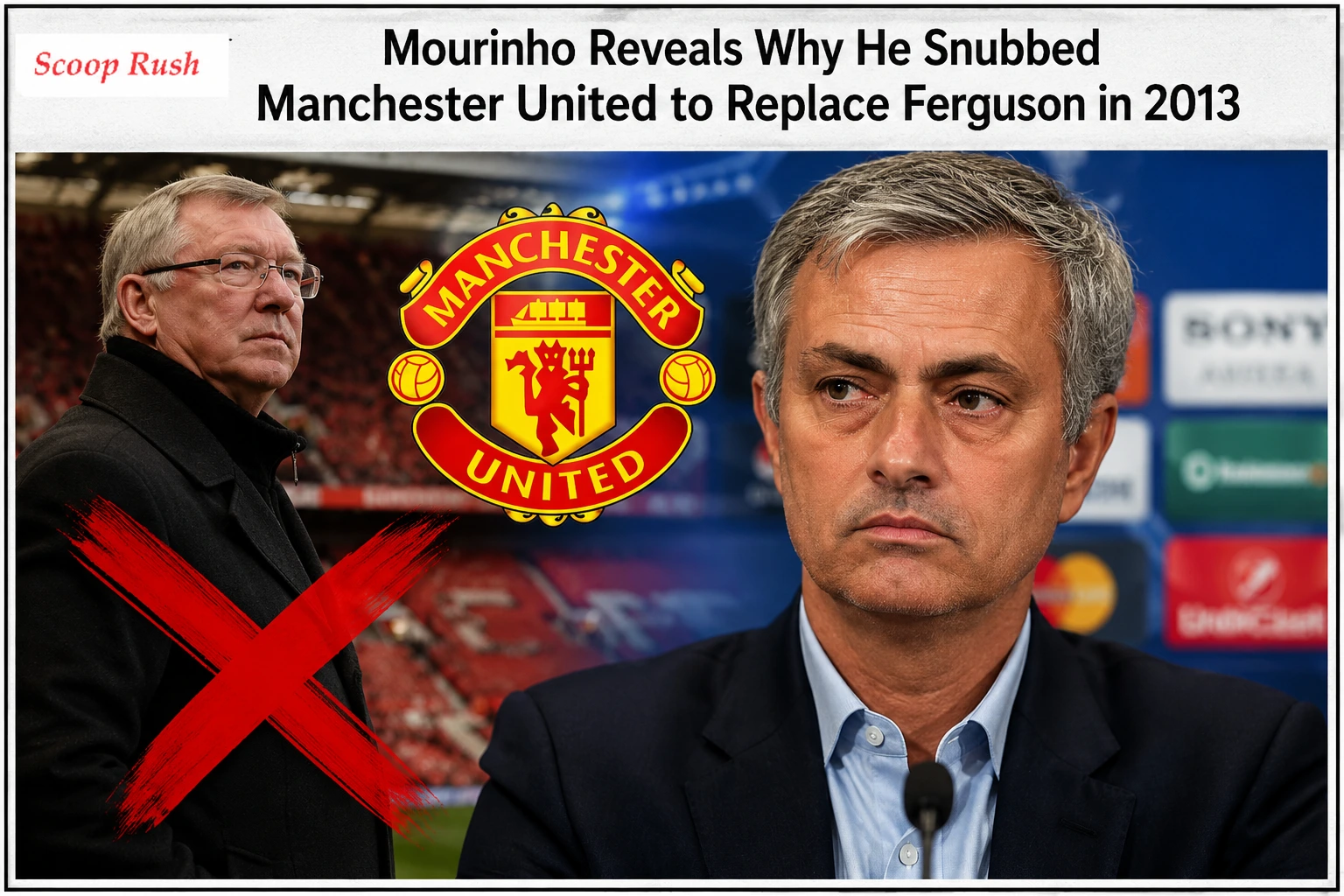
Imagine agreeing to take over from the most successful manager in Premier League history, then changing your mind within hours. That is exactly what happened when Mourinho agreed to replace Ferguson at Manchester United in 2013. More than a decade later, he has finally confirmed the full story of why he backed out.
In a new Netflix documentary about his career, Mourinho revealed that he had agreed to replace Ferguson at Manchester United. However, he backed out at the last moment and returned to Chelsea instead. This decision fueled speculation among football fans for years. Now, both men have spoken openly about what really happened behind closed doors.
This revelation matters because it reshapes a huge piece of Premier League history. Fans have long wondered about United’s alternate future. What if Mourinho had taken the job straight after Ferguson’s retirement in 2013? Instead, David Moyes got the role, and United entered a period of instability that many fans still discuss today. Understanding why Mourinho walked away from the chance to replace Ferguson matters. It gives fans a rare, honest look into the emotional side of football’s biggest decisions.
The Moment Mourinho Agreed to Replace Ferguson at Manchester United
According to Mourinho, the arrangement began after he left Real Madrid in 2013. He explained in the documentary that he signed an agreement after departing the Spanish giants. The deal would see him take over at Old Trafford following Ferguson’s retirement.
Ferguson spent 26 years at Manchester United and won 13 Premier League titles before stepping down in 2013. He confirmed this version of events. He revealed that he had offered Mourinho the job and, as far as he was concerned, Mourinho had accepted it.
However, things changed unexpectedly. Ferguson recalled that within hours of the agreement, the situation shifted entirely. Mourinho phoned him, visibly emotional, and explained that he could not go through with the move.
Why Mourinho Chose Chelsea Over Manchester United
Mourinho’s reasoning centered on loyalty rather than ambition. He said he had already given his word to Chelsea. He felt he could not break that promise, even for a club as prestigious as Manchester United.
Ferguson described the moment vividly, saying Mourinho called him in tears and insisted he had to honor his commitment to Chelsea. Although Ferguson understood the reasoning, he admitted the outcome disappointed him.
This wasn’t simply a career decision for Mourinho. He explained that United’s offer genuinely flattered him, given the club’s global appeal. Yet something deeper pulled him back toward Chelsea. He said love for a specific club can outweigh love for football in general. After a difficult spell at Real Madrid, he needed to feel wanted again. Chelsea, where he had already won back-to-back Premier League titles in 2005 and 2006, offered exactly that feeling.
Mourinho admitted that losing the chance to replace Ferguson felt dramatic at the time. Still, he does not regret the choice, since it came from an emotional place rather than a calculated career move.
What Happened After Mourinho Rejoined Chelsea
Once back at Stamford Bridge in 2013, Mourinho quickly delivered results. He led Chelsea to another Premier League title, along with the League Cup. The success proved his decision had not cost him.
Meanwhile, Manchester United moved forward without him. The club appointed David Moyes as Ferguson’s successor, and that decision ultimately did not work out as United had hoped.
Interestingly, Mourinho eventually did get his chance at Old Trafford. In May 2016, he took over from Louis van Gaal and spent two and a half years managing Manchester United. During that spell, he won the League Cup and the Europa League. However, his time at the club ended in December 2018 following a downturn in results.
Mourinho’s Return to Real Madrid and Old Wounds Reopened
This year, Mourinho returned to Real Madrid for a second spell. The move reopened conversations about his turbulent first stint there. Conflict marked his original departure from the club, particularly with then-captain Iker Casillas and several other senior players.
As Mourinho prepared for his reunion with Real Madrid, Casillas spoke candidly about the tension that defined their relationship. According to Casillas, things between them turned cold, and over time, the strain became impossible to repair.
Former Real Madrid midfielder Sami Khedira supported this account. He explained that the rift between Mourinho and Casillas affected the entire squad. Khedira described a difficult dressing room environment. He noted that fans loved Casillas as a Real Madrid legend, yet Mourinho benched him and reportedly criticized him in the media.
Khedira also claimed the fallout extended beyond Casillas. It damaged Mourinho’s relationships with other key players, including Cristiano Ronaldo and Sergio Ramos. These players, he said, played a vital role in maintaining harmony within the squad. So the breakdown carried wider consequences for team morale.
For his part, Mourinho defended his approach and claimed Casillas had displayed a poor attitude during their time together. He recalled specific conversations with Casillas. The captain allegedly requested extra holidays for national team players, later training sessions due to traffic concerns, and changes to matchday travel routines. As a result, Mourinho said he came to view the squad, or at least certain players, as spoiled.
Casillas additionally revealed friction with Mourinho over how the manager treated Spanish national team players who represented Barcelona. Mourinho remained unapologetic about this stance and explained that club rivalries, particularly with Barcelona, demanded a certain intensity. He described club football as a form of war, separate entirely from national team unity.
Mourinho’s Complicated History With Roman Abramovich
Beyond his relationship with Casillas, Mourinho also opened up about his turbulent partnership with former Chelsea owner Roman Abramovich. Abramovich hired and fired him on two separate occasions.
Mourinho explained that Abramovich brought incredible passion to football but sometimes lacked a deep understanding of footballing decisions. He pointed specifically to the signing of Andriy Shevchenko in 2006. The deal reportedly stemmed more from personal connections than football logic. Shevchenko joined Chelsea for a club-record fee at the time. Yet he managed only nine league goals across three seasons, falling well short of expectations.
According to Mourinho, he never truly wanted to sign Shevchenko and preferred Samuel Eto’o instead. Still, he admitted he never openly said no to the move, so he accepted some responsibility for how it unfolded.
The Champions League Comeback That Meant Everything
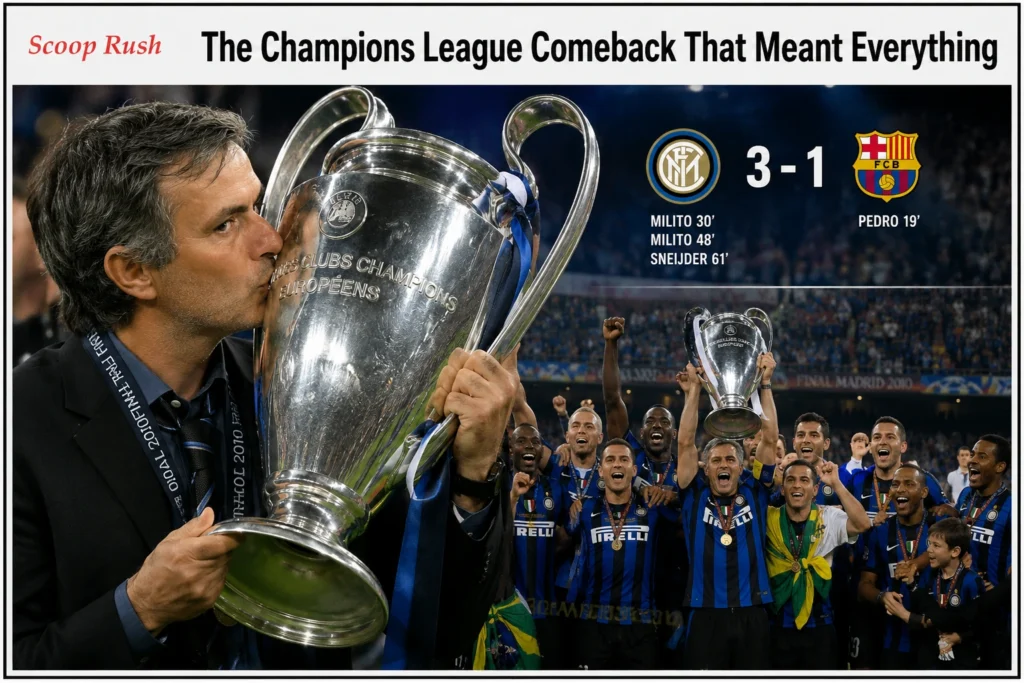
Mourinho’s most emotionally charged moment with Abramovich came after his 2007 sacking. In February 2010, while managing Inter Milan, Mourinho returned to Stamford Bridge for a Champions League last-16 clash against Chelsea. Inter won 2-1 and went on to lift the Champions League title that season.
Mourinho openly admitted that beating Chelsea in that match felt personal. He described the victory as a form of revenge against Abramovich, someone he knew loved winning and loved the club deeply. For Mourinho, the win represented more than football success. It symbolized a reclaiming of respect after feeling wronged.
He extended this sentiment further. Football, he argued, ultimately belongs to the players, coaches, and fans, not to owners he views as outsiders to the sport’s true spirit.
Why the Decision Not to Replace Ferguson Still Matters to Fans Today
Mourinho’s revelations offer more than just historical trivia. They highlight how deeply personal relationships and loyalty shaped some of the biggest decisions in modern football. A single phone call, driven more by emotion than strategy, altered the succession plan at one of the world’s biggest clubs.
Additionally, this story adds new context to United’s post-Ferguson struggles. No one can say for certain how things would have unfolded had Mourinho taken over in 2013. Still, the revelation adds fuel to long-standing debates among fans and pundits.
Furthermore, the insights into Mourinho’s relationships with Casillas and Abramovich paint a fuller picture of his management style. He clearly values loyalty and emotional connection, sometimes even above logic or long-term stability. This pattern appears throughout his career. It runs from his commitment to Chelsea in 2013 to his defense of controversial decisions at Real Madrid.
Key Takeaways
Jose Mourinho confirmed he agreed to replace Ferguson at Manchester United in 2013 before changing his mind within hours. He chose to honor his word to Chelsea instead, a decision that emotion and loyalty drove rather than career strategy. Ferguson confirmed the story and admitted disappointment despite understanding Mourinho’s reasoning.
Mourinho eventually managed Manchester United from 2016 to 2018. His earlier Real Madrid spell had ended amid conflict with Iker Casillas and other senior players. He also opened up about a complicated relationship with former Chelsea owner Roman Abramovich. This included disagreements over transfers and the emotional weight of facing Chelsea after being sacked.
Ultimately, these revelations give fans a rare, honest look into the human side of high-stakes football decisions. They remind everyone that even elite managers weigh loyalty and emotion just as heavily as ambition. That is exactly why Mourinho chose not to replace Ferguson at Manchester United in 2013.
Frequently Asked Questions
1. Did Jose Mourinho really agree to replace Ferguson at Manchester United?
Yes. Mourinho confirmed in a new Netflix documentary that he signed an agreement to take over at Manchester United after leaving Real Madrid in 2013. He changed his decision within hours.
2. Why did Mourinho choose Chelsea over Manchester United in 2013?
Mourinho explained that he had already given his word to Chelsea. He felt he could not break that promise, even though United’s offer flattered him.
3. Did Jose Mourinho ever manage Manchester United?
Yes. Mourinho eventually took charge of Manchester United in May 2016, succeeding Louis van Gaal. He won the League Cup and Europa League before United sacked him in December 2018.
4. What caused the conflict between Mourinho and Iker Casillas?
Their relationship broke down due to disagreements over playing time and dressing room dynamics. Both men later confirmed the relationship had become distant and difficult to repair.
5. Why did Mourinho consider his win over Chelsea with Inter Milan personally?
Chelsea owner Roman Abramovich had sacked Mourinho in 2007. When he returned with Inter Milan in 2010, he beat Chelsea in the Champions League. He described it as a moment of revenge against the man who fired him.in the Champions League, he described it as a moment of revenge against the man who fired him.

