
If you’ve ever doubled over after a rich meal with a sharp, squeezing pain under your right ribs, you already understand why gallbladder health isn’t something to ignore. That kind of pain often triggered by fried chicken, a creamy pasta, or a heavy holiday dinner is your gallbladder waving a red flag. And once you’ve had one attack, the fear of a repeat performance can make every meal feel like a gamble.
The good news is that food is one of the most powerful tools you have for keeping your gallbladder calm. You don’t need a complicated, restrictive plan — you need a clear, realistic menu built around foods that ease digestion instead of overworking it.
That’s exactly what this guide provides: a full 7-day gallbladder-friendly meal plan, along with the “why” behind every food choice, so you’re not just following instructions blindly but actually understanding how to eat for a happier gallbladder long after this week is over.
What Does the Gallbladder Actually Do?
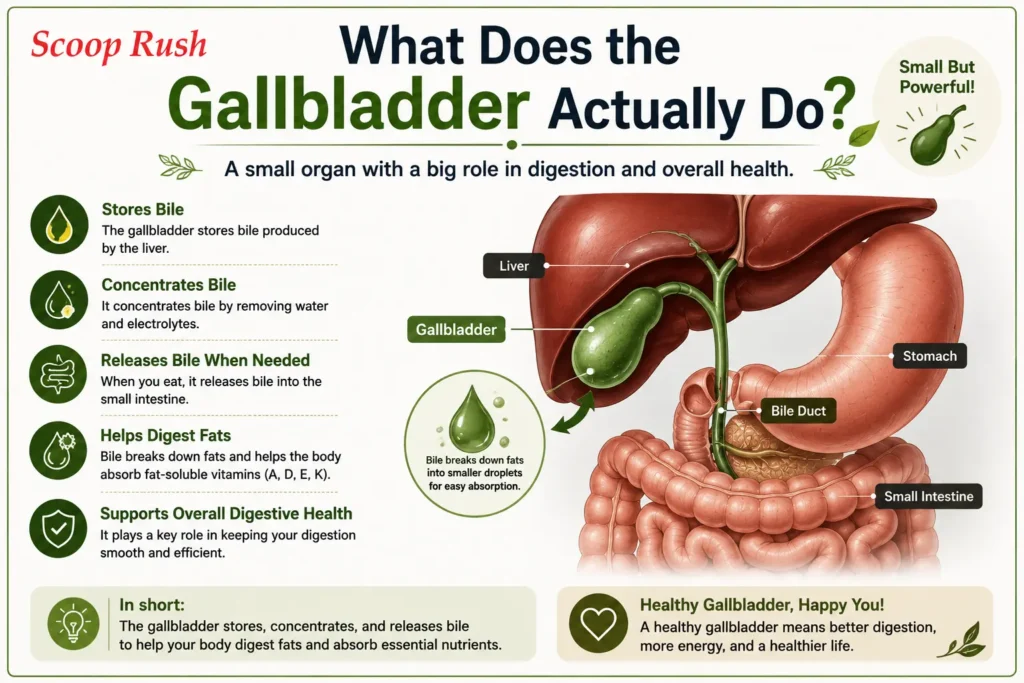
Tucked just beneath the liver, the gallbladder is a small, pear-shaped organ with an outsized job. It stores and concentrates bile a digestive fluid made by the liver and releases it into the small intestine whenever you eat something fatty. Bile acts like a detergent, breaking large fat globules into smaller ones so digestive enzymes can get to work.
The Gallbladder as a Reservoir
Think of the gallbladder as a reservoir. Your liver produces bile continuously, but you don’t need a steady drip of it you need a strong surge right when a fatty meal hits your small intestine.
The gallbladder solves that timing problem. It quietly stores and concentrates bile between meals, then contracts and squeezes out a concentrated dose the moment your body senses incoming fat. It’s an elegant system, and most of us never give it a second thought until something goes wrong.
How Gallstones Form
When everything runs smoothly, you never think about this process. But problems arise when bile becomes too concentrated with cholesterol or bilirubin, forming hardened deposits called gallstones.
These stones can range from as small as a grain of sand to as large as a golf ball, and a person can have just one or dozens at a time. Many people walk around with silent gallstones for years without ever knowing it, because the stones simply sit in the gallbladder without causing trouble.
What Triggers a Gallbladder Attack
The problems start when a stone moves and blocks one of the ducts responsible for carrying bile out of the gallbladder. That blockage causes the gallbladder to contract against resistance, which is what produces the sudden, severe pain known as a gallbladder attack.
Because fat is the primary trigger for bile release, the amount and type of fat you eat has a t This pain is often felt in the upper right abdomen and sometimes radiates to the back or right shoulder blade. Attacks are frequently triggered by a large, fatty meal, since fat is the strongest over 40. Risk climbs steadily as we get older.
Who Is Most Likely to Develop Gallbladder Problems?
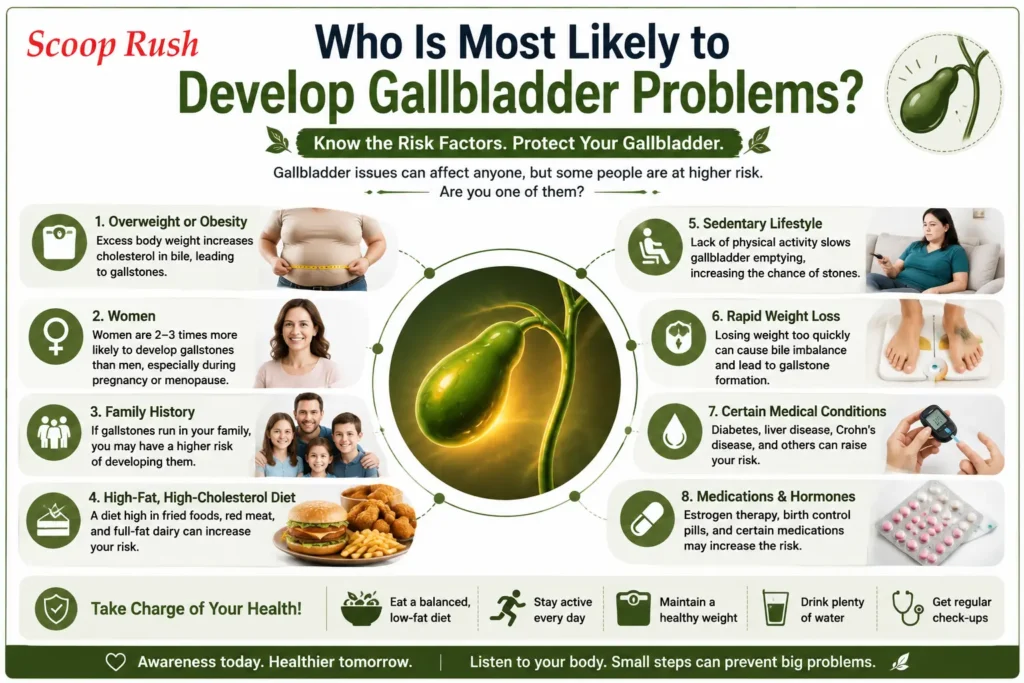
Certain factors raise your risk significantly:
- Being female. Estrogen from pregnancy, birth control, or hormone therapy increases cholesterol levels in bile.
- Age over 40. Risk climbs steadily with age.
- Excess weight. Higher body weight is linked to higher cholesterol in bile.
- Rapid weight loss. Crash diets can cause the liver to dump extra cholesterol into bile faster than the gallbladder can handle.
- Family history. Genetics play a real role.
- Diabetes. Elevated triglycerides are associated with gallstone formation.
- A diet low in fiber and high in saturated fat. This is the factor you control most.
If several apply to you, that’s simply a reason to pay closer attention to how you eat not a reason to panic. Gallstones are extremely common, and most people never even know they have them because the stones cause no symptoms. The issue isn’t the presence of a stone; it’s whether it starts interfering with bile flow.
There’s also a well-documented connection between gallbladder health and metabolic factors like insulin resistance and elevated triglycerides. This is one more reason a diet built around fiber, lean protein, and steady blood sugar isn’t just good general advice it directly targets some of the biological mechanisms behind gallstone formation, not just the symptoms.
The Metabolic Connection
There’s also a well-documented connection between gallbladder health and metabolic factors like insulin resistance and elevated triglycerides. This is one more reason a diet built around fiber, lean protein, and steady blood sugar isn’t just good general advice it directly targets some of the biological mechanisms behind gallstone formation.
The Core Principles Behind a Gallbladder-Friendly Diet
There’s no single “official” gallbladder diet prescribed by medical guidelines, but decades of clinical observation and nutrition research point to a handful of consistent strategies that ease symptoms and lower the risk of new gallstones forming.
1. Keep Fat Moderate, Not Nonexistent
The instinct after a painful gallbladder attack is to cut fat out entirely. But going to zero isn’t necessary or even wise, since your body still needs a certain amount of fat to absorb fat-soluble vitamins like A, D, E, and K. If you’re relying on supplements to fill the gap instead, it’s worth understanding the risks of taking too many vitamins before you overdo it.
Healthy fats in small amounts, like a drizzle of olive oil, a quarter of an avocado, or a spoonful of nut butter, don’t overwhelm the system the way a plate of fried food or a heavy cream sauce does. The goal is moderation and choosing the right kinds of fat, not elimination.
It also helps to think about the type of fat, not just the amount. Monounsaturated fats — found in olive oil, avocado, and most nuts tend to be gentler on digestion and require comparatively less bile to break down than the saturated fats found in fried foods, fatty cuts of meat, and butter.
Spreading small amounts of these gentler fats throughout the day, rather than concentrating fat into one large serving, also makes it easier for the gallbladder to keep up.
2. Make Fiber Your Best Friend
Soluble fiber binds to cholesterol in the digestive tract and helps escort it out of the body before it can concentrate in bile. Foods like oats, beans, lentils, apples, and vegetables should show up at nearly every meal.
Beyond its cholesterol-binding role, fiber also slows the rate at which food moves through the stomach and small intestine, which helps prevent the kind of rapid blood sugar spikes that have been linked to higher gallstone risk.
A simple, sustainable target is to include at least one fiber-rich food at every meal a scoop of beans in a salad, a side of steamed vegetables with dinner, or a piece of whole fruit with breakfast. Over the course of a day, these small additions add up to a meaningful amount of fiber.
That said, if you’re recovering from a flare-up or a procedure, you may temporarily need a gentler approach, such as a low-residue diet, before building fiber back up.
3. Eat Smaller Meals, More Often
A gallbladder recovering from irritation does better with frequent, modest portions than with three large meals. Smaller meals mean smaller, more manageable releases of bile, which reduces strain on the organ.
Large meals especially ones heavy in fat demand a bigger, more forceful gallbladder contraction, and that forceful squeeze is often exactly what triggers pain in a gallbladder that’s already inflamed or partially blocked by a stone.
Aiming for five or six smaller meals and snacks throughout the day, spaced roughly three to four hours apart, tends to be far more comfortable than the traditional three-meals-a-day structure, at least while symptoms are active.
4. Choose Lean Protein
Skinless poultry, egg whites, white fish, tofu, and legumes provide the protein your body needs for repair and satiety without the saturated fat load of fatty cuts of red meat or processed deli meat.
Protein is also important because it helps you feel full on smaller portions, which supports the smaller-meals strategy described above rather than working against it.
When cooking protein, technique matters as much as the ingredient itself. Grilling, baking, steaming, and poaching all avoid the added fat that comes from pan-frying or deep-frying, and they tend to preserve more of the food’s natural moisture and flavor.
5. Stay Hydrated
Water helps keep bile fluid and less prone to forming the sludge that can precede gallstones. Sipping water or herbal tea between meals rather than in large amounts during meals, which can dilute digestive juices supports steady digestion.
Many people underestimate how much plain water actually supports digestive comfort. A good baseline goal is to sip consistently throughout the day rather than trying to catch up with a large amount all at once in the evening.
6. Watch for Personal Triggers
Not every “gallbladder-safe” food agrees with every person. Some people tolerate raw vegetables, garlic, or coffee just fine; others find these foods aggravate their symptoms. Pay attention to your own patterns and adjust accordingly.
This is one of the most overlooked pieces of gallbladder nutrition advice: generic meal plans, including the one in this article, are a starting template, not a universal rulebook. Your own digestive history is the most valuable data you have.
Foods to Limit or Avoid
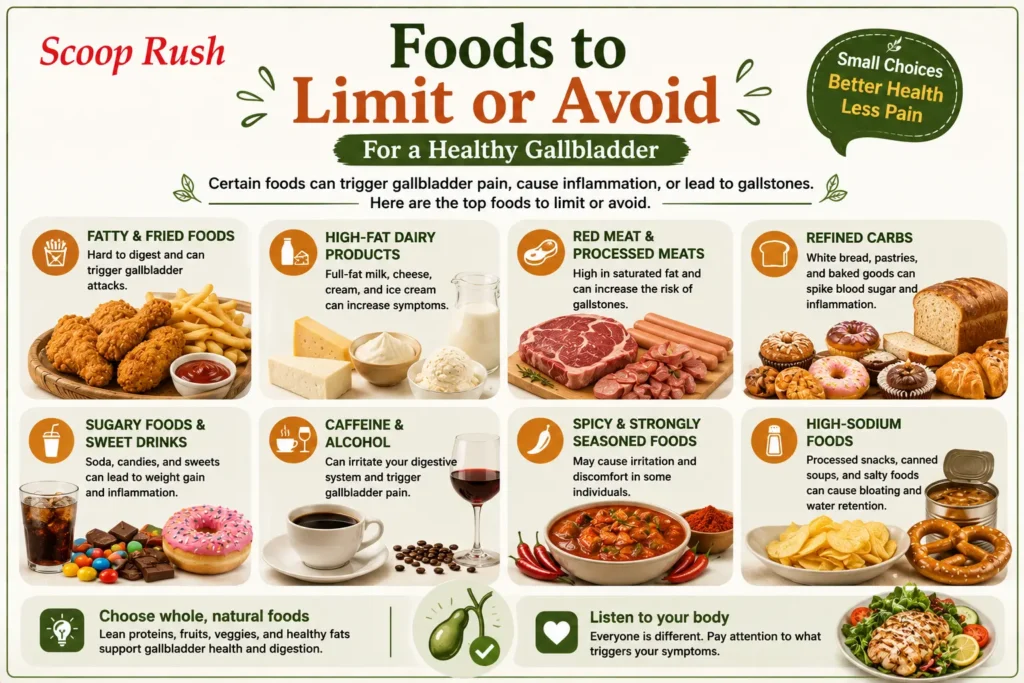
While no food is universally forbidden, these categories are the most common troublemakers for a sensitive gallbladder. Understanding why they’re problematic makes it much easier to spot hidden offenders that aren’t on this list.
Fried foods (French fries, fried chicken, doughnuts). Frying doesn’t just add fat it adds a large amount of fat in a single, concentrated bite, which demands a strong, sudden bile release that an inflamed or blocked gallbladder often can’t comfortably provide.
Fatty cuts of red meat, bacon, sausage, and processed deli meats. These are dense in saturated fat, which has been linked to higher cholesterol concentration in bile compared to unsaturated fats from plant sources or fish.
Full-fat dairy, including whole milk, cream, and regular cheese. Dairy fat is almost entirely saturated fat, and it’s easy to consume more of it than you realize a splash of cream in coffee, a handful of shredded cheese, and a scoop of ice cream add up quickly.
Creamy sauces, gravies, and heavy salad dressings. These often hide behind an
otherwise healthy-looking meal. A grilled chicken salad can go from gallbladder-friendly togallbladder-triggering with a few tablespoons of ranch or Caesar dressing. Baked goods made with butter or shortening (pastries, croissants, muffins). Beyond the fat content, many of these are also made with refined flour, which lacks the fiber that would otherwise help offset some of the digestive burden.
Highly processed snack foods. Chips, crackers, and packaged snack cakes frequently combine refined carbohydrates with hidden fats and sodium, a combination that offers little nutritional benefit while still taxing digestion.
Sugary drinks. While sugar itself isn’t a direct bile trigger the way fat is, the resulting weight gain and blood sugar swings are both independently associated with higher gallstone risk over time. If you’re looking for a swap, it helps to understand how diet soda affects weight loss before assuming any diet soda is automatically a better choice.
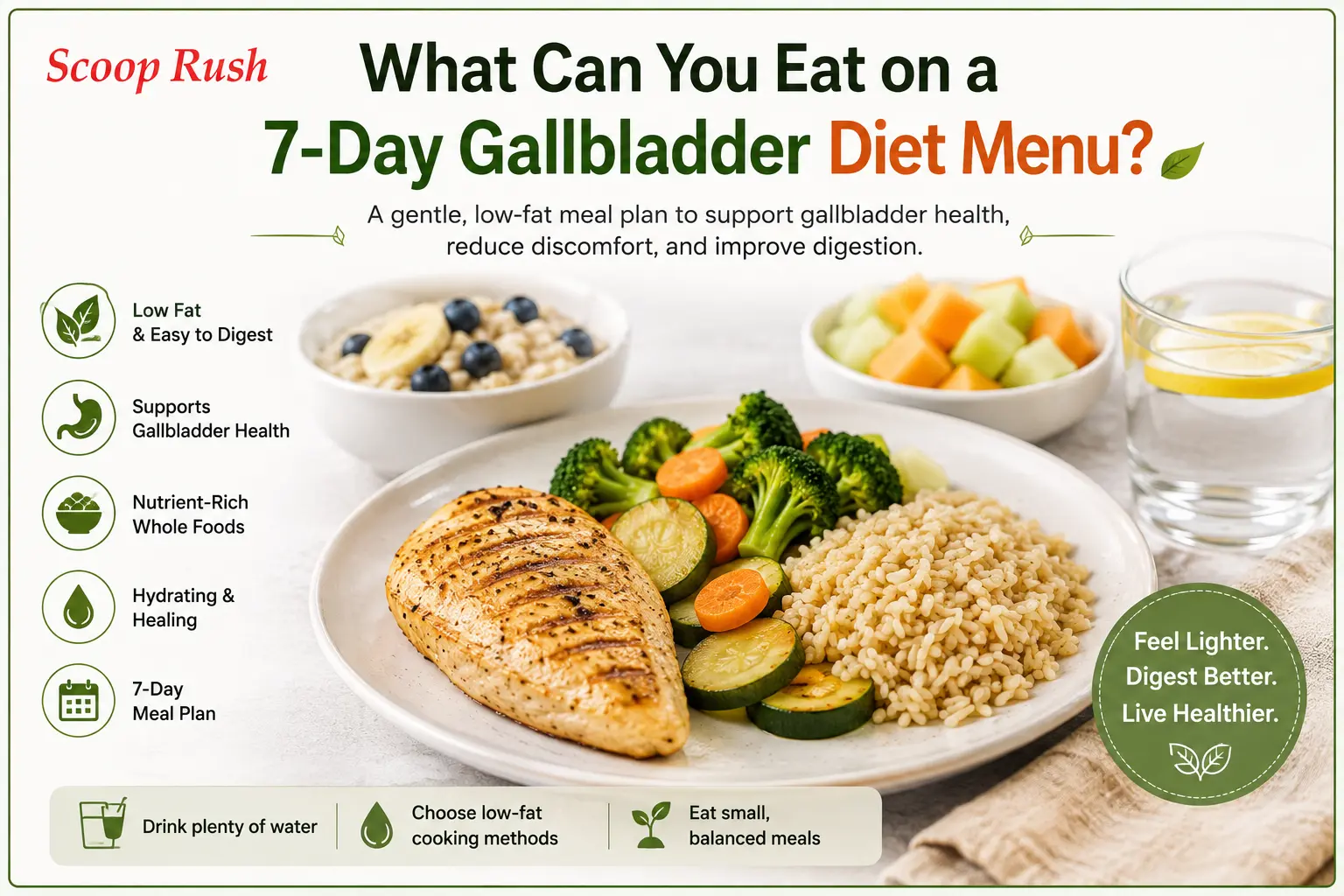
Your 7-Day Gallbladder Diet Menu
Below is a full week of meals designed around lean protein, high fiber, and gentle, minimally processed fats. Each day mixes familiar comfort foods with lighter preparations, so the plan feels sustainable rather than like a punishment.
You’ll notice a pattern across the week: breakfasts lean on oats, egg whites, fruit, and yogurt; lunches rotate between salads, wraps, and soups; and dinners center on a lean protein paired with a whole grain and a vegetable. Once you see that pattern, it becomes much easier to build your own gallbladder-friendly meals beyond this single week. If you also need to avoid gluten, many of these ideas can be adapted using this list of gluten-free breakfast ideas.
Portion sizes should be adjusted to your own appetite and any guidance from your healthcare provider the idea is a template, not a rigid script. Try to space meals roughly three to four hours apart, and keep snacks small enough that they support your next meal rather than replacing it.
Day 1
Breakfast: Rolled oats cooked in skim or unsweetened plant milk, topped with sliced banana and a pinch of cinnamon.
Lunch: A large bowl of shredded romaine and baby spinach with grilled, skinless chicken breast, cherry tomatoes, and shredded carrots, dressed lightly with lemon juice and a teaspoon of olive oil.
Dinner: Baked cod with a squeeze of lemon, served alongside steamed green beans and a small portion of brown rice.
Snack: A small container of plain, low-fat Greek yogurt with a handful of blueberries.
Day 2
Breakfast: Two scrambled egg whites with diced bell pepper and spinach, served with a slice of whole-grain toast.
Lunch: A whole-wheat wrap filled with sliced roasted turkey breast, mustard, lettuce, and cucumber.
Dinner: Stir-fried tofu with broccoli, snap peas, and carrots in a light garlic-ginger sauce, served over brown rice.
Snack: Apple slices with a thin spread of almond butter (about one teaspoon).
Day 3
Breakfast: A smoothie made with unsweetened almond milk, frozen mixed berries, a small banana, and a tablespoon of ground flaxseed.
Lunch: Lentil soup with carrots, celery, and onion, simmered in low-sodium vegetable broth, served with a few whole-grain crackers.
Dinner: Grilled chicken breast seasoned with rosemary and thyme, paired with roasted sweet potato and a simple cucumber-tomato salad.
Snack: Sliced cucumber and bell pepper with two tablespoons of hummus.
Day 4
Breakfast: A toasted whole-grain English muffin with a thin layer of natural peanut or almond butter and sliced strawberries.
Lunch: Quinoa salad with black beans, corn, diced red pepper, and a light lime vinaigrette.
Dinner: Grilled shrimp skewers with zucchini and cherry tomatoes, served over couscous.
Snack: A half-cup of low-fat cottage cheese with a few pineapple chunks.
Day 5
Breakfast: Plain low-fat yogurt layered with raspberries and a sprinkle of ground flaxseed.
Lunch: A tuna salad (made with a small amount of olive oil and lemon juice instead of mayonnaise) over a bed of leafy greens with cherry tomatoes.
Dinner: Baked turkey meatballs in a simple tomato sauce, served over whole-grain spaghetti with a side of sautéed spinach.
Snack: A handful of baby carrots with a squeeze of lemon.
Day 6
Breakfast: Warm barley cereal with raisins, a dash of cinnamon, and a splash of almond milk.
Lunch: A vegetable stir-fry with cubed, lightly grilled tofu, bok choy, snow peas, and bell pepper over brown rice.
Dinner: Grilled salmon (in moderation, since it’s an oilier fish) with steamed asparagus and wild rice.
Snack: A small apple with a thin slice of low-fat cheese.
Day 7
Breakfast: A fruit bowl of papaya, kiwi, and blueberries topped with chia seeds, alongside a small oat bran muffin.
Lunch: A grilled chicken sandwich on whole-wheat bread with spinach leaves and a thin swipe of mustard.
Dinner: A slow-simmered lentil stew with carrots and celery, served with sautéed spinach and a small baked potato (skin on for extra fiber).
Snack: Celery sticks with a thin spread of almond butter, eaten a couple of hours away from your main meals.
Cooking Methods That Make a Real Difference
The ingredients you choose matter, but how you cook them can matter just as much. A skinless chicken breast that’s deep-fried is a very different meal for your gallbladder than the same chicken breast grilled or baked.
Best Choices
Grilling, baking, roasting, steaming, poaching, and air-frying without oil all cook food thoroughly while adding little to no extra fat. These methods also tend to preserve more of a food’s natural flavor, which reduces the temptation to reach for a heavy sauce afterward.
Use Sparingly
Sautéing in a small amount of olive oil is fine in moderation, especially for aromatics like garlic and onion that form the base of a dish. The key is measuring rather than free-pouring — a teaspoon goes a long way when you’re cooking for flavor rather than volume.
Minimize
Deep-frying and pan-frying in a generous amount of oil or butter should be the exception rather than the rule. If you’re craving something crispy, an air fryer or a hot oven with a light mist of oil can often deliver a similar texture with a fraction of the fat.
Flavor Without the Fat
One of the biggest keys to sticking with a gallbladder-friendly diet long term is making sure the food still tastes good. Fresh herbs like basil, dill, and parsley; ground spices like cumin, paprika, and turmeric; and acidic finishes like lemon or lime juice can all add complexity without a single gram of added fat.
Garlic and ginger, used in moderation, also go a long way toward making simple steamed or grilled dishes feel far from boring.
Tips for Making This Plan Work in Real Life
Plan and Prep Ahead
- Batch cook on your calmest day…
- Read labels…
- Build a rotating list of go-to meals…
Eating Away From Home
- Plan restaurant meals in advance…
- Ask for sauces and dressings on the side…
- Choose grilled, baked, or steamed dishes…
Build Better Daily Habits
- Use herbs and citrus instead of heavy sauces…
- Don’t skip meals…
- Keep a food-symptom journal…
Support Digestion Naturally
Healthy daily habits can make a big difference in how comfortably your digestive system works. Staying active, drinking enough water, and paying attention to your body’s signals can help reduce discomfort and support long-term gallbladder health.
Move a little after meals. A short walk or other gentle activity after eating can support digestion and may help reduce bloating. Even light movement is better than sitting or lying down immediately after a meal.
Stay hydrated throughout the day. Drinking enough water helps keep bile flowing properly and supports healthy digestion. Aim to sip water regularly instead of waiting until you feel thirsty.
Listen to your body. Everyone’s tolerance is different. Keep a food and symptom journal to identify foods that trigger discomfort, and adjust your diet based on your own experience rather than following a one-size-fits-all approach.
A meal plan only helps if it’s realistic to follow. A few practical strategies can make a big difference:
Batch cook on your calmest day. Pick one day a week to roast a tray of vegetables, cook a pot of grains, and prep lean proteins. Having these building blocks ready makes assembling gallbladder-friendly meals throughout the week far less effort.
Use herbs and citrus instead of heavy sauces. Lemon juice, fresh herbs, garlic, and vinegar can make simple grilled or steamed foods taste vibrant without relying on butter or cream-based sauces.
Read labels for hidden fat. Packaged soups, salad dressings, and baked goods often carry more saturated fat than they appear to. A quick label check can help you avoid unintentional flare-up triggers.
Keep a simple food-symptom journal. Because tolerance varies so much from person to person, jotting down what you ate and how you felt afterward can help you identify your own individual triggers over time.
Don’t skip meals. Long gaps between meals can actually make bile more concentrated, which may increase discomfort. Smaller, steadier meals throughout the day are generally easier on the gallbladder than an occasional large one.
Plan for restaurant meals in advance. Eating out doesn’t have to derail your progress. Scanning a menu ahead of time for grilled, baked, or steamed options and asking for sauces on the side lets you enjoy dining out without guesswork at the table.
Build a rotating list of “safe” go-to meals. Rather than reinventing every meal from scratch, most people do best with a rotating list of eight to ten meals they know they tolerate well.
Ease into new foods one at a time. If you’re reintroducing a food after an attack or surgery, try it in isolation rather than as part of a big, mixed meal. That way, if discomfort follows, you’ll know exactly what caused it.
Move a little after meals. Gentle movement supports digestion, and it doesn’t need to be intense even the 5-minute walk every hour benefits your body in ways that support overall metabolic health.
When to See a Doctor or Registered Dietitian
Diet can meaningfully ease symptoms and reduce the likelihood of new gallstones, but it isn’t a cure for gallbladder disease, and it won’t dissolve existing stones. It’s time to reach out to a healthcare provider if you notice:
- Persistent pain in the, or fever accompanying digestive discomfort
- Symptoms tha upper right abdomen, especially after eating
- Nausea, vomitingt continue despite consistent dietary changes
- Unintentional weight loss or a diet that feels increasingly restrictive
- Yellowing of the skin or eyes, which can signal a blocked bile duct and requires urgent medical attention
A registered dietitian can also help you fine-tune this general plan into something tailored to your specific triggers, preferences, and any other health conditions you’re managing.
FAQs
Can I eat eggs on a gallbladder diet?
Egg whites are generally well tolerated since they contain protein without the fat found in the yolk. Whole eggs, which are higher in fat, may need to be limited or reintroduced gradually depending on how your body responds.
Is coffee off-limits?
Caffeine can stimulate stomach acid and may worsen bloating or discomfort for some people, particularly right after a gallbladder attack or surgery. Many people can reintroduce it in moderation later, though it’s worth being especially cautious about drinking coffee on an empty stomach while your digestive system is still sensitive.
Do I have to avoid all fat forever?
No. The goal is moderation, not elimination. Small amounts of healthy fats, such as olive oil, avocado, and nuts, are often well tolerated. You can usually reintroduce these foods gradually over time.
Will this diet make gallstones disappear?
Diet changes can ease symptoms and help reduce the risk of new gallstones. However, they cannot dissolve or remove existing stones. If gallstones continue to cause symptoms or complications, gallbladder removal surgery is usually the most effective treatment.
What should I eat right after gallbladder surgery?
In the days immediately following surgery, many people start with clear liquids and very low-fat foods before progressing to a bland diet of gentle, low-fat foods, and eventually working back up to a fuller diet like the one outlined here.
Can I still lose weight on a gallbladder diet?
Yes, though it’s worth doing gradually. Very rapid weight loss is itself a risk factor for gallstones, since the liver can release cholesterol into bile faster than a compromised gallbladder can manage. A slow, steady approach tends to be safer this is especially relevant if you’re using a GLP-1 medication, since rapid loss combined with the muscle loss risks linked to GLP-1 drugs is a separate issue worth discussing with your doctor.
The Bottom Line
A gallbladder-friendly diet isn’t about deprivation it’s about giving your digestive system fewer reasons to struggle.. It is about making smarter choices that are easier on your digestive system. Focus on fiber-rich carbohydrates, lean protein, and modest amounts of healthy fat. Eat smaller, more frequent meals to help reduce discomfort and support healthy digestion.
Pay attention to how your body responds to different foods. Everyone’s triggers are different. Stay in touch with your healthcare provider if your symptoms change or become more frequent. Treat this 7-day menu as a flexible starting point rather than a strict set of rules.
A gallbladder diagnosis does not mean you have to give up enjoyable meals. Most people feel more confident once they identify their personal trigger foods. Building a rotation of well-tolerated meals makes everyday eating easier. With a little planning and consistency, you can enjoy satisfying meals while supporting your long-term gallbladder health.
Give yourself permission to treat this as a learning process rather than a test you can fail. Some meals will sit better than others, and that’s useful information, not a setback. With a little planning, eating well and feeling good don’t have to be mutually exclusive even with a sensitive gallbladder.

