
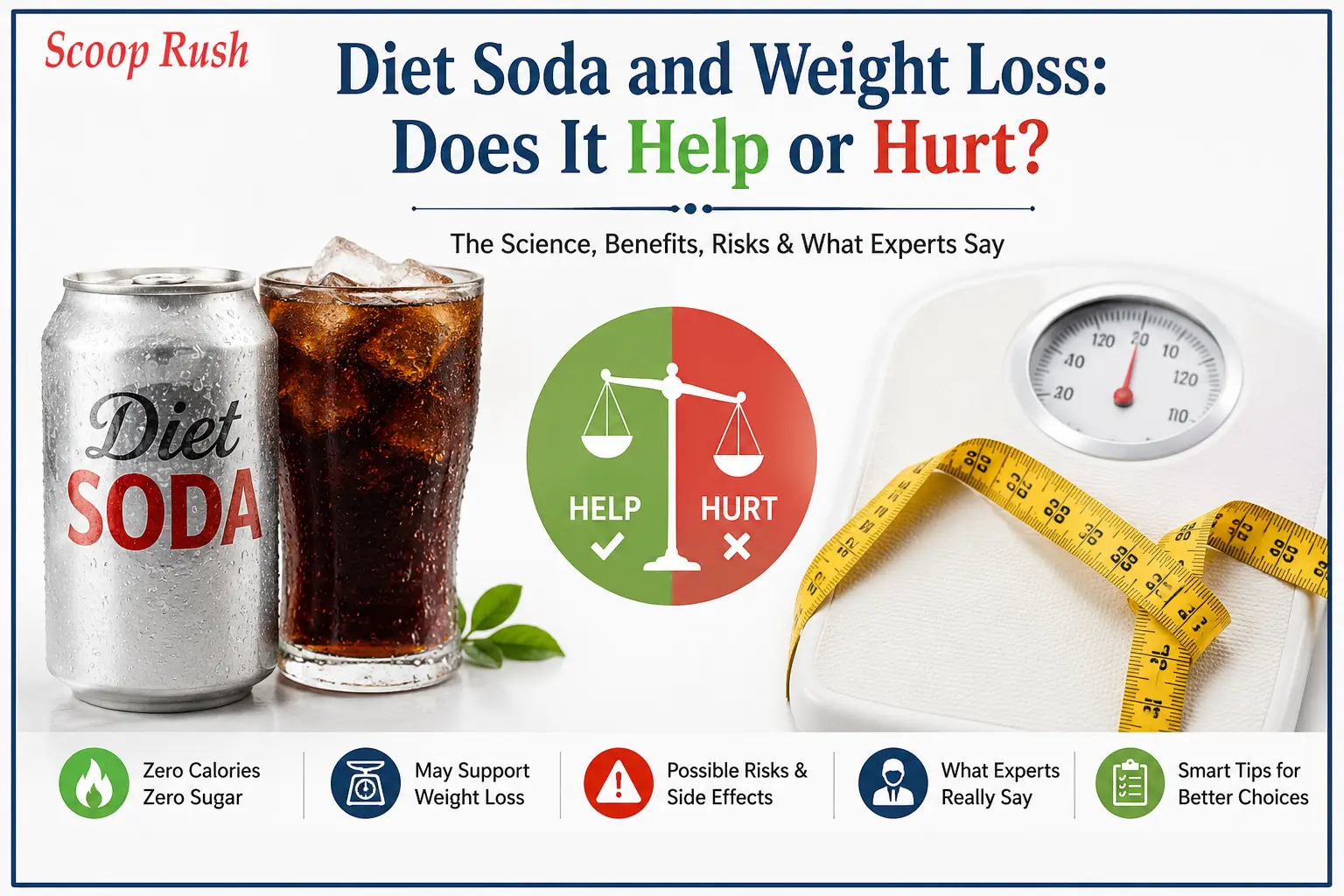
Walk down any grocery aisle and you will see two versions of the same soda sitting side by side. One is loaded with sugar. The other promises the same fizzy, familiar taste with zero calories and a bright “diet” label on the can.
For anyone watching their weight, that diet can looks like an obvious win. No sugar, no calories, same great taste. But does switching to diet soda actually help you lose weight, or could it be working against you in ways you don’t expect?
The Diet Soda Dilemma
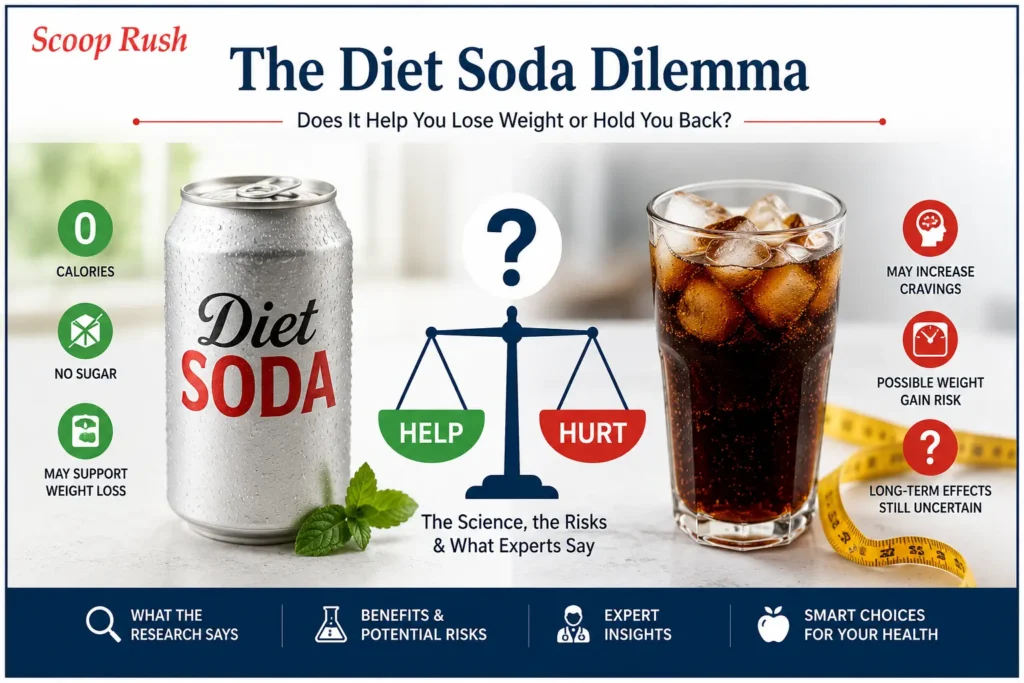
The honest answer is that the science is mixed. Some studies suggest diet soda can genuinely support weight loss goals. Others suggest it may be linked to weight gain over time. This article breaks down what researchers actually know, what remains uncertain, and how to make sense of the conflicting headlines.
Part of the confusion comes from how differently this topic gets covered online. One headline will tell you diet soda is basically water with bubbles. The next will warn that it is secretly making you gain weight. Both claims cannot be fully true, and neither one captures the whole picture.
That is exactly why it helps to slow down and look at the actual research, not just the scary or reassuring headline sitting on top of it. Below, we walk through what diet soda is made of, what the studies actually found, and how experts suggest thinking about it if you are trying to manage your weight.
Diet Soda vs Regular Soda: A Quick Comparison
Before diving into the research, it helps to see exactly what separates diet soda from its sugary counterpart. The table below breaks down the key differences.
| Feature | Regular Soda (12 oz) | Diet Soda (12 oz) |
| Calories | About 140 | 0 |
| Sugar | About 39 grams (roughly 10 teaspoons) | 0 grams |
| Sweetener used | High fructose corn syrup or sucrose | Aspartame, acesulfame potassium, sucralose, or saccharin |
| Caffeine | Yes, in most colas | Yes, in most diet colas |
| Nutritional value | None | None |
| Main health concern | Excess sugar and calorie intake | Long-term effects of artificial sweeteners |
Neither drink offers real nutrition. Both are considered ultra-processed beverages. The core difference comes down to which ingredient does the sweetening, and how your body responds to it.
What Exactly Is in Diet Soda?
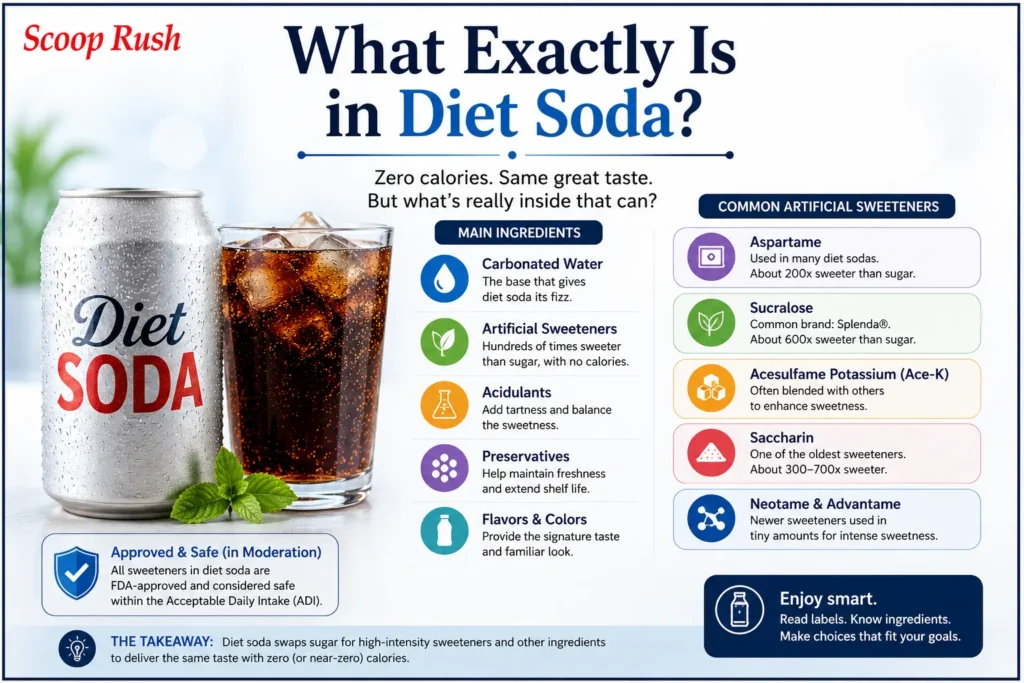
Diet soda gets its sweetness from nonnutritive sweeteners rather than table sugar. These ingredients are sometimes hundreds of times sweeter than sugar, so manufacturers only need a tiny amount to create that familiar taste.
Because so little sweetener is needed, the calorie count in diet soda rounds down to essentially zero. This is the entire appeal for people trying to cut calories without giving up carbonation and sweetness.
Here are the main FDA-approved artificial sweeteners used in diet beverages today.
| Sweetener | Common Brand Names |
| Saccharin | Sweet’N Low, Sweet Twin, Sugar Twin |
| Aspartame | NutraSweet, Equal |
| Acesulfame Potassium | Sunett, Sweet One |
| Sucralose | Splenda |
| Neotame | Not typically sold under a consumer brand |
| Advantame | Not typically sold under a consumer brand |
Each of these sweeteners has gone through FDA safety review and has an established acceptable daily intake, which is the amount considered safe to consume every day over a lifetime.
Does Diet Soda Help You Lose Weight?
This is where things get genuinely complicated, because researchers have found evidence pointing in two very different directions.
The Case For Diet Soda Helping With Weight Loss
Some research suggests diet soda can be a useful tool for people trying to shed pounds. A systematic review and meta-analysis found that replacing sugar-sweetened beverages with diet versions led to a small but real reduction in body weight, body mass index, and body fat percentage.
Data from the National Weight Control Registry adds more support to this idea. This registry tracks people who have lost at least 30 pounds and kept it off for a year or longer, and it found some encouraging patterns:
- About 26 percent of registry participants drink diet soda regularly, defined as at least once a day
- Most people who drink it weekly or more say it helps them control or reduce their overall calorie intake
- Many participants credit changes in their beverage habits as an important part of their weight loss success
- Other studies have found higher rates of diet beverage consumption among people who successfully lost weight and kept it off long term
For someone who currently drinks a lot of regular soda, switching to diet versions may offer a modest advantage for both losing weight and maintaining that loss over time.
The Case Against Diet Soda for Weight Loss
On the other side, several studies paint a less flattering picture. Research has linked frequent diet soda consumption to a noticeably larger increase in waist circumference over time.
Some specific findings that have raised concern include the following points:
- Diet soda drinkers have shown up to a 70 percent greater increase in waist circumference compared to people who avoid diet soda
- People drinking two or more diet sodas daily showed an even sharper increase, reported at up to 500 percent greater growth in waist size in some studies
- Researchers have proposed that sweet taste, whether from sugar or artificial sweeteners, may increase appetite rather than satisfy it
- Diabetes-prone mice fed aspartame for three months showed higher blood glucose levels compared to mice that were not given the sweetener
Because most of this research is observational, it shows a pattern rather than direct cause and effect. People who drink a lot of diet soda may also have other habits or health risk factors that affect their weight independently of the soda itself.
Why the Research Disagrees
The honest explanation is that human diet and weight are influenced by dozens of overlapping factors. Isolating the exact effect of one ingredient in one type of drink is genuinely difficult.
Reverse causality is also a real issue researchers point to. People who already carry excess weight or have other risk factors may be more likely to choose diet soda in the first place, which can make the drink look more harmful in the data than it actually is.
Until more controlled clinical trials are done, the fairest conclusion is that diet soda is neither a guaranteed weight loss shortcut nor a guaranteed cause of weight gain. Individual results likely depend heavily on overall diet, activity level, and how much diet soda someone actually drinks.
Diet Soda and Weight Loss: The Craving Connection
One theory that comes up repeatedly in this research involves cravings. The idea is fairly simple to understand once it’s broken down.
- Sugar contains calories, and the brain uses that calorie intake as a signal to feel full and satisfied
- Artificial sweeteners taste just as sweet, or sweeter, but carry no calories, so that fullness signal may never arrive
- Without feeling satisfied, some researchers believe the brain may keep prompting the body to seek out more food
- Over time, this pattern could contribute to overeating and weight gain, though it remains a theory rather than a settled fact
Separately, some studies suggest that regularly drinking very sweet beverages, sugary or artificially sweetened, can dull the taste buds over time. This may make naturally sweet foods, like fruit, taste less appealing and push people toward seeking out even sweeter options.
Neither theory has been proven as a direct cause of weight gain in humans. But together, they explain why many dietitians recommend treating diet soda as an occasional drink rather than a daily habit.
Is Aspartame Actually Safe to Drink?
Aspartame has faced intense scrutiny in recent years, and the headlines have not always told the full story. Here is what actually happened and what it means for your diet soda habit.
The 2023 Cancer Classification Explained
In July 2023, the World Health Organization’s International Agency for Research on Cancer classified aspartame as “possibly carcinogenic to humans.” This announcement triggered a wave of alarming headlines around the world.
What often got left out of those headlines is important context:
- The classification was based on “limited or insufficient evidence” that aspartame might cause cancer in people
- The underlying data came primarily from animal studies using doses far beyond what any person would realistically consume through diet soda
- This particular classification system indicates whether something could theoretically cause cancer, but it does not measure how likely that outcome actually is
- Other items placed in the same general risk category include aloe vera, pickled vegetables, and cell phone use
What Other Health Authorities Concluded
On the very same day the cancer classification was released, a separate WHO body called the Joint FAO/WHO Expert Committee on Food Additives published its own review of aspartame safety. Their conclusion was notably different.
That committee found no convincing evidence from either animal or human studies that aspartame causes harm at typical consumption levels, and it saw no reason to lower the existing safety limit that had been in place for years.
The FDA has publicly backed this second assessment, stating that it disagreed with the cancer research agency’s classification and had greater confidence in the food additive committee’s more comprehensive review process.
How Much Aspartame Is Actually Safe?
Regulatory agencies set an acceptable daily intake for aspartame based on extensive safety testing, then build in a wide margin of safety on top of that number.
| Detail | Amount |
| FDA acceptable daily intake for aspartame | 50 mg per kg of body weight per day |
| Aspartame in one 12 oz can of diet soda | About 200 mg |
| Cans needed daily to hit the limit (150 lb person) | About 17 cans |
| Cans needed daily to hit the limit (132 lb person) | About 15 cans |
In practical terms, someone would need to drink well over a dozen cans of diet soda in a single day, every day, for years, to approach the established safety limit. Most people fall dramatically below that threshold even with a daily diet soda habit.
Other Health Effects Worth Knowing About
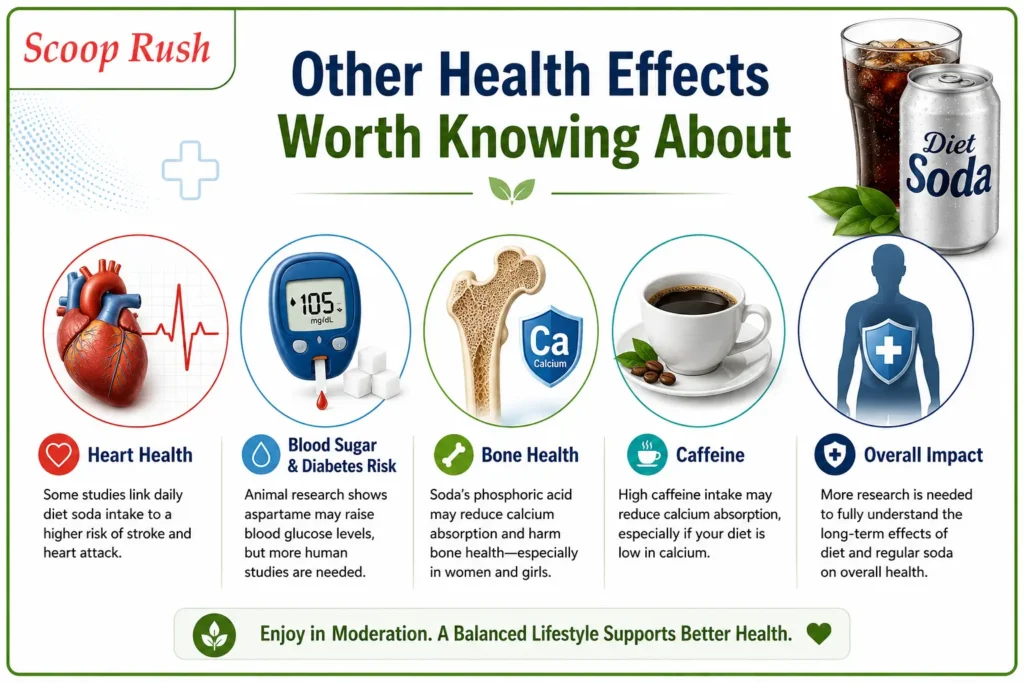
Weight and cancer risk tend to dominate the conversation, but researchers have also studied how soda, both diet and regular, affects other parts of the body.
Heart Health
Some observational studies have found that people who drink artificially sweetened beverages every day carry a higher risk of stroke and heart attack compared to non-drinkers. As with the weight research, this data shows correlation rather than confirmed cause and effect, since diet soda drinkers may differ from non-drinkers in other health-relevant ways.
Blood Sugar and Diabetes Risk
Animal research offers one of the more specific findings in this space. Diabetes-prone mice fed aspartame for three months developed higher blood glucose levels than mice that did not receive the sweetener. Whether this translates directly to humans is still an open question that requires more study.
Bone Health
Both diet and regular soda contain phosphoric acid, an ingredient that gives soda its tangy flavor but may also interfere with how well the body absorbs and retains calcium. A systematic review found an inverse relationship between sugar-sweetened beverage intake and bone health, with the effect appearing stronger in women and girls than in men and boys.
There is far less research specifically on diet soda and bone health. However, experts suspect a similar mechanism could apply, especially in cases where diet soda is replacing calcium-rich drinks like milk in someone’s daily routine.
Caffeine is worth mentioning here too, since high intake may reduce calcium absorption, particularly in people who are not getting enough calcium from their diet overall.
Healthier Alternatives to Diet and Regular Soda
For people who want to cut back on soda without giving up flavor or fizz entirely, there are several solid alternatives worth trying.
| Alternative | Why It Works |
| Sparkling or mineral water with fresh fruit | Delivers the same carbonated feel without any sweeteners |
| Kombucha | Fizzy texture plus a natural source of probiotics |
| Homemade herbal, green, or black tea | Can be flavored with citrus and served hot or cold |
| Fruit smoothies | Satisfies a sweet craving using whole fruit instead of added sweeteners |
| Plain or infused water | The simplest option and the one most dietary guidelines recommend as a first choice |
None of these options are meant to feel like a punishment. The goal is finding something enjoyable that also adds a bit more nutritional value to your day.
Practical Tips for Cutting Back on Diet Soda
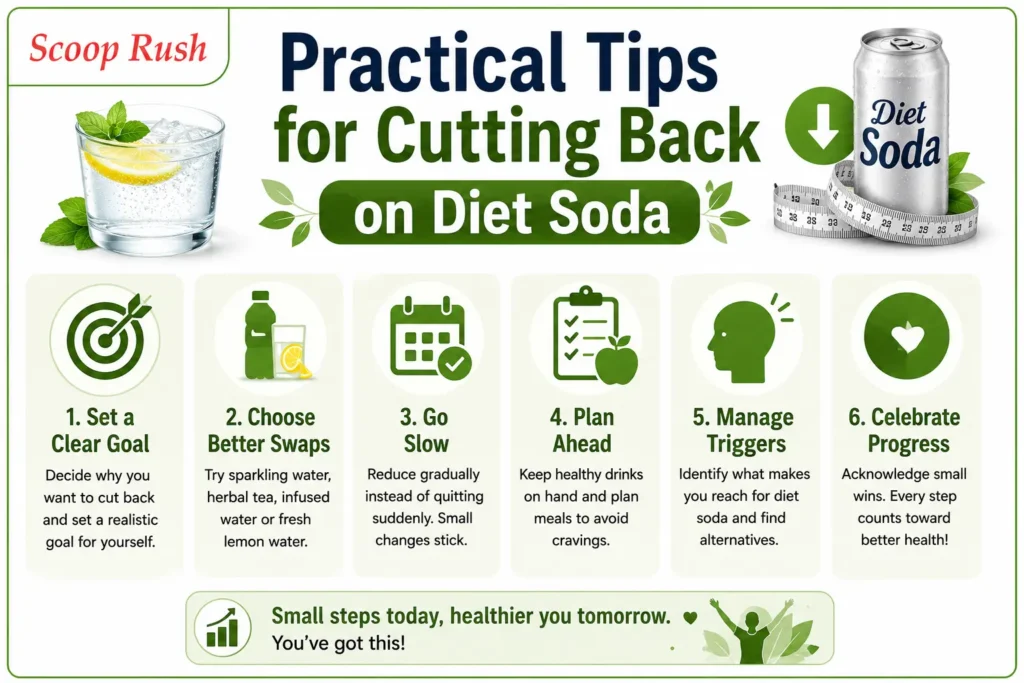
If you are looking to reduce your diet soda intake, small and realistic changes tend to work far better than quitting cold turkey. Consider these steps.
- Start by reading nutrition labels, since artificial sweeteners often show up in unexpected places like baked goods, condiments, dairy products, and pudding
- Swap standard 12 ounce cans for smaller 8 ounce cans to naturally reduce portion size
- Set a simple weekly goal, such as cutting from three diet sodas a day down to two, then replacing the third with water or tea
- Keep a refillable water bottle nearby so reaching for water becomes the easier default choice
- Focus on progress rather than perfection, since sustainable habits are built gradually over weeks, not overnight
Common Diet Soda Myths vs What Research Actually Shows
Diet soda has picked up a lot of baggage over the years, some of it fair and some of it exaggerated. The table below sorts through a few of the most common claims.
| The Myth | What the Research Actually Shows |
| Diet soda is basically the same as drinking water | False. Diet soda offers no nutritional value and still contains caffeine, acids, and artificial sweeteners that regular water does not |
| Aspartame is a proven cause of cancer in humans | Not accurate. Current evidence in humans is limited, and major safety bodies still consider it safe within daily limits |
| Switching to diet soda guarantees weight loss | Not guaranteed. It may offer a modest advantage for some people, but results vary and depend on overall diet and lifestyle |
| Diet soda always leads to weight gain | Also not settled. Some studies link frequent heavy use to weight gain, while others show no meaningful effect or even modest benefits |
| Sugar-free automatically means healthy | Misleading. Sugar-free does not mean nutrient-rich, and diet soda still counts as an ultra-processed beverage |
Seeing these claims side by side makes one thing clear. Diet soda sits in a genuine gray area, and anyone telling you it is either perfectly harmless or definitely harmful is oversimplifying a topic that researchers themselves are still studying.
What Nutrition Experts Generally Recommend
Registered dietitians who work directly with clients on weight management tend to land in a similar, fairly balanced place on this topic. Their guidance usually comes down to a few consistent themes.
- Diet soda is not considered dangerous in moderate amounts for most healthy adults
- It can serve as a helpful transition drink for people trying to move away from regular soda
- It should not be treated as a primary hydration source or a replacement for water
- Long term, heavy daily reliance on any processed beverage, diet or regular, is discouraged
- Individual response varies, so paying attention to your own hunger, cravings, and energy levels matters more than any single study
This kind of practical, moderation-focused advice tends to hold up better than dramatic headlines in either direction. It also lines up closely with how major dietary guidelines around the world approach sweetened beverages in general.
Diet Soda and Weight Loss: The Bottom Line
Diet soda is not a magic weight loss solution, but it is also not the villain some headlines make it out to be. The evidence genuinely points in both directions depending on which studies you look at.
Here is a simple summary of where the science currently stands:
- Diet soda contains zero calories and zero sugar, making it a lower calorie option compared to regular soda
- Some research links diet soda to modest weight loss support, particularly when replacing regular soda
- Other research links frequent diet soda consumption to increased waist circumference over time
- Aspartame remains approved as safe by the FDA and most major food safety bodies at typical consumption levels
- Neither diet nor regular soda offers any real nutritional value
Most major health organizations agree that diet soda is a better choice than regularly drinking sugar sweetened beverages. At the same time, few experts recommend making it a daily habit, simply because moderation tends to serve overall health better than heavy reliance on any processed drink.
Water remains the top recommendation across dietary guidelines worldwide. But for people who genuinely enjoy the occasional diet soda, current evidence suggests moderate consumption is unlikely to derail weight loss goals or create serious health risks on its own.
FAQs
1. Can drinking diet soda actually cause weight gain?
Some studies link frequent diet soda use to increased waist size, especially at two or more cans a day. But this is observational, not proof of cause. Other research shows diet soda supporting modest weight loss instead. Overall diet and lifestyle likely matter more than the soda itself.
2. Is aspartame in diet soda dangerous to drink regularly?
The FDA and WHO’s food additive committee still consider aspartame safe within daily limits. A separate WHO cancer agency labeled it “possibly carcinogenic” in 2023, but that was based on limited animal data at doses far above normal soda consumption. Typical intake is considered safe.
3. How much diet soda is considered safe to drink per day?
The FDA’s daily limit for aspartame allows a 150 pound person roughly 17 cans before reaching it. Still, most dietitians recommend moderation, generally around one can a day or less, rather than approaching that maximum.
4. Is diet soda actually better than regular soda for weight loss?
Diet soda has zero calories and sugar, versus about 140 calories and 39 grams of sugar in regular cola. For cutting calories, diet soda is the better of the two, though water remains the top recommended choice overall.
5. What are good alternatives to diet soda if I want to cut back?
Sparkling water with fresh fruit, kombucha, homemade flavored tea, and fruit smoothies are popular swaps. They offer flavor or fizz without artificial sweeteners and generally add more nutritional value than soda.

