

Have you ever been told that drinking coffee on an empty stomach can damage your stomach or cause ulcers? It’s one of the most common health claims shared by family members and on social media. But is it actually true?
The good news is that current research paints a different picture. For most healthy adults, enjoying a cup of coffee before breakfast is generally safe. However, people with certain digestive conditions may notice uncomfortable symptoms.
Coffee can increase stomach acid production and speed up caffeine absorption. As a result, some people experience heartburn, acid reflux, jitters, or digestive discomfort. That doesn’t mean coffee is harmful to everyone.
In this article, we’ll separate myths from facts, explain what experts say, and help you decide whether drinking coffee on an empty stomach is right for you.
Is It OK to Drink Coffee on an Empty Stomach?

For most people, the answer is yes. Experts say a healthy stomach has a protective lining that prevents stomach acid from damaging its tissues. Drinking coffee alone does not usually harm this lining.
Your digestive system naturally produces stomach acid throughout the day, even when you haven’t eaten. Therefore, drinking coffee doesn’t automatically mean your stomach will become damaged.
However, everyone’s body responds differently. While some people can drink black coffee without any problems, others may feel discomfort after just one cup.
If coffee regularly causes heartburn, nausea, or stomach pain, it’s worth adjusting your routine instead of ignoring the symptoms. Building a few healthy habits in your 20s and 30s around meal timing can make a noticeable difference to how your body handles your morning cup.
Why Has This Become Such a Popular Health Debate?
The idea that coffee damages an empty stomach has been around for decades. More recently, social media has helped spread this claim even further.
Many posts suggest that coffee causes stomach acid to attack the stomach lining because there’s no food to digest. While this sounds convincing, research doesn’t fully support the claim.
Experts agree that coffee increases stomach acid production. However, a healthy stomach is designed to protect itself from that acid.
The real concern is people who already have digestive conditions, not healthy adults with normal stomach function.
Does Coffee Increase Stomach Acid?
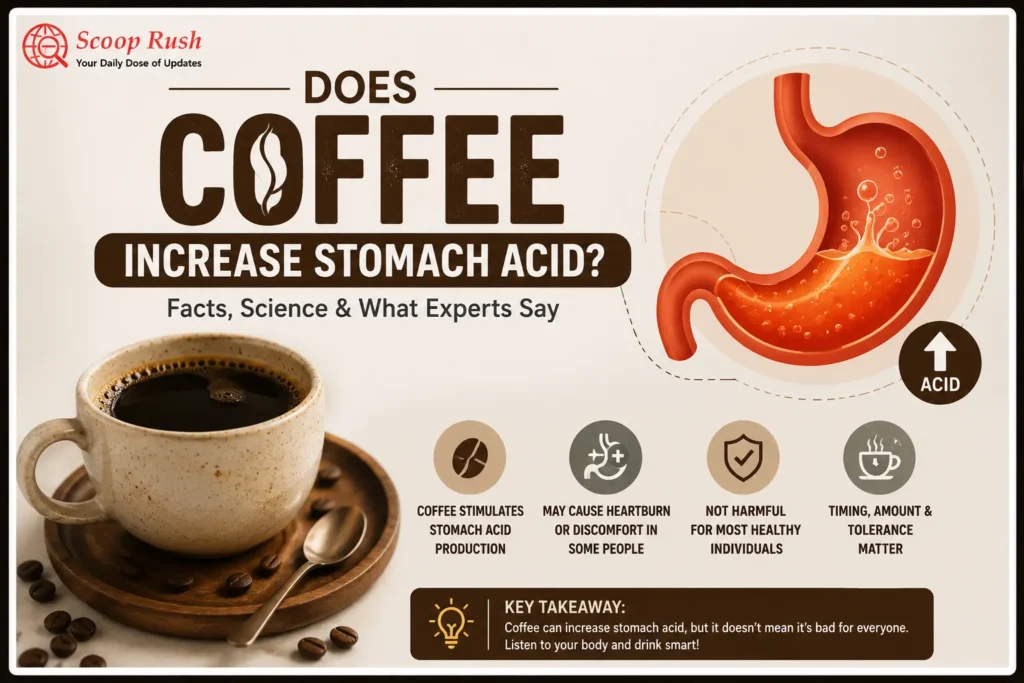
Yes, coffee can stimulate your stomach to produce more acid. Caffeine is one reason, but other natural compounds in coffee may also contribute.
For most healthy people, this extra acid doesn’t cause any problems. The stomach’s protective mucus layer prevents acid from damaging its walls.
However, people who already have acid reflux, GERD, or sensitive stomachs may notice burning or discomfort after drinking coffee.
If this happens frequently, drinking coffee with breakfast instead of before eating may help reduce symptoms.
Coffee Causes Heartburn and Acid Reflux
Heartburn happens when stomach acid flows back into the esophagus. This creates the burning feeling many people experience after eating or drinking certain foods.
Research on coffee and acid reflux has produced mixed results. Some studies found little connection, while others reported increased symptoms after consuming caffeinated beverages.
Experts believe coffee may temporarily relax the muscle that separates the stomach from the esophagus. At the same time, it may increase stomach acid production.
Together, these effects can make heartburn worse in people who already suffer from reflux. However, coffee is not considered the direct cause of GERD.
Tips to Reduce Heartburn
If coffee triggers reflux symptoms, you don’t necessarily have to give it up completely.
Instead, try drinking coffee with breakfast, reducing your caffeine intake, or adding low-fat milk. Some people also find that smaller servings are easier to tolerate.
Pay attention to how your body reacts. Simple changes are often enough to make coffee more comfortable.
Coffee Causes Stomach Ulcers

This is one of the biggest misconceptions about coffee. Modern medical research shows that coffee does not cause stomach ulcers.
Most stomach ulcers develop because of an infection caused by Helicobacter pylori (H. pylori) bacteria. Another common cause is long-term use of pain relievers such as ibuprofen and aspirin.
Large studies have found no meaningful link between coffee consumption and ulcer formation, even among people who drink several cups every day.
However, coffee can increase stomach acid. If you already have an ulcer, that extra acid may worsen pain, burning, or discomfort. Persistent, unexplained symptoms are always worth mentioning to a doctor, in the same way that recognizing early lung cancer symptoms early can make a real difference to outcomes.
What Does the Evidence Really Say?
Current evidence offers reassuring news for coffee lovers. Drinking coffee on an empty stomach does not appear to damage a healthy stomach or create ulcers.
However, people with GERD, heartburn, existing stomach ulcers, or sensitive digestion may experience stronger symptoms after drinking coffee before eating.
Rather than following internet myths, experts recommend paying attention to your own body’s response. If coffee makes you feel well, there’s usually no reason to stop.
In the next section, we’ll explore the possible side effects of drinking coffee on an empty stomach, including faster caffeine absorption, digestive changes, anxiety, cortisol, and the best time to enjoy your daily cup.
Side Effects of Drinking Coffee on an Empty Stomach
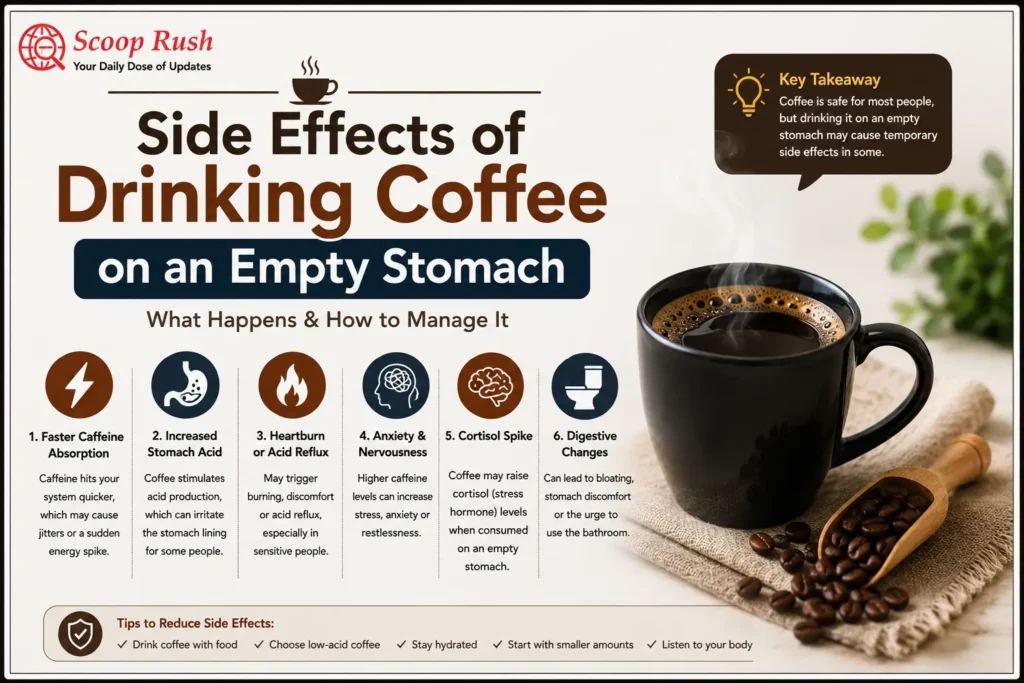
Although coffee is safe for most people, drinking it before eating may cause a few unwanted side effects. These effects are usually temporary and vary from person to person.
If you regularly feel uncomfortable after your morning coffee, your body may be telling you to change how or when you drink it.
Faster Caffeine Absorption
When your stomach is empty, your body absorbs caffeine more quickly. This means you may feel its effects sooner than usual.
As a result, some people experience shakiness, nervousness, or a sudden burst of energy shortly after drinking coffee.
The effects usually begin within minutes and become stronger over the next hour.
Why Food Makes a Difference
Eating before or with your coffee slows down caffeine absorption. This helps your body process caffeine more gradually.
Because of this, you may feel more stable energy instead of a quick spike followed by a crash.
If caffeine often makes you feel anxious, pairing coffee with breakfast may help.
Coffee May Increase Heartburn
Coffee naturally stimulates stomach acid production. For healthy people, this usually isn’t a problem.
However, if you have acid reflux or GERD, the extra acid may trigger symptoms such as heartburn or a burning feeling in your chest.
Coffee may also relax the muscle between your stomach and esophagus, making acid more likely to move upward.
How to Reduce Reflux Symptoms
If coffee causes heartburn, try drinking it after breakfast instead of before eating.
You can also choose a smaller serving or add low-fat milk. These simple changes may reduce irritation without giving up coffee completely.
Digestive Changes and Bathroom Urges
Many coffee drinkers notice that they need to use the bathroom soon after finishing a cup.
Research suggests that coffee stimulates hormones involved in digestion. These hormones encourage the muscles in your digestive tract to move waste through your bowels.
This effect can happen whether or not you’ve eaten, although some people notice it more on an empty stomach.
If this is part of your normal routine and doesn’t cause discomfort, it usually isn’t a cause for concern. Staying active can also support healthy digestion — even something as simple as taking a 5-minute walk every hour has been shown to help.
Can Coffee Make You Feel Anxious?
Yes, especially if you’re sensitive to caffeine.
Because caffeine is absorbed faster on an empty stomach, some people feel restless, shaky, or irritable after drinking coffee.
Others may notice a faster heartbeat or temporary heart palpitations.
These symptoms are more likely if you drink several cups a day or consume more caffeine than your body can comfortably handle.
Does Coffee Raise Cortisol Levels?
Coffee can temporarily increase cortisol, often called the body’s stress hormone.
Cortisol plays an important role in regulating blood pressure, metabolism, and your natural wake-up response.
Fortunately, experts say the increase caused by caffeine is usually small and has not been linked to long-term health problems in healthy adults.
For most people, this temporary rise is not a reason to avoid coffee.
Does Coffee Affect Nutrient Absorption?
Some studies suggest that drinking coffee with iron-rich meals may reduce how much iron your body absorbs.
However, drinking coffee on an empty stomach does not appear to create this problem because there is no meal competing for absorption.
If you have iron deficiency or have been advised to increase your iron intake, consider separating coffee from iron-rich meals. It’s also worth being cautious about stacking multiple supplements around your coffee routine, since taking too many vitamins can create its own set of risks.
Who Should Be More Careful?
While most healthy adults can safely drink coffee before breakfast, some people should be more cautious.
You may want to avoid drinking coffee on an empty stomach if you have:
- Frequent heartburn or acid reflux
- GERD
- A stomach ulcer
- Irritable bowel syndrome (IBS)
- Strong caffeine sensitivity
If coffee consistently causes pain, nausea, or digestive discomfort, speak with your healthcare provider instead of simply ignoring the symptoms. This is especially important for older adults, who should also stay mindful of related concerns like heat and humidity risks for seniors during warmer months when dehydration can compound stomach sensitivity.
Is Switching to Tea a Better Option?
Some people consider switching to tea because it usually contains less caffeine than coffee.
For individuals who are sensitive to caffeine, tea may cause fewer jitters or digestive symptoms.
However, tea can still contain caffeine. Therefore, it isn’t guaranteed to solve every problem.
The best choice depends on how your own body reacts rather than following a one-size-fits-all rule.
Should You Stop Drinking Coffee Before Breakfast?
If you enjoy coffee on an empty stomach and feel perfectly fine afterward, there is no strong evidence suggesting you need to change your routine.
On the other hand, if your morning coffee regularly causes heartburn, stomach discomfort, or anxiety, eating a light breakfast first may make a noticeable difference.
Listening to your body is often more helpful than following common myths.
When Is the Best Time to Drink Coffee?
There isn’t one perfect time to drink coffee. Experts say the best time depends on how your body responds to caffeine.
Some people feel great after drinking coffee before breakfast. Others feel better when they have it with or after a meal. The key is to choose the routine that works best for you.
Foods That Pair Well With Coffee
If coffee upsets your stomach, eating a light meal first may help. Certain foods can also slow caffeine absorption and reduce stomach irritation.
Good breakfast options include:
- Whole-grain toast or oatmeal for fiber
- Eggs, yogurt, or cottage cheese for protein
- Avocados, nuts, or nut butter for healthy fats
- Fresh fruit as part of a balanced meal
These foods may help you feel full while reducing the chance of heartburn or jitters.
Practical Tips for Drinking Coffee Safely
You don’t have to give up coffee to protect your digestive health. A few simple habits can make your morning cup easier on your stomach.
- Limit caffeine if it causes anxiety or heartburn.
- Drink coffee with breakfast if you have a sensitive stomach.
- Avoid adding too much sugar, which can lead to an energy crash.
- Stay within the recommended daily caffeine intake.
- Pay attention to how your body reacts and adjust your routine if needed.
Small changes are often enough to improve your experience. If you’re building out a broader wellness routine, it’s worth thinking about how your morning coffee fits alongside other goals — whether that’s managing weight while preserving muscle on GLP-1 medications or simply staying consistent with better everyday healthy habits.
The Bottom Line
For most healthy adults, drinking coffee on an empty stomach is generally safe. Current research does not show that it causes stomach ulcers or damages a healthy stomach.
However, coffee can increase stomach acid and speed up caffeine absorption. As a result, people with acid reflux, GERD, stomach ulcers, or caffeine sensitivity may experience heartburn, digestive discomfort, or jitters.
Instead of relying on myths, pay attention to your own body’s response. If coffee makes you feel well, there’s usually no reason to stop drinking it. If it causes discomfort, having it with food or reducing your caffeine intake may help.
The best approach is a balanced one. Enjoy your coffee in a way that supports both your energy and your digestive health.
FAQs
1. Is it bad to drink coffee on an empty stomach every day?
For most healthy adults, no. Research suggests it is generally safe. However, people with acid reflux, GERD, or stomach ulcers may notice worsening symptoms.
2. Can coffee on an empty stomach cause ulcers?
No. Current evidence shows that coffee does not cause stomach ulcers. Most ulcers are linked to H. pylori infection or long-term use of NSAID pain relievers.
3. Why does coffee make me feel shaky before breakfast?
Your body absorbs caffeine faster when your stomach is empty. This may lead to jitters, anxiety, or a rapid heartbeat in people who are sensitive to caffeine.
4. Does eating before coffee help?
Yes. Eating first can slow caffeine absorption and may reduce heartburn, stomach discomfort, and feelings of nervousness.
5. Should I switch from coffee to tea?
Tea contains less caffeine than coffee and may be easier for some people to tolerate. However, the best choice depends on your personal tolerance and how your body responds.

