
Introduction
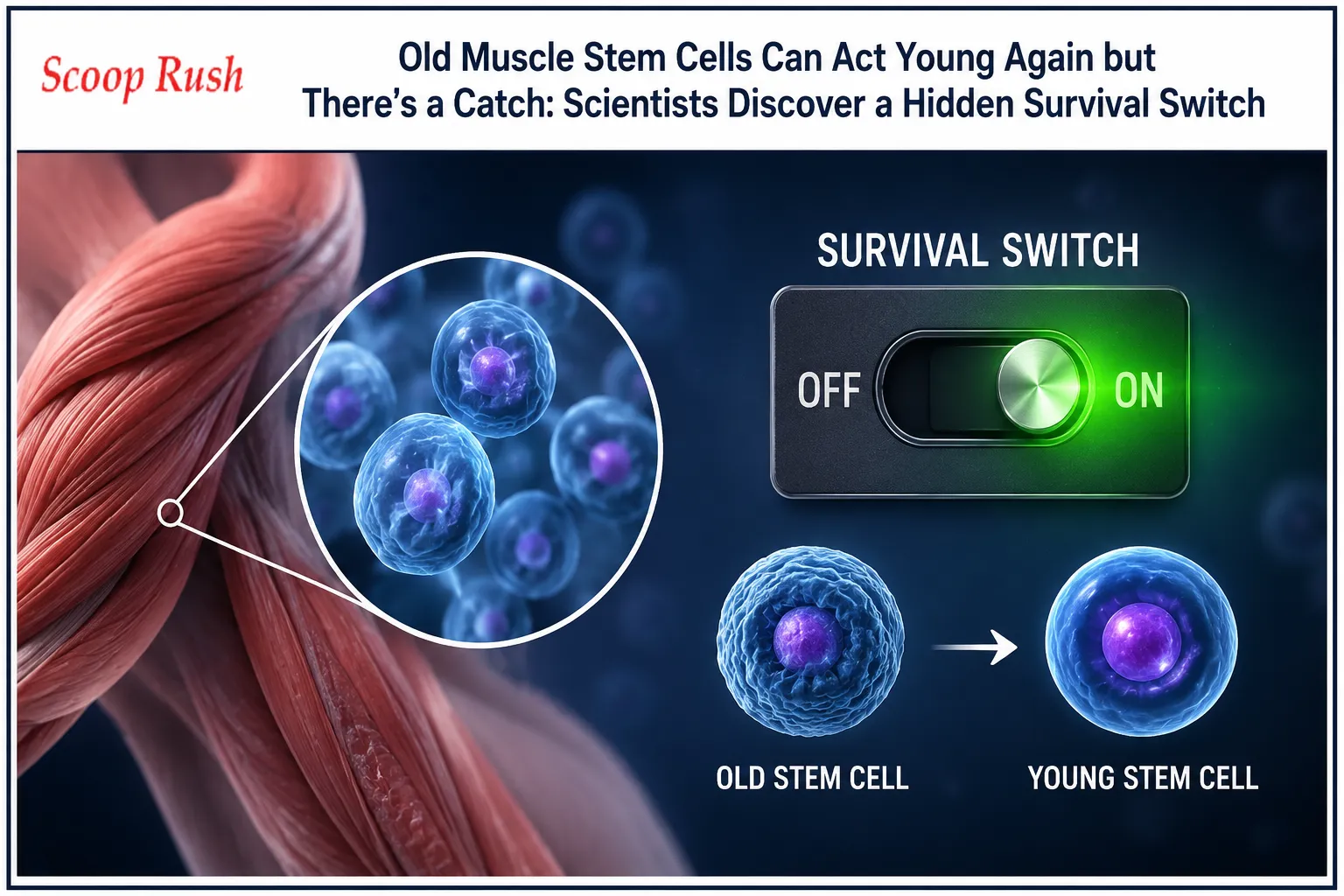
Growing older often means recovering more slowly from muscle injuries, but scientists may have finally discovered why. A new study from the University of California, Los Angeles (UCLA) reveals that aging muscle stem cells are not simply becoming weaker over time. Instead, they adopt a survival strategy that helps them withstand the stresses of aging while reducing their ability to repair damaged muscle quickly.
Researchers found that a protein called NDRG1 builds up inside older muscle stem cells and acts like a brake, slowing their activation after injury. Surprisingly, the same protein also protects these cells from the harsh conditions associated with aging, allowing them to survive longer. This discovery suggests that slower muscle healing may not be a sign of failure but a biological trade-off between faster repair and long-term survival. The findings could reshape future research on healthy aging and by helping scientists develop treatments that improve muscle repair without exhausting the body’s stem cell reserves.
Why Aging Muscles Heal More Slowly
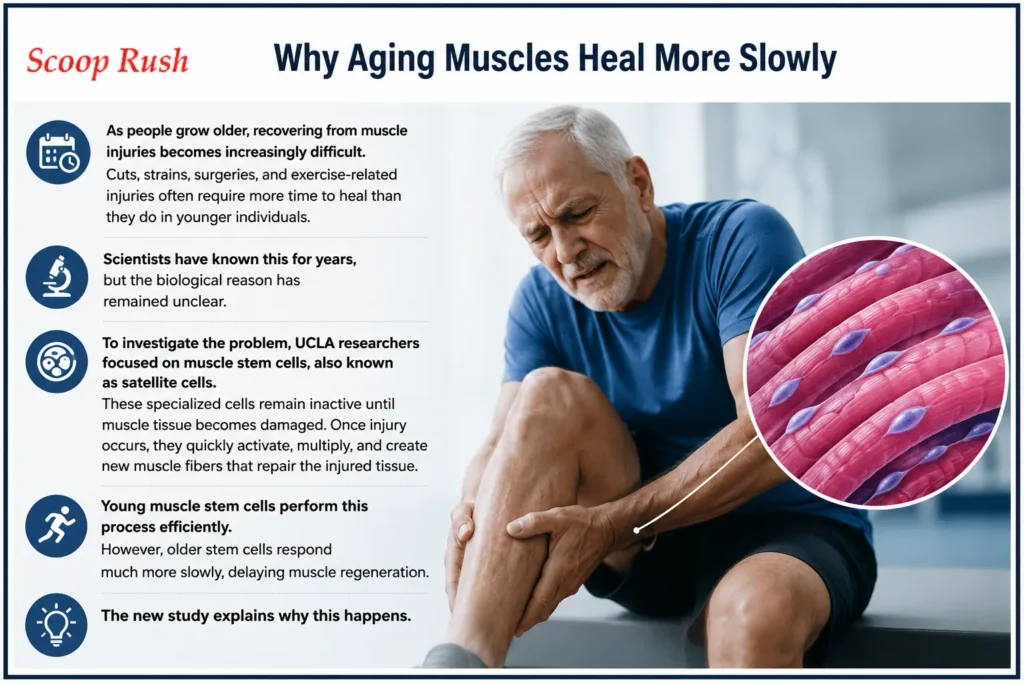
As people grow older, recovering from muscle injuries becomes increasingly difficult. Cuts, strains, surgeries, and exercise-related injuries often require more time to heal than they do in younger individuals.
Scientists have known this for years, but the biological reason has remained unclear.
To investigate the problem, UCLA researchers focused on muscle stem cells, also known as satellite cells. These specialized cells remain inactive until muscle tissue becomes damaged. Once injury occurs, they quickly activate, multiply, and create new muscle fibers that repair the injured tissue.
Young muscle stem cells perform this process efficiently. However, older stem cells respond much more slowly, delaying muscle regeneration.
The new study explains why this happens.
Scientists Identify NDRG1 as the Hidden Brake
Researchers compared muscle stem cells collected from young and old mice. One difference immediately stood out.
Older stem cells contained much higher levels of a protein called NDRG1. In fact, NDRG1 levels were about 3.5 times higher than those found in younger stem cells.
The researchers discovered that NDRG1 acts like an internal brake.
Instead of allowing muscle stem cells to activate immediately after injury, the protein suppresses an important growth pathway called mTOR. This pathway normally tells stem cells to leave their resting state and begin repairing damaged muscle.
When NDRG1 levels increase, the repair process slows significantly.
Although muscle healing becomes slower, the stem cells themselves become better equipped to survive the stressful conditions associated with aging.
Blocking NDRG1 Makes Old Stem Cells Behave Like Young Ones
To test whether NDRG1 was responsible for slower muscle repair, the research team studied naturally aged mice roughly equivalent to 75-year-old humans.
Instead of replacing aging stem cells, scientists temporarily blocked the activity of NDRG1.
The results were remarkable.
The older stem cells rapidly regained youthful behavior.
They activated faster after injury.
They divided more efficiently.
They repaired damaged muscle much more effectively.
These findings showed that older stem cells had not completely lost their regenerative ability. Instead, NDRG1 had been limiting their performance.
This discovery raises the possibility that some age-related muscle decline may be reversible by adjusting the molecular signals that control stem cell behavior.
The Catch Behind Faster Muscle Repair
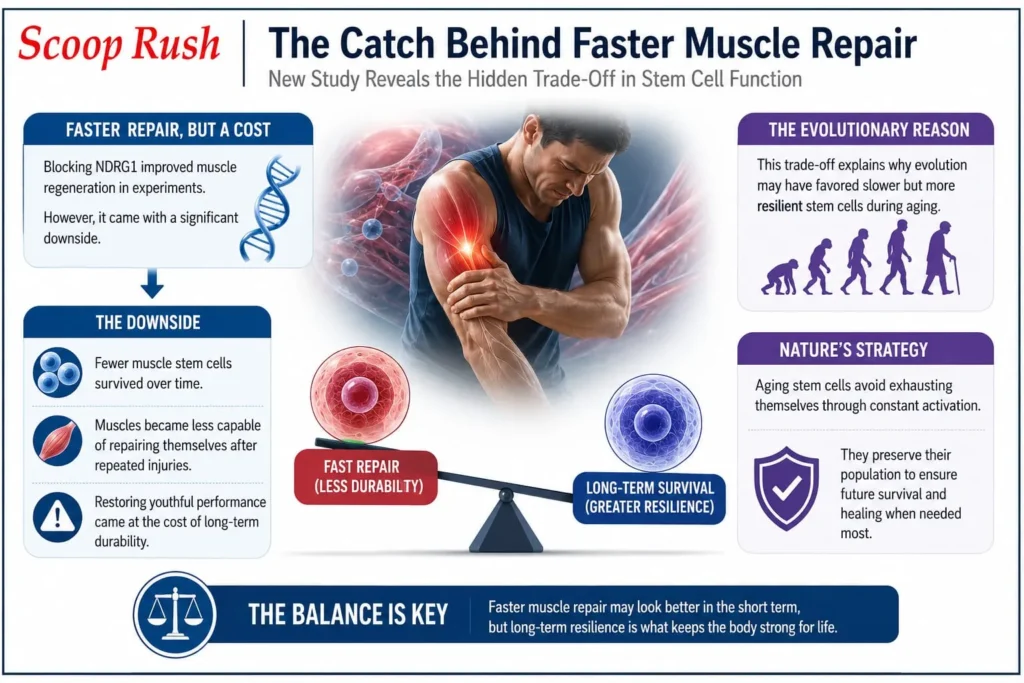
Although blocking NDRG1 improved muscle regeneration, researchers discovered an important downside.
Without the protective effects of NDRG1, fewer muscle stem cells survived over time.
As a result, muscles became less capable of repairing themselves after repeated injuries.
In other words, restoring youthful performance came at the cost of long-term durability.
This trade-off explains why evolution may have favored slower but more resilient stem cells during aging.
Instead of exhausting themselves through constant activation, aging stem cells appear to preserve their population for future survival.
Survival Versus Performance
Senior author Dr. Thomas Rando described the difference using a simple comparison.
Young muscle stem cells behave like sprinters.
They react quickly.
They repair tissue efficiently.
However, they may struggle to survive over the long term.
Older stem cells resemble marathon runners.
They respond more slowly after injury.
However, they are much better equipped to survive the stresses of aging.
According to the researchers, this balance between speed and endurance represents a natural survival strategy rather than a simple failure of aging cells.
Understanding Cellular Survivorship Bias
One of the study’s most interesting ideas is what researchers call cellular survivorship bias.
Over time, muscle stem cells with lower levels of NDRG1 are less likely to survive the harsh environment found in aging tissue.
Eventually, the remaining population consists mainly of stem cells with higher NDRG1 levels.
These cells survive better but repair muscle more slowly.
The researchers believe this process explains why aging tissues gradually lose regenerative capacity even though stem cells are still present.
Rather than selecting the fastest cells, aging appears to favor the toughest ones.
A New Way of Thinking About Aging
For decades, many scientists viewed aging as a gradual breakdown of cellular function.
This study suggests something different.
Some changes associated with aging may actually protect stem cells from disappearing altogether.
According to Dr. Thomas Rando, slower tissue repair may represent a necessary compromise that prevents complete depletion of the body’s stem cell supply.
The researchers compare this process to survival strategies seen throughout nature.
During droughts, famine, or harsh winters, many animals shift their energy away from reproduction and toward survival.
Muscle stem cells may follow a similar strategy.
Instead of focusing on producing new cells as quickly as possible, they prioritize staying alive in an increasingly stressful environment.
What This Means for Future Aging Treatments
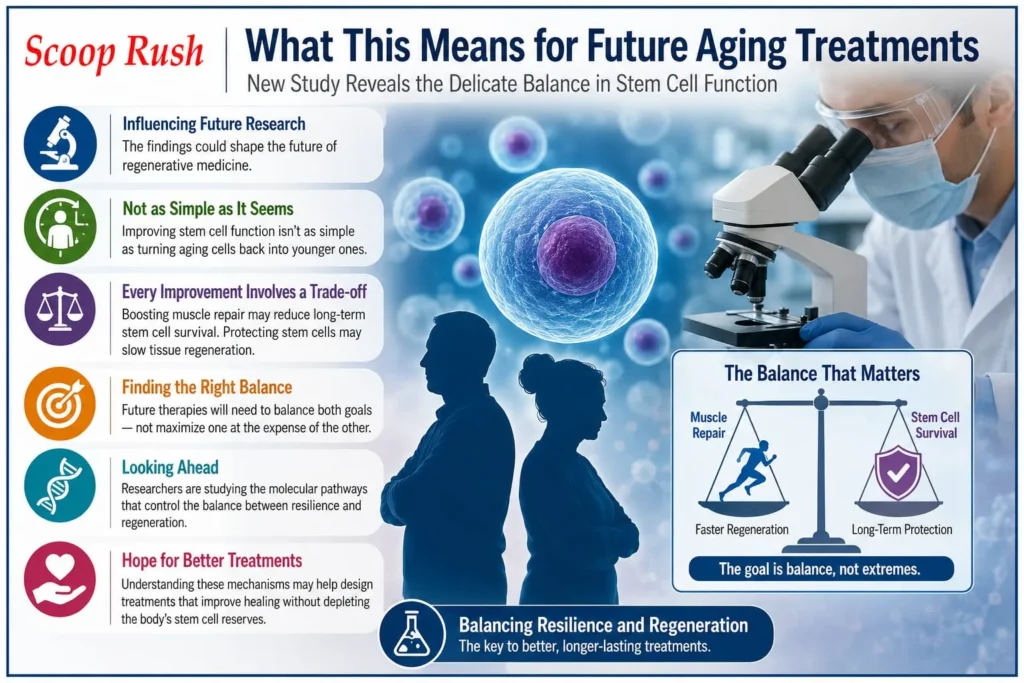
The findings could influence future regenerative medicine research.
Scientists have long searched for ways to restore youthful tissue repair in older adults.
However, this study suggests that improving stem cell function is not as simple as turning aging cells back into younger ones.
Every improvement may involve a trade-off.
Enhancing muscle repair could reduce long-term stem cell survival.
Protecting stem cells could slow tissue regeneration.
Future therapies will likely need to balance both goals rather than maximizing one at the expense of the other.
Researchers also plan to continue studying the molecular pathways that control this balance between resilience and regeneration.
Understanding these mechanisms may eventually help scientists design treatments that improve healing without exhausting the body’s stem cell reserves.
Why This Discovery Matters
Although this research was conducted in mice, it changes how scientists think about aging itself.
Instead of viewing older stem cells as damaged versions of younger cells, researchers now see them as cells that have adapted to survive under difficult conditions.
That perspective could reshape future studies on healthy aging, regenerative medicine, and muscle recovery.
The discovery also highlights an important lesson about biology.
Sometimes what appears to be a weakness is actually a survival strategy.
Slower muscle repair may be frustrating, but it could also help preserve the body’s ability to regenerate tissue over a much longer period.
Conclusion
The UCLA study provides valuable insight into why muscle healing slows with age. Researchers discovered that the protein NDRG1 acts as both a protector and a brake inside aging muscle stem cells. While it slows their ability to repair damaged tissue, it also helps them survive the stresses of aging.
Blocking NDRG1 allowed older stem cells to behave like younger ones and repair muscle more efficiently. However, this benefit came with a significant cost because fewer stem cells survived over time.
These findings suggest that aging is not simply a process of decline. Instead, it involves carefully balanced biological trade-offs that help preserve stem cells for the future while reducing their immediate performance. As scientists continue exploring these mechanisms, the research may eventually guide safer therapies that improve muscle repair without compromising long-term stem cell health.
FAQs
1. What are muscle stem cells?
Muscle stem cells, also called satellite cells, are specialized cells that repair damaged muscle tissue after injury.
2. What is NDRG1?
NDRG1 is a protein that increases in aging muscle stem cells. It slows muscle repair while helping the cells survive longer.
3. Why do older muscles heal more slowly?
According to the study, aging muscle stem cells contain higher levels of NDRG1, which delays their activation after injury.
4. Did scientists reverse muscle aging?
Not completely. Researchers temporarily restored youthful behavior in aged muscle stem cells by blocking NDRG1 in mice, but this also reduced long-term stem cell survival.
5. Could this research lead to anti-aging treatments?
The findings may help scientists develop future therapies that improve muscle repair. However, researchers say any treatment must carefully balance faster healing with preserving stem cell health.

