

Introduction: New Study Questions the Brain Benefits of Omega-3 Fish Oil Supplements
Millions of people take omega-3 fish oil supplements every day hoping they can improve memory, support brain health, and reduce the risk of Alzheimer’s disease. However, a major new clinical trial has found that omega-3 fish oil supplements may not provide the brain benefits many people expect.
The study discovered that although omega-3 from supplements successfully reached the brain, it did not improve memory, thinking ability, or slow brain changes linked to Alzheimer’s disease after two years.
Researchers from Keck Medicine of USC studied older adults who had a higher risk of developing Alzheimer’s disease. The results showed that high-dose omega-3 supplements performed no better than a placebo when it came to protecting brain function.
This new research challenges the popular belief that fish oil pills alone can prevent cognitive decline. Instead, scientists suggest that overall lifestyle choices, including a balanced diet, regular exercise, and quality sleep, may play a bigger role in supporting long-term brain health.
Omega-3 Fish Oil Supplements and Brain Health: What the New Study Found
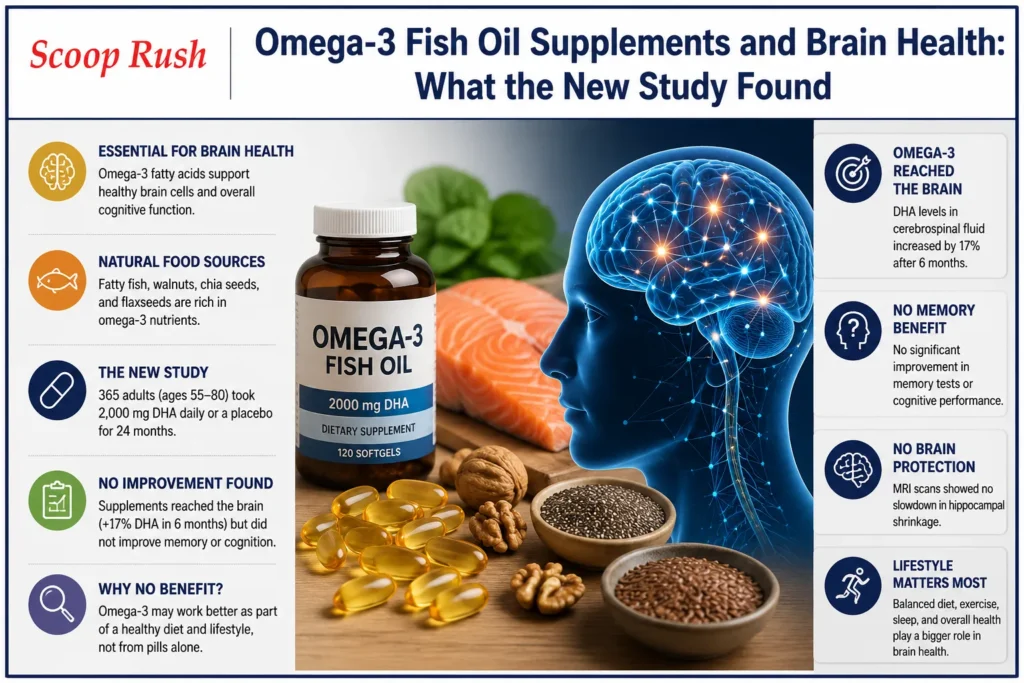
Omega-3 fatty acids are essential nutrients that help maintain healthy cells, including brain cells. Since the human body cannot produce omega-3 naturally, people must get these nutrients from foods or supplements.
Common food sources of omega-3 include fatty fish, walnuts, chia seeds, and flaxseeds.
For many years, researchers have studied omega-3 because of its role in brain function. Many people started using fish oil supplements because they believed these pills could protect memory and lower Alzheimer’s risk.
However, the new clinical trial found that increasing omega-3 levels in the brain through supplements did not automatically improve brain performance.
The study involved 365 adults between 55 and 80 years old. None of the participants had dementia, but they had risk factors associated with Alzheimer’s disease.
Nearly half of the participants carried the APOE4 gene, which is known as one of the strongest genetic risk factors for late-onset Alzheimer’s disease.
Researchers divided participants into two groups. One group received a daily omega-3 supplement containing 2,000 mg of DHA, while the second group received a placebo.
The research continued for 24 months and included memory tests, blood analysis, and MRI brain scans.
Omega-3 Reached the Brain, But Results Surprised Researchers
One major goal of the study was to discover whether omega-3 from supplements could actually reach the brain.
The researchers confirmed that it did.
After six months, DHA levels in cerebrospinal fluid increased by around 17%. This showed that the supplement successfully delivered omega-3 to the area surrounding the brain and spinal cord.
However, reaching the brain did not lead to better results.
Participants who took omega-3 supplements showed no significant improvement in memory tests or cognitive performance compared with people who received the placebo.
Brain scans also showed that supplements did not slow shrinkage of the hippocampus, a brain area strongly connected with memory and Alzheimer’s research.
Why Did Omega-3 Supplements Not Improve Memory?
Researchers are now investigating why omega-3 reached the brain but did not create noticeable improvements.
One possibility is that omega-3 may work differently when consumed through a complete healthy diet instead of a supplement alone.
A Mediterranean-style diet includes natural omega-3 sources such as fish, nuts, and seeds. This eating pattern is often connected with healthier lifestyle habits.
Researchers believe that the benefits of omega-3 may come from a combination of nutrients and healthy behaviors rather than from taking one supplement.
For example, people with healthier diets may also exercise more, sleep better, and maintain better overall health.
Therefore, simply increasing omega-3 levels through pills may not provide the same results as improving overall lifestyle habits.
Omega-3 Fish Oil Supplements Do Not Replace a Healthy Lifestyle
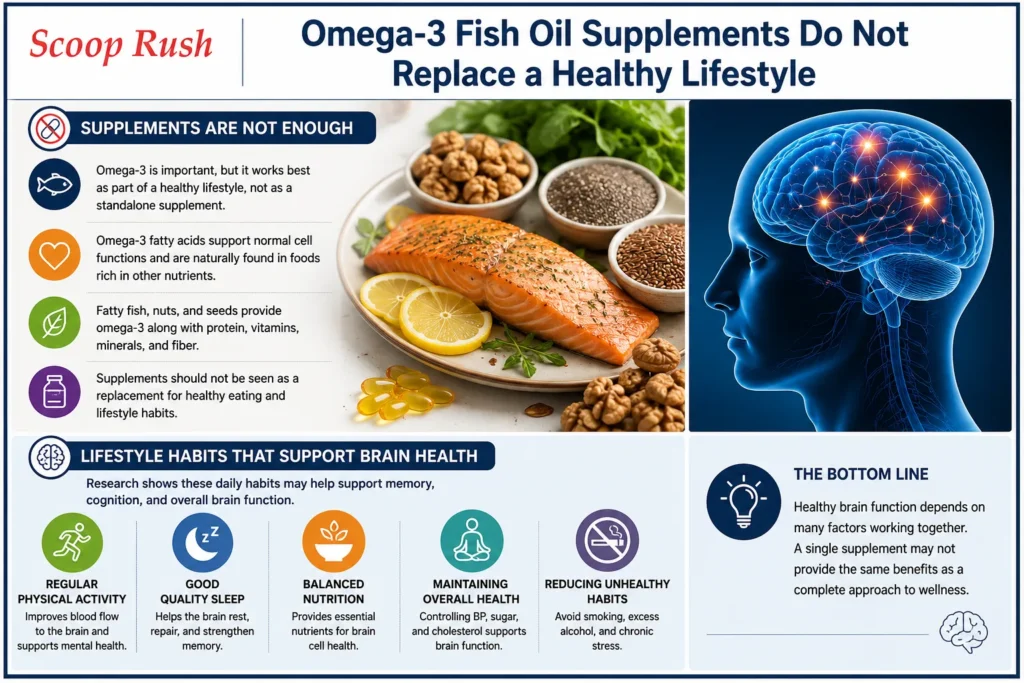
The study does not mean omega-3 is unnecessary. Instead, researchers explain that the way people consume omega-3 may influence its effects.
Omega-3 fatty acids remain important nutrients for the body. They support normal cell functions and are naturally found in foods that provide additional nutrients.
Fatty fish such as salmon and sardines provide omega-3 along with protein, vitamins, and minerals. Nuts and seeds also provide important nutrients that supplements may not contain.
However, researchers emphasize that supplements should not be viewed as a replacement for a healthy lifestyle.
Exercise, Sleep, and Diet Still Support Brain Health
Although lifestyle factors were not directly tested in this study, researchers highlighted several habits that may support brain function.
These include:
- Regular physical activity
- Good quality sleep
- Balanced nutrition
- Maintaining overall health
- Reducing unhealthy habits
Healthy brain function depends on many factors working together. A single supplement may not provide the same benefits as a complete approach to wellness.
What This Study Means for People Taking Fish Oil Supplements
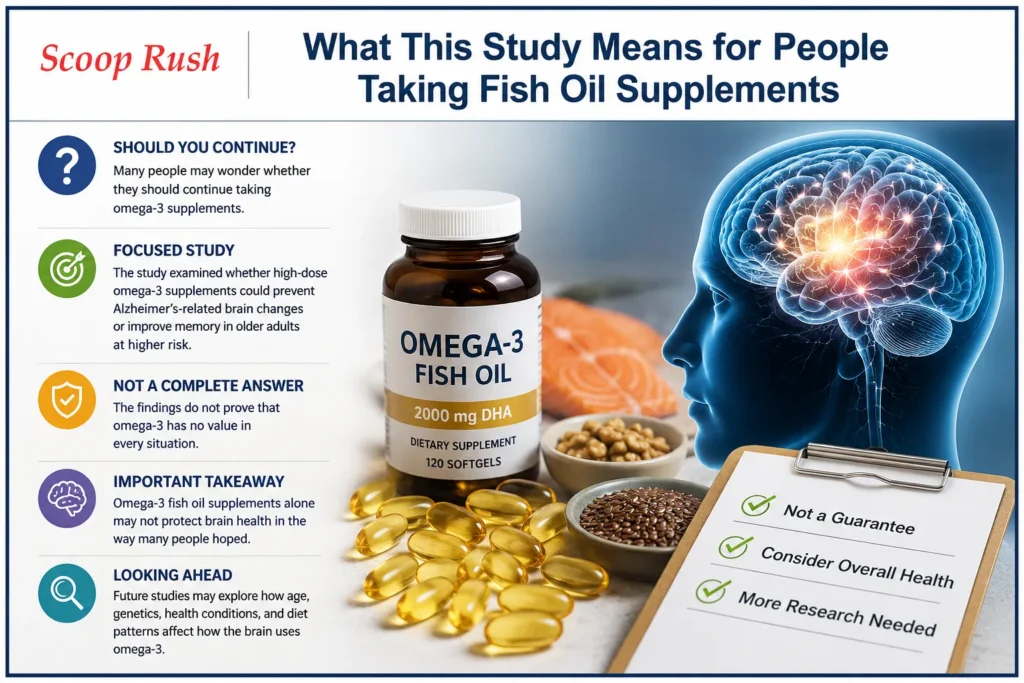
Many people may now wonder whether they should continue taking omega-3 supplements.
The study focused specifically on whether high-dose omega-3 supplements could prevent Alzheimer’s-related brain changes or improve memory in older adults at higher risk.
The findings do not prove that omega-3 has no value in every situation.
Instead, the research shows that omega-3 fish oil supplements alone may not protect brain health in the way many people hoped.
Future studies may explore how factors such as age, genetics, health conditions, and diet patterns affect how the brain uses omega-3.
The Future of Omega-3 Research and Alzheimer’s Prevention
Scientists continue to study how nutrition affects brain health and cognitive aging.
The new findings may change the way researchers study omega-3 and Alzheimer’s prevention. Instead of focusing only on supplements, future research may examine complete diets and personalized health approaches.
Researchers are also exploring whether certain people respond differently to omega-3 based on genetic factors such as APOE4.
Ultimately, protecting brain health appears to require multiple healthy habits working together rather than depending on one simple solution.
Conclusion: What the New Omega-3 Study Means for Brain Health
The latest research on omega-3 fish oil supplements shows that taking a supplement alone may not be enough to improve memory or protect the brain against Alzheimer’s-related changes.
Although omega-3 successfully reached the brain, researchers found no significant improvement in cognitive performance or brain structure compared with a placebo.
The study highlights the importance of looking at brain health as a complete picture. A balanced diet, regular exercise, quality sleep, and healthy daily habits may have a greater impact than relying only on supplements.
While omega-3 remains an important nutrient, this research suggests that the best approach may come from combining healthy food choices with an overall healthy lifestyle.
FAQs
1. Do omega-3 fish oil supplements improve memory?
A new clinical trial found that omega-3 fish oil supplements did not improve memory or thinking ability in older adults at higher risk of Alzheimer’s disease.
2. Did omega-3 supplements reach the brain?
Yes. Researchers found that DHA levels increased in cerebrospinal fluid, showing that omega-3 successfully reached the brain.
3. Should people stop taking omega-3 supplements?
The study does not suggest that everyone should stop taking omega-3 supplements. It shows that supplements alone may not provide the brain benefits many people expect.
4. What foods naturally contain omega-3?
Omega-3 can be found in foods such as fatty fish, walnuts, chia seeds, and flaxseeds.
5. What habits support brain health besides omega-3?
Researchers highlight healthy habits such as regular exercise, quality sleep, balanced nutrition, and maintaining overall health as important factors for brain function.

