
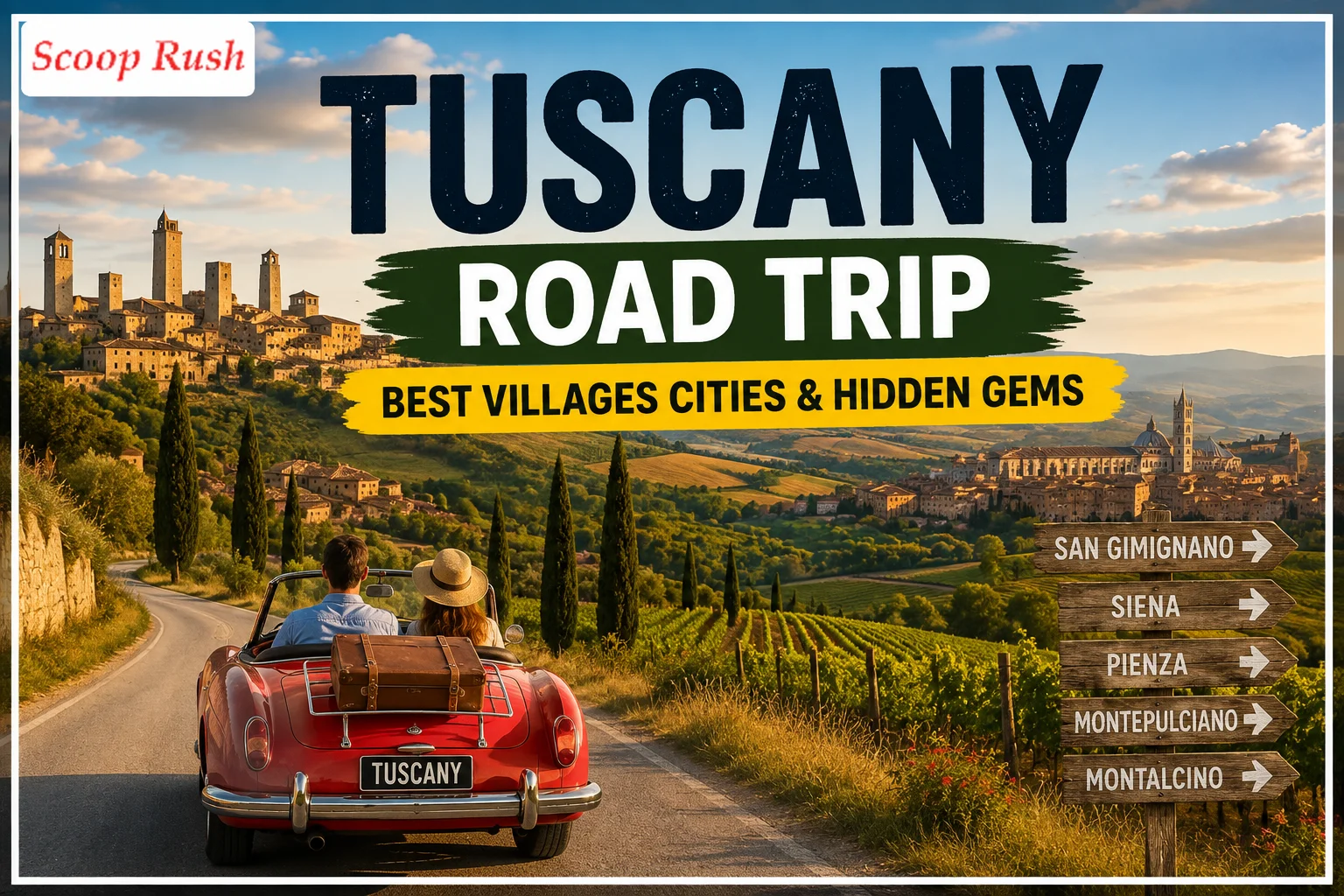
Planning a Tuscany road trip this year? This Italian region offers medieval towns, rolling vineyards and cypress-lined roads. A well planned Tuscany road trip lets travelers explore hilltop villages that trains simply cannot reach. From Pisa to the Val d’Orcia, this guide covers every major stop worth adding to your itinerary.
Tuscany rewards travelers who move slowly and follow their own pace. Every village along the way has its own charm, and no single list can capture all of it. This guide focuses on the stops that consistently impress first time visitors and returning travelers alike. It also highlights practical details like parking rules and vehicle choice, so the trip stays smooth from start to finish.
Why a Tuscany Road Trip Is Worth Planning
Tuscany sits between the Tyrrhenian Sea and the Apennine mountains. Florence serves as its capital, but smaller UNESCO listed cities like Siena, Pisa and Lucca deserve equal attention. Beyond these cities, the countryside hides fortified villages perched on ridges and roads that curve endlessly through vineyards.
Trains connect the major cities well, but they cannot reach the Val d’Orcia or villages like San Gimignano and Volterra. Therefore, a car remains the only practical way to see the region fully. A week long trip gives travelers enough time to enjoy both the famous stops and the quiet corners that most tourists miss.
Best Starting Points: Pisa, Lucca and Florence
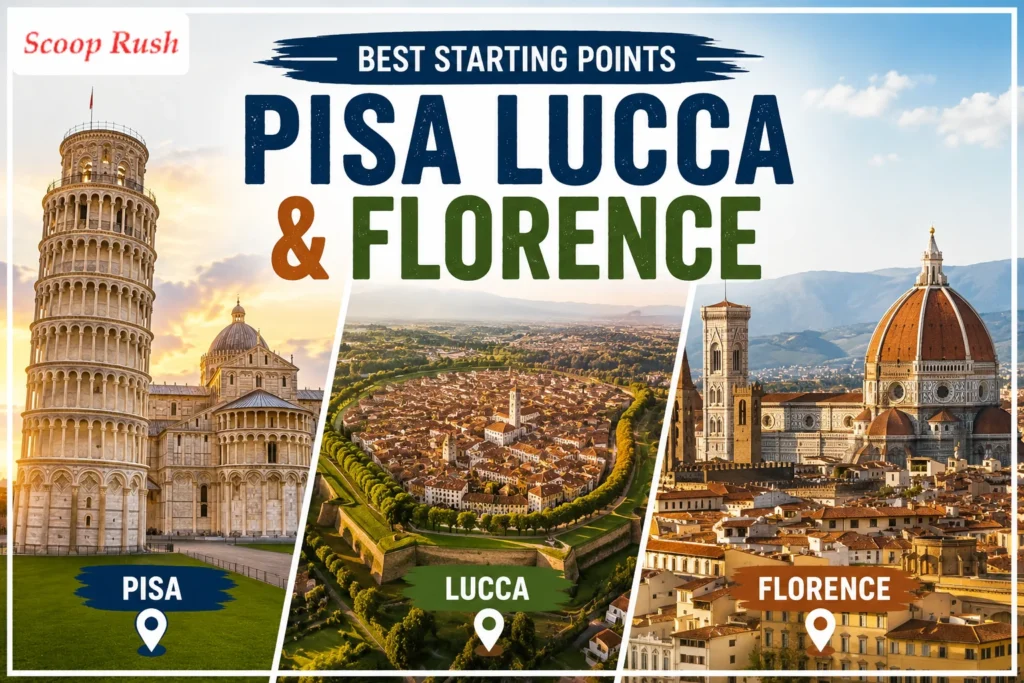
Pisa makes an ideal starting point for any Tuscany road trip. Its airport sits just three kilometers from the city center, and flights are often cheaper than those into Florence. Visitors can explore the Leaning Tower, the Duomo and the Baptistery in half a day before picking up a rental car and hitting the road.
Lucca lies thirty minutes east of Pisa and features some of the best preserved medieval walls in Italy. Travelers can walk or bike the full four kilometer wall circuit for sweeping views. Florence, meanwhile, needs at least two full days. The Duomo, Brunelleschi’s dome and the Uffizi Gallery alone justify the extra time.
Hilltop Villages You Cannot Skip
San Gimignano remains the most photographed village in Tuscany thanks to its medieval towers. Fourteen towers still stand from an original seventy two, and each one was built by wealthy families competing for status. Cobblestone alleys lead visitors to the Piazza della Cisterna, one of the prettiest squares in the region.
Volterra sits quietly nearby on a ridge at 550 meters and attracts far fewer crowds. Montepulciano and Montalcino both offer excellent wine tasting alongside sweeping countryside views. Smaller villages like Radda, Greve and Castellina di Chianti round out a well balanced Chianti detour that most tourists overlook.
Siena and the Val d’Orcia Countryside
Siena deserves an overnight stay rather than a rushed day visit. The Piazza del Campo forms the heart of the city, and its shell shaped design tilts gently toward the center. The cathedral’s black and white marble facade ranks among the finest Gothic buildings in all of Italy.
South of Siena, the Val d’Orcia delivers the postcard views most people picture when they think of Tuscany. Rolling hills, cypress trees and isolated farmhouses define this UNESCO listed valley. Pienza, built as a Renaissance ideal city, offers ramparts with some of the best valley views in the entire region.
Choosing the Right Car and Avoiding ZTL Fines
A compact car handles most of this route comfortably. Main roads between Pisa, Florence and Siena stay wide and well maintained. However, roads leading into Chianti villages or toward Volterra often narrow considerably, so a smaller vehicle helps avoid tight turns and cramped parking areas.
Travelers should also watch for ZTL zones, which are limited traffic areas found in every major city center. Driving into these zones without authorization can trigger an automatic fine near 110 dollars. The safest approach is to park at designated lots outside the ZTL and continue on foot into the historic center.
Hidden Gems Beyond the Main Route
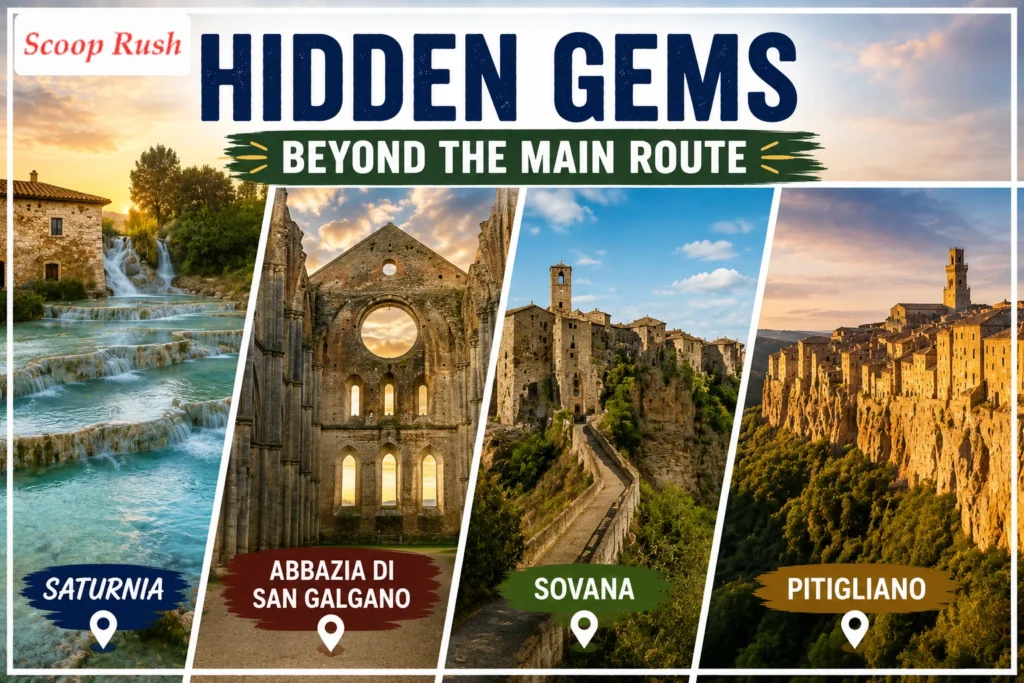
Beyond the well known stops, Tuscany hides several lesser known treasures worth a detour. The Saturnia hot springs offer free natural thermal pools that stay open all year. The roofless Abbazia di San Galgano abbey creates a hauntingly beautiful stop for history lovers.
Sovana offers a quiet escape inside an archaeological park built from volcanic tuff stone. Pitigliano, carved directly into cliffs, provides one of the most dramatic sights in southern Tuscany. These spots rarely appear in standard tour packages, which makes them ideal for travelers seeking something different.
Final Thoughts on Planning Your Trip
A Tuscany road trip rewards travelers who balance famous landmarks with quiet detours. Cities like Florence and Siena deliver world class art and architecture, while villages like San Gimignano and Pienza show the slower side of Italian life. Renting a compact car and planning around ZTL zones keeps the journey stress free from start to finish.
Ultimately, the best Tuscany itinerary leaves room for spontaneity. A quick stop at a roadside vineyard or an unplanned detour to a hilltop chapel often becomes the most memorable part of the trip. With a week on the road and this guide as a reference, travelers can experience the full range of what Tuscany has to offer.
FAQs
1. How many days do you need for a Tuscany road trip?
Seven days works well for most travelers. This timeframe covers major cities and several villages without feeling rushed.
2. Is it better to fly into Pisa or Florence for a Tuscany trip?
Pisa often works better since flights are cheaper and the rental car pickup sits near the airport.
3. Do you need a car to visit Tuscan villages like San Gimignano?
Yes, most hilltop villages have no train station, so a rental car remains the only reliable option.
4. What is a ZTL zone in Tuscany?
A ZTL is a limited traffic zone inside historic city centers. Driving in without permission results in an automatic fine.
5. What is the best time of year for a Tuscany road trip?
Spring and early autumn offer mild weather and fewer crowds compared to the busy summer season.

