
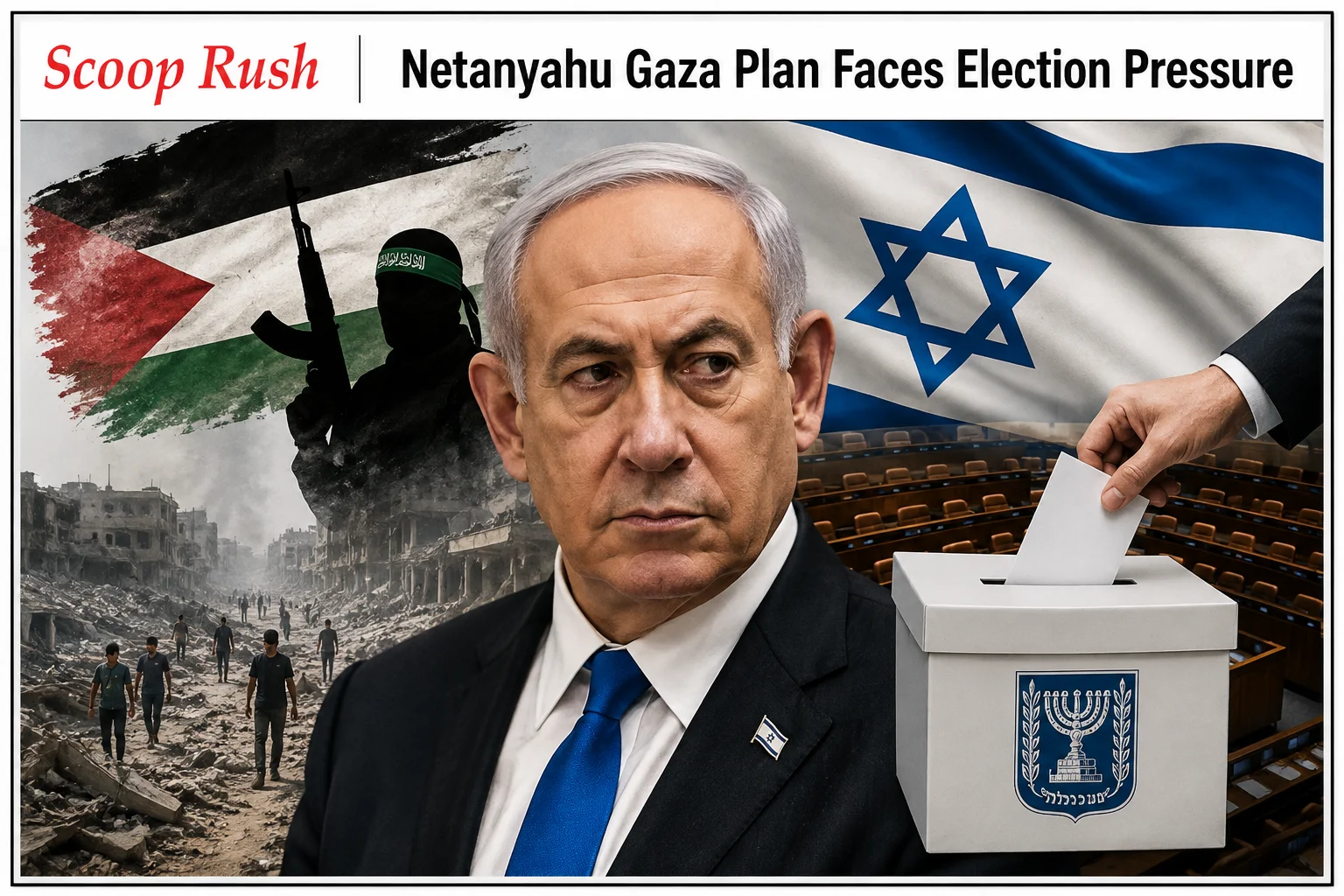
Israeli Prime Minister Benjamin Netanyahu has rejected the Netanyahu Gaza plan backed by US President Donald Trump. He said Israel will not withdraw its forces until Hamas fully disarms. His decision has created fresh tension with Washington.
The dispute comes ahead of Israel’s October 27, 2026 election. Netanyahu faces pressure from his far-right coalition partners. His latest position also reflects growing security concerns among Israeli voters.
Hamas Disarmament Becomes the Main Dispute
The Netanyahu Gaza plan dispute mainly concerns the timing of Hamas disarmament. Trump’s proposal supports a phased process connecting weapons removal with Israeli military withdrawals. Netanyahu wants complete disarmament before any withdrawal begins.
Netanyahu says Israel cannot leave Gaza while Hamas retains military capabilities. He has demanded the removal of heavy and light weapons. This position creates a major obstacle to Trump’s proposed roadmap.
Trump Faces a New Challenge From Netanyahu
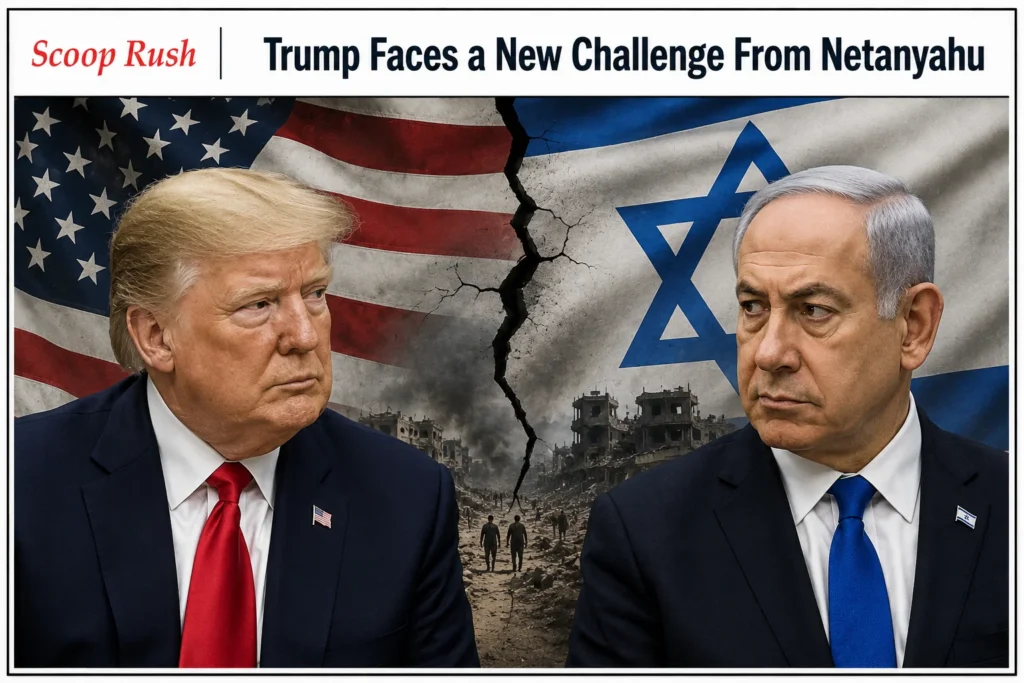
The disagreement has created tension between Trump and Netanyahu. Trump wants his Gaza roadmap to produce meaningful progress. Netanyahu’s rejection could make that objective more difficult.
However, Netanyahu also relies on strong US support. A serious dispute with Washington could create diplomatic problems. Despite that risk, he appears ready to defend his position publicly. This could test the close relationship between both leaders.
Election Pressure Shapes Netanyahu’s Position
The upcoming Israeli election adds another important factor. Voters will choose their next government on October 27, 2026. Recent polling suggests Netanyahu faces a challenging campaign.
His government depends on right-wing coalition partners. These parties strongly oppose concessions involving Hamas and Gaza. Netanyahu therefore has strong political reasons to maintain a tough position. His stance could help him retain support from those key allies.
Security Concerns Remain Central to the Debate
Israeli security remains at the heart of Netanyahu’s argument. The October 7, 2023 attack continues to influence political discussions across Israel. Many voters remain concerned about preventing another major attack.
Netanyahu presents Hamas disarmament as essential for long-term security. His position could appeal to voters who want stronger guarantees. It also helps him maintain support among conservative groups.
Hamas Rejects Israel’s Demands for Full Disarmament
Hamas says it remains committed to the broader Gaza roadmap. However, major differences remain over weapons and Israeli military withdrawal. The group wants Israel to meet its own commitments under the agreement.
Netanyahu demands complete disarmament before Israeli forces leave. Hamas faces pressure to surrender weapons while also seeking an Israeli withdrawal. This disagreement makes negotiations particularly difficult.
A Phased Withdrawal Could Offer a Possible Solution
US envoy Nickolay Mladenov has suggested a phased approach. Under this proposal, verified weapons removal could allow Israeli forces to withdraw from specific areas. The process would depend on clear verification.
Netanyahu has not accepted that sequence. He wants complete disarmament before any withdrawal takes place. Both sides therefore remain divided over which step should come first.
Political Disagreements Could Slow the Gaza Process
The dispute could delay the next phase of the agreement. The proposed process requires cooperation on disarmament, verification, and Israeli withdrawals. Any disagreement could prevent further progress.
The United States may now face pressure to find common ground. Washington must balance its relationship with Netanyahu against Trump’s desire for progress. The coming weeks could reveal whether compromise remains possible.
Gaza’s Future Also Depends on the Agreement
The proposed roadmap includes plans for Gaza’s future administration and reconstruction. Progress on those issues depends partly on resolving the security dispute. Continued disagreements could therefore delay broader plans.
For Gaza’s civilian population, the uncertainty remains serious. Political decisions about disarmament and withdrawal directly affect future conditions. The ongoing dispute could keep reconstruction and governance plans in limbo.
Netanyahu Faces a Difficult Political Calculation
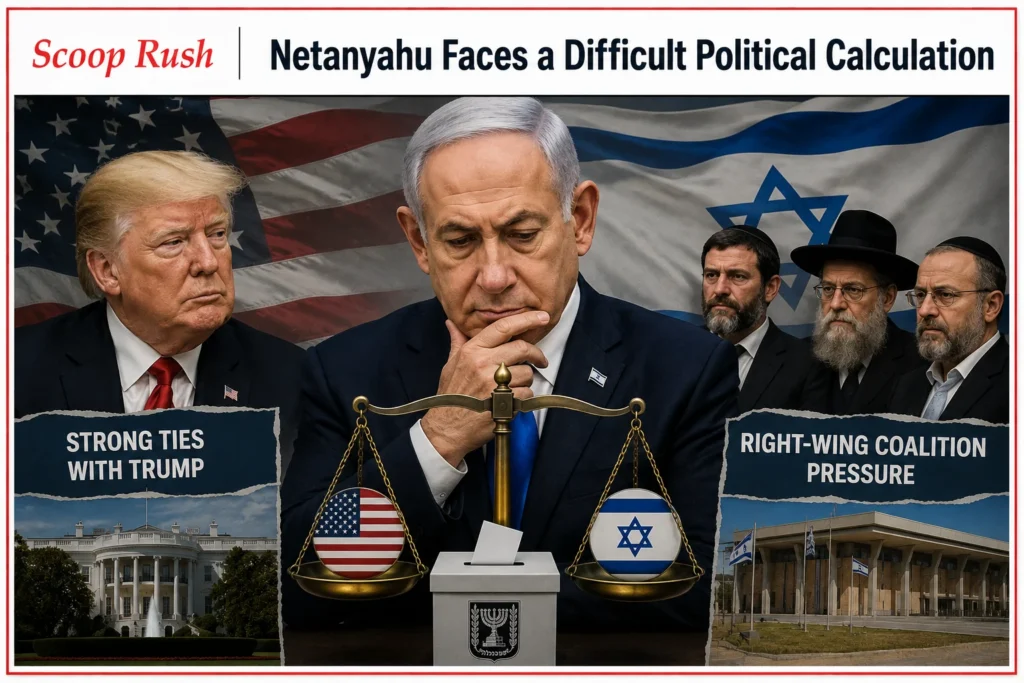
Netanyahu must balance two competing priorities. He needs strong relations with Trump while keeping his right-wing coalition together. Those objectives could become harder to manage as the election approaches.
For now, Netanyahu appears willing to risk tension with Washington. His priority remains complete Hamas disarmament before an Israeli withdrawal. That position could shape both his campaign and future negotiations.
What Could Happen Next?
US officials are likely to continue efforts to bridge the differences. Mladenov’s phased approach could provide a possible path forward. However, Israel must first accept a process that allows withdrawal before total disarmament.
Netanyahu’s election campaign will also influence future decisions. He needs support from coalition partners and security-focused voters. Therefore, his Gaza position could remain firm until Israelis vote in October.
Conclusion
The Netanyahu Gaza plan dispute centers on Hamas disarmament and Israeli withdrawal. The biggest disagreement concerns which step should happen first. Israel wants complete disarmament before withdrawal, while Trump’s roadmap supports a phased process.
The situation could change through further negotiations. US pressure, Hamas’s response, and Israel’s election could all influence the next steps. For now, the disagreement remains unresolved.
FAQs
1. Why did Netanyahu reject Trump’s Gaza plan?
Netanyahu rejected the plan because he wants Hamas completely disarmed before Israeli forces withdraw. He does not support withdrawal based on partial disarmament.
2. What does Trump’s Gaza roadmap propose?
Trump’s roadmap supports phased Hamas disarmament alongside Israeli military withdrawals. It also includes plans for international involvement and Gaza’s future administration.
3. Why does Israel’s election matter?
Netanyahu needs support from his right-wing coalition partners. Those parties strongly oppose major concessions involving Hamas and Gaza.
4. What is Hamas’s position?
Hamas says it remains committed to the broader roadmap. However, it expects Israel to fulfill its own commitments under the agreement.
5. Could the disagreement delay the Gaza agreement?
Yes. The dispute could slow negotiations because Israel and Hamas disagree over disarmament and withdrawal. Further US mediation may be needed to reach a compromise.

