
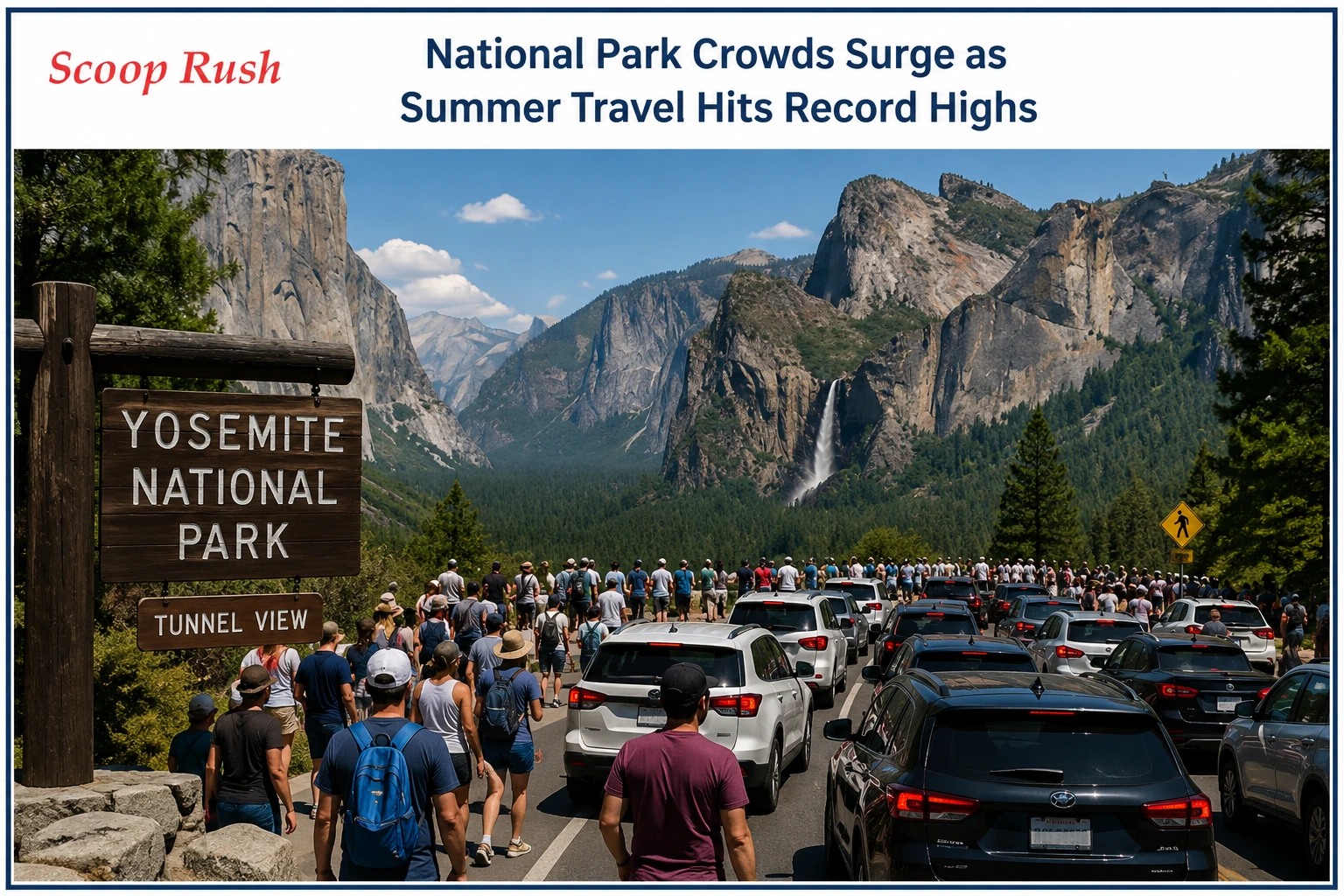
National Park Crowds continue to grow across the United States as millions of travelers head to famous destinations this summer. Parks such as Yellowstone, Yosemite, Zion, and Mount Rushmore have reported heavy traffic, long shuttle lines, and packed parking lots. Many visitors say the experience feels more like visiting a busy city or a major theme park than exploring nature. At the same time, park officials continue to manage record demand with fewer resources.
National Park Crowds Bring Heavy Traffic to Popular Destinations
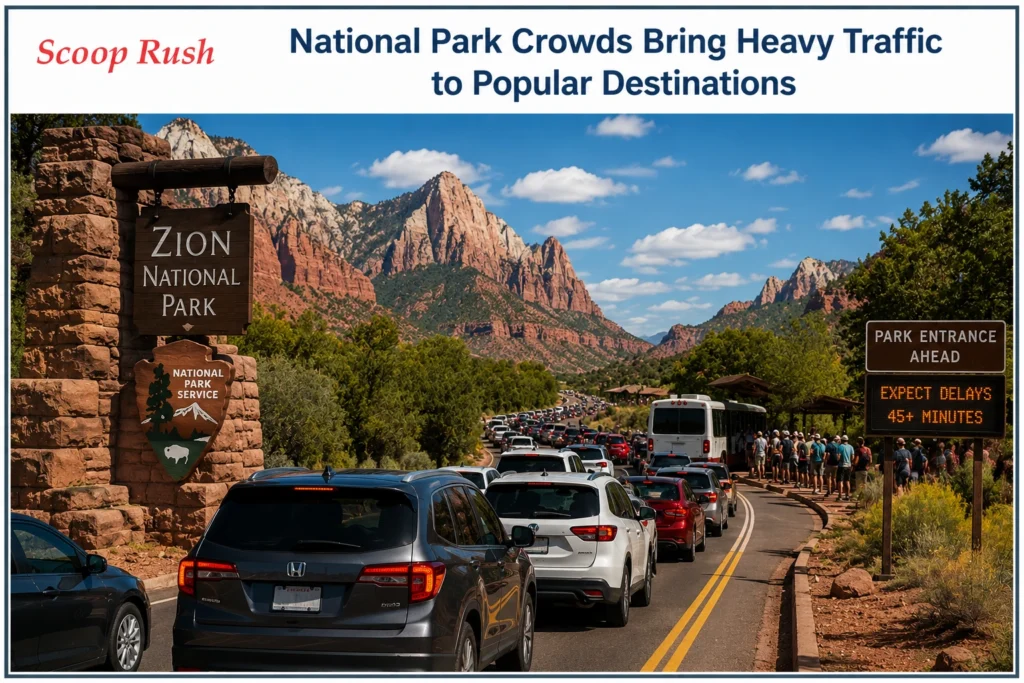
Visitors across the country have shared similar experiences this season. Long vehicle lines now greet travelers before they even enter some of America’s most famous parks.
At Zion National Park in Utah, visitors waited nearly 45 minutes just to reach the entrance. Shuttle lines also stretched for long periods, leaving many travelers comparing the experience to waiting for rides at Disney World.
Yosemite National Park also experienced major congestion after officials ended its timed reservation system earlier this year. Parking lots filled early in the day, and many trailhead spaces disappeared before visitors arrived. Roads became packed with bumper-to-bumper traffic during peak hours.
National Park Crowds Continue to Break Visitor Records
The growing demand shows no signs of slowing down.
Last year, 26 National Park Service sites recorded their highest visitor numbers ever. This summer has continued the trend.
Yellowstone National Park reported another record-breaking May. Visitors faced crowded parking areas, busy roads, and longer travel times throughout the park. Yosemite also welcomed record numbers during the same month, making early summer one of its busiest periods in recent years.
Travel experts believe the strong interest reflects a long-term increase in outdoor tourism rather than a short seasonal trend.
Fourth of July Celebrations Added Even More Visitors

Holiday events increased crowds at several national parks.
Mount Rushmore National Memorial attracted thousands of visitors during its Independence Day celebrations. Many travelers planned their trips months in advance. However, some later discovered they needed to win a lottery just to attend the fireworks event.
Those who did not receive tickets watched the celebration from nearby campsites. Large crowds also filled gift shops, visitor areas, and surrounding roads throughout the holiday weekend. Additional security measures created more traffic after President Donald Trump attended the fireworks celebration.
Staffing Challenges Add Pressure on National Parks
While visitor numbers continue to rise, many parks now operate with fewer employees.
According to the National Parks Conservation Association, the National Park Service lost nearly one-quarter of its permanent workforce during 2025. Budget reductions and years of deferred maintenance have also placed additional pressure on park operations.
Park staff continue to focus on visitor services, maintenance, public safety, and protecting natural resources. However, experts warn that fewer employees may affect visitor experiences and long-term conservation efforts.
Some specialists also believe removing reservation systems has increased congestion at several popular parks.
Why National Park Crowds Keep Growing
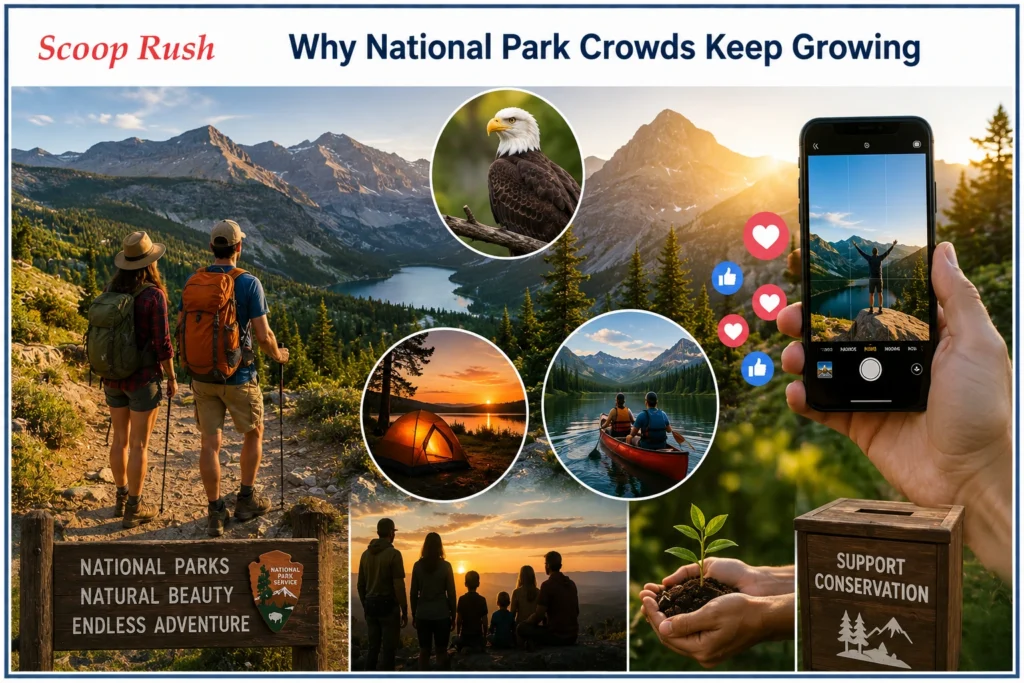
Several factors continue to drive visitor numbers higher.
Many Americans enjoy affordable outdoor vacations that offer hiking, wildlife viewing, camping, and scenic landscapes. Social media also plays an important role. Stunning photos and travel videos inspire more people to visit famous destinations every year.
Researchers say this trend has continued for more than a decade. Although crowded conditions create challenges, they also encourage more people to appreciate nature and support conservation.
Travelers Can Still Find Less Crowded Parks
Experts recommend exploring lesser-known parks instead of visiting only the most famous destinations.
Popular parks often receive most of the attention, while many beautiful locations remain quiet throughout the summer.
Travel companies encourage visitors to consider places such as North Cascades National Park in Washington or Capitol Reef National Park in Utah. These parks offer breathtaking scenery, hiking opportunities, and a more peaceful experience without overwhelming crowds.
Planning weekday visits, arriving early in the morning, or traveling during spring and fall can also help visitors avoid the busiest times.
Outlook for the Rest of Summer
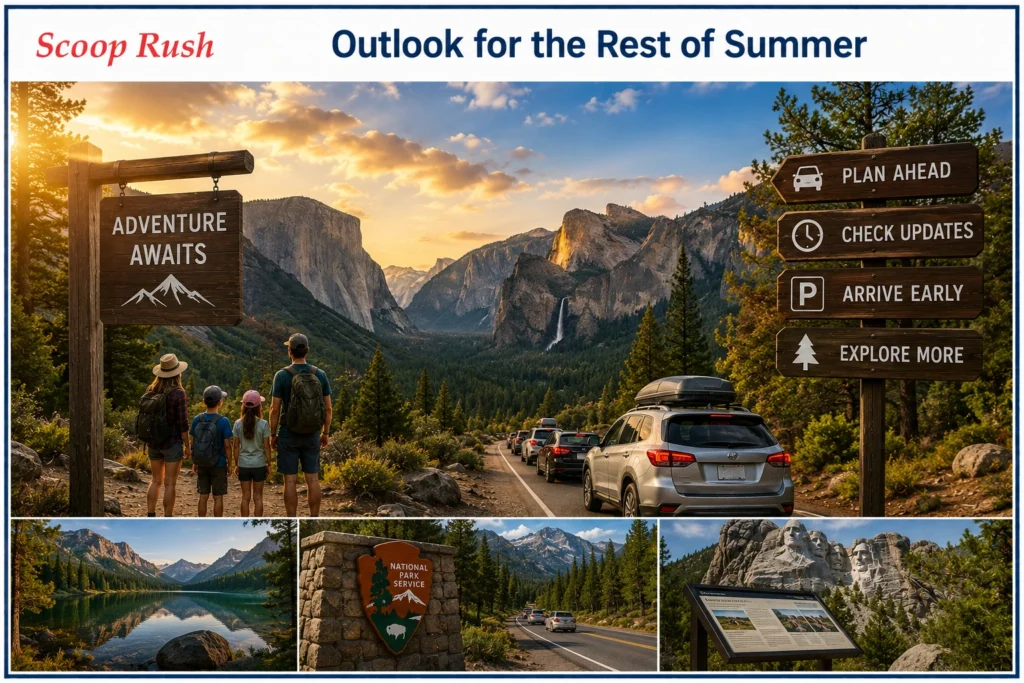
The summer travel season remains strong, and visitor numbers will likely stay high through August.
Travelers should expect busy roads, limited parking, and longer wait times at America’s most popular national parks. Planning ahead, checking park updates, and exploring lesser-known destinations can help create a more enjoyable experience.
Despite the crowds, national parks continue to inspire millions of visitors with their natural beauty and historic landmarks.
How Overcrowding Affects the Visitor Experience
The sharp rise in National Park Crowds has changed the way many people experience America’s most popular parks. Visitors now spend more time waiting in traffic, searching for parking, and standing in shuttle lines. In some locations, crowded trails make it difficult to enjoy peaceful hikes or take photographs.
Families also face longer waits at visitor centers, restrooms, and restaurants. During holiday weekends, many facilities reach full capacity early in the day. Travelers who arrive without planning ahead may struggle to find parking or even enter some attractions.
Many visitors still describe their trips as memorable because of the parks’ natural beauty. However, they also say that better planning has become essential for a successful visit.
Local Communities Also Feel the Impact
The increase in visitors benefits many communities located near national parks. Hotels, restaurants, campgrounds, and outdoor tour companies welcome more customers during the busy season. Local businesses often depend on summer tourism for a large share of their yearly income.
At the same time, nearby towns also face new challenges. More vehicles create traffic congestion on local roads. Popular restaurants and hotels often reach full capacity, while campgrounds sell out weeks in advance. Local services must work harder to meet the growing demand from visitors.
Experts Encourage Smarter Travel Planning
Travel experts believe visitors can still enjoy America’s national parks by making a few simple changes to their travel plans.
Booking accommodations several months before the trip can help travelers secure better options. Arriving early in the morning also reduces the chances of getting caught in long entrance lines. Many experts recommend visiting during weekdays because weekends usually attract the largest crowds.
Choosing lesser-known parks can also provide a better experience. These parks offer beautiful scenery, wildlife, hiking trails, and outdoor adventures without the heavy congestion found at the country’s most famous destinations.
The Future of America’s National Parks
Park experts believe visitor numbers will continue to increase over the coming years. Outdoor recreation remains popular with families, photographers, hikers, and international tourists. Social media continues to introduce millions of people to breathtaking landscapes across the United States.
This growing interest creates both opportunities and challenges. More visitors help people connect with nature and support local tourism. However, continued investment in park staff, infrastructure, and conservation will play an important role in protecting these landscapes for future generations.
Balancing tourism with conservation will remain one of the National Park Service’s biggest priorities as demand continues to grow.
Conclusion
National Park Crowds have reached record levels during the summer of 2026, turning many of America’s most famous destinations into some of the busiest tourist attractions in the country. Heavy traffic, packed parking lots, and long wait times have become common at parks such as Yellowstone, Yosemite, Zion, and Mount Rushmore. Despite these challenges, millions of visitors continue to choose national parks because of their breathtaking scenery, outdoor activities, and historic landmarks.
As travel demand continues to rise, careful planning will help visitors enjoy a smoother experience. Arriving early, avoiding peak travel days, and exploring lesser-known parks can reduce stress while supporting more sustainable tourism. With the right balance between visitor access and conservation, America’s national parks can continue to inspire travelers while protecting their natural beauty for generations to come.
FAQs
1. Why are national parks seeing record crowds in 2026?
National parks have become a top choice for summer travel. Many families prefer outdoor vacations, while social media continues to inspire more people to visit popular parks across the United States.
2. Which national parks are the busiest this summer?
Some of the busiest parks include Yellowstone National Park, Yosemite National Park, Zion National Park, and Mount Rushmore National Memorial. Visitors have reported long entrance lines, heavy traffic, and crowded attractions.
3. What caused the increase in Yosemite visitors?
Yosemite removed its timed entry reservation system earlier this year. As a result, more visitors have entered the park during peak periods, leading to busier roads, full parking lots, and longer wait times.
4. Do staffing shortages affect visitors at national parks?
Yes. The National Park Service continues to operate with fewer permanent employees. While staff members focus on visitor safety and essential services, limited staffing can increase wait times and place extra pressure on park operations.
5. What is the best way to avoid large crowds at national parks?
Plan your visit on weekdays, arrive early in the morning, and avoid holiday weekends whenever possible. You can also explore less-visited parks, such as North Cascades National Park or Capitol Reef National Park, for a quieter and more relaxing experience.

