
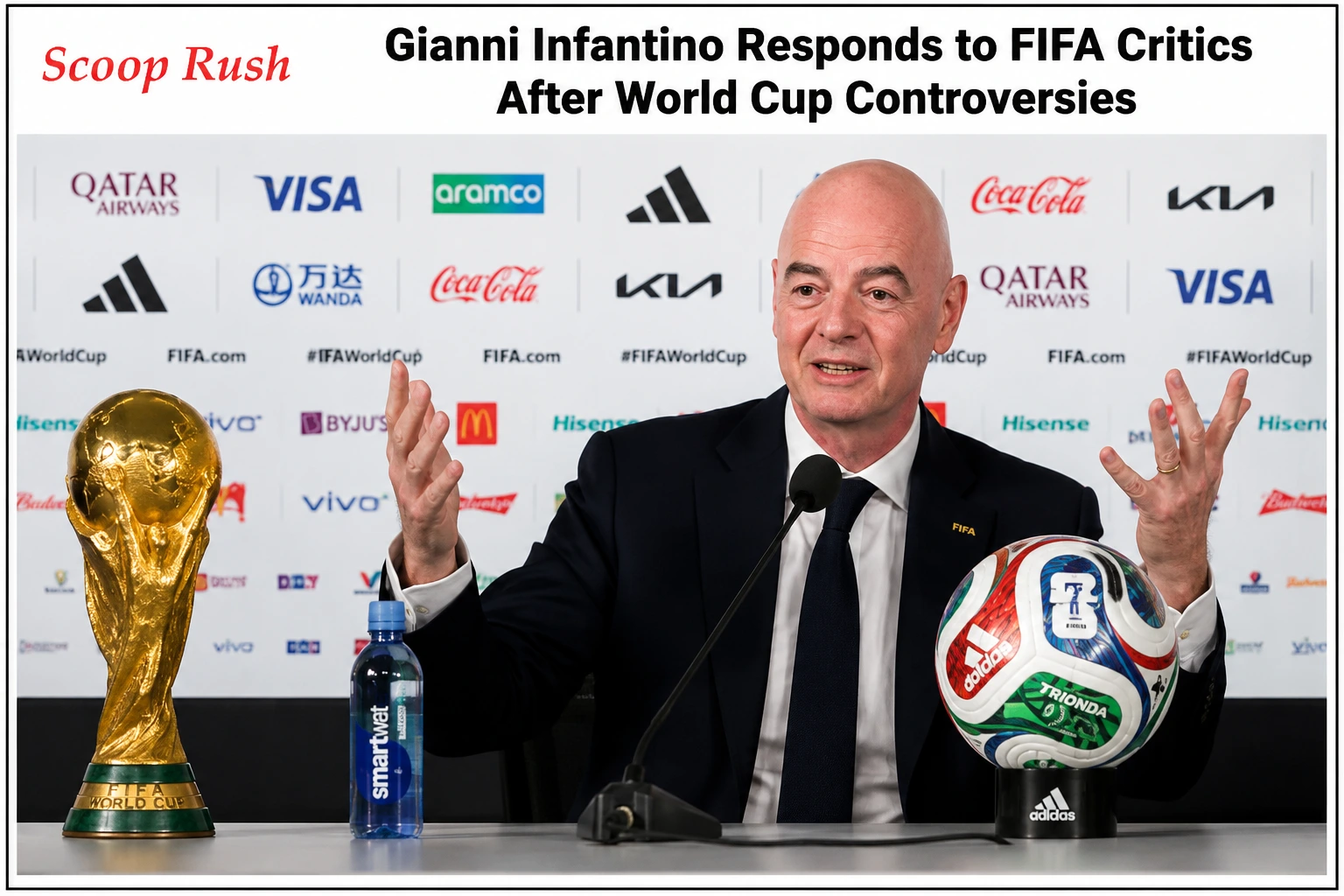
Gianni Infantino FIFA Critics: FIFA President Defends World Cup Amid Fresh Backlash
Gianni Infantino Responds to FIFA Critics After World Cup Controversies became one of the biggest talking points after the FIFA president defended the tournament against growing criticism. “Meditate, pray or watch a football match.” Those were the words FIFA president Gianni Infantino used as he responded to growing criticism following the FIFA World Cup. Instead of avoiding the debate, Infantino directly addressed journalists, commentators, and online critics in a lengthy social media statement that quickly attracted worldwide attention.
The Gianni Infantino FIFA Critics debate has become one of the biggest talking points after the tournament. While FIFA celebrated record crowds, global interest, and what it described as a successful event, critics continued raising concerns about visa issues, controversial disciplinary decisions, security claims, and political influence.
Infantino insisted the tournament united people through football. However, many observers believe important questions about FIFA’s handling of the World Cup remain unanswered. His response has therefore added another chapter to an already controversial tournament.
Why Gianni Infantino Responded to FIFA Critics
Gianni Infantino shared a 15-slide message on his personal Instagram account. FIFA later reposted the statement to its official account, allowing millions of followers to read his comments.
Rather than focusing only on football, Infantino addressed those who had questioned FIFA’s leadership and management of the World Cup.
He argued that some critics were spreading “hate and false rumours” instead of recognizing what the tournament had achieved.
According to Infantino, the competition represented:
- Unity among nations
- A celebration of humanity
- Joy for supporters
- A safe environment for fans
- The power of football to bring people together
He urged critics to spend less time attacking FIFA and more time appreciating the emotions football creates around the world.
Gianni Infantino FIFA Critics Statement Sparks Global Discussion
Infantino’s message immediately generated worldwide attention because it arrived after weeks of criticism surrounding the World Cup.
Throughout his statement, he praised FIFA’s efforts while rejecting many of the concerns raised during the tournament.
He said football had united millions of people regardless of nationality, politics, religion, or background.
According to Infantino, those watching from inside the stadiums experienced unforgettable moments with their families and friends.
Meanwhile, he suggested many critics failed to appreciate those positive experiences because they focused only on negative headlines.
His strongest message came near the end of the statement when he encouraged opponents to:
“Reflect, meditate, pray or watch a football match.”
That sentence quickly became one of the most discussed quotes following the tournament.
Why the FIFA World Cup Faced So Much Criticism
Although FIFA praised the tournament, several major controversies attracted international attention.
These issues shaped public discussion before, during, and after the competition.
Visa Delays Created Problems for Teams and Fans
One of the biggest concerns involved international travel.
Infantino acknowledged that some visitors experienced visa problems. However, he argued that critics ignored the millions of supporters who entered the host country successfully.
His statement emphasized that only a small number of people were denied entry compared to the overall number of approved visitors.
However, several reported issues affected different participants.
According to the information available:
- Iran experienced visa delays before the tournament.
- Members of Iran’s support staff were refused entry into the United States.
- Some Iranian supporters lost their ticket allocations.
- Iran moved its training base from Tucson, Arizona, to Tijuana, Mexico because of logistical difficulties.
- The team also faced restrictions while travelling between its training base and match venues.
These challenges became one of the tournament’s most widely discussed off-field issues.
Travel Restrictions Extended Beyond Iran
The travel concerns were not limited to one country.
Supporters from Haiti, Senegal, and Ivory Coast were also affected by travel bans introduced by the Trump administration.
Meanwhile, Somali referee Omar Artan was denied entry into the United States despite holding a diplomatic passport and a valid U.S. visa because of concerns related to his reported association with suspected members of terrorist organizations.
These incidents led many observers to question FIFA’s claim that the tournament would be the most welcoming World Cup ever.
Even so, Infantino maintained that football had still succeeded in bringing people together.
FIFA Defended Its Safety Record
Another important part of Infantino’s statement focused on security.
He described the tournament as a success from a safety perspective.
According to Infantino, the World Cup delivered:
- Zero violence
- Zero major incidents
- Safe stadiums
- Joy and celebration throughout the event
He argued that football united supporters despite global political tensions.
Furthermore, he praised everyone involved in organizing the tournament.
However, several incidents after important matches continued attracting attention.
Investigations Continued After the World Cup Final
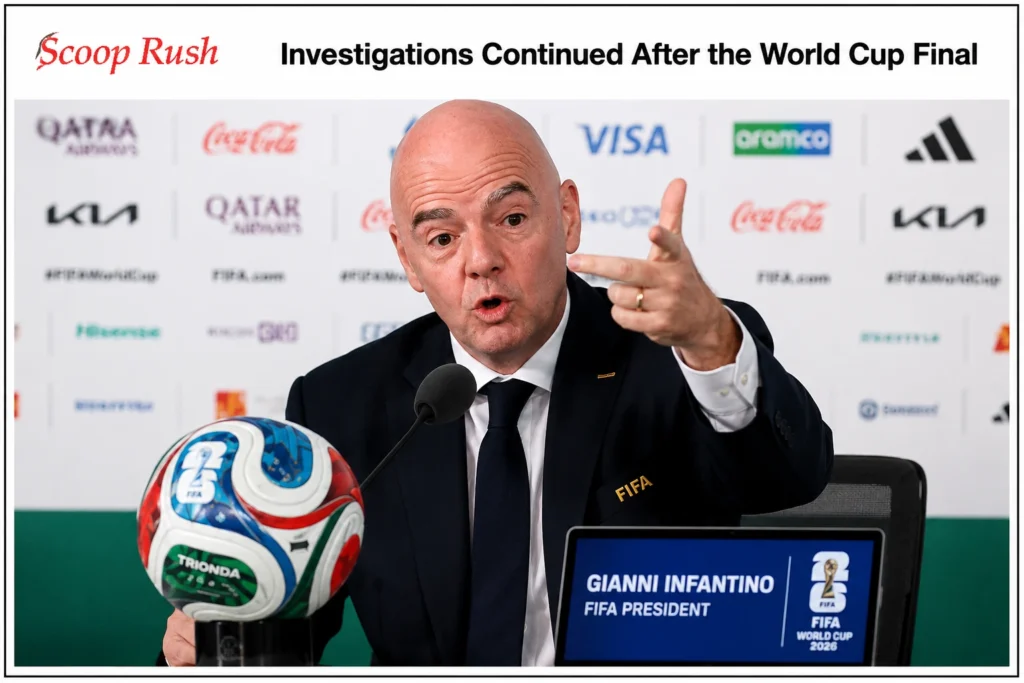
Although Infantino highlighted the tournament’s positive atmosphere, FIFA continues investigating several incidents connected to the competition.
These investigations include:
- Altercations involving Argentina players and members of the coaching staff after the World Cup final against Spain.
- Allegations of racist abuse directed at American internet personality I Show Speed.
- Supporters were arrested during multiple matches, including England’s semi-final against Argentina in Atlanta.
In addition, Immigration and Customs Enforcement (ICE) officers were present at several stadiums during the tournament, a decision that also became part of the wider discussion surrounding the event.
As a result, critics argued that describing the tournament as completely free of problems overlooked important incidents that occurred during the competition.
Iran’s Experience Highlighted Different Perspectives
One section of Infantino’s statement focused on Iran’s participation.
He praised FIFA’s efforts to ensure Iran competed despite the country’s ongoing conflict with tournament co-host the United States.
According to Infantino, FIFA worked tirelessly to help Iran enter the country without conflict.
However, Iran head coach Amir Ghalenoei offered a very different assessment.
He described his team as “the most oppressed” at the World Cup because of visa delays, travel problems, and logistical challenges.
The contrasting views illustrated how differently FIFA and participating teams interpreted the tournament experience.
Folarin Balogun Decision Added to FIFA’s Challenges
One of the tournament’s biggest football controversies involved United States forward Folarin Balogun.
Balogun had received a one-match suspension after being sent off. However, FIFA later suspended that ban, allowing him to play in the United States’ Round of 16 match.
The decision immediately attracted criticism because similar reversals are extremely rare at the men’s FIFA World Cup.
According to the BBC report, only one other player among 191 red-card cases at previous men’s World Cups avoided serving a suspension.
As a result, many football officials questioned whether FIFA had applied its disciplinary rules consistently.
UEFA Criticized FIFA’s Decision
UEFA strongly disagreed with the ruling.
The European governing body described the decision as:
- Unprecedented
- Incomprehensible
- Unjustifiable
Meanwhile, the Norwegian Football Federation announced it was considering filing a formal complaint with FIFA’s Ethics Committee.
Critics also questioned reports that the decision followed intervention from U.S. President Donald Trump. Those concerns increased discussion about political influence in football governance.
However, Infantino defended FIFA’s position.
He argued that similar disciplinary decisions are common in several major domestic leagues. Therefore, he rejected suggestions that the ruling was unusual.
International Olympic Committee Declined to Investigate
The controversy extended beyond football.
Human rights campaign group FairSquare asked the International Olympic Committee (IOC) to investigate possible breaches of political neutrality involving Gianni Infantino.
However, the IOC declined to open an investigation.
According to the committee, the complaint did not fall within the jurisdiction of its Ethics Commission.
As a result, no IOC investigation will take place based on the complaint described in the BBC report.
Dan Roan Says FIFA Risks Ignoring Legitimate Concerns
BBC Sport editor Dan Roan offered additional analysis after Infantino’s statement.
According to Roan, FIFA may genuinely believe it deserved more recognition for organizing a successful tournament.
He noted that the World Cup achieved:
- Record ticket sales
- Millions of spectators worldwide
- A major international security operation
However, Roan argued that Infantino’s response could reinforce the perception that FIFA struggles to accept legitimate criticism.
Instead of answering concerns through regular media briefings, Infantino chose to respond in a lengthy social media post after the tournament.
Consequently, critics may see his comments as evidence that FIFA has become defensive rather than open to scrutiny.
Several Issues Continued to Shape the Debate
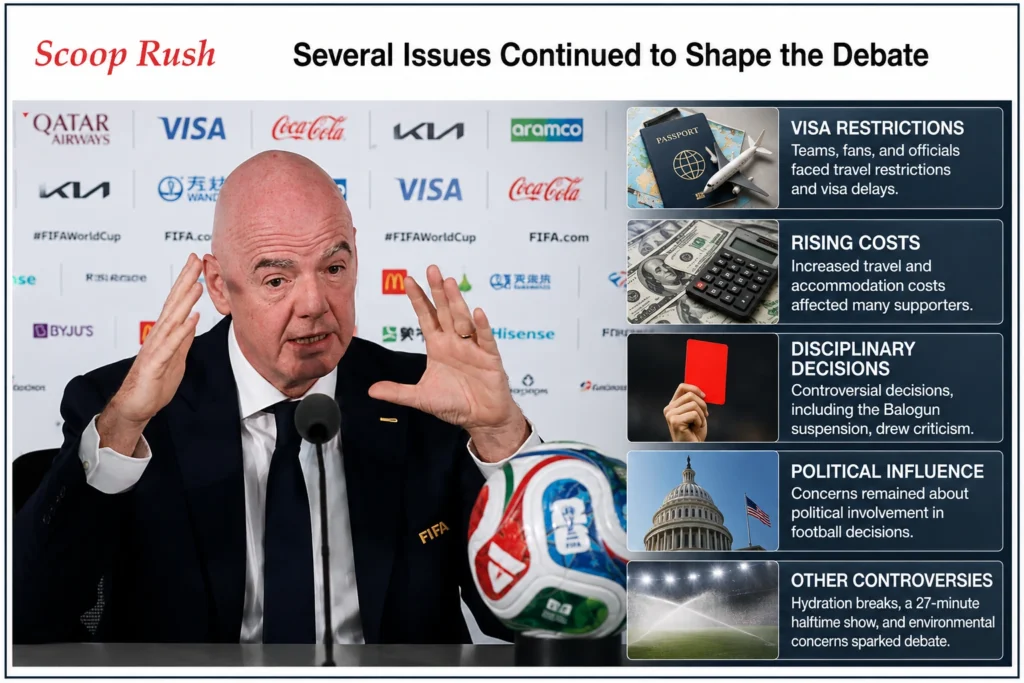
Roan pointed out that criticism did not emerge without reason.
Several major issues remained part of the conversation throughout the tournament.
These included:
- Visa restrictions affecting teams, fans, and officials
- Rising travel and attendance costs for supporters
- Questions surrounding the Balogun suspension
- Concerns about political influence
- The introduction of hydration breaks
- A 27-minute halftime show during the final
- Environmental concerns linked to the tournament’s expanded format
Because of these developments, media organizations continued asking questions about FIFA’s decision-making before and after the competition.
Gianni Infantino Says Football Should Unite People
Despite the criticism, Infantino maintained an optimistic message throughout his statement.
He said football creates moments that bring families, children, grandparents, and supporters together.
According to him, millions of people celebrated the World Cup with happiness, emotion, and respect.
He encouraged critics to focus on those moments instead of controversy.
His closing message emphasized:
- Love instead of hate
- Unity instead of division
- Respect instead of conflict
Infantino also said he was proud to have contributed to what he described as one of football’s greatest global celebrations.
What This Means for FIFA
The debate surrounding Gianni Infantino’s comments reflects the growing expectations placed on modern sports organizations.
On one hand, FIFA points to record attendance, worldwide television audiences, and successful tournament operations.
On the other hand, journalists, football officials, supporters, and human rights organizations continue raising questions about governance, transparency, and decision-making.
As FIFA prepares for its next presidential election, discussions surrounding leadership and accountability are likely to remain part of the global football conversation.
Regardless of differing opinions, the latest statement ensures that debate over FIFA’s handling of the World Cup will continue well beyond the final whistle.
Conclusion
Gianni Infantino’s response to FIFA critics has become one of the defining stories following the FIFA World Cup. Through his public statement, the FIFA president defended the tournament, praised its achievements, and encouraged critics to appreciate football’s ability to unite people.
However, the discussion extends beyond one social media post. Visa issues, disciplinary decisions, security claims, and ongoing investigations continue to shape public opinion about FIFA and its leadership.
While supporters view the tournament as a global success, critics believe several important concerns still deserve careful examination. As a result, the conversation surrounding FIFA’s leadership is unlikely to end anytime soon.
Frequently Asked Questions
1. Why did Gianni Infantino respond to FIFA critics?
Gianni Infantino defended FIFA after criticism surrounding the World Cup. He argued that many people ignored the tournament’s positive achievements and focused only on controversy.
2. What did Gianni Infantino tell his critics?
He encouraged critics to “reflect, meditate, pray or watch a football match” instead of spreading what he described as hate and false rumours.
3. Why was the Folarin Balogun decision controversial?
FIFA suspended Balogun’s one-match ban before the United States’ Round of 16 match. Critics argued that similar decisions are extremely rare at the men’s FIFA World Cup.
4. What issues affected the FIFA World Cup?
The tournament faced criticism over visa delays, travel restrictions, disciplinary decisions, political influence concerns, security claims, and post-match investigations.
5. Is FIFA investigating incidents from the World Cup?
Yes. According to the BBC report, FIFA is investigating post-final altercations involving Argentina players and staff, allegations of racist abuse toward IShowSpeed, and other disciplinary matters.

