
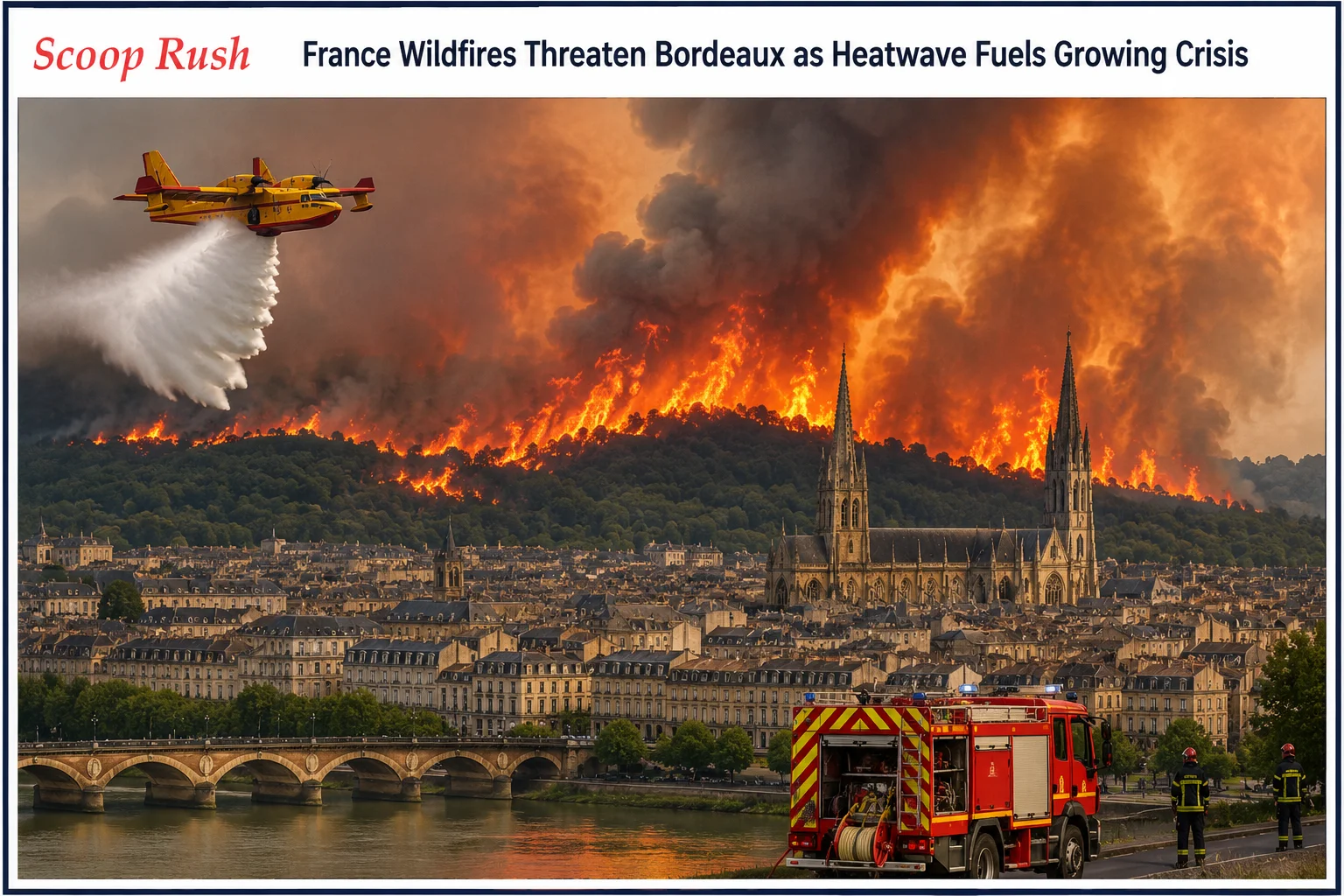
France wildfires continue to spread across the country’s southwest as firefighters battle dangerous conditions. The largest fires now burn close to Bordeaux, raising concerns for nearby communities. Officials warn the emergency could continue for weeks or even months because hot and dry weather remains in the forecast.
Spain also continues fighting several major wildfires across central and eastern regions. Thousands of firefighters, aircraft, and emergency crews remain on duty. European countries have sent additional support as both nations face one of their toughest wildfire seasons in recent years.
France Wildfires Move Closer to Bordeaux
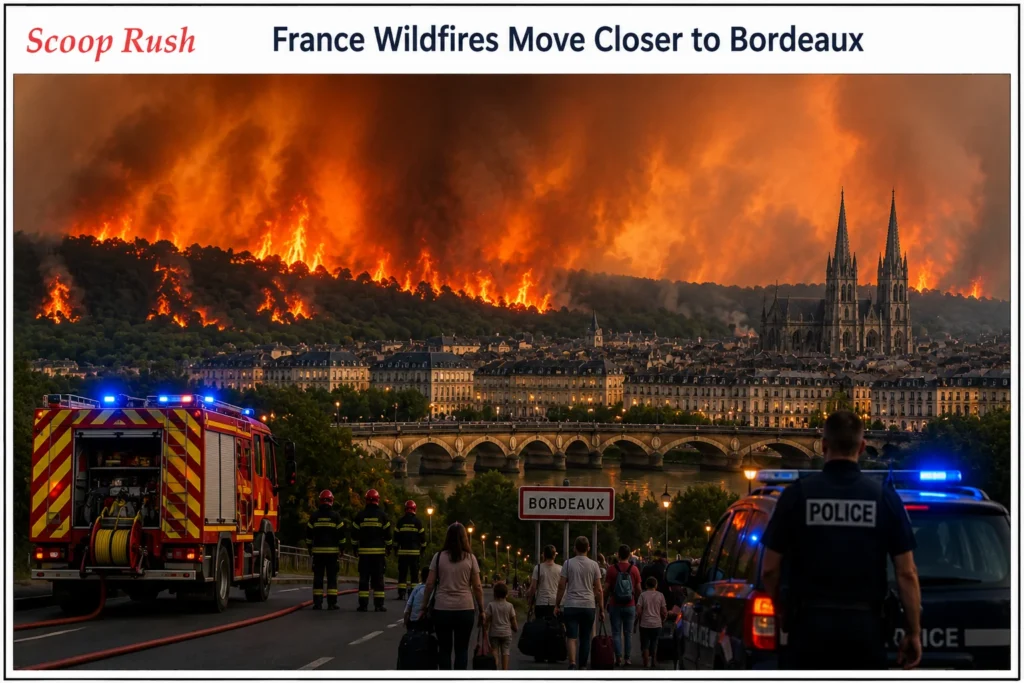
France wildfires have advanced to within about 15 kilometers of Bordeaux. Firefighters continue working around the clock to stop the flames before they reach the city’s outskirts. Authorities continue monitoring the situation and adjust emergency plans as conditions change.
French Interior Minister Laurent Nunez described the situation as unprecedented. Officials have already evacuated several nearby communities. Police and emergency teams visited homes overnight to move residents to safer locations before the fire spread further.
France Wildfires Force Large-Scale Evacuations
France wildfires have forced about 220,000 people to leave their homes. Emergency shelters continue supporting displaced families while authorities assess damage in affected areas. Many residents remain uncertain about when they can safely return.
Local officials continue asking people to follow evacuation orders without delay. Firefighters remain focused on protecting homes, public buildings, and critical infrastructure. Their priority remains saving lives while slowing the fire’s advance.
Spain Faces One of Its Largest Wildfire Emergencies
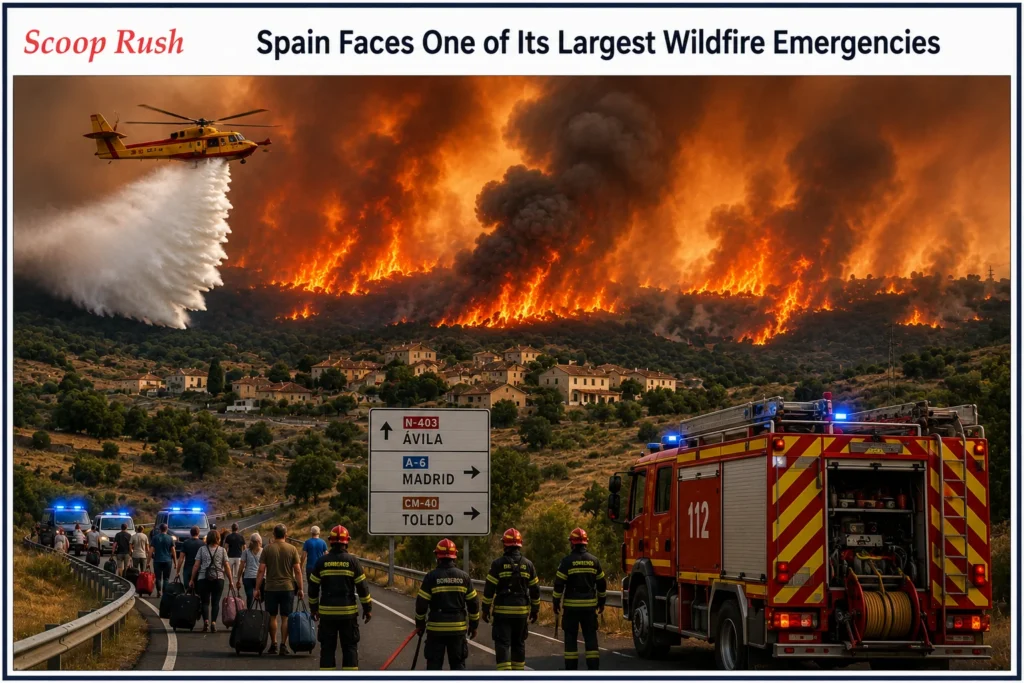
Spain continues battling several major wildfires across Avila, Madrid, Toledo, and Valencia. The Avila fire has burned more than 50,000 hectares, making it one of the country’s largest wildfires in recent history.
More than 75,000 people have evacuated across Spain, while another 30,000 remain under shelter orders. Emergency crews continue working despite difficult terrain and changing weather conditions. Authorities expect firefighting efforts to continue throughout the week.
Extreme Heat Continues Fueling the Fires
Weather conditions remain one of the biggest challenges for emergency crews. High temperatures, dry vegetation, and strong winds continue helping the fires spread across forests and open countryside. Little rainfall is expected in the coming days.
Spanish weather officials have warned that another heatwave will push temperatures close to or above 40 degrees Celsius in several regions. Firefighters expect the weather to increase wildfire risks and make containment more difficult.
Fire Clouds Create Dangerous Conditions
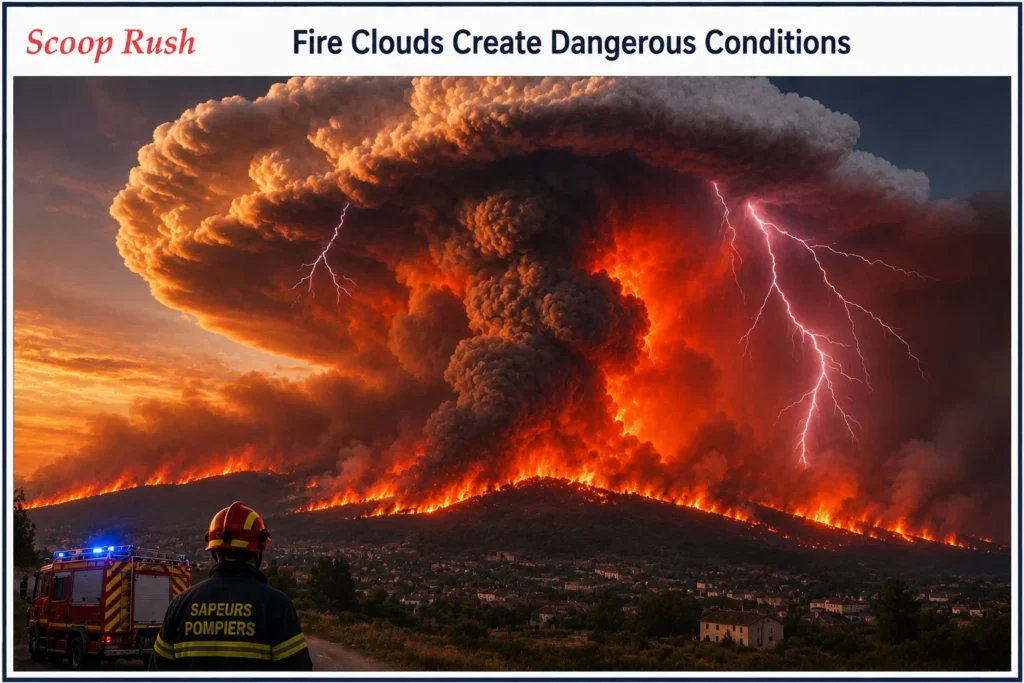
France wildfires have produced rare fire clouds, also called pyrocumulonimbus clouds. These clouds form when intense heat pushes smoke high into the atmosphere. They can generate powerful winds and even create lightning that starts new fires.
Scientists say firefighters in France rarely face this phenomenon. Fire clouds make fires far less predictable because they can suddenly change direction and spread flames into new areas.
International Support Joins Firefighting Efforts
Several European countries have stepped in to help France and Spain. Greece and Italy have deployed Canadair firefighting aircraft, while Portugal has sent military personnel and equipment. Turkey also plans to send additional aircraft to assist.
International cooperation continues strengthening firefighting operations. Additional aircraft allow emergency crews to attack fires from the air while ground teams focus on protecting communities and creating firebreaks.
Climate Conditions Increase Wildfire Risk
Experts say several weather factors have contributed to the current wildfire crisis. An unusually wet winter encouraged dense vegetation growth. Extreme summer heat later dried those plants, creating large amounts of fuel for wildfires.
Scientists also point to repeated heatwaves across southern Europe. They say hotter and drier conditions increase wildfire intensity and make fires much harder to contain. Many experts believe countries must strengthen wildfire prevention before future fire seasons.
Authorities Prepare for a Long Emergency
French officials believe the wildfire season remains far from over. Some hotspots could continue burning for weeks or even months if weather conditions fail to improve. Emergency teams will continue monitoring high-risk areas throughout the summer.
Spanish authorities also remain on high alert as another heatwave approaches. Governments continue urging residents to stay informed, avoid restricted areas, and follow official safety instructions until conditions improve.
Conclusion
France wildfires continue threatening communities near Bordeaux while firefighters battle difficult weather conditions. Spain also faces widespread blazes that have forced tens of thousands of people from their homes. Emergency crews across both countries continue working tirelessly to contain the fires.
International support has strengthened firefighting efforts, but the crisis is far from over. With more heat expected this week, authorities remain focused on protecting lives, limiting damage, and preventing new outbreaks.
FAQs
1. Why are France wildfires spreading so quickly?
High temperatures, dry vegetation, and strong winds continue fueling the fires. These conditions allow flames to move rapidly through forests and open land.
2. Is Bordeaux under evacuation because of the wildfires?
Authorities have not ordered a full evacuation of Bordeaux. However, several nearby communities have evacuated as firefighters work to stop the fires from reaching the city.
3. Why are Spain’s wildfires so severe this year?
Spain has experienced prolonged heat, drought, and strong winds. These weather conditions have created ideal environments for large and fast-moving wildfires.
4. What are fire clouds and why are they dangerous?
Fire clouds form above intense wildfires when rising heat carries smoke high into the atmosphere. They can generate strong winds and lightning that may start additional fires.
5. Which countries are helping France and Spain fight the wildfires?
Greece, Italy, Portugal, and Turkey have provided aircraft, emergency crews, and equipment. Their support helps strengthen firefighting operations across the affected regions.

