
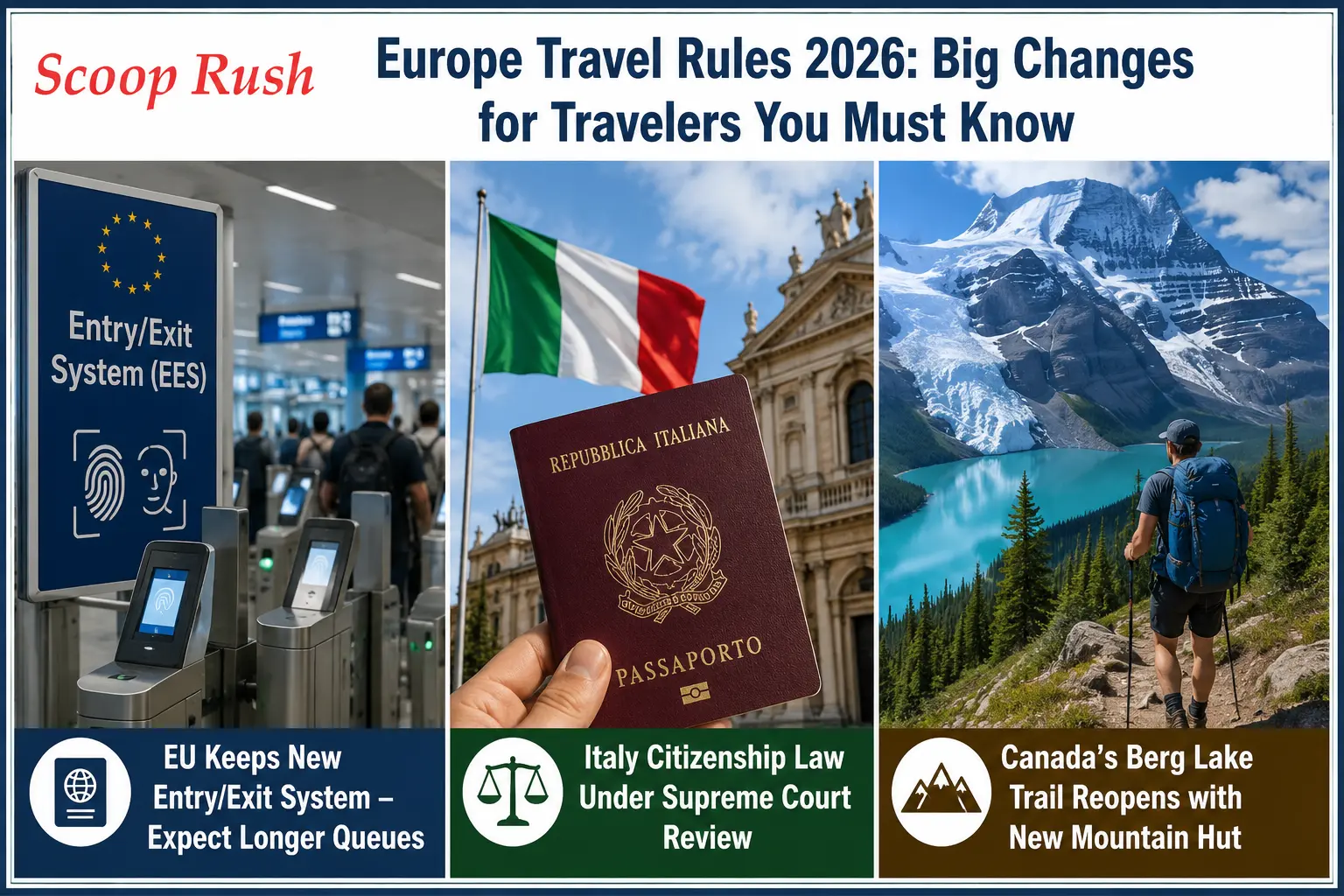
Europe Travel Rules 2026 are changing how millions of people travel, move, and even claim citizenship across the continent. Italy’s Supreme Court is reviewing controversial citizenship restrictions while the European Union has decided to keep its new biometric Entry/Exit System despite complaints from airlines. At the same time, Canada has reopened one of North America’s most spectacular hiking trails, giving international travelers another reason to plan an outdoor adventure.
Here is everything travelers should know before planning their next trip.
Europe Travel Rules 2026: Italy’s Citizenship Law Faces Supreme Court Review
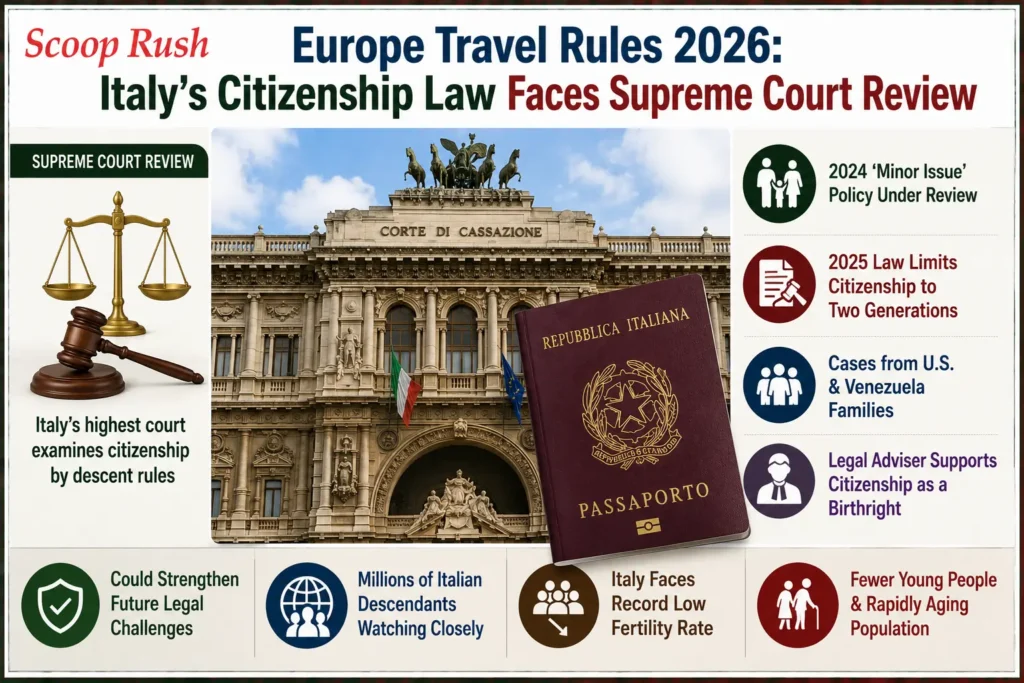
Italy’s highest court has begun examining legal challenges against government restrictions on citizenship by descent.
The review focuses on the 2024 “minor issue” policy, which affected people whose Italian parents became citizens of another country while their children were still minors. The rule prevented many descendants from claiming Italian citizenship, especially in countries such as the United States where children automatically receive citizenship at birth.
The hearing comes after Italy introduced an even stricter law in March 2025. That legislation limited citizenship by descent to only two generations, removing eligibility for millions of people with Italian ancestry.
Lawyers representing American and Venezuelan families argued that people gain Italian citizenship at birth, and no one can take it away without their consent. The government’s legal adviser reportedly supported that interpretation during the hearing, raising hopes among families challenging the restrictions.
If the Supreme Court rules in favor of the plaintiffs, it could strengthen future legal challenges against Italy’s broader citizenship law. Many Italian descendants are closely watching the case because they had already started citizenship applications or even relocated to Italy before the rules suddenly changed.
Meanwhile, Italy continues to face a demographic crisis. The country’s fertility rate has fallen to a record low, with fewer young people and a rapidly aging population.
Europe Travel Rules 2026: EU Keeps New Entry Exit System Despite Airport Chaos
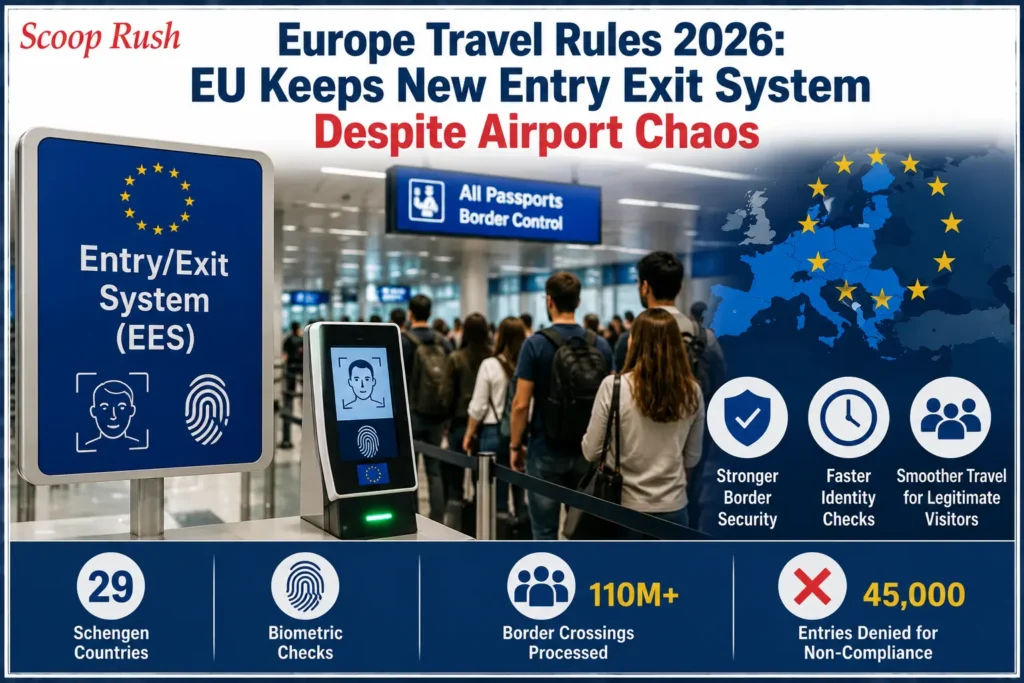
The European Union has confirmed that its new Entry/Exit System (EES) will remain in place despite growing criticism from airlines and airports. The biometric border system became fully operational in April 2026. It requires most non-EU visitors entering the 29-country Schengen Area to provide facial photographs and fingerprints when crossing external borders.
The aviation industry recently urged EU leaders to suspend the program during the busy summer travel season. Airlines warned that the new procedures were causing long queues, passenger confusion, and missed flights.
However, European Commission officials rejected the request. Officials said the system improves border security while allowing legitimate travelers to continue entering Europe. According to the Commission, the system has already processed more than 110 million border crossings and denied entry to around 45,000 travelers who did not meet the requirements.
Travelers visiting Schengen countries for stays of up to 90 days should expect additional time at border checkpoints and should arrive earlier than usual for international departures.
Europe Travel Rules 2026: Canada’s Iconic Berg Lake Trail Returns
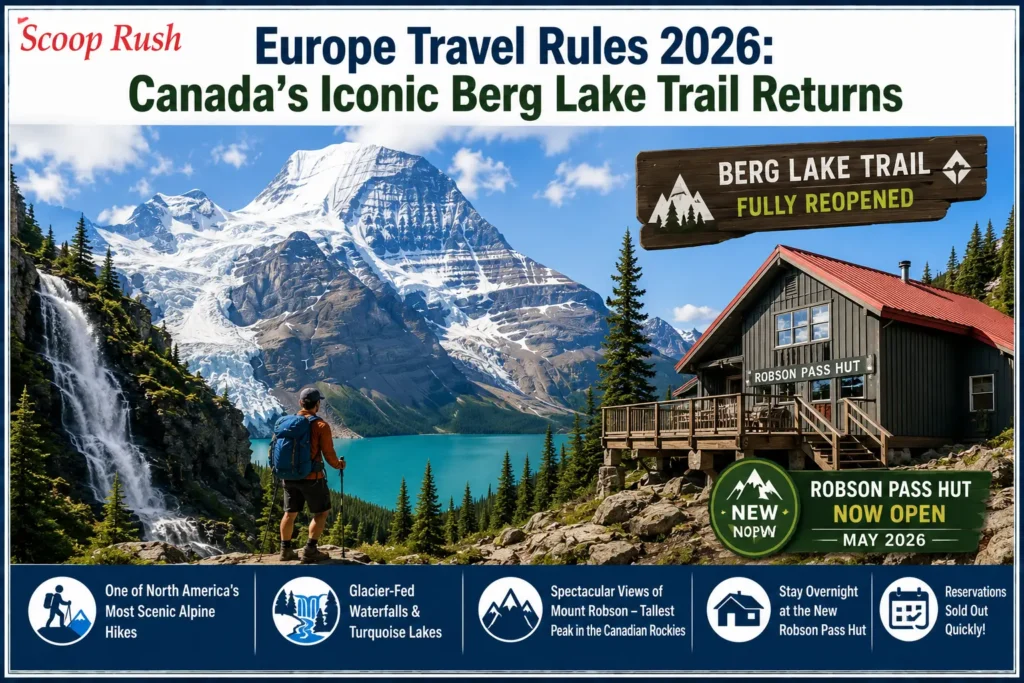
While Europe introduces stricter travel procedures, outdoor travelers have received good news from Canada. The famous Berg Lake Trail in British Columbia has fully reopened after years of reconstruction following severe flood damage in 2021. Many people rank the Berg Lake Trail among North America’s most scenic alpine hikes. It features glacier-fed waterfalls, turquoise lakes, and spectacular views of Mount Robson, the tallest peak in the Canadian Rockies.
A major addition is the newly opened Robson Pass Hut, which began welcoming visitors in May 2026. The mountain hut allows hikers to stay overnight without carrying heavy camping equipment, making the trail more accessible for backpackers and winter visitors. The route was rebuilt with climate resilience in mind after devastating floods destroyed large sections of the original trail.
Reservations for the new hut sold out quickly following its opening, highlighting renewed interest in one of Canada’s most famous hiking destinations.
How These Travel Changes Affect International Travelers
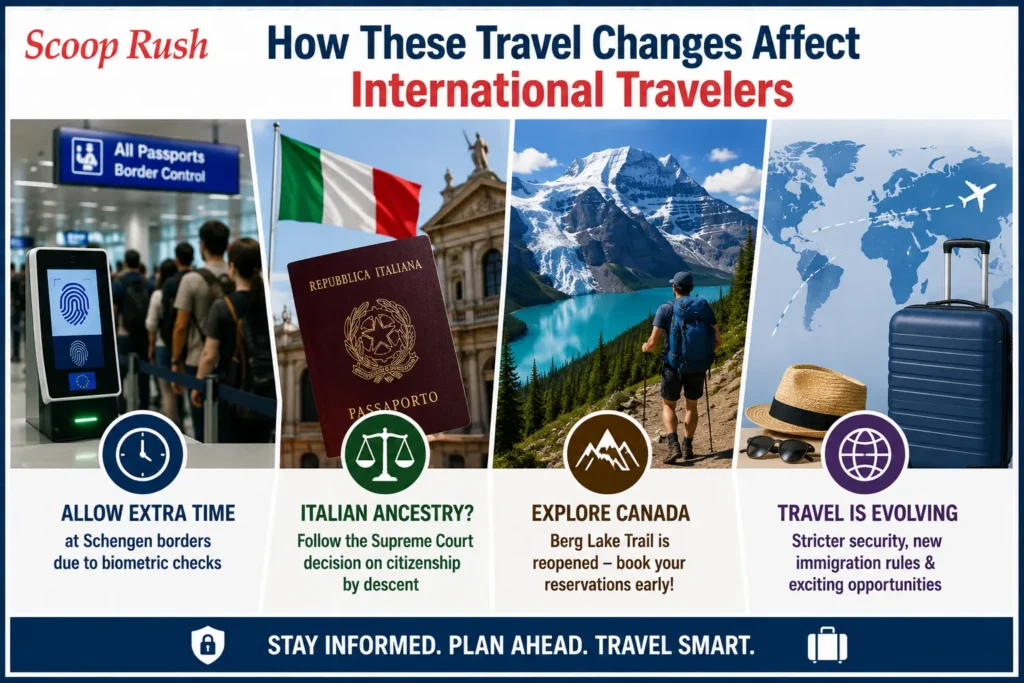
Travelers planning international trips should prepare for several important changes.
- Allow extra time when entering or leaving Schengen countries because biometric checks may increase waiting times.
- Visitors with Italian ancestry should closely follow the Supreme Court’s decision if they hope to apply for citizenship by descent.
- Outdoor enthusiasts may want to add Canada’s reopened Berg Lake Trail to their future travel plans, but reservations should be booked well in advance.
Together, these developments show how travel is evolving through stricter border security, changing immigration policies, and new tourism opportunities.
What Travelers Should Expect in 2026
Europe continues to balance stronger security measures with growing tourism demand. Italy’s citizenship dispute could reshape the future of citizenship by descent for millions of families around the world. At the same time, the European Union remains committed to biometric border controls despite criticism from the travel industry.
Outside Europe, Canada’s fully restored Berg Lake Trail offers travelers a fresh opportunity to experience one of North America’s most breathtaking mountain landscapes. For anyone planning international travel in 2026, staying informed about these policy changes can help avoid delays, unexpected restrictions, and missed opportunities.
FAQs
1. What are Europe Travel Rules 2026?
Europe Travel Rules 2026 include new biometric border checks under the EU Entry/Exit System, changes to Italy’s citizenship laws, and updated travel requirements across Europe.
2. What is the EU Entry/Exit System (EES)?
The Entry/Exit System is a biometric border program that records fingerprints and facial images of most non-EU travelers entering and leaving the Schengen Area.
3. Why is Italy’s citizenship law being challenged?
Several families argue that Italian citizenship is a birthright and should not be removed because of later changes in government policy. Italy’s Supreme Court is reviewing whether earlier restrictions were lawful.
4. Will travelers experience delays at European airports?
Yes. Travelers may face longer processing times because biometric information must be collected at many external Schengen border crossings.
5. Why is Canada’s Berg Lake Trail attracting attention?
The trail has fully reopened after extensive flood repairs and now features the new Robson Pass Hut, giving visitors easier access to one of Canada’s most scenic mountain hiking destinations.

