

A “no sugar diet” sounds like the ultimate healthy choice, but a new study suggests that completely removing sugar may create unexpected problems inside the body. Researchers found that eliminating sucrose from a low-fat diet affected gut health, metabolism, and glucose control in mice.
For years, people have been told that reducing sugar is one of the best ways to improve health. However, new research presented at ENDO 2026 suggests that going completely sugar-free may not always bring the benefits people expect.
The study, carried out by researchers from the Dasman Diabetes Institute in Kuwait, explored how removing sucrose from a low-fat diet affected mice over 16 weeks. The findings showed that the animals developed several health changes that were not seen in the control group.
While the research does not prove the same effects happen in humans, it raises important questions about extreme diet restrictions and the role sugar plays in supporting the body’s internal systems.
No Sugar Diet Study Shows Possible Health Risks
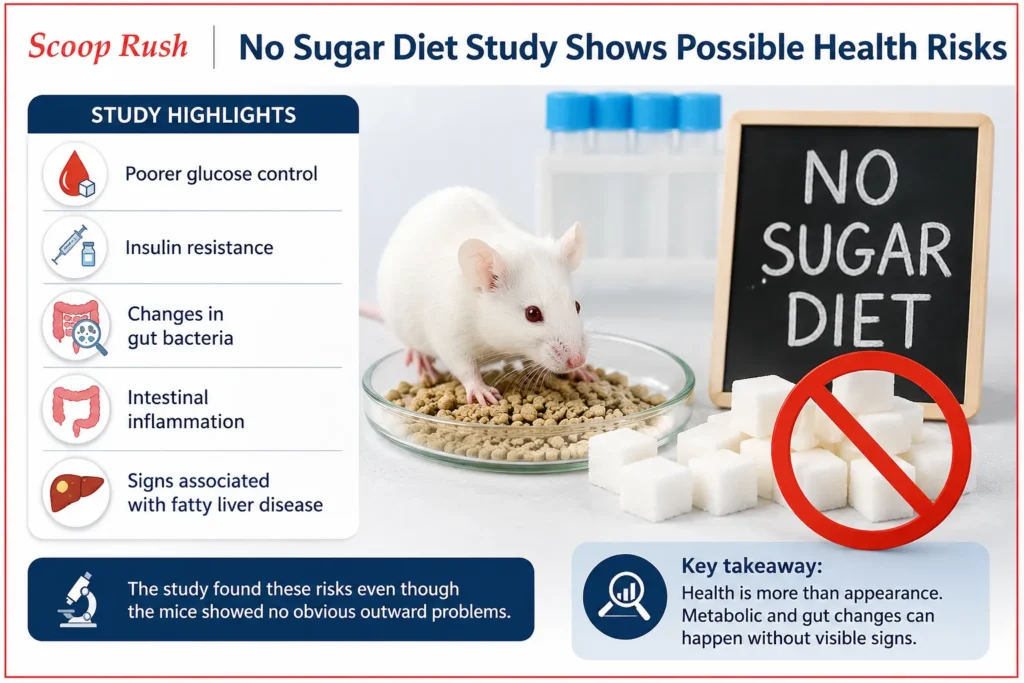
The new research focused on what happens when sugar is removed completely from a diet. Scientists tested mice by feeding them a low-fat diet without sucrose, which is a common form of sugar.
After 16 weeks, researchers noticed several changes linked to metabolic health. The mice developed problems that included:
- Poorer glucose control
- Insulin resistance
- Changes in gut bacteria
- Intestinal inflammation
- Signs associated with fatty liver disease
The findings surprised researchers because the mice did not show obvious outward problems at first. However, deeper testing revealed that important internal processes had changed.
According to researchers, the results highlight that health is not only about appearance or body weight. A person may look healthy while experiencing problems with metabolism or gut function.
How No Sugar Diet May Affect Gut Health
The human digestive system contains trillions of microorganisms known as the gut microbiome. These bacteria help support digestion, immunity, and overall health.
Researchers explained that certain helpful bacteria rely on carbohydrates and simple sugars as fuel. When these sources disappear completely, the balance of gut bacteria may change.
Gut Bacteria Need a Balanced Food Supply
A completely sugar-free diet can reduce the nutrients available for some beneficial microbes. As a result, the balance between helpful and harmful bacteria may become disrupted.
The study suggested that this change could contribute to gut inflammation and metabolic problems.
However, researchers emphasized that the study involved mice, not humans. More research is needed before scientists can confirm whether the same effects happen in people following a strict no sugar diet.
The Difference Between Reducing Sugar and Removing It
The research does not suggest that people should eat large amounts of processed sugar. Excessive sugar intake has long been connected with health concerns, including obesity and type 2 diabetes.
Instead, the study highlights the difference between reducing added sugar and eliminating all forms of sugar.
Many processed foods contain high amounts of added sugar. Reducing these foods can still be an important part of a balanced diet.
However, removing every source of sugar may not provide the same benefits for everyone.
A balanced approach may be more helpful than extreme restrictions. Natural sources of carbohydrates, including fruits and vegetables, provide nutrients and fiber that support the body.
What Happens When You Stop Eating Sugar?

Many people report feeling better after reducing sweets and sugary foods. Some experience improvements such as:
- Better energy levels
- Reduced cravings
- Improved eating habits
- Changes in skin appearance
Dr Eric Berg discussed some possible benefits of reducing sugar, including lower inflammation and improved skin appearance.
However, researchers explained that completely stopping sugar may affect gut health in unexpected ways.
The goal should not be removing one food group entirely. Instead, the focus should be creating a balanced diet that supports the entire body.
Researchers Explain Why Extreme Diets Can Be Problematic
Rasheed Ahmad, head of the Immunology & Microbiology Department at the Dasman Diabetes Institute, explained that the research shows the importance of maintaining a healthy gut microbiome.
According to Ahmad, completely removing sucrose from a low-fat diet may disrupt gut health and contribute to inflammation and metabolic changes.
The research suggests that future dietary advice may focus more on supporting healthy gut bacteria rather than only restricting sugar.
How to Support Your Gut Health Naturally

If someone has followed a very strict low-sugar diet, researchers suggest focusing on rebuilding a healthy gut environment.
Eat a Variety of Whole Foods
A diverse diet provides different nutrients for gut bacteria. Foods such as fruits, vegetables, and grains contain natural sugars and fiber that support digestion.
Additionally, eating a wide range of foods helps maintain a healthier balance inside the gut.
Include Fermented Foods
Fermented foods may help introduce beneficial bacteria into the digestive system.
Examples include:
- Live yogurt
- Kefir
- Sauerkraut
These foods can support the diversity of gut bacteria when included as part of a balanced diet.
Why This Study Matters for People Following Diet Trends

The popularity of “clean eating” has encouraged many people to remove certain foods completely. Sugar is one of the most common targets because high sugar consumption is linked with several health concerns.
However, this research suggests that extreme elimination may not always be the best approach.
The body depends on a complex relationship between nutrients, hormones, metabolism, and gut bacteria.
Therefore, a healthy diet may be less about removing everything considered unhealthy and more about creating balance.
Conclusion: Balance May Be Better Than a No Sugar Diet
The latest research challenges the idea that completely removing sugar is always the healthiest choice.
The study found that a no sugar diet may affect gut bacteria, glucose control, and metabolic health in mice. However, researchers also warned that the findings do not directly prove the same effects in humans.
Ultimately, reducing processed sugar can still be beneficial. However, completely eliminating all sugar sources may not be necessary for good health.
A balanced diet with a variety of nutrients may provide better long-term support for the body.
FAQs
1. Is a no sugar diet bad for your health?
A completely no sugar diet may have unexpected effects, according to a mouse study. Researchers found changes in gut health and metabolism, but more human research is needed.
2. Does cutting sugar completely improve health?
Reducing added sugar can support healthier eating habits. However, removing all sugar sources may not always provide additional benefits.
3. Why does the body need some sugar?
Certain gut bacteria use simple carbohydrates as fuel. These bacteria help support gut health and normal body functions.
4. What foods support gut health?
Foods such as fruits, vegetables, grains, and fermented foods like live yogurt and kefir can help support a healthy gut environment.
5. Did the study prove that sugar is healthy?
No. The study does not suggest eating more processed sugar. It suggests that completely removing sugar may affect certain body processes.

