
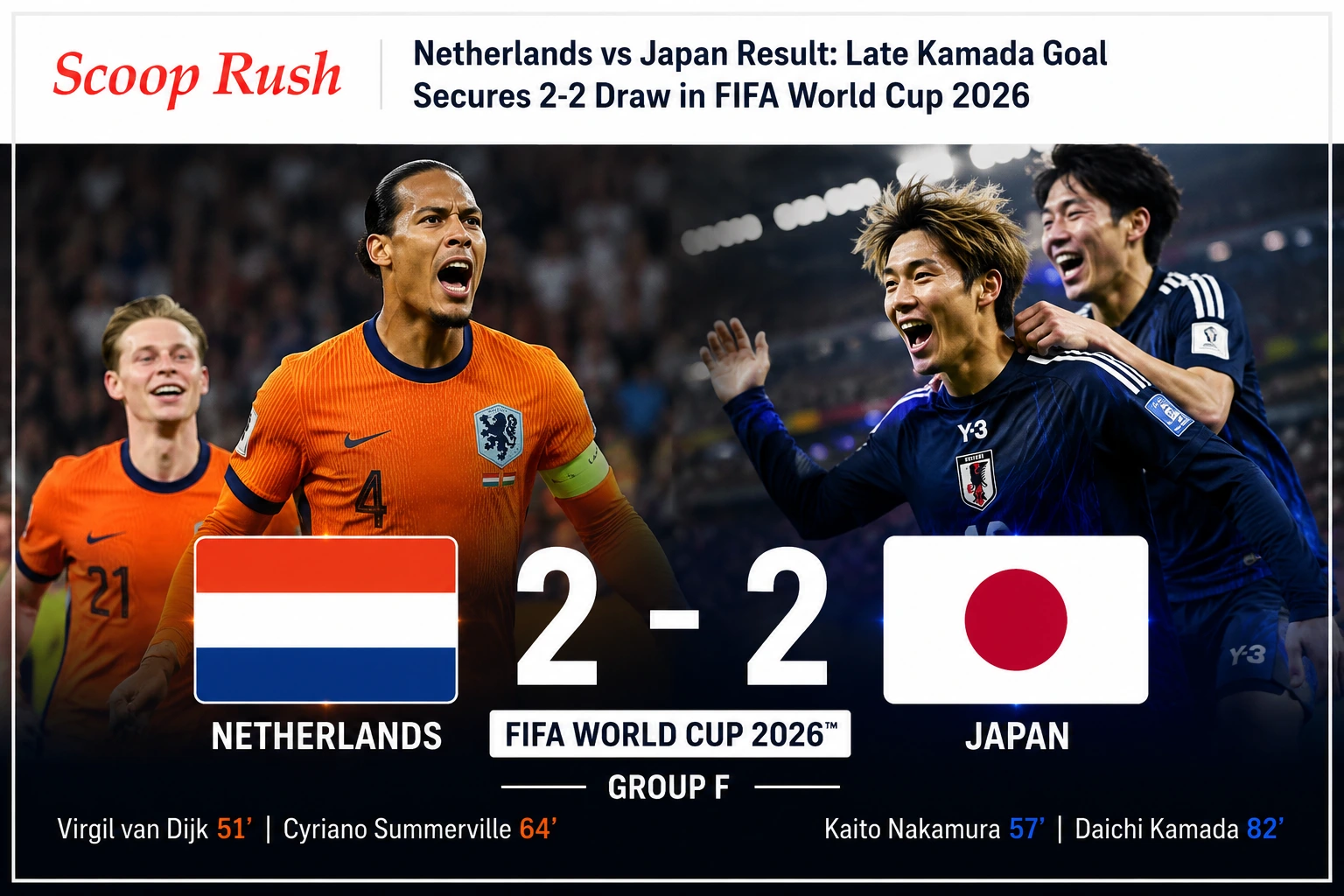
FIFA World Cup 2026 – Group F
Full-Time: Netherlands 2-2 Japan
Venue: Dallas Stadium, Arlington
Date: Monday,June 15
The Netherlands vs Japan clash in FIFA World Cup 2026 Group F delivered one of the most entertaining matches of the opening round as the two nations battled to a thrilling 2-2 draw at Dallas Stadium, Arlington, on Monday, June 15. Both teams showcased attacking quality, resilience, and tactical discipline in a contest that kept supporters on the edge of their seats until the final whistle.
The result leaves both nations with one point in Group F, while Sweden’s victory over Tunisia places the Scandinavian side at the top of the standings after the opening matchday.
Match Overview
Goalscorers
Netherlands
- Virgil van Dijk (51′)
- Cyriano Summerville (64′)
Japan
- Kaito Nakamura (57′)
- Daichi Kamada (82′)
The match featured several momentum swings, with the Dutch taking control early in the second half before Japan twice responded to secure a deserved point.
First Half: Tactical Battle With Few Clear Chances
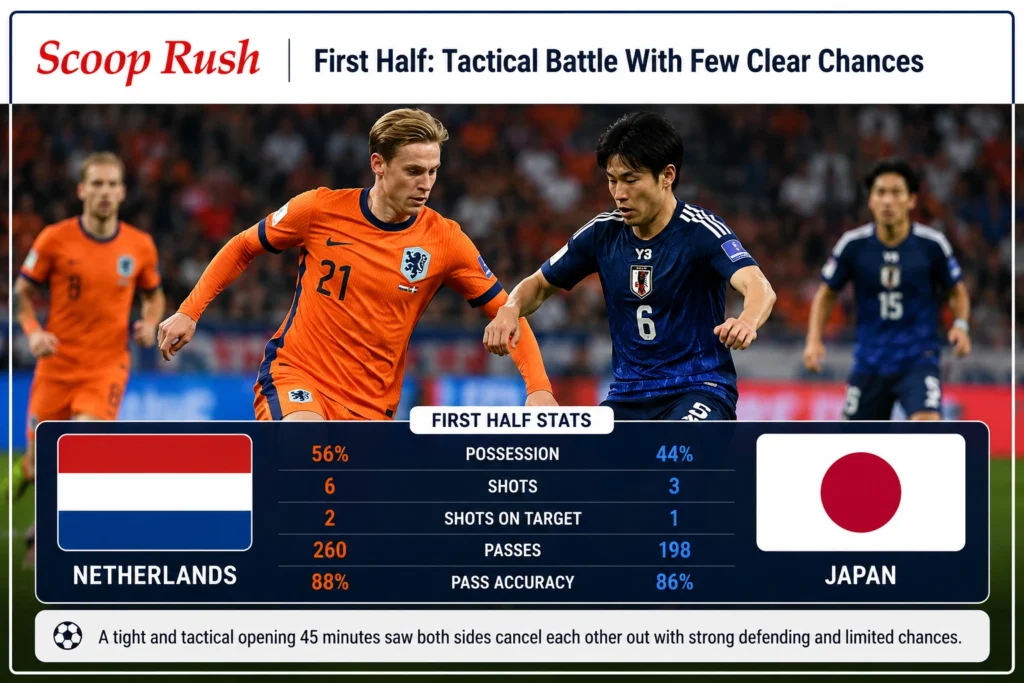
The opening 45 minutes were characterized by cautious play from both sides. The Netherlands enjoyed more possession and controlled the tempo, while Japan focused on compact defending and quick transitions.
Ronald Koeman’s side lined up in a 4-3-3 formation, with Virgil van Dijk marshalling the defense and Cody Gakpo leading the attack. Japan matched them with an organized setup designed to frustrate the Dutch midfield and exploit space on the counterattack.
Although the Netherlands dominated possession, clear opportunities were limited. Japan’s defensive structure remained disciplined, preventing the Oranje from creating many high-quality chances inside the penalty area.
Japan, meanwhile, looked dangerous whenever they broke forward. The pace and movement of their attackers caused occasional problems for the Dutch back line, hinting at the drama that would unfold after halftime.
The teams went into the break level at 0-0, with neither side able to convert their territorial advantage into goals.
Van Dijk Breaks the Deadlock
The second half began with greater intensity, and it did not take long for the Netherlands to make their breakthrough.
In the 51st minute, captain Virgil van Dijk rose highest inside the penalty area to score and give the Netherlands a 1-0 lead. The goal rewarded the Dutch for their sustained pressure and appeared to put them in control of the contest.
Van Dijk’s leadership was evident throughout the match, and his goal seemed likely to provide the platform for a Dutch victory.
However, Japan had other ideas.
Japan’s Immediate Response
Just six minutes after falling behind, Japan found an equalizer through Kaito Nakamura.
The goal highlighted Japan’s resilience and attacking quality. Rather than becoming discouraged by conceding first, the Samurai Blue increased their tempo and began committing more players forward.
Nakamura’s finish brought Japan level at 1-1 and completely changed the atmosphere of the match. Suddenly, the Dutch defense found itself under pressure from a Japanese side growing in confidence with every attack.
The equalizer also demonstrated why Japan continues to be regarded as one of Asia’s strongest football nations. Their ability to respond quickly to adversity prevented the Netherlands from settling into a comfortable rhythm.
Summerville Restores Dutch Advantage
The Netherlands regrouped well after conceding and once again moved in front in the 64th minute.
Crysencio Summerville produced an important finish to restore the Dutch lead and make it 2-1. The winger’s goal capped a strong attacking move and rewarded the Netherlands for their persistence.
At this stage, the Oranje appeared to have weathered Japan’s response and looked capable of seeing out the match. Their superior possession numbers and experience suggested they could manage the game effectively during the closing stages.
Yet Japan remained determined and continued searching for another equalizer.
Kamada’s Late Heroics
As the match entered its final ten minutes, Japan intensified their attacks and pushed more players into advanced positions.
Their persistence paid off in the 82nd minute when Daichi Kamada found the net to make it 2-2.
The goal sparked wild celebrations among the Japanese players and supporters. Kamada’s equalizer was the culmination of a courageous second-half performance that saw Japan twice come from behind against one of Europe’s traditional powerhouses.
Midfielder Koki Ogawa played a key role in the move, providing the assist that allowed Kamada to finish clinically and rescue a valuable point.
The final minutes were tense as both teams searched for a winning goal, but neither side could find the decisive breakthrough.
When the referee blew the final whistle, the score remained 2-2.
Team Statistics
The statistics illustrate the competitive nature of the contest while highlighting the Netherlands’ territorial advantage.
| Stat | Netherlands | Japan |
| Shots | 11 | 8 |
| Shots on Target | 7 | 3 |
| Possession | 60% | 40% |
| Passes | 515 | 342 |
| Pass Accuracy | 89% | 88% |
| Fouls | 7 | 7 |
| Yellow Cards | 3 | 0 |
| Corners | 5 | 4 |
The Netherlands controlled possession and completed significantly more passes, but Japan proved highly efficient with their opportunities.
One particularly notable statistic was discipline. While the Dutch received three yellow cards, Japan completed the match without a single booking, demonstrating their composure and organization.
Key Performers
Virgil van Dijk (Netherlands)
The Dutch captain delivered another commanding performance. Beyond scoring the opening goal, he provided leadership and stability in defense. His aerial dominance was evident throughout the match.
Crysencio Summerville (Netherlands)
Summerville’s goal restored the Dutch lead and highlighted his attacking threat. He consistently stretched Japan’s defense with his pace and movement.
Kaito Nakamura (Japan)
Nakamura’s equalizer came at a crucial moment and shifted the momentum back toward Japan. His energy and attacking intent troubled the Netherlands throughout the second half.
Daichi Kamada (Japan)
The midfielder emerged as Japan’s hero with the late equalizer. His intelligent movement and composure in front of goal ensured the Samurai Blue left with a deserved point.
Tactical Analysis
Netherlands
The Dutch approach centered on possession, patient build-up play, and utilizing width through their front three. They successfully controlled large portions of the match and generated more shots than Japan.
However, defensive lapses after taking the lead twice prevented them from securing all three points. The Netherlands will be pleased with their attacking performance but concerned by their inability to protect advantages.
Japan
Japan’s tactical discipline was impressive. They remained compact defensively, absorbed pressure effectively, and attacked with purpose whenever opportunities arose.
Their willingness to respond after each setback show cased strong mentality and confidence. Japan’s quick transitions and efficient finishing ultimately earned them a valuable draw.
What the Result Means for Group F
After the opening round of matches, Group F remains wide open.
Current Standings
- Sweden – 3 points
- Japan – 1 point
- Netherlands – 1 point
- Tunisia – 0 points
With Sweden already holding an early advantage, both the Netherlands and Japan will view this result as respectable but slightly disappointing. Each side had opportunities to claim victory and take control of the group.
The draw means upcoming fixtures become increasingly important. Both nations remain strong contenders for qualification to the knockout stage, but neither can afford many more dropped points.
Final Thoughts
The Netherlands vs Japan result provided everything football fans could want from a World Cup group-stage encounter: quality goals, tactical intrigue, momentum shifts, and late drama.
The Netherlands will regret failing to hold the lead on two occasions despite dominating possession and creating more chances. Japan, meanwhile, can take enormous confidence from a performance that demonstrated resilience, organization, and attacking efficiency.
A 2-2 draw was ultimately a fair reflection of a closely contested match. While the Dutch showcased their technical quality and control, Japan proved once again that they can compete with the world’s best teams.
As Group F continues to unfold, both nations remain firmly in the race for a place in the knockout rounds, setting up an exciting battle in the matches ahead.

