
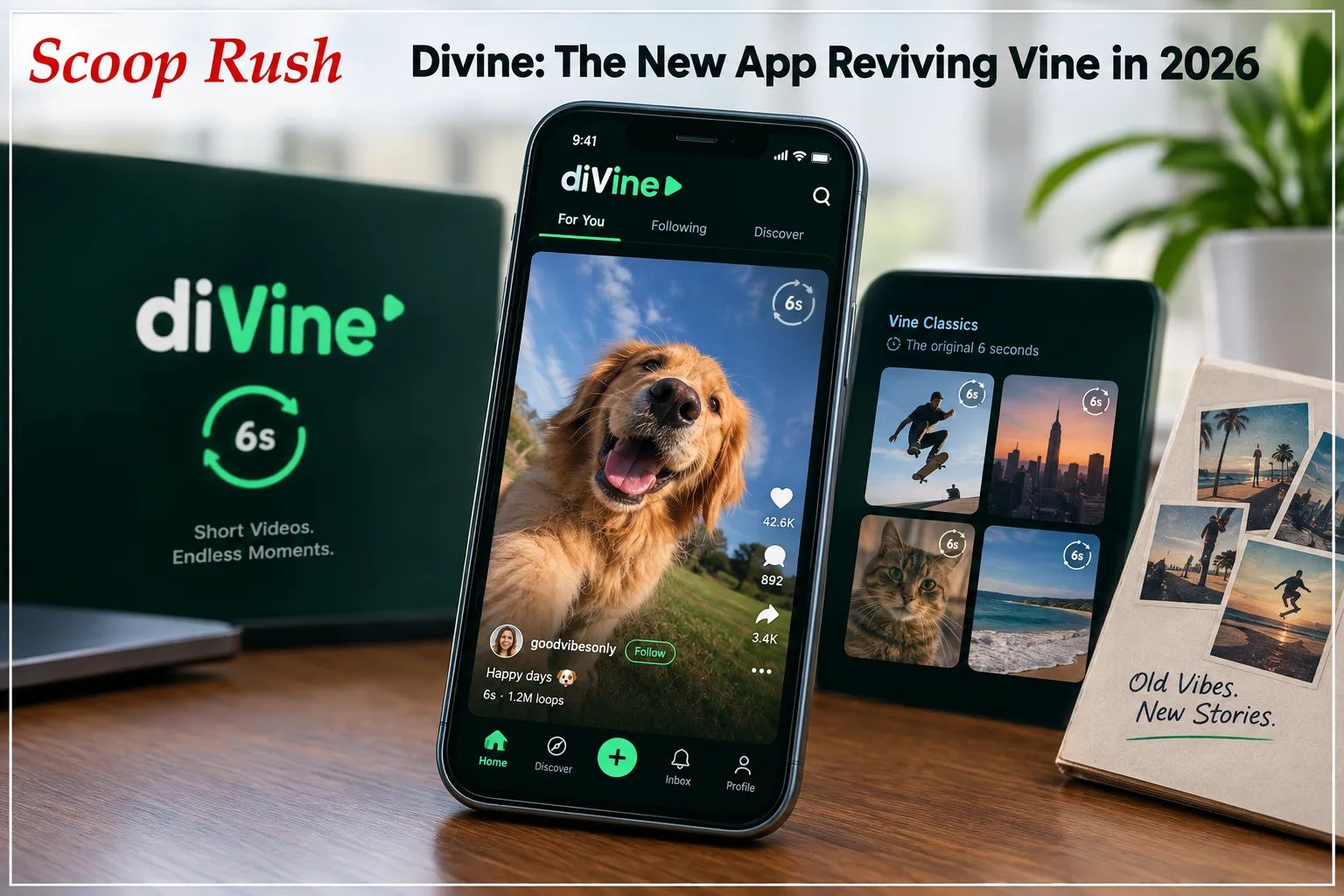
Divine is the new app everyone’s been searching for since Vine disappeared in 2017, and it just launched to the public with a twist nobody saw coming. More than 2.5 million original Vine videos are back from the dead, and Divine also promises to keep AI content out completely.
If you grew up on six-second Vine loops, or you’re simply curious why “Vine is back” started trending, here’s everything you need to know about the Divine app, how it works, and why it’s already pulling in thousands of users.
What Is Divine, Exactly?
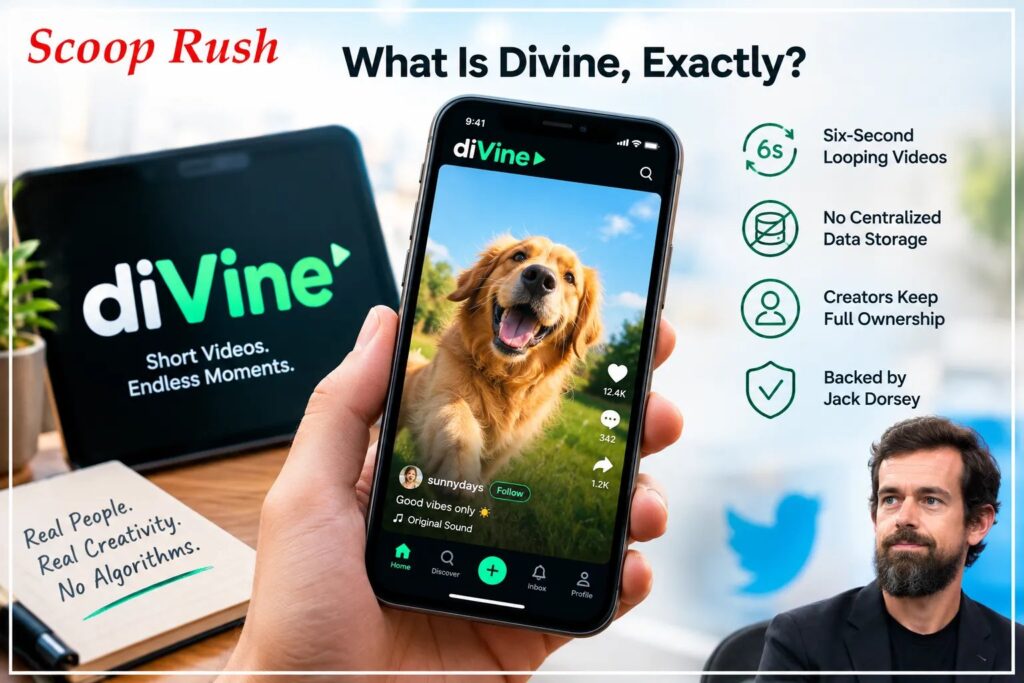
Divine is a short-form video app that lets users create and share six-second videos that loop, just like the original Vine did. It opened to the public on August 20, 2026, and Evan Henshaw-Plath, a former Twitter employee also known as Rabble, built it.
Divine isn’t owned by Twitter, X, or anyone connected to the original Vine app. However, it is backed by Twitter co-founder Jack Dorsey, who held a senior role at the company when it bought Vine back in 2012. That connection gives the Divine app some credibility, since Dorsey has firsthand history with the platform it now revives.
Henshaw-Plath told the BBC he built Divine because he felt social media needed “a reset.” He said he was tired of watching videos online without knowing whether they were real or AI-generated. He added that he wanted to have fun without second-guessing every clip.
Divine’s own website describes its mission as bringing back joy and creativity to short-form video. Unlike traditional platforms, it doesn’t store user data on centralized servers. As a result, creators keep full ownership over what they post, and no single company can delete or control that content.
How the Divine App Differs From Vine
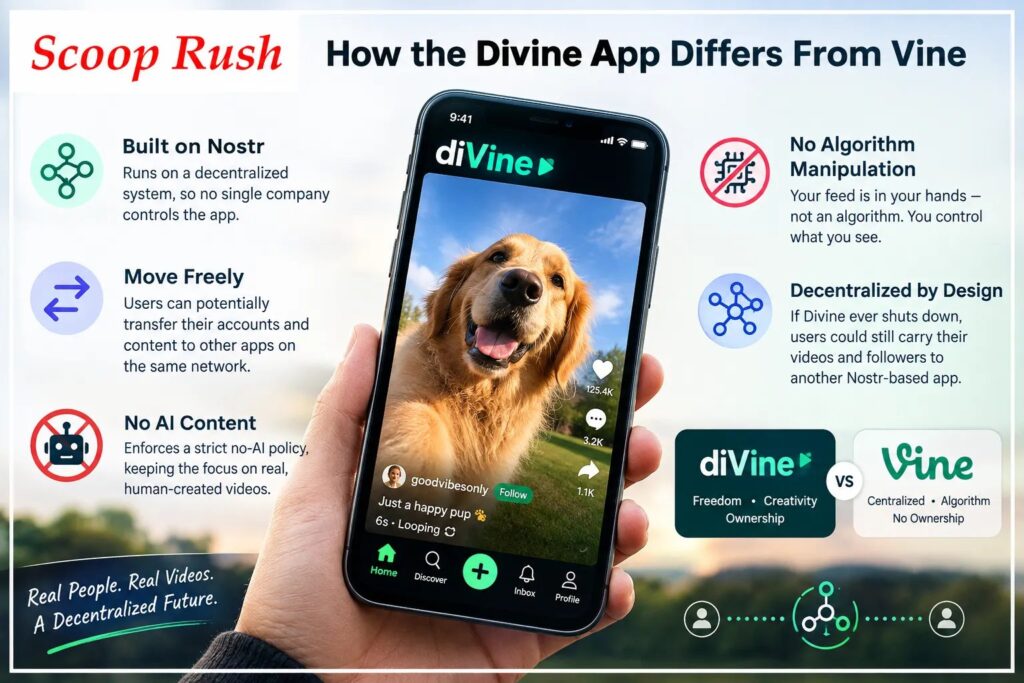
Unlike the original Vine, Divine runs on a decentralized system called Nostr. This means no single company controls the app. Consequently, users can potentially move their accounts and content to other apps built on the same system instead of staying locked into one platform forever. Bluesky and Mastodon use similar decentralized models, so the idea isn’t entirely new to social media users.
Divine also enforces a strict no-AI policy, something Vine never had to consider back in 2012, since AI-generated video barely existed at the time.
Additionally, Divine claims there’s no algorithmic manipulation shaping what users see. Instead, people control their own feeds directly, which marks a clear break from how most modern platforms, including WhatsApp, Facebook, and Instagram, operate today.
Divine’s Decentralized Structure Explained
The Nostr protocol gives Divine its independence. Because no company owns the network itself, individual apps built on it can rise or fall without taking user data down with them. Therefore, if Divine ever shuts down, users could theoretically carry their videos and followers to another Nostr-based app instead of losing everything.
How Divine Blocks AI-Generated Videos
This no-AI feature is getting the most attention, and for good reason. Divine uses three main methods to keep synthetic content off the platform.
First, users must record videos live inside the app. Uploading pre-made clips from elsewhere isn’t allowed. This rule immediately rules out most AI video tools, since those tools typically generate files meant for upload rather than live capture.
Second, Divine uses a verification tool called ProofMode. It works like a digital receipt, attaching details to each video such as when someone recorded it and whether the file has changed since. This creates a layer of accountability that most mainstream apps simply don’t offer, unlike the ongoing debate over AI voice cloning laws protecting UK celebrities.
Third, both users and automated systems help flag suspected AI content after it’s posted. If a video looks synthetic, the community becomes part of the moderation process alongside Divine’s own detection tools, in much the same way AI detectors try to tell human writing from AI writing.
Social media analyst Matt Navarra pointed out that this approach carries real risk. He noted that the same features people complain about on other platforms often keep them addictive. Therefore, Divine must prove it can remove that addiction without losing what made short-form video fun in the first place.
Why Divine’s No-AI Promise Matters Right Now
AI-generated video has become nearly impossible to avoid on most platforms today, a concern also raised around Snapchat blocking AI-generated videos from its Spotlight feed. Consequently, many users have grown skeptical about what they’re watching, unsure whether a clip shows real footage or something generated by a tool. Henshaw-Plath addressed this fatigue directly, saying he wanted a space where people didn’t have to second-guess every video.
For a growing number of users, that single promise might be reason enough to try Divine.
The 2.5 Million Restored Vine Videos
Here’s the part that surprised even Divine’s own founder. Henshaw-Plath originally planned to recreate Vine’s format only. Then he discovered that the Internet Archive had preserved a copy of Vine’s old data, so he spent months rebuilding it.
He said the discovery felt exciting, and he expected only a few thousand people to care about it.
Instead, 10,000 people installed Divine within hours of its launch, overwhelming its servers. That reaction told him the app tapped into something bigger than simple nostalgia. Separately, other reports note Divine’s library also includes around 170,000 clips recovered through volunteer archivists, adding even more depth to its restored video collection.
Why Six-Second Vine Videos Still Work Today
You might wonder why anyone wants short, looping clips when YouTube and TikTok have pushed toward longer content in recent years. Henshaw-Plath compared Vine’s format to haiku poetry. He explained that while free-form prose is possible, poetry holds meaning precisely because of its constraints, and Vine worked the same way.
The tight six-second format forced real creativity. There was no room for filler, only for the moment that actually landed. This is likely why so many old Vines still circulate as memes nearly a decade after the app shut down.
How to Sign Up for the Divine App
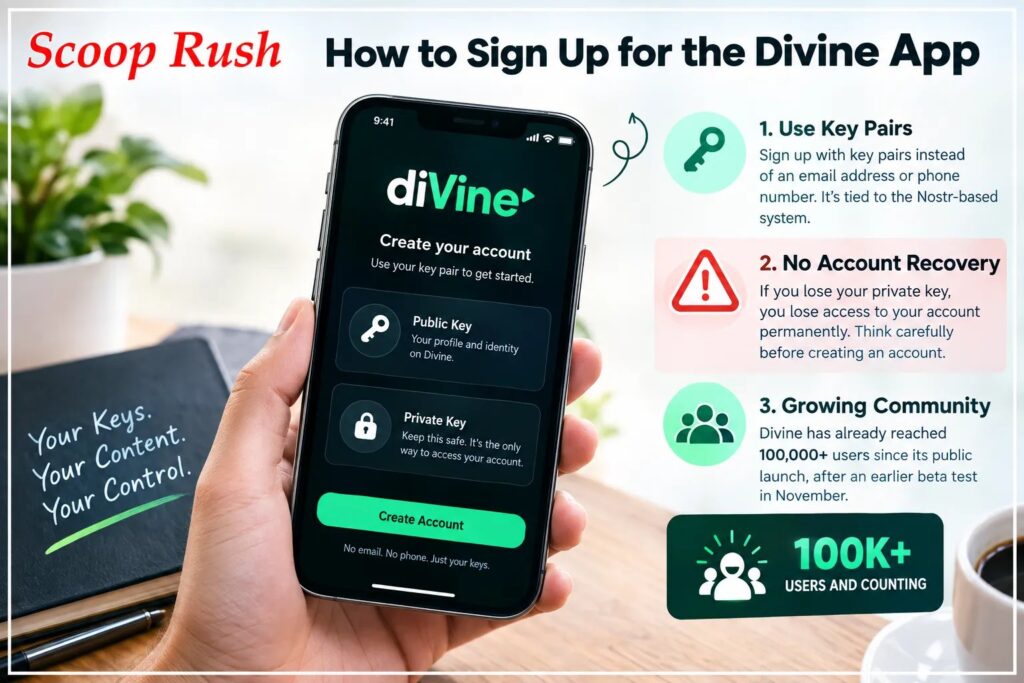
Signing up works differently than most apps people know. Divine uses key pairs instead of email addresses or phone numbers, tied to its Nostr-based system.
There’s one major catch worth knowing before you sign up. Divine has no account recovery system. If you lose your private key, you lose access to your account permanently. This marks a big shift from typical apps, where password resets are standard, so think it through carefully before creating an account.
Divine has already crossed 100,000 users since its public launch, following an earlier beta test back in November. That means the app spent roughly nine months in testing before opening to everyone.
A Quick Look Back at Vine’s Legacy
Understanding Vine’s history helps explain why Divine’s launch feels like such a big deal. The original app launched in June 2012, founded by Rus Yusupov, Colin Kroll, and Dom Hofmann. Twitter bought it just six months later for $30 million.
At its peak, Vine had more than 200 million monthly active users. Furthermore, it helped launch the careers of stars like Jake Paul, Logan Paul, Lele Pons, Brittany Furlan, and Shawn Mendes. Many of these creators turned early Vine fame into long-term entertainment careers, not unlike how some modern creators have built five-figure monthly side hustles from online platforms today.
Despite that massive audience, Vine struggled against Instagram and other rising apps. Twitter ultimately shut it down in 2017, leaving behind a nostalgic gap that fans have discussed ever since.
Divine Isn’t the Only Nostalgic App Making a Comeback
Interestingly, Divine’s return isn’t happening alone. Myspace is also reportedly planning a relaunch, according to site owners Chris Vanderhook and Tim Vanderhook. They confirmed in a new documentary that they still own the Myspace brand and are waiting for the right moment to bring it back.
Together, these two comebacks suggest something bigger is happening across social media. People miss the internet the way it used to feel, before algorithms and AI content took over. Both Divine and Myspace are betting there’s real demand for that older, simpler version of the web.
Final Thoughts on the Divine App
Divine brings back a beloved format, restores a huge chunk of internet history, and takes a clear stand against AI content at a moment when that issue is impossible to ignore. Whether it can hold onto users long-term remains an open question. However, the early numbers, from 10,000 installs in the first few hours to over 100,000 users since launch, suggest real demand for something built on authenticity instead of algorithms.
FAQs
What is the Divine app used for?
Divine lets users create and share six-second looping videos, similar to the original Vine. Users can also browse more than 2.5 million restored classic Vine clips.
Is Divine connected to the original Vine or Twitter?
No. Divine is an independent app built by former Twitter employee Evan Henshaw-Plath. However, it is backed by Twitter co-founder Jack Dorsey.
How does Divine stop AI-generated videos?
Divine requires live recording within the app and uses a verification tool called ProofMode to confirm authenticity. It also relies on user reports plus automated detection to catch AI content.
Can I recover my Divine account if I lose access?
No. Divine has no account recovery system. Losing your private key means permanently losing access to your account.
How many people have joined Divine so far?
Divine has surpassed 100,000 users since its public launch on August 20, 2026. This follows an earlier beta release in November.

