
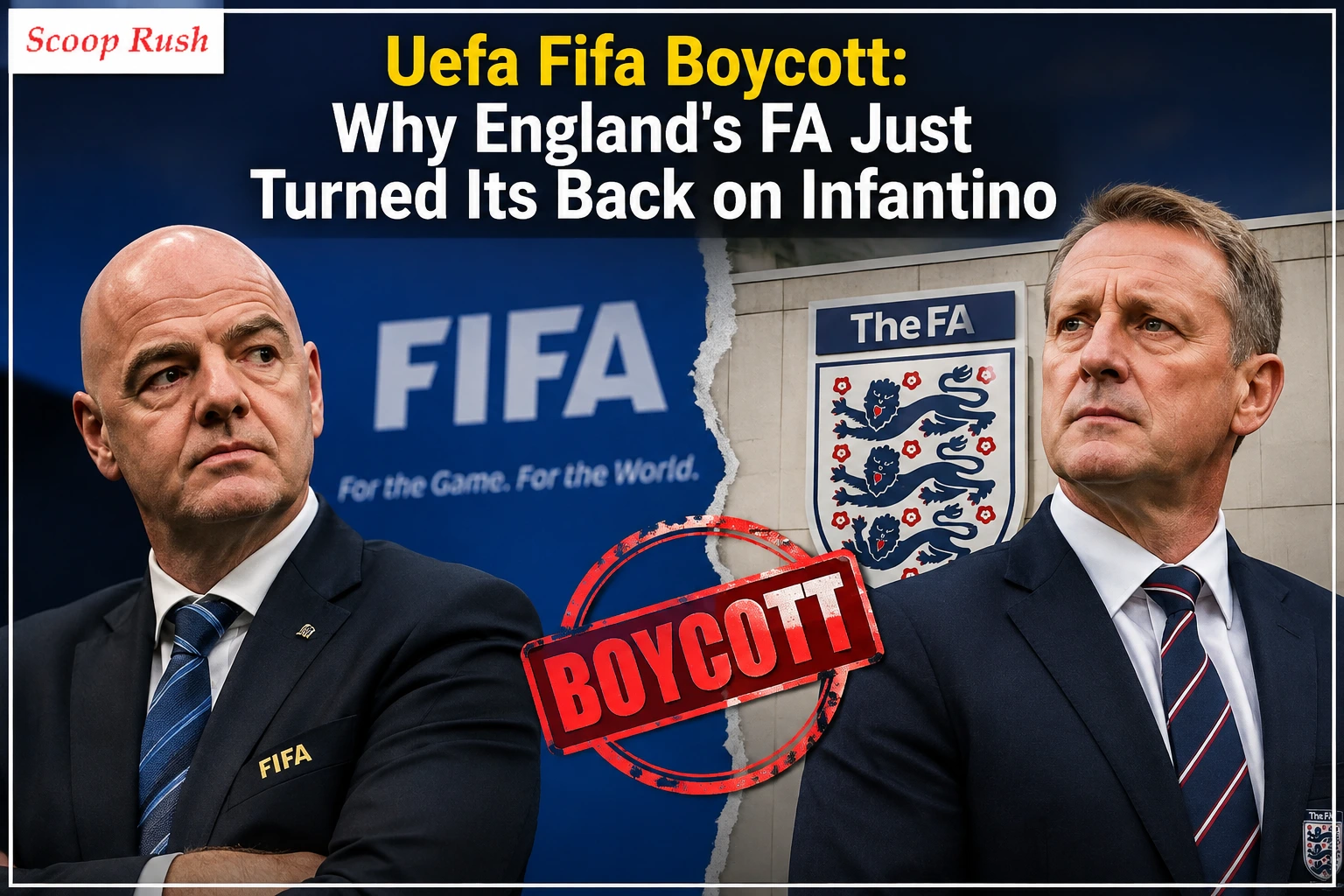
Could a Uefa Fifa Boycott Really Stop the World Cup?
Picture this. England, Spain, France, and Germany all refuse to play in Fifa’s biggest tournaments. That scenario no longer sounds far-fetched. A Uefa Fifa boycott is now firmly on the table, and the crisis around Fifa president Gianni Infantino has just gotten worse.
Uefa, European football’s governing body, says its conditions for backing down still haven’t been met. Meanwhile, the English Football Association has pulled its support for Infantino completely. What began as anger over a controversial financial plan has turned into a real power struggle at the top of world football, and it could reach every fan who follows the World Cup.
This story matters far beyond boardrooms in Zurich and Rabat. If Uefa moves ahead with a boycott, it could disrupt qualifying matches, tournaments, and even the men’s and women’s World Cups. Let’s look at what triggered this crisis, why Europe reacted so strongly, and what a Uefa Fifa boycott could mean next.
What Triggered the Uefa Fifa Boycott Threat
The trouble started with Fifa’s Forward Enterprise plan, known as FFE. Infantino reportedly offered every national football association $40 million, around £30 million, if they backed a proposal to sell stakes in major Fifa competitions to private investors. That list included the men’s and women’s World Cups, two of the most valuable properties in global sport.
Critics called the deal secretive and rushed. Uefa didn’t hold back either, describing the FFE proposal as a “shabby, back room, opaque deal.” That kind of language from a normally cautious organisation shows how seriously European football took the threat.
The backlash spread quickly. Inside Fifa, senior figures pushed back hard too. Secretary general Mattias Grafstrom, widely seen as Infantino’s closest ally, reportedly called the events “a sad and reproachable series of events” in an internal staff memo. When your own second-in-command criticises a plan openly, something has clearly gone wrong.
Infantino’s Apology Failed to Calm the Uefa Fifa Boycott Row
Facing growing pressure, Fifa held a management board meeting in Rabat, Morocco. Infantino apologised for errors in how the process unfolded. Fifa admitted “mistakes” and said officials never intended to make the Council or member associations “feel excluded.”
However, an apology alone couldn’t satisfy Uefa. The confederation responded almost immediately, saying the meeting “changes nothing.” Uefa insists its position was clear days earlier: it had lost confidence in Infantino’s presidency, and that stance still holds firm today.
A deeper frustration exists too. Some within Uefa believe Infantino tried to spread the blame instead of taking full personal responsibility. Rather than apologising alone, he appeared alongside Grafstrom, and many read that as an attempt to soften the criticism aimed at him directly. Several key questions also remain unanswered. Who actually drew up the FFE plan? Did a competitive process take place? Did Infantino stand to gain personally? Fifa hasn’t addressed any of these questions publicly, and that silence is fuelling more suspicion.
Why the Uefa Fifa Boycott Threat Carries So Much Weight
A boycott isn’t a step any confederation takes lightly. Yet Uefa has kept it firmly on the table as what insiders call its “nuclear option.” Unlike smaller diplomatic pressure tactics, a boycott would hit tournaments, broadcasters, sponsors, and fans directly.
Fans will soon see whether this threat holds real weight. The Fifa Women’s U20 World Cup kicks off in Poland in early September, with six European nations, including England, set to compete. This tournament will show whether Uefa acts on its words or simply uses the threat as leverage for now.
There’s real risk for Uefa here too. A boycott loses its power if used too often. Blocking one questionable financial proposal is one thing. Using the same weapon to remove a sitting Fifa president is a much bigger step, and it risks making European football look like it’s forcing its will on the rest of the world.
England’s FA Adds Weight to the Uefa Fifa Boycott Threat
England’s Football Association has now formally written to Fifa, withdrawing its backing for Infantino. This move carries real significance. The FA remains one of the most influential associations in world football, and its decision strengthens Uefa’s position rather than leaving the confederation to fight alone.
For English fans, this development brings the crisis much closer to home. It shows that the FA views the situation as serious enough to break publicly with the man leading world football’s governing body.
How United Is Support for a Uefa Fifa Boycott Globally?
Here’s where the picture gets complicated. Despite the seriousness of Uefa’s stance, global support for removing Infantino isn’t universal at all.
Lamin Kaba Bajo, president of the Gambia Football Federation, actually praised Infantino’s “courage” for reversing the FFE plan and said he supports him “more than ever.” That response contrasts sharply with the language coming from Uefa.
Reactions elsewhere remain mixed rather than united against Infantino:
- Jordan didn’t back Infantino before this controversy began, and it has now publicly confirmed it won’t vote for his re-election in March.
- Concacaf issued a statement after the proposal collapsed but stopped short of saying it had lost confidence in Infantino, unlike Uefa.
- Conmebol, South America’s governing body, said it wouldn’t support any move that ignores Fifa’s official procedures ahead of the presidential election.
This lack of unified global opposition creates a real obstacle for Uefa. Football politics rarely follows European sentiment alone, and Infantino appears to understand this well.
What Options Does Uefa Have Beyond a Boycott?
So what can Uefa actually do besides issuing statements? A few paths exist, though none of them come easily.
Forcing an Emergency Fifa Council Meeting
One option involves forcing an emergency Fifa Council meeting to hold Infantino directly accountable. This route needs support from 19 of the 36 confederation and association heads. Given the mixed global reaction, reaching that number looks genuinely difficult right now.
Triggering a Vote of No Confidence
Uefa can also call an extraordinary congress to trigger a formal vote of no confidence. This move needs a majority of Fifa’s 211 member associations, meaning 106 votes, to succeed. It would essentially function as a presidential election without a second name on the ballot.
If Uefa can’t realistically reach 106 votes, triggering this process could backfire and expose just how limited its global support really is. This option carries serious risk alongside its potential reward.
Backing a Unity Candidate for the March Election
A quieter but perhaps smarter route involves finding one candidate to challenge Infantino in next March’s presidential election. Insiders have named Victor Montagliani, Concacaf’s president, as a likely contender should Uefa pursue this path.
This approach avoids an immediate showdown and instead works within Fifa’s existing electoral system. However, it also buys Infantino time, and he appears determined to use every bit of it.
Infantino Stays Defiant Despite the Uefa Fifa Boycott Pressure
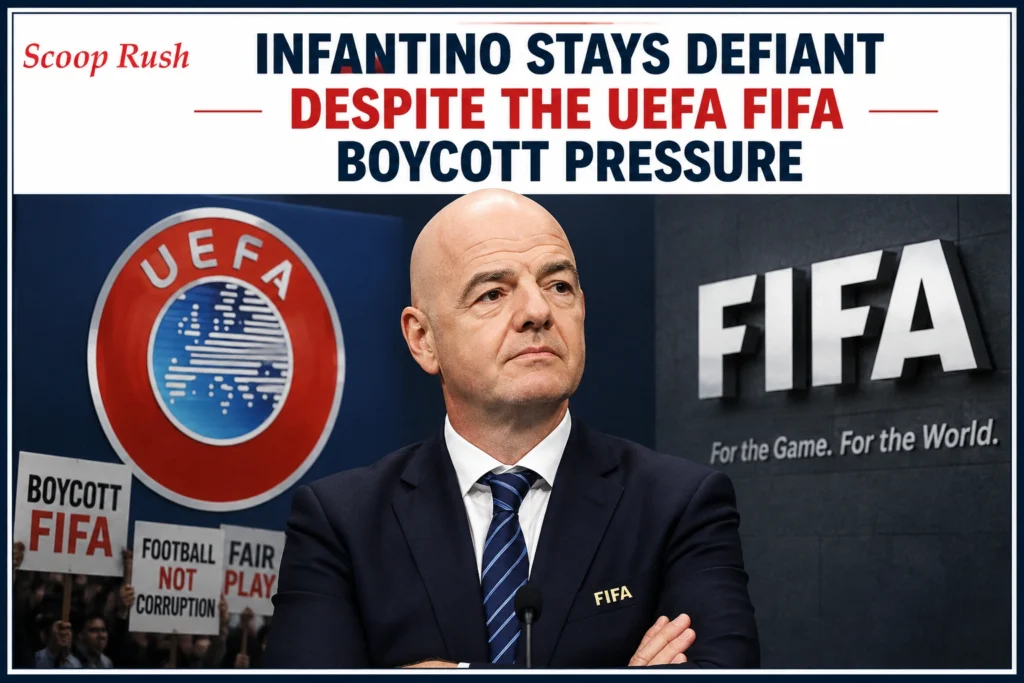
Despite the storm around him, Infantino doesn’t appear ready to step aside. Observers actually noted he seemed emboldened rather than defensive during Wednesday’s meeting in Rabat.
Notably, Infantino himself summoned the Fifa management board together, not the other way around. By the end of the meeting, tensions with Grafstrom seemed to ease, and photographers later pictured the pair smiling together at a Women’s Africa Cup of Nations match between Malawi and Zambia.
Not everyone inside Fifa feels reassured though. Fifa left chief operating officer Kevin Lamour out of the meeting entirely. Lamour had previously criticised the FFE plan strongly, calling it “the project of one person” and urging football’s leaders to ask themselves hard questions. He went as far as saying he’d accept losing his job over speaking out, adding that at least he’d “sleep well tonight.”
This internal split shows that even Fifa’s own leadership remains divided over how Infantino has handled the situation.
Why Every Football Fan Should Watch This Story
At this point, some fans might wonder why boardroom politics in Zurich or Rabat should matter to them. The answer is simple. Fifa controls the World Cup, arguably the biggest event in global sport. Any disruption from a Uefa Fifa boycott could affect qualifying matches, tournament schedules, and the credibility of competitions fans have followed for decades.
Furthermore, Fifa plans to announce new funding for member associations before the year ends. That announcement could sway undecided associations back toward supporting Infantino ahead of March’s election, making Uefa’s next move even more urgent.
Final Thoughts: A Standoff With No Clear Winner Yet
Right now, this remains a genuine standoff. Uefa has drawn a clear line, insisting its conditions haven’t been met and that it still lacks confidence in Infantino. The FA’s decision to withdraw support adds real pressure from one of football’s most powerful nations.
Yet Infantino remains defiant, and global support for removing him is far from unanimous. Ultimately, the coming weeks, starting with the Women’s U20 World Cup in Poland, will reveal whether Uefa follows through on its boycott threat or whether this crisis quietly fades as football’s political machinery grinds toward March’s presidential election.
One thing is certain. This dispute has moved well beyond money. It has become a fight over trust, transparency, and who truly controls the future of world football.
Frequently Asked Questions
1. Why is Uefa threatening a Fifa boycott?
Uefa is considering a boycott because it says its conditions following the controversial FFE proposal haven’t been met. The confederation says it has lost confidence in Fifa president Gianni Infantino and wants full accountability, not just an apology.
2. What was the Fifa Forward Enterprise (FFE) proposal?
The FFE proposal reportedly offered national football associations $40 million each to support a plan that would sell stakes in major Fifa competitions, including the men’s and women’s World Cups, to private investors.
3. Has the FA withdrawn its support for Gianni Infantino?
Yes. The English Football Association sent a formal letter withdrawing its backing for Infantino, aligning itself more closely with Uefa’s stance against the Fifa president.
4. Could a Uefa Fifa boycott actually affect the World Cup?
It could. Uefa has described a boycott as its strongest option, and if it goes ahead, it could disrupt European participation in major Fifa tournaments, including World Cup qualifying and the finals themselves.
5. Who could replace Gianni Infantino as Fifa president?
No official candidate has been confirmed yet. However, insiders have named Concacaf president Victor Montagliani as a possible unity candidate should Uefa and other confederations push for an alternative ahead of the March presidential election.

