
Introduction
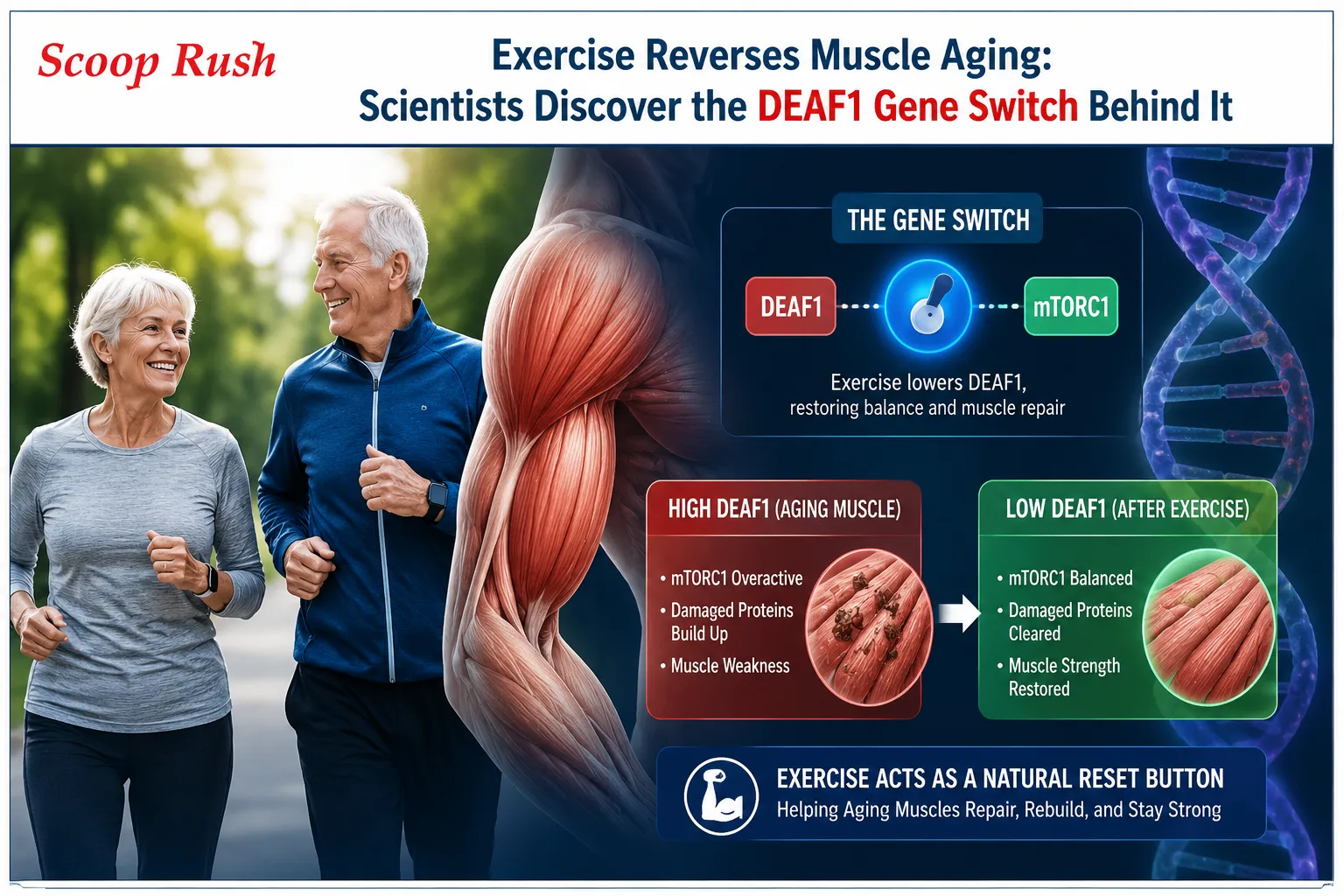
Exercise Reverses Muscle Aging is more than just a fitness claim. Researchers at Duke-NUS Medical School have identified a molecular switch centered on the DEAF1 gene that helps explain why physical activity keeps aging muscles stronger and healthier. The discovery could reshape how scientists and doctors understand age-related muscle loss and why some older adults respond better to exercise than others. Published in the Proceedings of the National Academy of Sciences (PNAS), the study provides new insight into the biology of muscle aging and repair. muscle loss in older adults.
Exercise Reverses Muscle Aging is more than just a catchy headline. A new study from Duke-NUS Medical School has identified the DEAF1 gene as a molecular switch that helps explain why physical activity keeps aging muscles stronger and healthier.
What Causes Muscles to Weaken With Age
Muscle loss is often seen as an unavoidable part of getting older. However, its effects go far beyond simply feeling weaker.
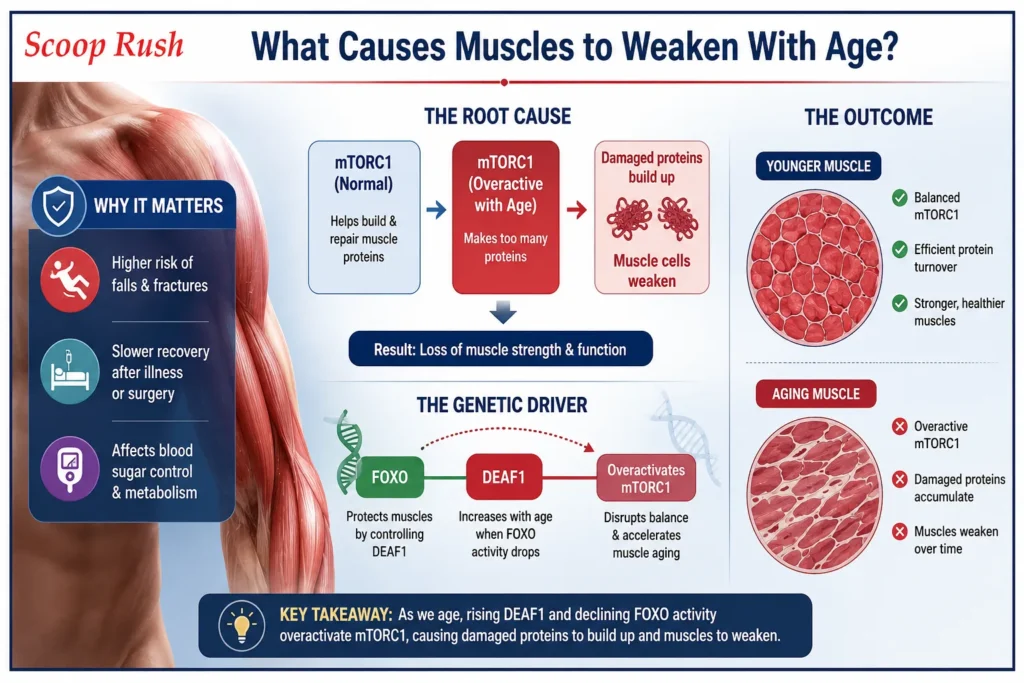
Weaker muscles increase the risk of falls and fractures. They also slow recovery after illness or surgery. Additionally, muscle tissue plays a major role in regulating blood sugar, so declining muscle health can affect metabolism too.
At the center of this decline is a pathway called mTORC1, which controls how muscles build and maintain proteins. In younger bodies, this system works efficiently. It helps muscles grow and repair themselves after physical stress.
As people age, though, mTORC1 can become overactive. Instead of maintaining a healthy balance, it pushes muscles to keep producing new proteins while neglecting the cleanup of damaged ones. Over time, these damaged proteins accumulate inside muscle cells. This buildup places stress on the cells and contributes directly to the gradual loss of strength associated with aging.
For a long time, researchers understood this imbalance existed. What they didn’t know was what caused it.
The Genetic Driver Behind Muscle Aging
Researchers found that Exercise Reverses Muscle Aging through the DEAF1 gene and FOXO proteins.The Duke-NUS team, working alongside collaborators from Singapore General Hospital and Cardiff University, pinpointed DEAF1 as the missing piece.
According to the study, DEAF1 levels naturally rise as muscles age. As DEAF1 increases, it pushes mTORC1 activity even higher, disrupting the normal balance between building and clearing proteins. This accelerates muscle deterioration significantly.
Under healthy conditions, DEAF1 is kept in check by a group of proteins called FOXOs. However, FOXO activity declines with age. As a result, DEAF1 no longer faces the same regulatory control, allowing its levels to climb unchecked. This is similar to how a hidden genetic factor can quietly shift how a drug or pathway performs in the body.
This creates what researchers describe as a persistent, damaging cycle. The system that once protected muscles from wear and tear becomes part of the problem.
How Exercise Flips the Switch Back
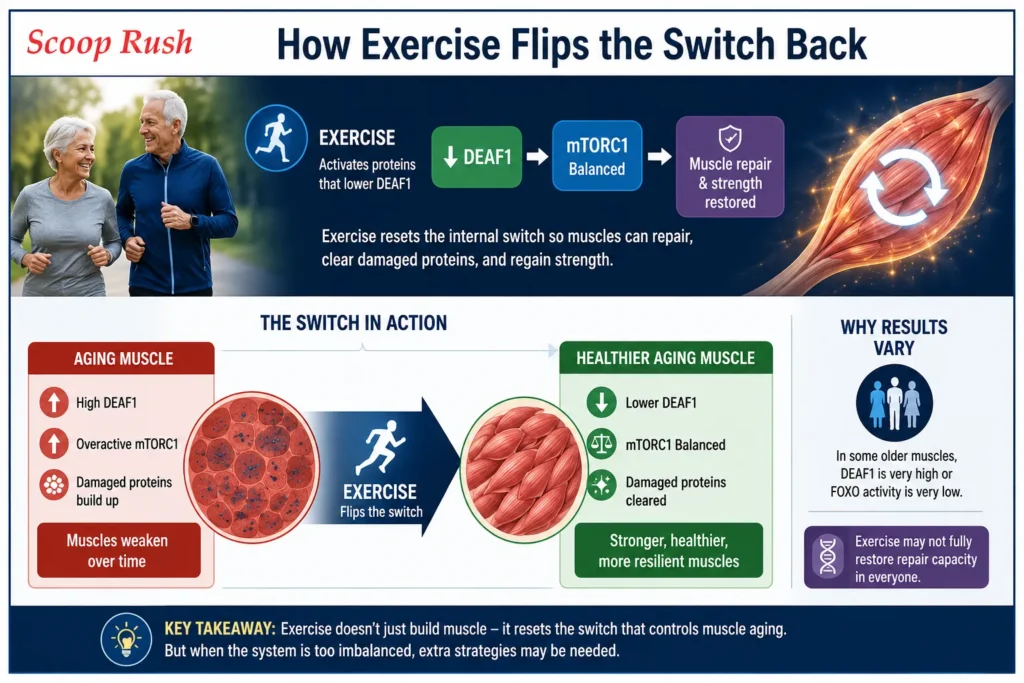
Exercise Reverses Muscle Aging by lowering DEAF1 levels and restoring the balance of the mTORC1 pathway.
Assistant Professor Tang Hong-Wen, the study’s senior author from Duke-NUS’s Cancer and Stem Cell Biology Program, explained the mechanism directly. Physical activity activates proteins that lower DEAF1 levels, which in turn brings mTORC1 back into balance. This allows aging muscles to clear out damaged proteins, rebuild themselves properly, and regain strength and resilience.
In simpler terms, exercise doesn’t just build muscle. It resets the internal switch that controls whether muscles repair themselves or slowly break down.
Tang described the discovery as striking, noting that exercise appears to target the actual switch responsible for muscle aging, rather than just addressing surface-level damage. That distinction matters because it points to a root cause rather than a temporary fix.
Why Exercise Doesn’t Work the Same for Everyone
The research also uncovered an important limitation. In some older muscles, DEAF1 levels rise so high, or FOXO activity drops so significantly, that exercise alone may not be enough to fully restore the muscle’s repair capacity.
This finding could explain a pattern many people have noticed anecdotally: some older adults see dramatic benefits from staying active, while others see far less improvement despite similar effort. Understanding the biology behind this difference could help doctors eventually tailor recommendations more precisely, much like how researchers studying omega-3 supplements have found that individual response can vary widely.
Testing the Theory in Flies and Mice
To confirm their findings, researchers ran experiments across two different species. They tested the DEAF1 mechanism in both fruit flies and aging mice, an approach that echoes how scientists studying new beetle species rely on careful cross-species comparison to validate biological patterns.
The results were consistent in both cases. When DEAF1 levels were artificially raised, muscles weakened more rapidly. When DEAF1 was lowered, muscles regained a healthier protein balance and improved strength.
In the mouse experiments specifically, researchers put older mice through structured endurance workouts, including treadmill sessions, while a separate group remained sedentary. The mice that exercised showed significant drops in mTORC1 activity, the overactive pathway tied to muscle loss and a condition known as sarcopenia.
Because the same pattern held true across two very different organisms, the findings suggest DEAF1 plays a conserved role in muscle aging that likely applies broadly across species, including humans.
Beyond Aging: What This Means for Recovery and Disease
The implications of this research may reach well beyond typical age-related muscle loss.
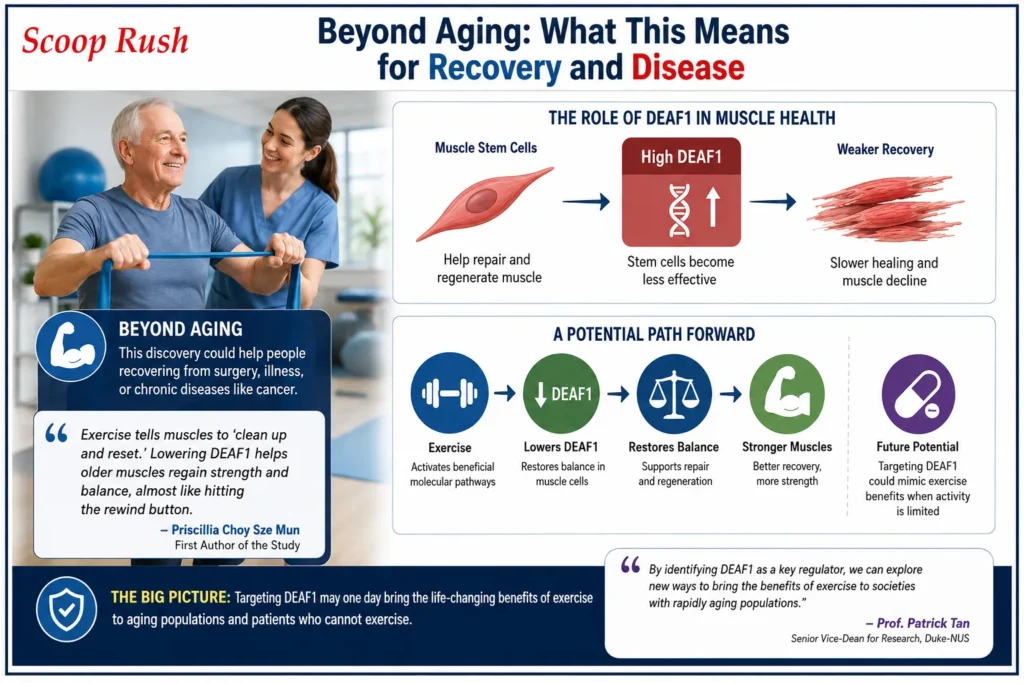
DEAF1 also influences muscle stem cells, which are responsible for helping muscles repair and regenerate damaged tissue. These stem cells naturally become less effective over time. When DEAF1 activity is disrupted, that decline appears to accelerate, making recovery even harder.
This connection could prove especially valuable for people recovering from surgery, serious illness, or chronic conditions such as cancer. In situations where physical activity is limited or impossible, understanding DEAF1 offers a potential path forward.
Researchers suggest that targeting DEAF1 directly, through future drug development, could potentially replicate some of the beneficial effects of exercise at the molecular level. That would mean helping patients maintain muscle strength even when they can’t work out in the traditional sense.
Priscillia Choy Sze Mun, the study’s first author, summarized the discovery memorably. She described exercise as essentially telling muscles to “clean up and reset,” with lowering DEAF1 helping older muscles regain strength and balance, almost like hitting a rewind button.
Professor Patrick Tan, Senior Vice-Dean for Research at Duke-NUS, added that identifying DEAF1 as a key regulator could open new avenues for bringing the benefits of exercise to aging populations worldwide, particularly as life expectancy continues to rise globally.
Conclusion
Exercise Reverses Muscle Aging by restoring the body’s natural muscle repair system, according to researchers at Duke-NUS Medical School. The discovery of the FOXO-DEAF1-mTORC1 pathway gives scientists a clear biological explanation for why physical activity remains one of the best ways to protect muscle health as people age.
For everyday readers, the practical message stays simple: physical activity continues to be one of the most powerful tools available for maintaining strength and independence with age. At the same time, this research opens the door to future treatments for people who cannot exercise due to illness, injury, or advanced age.
As Tang and his team continue this work, the hope is that understanding DEAF1 could eventually lead to therapies that mimic exercise’s protective effects at a cellular level, offering new options for millions of people at risk of muscle decline.
FAQs
What is DEAF1 and why does it matter for muscle aging?
DEAF1 is a gene regulator that rises in activity as muscles age. Higher DEAF1 levels push a growth pathway called mTORC1 into overdrive, disrupting the normal balance between building new muscle proteins and clearing out damaged ones. This imbalance contributes directly to muscle weakness over time.
How does exercise affect DEAF1 levels?
Physical activity activates FOXO proteins, which in turn lower DEAF1 levels. This helps restore normal mTORC1 activity, allowing muscles to clear damaged proteins and rebuild themselves more effectively.
Why doesn’t exercise help everyone’s muscles equally?
In some older muscles, DEAF1 levels become extremely high or FOXO activity drops too far. In these cases, exercise alone may not fully restore the muscle’s repair capacity, which may explain why individual responses to exercise vary.
Could this research lead to new treatments for muscle loss?
Yes. Researchers believe that targeting DEAF1 directly, potentially through medication, could help replicate some of the muscle-protective benefits of exercise. This could benefit people who cannot exercise due to illness, surgery, or limited mobility.
Was this research tested only in humans?
No. Scientists confirmed their findings using both fruit flies and aging mice. Results were consistent across both species, suggesting DEAF1 plays a conserved biological role that likely extends to humans as well.

