
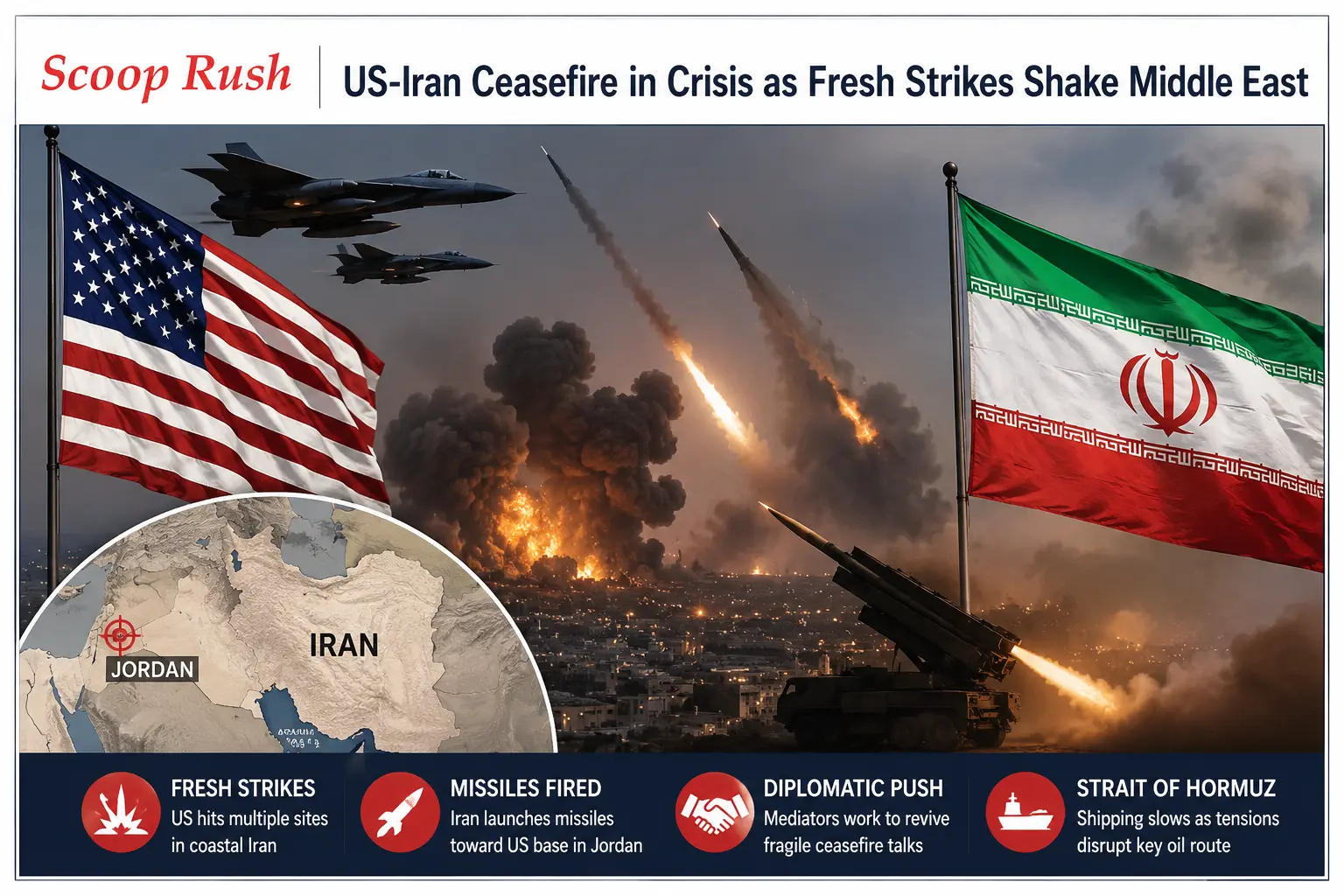
The US-Iran ceasefire is facing its biggest challenge yet after both sides accused each other of launching new attacks across the Middle East. Iran claimed the United States carried out fresh strikes on coastal military sites, while Tehran said it responded by firing missiles toward a US military base in Jordan.
The latest exchange has raised fresh concerns that the fragile truce could collapse completely. Although neither Washington nor Tehran has officially ended the ceasefire agreement, the recent violence has made the path back to diplomacy increasingly uncertain.
At the same time, tensions in the Strait of Hormuz continue to disrupt global shipping, adding pressure to energy markets and increasing fears of a broader regional conflict.
US-Iran Ceasefire Comes Under Pressure After New Military Exchange
The situation escalated after Iranian state media reported that US forces launched another round of strikes on several locations along Iran’s southern coast. According to Iranian officials, the attacks followed overnight operations that targeted dozens of military facilities across the country. Tehran described the latest strikes as another violation of the temporary peace agreement that both sides entered into only weeks ago.
Iran quickly announced what it called a defensive response. Officials claimed missiles were launched toward a US military base in Jordan. Jordan later confirmed that missiles entered its airspace and were intercepted before reaching their targets. Authorities said there were no immediate reports of major casualties or significant damage.
The US military has not officially confirmed Iran’s claims regarding the latest attacks. While details continue to emerge, the renewed military activity highlights how quickly the security situation has deteriorated despite ongoing diplomatic efforts.
Diplomatic Efforts Continue Despite Growing Tensions
Even as military operations continue, international mediators are working to prevent the conflict from spiraling further.
Regional diplomatic sources say discussions between Washington and Tehran have not completely stopped. Several countries remain engaged in behind-the-scenes negotiations aimed at restoring confidence between both sides.
However, every new exchange of fire makes those talks more difficult. The ceasefire was intended to reduce military tensions while allowing both governments to negotiate long-term security issues. Instead, repeated accusations and retaliatory strikes have created new obstacles for negotiators.
Political analysts believe the coming days could determine whether diplomacy survives or whether both countries move toward a much larger confrontation.
Military Activity Expands Across the Region
The latest confrontation is no longer limited to Iran alone.
Over the past two days, military activity has spread across several parts of the Middle East. Iran has accused the United States of expanding its operations, while Washington continues to monitor Iranian military movements across the region. Jordan’s interception of incoming missiles demonstrates how neighboring countries are increasingly being drawn into the crisis.
Regional governments remain on high alert as air defense systems continue monitoring possible new attacks. Security experts warn that further escalation could increase the risk of accidental clashes involving additional countries.
Ali Khamenei Funeral Adds Political Uncertainty
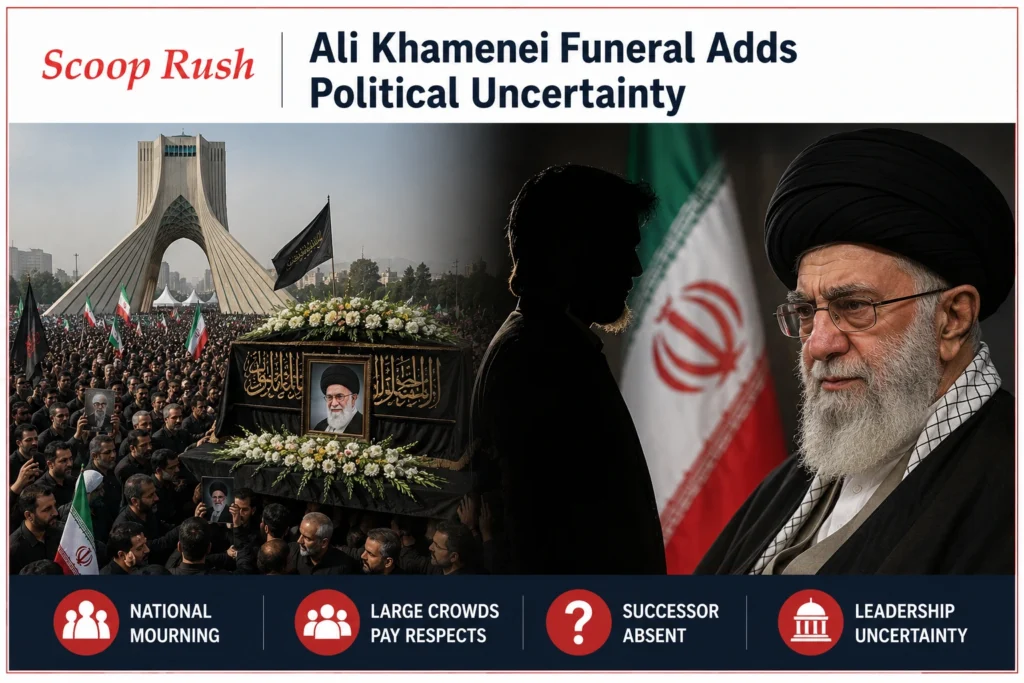
The renewed fighting comes as Iran concludes the final day of funeral ceremonies for former Supreme Leader Ali Khamenei. Large crowds gathered across the country to pay their respects during several days of national mourning. Attention has also shifted toward Iran’s future leadership.
Sources familiar with the situation say Mojtaba Khamenei, the late leader’s son and designated successor, is unlikely to appear publicly during the final ceremonies. His absence has fueled speculation inside and outside Iran. However, Iranian authorities have not provided any official explanation regarding his decision to stay out of public view.
Political observers believe the leadership transition could influence Tehran’s future approach toward negotiations with the United States.
Strait of Hormuz Becomes a New Flashpoint
The conflict is also affecting one of the world’s most strategically important waterways. The Strait of Hormuz serves as a critical route for global oil exports. Any disruption there has immediate consequences for international energy markets.
Following the latest military escalation, commercial shipping traffic has slowed as companies assess security risks.
Iran has reportedly moved several oil tankers away from the area as a precautionary measure. Meanwhile, President Donald Trump has warned that the United States could restore a naval blockade if Iran continues actions that threaten maritime security. Energy analysts say prolonged instability in the Strait of Hormuz could push shipping costs higher and place additional pressure on global oil prices.
Global Leaders Watch Closely
Governments across Europe, the Gulf region, and Asia continue monitoring developments with growing concern. Many countries have urged both Washington and Tehran to avoid further military action and return to negotiations before the situation becomes more difficult to control.
Financial markets are also reacting cautiously as investors monitor developments affecting energy supplies and regional stability. Diplomatic observers say both sides still have an opportunity to preserve the ceasefire, but that window is becoming increasingly narrow.
Can the US-Iran Ceasefire Still Survive?
The ceasefire remains technically in place because neither country has formally withdrawn from the agreement. However, repeated military exchanges have weakened trust between both governments. Each new strike increases political pressure and reduces the chances of meaningful negotiations.
For now, mediators continue working behind closed doors to restore dialogue. Whether those efforts succeed may determine if the Middle East moves back toward diplomacy or enters another dangerous phase of conflict.
FAQs
1. What is the US-Iran ceasefire?
The US-Iran ceasefire is a temporary agreement designed to stop military attacks and create conditions for diplomatic negotiations between the two countries.
2. Why is the US-Iran ceasefire under pressure?
Fresh US strikes and Iranian missile attacks have increased tensions, making it harder for both governments to maintain the fragile peace agreement.
3. Did Iran launch missiles toward Jordan?
Iran said it targeted a US military base in Jordan. Jordan confirmed intercepting missiles in its airspace and reported no major casualties.
4. Why is the Strait of Hormuz important?
The Strait of Hormuz is one of the world’s busiest oil shipping routes. Any disruption there can affect global energy supplies and increase oil prices.
5. Has the US-Iran ceasefire officially ended?
No. Neither Washington nor Tehran has formally announced the end of the ceasefire, although recent military exchanges have placed the agreement under serious strain.

