
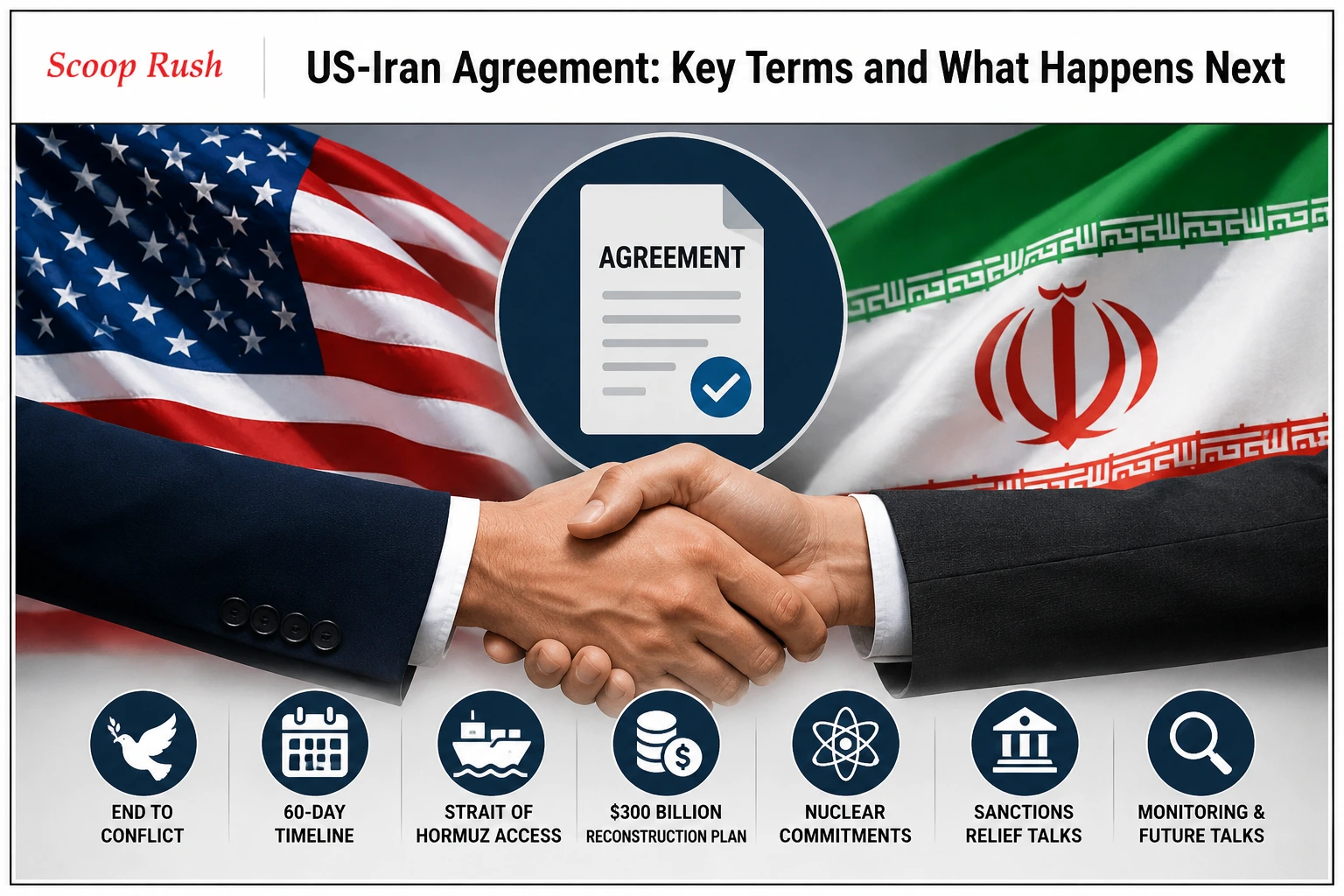
A newly signed US-Iran memorandum of understanding has laid out a roadmap aimed at ending months of conflict, reopening critical trade routes, and launching negotiations for a broader long-term agreement.
The agreement, signed by US President Donald Trump and Iranian President Masoud Pezeshkian, establishes an immediate ceasefire framework and outlines commitments on nuclear issues, sanctions relief, regional security, and economic recovery.
While many details still require further negotiations, the memorandum sets the foundation for a final deal that both sides aim to complete within the coming weeks.
Ceasefire and End of Military Operations
The first and most significant part of the agreement calls for an immediate halt to military operations between the United States, Iran, and their allies.
The document states that neither side will initiate military action or threaten the other moving forward. It also emphasizes respect for the sovereignty and territorial integrity of countries affected by the conflict, including Lebanon.
Officials describe this as the first step toward a permanent end to hostilities across the region.
Commitment to Respect Sovereignty
Both countries agreed not to interfere in each other’s internal affairs.
The provision focuses on respecting national sovereignty and territorial integrity, aiming to reduce tensions that have contributed to years of strained relations between Washington and Tehran.
60-Day Timeline for a Final Agreement
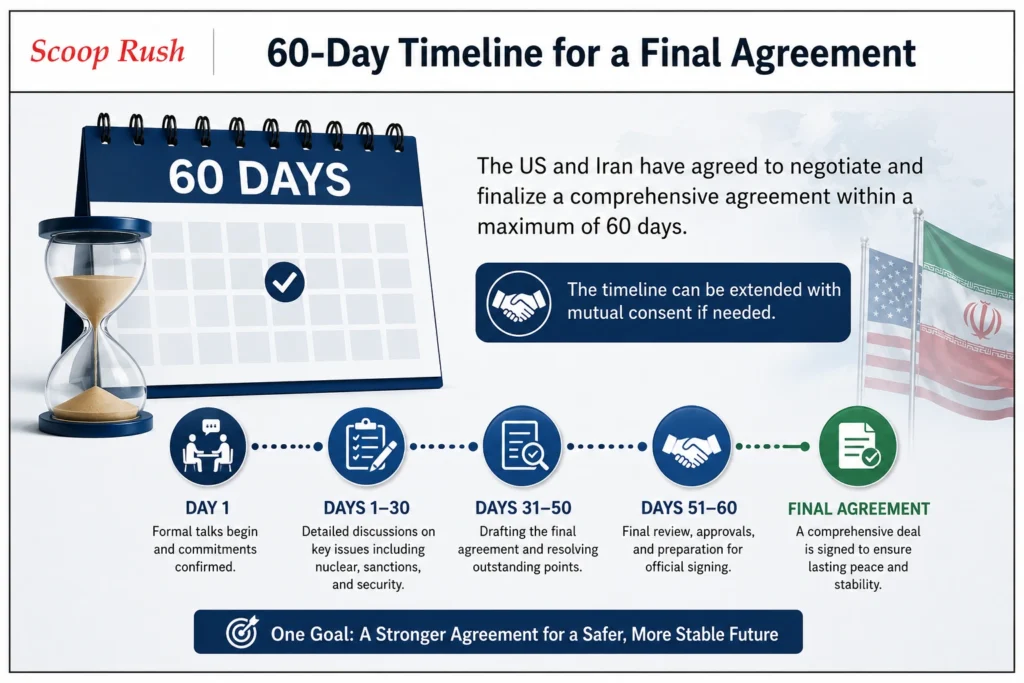
The memorandum establishes a maximum 60-day period for negotiating a comprehensive final deal.
Officials from both governments have confirmed that formal talks are already underway. The timeline can be extended if both sides agree that additional negotiations are necessary.
US to Ease Military and Maritime Restrictions
Under the agreement, the United States will begin removing restrictions affecting Iranian ports and maritime trade.
The document also outlines plans for the gradual reduction of military deployments near Iran, returning US forces to their pre-conflict posture once a final agreement is reached.
Reopening the Strait of Hormuz
One of the most closely watched elements of the deal involves the Strait of Hormuz, one of the world’s most important energy shipping routes.
Iran has agreed to facilitate the safe passage of commercial vessels through the waterway. The reopening is expected to help stabilize global energy markets after months of disruption.
The agreement also calls for future cooperation between Iran, Oman, and Gulf states to develop a broader framework for managing maritime traffic in the region.
$300 Billion Reconstruction and Development Plan
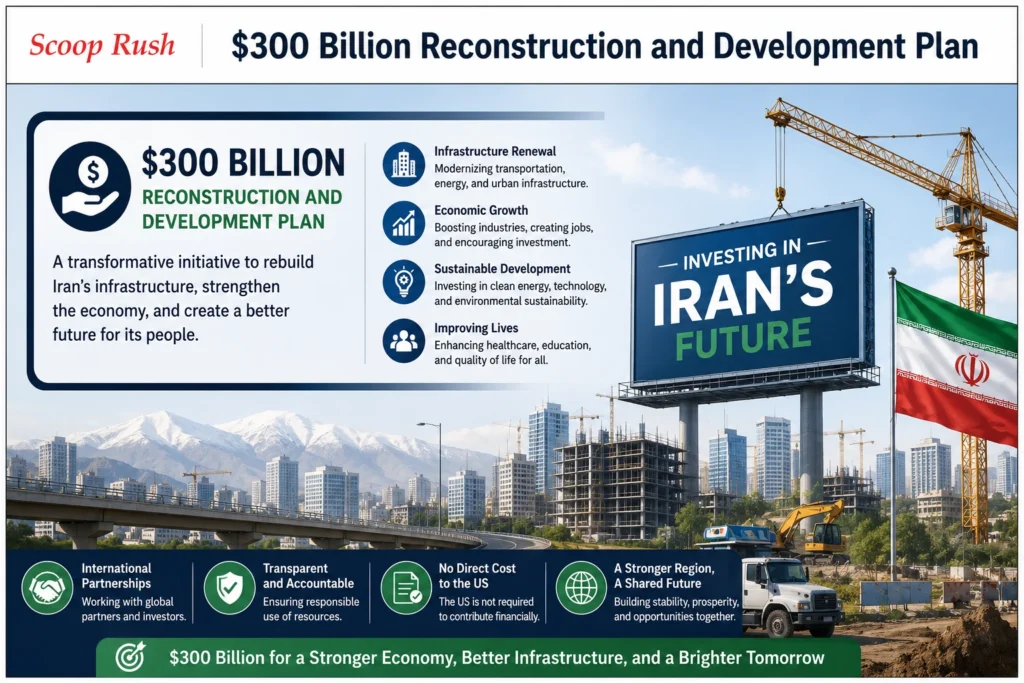
The memorandum includes plans for a reconstruction and economic development initiative valued at at least $300 billion.
The funding mechanism will be finalized during future negotiations. US officials have clarified that Washington is not obligated to contribute direct financial assistance but will support international investment and development projects in Iran if the agreement is successfully implemented.
Sanctions Relief Under Future Negotiations
The agreement outlines a path toward ending economic sanctions imposed on Iran.
However, the timing and scope of sanctions relief remain subject to future negotiations and compliance with the commitments outlined in the memorandum.
Both sides have agreed to address sanctions as a priority during upcoming talks.
Iran Reaffirms Nuclear Commitments
A central component of the agreement is Iran’s commitment not to develop or acquire nuclear weapons.
The memorandum also addresses Iran’s existing stockpile of enriched uranium. While a final technical solution has not yet been agreed upon, both sides support oversight by the International Atomic Energy Agency (IAEA).
US officials have described this provision as one of the most important outcomes of the agreement.
Temporary Nuclear Status Quo
Until a final arrangement is reached, both countries have agreed to maintain the current status of Iran’s nuclear program.
During this period, the United States will avoid introducing new sanctions while allowing certain economic activities, including oil exports and related financial transactions, under temporary waivers.
Release of Frozen Iranian Assets
The agreement also addresses long-standing disputes over Iranian funds held abroad.
The United States has agreed to begin making frozen assets available through procedures that will be finalized during negotiations. Officials say the release of funds will be linked to Iran’s compliance with its obligations under the agreement.
Monitoring and Future Negotiations
The final sections of the memorandum establish a framework for monitoring implementation and compliance.
Both countries will create mechanisms to oversee the agreement and continue negotiations toward a comprehensive settlement.
Any final deal is expected to receive endorsement through a binding United Nations Security Council resolution.
Fresh Talks Begin in Switzerland
Following the signing of the memorandum, direct negotiations between US and Iranian officials have started in Switzerland.
The talks are focused on implementing the agreement, addressing nuclear issues, and resolving regional security concerns.
Recent tensions involving Israel and Hezbollah in Lebanon have added complexity to the process, with both Washington and Tehran emphasizing the need to maintain the ceasefire framework established by the memorandum.
What the Agreement Means
The US-Iran memorandum represents a significant diplomatic effort to reduce tensions after months of conflict.
If successfully implemented, the agreement could reopen key trade routes, ease economic pressure on Iran, reduce regional instability, and create a pathway toward a broader settlement on nuclear and security issues.
However, many details remain unresolved, and the success of the deal will depend on both sides meeting their commitments during the upcoming negotiations.
FAQs
1. What is the US-Iran memorandum of understanding?
The memorandum of understanding is a 14-point preliminary agreement designed to end hostilities, reopen trade routes, address nuclear concerns, and create a framework for a long-term peace deal.
2. Does the agreement immediately remove sanctions on Iran?
No. The agreement outlines a path toward sanctions relief, but the details and timeline will be negotiated in future talks.
3. What happens to Iran’s nuclear program under the deal?
Iran has agreed not to develop nuclear weapons, and discussions will continue on how to manage existing enriched uranium under international supervision.
4. Why is the Strait of Hormuz important?
The Strait of Hormuz is one of the world’s most important shipping routes for oil and energy exports. Reopening it helps restore global trade and energy supplies.
5. What are the next steps after the agreement?
US and Iranian officials will continue negotiations over the next 60 days to finalize a comprehensive agreement and establish monitoring mechanisms for compliance.

