
The Supreme Court handed President Donald Trump a temporary win on Monday. The ruling backs Trump’s mail voting restrictions and lets parts of his plan move forward. Democratic-led states still hope separate lawsuits can block the policy before November.
The justices did not rule on whether Trump’s executive order is legal. Instead, they focused on timing. The court said Democratic-led states filed their challenge too early, before the harm became clear.
Supreme Court Gives Trump an Interim Win
The Supreme Court issued an unsigned order on Monday. The vote split 6-3 along ideological lines, with all three liberal justices dissenting. The conservative majority did not examine whether Trump’s order violates the Constitution.
Instead, the majority questioned whether states faced immediate legal harm. The justices said states sued before the policy’s effects became concrete. That reasoning let the court lift a lower court injunction covering 23 states and Washington, D.C. The ruling also granted a similar request tied to Alabama and 11 other states.
What Trump’s Executive Order Requires
Trump signed the order in March 2026. It hands the Postal Service and the Department of Homeland Security new roles in election administration. The White House says the changes will boost election security.
The order tells states to submit lists of eligible mail voters. The Postal Service would then check ballots against those lists before delivery. Homeland Security would separately build its own citizen eligibility lists. Officials could use those lists during investigations tied to alleged voting violations.
Postal Service Faces New Ballot Rules
The Postal Service plays a central role in Trump’s plan. Under the order, states must hand over voter eligibility data. The agency would use that data before processing certain mail ballots.
USPS also issued a final rule on Friday. The rule sets new design standards for ballot envelopes. It requires tracking barcodes and a new online portal for states to submit voter information. Critics say the tight timeline creates a heavy burden for an already strained agency.
Massachusetts Injunction Still Blocks USPS
A separate legal fight still limits Trump’s plan. U.S. District Judge Indira Talwani issued a nationwide injunction in a different case in June. That order came from a lawsuit filed by voting rights groups, not the 23 states.
Monday’s Supreme Court ruling did not lift that injunction. So USPS still cannot enforce every part of the new rule nationwide. Voting rights groups filed an emergency motion over the weekend, arguing USPS violated Talwani’s order by posting Friday’s rule. The administration must respond by Tuesday morning.
Democratic States Push Back
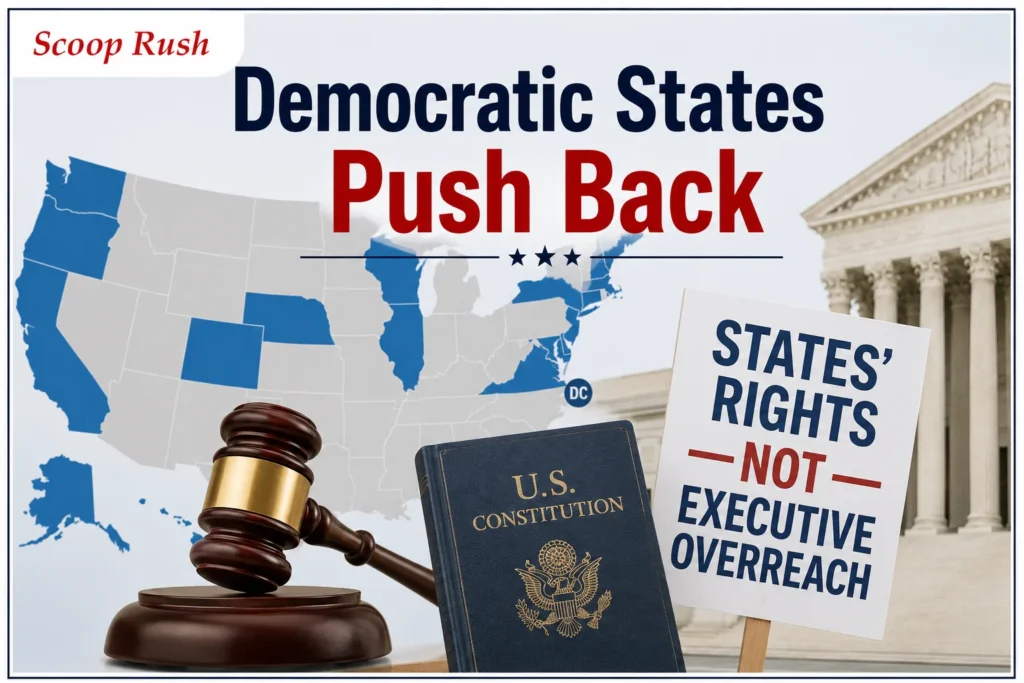
Twenty-three Democratic-led states challenged Trump’s order, along with Washington, D.C. They argue the Constitution gives states, not the president, authority over election procedures. They warn the changes could disrupt voting before the midterms.
Their lawsuit focused on the pressure the order already created. States said they faced real burdens preparing for federal demands. The Supreme Court disagreed on timing, not the merits. The justices said states can still sue once USPS or DHS finalizes specific actions.
Liberal Justices Warn of Election Chaos
The court’s three liberal justices strongly criticized the ruling. Justice Sonia Sotomayor, joined by Justice Elena Kagan, wrote that lower courts already had authority to rule for the states. She stressed the decision settles nothing about Trump’s legal authority.
Justice Ketanji Brown Jackson wrote a separate, lengthy dissent. She said the ruling “needlessly injects chaos and uncertainty” into the midterms. Jackson called the court’s shifting timing rules a “Kafkaesque nightmare” for election plaintiffs. She argued the case was “not a close call.”
White House Calls It a Major Win
The White House celebrated Monday’s decision. Spokeswoman Lauren Bis called it a major win for election security. She said the administration wants stronger safeguards around mail ballots.
Trump has repeatedly raised concerns about noncitizen voting. Federal courts have not found evidence of widespread fraud supporting those claims. The administration insists federal agencies must act lawfully going forward. Still, the Supreme Court warned that future implementation steps could face fresh legal challenges.
A Tight Timeline Before the Midterms
Time pressure looms over this entire fight. North Carolina is set to send the nation’s first midterm mail ballots within days. Officials in several states must prepare mailing systems soon after.
That schedule leaves little room for drawn-out litigation. Election administrators may need to adjust procedures while courts keep reviewing the rules. Legal experts say more court battles are likely before Election Day. One law professor described the fight as only the first inning of a long game.
What Happens Next in the Legal Fight
The next major ruling could come from Judge Talwani in Massachusetts. Her nationwide injunction still blocks core USPS requirements. Voting rights groups want her to act quickly against Friday’s new rule.
The Trump administration could ask an appeals court to step in. It could also return to the Supreme Court for another emergency ruling. Meanwhile, Democratic states remain free to challenge specific actions as they happen. The legal battle over Trump’s mail voting restrictions is far from over.
Why This Ruling Matters
Mail voting affects millions of Americans every election cycle. Any last-minute rule change creates real risks for voters and election workers alike. The approaching midterms make this timing especially critical.
The case also raises bigger questions about federal power over elections. States argue this authority belongs to them and Congress, not federal agencies. Monday’s ruling does not resolve that debate. Voters and election officials must now wait for the next court decision.
Conclusion
The Supreme Court’s ruling gives Trump a temporary victory on mail voting. However, it does not settle the legality of his executive order. Further court challenges could still block key parts of the plan before November.
For now, the biggest issue remains timing. States must prepare for mail voting while courts continue reviewing the rules. Therefore, Trump’s mail voting restrictions could face more legal battles before the 2026 midterm elections.
FAQs
1. Did the Supreme Court approve Trump’s entire mail voting order?
No. The Supreme Court only ruled that states sued too early. It did not decide whether the executive order itself is lawful. Courts will keep reviewing specific parts of the plan.
2. Can USPS immediately enforce Trump’s new ballot rules?
Not fully. A separate nationwide injunction from a Massachusetts judge still blocks key USPS actions. That case involves voting rights groups, not the 23 states in Monday’s ruling.
3. What does Trump’s order require from states?
States must submit lists of eligible mail voters to the federal government. Ballot envelopes need new tracking barcodes under USPS rules. Homeland Security will also build separate voter eligibility lists.
4. Why did Democratic-led states sue over the order?
States argue the Constitution gives them, not the president, control over elections. They fear confusion and delays before the midterms. They also worry about federal pressure on local election officials.
5. Will the Supreme Court hear this case again?
Very likely. Several legal questions remain unresolved after Monday’s ruling. New lawsuits over specific USPS or DHS actions could reach the justices again before November.

