
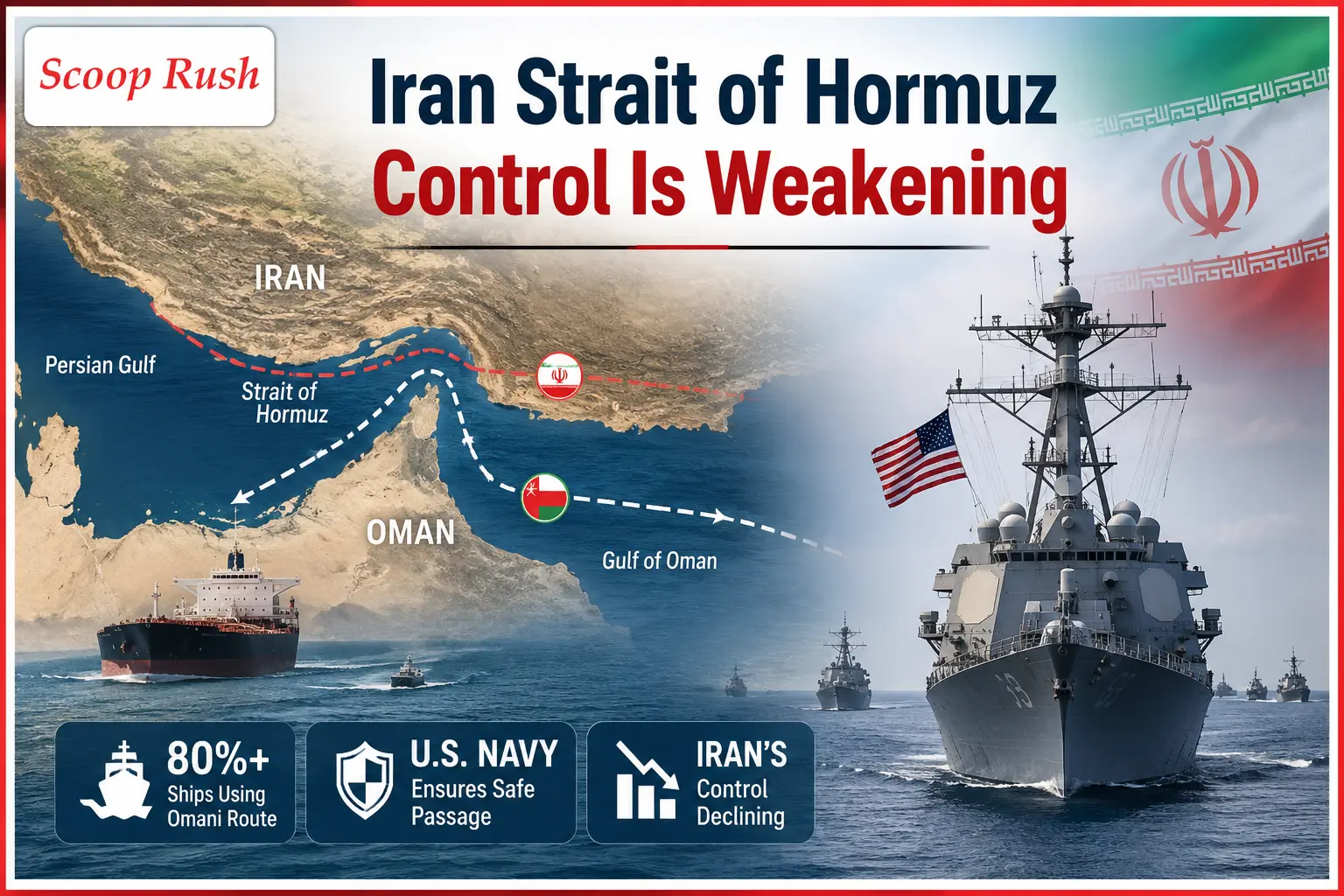
Iran has lost significant control of the Strait of Hormuz as more commercial ships use routes protected by the United States. Recent shipping data shows a major shift toward the Omani side of the waterway. The change weakens Tehran’s ability to dictate shipping movements through the strategic passage.
However, the United States does not have complete control either. Iranian forces still threaten ships and disrupt maritime traffic. The competing claims have created uncertainty around one of the world’s most important energy routes.
Ships Shift Toward the Omani Route
More than 80% of recent vessel transits have used the Omani route. Kpler provided the shipping data behind the estimate. The route runs along Oman’s side of the Strait of Hormuz. Iran strongly opposes commercial vessels using this channel.
The shift marks a major change from earlier traffic patterns. Kpler reportedly saw almost no traffic on this route one month ago. Iranian threats had discouraged ships from using the area. Now, more operators appear willing to accept the risks. US naval protection has helped support that change.
Iran’s Shipping Leverage Has Weakened
The change also affects Iran’s ability to influence shipping costs. Tehran previously sought toll payments from vessels using the waterway. However, many operators now avoid Iran’s preferred route. That reduces Tehran’s practical ability to collect those payments.
Iran still maintains significant military capabilities around the strait. Its forces can threaten vessels with missiles, drones and other weapons. Those threats continue to make the waterway dangerous. Therefore, Iran has not lost its ability to disrupt maritime traffic.
US Naval Presence Changes the Balance
The growing US naval presence has changed how shipping companies approach the strait. Operators increasingly rely on American protection while crossing disputed waters. This has encouraged vessels to challenge Iranian restrictions.
At the same time, Washington faces limits in claiming full control. Shipping volumes remain below levels seen before the conflict. Iranian attacks also continue to create serious risks for commercial vessels. Thus, the situation reflects reduced Iranian control rather than complete American dominance.
Oil Shipments Remain Under Pressure
The Strait of Hormuz remains vital to global energy markets. Large volumes of oil normally pass through the waterway each day. The current conflict has sharply reduced those flows. Alternative routes and unusual tanker movements have helped maintain some exports.
Some Gulf states have also used large tankers to move crude through the strait. Those vessels can transfer cargo outside the immediate danger zone. Some ships have switched off tracking systems to reduce their exposure. This makes accurate estimates of total traffic more difficult.
US and Iran Make Conflicting Claims
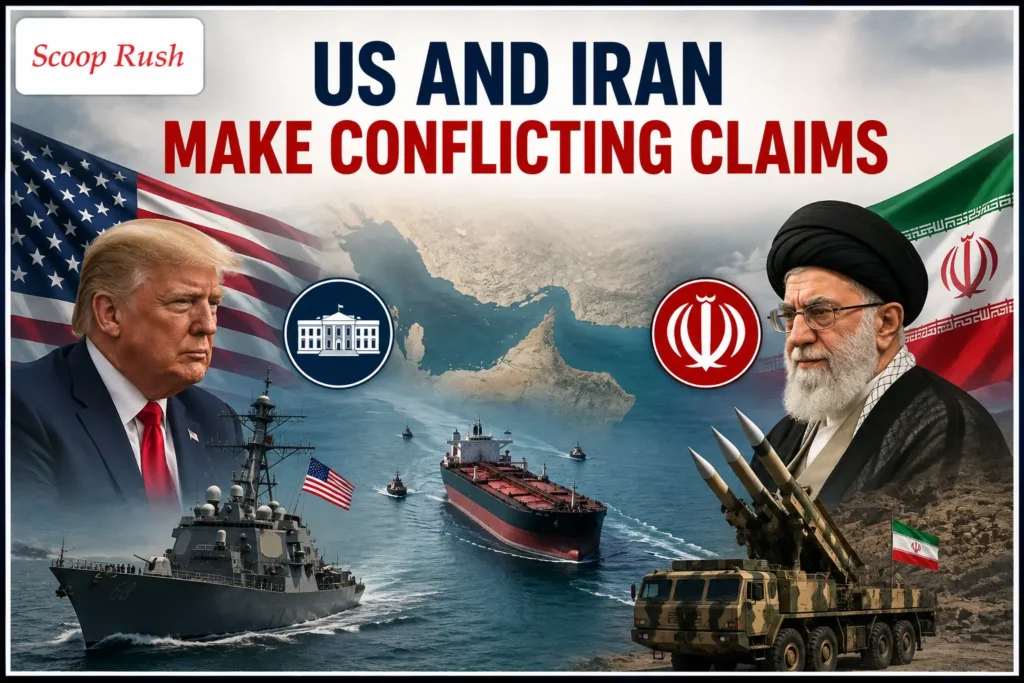
US President Donald Trump has claimed that America has total control of the strait. However, available shipping data does not fully support that statement. Iranian attacks and reduced oil flows show that significant risks remain.
Iran also claims strong authority over the waterway. Tehran says it will keep the strait closed until Washington meets its demands. Iranian officials want the US blockade removed and sanctions lifted. They also demand the release of frozen Iranian assets and an end to military operations.
Iran Says Hormuz Will Stay Closed
Iranian Parliament Speaker Mohammad Bagher Ghalibaf repeated Tehran’s position this week. He said Iran would not reopen the Strait of Hormuz under current conditions. He linked reopening the waterway to the implementation of the June agreement with Washington.
The June memorandum created a 60-day period for negotiations. That period expired without a final agreement. Both governments now accuse the other side of failing to meet commitments. The disagreement has left shipping arrangements at the center of the conflict.
Oman Becomes Central to the Shipping Dispute
Oman now plays an important role in efforts to restore maritime movement. Iranian and Omani officials have discussed ways to restore freedom of navigation. Their discussions have taken place without direct US participation.
That development creates another complication for Washington. The United States wants greater control over security arrangements around the strait. Meanwhile, Oman has traditionally maintained channels with Iran. Any agreement between Muscat and Tehran could therefore influence future shipping patterns.
Global Oil Markets Face Fresh Risks
The uncertainty around Hormuz has already affected oil markets. Traders remain concerned about prolonged disruption to regional supplies. Brent crude recently traded near $91 per barrel. Prices could remain sensitive to further attacks or shipping restrictions.
However, alternative shipping methods provide some relief. Gulf producers can use different export arrangements and transfer cargo outside danger zones. These methods cannot fully replace normal Hormuz traffic. Still, they can reduce the immediate impact of the disruption.
Iran Still Retains the Power to Disrupt
Iran’s reduced control does not mean the threat has disappeared. Iranian forces can still attack vessels and create uncertainty. Even limited attacks can force shipping companies to change routes. That threat gives Tehran continued influence over maritime activity.
The key difference lies in Iran’s ability to enforce its demands. More ships now ignore Tehran’s preferred route restrictions. They instead use the Omani side with American protection. This suggests Iran’s deterrence has weakened compared with previous months.
What Happens Next in the Strait?
The future of the Strait of Hormuz will depend heavily on diplomacy. Iran wants Washington to meet its conditions before reopening the waterway. The United States continues to pressure Tehran through military and economic measures. Neither side has yet accepted the other’s terms.
Meanwhile, shipping companies will likely continue choosing the safest available route. The growing use of the Omani channel shows how quickly maritime patterns can change. If tensions ease, traffic could return to normal routes. If fighting intensifies, oil markets and global shipping could face deeper disruption.
Conclusion
Iran has lost significant control of the Strait of Hormuz, but it still retains the ability to disrupt shipping. The biggest sign of change comes from commercial vessels themselves. More than 80% of recent transits have shifted toward the Omani route. US naval protection has helped make that shift possible.
Still, Washington cannot claim uncontested control over the waterway. Iranian attacks continue, while oil flows remain below pre-war levels. Oman and Iran are also discussing new arrangements for maritime movement. Therefore, the Strait remains contested, dangerous and vital to the global economy.
FAQs
1. Has Iran completely lost control of the Strait of Hormuz?
No. Iran has lost significant practical influence, but it can still disrupt shipping. Its military forces continue to threaten vessels in the region. The United States also does not have complete control of the waterway.
2. Why are ships using the Omani route?
Many vessels now prefer the Omani route because it reduces their exposure to Iranian restrictions. US naval forces also provide protection for commercial shipping. Kpler data shows more than 80% of recent vessel transits used this route.
3. Why is the Strait of Hormuz important?
The strait connects the Persian Gulf with the Gulf of Oman. It serves as a major route for global oil and gas shipments. Any prolonged disruption can therefore affect fuel prices and international energy supplies.
4. What does Iran want before reopening the strait?
Iran says the United States must fulfill commitments from the June memorandum. Tehran wants the US blockade removed and oil sanctions lifted. It also demands the release of frozen assets and an end to military operations.
5. Could the Strait of Hormuz return to normal?
Yes, but a lasting improvement would likely require a diplomatic agreement. Current negotiations remain uncertain, while Iran and the United States maintain opposing positions. Any reduction in military tensions could encourage more normal commercial shipping.

