
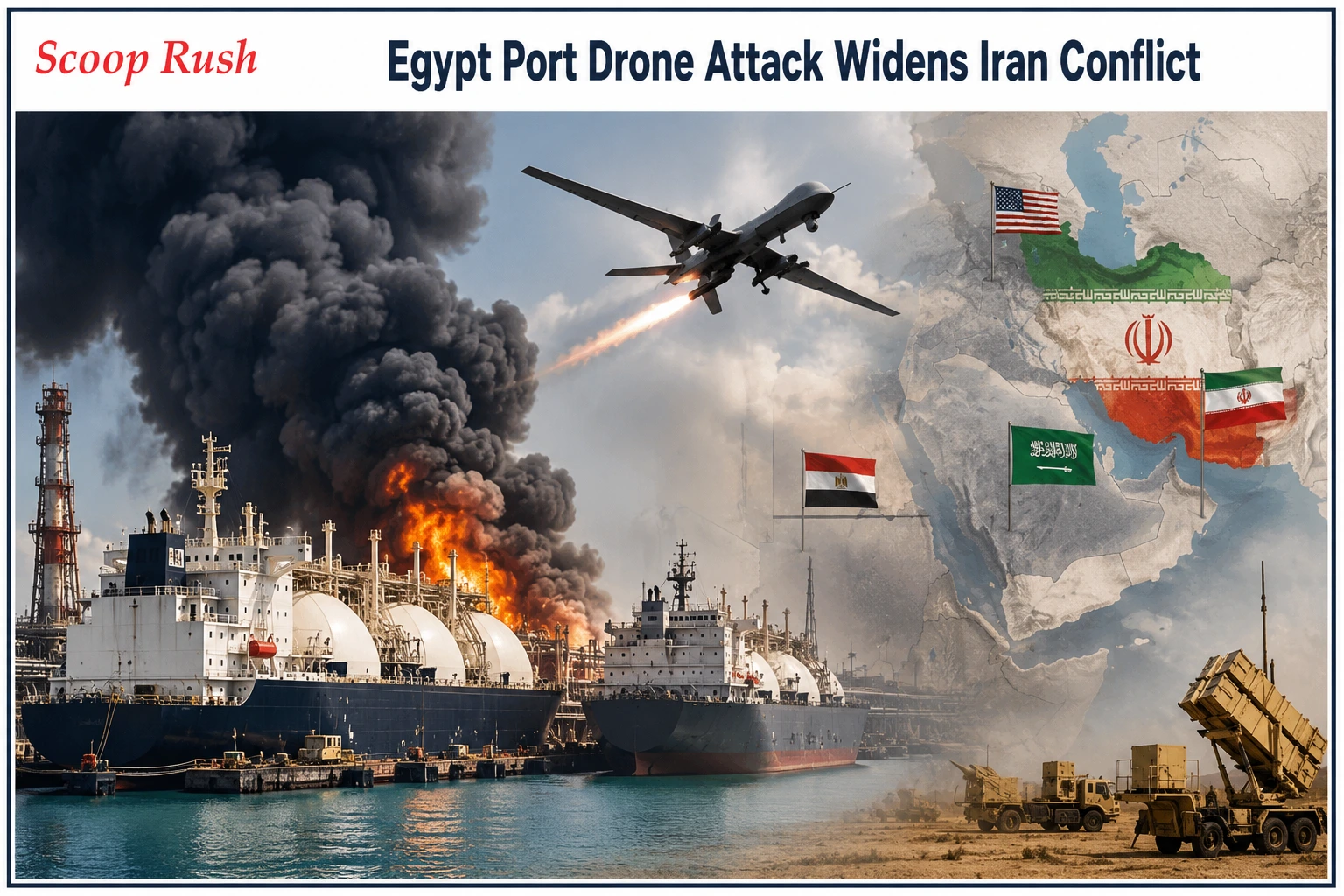
The Egypt port drone attack has pushed the US-Iran conflict into a new phase. Egypt confirmed that a drone caused a fire aboard two vessels at Damietta Port, a major liquefied natural gas hub on the Mediterranean coast. Emergency crews quickly controlled the fire, and officials reported no deaths or injuries. However, the incident marked the first direct strike on Egyptian infrastructure since the regional conflict began.
The attack came as military activity increased across the Middle East. The United States launched fresh strikes inside Iran after accusing Tehran of attempting to attack American military positions in Jordan. Saudi Arabia also joined US operations against Iran-backed groups in Iraq. These developments have raised concerns that the conflict could spread further and threaten regional stability.
Egypt Port Drone Attack Hits Major LNG Hub
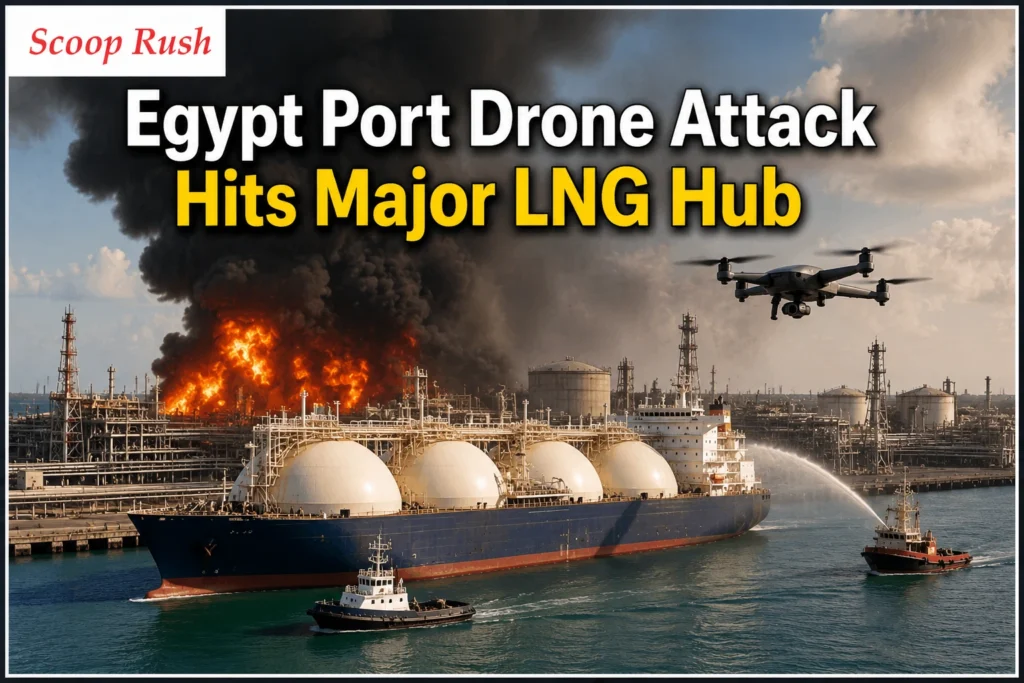
Egyptian authorities confirmed that a drone caused the fire during cargo operations at Damietta Port. The facility plays an important role in Egypt’s natural gas imports and exports. Emergency teams reached the scene quickly and prevented the fire from spreading across the terminal.
Officials said the attack damaged two vessels at the LNG terminal. Investigators continue examining evidence to identify the source of the drone. No organization has claimed responsibility, and authorities have promised to strengthen security around critical infrastructure.
Two LNG Vessels Caught Fire During Attack
Reports identified the first vessel as the US-owned floating storage and regasification unit Energos Winter. The fire later spread to the Greek-owned LNG tanker GasLog Salem. Tugboats worked for several hours before bringing the situation under control.
Both ships later moved away from the port as safety inspections began. Egyptian officials confirmed that Damietta Port continued operating at full capacity. Shipping and cargo services resumed after emergency crews declared the area safe.
Egypt Strengthens Security After First Direct Strike
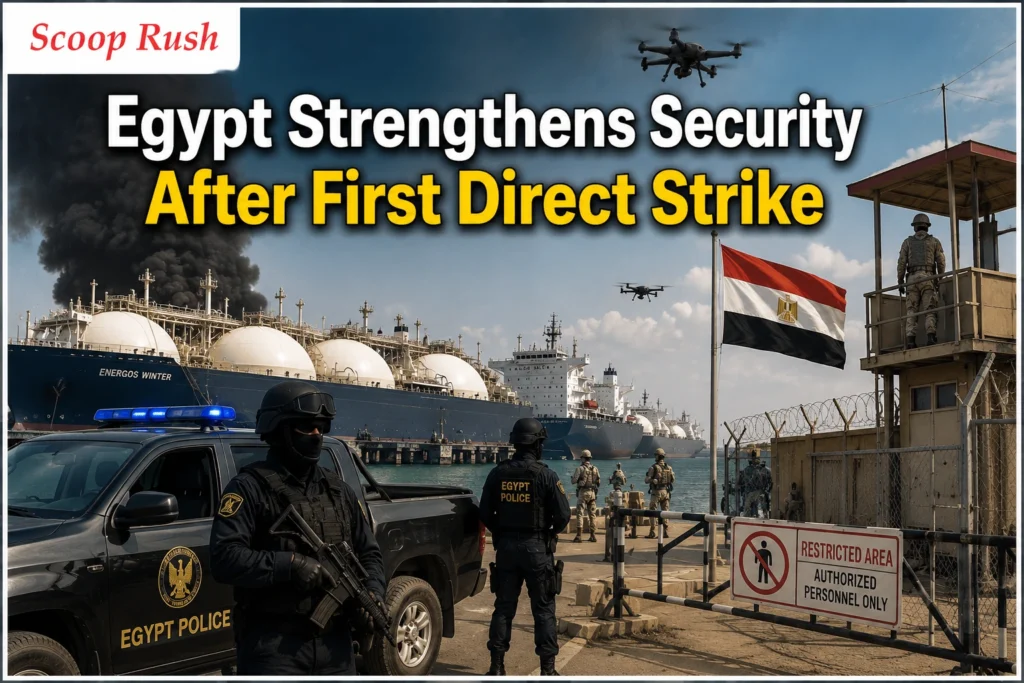
The Egypt port drone attack marked an important security challenge for Cairo. Egypt has remained a close US ally throughout the conflict but had avoided direct attacks until now. The latest incident has changed that situation.
The government launched a full investigation while increasing protection around strategic facilities. Officials said they would take every necessary measure to protect national security. Authorities have not blamed any country or armed group while investigations continue.
US Launches Fresh Military Strikes Inside Iran
The United States carried out another wave of air strikes against targets inside Iran. American officials said the operation targeted Revolutionary Guards command centers and drone facilities linked to recent military attacks.
The strikes followed Iran’s attempted missile attack against US military positions in Jordan. Explosions were reported in Bandar Abbas, Kish Island, Qeshm Island, and Ahvaz. Iranian state media also reported casualties after the overnight operation.
Iran Responds With New Warnings
Iran strongly condemned the latest American strikes. Officials warned that further military action would bring serious consequences across the region. The Revolutionary Guards also repeated their position that the Strait of Hormuz would remain closed.
Iranian media claimed recent attacks damaged American military aircraft. However, the US military rejected those claims and stated that no aircraft suffered damage. Both sides continue exchanging strong statements as tensions remain high.
Saudi Arabia Expands Military Cooperation

Saudi Arabia joined the United States in military operations targeting Iran-backed armed groups in Iraq. According to Saudi officials, the strikes responded to repeated drone attacks against Saudi oil facilities.
The Popular Mobilisation Forces reported at least 20 members died during the attacks. Iran condemned the operation and accused Washington and Riyadh of increasing regional instability. Meanwhile, Iraq denied that its territory served as the launch point for attacks on Saudi Arabia.
Egypt Port Drone Attack Raises Energy Market Concerns
The Egypt port drone attack has also drawn attention from global energy markets. Damietta Port serves as one of Egypt’s key LNG facilities and supports both imports and exports. Any disruption could affect regional gas supplies during peak demand.
Energy analysts believe Egypt has enough alternative facilities to avoid immediate shortages. However, repairs to damaged equipment may reduce reserve capacity if they take longer than expected. LNG traders continue monitoring developments closely.
Shipping Routes Face Growing Security Risks
The latest attack has increased concerns about commercial shipping across the Middle East. During recent months, several vessels and energy facilities have faced attacks linked to the wider conflict. Shipping companies now face higher security risks across important trade routes.
Security experts warn that attacks on ports and LNG terminals could affect global supply chains. Insurance costs for commercial shipping may also increase if regional tensions continue rising. Governments continue reviewing security measures around major ports.
Regional Conflict Continues To Expand
The Egypt port drone attack shows how the conflict now reaches countries beyond the original battlefield. Military operations now involve the United States, Iran, Saudi Arabia, Iraq, and Egypt. The growing number of affected countries has increased international concern.
Diplomatic efforts have made little progress despite repeated calls for restraint. Regional governments remain on high alert while military forces continue preparing for possible new attacks. The risk of further escalation remains significant.
Global Energy Markets Watch Every Development
Energy markets continue reacting to each new development across the Middle East. The region supplies a large share of the world’s oil and natural gas. Any attack on production facilities, shipping routes, or LNG terminals creates uncertainty for traders.
Although Egypt continues operating Damietta Port, investors remain cautious. Future attacks could disrupt supplies and increase transportation costs. Market analysts believe stability will depend on how quickly regional tensions ease.
Conclusion
The Egypt port drone attack marks a major turning point in the widening US-Iran conflict. Although Egypt avoided casualties and kept Damietta Port operational, the incident exposed the growing threat facing regional energy infrastructure. The attack also demonstrated that the conflict now extends beyond military bases and battlefields.
At the same time, fresh US strikes inside Iran and joint military operations in Iraq continue raising tensions across the Middle East. Governments remain on alert while energy markets closely monitor every development. Without meaningful diplomatic progress, the conflict could expand further and create new risks for regional security and global trade.
FAQs
1. What happened during the Egypt port drone attack?
A drone struck two LNG vessels at Damietta Port, causing a fire. Emergency teams quickly controlled the blaze, and no casualties were reported.
2. Which ships were affected by the attack?
The attack reportedly damaged the US-owned Energos Winter and the Greek-owned GasLog Salem during cargo operations at the LNG terminal.
3. Why is Damietta Port important?
Damietta Port serves as one of Egypt’s major liquefied natural gas terminals. It supports the country’s energy imports, exports, and regional gas supply.
4. Why did the United States launch new strikes on Iran?
The United States said it responded after Iran attempted to attack American military positions in Jordan. The operation targeted Revolutionary Guards facilities and drone sites.
5. Could the conflict affect global energy supplies?
Yes. Continued attacks on ports, LNG terminals, and shipping routes could disrupt energy supplies and increase costs in global markets.

