
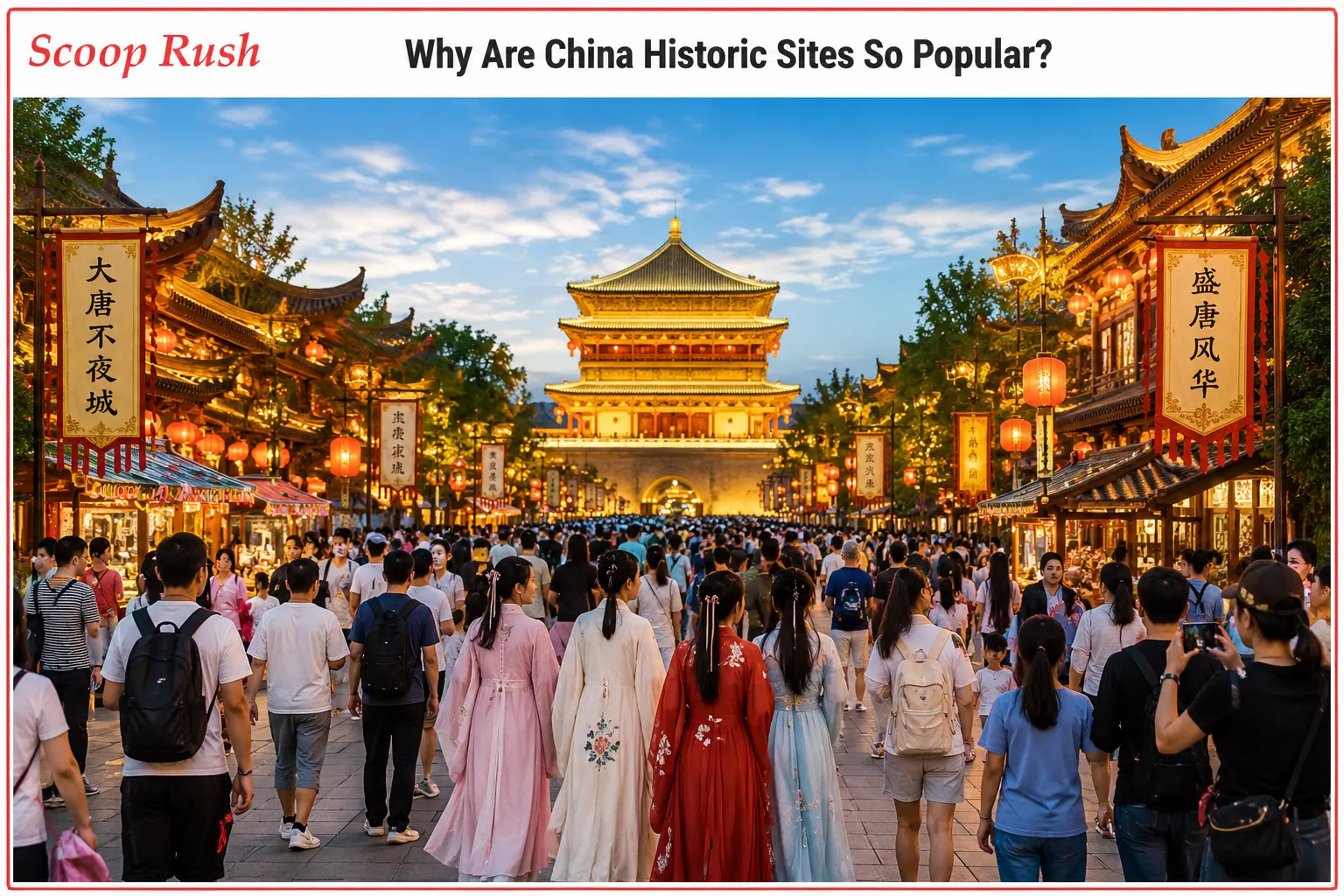
China historic sites continue attracting millions of visitors every year. However, many travelers now visit recreated ancient towns instead of original landmarks. These carefully designed destinations blend history, entertainment, and social media appeal. As a result, they have become major tourism hotspots across the country.
Domestic tourists enjoy immersive cultural experiences at affordable prices. Meanwhile, international visitors also explore these attractions through the growing “Chinamaxxing” travel trend. Although some tourists admire the atmosphere, others question the authenticity of these rebuilt locations.
What Are China Historic Sites Built as Fanggu Attractions?
China historic sites include many fanggu, or historical imitation, attractions. These destinations recreate ancient streets, palaces, and villages using modern construction techniques. Designers carefully age buildings with weathered tiles, stone paths, and traditional decorations.
Many original landmarks disappeared because of wars, fires, revolutions, and natural disasters. Therefore, developers created these replicas to preserve historical styles while boosting tourism. Visitors often enjoy the experience without expecting complete historical authenticity.
Why Fanggu Tourism Continues Growing
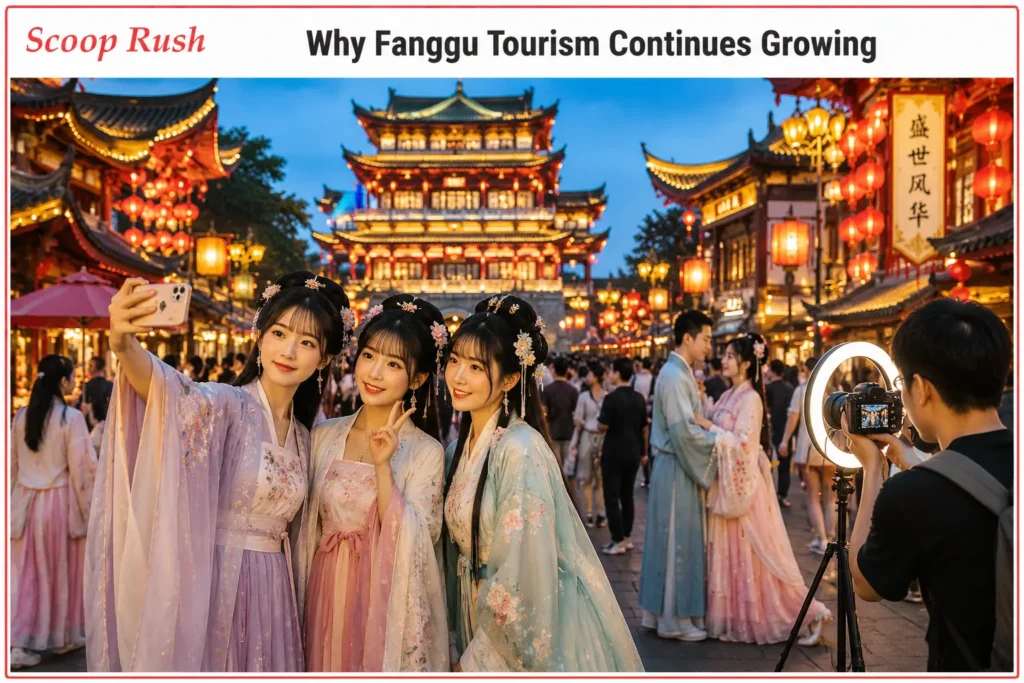
Many Chinese travelers seek cultural experiences without spending large amounts of money. Visitors can rent traditional Hanfu clothing for about $15. Professional photography packages usually cost another $10, making the experience affordable.
Social media has accelerated this trend. Beautiful costume photos frequently go viral on Xiaohongshu, also known as RedNote. Consequently, younger travelers now visit these attractions mainly for memorable photos and immersive experiences.
Gubei Water Town Blends History With Modern Tourism
Located near Beijing, Gubei Water Town recreates the appearance of a southern Jiangnan water village. Canals, stone bridges, lanterns, and traditional homes create a peaceful atmosphere. The town also sits close to the Simatai section of the Great Wall.
Developers completed the attraction in 2014 through a state-backed project worth about $600 million. Today, tourists combine Great Wall visits with boat rides, local performances, hot springs, and luxury stays. While many visitors enjoy the experience, some feel disappointed after learning the town is entirely modern.
Datang Everbright City Revives Tang Dynasty Culture
Xi’an has transformed part of its city into Datang Everbright City. The lively pedestrian district celebrates the Tang Dynasty through architecture, music, cultural shows, and colorful performances. Bright lights and traditional buildings create an exciting nighttime atmosphere.
Many couples also choose the location for elaborate “time-travel” wedding photography. They wear Tang Dynasty clothing, Republican-era outfits, and modern wedding dresses during one production. Although these packages cost thousands of dollars, many newlyweds consider them worthwhile.
Kashgar Old City Balances Heritage and Tourism
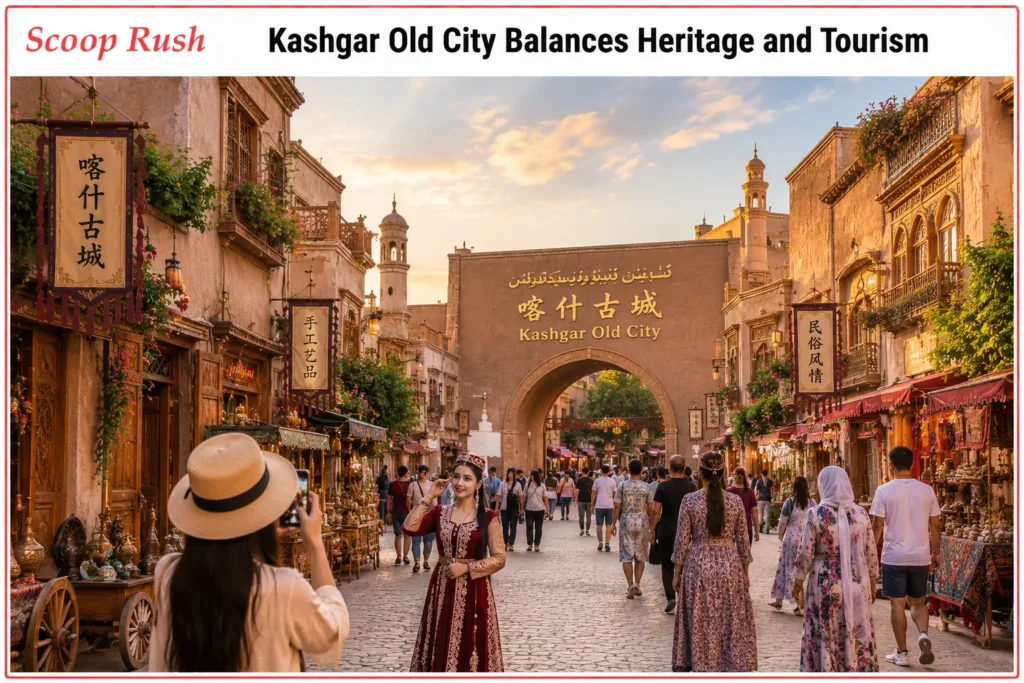
Kashgar has served as an important Silk Road city for nearly 2,000 years. However, authorities rebuilt much of its historic old town after large-scale redevelopment. Today, visitors explore restored streets that resemble the original city.
Xinjiang welcomed around 323 million tourists during 2025, generating more than $53 billion in tourism revenue. Many travelers appreciate Kashgar’s cultural atmosphere despite ongoing debate over the reconstruction. Some visitors describe the experience as unique, while others feel it resembles a carefully managed theme park.
How Social Media Shapes China Historic Sites
China historic sites have become popular across major social media platforms. Travelers share professional Hanfu photos, cultural performances, and scenic night views. These posts inspire millions to visit the same destinations.
The growing “Chinamaxxing” trend has also increased international interest. Young travelers now choose China to experience traditional clothing, historic settings, and local culture. Online content continues driving tourism across recreated historic towns.
Why Replica Towns Appeal to Modern Travelers
Modern travelers often seek experiences instead of traditional sightseeing. Fanggu attractions combine history, entertainment, shopping, dining, and photography in one location. Visitors enjoy convenience alongside cultural activities.
Many replica towns also offer comfortable hotels, organized events, and family-friendly attractions. These features make them accessible to travelers of every age. As a result, many visitors value the overall experience more than historical authenticity.
Can Replica Historic Towns Preserve Chinese Culture?
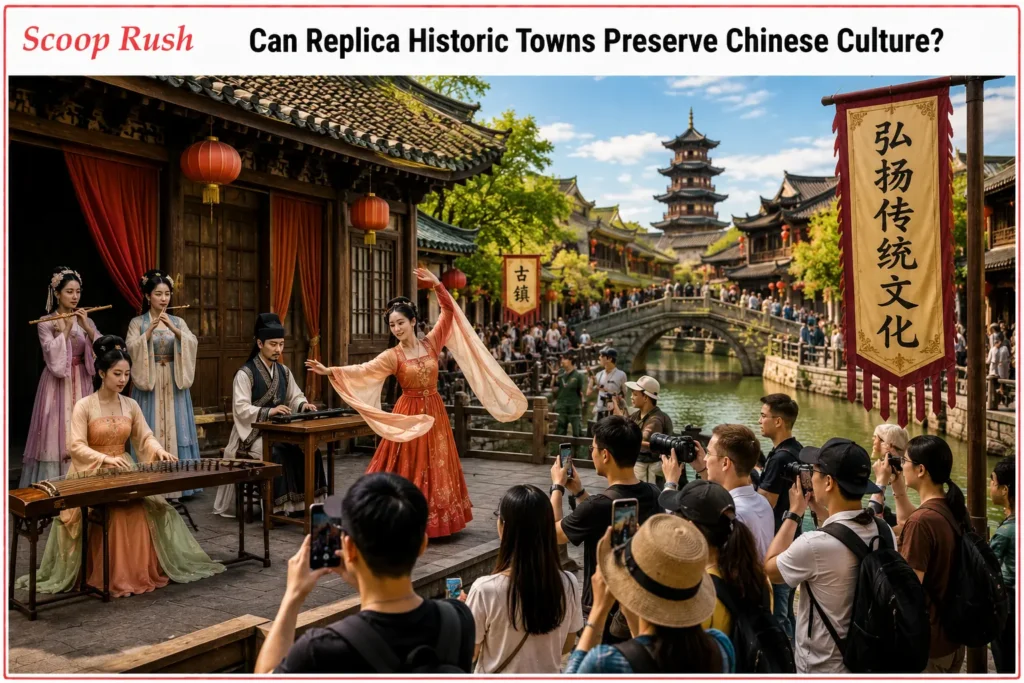
Replica towns cannot replace original heritage sites. However, they introduce visitors to traditional architecture, clothing, music, and customs. Many tourists develop a stronger interest in Chinese history after visiting these destinations.
Experts believe authentic landmarks should remain protected alongside modern recreations. Both can support cultural education and tourism when managed responsibly. Clear information also helps visitors understand the difference between original history and modern interpretation.
Why Tourists Have Mixed Opinions
Many visitors appreciate the clean streets, organized attractions, and immersive cultural experiences. Families, photographers, and international travelers often value comfort over historical accuracy. These attractions also make traditional Chinese architecture more accessible.
However, some tourists believe operators should clearly explain which sites are modern recreations. They support rebuilding historical styles but expect transparency before visiting. Honest marketing could improve visitor trust without reducing interest.
Conclusion
China historic sites now combine cultural storytelling with modern tourism. Recreated towns offer beautiful scenery, traditional experiences, and family-friendly entertainment. Many travelers value these experiences despite their modern origins.
At the same time, authenticity remains important for many visitors. Clear information helps travelers understand what they are visiting. As China expands its tourism industry, balancing historical accuracy with immersive experiences will remain essential.
FAQs
1. What does fanggu mean in China?
Fanggu means “historical imitation.” It describes modern attractions built to resemble ancient Chinese towns or historical landmarks.
2. Why does China build replica historic towns?
Many original sites disappeared over centuries. Replica towns preserve traditional architecture while supporting tourism and local economies.
3. Is Gubei Water Town an authentic ancient village?
No. Developers built Gubei Water Town in 2014. It recreates the appearance of a traditional Chinese water town.
4. Why do visitors wear Hanfu at these attractions?
Hanfu clothing helps visitors enjoy immersive cultural experiences. Many also book professional photo sessions for social media.
5. Do tourists enjoy recreated historic sites?
Many visitors enjoy them for entertainment and photography. However, some prefer greater transparency about which attractions are modern recreations.

