
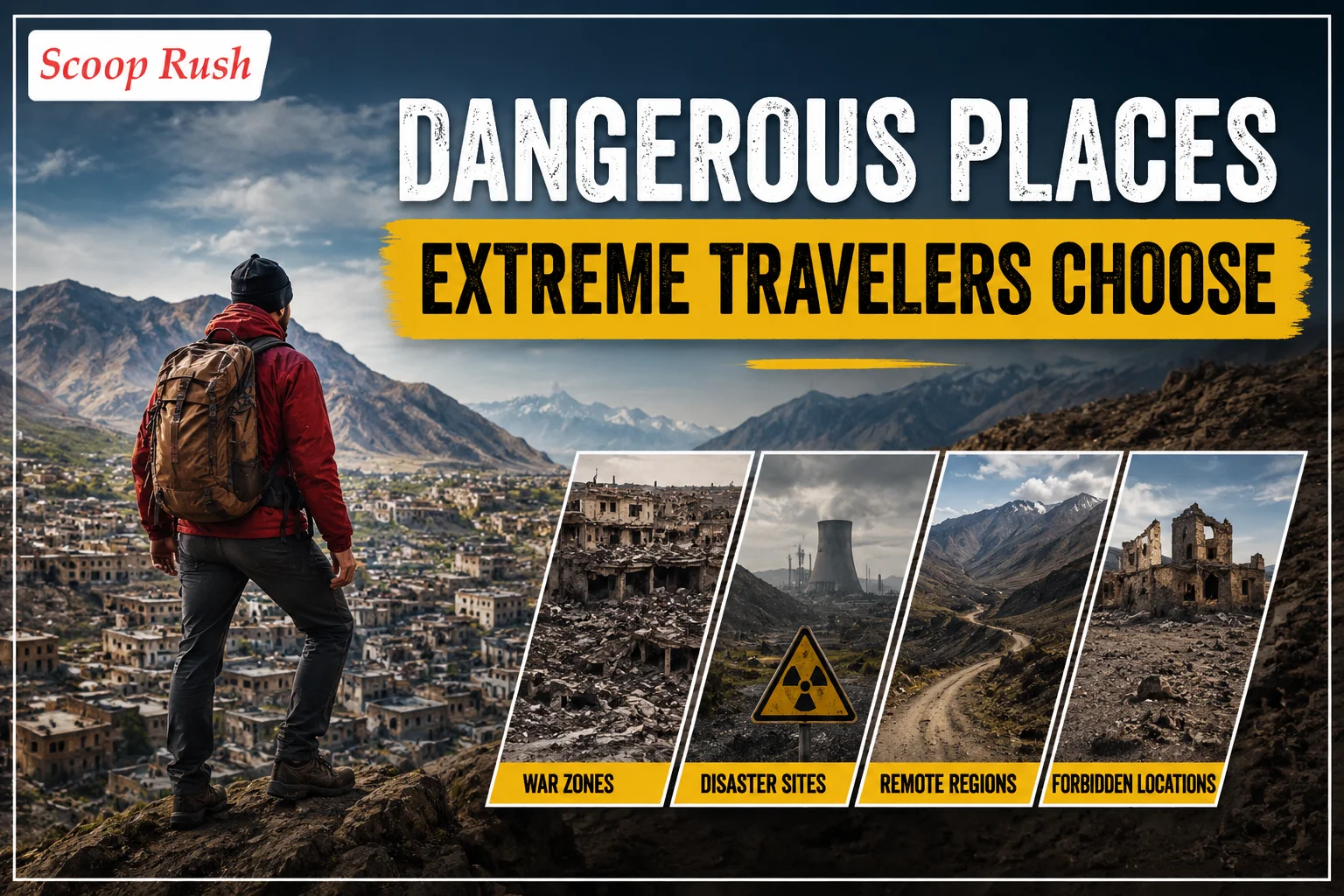
Dangerous places rarely appear on ordinary vacation lists. Yet some travelers actively choose them for unusual experiences. They seek war zones, unstable regions, remote areas, and sites marked by tragedy. Their reasons vary from cultural curiosity to personal achievement.
This growing interest falls under several forms of dark and extreme tourism. Some travelers visit countries that governments warn against. Others visit locations connected with historic disasters or atrocities. Social media also gives these journeys a wider audience.
Why Travelers Choose Dangerous Places
For some visitors, history provides the strongest motivation. Arnaud Kirby travels to countries such as Syria, Libya, Sudan, and Chad. He says visiting these places offers a deeper view than reading about them. He also values destinations with very few tourists.
Kirby believes limited tourism can create more personal encounters. He describes Chad as an especially memorable experience. He found people friendly and welcoming during his visit. At Zakouma National Park, he also encountered wildlife unused to frequent vehicles.
Extreme Travelers Chase More Than Adventure
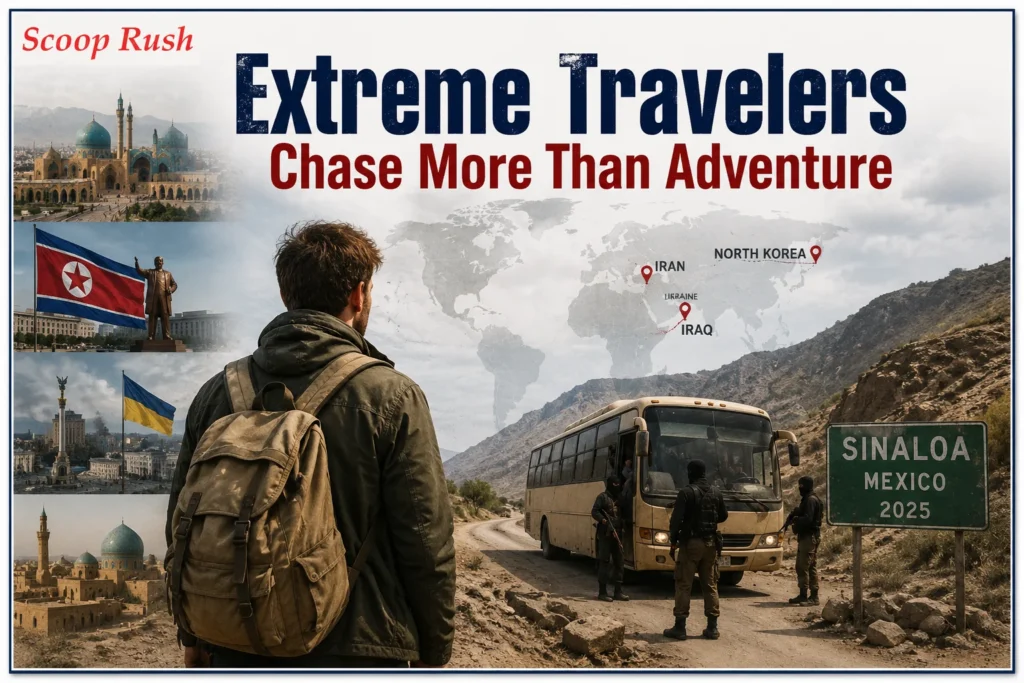
Not every extreme traveler simply wants danger. Some want to understand countries that receive negative international coverage. British traveler Will Aswell says curiosity drives many of his journeys. He has visited Iran, North Korea, Ukraine, and Iraq.
However, his travels have not always remained comfortable. During a 2025 trip through Mexico’s Sinaloa state, armed cartel members stopped his bus. He said they forced him to hand over money before releasing him. The experience showed how quickly travel plans can become dangerous.
Tour Guides Face Difficult Security Decisions
Some travelers enter risky regions through specialist tour companies. Australian guide Alex Hobbs works with Lupine Travel. The company organizes trips to unusual and potentially dangerous destinations. Guides must constantly monitor changing conditions before and during trips.
Hobbs says the company researches destinations extensively before launching tours. Local contacts provide updates about security and logistics. The company also prepares several backup plans for unstable environments. Hobbs says the company will postpone or change trips when conditions become unsafe.
Country Collectors Push Travel Further
Another group follows a different goal. These travelers try to visit as many countries, territories, regions, and enclaves as possible. Charles Veley became a major figure in this community. He founded Most Traveled People, an online community for extreme travelers.
The group’s system goes far beyond the usual country count. Its list includes more than 1,500 destinations and geographical locations. Members can earn points for visiting individual places. Some destinations remain simple, while others present serious logistical or security challenges.
A Journey Into a Conflict Zone

One major example involved a group traveling through Nagorno-Karabakh in Azerbaijan. Veley joined more than 30 travelers from different countries. The group traveled with military assistance through an area affected by decades of conflict.
The region still contained visible signs of war during the journey. Travelers encountered military checkpoints, damaged areas, and demining operations. Land mines remained a major concern. The group also faced changing security conditions during its trip.
The Risks Can Change Without Warning
Extreme travel requires flexibility because conditions can shift quickly. During the Azerbaijan journey, the group changed plans after skirmishes emerged. Rather than continue toward a planned route, the travelers took a long detour. Safety became more important than completing the itinerary.
The danger extended beyond armed conflict. The region contained extensive minefields left from earlier fighting. A demining demonstration showed the destructive force of those explosives. Such experiences highlight the difference between adventurous travel and ordinary tourism.
Dangerous Places Can Become Personal Milestones
Some travelers pursue extreme destinations as part of a much larger goal. Hayley Kennedy became the first known sight-impaired person to visit all 193 United Nations countries. Her journey included countries such as North Korea, Iran, Somalia, Myanmar, and the Democratic Republic of Congo.
Kennedy says she wants to experience as much of the world as possible. She usually travels alone when circumstances allow it. For less accessible destinations, she joins groups or travels with companions. Her journey also highlights the challenges disabled travelers can face worldwide.
Dark Tourism Looks Toward History
Dark tourism represents another side of this trend. These travelers do not necessarily seek dangerous countries. Instead, they visit places connected with death, conflict, disasters, or human suffering. Examples include Jonestown, Cambodia’s Killing Fields, and Chernobyl.
British author H.E. Sawyer has studied this form of tourism extensively. His interest grew through family connections to World War II and a Holocaust survivor. A visit to Chernobyl later encouraged his academic interest in dark tourism.
Memorials Offer More Than Photographs

Sawyer argues that visiting difficult historical sites can create a different understanding. Visitors can experience the physical scale and setting of a memorial. They can also observe how other visitors respond to the location. These details often disappear when people study events only through books or screens.
His travels have included Aberfan in Wales and Aokigahara in Japan. He also visited the Salem Express wreck in the Red Sea. Hartheim Castle in Austria left an especially dark impression because Nazis killed thousands of disabled and mentally ill people there.
Jonestown Draws a New Kind of Visitor
Jonestown in Guyana has recently entered the dark tourism conversation. More than 900 members of the Peoples Temple died there in 1978. The tragedy remains deeply connected with the surrounding community and local history.
Wanderlust Adventures began offering Jonestown tours in early 2025. The company first met with local residents before organizing the trips. Its tours aim to explain the tragedy while including the Guyanese perspective. The company says academics also visit to study cult psychology.
Social Media Changes Extreme Travel
Social media has added another layer to dark tourism. Travelers can now document unusual journeys for large online audiences. Difficult destinations can therefore become travel content as well as personal experiences. This can make remote or troubling locations more visible to potential visitors.
However, turning tragedy into content raises difficult questions. A serious historical site can easily become a backdrop for photographs. Conflict zones can also appear more exciting online than they feel in reality. Responsible travelers must consider local communities and the history behind each location.
The Debate Over Country Collecting
Extreme travelers also face criticism from people who value slower forms of travel. Critics argue that collecting destinations can reduce complex cultures to numbers. Jake Haupert of the Transformational Travel Council questions whether travelers truly experience places when they focus mainly on completing lists.
Country collectors reject the idea that their approach lacks meaning. Dave Seminara argues that these travelers often visit places far outside mainstream tourism. He believes such journeys can expose visitors to countries that receive little international tourism. The debate ultimately centers on what makes travel meaningful.
Extreme Travel Requires Careful Risk Management
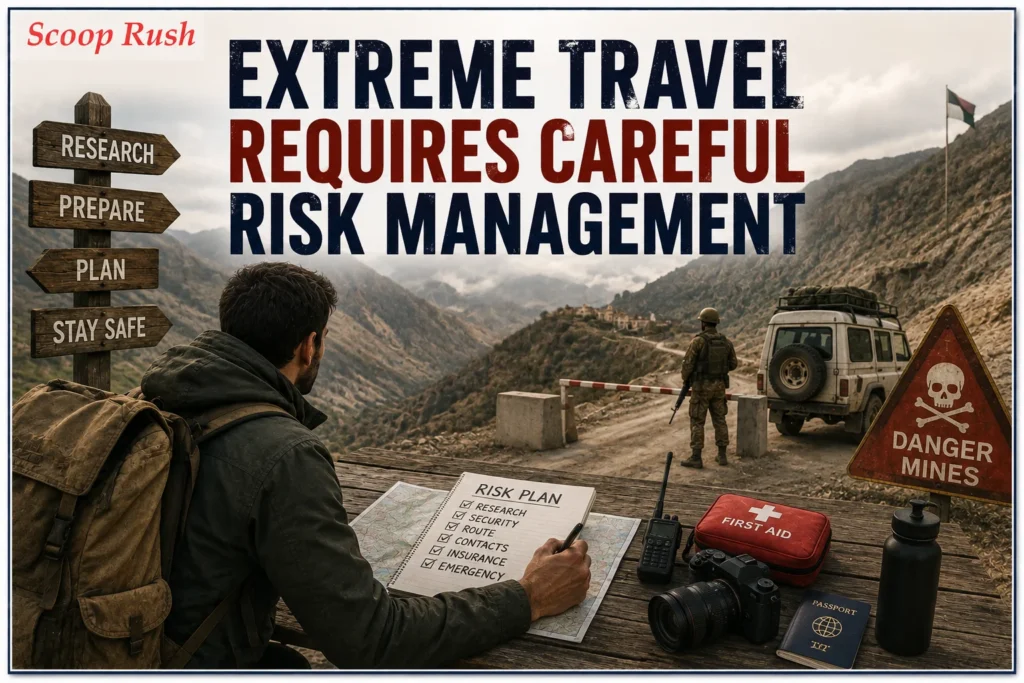
The people featured in these accounts do not all describe themselves as thrill seekers. Many emphasize curiosity, knowledge, history, or personal achievement. Some also develop detailed systems for managing difficult journeys. Their experiences show that motivation matters as much as the destination itself.
Still, preparation cannot remove every danger. Travelers may encounter armed groups, changing political conditions, crime, land mines, or sudden travel restrictions. One incident can quickly change an entire journey. That reality separates extreme travel from conventional vacation planning.
Why Dangerous Places Continue to Fascinate Travelers
The attraction of dangerous places comes from several different forces. Some travelers want authentic cultural encounters. Others want to understand history beyond familiar headlines. Country collectors seek another achievement, while dark tourists explore places marked by tragedy.
For many, the experience also creates a powerful sense of accomplishment. Veley compares completing travel goals with finishing other major personal projects. He says achievement brings a strong feeling of satisfaction. His story shows why some travelers keep searching for the next difficult destination.
Conclusion
Dangerous places have become destinations for a small but determined group of travelers. Their motivations range from curiosity and history to personal achievement and adventure. Some pursue remote countries, while others explore locations shaped by tragedy.
Their journeys also raise important questions about responsible tourism. Travel can challenge stereotypes and create deeper understanding. Yet visitors must respect local communities and recognize genuine security risks. For these travelers, the world remains an enormous map of places to understand, experience, and sometimes carefully avoid.
FAQs
1. What is dark tourism?
Dark tourism involves visiting locations connected with death, tragedy, conflict, disasters, or atrocities. Some travelers visit historical memorials, former disaster sites, or places linked with mass violence. Others visit countries that currently face serious security concerns.
2. Why do people visit dangerous places?
Motivations differ between travelers. Some seek cultural understanding or historical knowledge. Others enjoy adventure, pursue travel records, or want to visit places few tourists see. Social media can also encourage interest in unusual destinations.
3. What makes extreme travel risky?
Extreme travelers may face armed conflict, crime, political instability, terrorism, kidnapping, or unexploded weapons. Security conditions can also change without warning. A planned route may become impossible within hours.
4. Do extreme travelers always seek danger?
No. Many travelers featured in these accounts say danger itself does not drive them. They often focus on history, culture, exploration, or personal goals. However, their interests sometimes lead them into places with serious risks.
5. Can dark tourism benefit local communities?
It can create educational and cultural opportunities when handled responsibly. Jonestown tours, for example, include local perspectives and community consultation. Responsible tourism should respect victims, residents, and the historical meaning of each site.

