
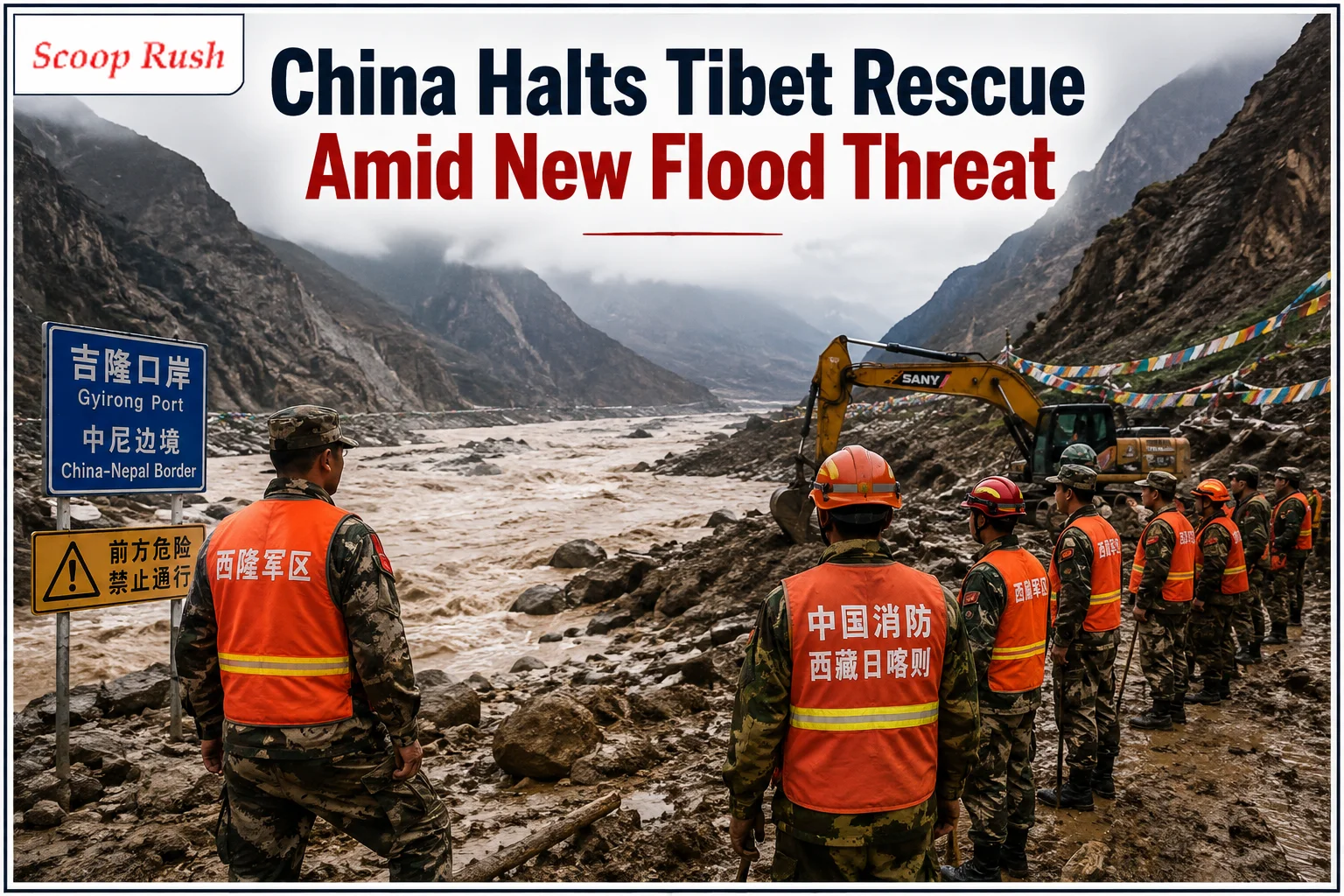
China halts Tibet rescue operations near the Gyirong border after a barrier lake began overflowing. Officials fear a second flood could hit the disaster zone. The decision affects rescue teams working close to Gyirong Port. Hundreds of people remain missing after Wednesday’s deadly mudslide.
The barrier lake formed when mud and debris blocked a river near the border. Continued rainfall has added pressure on the unstable dam. As a result, officials expect water levels to keep rising through the weekend. They warn that a sudden breach could trigger another destructive flood.
Why China Halted Tibet Rescue Operations
Chinese authorities ordered rescue teams to stop moving toward Gyirong Port on Friday. Teams already inside the danger zone received orders to pull back. Officials said the move would protect rescuers from a second disaster. Safety, they explained, now comes before further searches.
State broadcaster CCTV reported that the barrier lake had started overflowing steadily. Water could soon reach areas already damaged by the mudslide. Therefore, emergency crews must wait in safer locations nearby. Authorities will decide when conditions allow rescue work to resume.
Barrier Lake Creates a New Danger
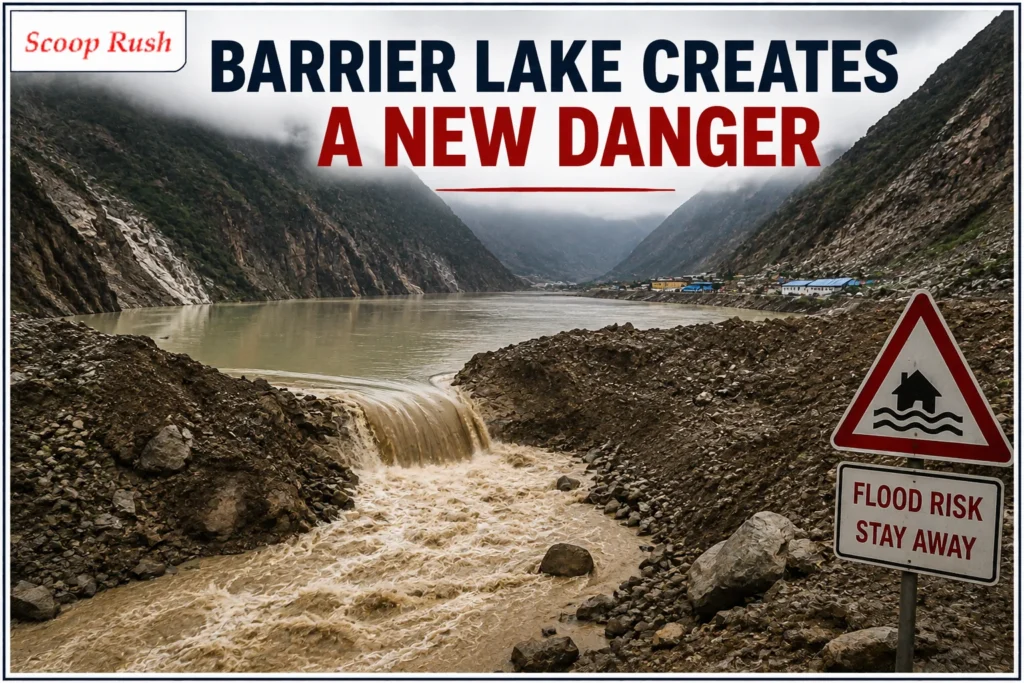
The barrier lake formed after a huge mudslide blocked local waterways. This disaster struck the Gyirong area on Wednesday, August 26. It caused severe damage and left hundreds of people missing. Since then, the blocked river has kept rising steadily.
The lake now holds an estimated two million cubic meters of water. Officials expect this volume to grow as rain continues. Water levels could peak within the coming days. A sudden breach could send powerful floods toward Gyirong Port.
Rescue Teams Pull Back From the Disaster Zone
Emergency authorities told teams to stay in designated safe zones. Some crews had already reached parts of the affected region. However, rising water made further movement too risky. Officials decided that protecting rescuers must stay the top priority.
Rescue personnel include firefighters, engineers, and emergency response teams. These teams continue watching the barrier lake closely. They remain ready to restart searches once conditions improve. This pause does not mean the rescue mission has ended.
Hundreds Remain Missing After the Mudslide
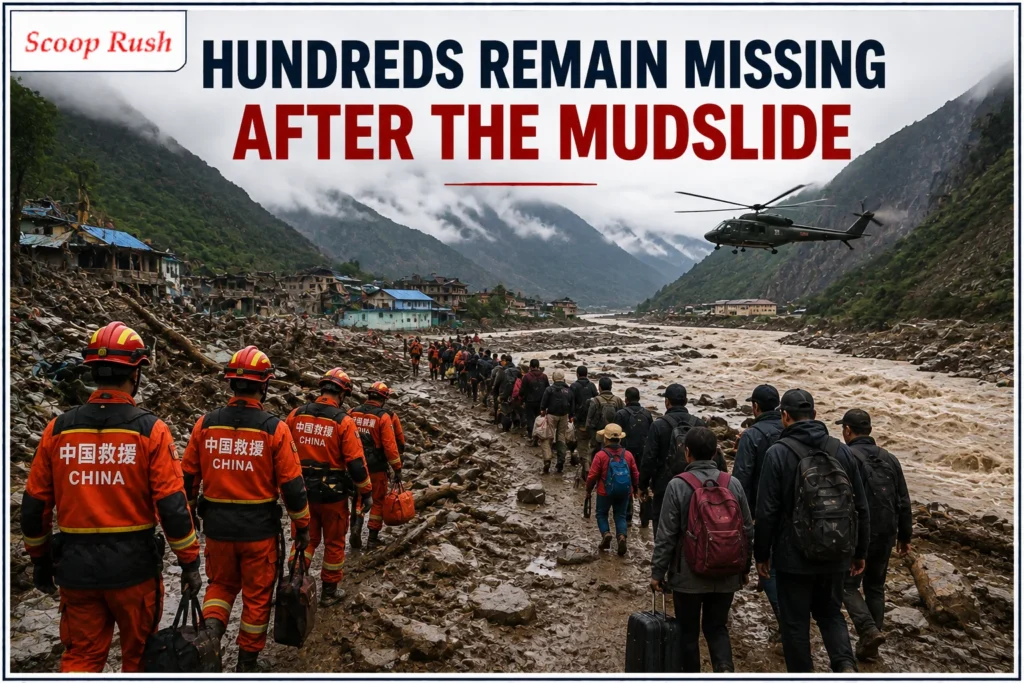
More than 550 people remain unaccounted for on the Tibetan side. This group reportedly includes around 260 foreign nationals. Many travelers had been heading toward Mount Kailash. The disaster has therefore worried families and governments alike.
Before the rescue pause, authorities moved many people to safety. Emergency teams evacuated 499 Chinese nationals from danger zones. They also relocated 555 foreign nationals to secure areas. These early evacuations reduced the number of people at risk.
Drones and Technology Support the Search
Although ground searches face limits, monitoring continues nonstop. Rescue teams now use drones to study the changing landscape. They are also building three-dimensional models of the disaster zone. This technology helps officials spot areas that need urgent attention.
Thermal imaging also plays a key role in the search. Rescue teams use heat signatures to detect people trapped under debris. Manual searches will resume once ground conditions turn safe. For now, though, the unstable terrain limits close-range work.
Heavy Rain Keeps Flood Risk High
Weather remains a serious concern for emergency officials. Forecasts show that rainfall will continue across the region. More rain could raise the barrier lake’s water level further. It could also weaken the debris still holding the water back.
A sudden breach could unleash a powerful downstream flood. Such a flood could strike areas already hit by the mudslide. Gyirong Port faces particular risk due to its location. Authorities are therefore watching water levels and terrain around the clock.
Gyirong Port Faces Further Disruption
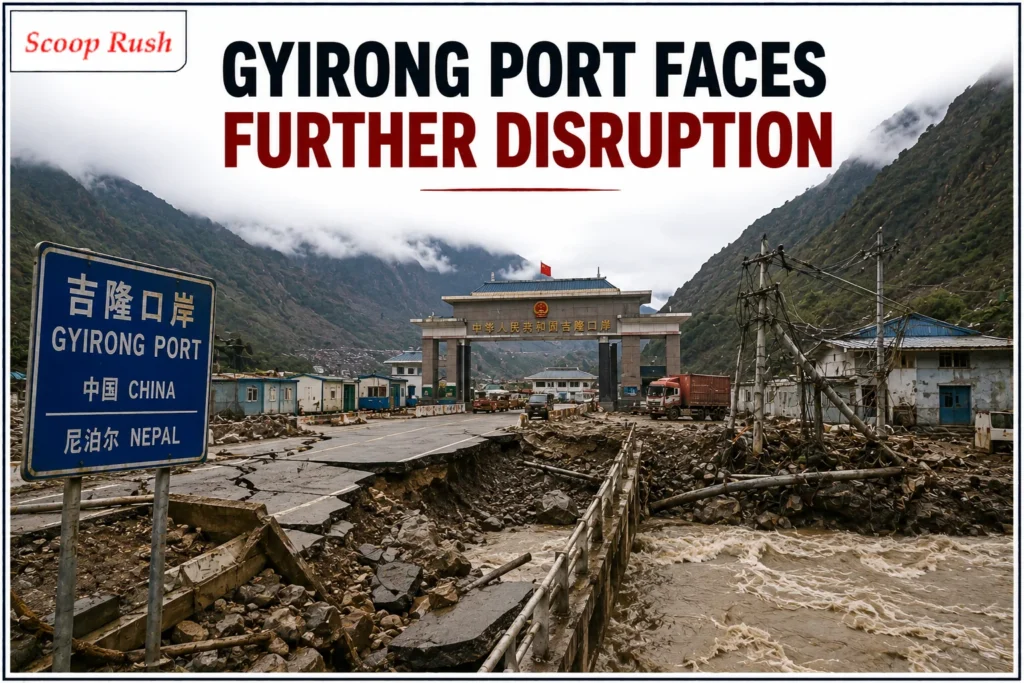
Gyirong Port plays a key role in trade between China and Nepal. The mudslide already damaged roads and other infrastructure nearby. Power and telecom networks also suffered major disruption. Another flood could delay repairs and limit access even more.
The rescue suspension adds fresh pressure on people in the region. Authorities must balance urgent searches with safety for rescue crews. For now, caution has forced teams to wait it out. Officials will keep assessing whether conditions improve soon.
China Continues Monitoring the Barrier Lake
Engineering teams are tracking the barrier lake and surrounding land closely. They need to understand how fast water levels are changing. Officials must also judge whether the debris dam stays stable. These findings will guide future decisions on rescue operations.
Drones and remote equipment now gather data from safer positions. This lets teams collect information without entering high-risk zones. Meanwhile, rescue personnel remain on standby for new orders. The situation could shift quickly if water levels spike.
What Happens Next for the Rescue Effort
The immediate goal remains stopping a second disaster. Rescue teams cannot yet enter areas threatened by rising water. Officials will keep watching the barrier lake before allowing crews forward. Their next move depends on water levels and ground stability.
If conditions turn safer, teams could resume physical searches soon. They may then focus on spots where missing people could remain trapped. Technology will continue supporting the effort during this pause. However, officials must first confirm it is safe to proceed.
FAQs
1. Why did China halt the rescue operation in Tibet?
China halted the operation because the barrier lake began overflowing. Officials feared a fresh flood could strike rescue teams. Crews withdrew to safer ground until conditions stabilize.
2. What caused the barrier lake near Gyirong Port?
A powerful mudslide pushed mud, rocks, and debris into local rivers. This debris blocked the flow and formed a natural dam. Water then built up behind the blockage, creating the lake.
3. How many people are still missing in Tibet?
More than 550 people remain unaccounted for in the region. Around 260 of the missing are believed to be foreign nationals. Search teams continue using drones and thermal imaging to locate them.
4. When could the barrier lake reach its highest level?
Officials expect the lake to keep rising due to ongoing rain. Current estimates suggest levels could peak within the next few days. A breach before then could trigger dangerous flooding downstream.
5. Will China resume rescue operations soon?
Authorities have not ended the overall rescue mission. They paused physical searches only because conditions remain unsafe. Teams will resume work once officials confirm the area is stable.

