
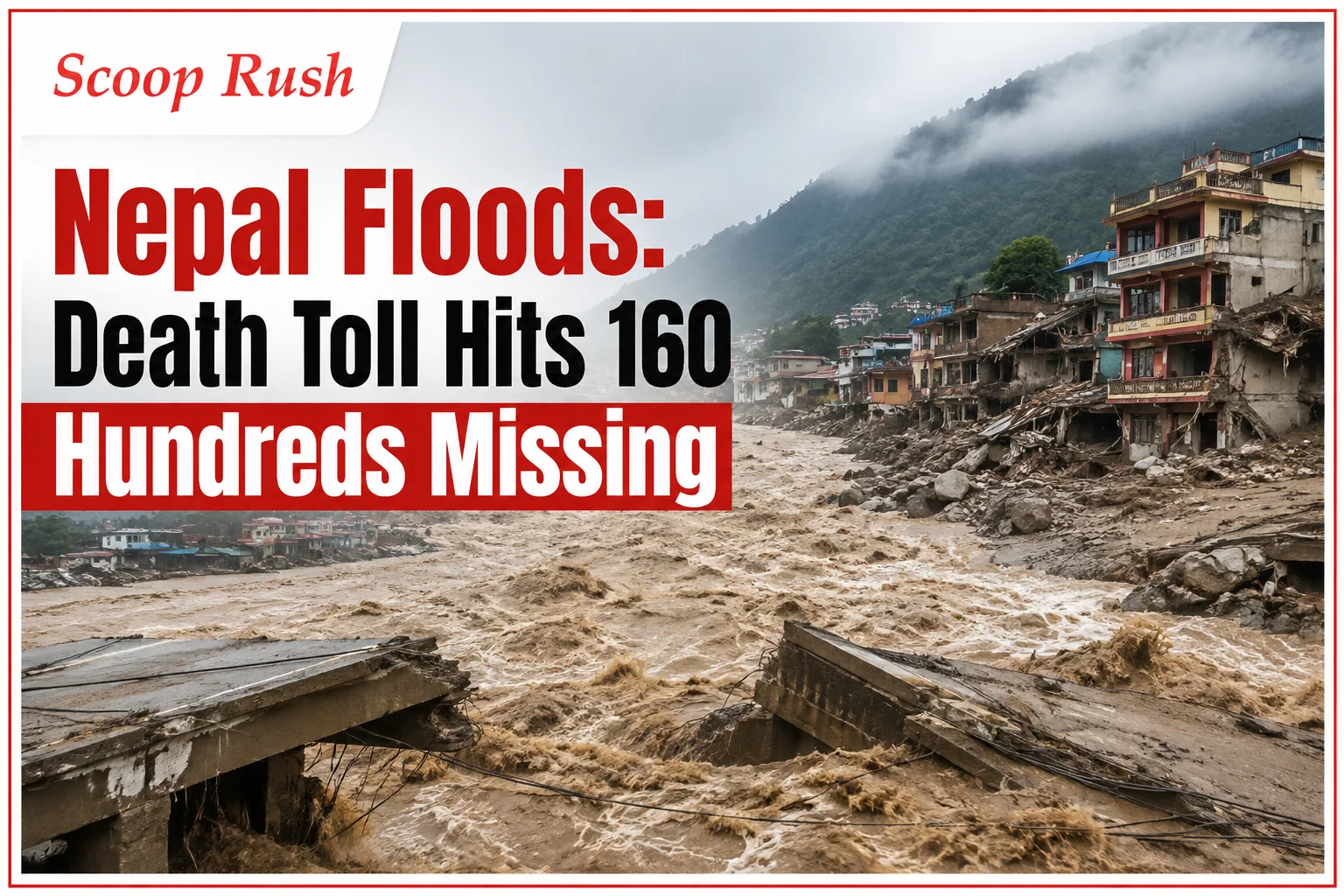
The Nepal floods have killed at least 160 people along the Nepal-China border. Hundreds more remain missing after violent flash floods and landslides struck northern Nepal on August 26. Rescue teams are still searching through mud, rock, and debris for survivors.
The disaster hit without much warning and caught entire villages off guard. Floodwaters tore through valleys, destroyed homes, and cut off major travel routes within hours. Officials in Nepal and China are now racing to reach isolated communities before conditions worsen further.
Nepal Floods Devastate Border Communities
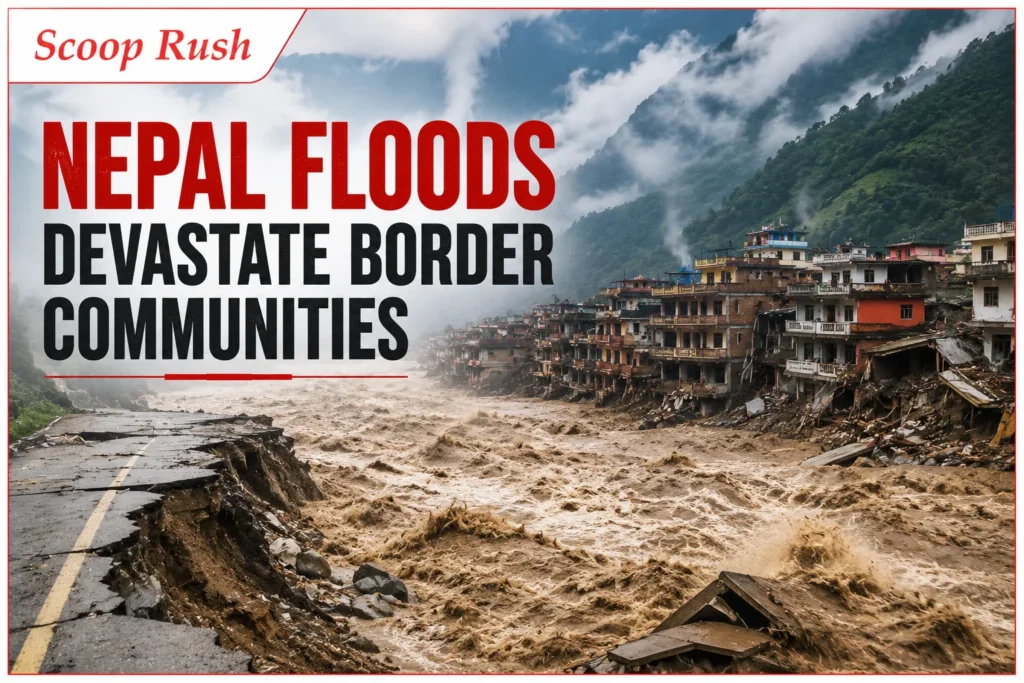
The disaster began near Nepal’s northern border with Tibet. A sudden surge of water tore through Rasuwa district and buried homes, roads, and bridges in mud. The flood then rushed downstream and hit several central Nepal districts within hours.
The Bhote Koshi and Trishuli river systems carried the worst of the destruction. Powerful currents swept away vehicles, buildings, and entire sections of highway. Communities along the riverbanks had little warning before the water arrived.
Death Toll Continues To Rise
Nepal police confirmed at least 157 deaths by Thursday morning. China’s Tibet region reported three additional deaths from the same disaster. That brought the combined toll to roughly 160 people, and officials expect this number to grow.
Search teams still cannot reach several isolated villages. Damaged roads and thick flood debris continue blocking rescue routes into the worst-hit areas. Therefore, the final death count may take days or weeks to confirm.
Hundreds Remain Missing After The Disaster
Officials say hundreds of people remain unaccounted for across Nepal and Tibet. Missing lists include tourists, local residents, workers, and even security personnel. Nepal’s tourism board has repeatedly revised these numbers as verification continues.
More than 300 foreign nationals appear on the missing list so far. Indian citizens make up the largest group of missing travelers. American, Australian, British, Canadian, and Malaysian nationals also remain unaccounted for.
Foreign Tourists Caught In The Nepal Floods
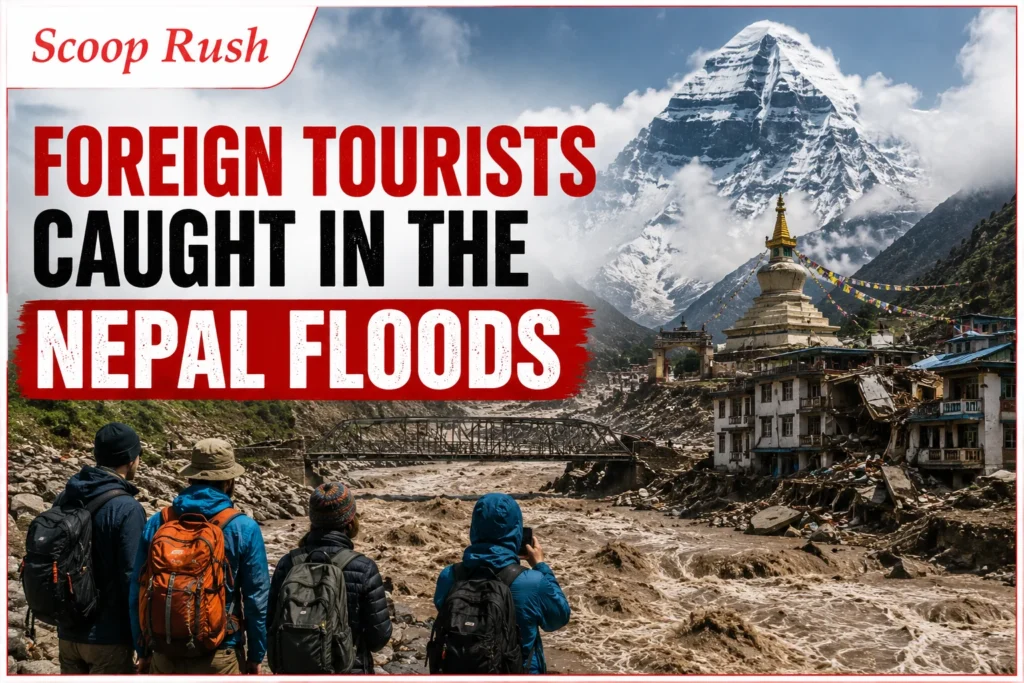
Northern Nepal serves as a major route toward Mount Kailash in Tibet. Hindu, Buddhist, Jain, and Bon pilgrims travel this corridor every year. Trekkers also pass through the region on popular Himalayan trails.
Nepal’s tourism board reported dozens of missing pilgrims and trekkers on Wednesday alone. Authorities are now cross-checking passenger lists with travel agencies and local guides. They are also working with foreign embassies to trace missing citizens.
Roads And Bridges Suffer Heavy Damage
Floodwaters wrecked infrastructure across several Nepalese districts. Rasuwa, Nuwakot, and Dhading all report major damage to roads and buildings. The flood also destroyed power lines and small hydropower stations along the rivers.
Cross-border transport between Nepal and Tibet has stopped completely. The Rasuwagadhi border crossing suffered some of the worst destruction. Floodwaters swept away vehicles and structures near this key trade route.
What Caused The Nepal Floods?
Scientists believe a glacial ice and rock collapse triggered the disaster. Satellite images suggest a large chunk of ice broke off a Himalayan glacier. The falling ice and rock likely blocked a river before it burst downstream.
A minor earthquake also struck near Kathmandu earlier the same day. However, experts have not confirmed a direct link between the quake and the flood. Researchers continue studying satellite data to understand the full sequence of events.
Himalayan Climate Risks Add To The Danger
This disaster highlights growing risks across the Himalayan region. Rising temperatures destabilize glaciers and frozen mountain slopes each year. That instability raises the danger of sudden floods and landslides in nearby valleys.
Experts have long warned about glacier loss across the Hindu Kush Himalaya. Warmer conditions weaken mountain ice and increase hazards downstream. Still, scientists need more evidence before linking this specific flood to climate change.
Rescue Teams Face Dangerous Conditions
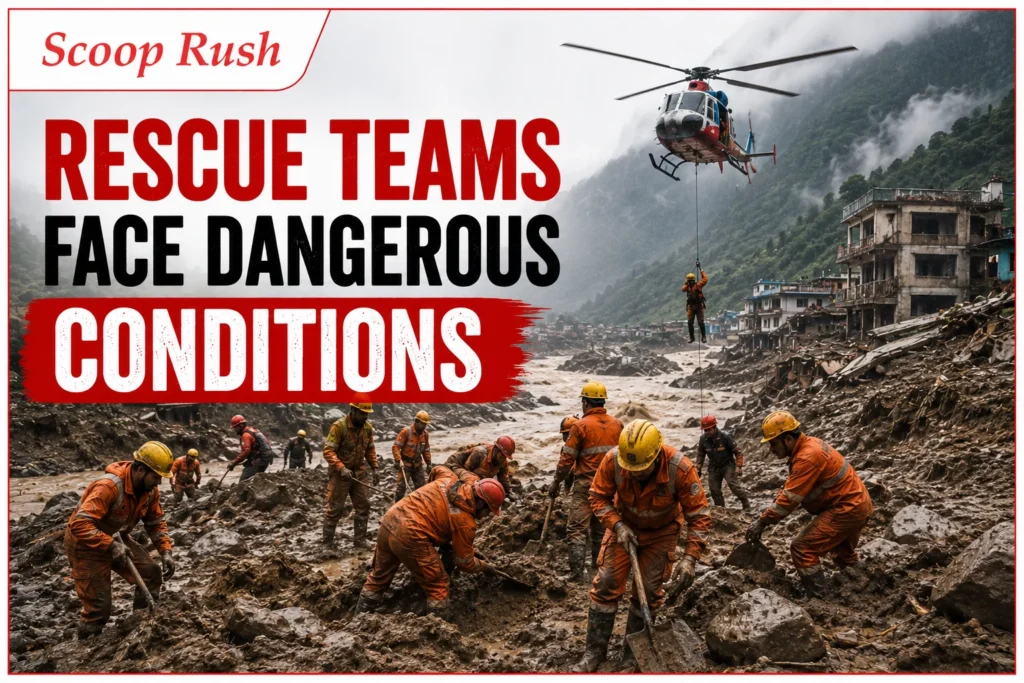
Nepali rescue crews continue digging through mud and debris. Security forces have joined the search for missing residents and travelers. Helicopters support these operations whenever weather and terrain allow safe flights.
Conditions remain extremely difficult around the hardest-hit communities. Heavy mud still blocks roads near the Gyirong border crossing in China. Rain adds further risk for rescuers working near unstable slopes.
Communication Failures Slow The Search
Floodwaters damaged power lines and communication towers across the region. These failures have slowed efforts to reach isolated communities. They have also made it harder to verify missing-person lists accurately.
Authorities must now cross-check reports from families, agencies, and local police. Some missing people may still contact relatives once networks return. As a result, current figures could shift significantly in coming days.
Nepal Seeks International Help
Nepal has mobilized security forces and emergency teams across affected districts. Officials also requested help from neighboring countries during the crisis. Both India and China have joined the wider emergency response effort.
International governments are closely monitoring the unfolding disaster. The United States confirmed it is tracking affected American citizens. Washington also announced emergency assistance for the hardest-hit communities.
Global Reaction To The Disaster
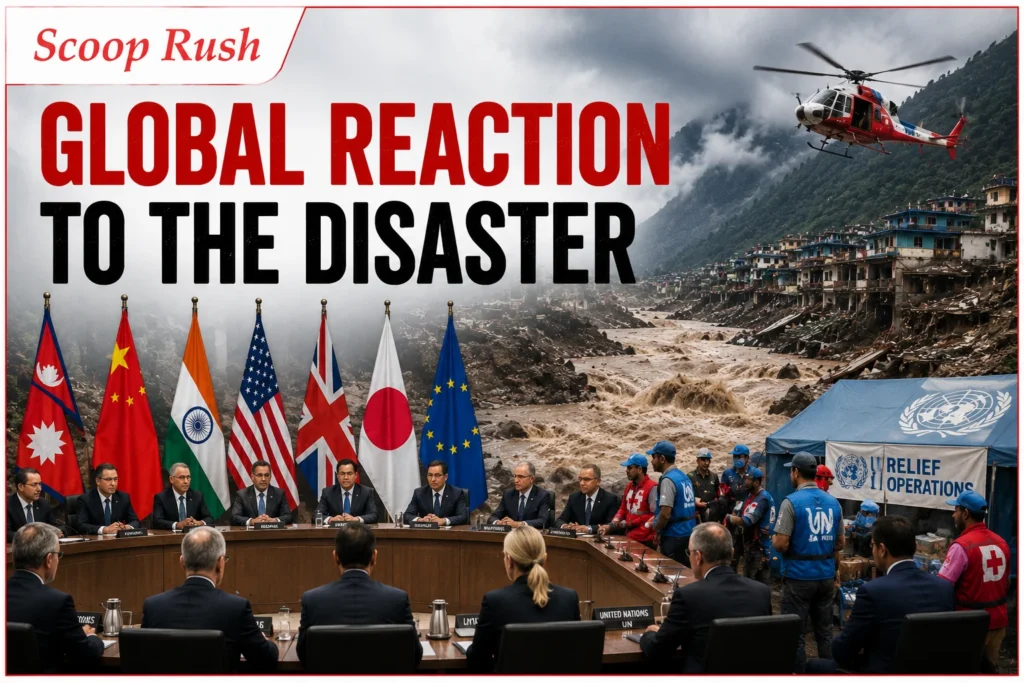
World leaders and international agencies are closely watching the crisis unfold. Several governments have confirmed missing citizens among the hundreds still unaccounted for. Diplomatic channels between Nepal, China, India, and other nations remain active as the search continues.
The disaster has also renewed global attention on Himalayan disaster preparedness. Aid groups and humanitarian organizations are assessing how they can support Nepal’s response. Meanwhile, the United Nations and regional bodies continue monitoring the situation for further developments.
Nepal Faces A Long Recovery
The immediate priority remains finding survivors and helping stranded families. Authorities must also restore roads, electricity, and communication networks quickly. Damaged bridges could create long-term transport problems for remote communities.
Recovery will require significant resources and careful coordination. Officials must assess damaged homes, hydropower plants, and public infrastructure across the region. Communities will also need shelter, medical care, and clean water in the meantime.
Final Thoughts
The Nepal floods have caused one of the region’s most serious disasters in recent years. Families are still searching for missing loved ones while rescue teams battle dangerous terrain. The coming days will likely bring a clearer picture of the true human cost.
This tragedy also serves as a stark warning about Himalayan climate risks. Melting glaciers and unstable slopes threaten communities across Nepal, Tibet, and neighboring regions. Governments and travelers alike must stay alert as recovery efforts continue and new information emerges.
FAQs
1. How many people have died in the Nepal floods?
The confirmed death toll stands at around 160 across Nepal and Tibet. Nepal reported 157 deaths, while Tibet reported three more. Officials expect this number to rise as search teams reach cut-off areas.
2. Where did the Nepal floods cause the most damage?
Rasuwa district suffered the worst destruction near Nepal’s northern border. Nuwakot and Dhading districts also faced major flooding and infrastructure damage. China’s Gyirong County reported serious flood and mudslide damage as well.
3. Are foreign tourists missing in Nepal?
Yes, more than 300 foreign travelers remain unaccounted for. Indian, American, Australian, British, and Malaysian nationals appear on the missing list. Authorities are still verifying identities with tourism agencies and foreign embassies.
4. What caused the Nepal floods?
A glacial ice and rock collapse likely triggered the disaster. The collapse appears to have blocked a river before it burst downstream. Scientists are still studying satellite images to confirm the full cause.
5. How is the international community responding to the Nepal floods?
India and China have both sent assistance to support rescue efforts. The United States is tracking affected American citizens and offering aid. Global agencies continue monitoring the disaster and coordinating with Nepali authorities.

