
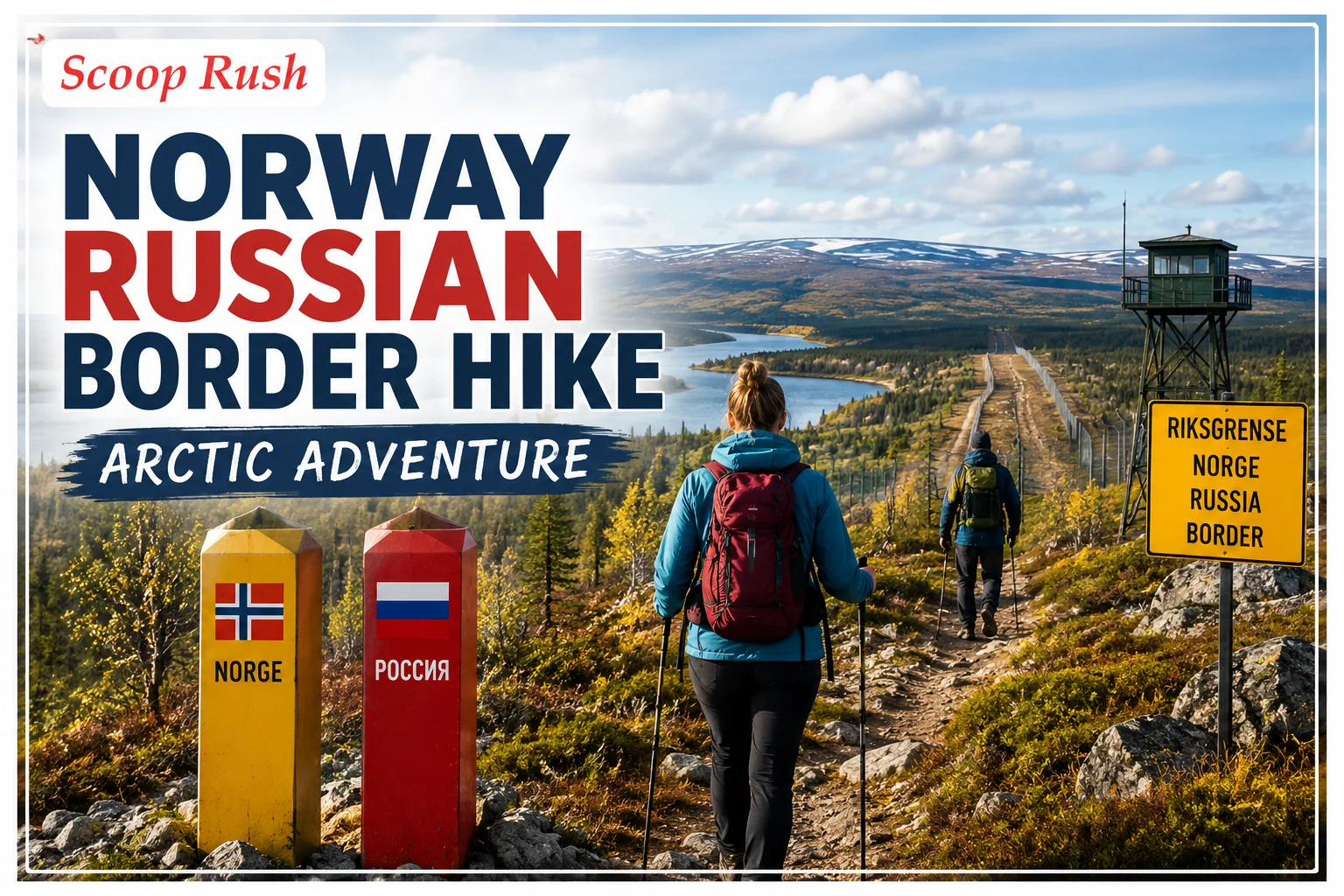
In the far northeast corner of Norway, a new kind of hiking trip is drawing travelers to the small town of Kirkenes. Instead of just admiring fjords or chasing the Northern Lights, visitors can now walk toward one of Europe’s most closely watched borders through birch forest, open tundra, and land that has separated NATO from Russia since the Cold War.
It’s an unusual mix: peaceful wilderness on one side, watchtowers and patrols on the other. For travelers who want more than a typical Arctic sightseeing trip, that contrast is exactly the draw.
Why Kirkenes?

Kirkenes sits right at the edge of Norway, close to both Finland and Russia. That location has shaped the town for generations you’ll spot street signs in Norwegian and Russian, and Russian influence is woven into the local culture and history.
The town has long been a stop for Arctic coastal cruises, including Hurtigruten and Havila Voyages. But in recent years, a few local operators have started offering something more active: guided hikes that lead visitors directly to the official border markers, rather than just a bus ride to a viewpoint.
What the Hike Actually Looks Like
The route runs through birch forest and tundra, with the Pasvik River tracing part of the natural boundary between the two countries. Small guided groups some tours cap it at around seven people set out from Kirkenes and spend roughly two to three hours on the trail, depending on fitness level and how much of the route they take on.
One highlight is the climb up Russehøgda, a hill rising about 120 meters that opens up wide views over the Storskog border area and, on a clear day, across into Russia itself. It’s a strange feeling a quiet Arctic hillside with a heavily monitored international border running through the landscape below.
Reaching the Border Markers
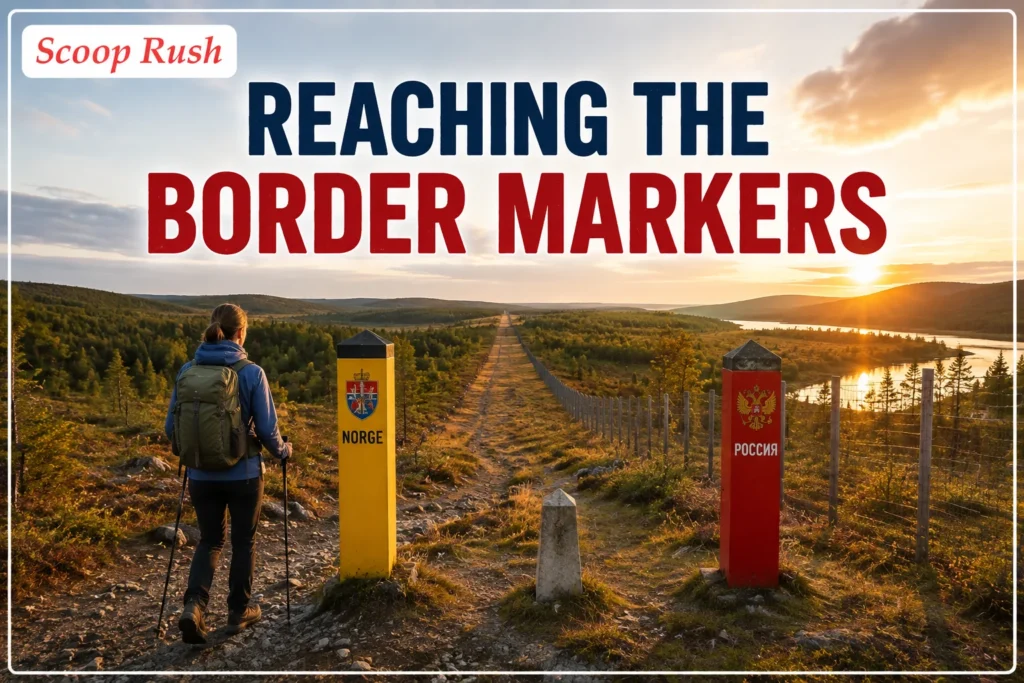
The trail eventually reaches a cleared strip of land marking the actual boundary. Hikers can’t cross it or get close to the markers yellow posts mark the Norwegian side, red ones mark the Russian side but guides explain the history and significance as you go, including the fact that this was once one of only two land borders between NATO and the Soviet Union.
Trail conditions shift with the seasons. After heavy rain, sections can turn muddy, so waterproof, ankle-high boots are worth having (some operators will lend rubber boots if you ask ahead). During the Midnight Sun season, roughly mid-May to late July, some companies even run the hike as an evening excursion, taking advantage of the round-the-clock daylight.
Storskog: The Only Land Crossing
A short distance from the hiking trail sits Storskog, Norway’s only official land border crossing with Russia. It still handles regular truck and vehicle traffic along the E105 highway, though recreational crossings have dropped off significantly in recent years.
Storskog carries real historical weight. During the Cold War, this was the frontier between NATO’s Norway and the Soviet Union and today it remains NATO’s northernmost land border, a fact that still shapes how closely the area is monitored.
Security Has Tightened Since 2022
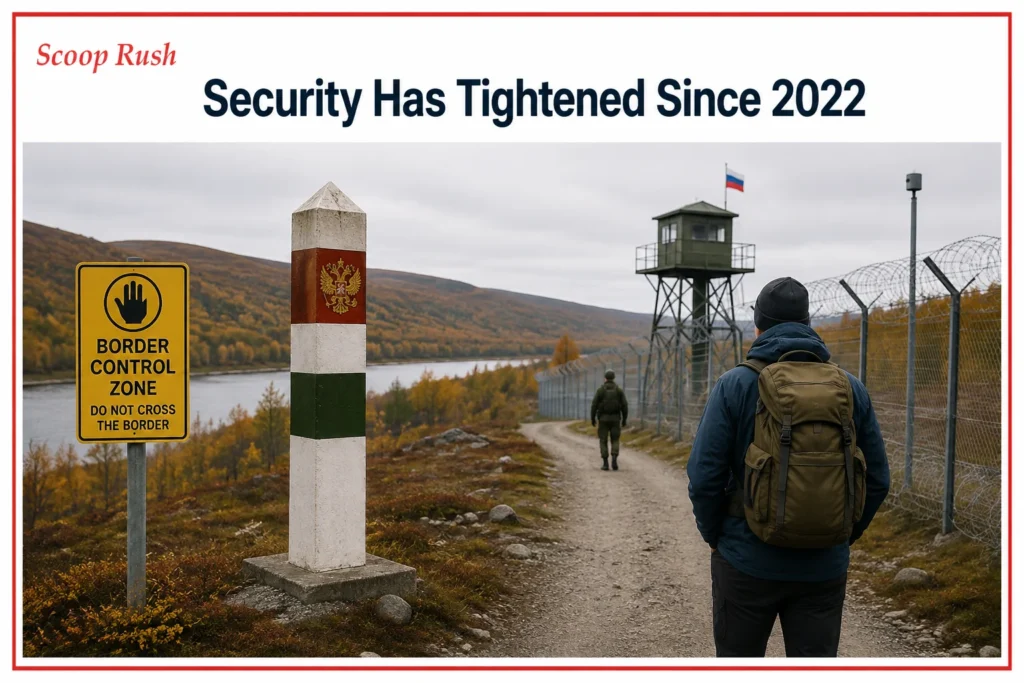
Border security in the region has become noticeably stricter since Russia’s invasion of Ukraine. Both Norwegian and Russian authorities have increased monitoring along the frontier, and while Storskog remains open for official crossings, recreational activity near the border has declined.
Travelers on guided hikes will notice this firsthand watchtowers, patrols, and surveillance are part of the scenery. The rules for visitors are strict and enforced:
- Never touch, move, or approach the physical border markers
- Stay within permitted trail areas at all times
- Avoid photographing military personnel or security installations
- Carry a passport, since authorities may request ID during patrol checks
Breaking these rules can result in fines, so most travelers find it far easier and safer to go with a local guide who knows exactly where the boundaries are.
A Town Shaped by Its Neighbors
Kirkenes isn’t just a jumping-off point for the hike it has its own layered history worth spending time in. The Borderland Museum digs into the overlapping histories of Norwegians, Finns, and Russians in the region, while a monument in town honors the Red Army’s liberation of the area from German occupation in the autumn of 1944.
Near the Pasvik River stands Boris Gleb Church, a Russian Orthodox church with roots going back to the medieval period. Some guided tours include a stop here, adding a layer of religious and cultural history to the trip. Visitors view it from the Norwegian side, since the site sits right at the edge of the border zone.
Wildlife and Arctic Scenery
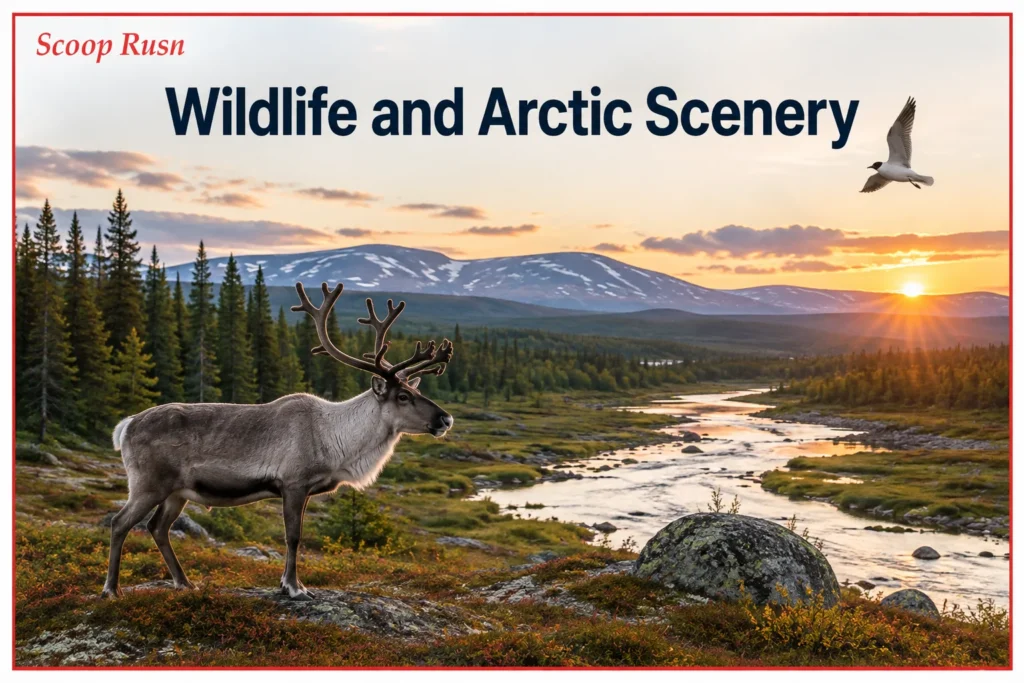
The border itself is only part of the appeal the surrounding landscape is classic Arctic wilderness: forests, wetlands, rivers, and sweeping open tundra. Summer brings the Midnight Sun and long daylight hours; winter brings snow, darkness, and a completely different atmosphere.
Reindeer and various Arctic birds live in the area, and the wider Pasvik valley is also known for its brown bear population, though sightings on any given hike are never guaranteed. It’s best to go in expecting beautiful scenery rather than counting on wildlife encounters.
Planning Your Trip
Because conditions and rules can change quickly this close to an international border, a few basics go a long way:
- Check the weather before you go. Arctic conditions shift fast, even on short hikes.
- Wear proper gear. Waterproof, ankle-high boots and warm layers make a real difference on uneven terrain.
- Bring your passport. It may be required for identification near the border.
- Book with a licensed local operator. Guides know the current rules, the safe routes, and the history and they take the guesswork out of an area where mistakes can mean fines.
Independent hiking is technically possible on public trails, but given how strict the border regulations are, most visitors find a guided tour is the simpler and safer choice.
Worth the Trip?
A hike along the Norway–Russia border isn’t your typical Arctic outing. It combines genuine wilderness with a very real, very present piece of geopolitics watchtowers and patrols alongside birch forest and tundra views. For travelers who want their trip to include a little history and context, not just scenery, Kirkenes offers something few other places can.
Just remember: this is a sensitive international frontier, not a photo backdrop. Respecting the rules is what keeps the experience open to travelers in the first place.
Final Thoughts
A hike along the Norway–Russia border isn’t like any other Arctic outing. It’s wilderness and geopolitics side by side birch forest and tundra one moment, watchtowers and border patrols the next. Few places let you feel history this directly: standing on a quiet Arctic hillside, looking out at a frontier that’s been watched closely since the Cold War and even more closely since 2022.
For travelers who want their trip to hold more than scenery, Kirkenes delivers that rare combination of nature, history, and a genuine sense of place. Just go in with the right mindset: this is a real international border, not a backdrop. Following the rules, sticking with a licensed guide, and treating the area with respect is what keeps this experience open to travelers at all.
FAQs
1. Where can I do a Norway–Russia border hike?
Guided hikes depart from Kirkenes in northeastern Norway, with routes running through permitted areas near the Pasvik River and Storskog border crossing.
2. How long is the hike?
Most guided hikes run about two to three hours, depending on the route and group fitness level. Some operators offer a shorter version for those who want a less demanding walk.
3. Can I actually cross into Russia?
No. The border corridor is strictly off-limits, and all guided hikes stay within permitted Norwegian territory.
4. What should I bring?
A passport, waterproof ankle-high boots, warm layers, and a charged phone. Conditions can change quickly, even in summer.
5. Is this trip suitable for casual travelers?
Yes, most hikes are designed for people with average fitness. Just make sure to book with a licensed local guide and follow all posted border rules.

