
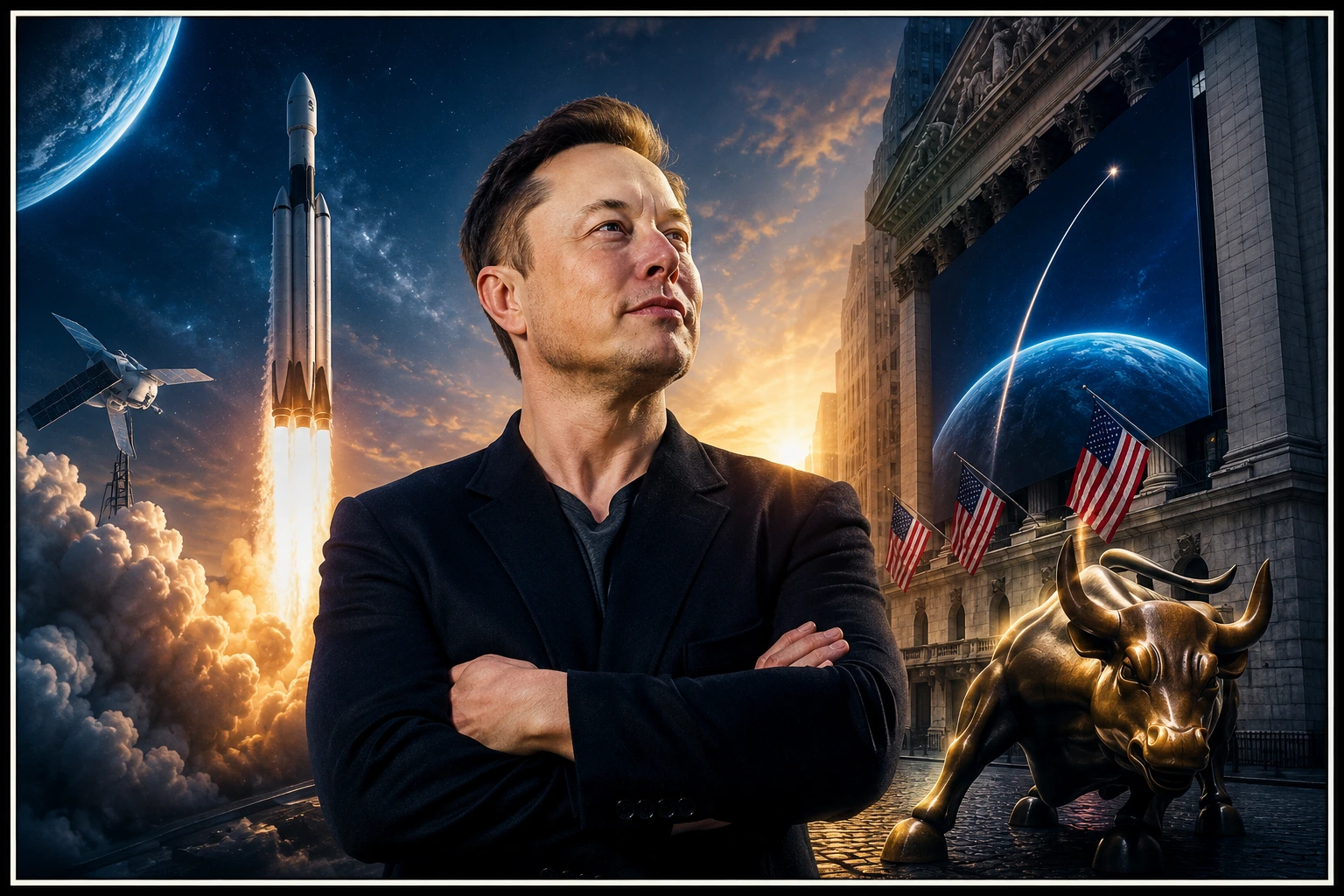
SpaceX IPO 2026: The Biggest Market Debut Ever
SpaceX just pulled off the largest IPO in stock market history. On June 12, 2026, the rocket company opened on the Nasdaq under the ticker SPCX. The stock jumped right out of the gate. By the end of the day, it had soared close to 19 percent and turned Elon Musk into the world’s first trillionaire.
This was not a quiet listing. It was a full event. A bell rang in Times Square and another rang at Starbase in Texas. And while traders watched the numbers climb, SpaceX did something only SpaceX would do. It launched a Falcon 9 with Starlink satellites on the very same morning.
Here is what happened, why it matters, and what comes next.
What Is the SpaceX IPO?
An IPO, or initial public offering, is when a private company sells shares to the public for the first time. SpaceX stayed private for 24 years. The company was founded in 2002 to build reusable rockets and one day carry humans to Mars.
For most of that time, going public was off the table. Leadership wanted to focus on long-term goals, not quarterly earnings reports. That changed in late 2025, and the listing moved fast after that.
Key facts from the debut:
- Ticker: SPCX on Nasdaq
- IPO price: 135 dollars per share
- Opening price: 150 dollars per share
- Closing price: around 161 dollars per share, up roughly 19 percent
- Money raised: about 75 billion dollars
- Valuation: around 1.77 trillion dollars at the IPO price, climbing above 2 trillion during trading
- Listing date: June 12, 2026
The deal also used a dual listing with Nasdaq and Nasdaq Texas, a nod to the company’s Starbase headquarters.
Why This IPO Is a Big Deal
Size is the headline. This was the biggest IPO Wall Street has ever seen. More than 500 million shares changed hands on day one. That came close to Facebook’s record first-day trading back in 2012.
But the scope matters just as much. SpaceX is now a public bet on rockets, satellites, and AI all at once. That mix is rare. Most companies do one thing. This one does several.
A few reasons the listing stands out:
- It made Elon Musk the world’s first trillionaire on paper.
- It pushed SpaceX past most public companies in total market value.
- It marked the first of several expected AI-linked mega IPOs, with OpenAI and Anthropic also eyeing the public market.
- More than half of the roughly 22,000 employees bought extra stock during the offering, totaling close to 1 billion dollars.
That last point is worth a pause. When staff put their own money in at this scale, it sends a strong signal about belief in the mission.
How SpaceX Got Here
The road was not smooth. Musk has openly said he gave the company less than a 10 percent chance of survival in the early years. The first three Falcon 1 flights failed before the fourth reached orbit in 2008.
Each milestone faced doubters. Here is the short version of what the company proved over time:
- 2008: First privately built liquid-fueled rocket to reach orbit
- 2010: Falcon 9 reaches orbit
- Later years: First private company to send astronauts to the International Space Station
- Reusability: Landing and reflying rockets, which slashed launch costs
- 2025: A record 165 orbital launches in a single year
Then came Starlink. The satellite internet network now serves more than 12 million subscribers across 164 countries. It runs on roughly 9,600 satellites in low Earth orbit. It reaches places that traditional internet cables never could.
The xAI Merger and the AI Angle
There is one more piece that shaped this IPO. In February 2026, SpaceX completed its merger with xAI, Musk’s artificial intelligence company. That combined SpaceX’s space and connectivity work with a large AI compute operation under one roof.
The plan goes beyond Earth. Musk has talked openly about building solar-powered data centers in space. The idea is simple to state and hard to do. Power and cooling for AI are getting expensive on the ground. Space offers free solar energy and natural cold.
So SPCX is not only a space stock now. It is also an AI story. That dual identity is part of why investors paid so much attention.
What It Means for Investors
A historic debut is exciting. It is also worth a calm look. A few things to keep in mind:
- Valuations can swing. SPCX moved fast on day one, both up and during the session. Early volatility is normal for a hot IPO.
- Profit questions remain. Like other AI-heavy companies, SpaceX faces real spending as it builds. The bottom line will get close attention in future filings.
- Retail access is wide. The offering set aside a large share for everyday investors through major brokerages.
None of this is financial advice. It is a snapshot of what the market saw on launch day. Always do your own research before you buy any stock.
Frequently Asked Questions
1. When did SpaceX go public?
SpaceX went public on June 12, 2026. It began trading on the Nasdaq Stock Market under the ticker symbol SPCX after 24 years as a private company.
2. What is the SpaceX stock ticker?
The SpaceX stock ticker is SPCX. The shares trade on the Nasdaq, with a dual listing that also ties the company to Nasdaq Texas.
3. How much did SpaceX raise in its IPO?
SpaceX raised about 75 billion dollars in the offering. That gave the company a valuation near 1.77 trillion dollars at the IPO price, making it the largest IPO in history.
4. Why is the SpaceX IPO considered historic?
It was the biggest IPO ever by money raised. It also made Elon Musk the world’s first trillionaire and combined space, satellite internet, and AI into one public company.
5. How does the xAI merger affect SpaceX stock?
The xAI merger, completed in February 2026, added a major AI compute business to SpaceX. This gives SPCX exposure to both space and artificial intelligence, including plans for data centers in orbit.
Final Thoughts
The SpaceX IPO was more than a stock listing. It was a milestone for the whole space and AI sector. A company that almost failed three times now sits among the most valuable in the world.
Want to keep up with market-moving tech news and what it means for your strategy? Follow along for clear, no-jargon breakdowns of the stories that matter.

