
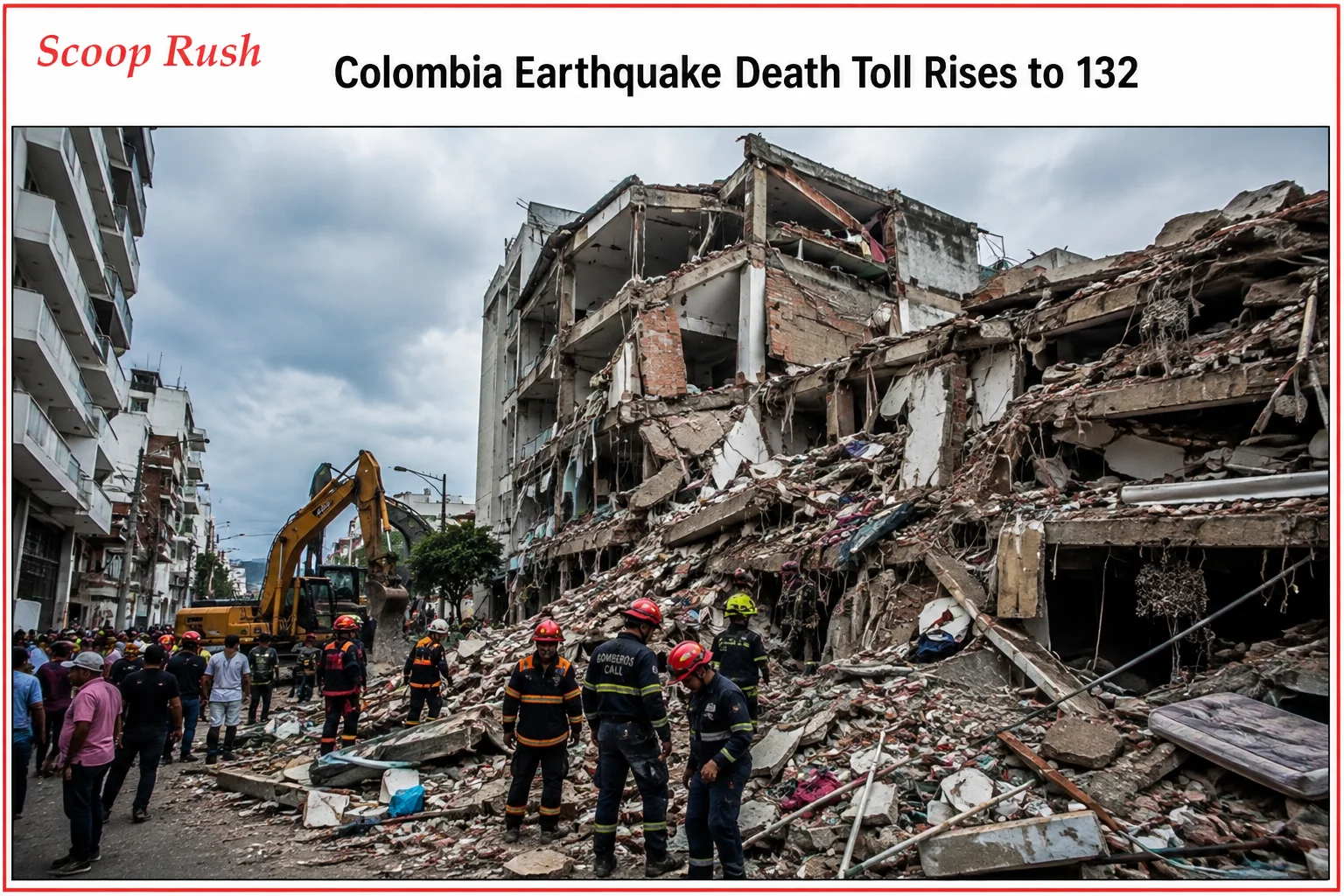
At least 132 people have died after a powerful Colombia earthquake struck western Colombia. More than 570 people suffered injuries after the magnitude 7.4 quake. Rescue teams continue searching collapsed buildings for survivors across several affected cities.
The earthquake struck near San José del Palmar in Chocó province. Strong tremors reached Bogotá and several neighboring countries. Authorities declared a national disaster and launched a major emergency response.
Colombia Earthquake Strikes Western Colombia
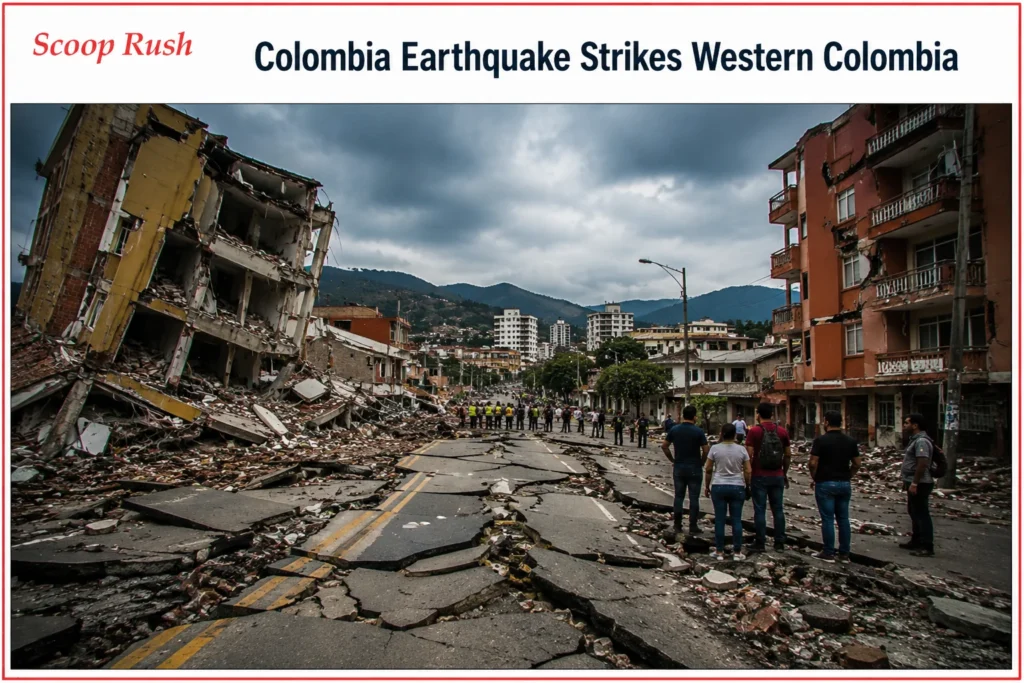
The Colombia earthquake struck at about 7:34 a.m. local time Monday. The epicenter was near San José del Palmar in Chocó province. The location sits roughly 150 miles west of Bogotá.
The powerful shaking spread across western Colombia within minutes. Residents reported strong tremors in Bogotá and other major cities. Shaking also reached Ecuador, Venezuela, and Panama.
Death Toll Rises as Injuries Increase
The Colombia earthquake has killed at least 132 people so far. More than 570 people have also suffered injuries, according to updated reports. Officials expect the figures could change during ongoing rescue operations.
Earlier reports placed the death toll above 100 people. Rescue teams later discovered additional victims across several regions. Authorities continue collecting information from remote and heavily damaged communities.
Pereira Suffers Heavy Earthquake Damage
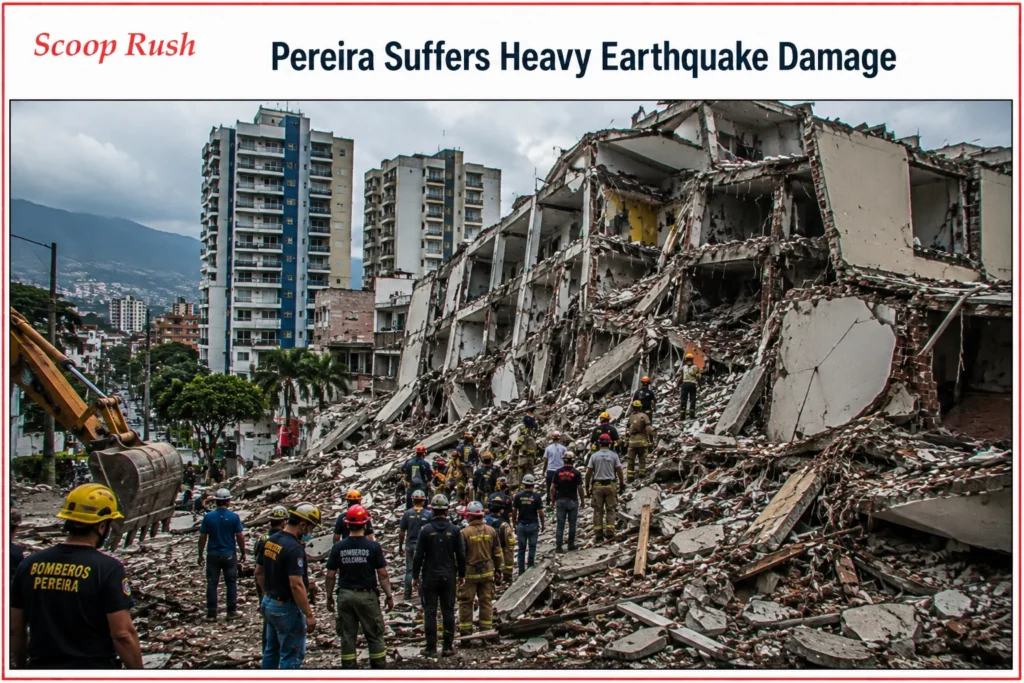
Pereira suffered some of the most serious damage from the earthquake. The city lies within Colombia’s coffee-growing region. Several buildings collapsed during the powerful shaking.
Local officials reported dozens of deaths across the surrounding metropolitan area. Rescue workers searched damaged structures for trapped residents. Authorities also introduced curfews in some areas of Pereira.
Cali Rescue Teams Search for Survivors
Cali also suffered extensive damage after the earthquake struck western Colombia. The city is Colombia’s third-largest urban center. Several buildings collapsed, leaving people trapped beneath heavy debris.
Firefighters joined police officers and civilian volunteers during rescue operations. Teams removed concrete and bricks using basic tools. They also formed human chains to move debris away from collapsed structures.
Hospitals and Public Buildings Face Damage
The earthquake damaged hospitals and other important public facilities. Some medical centers reported structural problems after the strong shaking. Emergency teams moved patients and prepared additional medical capacity.
The disaster also affected several regional airports. Authorities reported problems at airports in Pereira, Manizales, Quibdó, Armenia, Cartago, and Buenaventura. Officials suspended some operations while teams checked structural safety.
Chocó Region Faces Major Challenges
Chocó lies close to the earthquake’s epicenter. The region also has difficult terrain and limited transportation links. These conditions created additional challenges for emergency responders.
Communications outages slowed early reports from some communities. Local officials reported deaths and injuries across the province. Quibdó also suffered damage to buildings and essential services.
Colombia Declares a National Disaster
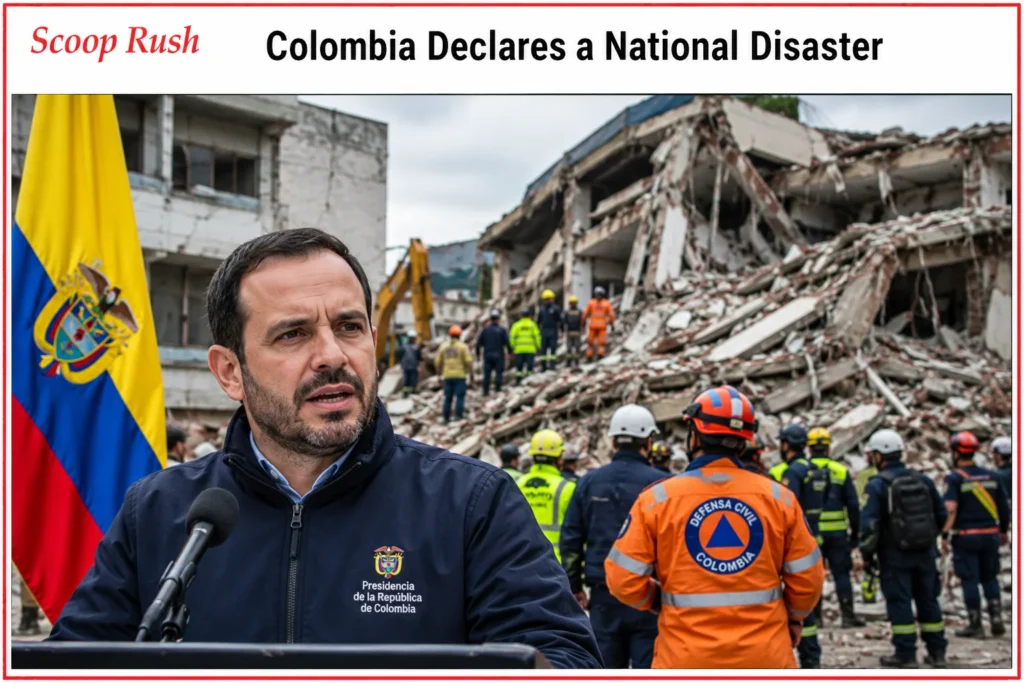
President Abelardo de la Espriella declared a national disaster after the earthquake. The decision allows authorities to coordinate emergency resources more quickly. Government agencies began organizing rescue and relief operations.
The president ordered a unified command structure for the emergency response. Authorities also began providing assistance to affected families. Officials reported damage to more than 1,500 buildings across affected areas.
Rescue Workers Race to Find Survivors
Rescue teams continue searching collapsed buildings across western Colombia. Firefighters, police officers, soldiers, and volunteers joined the effort. Teams remain focused on areas where people may still remain trapped.
Volunteers have helped remove debris from damaged buildings. Rescuers also pause regularly to listen for signs of survivors. Several successful rescues have provided hope during the difficult operation.
Aftershocks Create Additional Risks
Aftershocks followed the main earthquake across the affected region. These tremors can create serious risks around weakened buildings. Rescue workers must therefore inspect structures before entering them.
Many residents stayed outside their homes after the earthquake. Some feared additional shaking and further structural damage. Emergency officials continue monitoring seismic activity across western Colombia.
International Aid Supports Colombia’s Response
Several countries offered support after the devastating earthquake. The United States announced $15.5 million in emergency assistance. The funding will support shelter, food, protection, and earthquake assessments.
European and Latin American governments also expressed support for Colombia. International organizations continue monitoring conditions in affected communities. Additional assistance could help provide medical care and emergency shelter.
Colombia Begins a Difficult Recovery
The rescue operation represents only the first stage of recovery. Thousands of damaged homes may require major repairs or replacement. Public buildings will also need detailed structural inspections.
Families who lost homes may need temporary accommodation and financial assistance. Businesses could also face losses from damage and closures. The government will need to coordinate recovery efforts across multiple regions.
What Happens Next After the Earthquake
Authorities will continue searching collapsed buildings for possible survivors. Emergency agencies will assess damaged homes and critical infrastructure. These inspections will help identify areas that remain unsafe.
Officials must also restore transportation and communication services. Medical teams will continue treating injured residents. Longer-term recovery will likely focus on housing, infrastructure, and financial assistance.
Conclusion
The Colombia earthquake has caused widespread destruction across western Colombia. At least 132 people have died, while more than 570 others suffered injuries. Rescue teams continue searching collapsed buildings for survivors as authorities assess the damage.
The disaster has damaged homes, hospitals, airports, and other vital infrastructure. Colombia now faces a major recovery effort across several regions. Government agencies and international partners continue providing emergency support to affected communities.
FAQs
1. How many people died in the Colombia earthquake?
At least 132 people have died following the magnitude 7.4 earthquake. More than 570 people have suffered injuries. Officials could revise these numbers as rescue teams continue their work.
2. Where did the Colombia earthquake occur?
The earthquake struck western Colombia near San José del Palmar. The epicenter was located in Chocó province. The tremor affected cities across western Colombia and reached neighboring countries.
3. How strong was the Colombia earthquake?
The earthquake measured 7.4 in magnitude. It became one of Colombia’s strongest earthquakes in recent years. Its powerful shaking caused widespread structural damage across several regions.
4. Which cities suffered the most damage?
Pereira and Cali suffered significant damage after the earthquake. Manizales and Quibdó also reported serious destruction. Several regional airports and medical facilities also faced problems.
5. Are rescue operations still continuing?
Yes, rescue operations remain active across the hardest-hit areas. Emergency workers continue searching damaged buildings for survivors. Volunteers and government forces are supporting rescue teams.

