
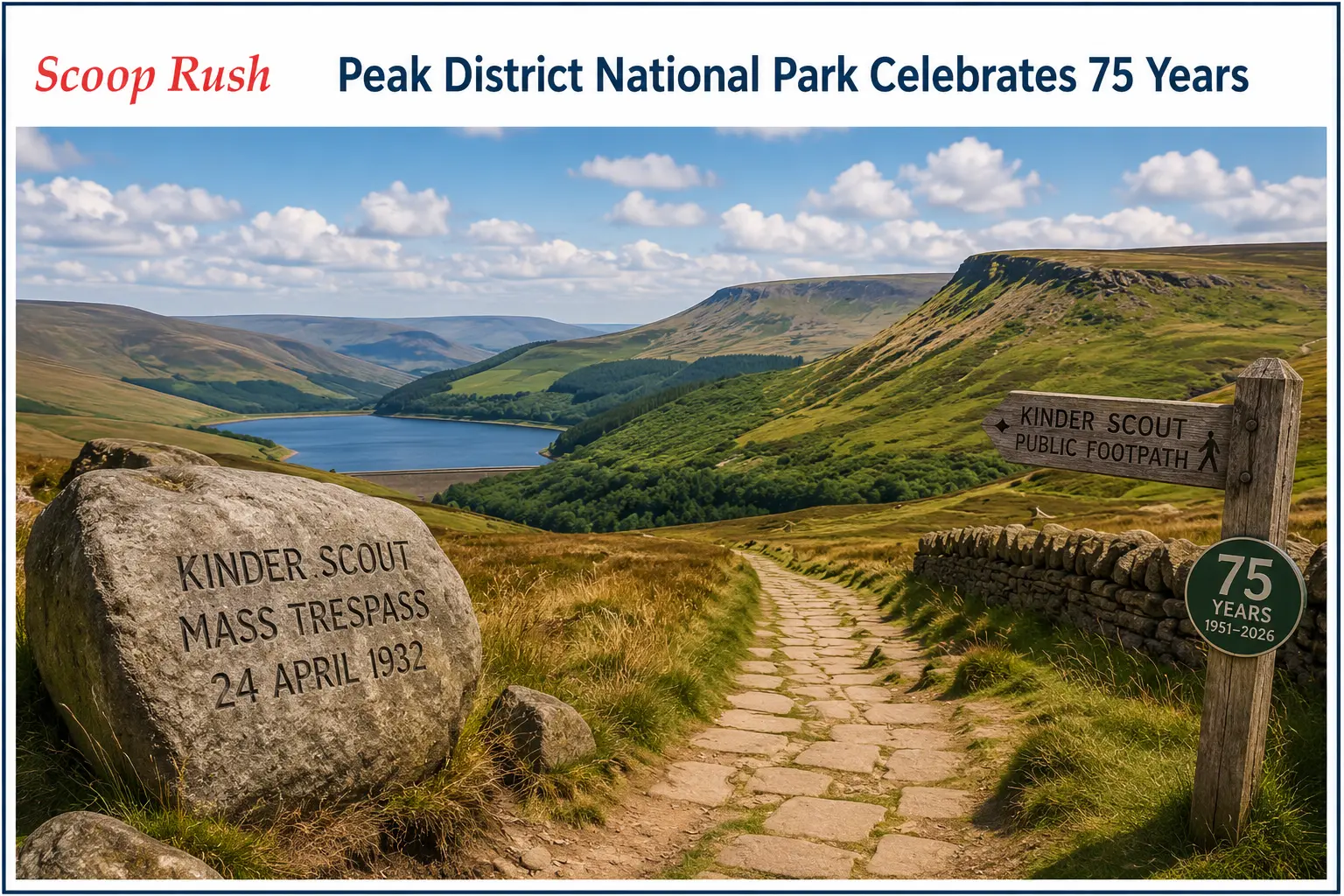
The Peak District National Park celebrates its 75th anniversary in 2026. Visitors can now follow the famous Kinder Scout Mass Trespass route. The historic walk changed public access to the countryside. It also inspired Britain’s national park movement. Today, the trail reminds visitors how ordinary people helped protect outdoor spaces for everyone.
The anniversary highlights one of the most important moments in Britain’s outdoor history. Guided walks, exhibitions, and special events allow visitors to explore the park’s remarkable past. The Peak District continues welcoming millions of visitors each year. Its stunning landscapes and rich heritage make it one of the country’s most popular travel destinations.
Peak District National Park celebrates 75 years
The Peak District National Park became Britain’s first national park on 17 April 1951. It followed years of public campaigns for countryside access. Today, it welcomes more than 13 million visitors every year.
The park covers around 550 square miles across Derbyshire and nearby counties. Visitors enjoy hiking, cycling, climbing, wildlife watching, and scenic villages. Its landscapes include moorlands, limestone valleys, rivers, and dramatic rock formations.
Peak District National Park honors the Kinder Scout Mass Trespass
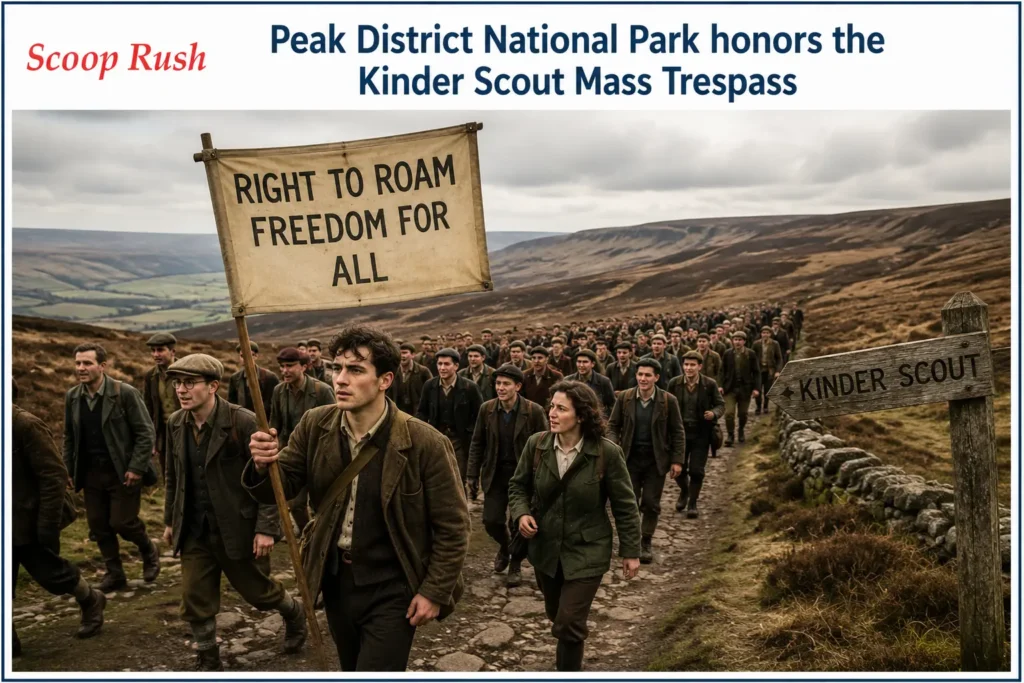
The famous Kinder Scout Mass Trespass took place on 24 April 1932. Around 400 working-class walkers joined the protest. Most came from Manchester, Sheffield, and nearby industrial towns.
The land belonged to the Duke of Devonshire. Landowners reserved it mainly for grouse shooting. Benny Rothman led the demonstration. Protesters challenged restrictions on public access. They believed everyone deserved countryside freedom.
Kinder Scout protest changed public access forever
The walkers gathered at Bowden Bridge before climbing Kinder Scout. Gamekeepers confronted them during the ascent. Small clashes followed, but the group reached the plateau.
Authorities arrested five protesters after the event. Courts sentenced them to prison terms between two and six months. Public support quickly grew. The protest became a powerful symbol of equal countryside access.
Peak District National Park inspired national reform
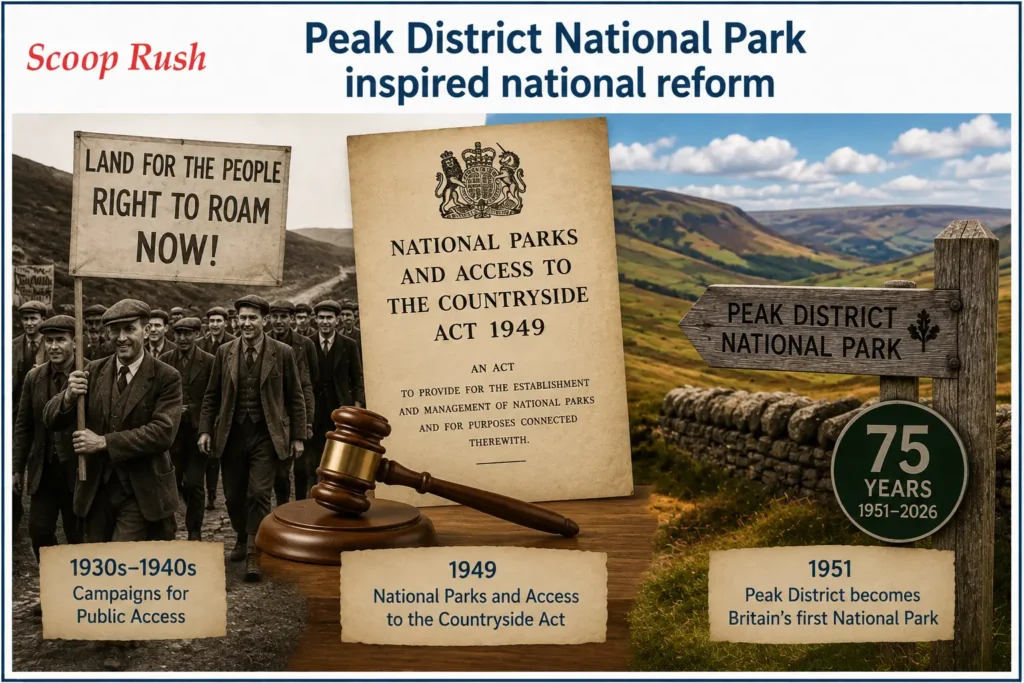
The Kinder Scout protest increased pressure for legal reforms. Campaign groups continued demanding public access throughout the 1930s and 1940s. Their efforts gained wider political support after World War Two.
Parliament passed the National Parks and Access to the Countryside Act in 1949. This law created Britain’s national park system. Two years later, the Peak District received official national park status.
Peak District National Park opened the way for future parks
The Peak District became the first protected national park in Britain. Soon after, the government designated the Lake District, Snowdonia, and Dartmoor. More national parks followed during the 1950s.
The new system protected beautiful landscapes while encouraging responsible recreation. It also improved public enjoyment of nature. National parks became important places for conservation and outdoor activities.
Peak District National Park still shapes right to roam campaigns
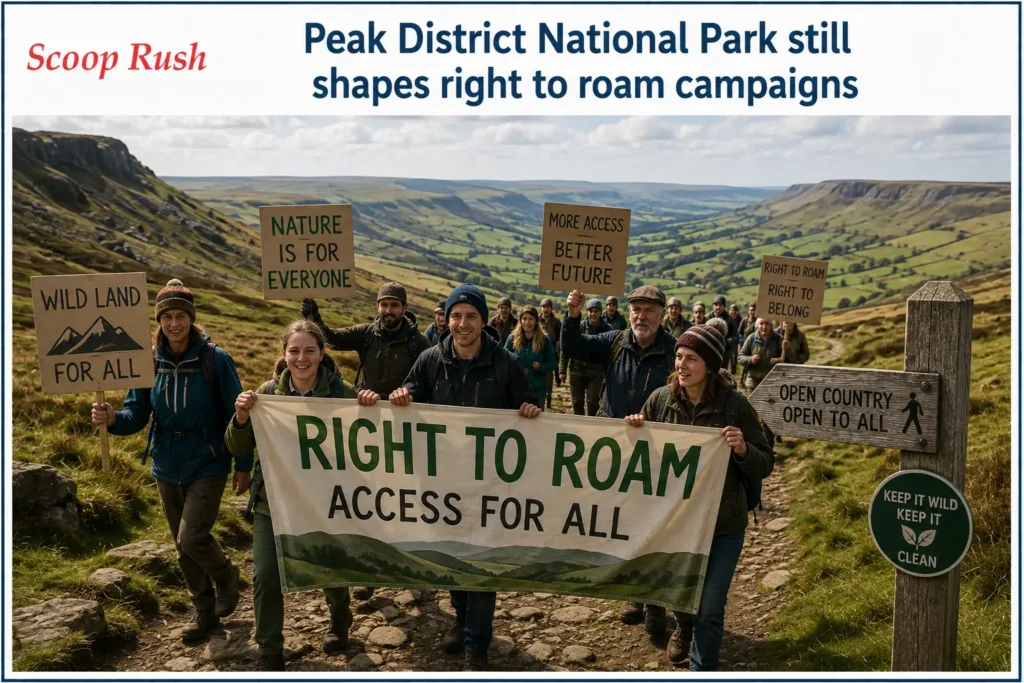
Campaigners believe countryside access still needs improvement. Only a small percentage of England allows open public access. Many protected areas remain difficult to reach.
Groups such as Right to Roam continue peaceful campaigns today. They seek wider access similar to Scotland’s outdoor rights. They also encourage responsible enjoyment and environmental protection.
Peak District National Park offers visitors a historic walking route
Visitors can retrace the original Kinder Scout route from Bowden Bridge. The trail measures about eight miles. It passes Kinder Reservoir, William Clough, and Snake Path before reaching the plateau.
The route offers spectacular views across the Dark Peak. Walkers also discover the history behind Britain’s access movement. Guided anniversary walks and exhibitions make 2026 an excellent year to visit.
Peak District National Park protects nature for future generations
The National Trust now manages Kinder Scout. The area also holds National Nature Reserve status. Conservation teams protect wildlife, fragile habitats, and historic landscapes.
Visitors play an important role in protecting the park. Authorities ban campfires and disposable barbecues because of wildfire risks. Responsible tourism helps preserve the landscape for future generations.
Why Peak District National Park remains important today
The Peak District represents more than beautiful scenery. It also represents fairness, public access, and shared national heritage. The events of 1932 continue inspiring outdoor campaigns across Britain.
Seventy-five years after becoming Britain’s first national park, its story remains powerful. Every visitor walking Kinder Scout follows a route that changed British history forever.
Conclusion
The Peak District National Park stands as one of Britain’s greatest conservation success stories. Its creation followed decades of determination from campaigners who believed everyone deserved access to nature. The Kinder Scout Mass Trespass remains a landmark event that transformed public attitudes toward the countryside.
Today, millions of visitors enjoy the landscapes once closed to ordinary people. The park continues balancing conservation with recreation while inspiring future generations. Its history reminds everyone that protecting nature and expanding responsible public access can work together.
FAQs
1. Why is the Peak District National Park historically important?
The Peak District became Britain’s first national park on 17 April 1951. Its creation marked a major step in protecting natural landscapes while giving more people access to the countryside for recreation.
2. What was the Kinder Scout Mass Trespass?
The Kinder Scout Mass Trespass took place on 24 April 1932. Around 400 walkers entered privately owned land to protest restricted access. The event became a turning point in Britain’s right to roam movement.
3. Who led the Kinder Scout protest?
Benny Rothman, a 20-year-old activist from Manchester, led the protest. His leadership helped bring national attention to public access rights and inspired future countryside reforms.
4. Can visitors still walk the original Kinder Scout route?
Yes. Visitors can follow the historic eight-mile trail from Bowden Bridge to Kinder Scout. The route passes important locations linked to the 1932 protest while offering stunning Peak District scenery.
5. Why does the right to roam campaign continue today?
Campaigners believe many parts of England remain difficult to access. They continue promoting wider countryside access while encouraging responsible walking, conservation, and respect for nature.

