
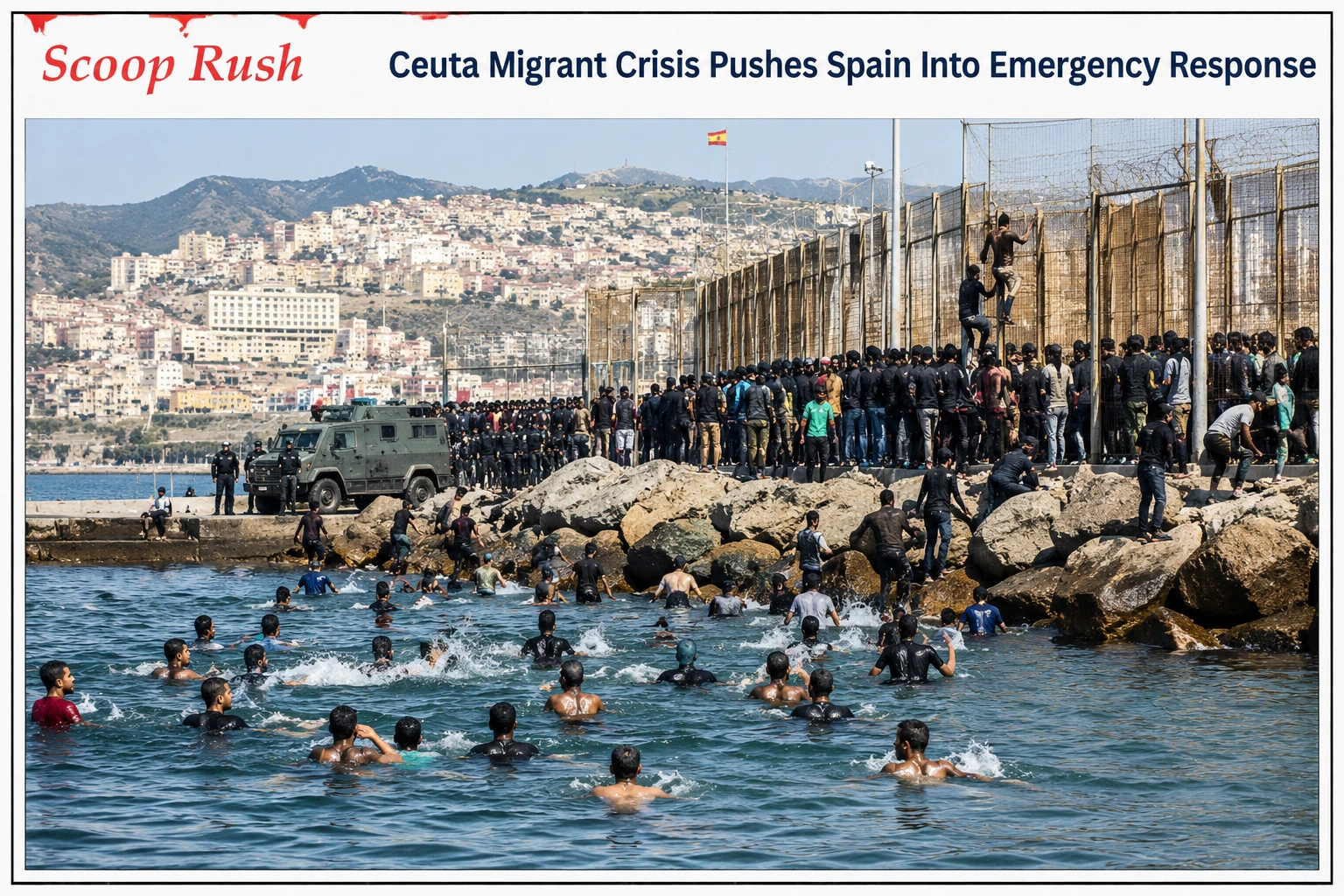
The Ceuta migrant crisis has forced Spain into emergency action after tens of thousands of migrants crossed from Morocco within one day. Spanish Prime Minister Pedro Sánchez traveled to Ceuta after authorities reported an unprecedented surge. Officials estimated between 50,000 and 60,000 arrivals. The influx became the largest mass migration event ever recorded in the Spanish enclave.
The sudden arrivals overwhelmed local services and border security. Authorities confirmed that at least 43 people died during the dangerous journey. Many drowned while trying to reach Spanish territory by sea. Spain quickly deployed additional security forces and emergency teams to restore order and support rescue operations.
Ceuta Migrant Crisis Overwhelms Border Security
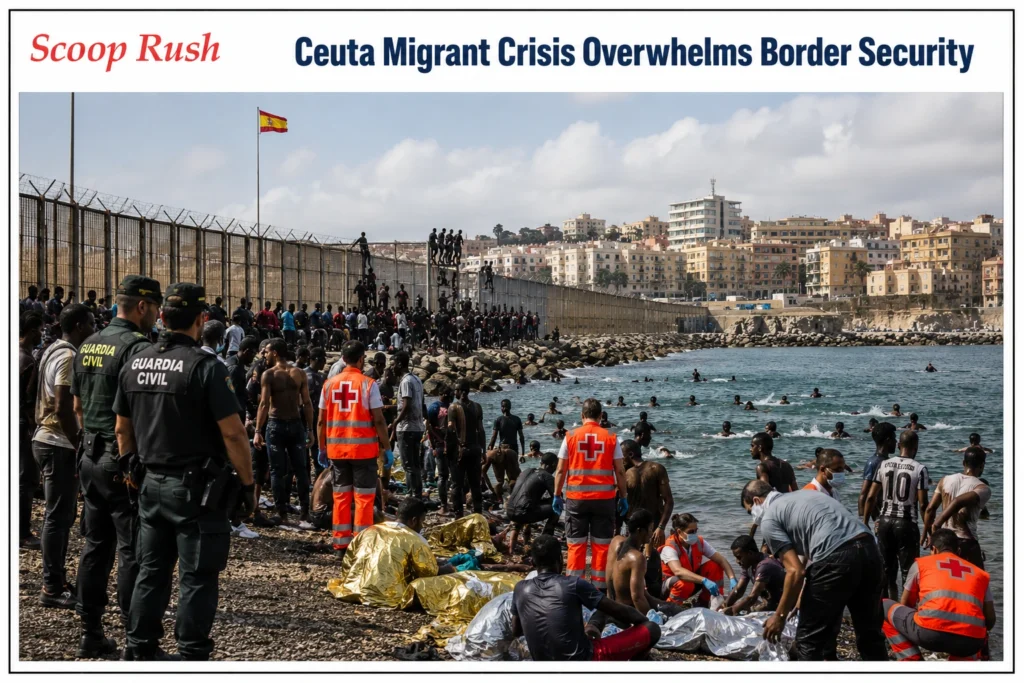
The Ceuta migrant crisis placed enormous pressure on the small Spanish territory. Ceuta has a population of about 85,000 people. Tens of thousands of migrants arrived within hours by swimming around breakwaters or climbing border fences. Local authorities struggled to manage the unexpected surge.
Emergency services focused on rescue efforts and humanitarian support. Thousands of migrants remained without proper shelter. Medical teams treated injured people while security officers tried to restore public order. Local leaders described the situation as a serious humanitarian emergency.
Ceuta Migrant Crisis Prompts Strong Government Response
Prime Minister Pedro Sánchez visited Ceuta shortly after the crisis began. He called the mass crossing a violation of Spain’s territorial integrity. He also promised to use every available state resource to protect residents and strengthen security.
The Spanish government blamed organized human trafficking networks for encouraging the crossings. Officials said traffickers spread misleading information after Spain’s Supreme Court ruling regarding migrants intercepted at sea. Authorities believe the false claims triggered the massive movement toward Ceuta.
Ceuta Migrant Crisis Leads To Military Deployment
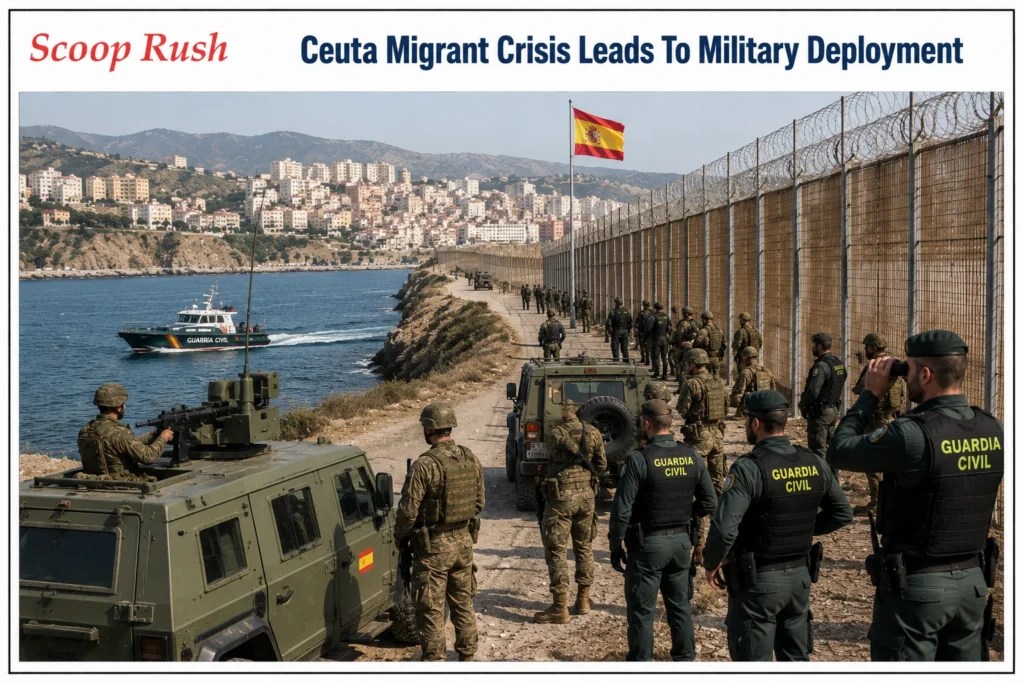
Spain reinforced security across Ceuta after the sudden influx. The government deployed armed forces, additional Guardia Civil officers, and specialist units to support local authorities. Security teams also increased patrols along coastal areas.
Officials announced plans to strengthen border protection further. The government also proposed installing a floating barrier near Tarajal Beach. The measure aims to improve border visibility while respecting legal requirements.
Ceuta Migrant Crisis Triggers Returns To Morocco
Spain and Morocco quickly coordinated efforts after the crossings. Thousands of migrants voluntarily returned to Morocco after facing difficult conditions inside Ceuta. Limited food, shelter, and services encouraged many to leave.
Spanish officials reported that around 25,000 migrants had already crossed back into Morocco. Authorities continue processing new arrivals while reviewing each case under Spanish immigration law.
Ceuta Migrant Crisis Sparks European Political Debate
The Ceuta migrant crisis quickly became a European political issue. Several leaders called for stronger protection of the European Union’s external borders. Italy urged tougher measures, while France increased checks at its border with Spain.
The European Commission expressed concern over the situation. However, officials clarified that Ceuta follows special Schengen rules. Travelers still face border checks before entering mainland Europe.
Human Traffickers Remain At The Center Of The Crisis
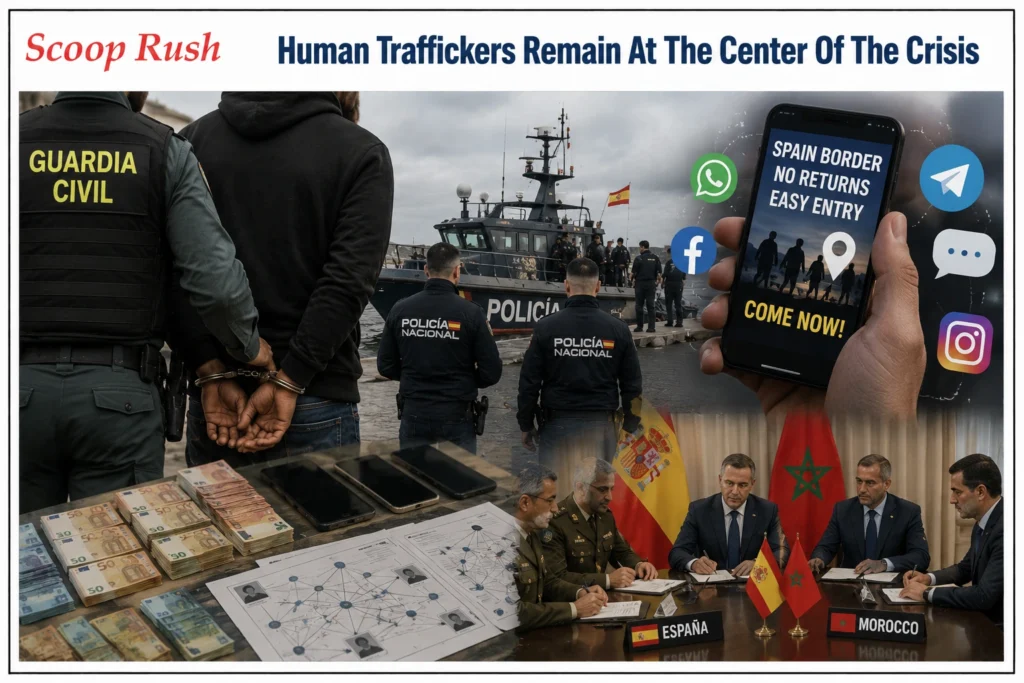
Spanish officials believe criminal trafficking groups organized much of the migration surge. They allegedly spread false information about Spain’s migration rules through illegal networks and social media.
Authorities continue working with Morocco to stop trafficking operations. Both countries hope stronger cooperation will prevent future mass crossings and reduce the influence of organized criminal groups.
Ceuta Migrant Crisis Highlights Humanitarian Challenges
The Ceuta migrant crisis created immediate humanitarian concerns across the territory. Thousands of migrants arrived without enough food, water, or shelter. Emergency workers rushed to provide medical care and other essential services. Many women and children also required urgent support.
Rescue teams continued searching coastal waters after several migrants disappeared during the crossing. Local authorities warned that hospitals and public services faced intense pressure. Aid organizations also urged officials to protect vulnerable people while restoring security.
Ceuta Migrant Crisis Revives Spain And Morocco Cooperation
The Ceuta migrant crisis encouraged Spain and Morocco to strengthen their cooperation. Officials from both countries coordinated efforts to manage the emergency and reduce additional crossings. They also worked together to support voluntary returns.
Spanish leaders thanked Morocco for its cooperation during the crisis. Both governments pledged to continue fighting human trafficking networks. They also plan to improve intelligence sharing and border coordination.
Ceuta Migrant Crisis Raises Questions About Future EU Migration Policy
The Ceuta migrant crisis has renewed debate over Europe’s migration strategy. Several governments demanded stronger protection of the EU’s external borders. Others called for closer cooperation with neighboring countries to prevent future emergencies.
European leaders also discussed long-term migration reforms. Many believe better border management and stronger action against trafficking networks remain essential. The events in Ceuta may shape future migration policies across Europe.
Conclusion
The Ceuta migrant crisis has become one of Spain’s biggest migration emergencies in recent history. The unprecedented number of arrivals overwhelmed local resources within hours and created serious humanitarian and security challenges.
Spain has responded by strengthening border security and working closely with Morocco. European leaders continue discussing migration policy while authorities focus on restoring order, protecting lives, and preventing future mass crossings.
FAQs
1. What is the Ceuta migrant crisis?
The Ceuta migrant crisis began after between 50,000 and 60,000 migrants crossed from Morocco into Ceuta within about one day. The sudden influx overwhelmed local authorities and created a major humanitarian and security emergency.
2. How many people died during the Ceuta migrant crisis?
Spanish authorities confirmed that at least 43 people lost their lives during the crossings. Many victims drowned while attempting to swim into Spanish territory from Morocco.
3. Why did so many migrants cross into Ceuta?
Spanish officials believe human trafficking networks spread misleading information after a recent Supreme Court ruling. Many migrants reportedly believed they could enter Spain more easily because of those false claims.
4. How did Spain respond to the Ceuta migrant crisis?
Spain deployed military personnel, police officers, and emergency teams to Ceuta. The government also strengthened border security and worked with Morocco to return thousands of migrants voluntarily.
5. Why is Ceuta important in European migration?
Ceuta is a Spanish territory located on the northern coast of Africa. It forms one of the European Union’s only land borders with Africa. Because of its location, it remains an important route for migrants trying to reach Europe.

