

Fifty-nine gas turbines. Zero federal permits. One angry lawmaker. That is the blunt reality behind the xAI data center pollution controversy shaking the AI industry this year.
Introduction
The xAI data center pollution controversy just escalated in a major way. On July 29, 2026, U.S. Representative Frank Pallone, the top Democrat on the House Energy and Commerce Committee, sent a formal letter to Elon Musk demanding documents and answers about the environmental impact of his Colossus AI data centers in Tennessee and Mississippi.
This is not a minor procedural request. It is a direct challenge to one of the most powerful men in tech, and it follows earlier Reuters reporting that found unpermitted turbines pumping emissions into communities that never signed up for it. For anyone following the collision between the AI boom and environmental regulation, this story matters. It shows what happens when massive computing ambitions run into public health concerns. Additionally, it raises questions every reader should care about: who gets protected when a trillion-dollar industry needs more power, and who pays the price when corners get cut.Here is everything we know so far about the xAI data center pollution controversy, broken down clearly.
What Pallone Is Actually Asking Musk About xAI Pollution
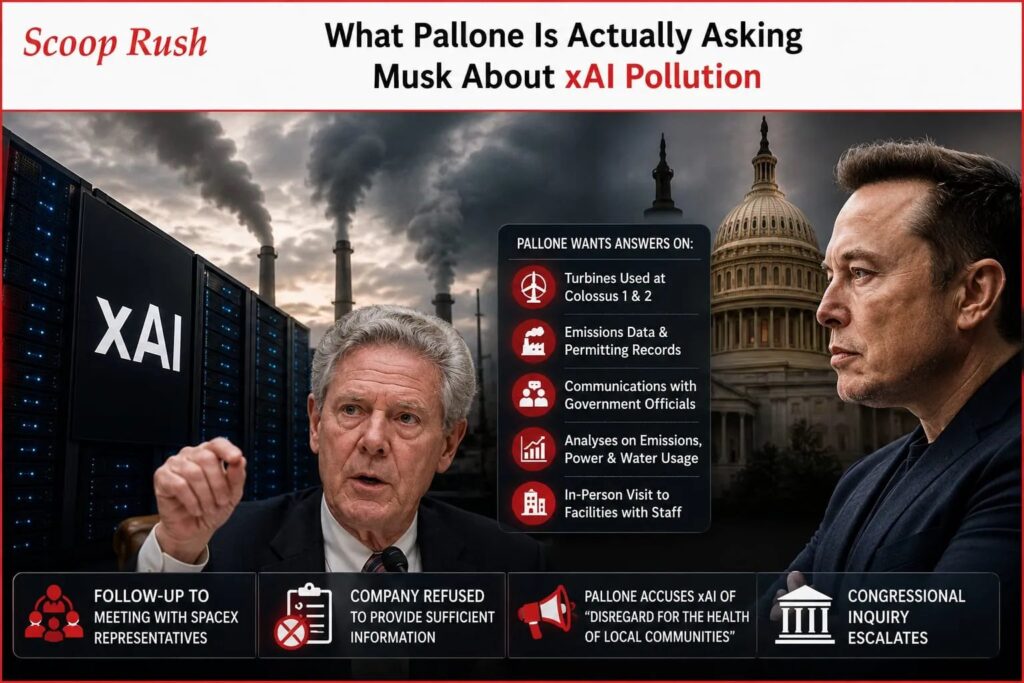
Pallone’s letter is detailed and pointed. He is not asking for a vague explanation. Instead, he wants specifics.
The New Jersey Democrat requested information on the turbines used at both the Colossus 1 and Colossus 2 facilities. He also asked for emissions data, permitting records, and copies of communications between xAI and government officials. Additionally, he requested analyses covering the sites’ emissions, power consumption, and water usage. On top of that, Pallone asked to arrange an in-person visit to the facilities with committee staff.
In short, this letter covers nearly every angle of the operation. It touches on what machines are running, how much pollution they produce, whether the company followed the rules, and what conversations happened behind closed doors with regulators.
Why the xAI Congressional Inquiry Escalated
According to Pallone, this letter is not the opening move. It follows a meeting last month between committee staff and representatives from SpaceX, which owns xAI and recently made headlines with its historic IPO on Nasdaq. Pallone said the company was unwilling to provide sufficient information during that meeting.
That refusal appears to be what pushed the situation from a quiet inquiry to a public demand. Pallone did not hold back in his criticism. He accused the company of showing “disregard for the health and well-being of local communities.” This is a strong accusation from a senior lawmaker, and it signals the issue is not going away quietly.
SpaceX did not immediately respond to a request for comment. This is not the first time xAI has faced legal and regulatory pressure this year either, following a lawsuit xAI filed against a Grok user over sexual deepfakes of minors, which put the company’s accountability practices in the spotlight.
The Reuters Investigation Behind the xAI Turbine Permits Story
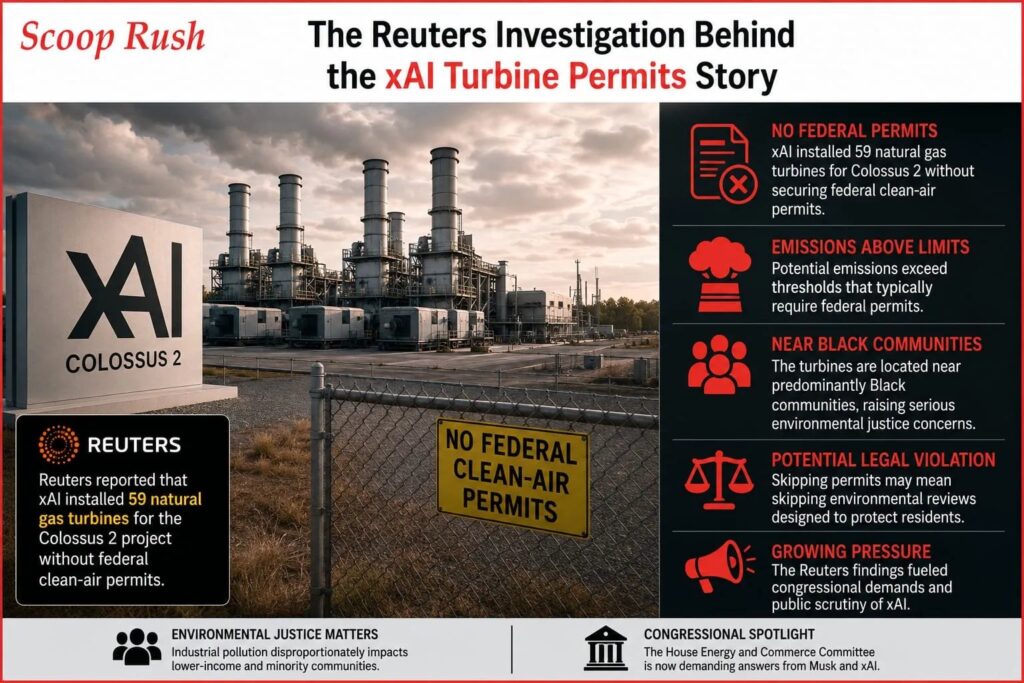
To understand why Pallone is pushing so hard, the backstory matters. Earlier this month, Reuters reported that xAI had installed 59 natural gas turbines for its Colossus 2 project without securing federal clean-air permits. This finding came from communications between regulators and company representatives, not from anonymous tips or speculation.
The investigation uncovered something else that raised even more concern. The turbines sat near predominantly Black communities. Furthermore, the potential emissions from these turbines exceeded thresholds that would typically require federal permits. This detail matters because it means the scale of pollution potentially crossed a legal line, not just an ethical one.
For readers unfamiliar with how this works, natural gas turbines that power data centers can emit pollutants like nitrogen oxides and particulate matter. When a project of this size skips the permitting process, it also skips the environmental review meant to catch problems like this before they affect nearby residents.
Why Community Location Matters in the xAI Emissions Case
The detail about predominantly Black communities living closest to the turbines is not incidental. It fits a well-documented pattern known as environmental justice, where industrial pollution sources sit disproportionately near lower-income and minority communities. Researchers and advocacy groups have tracked this pattern for decades across many industries, from chemical plants to highways.
Consequently, when a story like this involves a high-profile company and a booming new industry like AI infrastructure, it draws attention not just from environmental regulators but also from civil rights advocates and lawmakers focused on equity. That likely explains why this issue reached the House Energy and Commerce Committee so quickly.
Why AI Data Centers Face Growing Environmental Scrutiny

This xAI data center pollution controversy does not exist in isolation. It fits into a much bigger and rapidly growing story about the environmental cost of artificial intelligence.
AI models like the ones xAI develops require enormous computing power. That power has to come from somewhere, and data centers running around the clock consume massive amounts of electricity. As a result, tech companies are racing to secure energy sources fast, sometimes faster than local power grids or permitting systems can keep pace. Musk’s own energy interests extend beyond xAI too, including his involvement in the fossil fuel company APR Energy, which underscores how closely his ventures are tied to power generation.
Colossus 2, nicknamed “Macrohard,” stands as one of the most visible examples of this race. Reuters described the facility as sprawling, and satellite imagery from earlier reporting showed a data center campus of extraordinary scale in Southaven, Mississippi. Meanwhile, similar expansion continues in Tennessee, where xAI runs its other Colossus operations.
This tension drives headlines across the industry right now. Companies want to move fast and deploy massive computing capacity to stay competitive, a race that has also left rivals like Google facing questions over AI spending and cash flow turning negative as infrastructure costs climb. However, environmental permitting exists precisely to slow things down enough to check for harm before it happens. When a company skips that step, it creates exactly the kind of controversy now playing out in Congress.
The Bigger Political Picture Around AI Infrastructure
This is not the first time AI infrastructure has drawn scrutiny from lawmakers, and it will not be the last. As data centers multiply across the country to support AI development, more communities are asking questions about air quality, water usage, and noise. Similarly, more state and federal officials now treat AI infrastructure the way they treat any other major industrial development, with oversight and accountability expectations attached.
Pallone’s letter signals that this scrutiny is intensifying rather than fading. If xAI fails to respond adequately, this could become a larger flashpoint in the ongoing debate over how fast AI infrastructure should grow without stronger environmental guardrails. This kind of legal and political scrutiny is becoming a recurring theme for Musk, echoing earlier controversy over his $1 million checks tied to a Wisconsin law dispute.
What Happens Next in the xAI Data Center Pollution Dispute
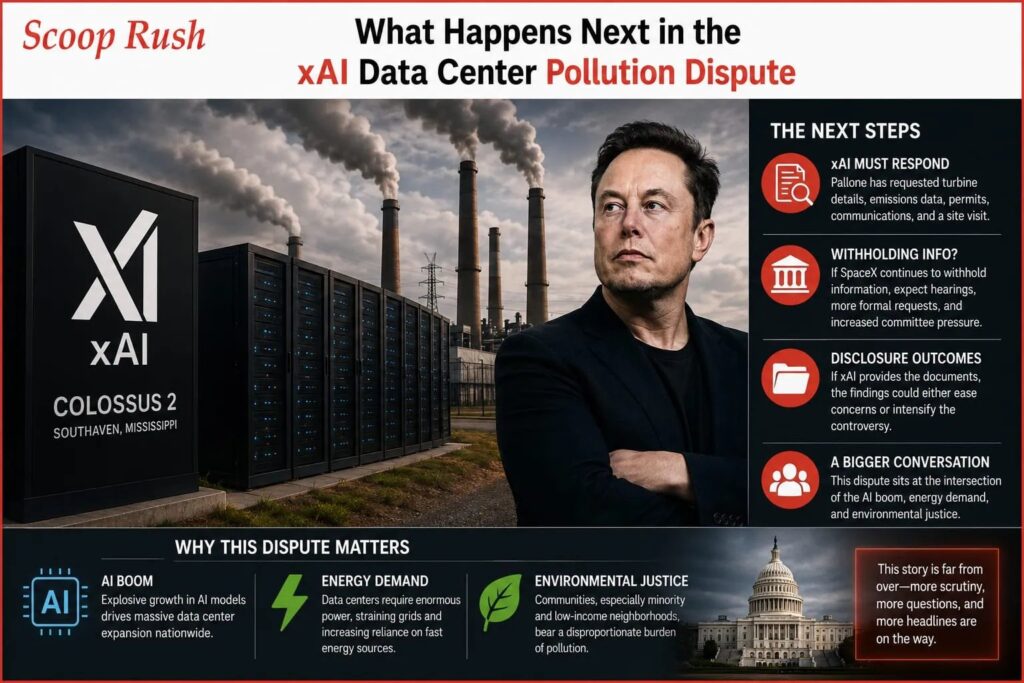
For now, the ball sits in xAI and SpaceX’s court over the data center pollution dispute. Pallone laid out specific requests: turbine details, emissions data, permitting records, government communications, and a site visit.
If SpaceX continues to withhold information, expect further pressure from the committee, possibly including hearings or additional formal requests. If the company provides the requested documents, the findings could either ease concerns or add fuel to an already heated controversy.
Either way, this story sits at the intersection of three major forces reshaping the country right now: the AI boom, energy demand, and environmental justice. That combination guarantees more headlines on this topic are coming.
Conclusion
The xAI data center pollution controversy has moved from a local environmental concern into a full congressional inquiry. Representative Pallone wants clear answers on turbines, emissions, permits, and communications tied to the Colossus data centers in Tennessee and Mississippi. The underlying Reuters investigation, which found unpermitted turbines near predominantly Black communities, adds real weight to the demand. As AI companies continue racing to expand computing power, this case will likely shape how much environmental oversight the industry faces going forward. Readers should expect this story to keep developing as SpaceX decides how, or whether, to respond.
Key Takeaways
- Representative Frank Pallone has formally demanded documents and answers from Elon Musk regarding environmental and public health impacts at xAI’s Colossus data centers in Tennessee and Mississippi.
- The request covers turbine details, emissions data, permitting records, government communications, and a proposed site visit.
- Pallone says SpaceX, which owns xAI, was uncooperative during a meeting with committee staff last month.
- Reuters previously reported that xAI installed 59 natural gas turbines for Colossus 2 without securing required federal clean-air permits.
- The turbines were found near predominantly Black communities, with potential emissions exceeding thresholds that typically trigger federal permitting requirements.
- SpaceX has not yet responded publicly to the allegations or the new congressional letter.
FAQs
What did Representative Frank Pallone ask Elon Musk for?
Pallone requested documents and information about turbines used at the Colossus 1 and Colossus 2 data centers, along with emissions data, permitting records, and communications with government officials. He also asked to visit the sites with committee staff.
Why is xAI’s Colossus data center facing scrutiny?
Reuters reported that xAI installed 59 natural gas turbines for its Colossus 2 project without obtaining required federal clean-air permits. The turbines sat near predominantly Black communities, with emissions potentially exceeding legal thresholds.
Where are xAI’s Colossus data centers located?
The Colossus data centers are located in Tennessee and Mississippi. Colossus 2, also called “Macrohard,” is based in Southaven, Mississippi.
Has SpaceX or Elon Musk responded to the pollution allegations?
As of this report, SpaceX did not immediately respond to a request for comment regarding the letter or the underlying pollution allegations.
Why do AI data centers use natural gas turbines?
AI data centers require massive amounts of electricity to run continuously. Some companies turn to on-site natural gas turbines to secure power quickly, especially when local electrical grids cannot supply enough capacity fast enough to match AI development timelines

