
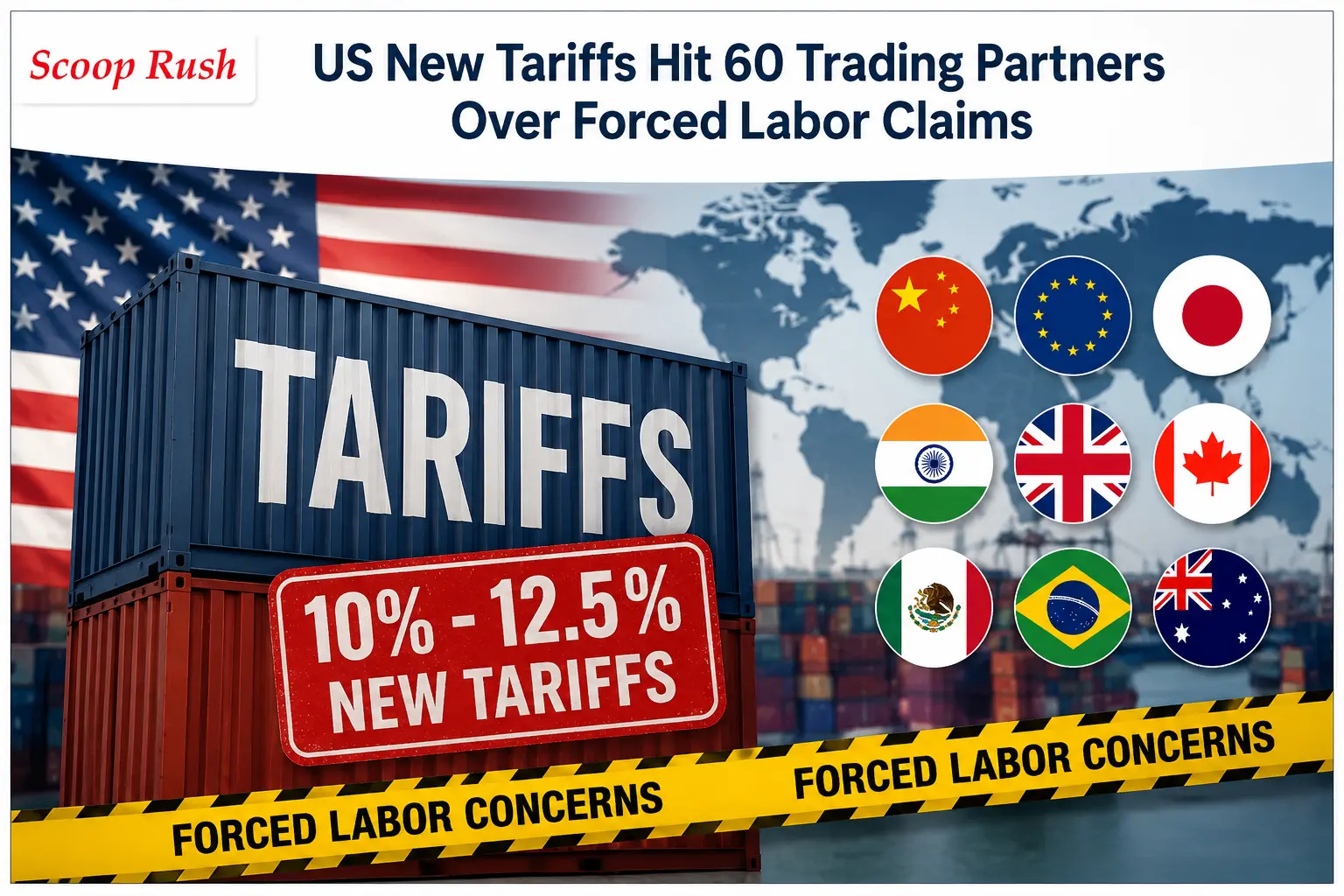
The US New Tariffs have triggered another major trade dispute worldwide. President Donald Trump’s administration announced fresh import duties on 60 trading partners. The new rates range from 10% to 12.5%. They affect nearly all goods entering the United States from the targeted economies. The White House says the move aims to pressure countries to strengthen bans on forced labor products.
The tariffs replace a temporary 10% global import duty that expired on Friday. Officials now rely on a different legal framework after the US Supreme Court rejected earlier emergency tariffs this year. Many governments have already criticized the decision and warned about its impact on global trade.
US New Tariffs Replace Temporary Global Duties
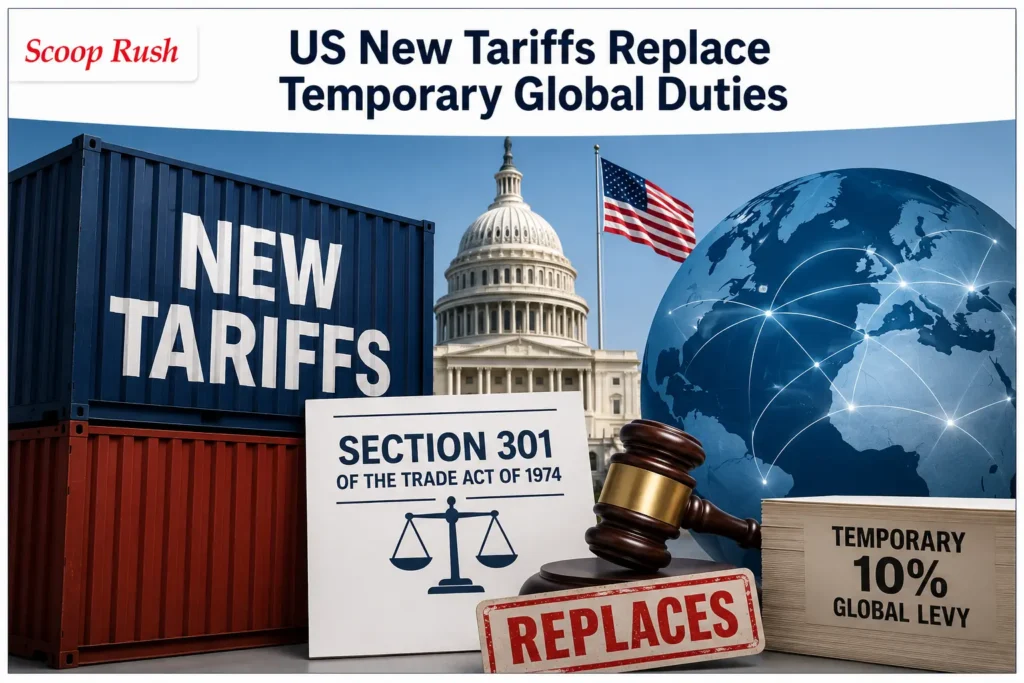
The Trump administration introduced the new tariffs under Section 301 of the Trade Act of 1974. This law allows trade action against countries that engage in unfair trade practices. Officials argue weak enforcement of forced labor bans creates unfair competition.
Earlier this year, the US Supreme Court struck down many tariffs introduced under emergency powers. As a result, the administration replaced the temporary 10% global levy with this new tariff system. Officials believe the updated legal approach offers stronger protection against future court challenges.
US New Tariffs Target Major Trading Partners
The new measures cover around 60 major US trading partners. Together, they account for almost 99% of American imports. China, the European Union, Japan, India, the United Kingdom, Canada, Mexico, Brazil, and Australia all face the new duties.
Countries that enforce strong restrictions against forced labor imports will pay a 10% tariff. Others that fail to meet US expectations will face the higher 12.5% rate. However, products already covered by separate sector tariffs remain exempt.
Exemptions Under the New Tariff Policy
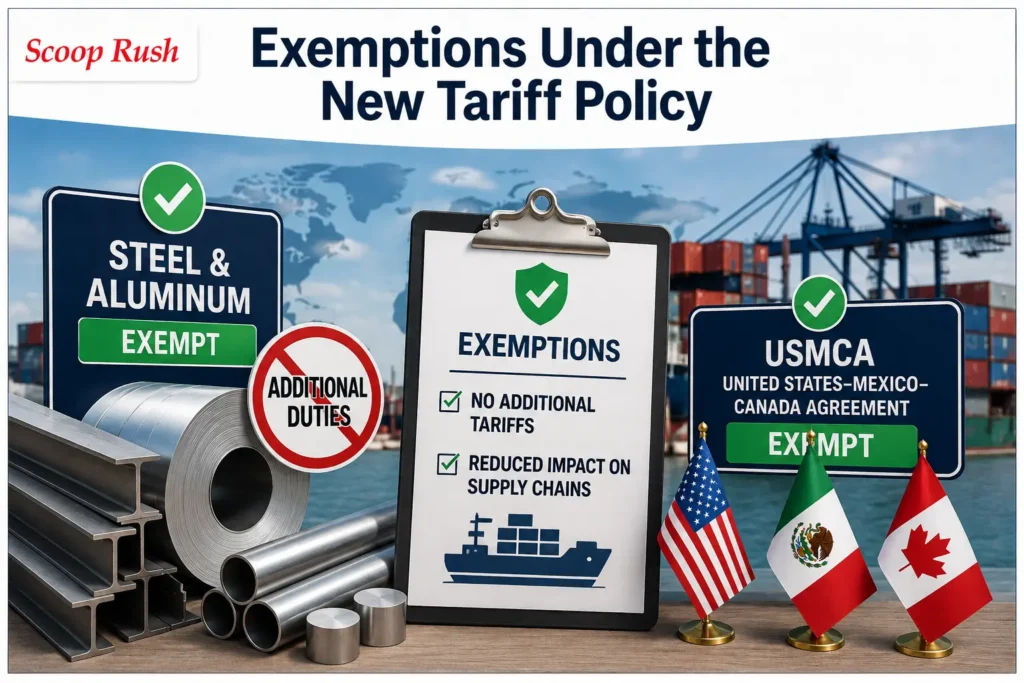
Several products and trade agreements remain outside the latest measures. Steel and aluminum already face separate tariffs. Therefore, they will not receive additional duties under this policy.
Goods traded under the United States, Mexico, and Canada Agreement also remain exempt. These exemptions reduce the immediate impact on North American supply chains. They also provide some relief for businesses operating under existing trade rules.
Trump Administration Defends US New Tariffs
US Trade Representative Jamieson Greer defended the decision. He said forced labor creates both human rights concerns and unfair trade practices. According to Greer, stronger enforcement benefits workers worldwide.
However, several trade experts questioned that explanation. Caroline Freund of the University of California San Diego argued the administration mainly wants to reduce the trade deficit. She believes the forced labor justification provides legal support for broader tariff goals.
Businesses Warn About Higher Costs
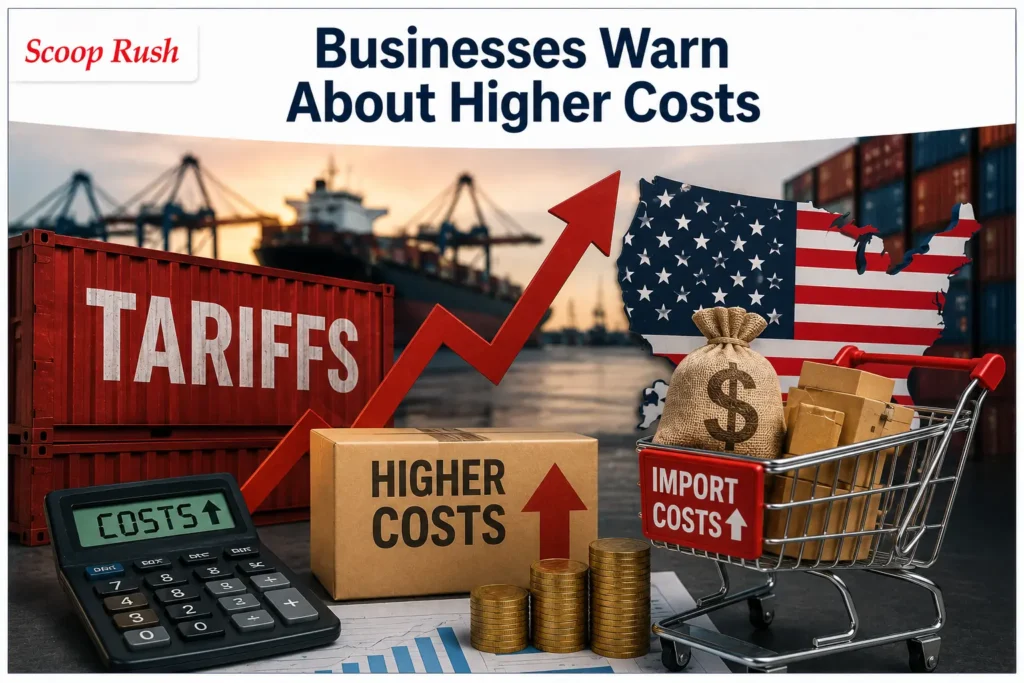
Many economists expect the tariffs to increase import costs. Businesses may pay more for products entering the United States. Some companies could eventually pass those costs to consumers.
Wendy Cutler of the Asia Society Policy Institute said exemptions may soften part of the impact. Still, she expects many countries to expand trade with alternative partners. That strategy could reduce future dependence on the American market.
Global Leaders React to US New Tariffs
The European Union expressed disappointment over the decision. EU officials rejected claims that Europe fails to protect workers. They argued European labor standards remain among the strongest in the world.
Brazil called the tariffs arbitrary and unjustified. The government plans to challenge the decision through the World Trade Organization. Australia also criticized the measures, while Japan formally expressed regret over the announcement.
UK Businesses Face Fresh Concerns
British business leaders fear the United Kingdom could lose competitiveness. The British Chambers of Commerce noted that UK exporters now face different treatment than many European competitors.
Trade experts also warned that policy uncertainty remains high. They believe businesses will monitor future White House decisions before making major investment changes. President Trump has previously adjusted tariff policies within short periods.
What Comes Next After US New Tariffs?
The administration continues investigating several economies for additional trade concerns. Officials are examining claims of excess industrial production in multiple countries. Those investigations could lead to further tariffs later this year.
Meanwhile, affected governments will likely continue negotiations with Washington. Others may strengthen trade partnerships outside the United States. The latest measures add new uncertainty to the global trading system.
Conclusion
The US New Tariffs mark another significant step in President Trump’s trade strategy. The administration argues the policy promotes fair trade and stronger labor protections. Critics believe the move mainly supports domestic manufacturing goals.
Businesses, consumers, and governments will closely watch the economic effects. Future negotiations and legal challenges could shape the next phase of global trade relations.
FAQs
1. What are the new US tariffs?
The United States introduced new tariffs ranging from 10% to 12.5% on imports from 60 trading partners. These duties replace the temporary global tariff that expired on July 24, 2026.
2. Why did the US impose these tariffs?
The Trump administration says the tariffs target countries that do not adequately enforce bans on goods produced with forced labor. Officials argue the policy promotes fair trade and protects workers.
3. Which countries face the new tariffs?
The affected trading partners include China, the European Union, Japan, India, the United Kingdom, Canada, Mexico, Brazil, and Australia, along with dozens of other major US trading partners.
4. Are any goods exempt from the new tariffs?
Yes. Products already subject to separate tariffs, such as steel and aluminum, are exempt. Goods traded under the United States-Mexico-Canada Agreement (USMCA) also remain free from these new duties.
5. How could the tariffs affect consumers?
The new import duties could increase costs for businesses that rely on foreign goods. As a result, some companies may raise prices, leading consumers to pay more for certain products.

